How Deeply Should Michigan Gardeners Water Established Trees During August Dry Spells
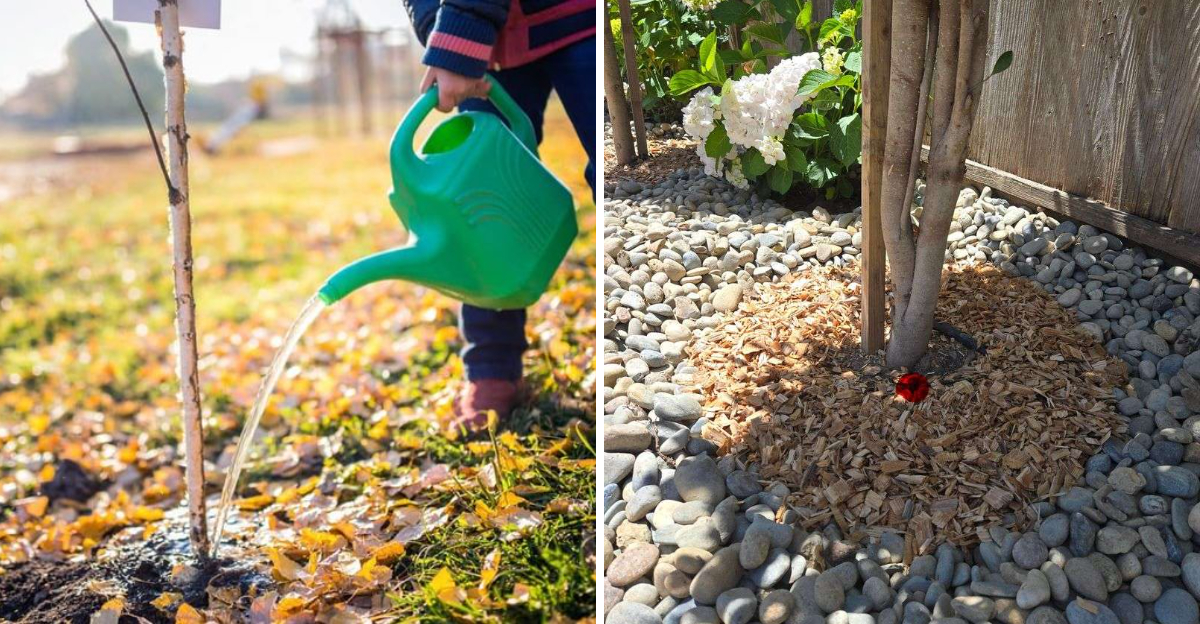
Established trees need water reaching at least twelve to eighteen inches deep to properly support their root systems during Michigan’s August dry spells.
Shallow watering only encourages roots to stay near the surface, making trees more vulnerable to future drought stress rather than less.
A slow, deep soak using a soaker hose placed at the tree’s dripline delivers water exactly where roots can access it most effectively.
Checking soil moisture with a long screwdriver or probe helps confirm whether water is actually reaching the deeper root zone.
Watering once or twice weekly, rather than daily light watering, better mimics the deep soaking trees naturally prefer. Mulching around the base helps retain this moisture longer, reducing how often deep watering sessions are needed.
Young or recently planted trees require more frequent attention compared to fully established specimens with deeper root systems. Getting this depth right during dry spells protects long term tree health far more than surface watering ever could.
1. Give Established Trees A Deep Soaking
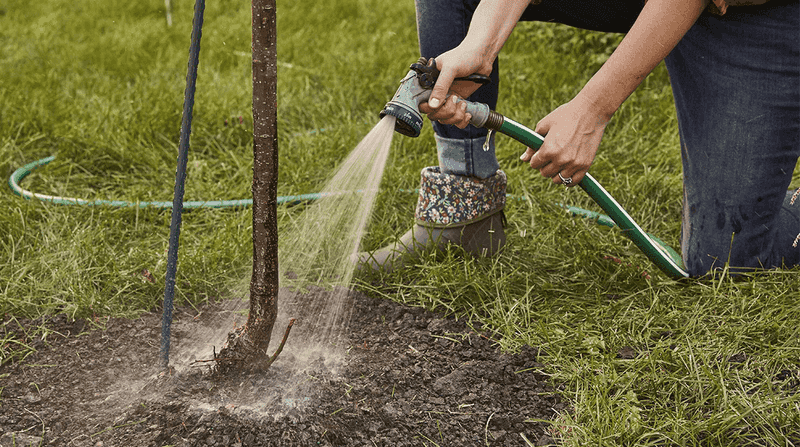
Picture your tree as a giant sponge buried underground. During August dry spells in Michigan, that sponge needs a serious refill, not just a quick sprinkle.
Established trees have roots that can spread out two to three times the width of their canopy, so a fast blast from the hose barely scratches the surface of what they actually need.
Deep soaking means getting water down into the soil where the roots can actually reach it. Shallow watering only wets the top few inches, which does very little for a tree with roots that go down 12 to 18 inches or more.
When water penetrates deeply, the roots stay hydrated and the tree stays stable, even during long stretches without rain.
Slow, steady watering is the key to making deep soaking work. Using a drip hose, soaker hose, or a slow trickle from a garden hose placed on the ground gives the soil time to absorb moisture before it runs off.
Aim to water for 30 minutes to an hour at a low flow rate to really get moisture moving downward. This method is far more effective than a quick five-minute spray and gives your tree the hydration it truly needs during Michigan’s hottest, driest weeks of the year.
2. Aim For About One Inch Each Week
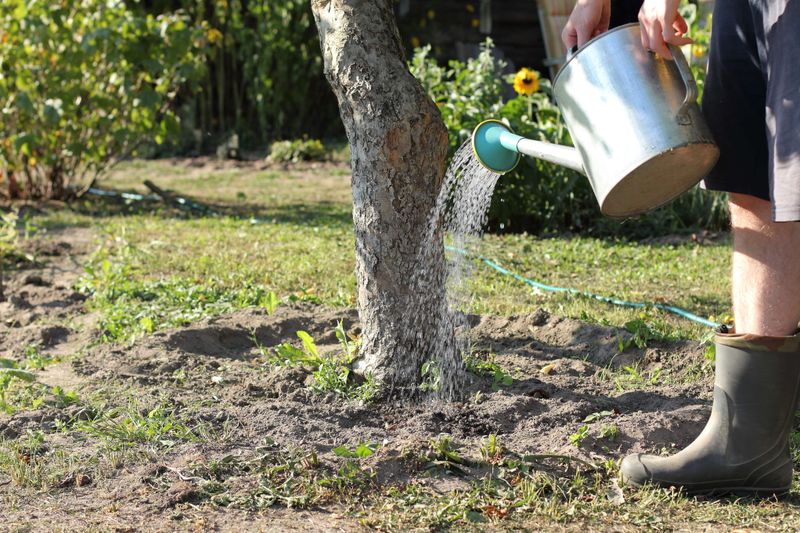
One inch of water per week sounds like a simple rule, but it actually carries a lot of science behind it.
That amount roughly matches what most Michigan trees would receive from natural rainfall during a typical summer week, making it a practical target when the skies stay dry through August.
Here is the tricky part: one inch of water covers a surprisingly large area when you think about it in gallons. For every 100 square feet of ground under your tree, one inch of water equals about 62 gallons.
That means a tree with a wide canopy needs a lot more water than most gardeners expect. Measuring with a rain gauge or a simple tuna can placed under the sprinkler helps you track whether you are hitting that target each week.
Your Michigan Garden Changes Every Week. Your Plan Should Too.
Gardening in Michigan changes quickly throughout the season. Every Friday you’ll receive a simple weekly plan showing exactly what to plant, prune, fertilize, harvest, and protect so you never miss the right timing.
Splitting your watering into two sessions per week rather than one long session can help the soil absorb moisture more evenly. Dry summer soil can get hard and compacted, making it tougher for water to soak in all at once.
Two smaller sessions give the ground a chance to soften up between waterings, which allows moisture to reach deeper root zones more effectively.
Sticking to the one-inch guideline gives your tree a reliable baseline, though you may need to adjust based on your specific soil type, the size of your tree, and how intense the heat becomes during those dry August stretches in Michigan.
3. Increase Water During Extreme Heat
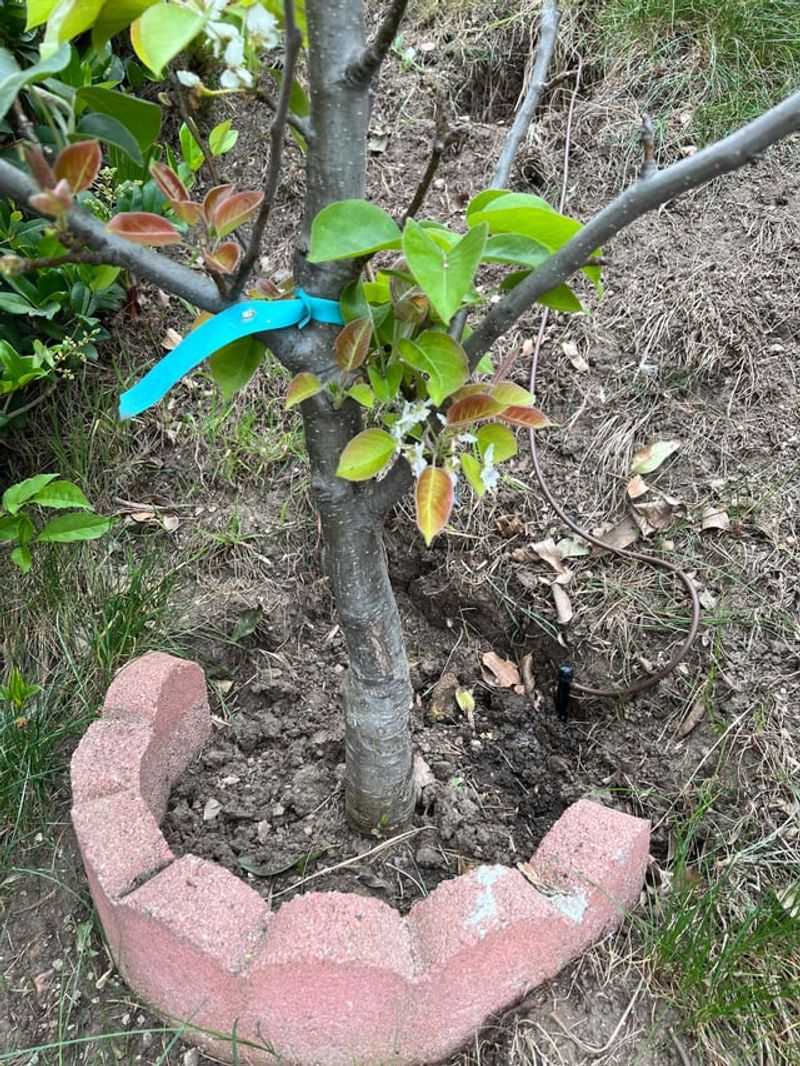
When Michigan temperatures climb into the upper 80s or push past 90 degrees Fahrenheit, trees work a lot harder to stay cool.
They pull water up through their roots and release it through their leaves in a process called transpiration, and during a heat wave, that process speeds up dramatically.
One inch of water per week may simply not be enough to keep up with the demand.
During extreme heat, bumping your watering up to closer to two inches per week gives your tree a better chance of staying hydrated and healthy. Heat waves cause soil to dry out faster, and the tree is using water more quickly at the same time.
That double pressure means your tree can fall behind on moisture faster than you might realize, even if you watered just a few days ago.
Watch the forecast carefully during August and plan your watering schedule around temperature spikes. If a stretch of 90-plus degree days is coming, water deeply before the heat arrives so the soil has a reservoir of moisture ready to go.
Watering in the early morning is also a smart move during hot weather because less water evaporates from the soil surface before it has a chance to soak in.
Giving your tree a little extra support during Michigan’s most intense summer heat keeps it resilient and ready to thrive once cooler fall temperatures finally arrive.
4. Water The Root Area Instead Of The Trunk
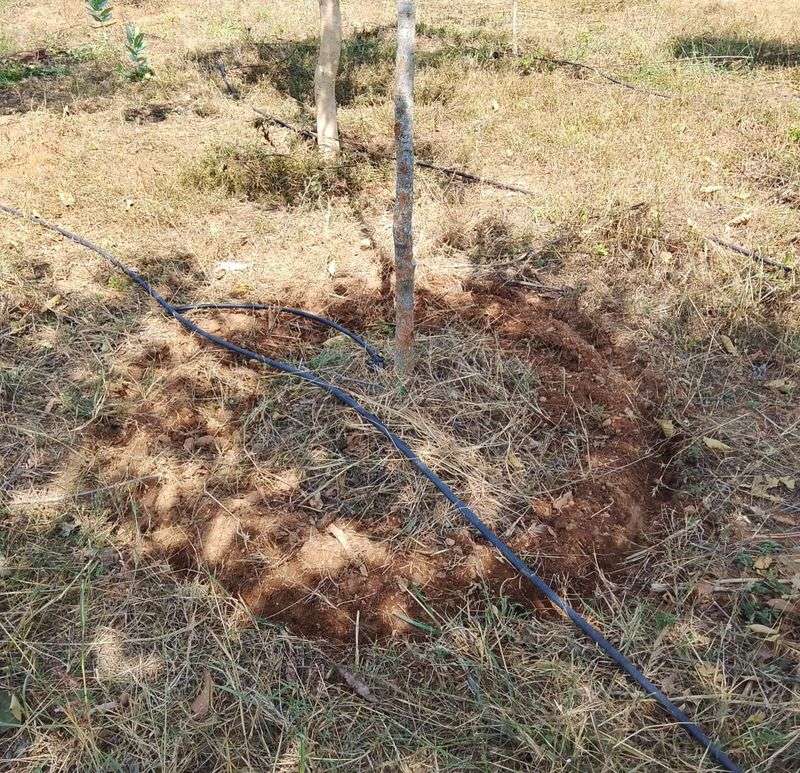
Most people walk up to a tree and pour water right at the base of the trunk. It feels natural, but it actually misses the mark by a wide distance.
The roots that absorb the most water are not clustered right at the trunk. They spread outward beneath the canopy, often extending well beyond the tips of the branches.
The outer edge of the tree canopy, called the drip line, is where you want to focus your watering. Roots in that zone are younger, more active, and far better at pulling moisture from the soil than the older roots close to the trunk.
Placing your soaker hose or drip system in a wide ring around the tree, roughly following the drip line, gets water exactly where it will do the most good.
Watering only at the trunk can also create problems for the bark. Keeping the area right around the base of the trunk constantly wet encourages fungal growth and can weaken the protective bark layer over time.
Spreading your water out across the full root zone not only feeds the tree more effectively but also keeps the trunk area drier and healthier. For large established trees in Michigan, this might mean watering an area that is 20, 30, or even 40 feet wide.
Adjusting your approach to target the right zone makes every drop of water count and gives your tree the best possible support during a dry August.
5. Apply Water Slowly
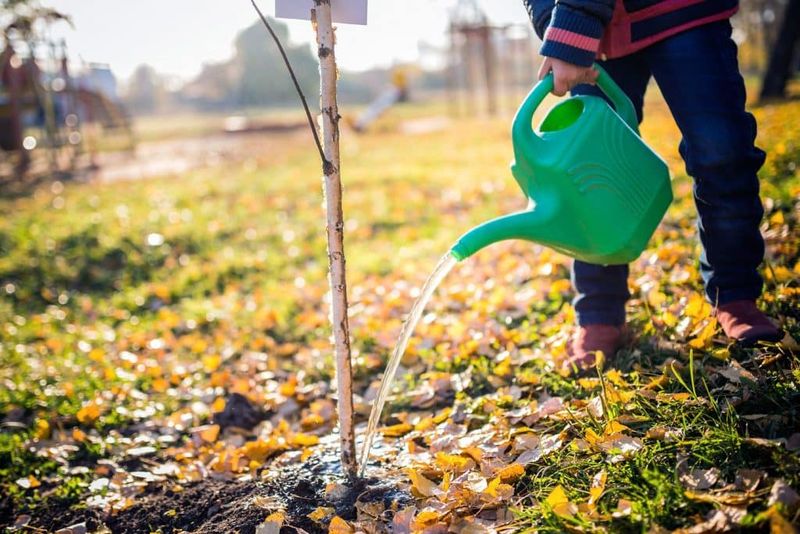
Speed matters a lot when it comes to watering trees. Pouring water on fast might seem efficient, but dry summer soil often cannot absorb it quickly enough.
The water runs off across the surface before it ever gets a chance to sink down to the roots, which wastes your time, your water, and does almost nothing for the tree.
Slow watering solves that problem in a satisfying way. When water trickles out at a gentle rate, the soil has time to gradually soften and open up, letting moisture travel downward rather than sideways or away.
Soaker hoses are one of the best tools for this because they release water at a slow, steady rate right along the soil surface.
Drip irrigation systems work similarly and can be set on a timer so your trees get consistent moisture without you having to stand in the yard with a hose.
If you prefer a simpler approach, a regular garden hose turned to a very low trickle and moved around the root zone every 15 to 20 minutes works well too.
Some gardeners poke small holes in the bottom of a five-gallon bucket, fill it up, and let it slowly drain near the tree roots.
Whatever method you choose, the goal is the same: get water moving down into the soil, not across the top of it. Slow and steady watering during August dry spells is one of the most effective things you can do for Michigan trees.
6. Check Sandy Soil More Often

Michigan has a lot of sandy soil, especially in the western and northern parts of the state, and sandy soil behaves very differently from clay or loam. Water moves through sand quickly, sometimes too quickly.
After a good watering, sandy soil can dry out again within just a day or two, leaving tree roots thirsty much sooner than you might expect.
If your yard has sandy soil, checking moisture levels more often than once a week is a smart habit during August. A simple way to do this is to push a long screwdriver or a wooden dowel six to eight inches into the soil near the drip line of the tree.
If it slides in easily, there is still moisture present. If it hits resistance and feels dry, your tree needs water sooner rather than later.
Gardeners with sandy soil may find they need to water every three to four days during hot, dry stretches instead of once a week. The goal is not to flood the soil but to keep it consistently moist at root depth.
Adding organic matter like compost to sandy soil over time can improve its ability to hold moisture, but that is a longer-term project. Right now, during August dry spells, the most important thing is staying attentive.
Checking your soil regularly and responding quickly when it dries out gives your trees the steady moisture supply they need to stay strong all summer long.
7. Watch For Drought Stress
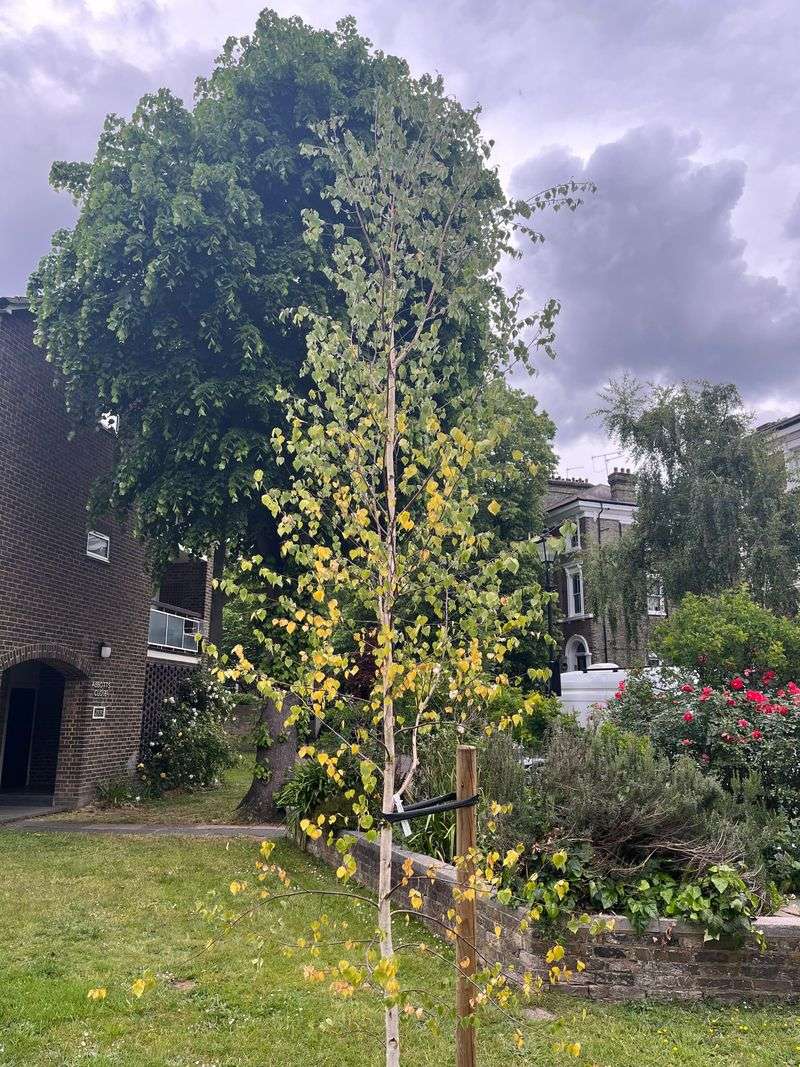
Trees cannot talk, but they do send signals when they are struggling. During a dry August in Michigan, knowing what those signals look like can help you act before the situation becomes serious.
The earlier you catch drought stress, the easier it is to help your tree bounce back.
Curling or cupping leaves are often one of the first things you will notice. When a tree cannot pull up enough water, the leaves curl inward to reduce the surface area exposed to the sun, which slows down water loss.
Leaf scorch is another common sign, where the edges and tips of leaves turn brown and crispy even though the leaf is still attached.
Some trees also respond to drought by dropping leaves early, which is a way of reducing the amount of water they need to maintain.
Early fall color can also be a drought stress signal rather than a seasonal change. If your maple or oak starts turning color weeks before other trees in the neighborhood, dry conditions may be the reason rather than cool temperatures.
When you spot any of these signs, water deeply right away and check the soil moisture regularly going forward.
Keep in mind that drought stress can linger even after rainfall returns, so continue monitoring your trees for several weeks after a dry spell ends.
Staying observant and responsive through August gives your established Michigan trees the best chance of heading into fall in strong, healthy condition.
8. Mulch To Keep Moisture In The Soil
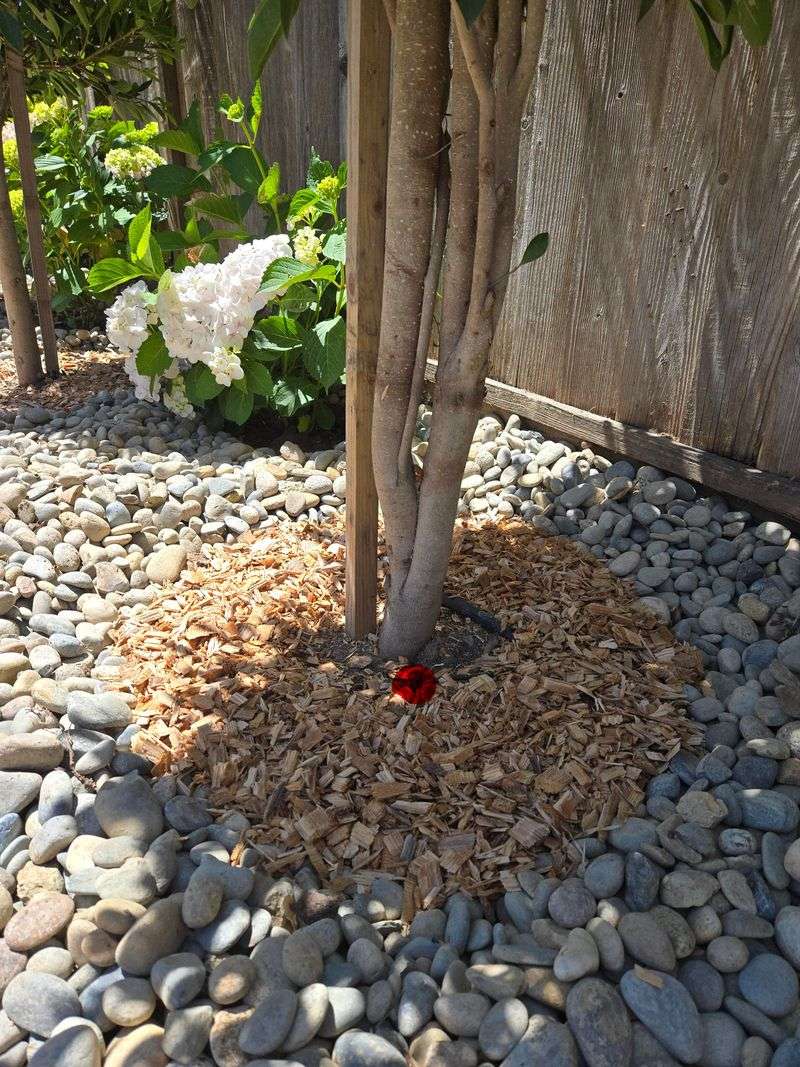
Mulch might be the most underrated tool in a Michigan gardener’s summer toolkit. A layer of mulch spread around the base of a tree works like a blanket for the soil, slowing down evaporation so moisture sticks around longer between waterings.
During a hot, dry August, that extra moisture retention can make a real difference for your tree’s root zone.
Two to three inches of mulch is the sweet spot for most established trees. Wood chips, shredded bark, or leaf mulch all work well and break down slowly over time, adding organic matter to the soil as they do.
Spread the mulch in a wide circle following the drip line of the tree, covering as much of the root zone as you can reach. The wider you go, the more soil stays cool and moist underneath.
One important detail that trips up a lot of gardeners: keep the mulch away from the trunk.
Piling mulch up against the bark, sometimes called volcano mulching, traps moisture against the trunk and creates conditions that can weaken the bark and invite pests.
Leave a gap of at least two to four inches between the mulch and the base of the trunk. Getting this detail right protects the tree while still giving the roots all the moisture benefits mulch provides.
Applied correctly, mulch reduces how often you need to water and keeps your established Michigan trees comfortable through even the driest stretches of August.