The Hidden Pest Behind Your Bare Kentucky Tomato Stems
A stealthy creature moved through your tomatoes last night, leaving no trace behind. Your fattest fruit disappeared, stem and all, between dusk and dawn. Gardeners across Kentucky are seeing the same thing you now face.
Stripped leaves cover the soil like confetti, clear proof of a feast you missed. Nobody heard rustling, nobody saw movement, yet the damage kept coming for you. Silence conceals a predator watching you.
Kentucky backyards, including yours, have become hunting grounds for a stealthy creature. Sharp eyes fail against this thing because it wears your plant like armor. Patience matters far more than worry when you face a clever invader.
Understanding its rhythm changes everything about how you fight back. Certain specific behaviors separate confused gardeners from ones who reclaim your harvest.
Knowing what quietly moves beneath those leaves gives you real power. Ignore this threat, and your entire crop will disappear before you notice.
Meet The Camouflaged Culprit Behind Those Stripped Stems
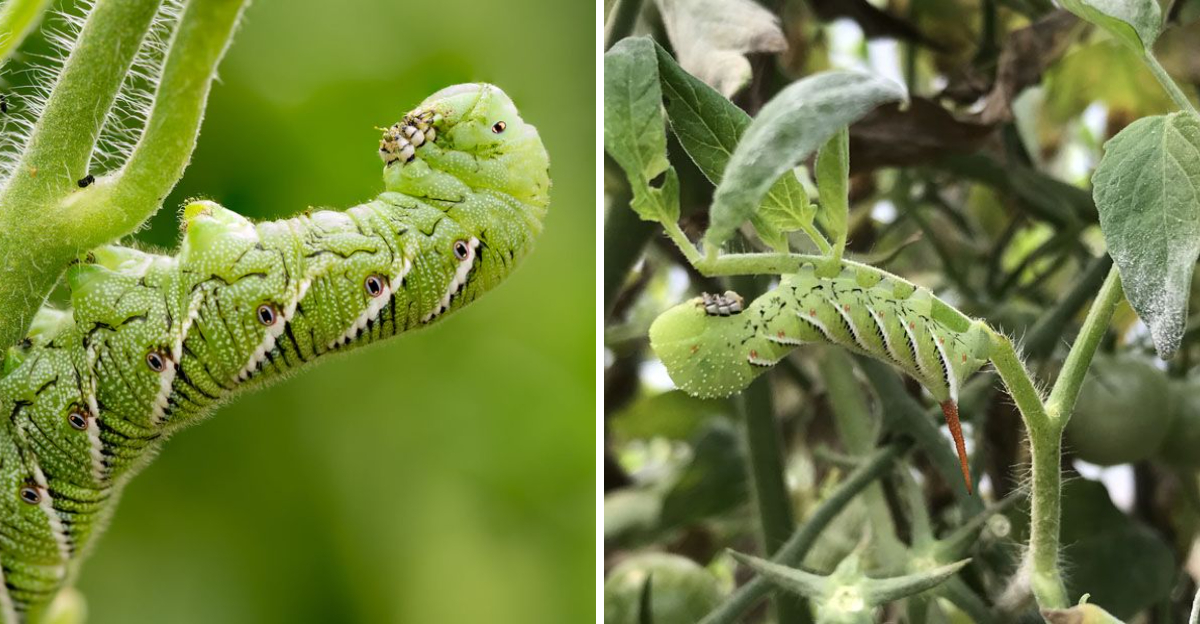
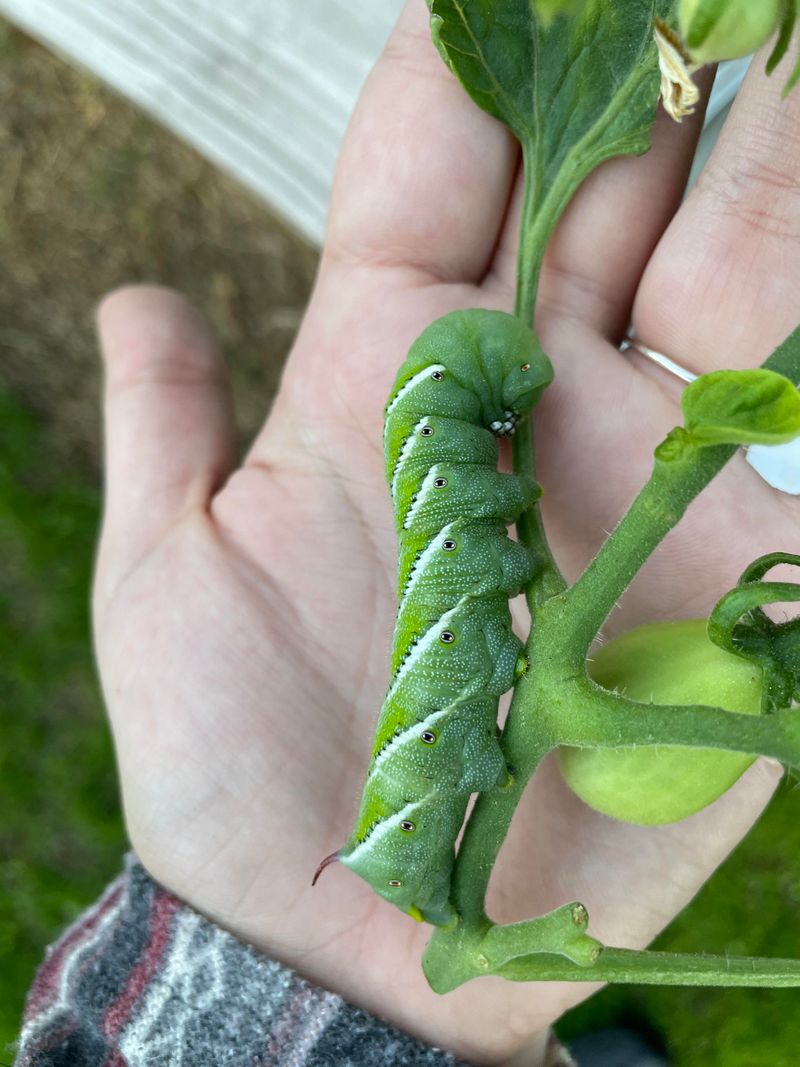
Five inches of pure green camouflage, complete with white chevron stripes and a curved horn on its rear end. That is the tomato hornworm, and it is the reason your plants look like someone took scissors to them.
Despite the intimidating spike, the horn is harmless. It cannot sting, bite, or poke you, and handling one feels a bit like holding a warm, wiggly water balloon.
The caterpillar is the larval stage of the five-spotted hawk moth, a chunky gray-brown flier that hovers like a hummingbird at dusk.
Females lay single pale green eggs on the underside of tomato leaves, and each moth can leave hundreds of them scattered across a garden.
Within a week, tiny caterpillars hatch and begin feeding. They grow astonishingly fast, going through five stages in roughly three to four weeks and gaining most of their size in the final few days.
That growth spurt is why damage seems to appear out of nowhere. A hornworm you missed on Monday can be triple the size by Friday, eating far more leaf area with every bite.
Late summer is often peak season in Kentucky, where warm conditions typically support two generations per year, with the second brood reaching full size right as tomatoes are ripening.
Knowing what you are dealing with changes the whole game. Once you can picture the shape, the stripes, and the horn, spotting them in the canopy gets much easier.
Green Pellets On The Soil Are Your First Clue
Before you ever see the caterpillar, you will see what it leaves behind. Dark green or black pellets, about the size of a peppercorn and ridged like tiny barrels, appear on leaves, mulch, and the soil under your plants.
Gardeners call it frass, and it is honestly the most reliable hornworm detector out there. Because the caterpillars feed above where the pellets fall, the droppings act like a treasure map pointing straight up.
Here is the trick that saves so much squinting. Find a cluster of frass, then look directly overhead along the stems and leaf undersides within a foot or two of that spot.
Your Kentucky Garden Changes Every Week. Your Plan Should Too.
Gardening in Kentucky changes quickly throughout the season. Every Friday you’ll receive a simple weekly plan showing exactly what to plant, prune, fertilize, harvest, and protect so you never miss the right timing.
Bigger pellets mean a bigger caterpillar, which means faster damage. Fresh frass looks moist and shiny, while older droppings turn dull and crumbly, so shine tells you whether the feeder is still nearby.
Check in the morning while the light is soft and low. Sweep the soil clean after each inspection, then look again the next day to see whether new pellets appeared overnight.
If you use straw mulch, the pellets can blend in, so run your fingers lightly across the surface. On bare soil or landscape fabric, they stand out beautifully.
Chewed leaf edges, missing leaflets, and bare midribs on upper branches back up the frass evidence. Put those signs together and you can find a well-hidden caterpillar in under a minute.
Why Your Eyes Keep Missing Them
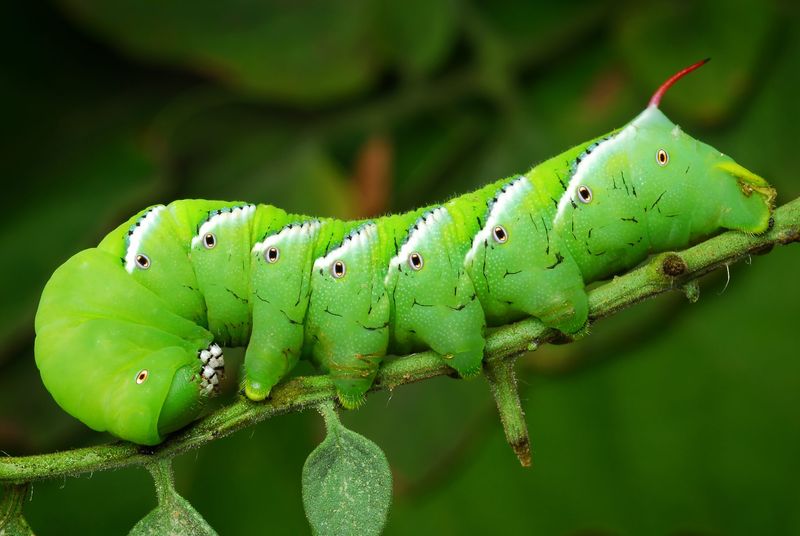
You can stare at a tomato plant for two full minutes and swear it is clean, then blink and suddenly there is a caterpillar the length of your finger right in front of you. That frustrating moment is the result of a highly effective evolutionary adaptation.
The hornworm body is the exact green of tomato foliage. Those pale diagonal stripes break up its outline the same way stripes hide a tiger in tall grass.
They also rest along stems rather than across them, lining their bodies up with the plant’s own lines. Add the ribbed texture of their skin, which mimics leaf veins, and you have a living optical illusion.
Behavior helps them too. During the hottest part of the day, hornworms tuck into the shady interior of the plant, low and close to the main stem.
Try a different approach instead of scanning the surface. Gently lift and turn branches, look at leaf undersides, and search from below at eye level with the soil.
Nighttime changes everything. A cheap ultraviolet flashlight makes hornworms glow a ghostly blue-green, and many gardeners find three or four in minutes after failing all afternoon.
Another tip: mist the foliage with a hose. Startled hornworms often thrash or rear up, giving away their position instantly.
Once you train your eye, the horn becomes the giveaway. Look for that small curved point, and the rest of the caterpillar suddenly snaps into focus.
Damage Adds Up Faster Than You Expect
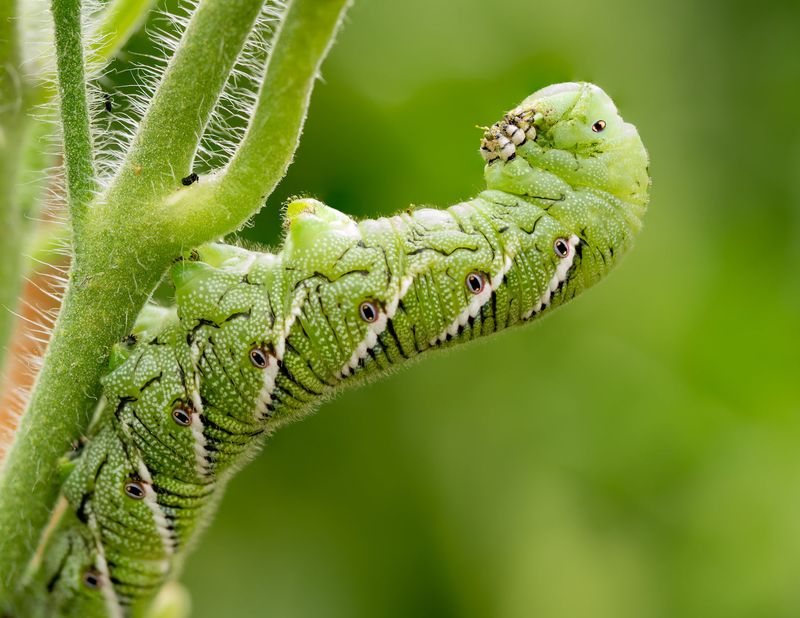
One large hornworm can strip the leaves from an entire branch in a single day. Put four or five on a young plant and you may find significantly defoliated stems by the weekend.
Leaves matter more than people realize. They are the solar panels that build sugar for fruit, so losing them means smaller, blander tomatoes even if the plant survives just fine.
There is a second problem. Missing foliage exposes green fruit to harsh afternoon sun, which causes pale, leathery patches called sunscald on the shoulders of tomatoes.
Hornworms occasionally chew shallow gouges into the fruit itself. Those wounds invite mold and soft rot, especially during humid late-summer weather.
They do not stop at tomatoes either. Peppers, eggplant, potatoes, and tomatillos are all fair game, since every one of them belongs to the nightshade family.
Younger transplants and container plants feel the loss hardest because they have less leaf area to spare. A big, sprawling indeterminate vine can shrug off moderate feeding with barely a hiccup.
The practical takeaway is timing. Damage in June often gets outgrown, but damage in late August affects fruit during a critical filling stage that’s hard to recover from.
So focus your effort now. A ten-minute walk through the patch every couple of days does more for your harvest than any spray you could buy in September.
Handpicking Still Beats Almost Everything Else
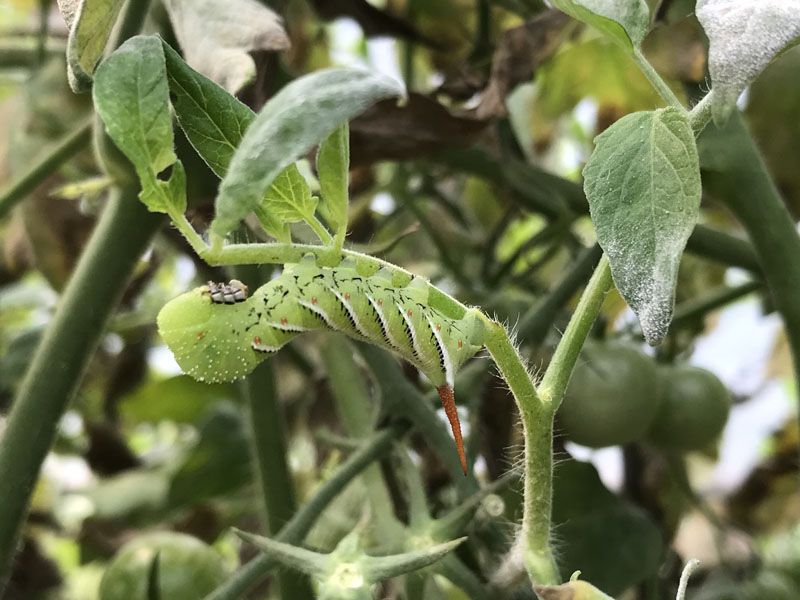
Low tech, free, and weirdly satisfying. Plucking hornworms off by hand remains the single most effective control for a backyard tomato patch, and it takes only a few minutes at a time.
Grab the caterpillar firmly behind the head and roll it off the stem. They grip surprisingly hard with tiny hooked feet, so a slow steady pull works better than a yank that could tear the leaf.
Drop them into a bucket of soapy water, or relocate them far from your Kentucky garden if you would rather not. Some gardeners toss them to backyard chickens, who treat the whole thing like a holiday feast.
Wear gloves if the wriggling bothers you. They cannot hurt you, but a five-inch caterpillar flexing in your palm is a memorable sensation.
Go out early in the morning or at dusk when the caterpillars sit higher in the canopy. Bring the UV flashlight after dark for the easiest hunting of all.
Work in a pattern so you do not miss plants. Start at one end of the row, check the top, middle, and interior of each plant, then look at the soil for fresh frass.
Repeat every two or three days for a couple of weeks. Moths keep laying, so consistency matters more than any single heroic sweep of the garden. Most gardeners find the numbers drop off sharply after three or four rounds.
Tiny Wasps Are Already Fighting On Your Side
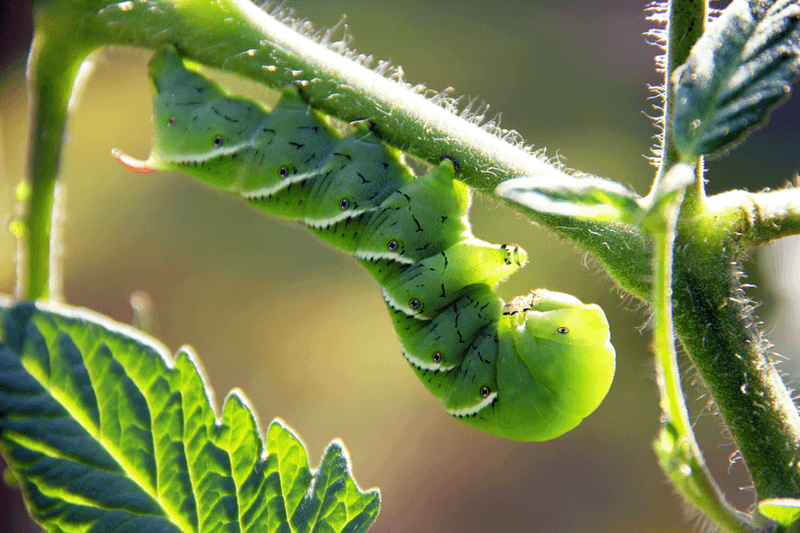
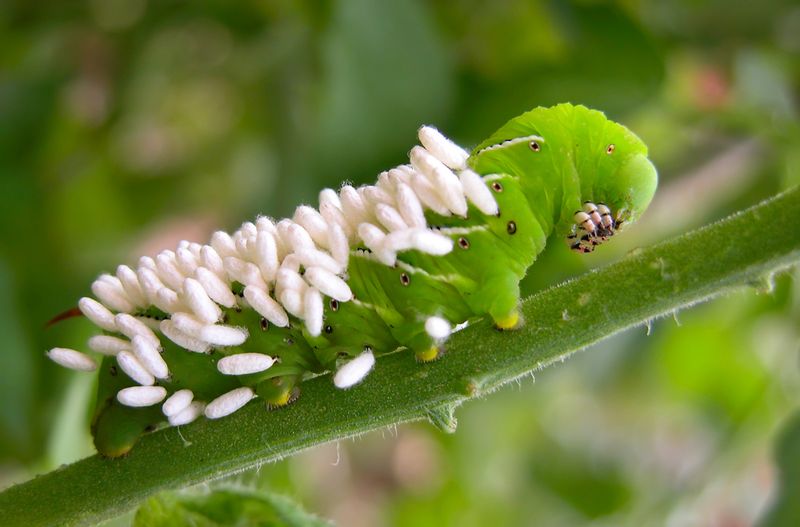
Spot a hornworm covered in what looks like grains of white rice, and you’re looking at natural pest control already at work.
The adult wasp is smaller than a grain of pepper and harmless to people. She lays eggs inside the caterpillar, and the developing larvae feed within before spinning cocoons on its back.
A hornworm in that condition stops eating almost entirely. Leave it right where it sits so dozens of new wasps can emerge and hunt down the rest of the caterpillars in your Kentucky garden. Removing a cocoon-covered hornworm is a common gardening mistake.
Other helpers pitch in too. Green lacewings, paper wasps, ladybugs, and ground beetles all take eggs or small caterpillars, and birds happily snatch the larger ones.
You can invite these insects by planting small-flowered nectar sources nearby. Dill, sweet alyssum, cilantro, yarrow, cosmos, and buckwheat are favorites of tiny parasitic wasps.
Skip broad-spectrum insecticides, which knock out the beneficials along with the target pest. A garden with steady flower bloom tends to keep hornworm numbers naturally low year after year.
A single braconid wasp can parasitize several caterpillars, and gardens with good habitat often see a meaningful reduction in the hornworm population as a result.
Bt Spray Is The Gardener’s Gentle Backup Plan
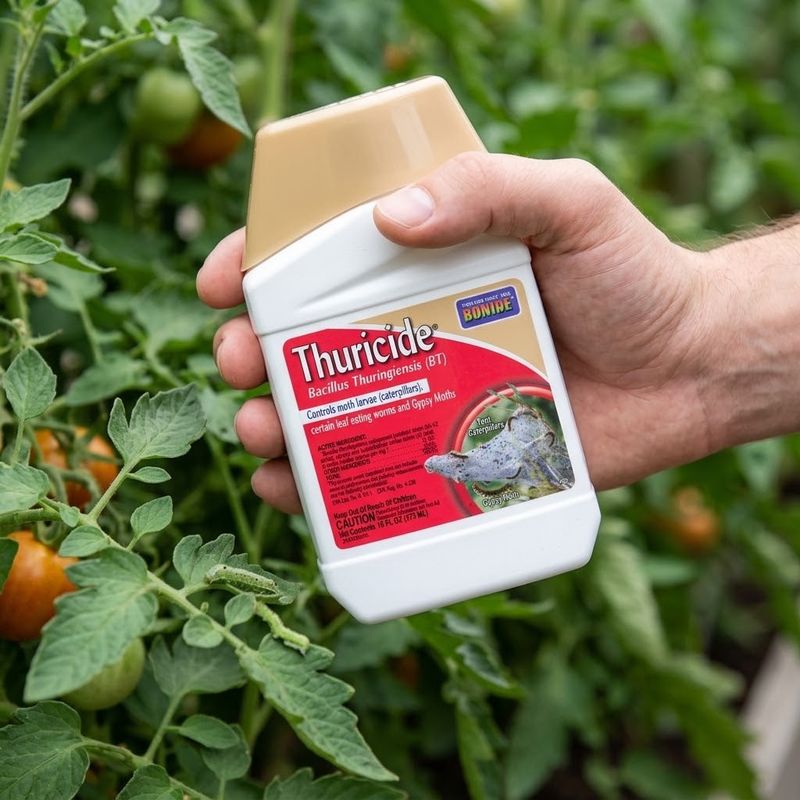
When handpicking cannot keep up, a bacterial spray called Bacillus thuringiensis, or Bt, steps in. It is a naturally occurring soil bacterium approved for organic growing.
Bt works only on caterpillars that eat treated leaves. Bees, ladybugs, birds, pets, and people are not affected, which makes it a comfortable choice for a family vegetable bed.
Timing is what separates success from disappointment. Small caterpillars are far more sensitive, so spray as soon as you notice fresh chewing rather than waiting until the hornworms are jumbo sized.
Coverage matters just as much. Hornworms feed on leaf undersides, so aim upward and hit the interior of the plant, not just the sunny outer foliage.
Apply in the evening because sunlight breaks Bt down within a day or two. Reapply after rain and roughly every five to seven days while feeding continues.
Treated caterpillars stop eating within hours, though they may cling to the plant for a while before dropping. Patience helps here.
Spinosad is another organic option that works quickly, but it can harm bees while wet, so use it after dusk when pollinators have gone home.
Read and follow the label for mixing rates and harvest intervals. Most Bt products allow picking tomatoes the same day, which is handy in peak season.
Between Bt and a flashlight, you have a solid one-two combination that keeps late-summer plants productive without heavy chemicals.