The Huge Black-And-Yellow Spider Florida Gardeners Start Noticing As Fall Approaches
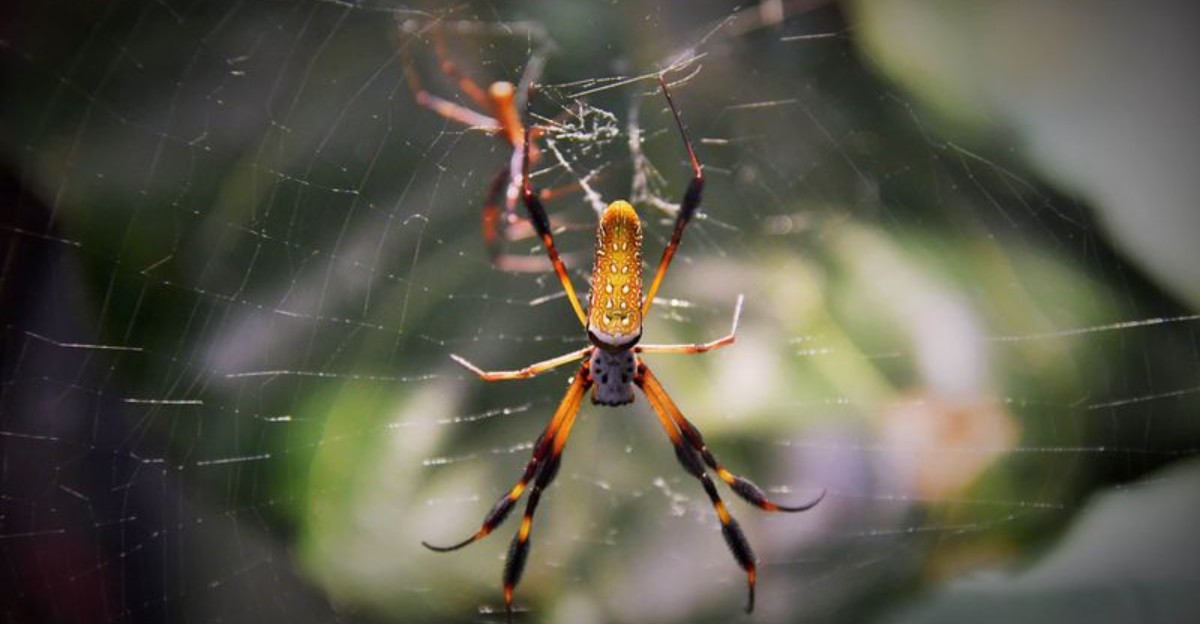
That web strung across the porch railing wasn’t there a few days ago, and now it’s impossible to walk past without noticing it.
Thick zigzag pattern running down the middle, and sitting right in it, a spider bigger than anything that’s shown up in the yard all summer, patterned in bold yellow and black.
Fall is exactly when these start turning up everywhere across Florida yards, strung between trees, porches, anywhere with enough space for a web that size. They didn’t just arrive overnight.
They’ve been growing all season, and this time of year is when they finally reach the size that makes people stop mid-step and reconsider walking through the garden at all. Here’s the part most people get wrong the moment they spot one.
1. Meet The Golden Silk Orb-Weaver Filling Florida Gardens
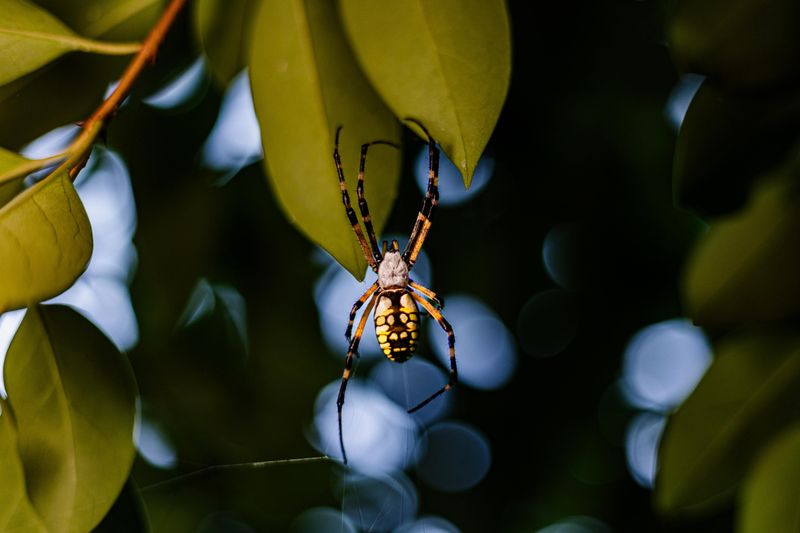
Say hello to Trichonephila clavipes, the golden silk orb-weaver, though most Floridians just call her a banana spider. She also goes by giant wood spider in some corners of the state.
The size is what stops people in their tracks. A large female can have a body over an inch long, with legs extending her total span several inches across.
Her body is elongated and painted in yellow and black, often speckled with small white spots. Her legs are long and slender, decorated with feathery tufts of dark hair that look almost like tiny brushes.
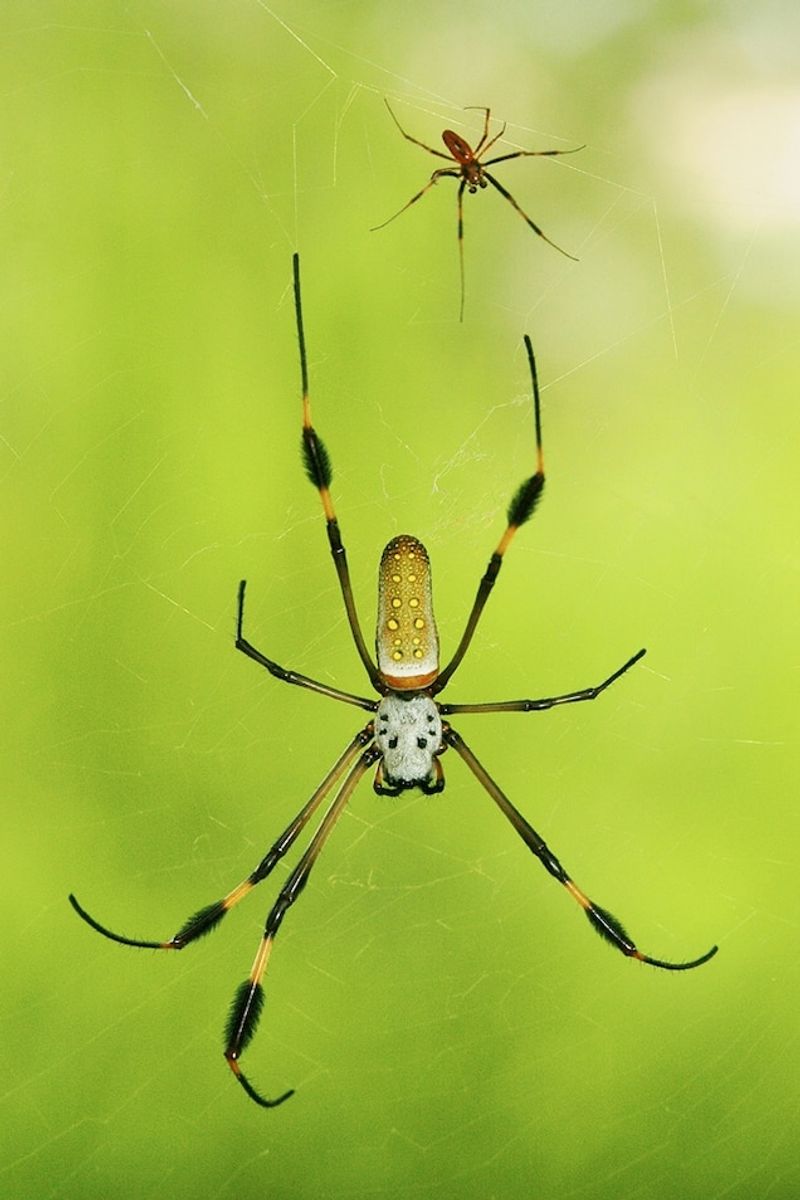
Males are a different story entirely. They measure roughly a quarter inch and wear plain dark brown, so they hide in plain sight along the edges of her web.
These spiders show up all over the state. Wooded lots, backyard gardens, the gaps between trees and shrubs, and citrus groves all make good real estate for them.
Gardeners in central and south Florida run into them constantly once the weather starts shifting. Once you learn the shape and the golden glint of the silk, you will start spotting them everywhere on your morning walk.
She may look fierce, but she is mostly just a patient hunter waiting for lunch to fly by.
2. Recognize This Black-And-Yellow Spider Before Removing It
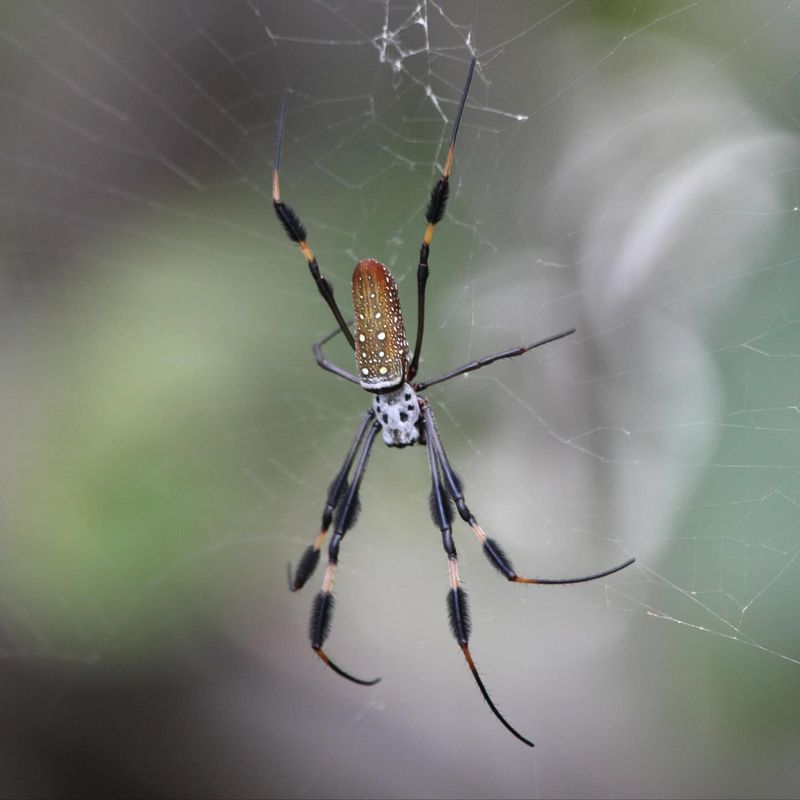
Identification gets easy once you know the checklist. Start with size, because a female golden silk orb-weaver is hard to mistake for anything small.
Her abdomen glows with yellow or golden tones against black, often marked with pale or white spots. The long legs carry bands of black and yellow or brown.
Check the legs closely for the giveaway detail. Dark tufts of hair sit on the tibia segments of the first, second, and fourth pairs, giving her a slightly shaggy look no other common Florida spider has.
The male looks like a completely different creature. He is around a quarter inch, dull brown, and usually tucked near the edge of the female’s web hoping she stays busy with prey.
The web tells you just as much as the spider does. Look for a big circular orb spun from silk that shines gold in the sun, frequently over 3 feet wide and sometimes stretching close to 6.5 feet.
Your Florida Garden Changes Every Week. Your Plan Should Too.
Gardening in Florida changes quickly throughout the season. Every Friday you’ll receive a simple weekly plan showing exactly what to plant, prune, fertilize, harvest, and protect so you never miss the right timing.
She rests head-down in the center, legs gathered in pairs, waiting for a vibration.
Before you reach for a broom, take ten seconds to run through those clues. Knowing what you are looking at usually changes what you decide to do next.
3. Understand Why These Spiders Appear More In Fall
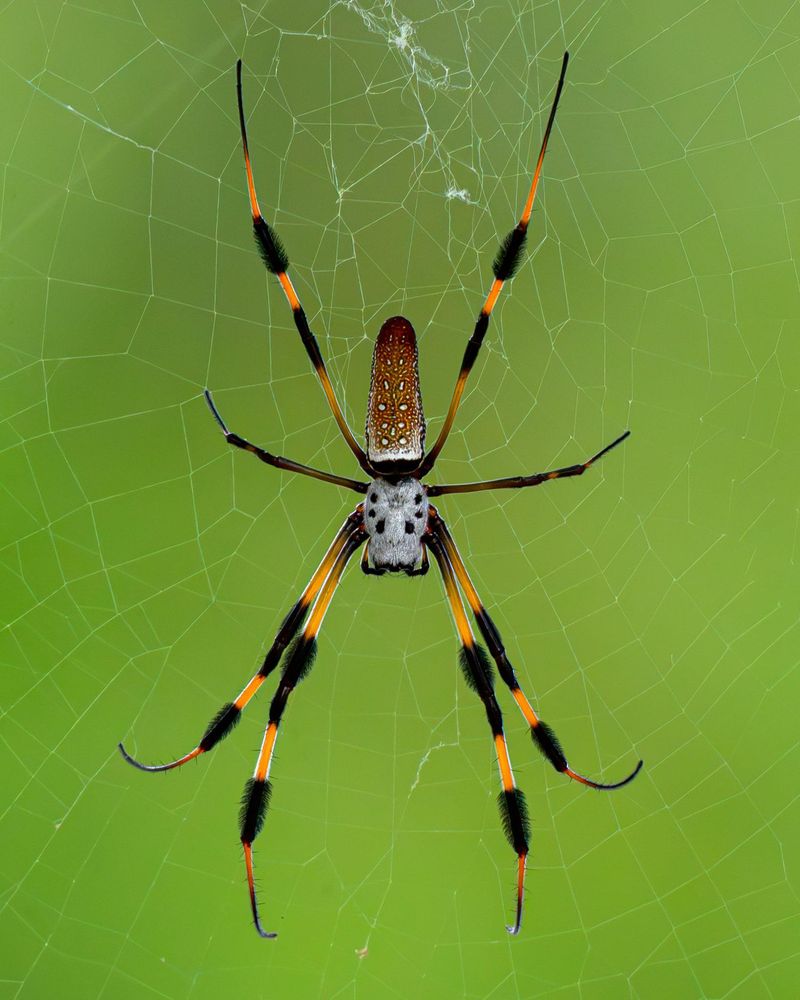
Here is the funny part: those spiders did not suddenly move in. They have been in your yard since spring, just too small to notice.
Golden silk orb-weavers run one generation per year in temperate North America. Their calendar lines up almost perfectly with the end of summer.
Adult males typically show up between July and September. Females reach maturity around August, which is exactly when gardeners start walking face-first into silk.
By early fall, a female has eaten steadily for months and grown to her full size. Bigger body means bigger web, and bigger web means you finally see her.
Mature females hang on well into the fall season. During that stretch, each one builds at least two large egg sacs, and every sac holds several hundred eggs wrapped in curly yellow silk.
Those sacs are built to sit through winter. The spiderlings inside stay protected until warmer spring weather signals them to emerge.
So the autumn spider boom is really just a growth spurt finishing up on schedule. Nothing invaded, and nothing went wrong with your garden.
Once you know the timing, the whole season feels less like an ambush and more like a predictable yearly event you can plan your walking paths around.
4. Leave Helpful Garden Hunters Alone When You Spot Them
Think of her as free labor that never asks for a paycheck. Every insect stuck in that golden web is one fewer chewing on your tomatoes.
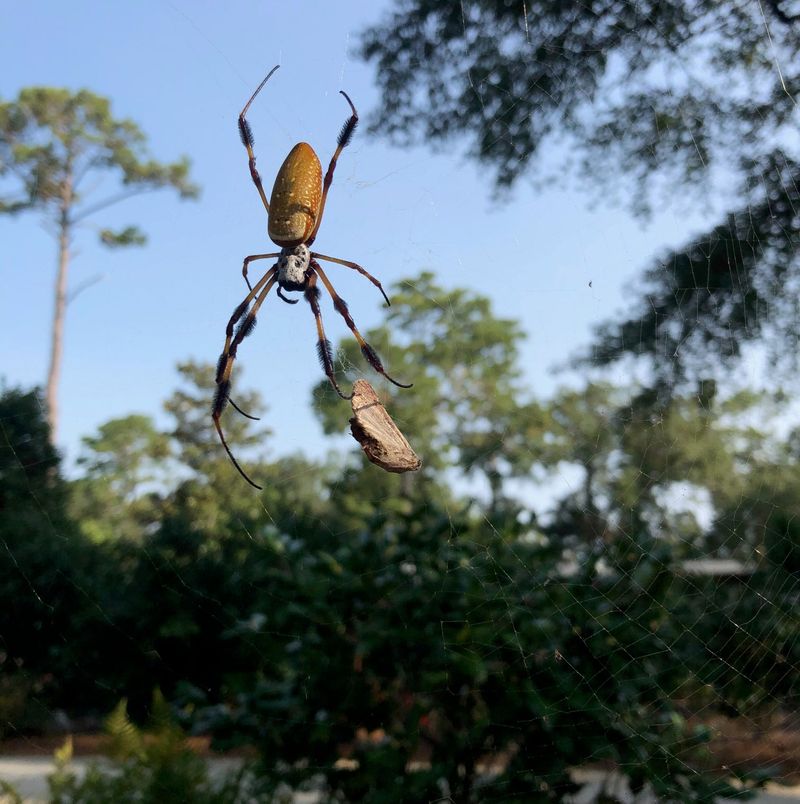
Golden silk orb-weavers eat an impressively long list of flying insects. They capture a wide range of flying insects, including flies, moths, beetles, and other insects that become trapped in their webs.
The menu keeps going with crickets, grasshoppers, locusts, stinkbugs, and leaf-footed bugs. Any Florida gardener who has watched stinkbugs ruin a tomato crop knows exactly how useful that is.
Her size lets her handle prey that would overwhelm a smaller spider. Insects considerably larger than she is still end up on the dinner list.
Multiply that by every web in your yard and the numbers add up quickly. A single female can clear out hundreds of insects over a season.
That steady work helps keep bug populations balanced instead of exploding. Gardens with healthy predator populations usually need less intervention overall.
So when you spot one strung up between the hibiscus and the mailbox, the smartest move is often to walk around her. Mark the spot with a stake if the web crosses a path you use daily.
She will keep hunting, you will keep your harvest, and everybody comes out ahead.
5. Look For Their Large Webs Near Plants And Trees
The web might be more impressive than the spider. Sunlight hits the silk and the whole structure lights up like someone strung a hoop of brass thread between your trees.
Size alone makes these webs memorable. The circular orb regularly exceeds 3 feet across, and some reach roughly 6.5 feet, with anchor strands running even farther to nearby branches.
The golden color comes from pigments in the silk itself. Researchers think that color may help attract bees in bright light while blending into shadow in shaded spots, which is a clever trick either way.
Placement follows the bugs. Open woods, forest edges, gaps between trees and shrubs, garden beds, and yard corners all serve as prime web sites.
They will also build between utility lines, fence posts, porch railings, and other structures we put up. If flying insects travel a route, a web may appear across it.
Scan at eye level and slightly above when you head outside in fall. Morning dew or low-angle sun makes strands much easier to see.
Carrying a long-handled tool ahead of you on overgrown paths saves you a face full of silk. A little awareness keeps both you and the architect undisturbed.
6. Know The Difference Between Banana Spiders And Dangerous Species
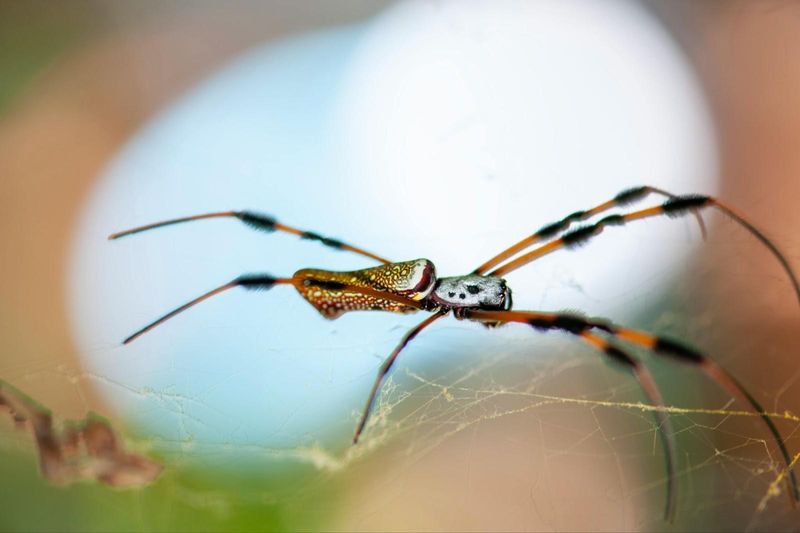
Big does not equal dangerous. Despite the dramatic appearance, golden silk orb-weavers pose very little risk to people.
Their venom has very low toxicity for humans. A bite generally causes less trouble than a bee sting, with localized pain and mild redness that fades quickly.
They are not aggressive either. Bites happen mainly when a spider gets handled, pinched, or accidentally squished, and a disturbed one usually drops from the web or retreats.
Florida does have spiders worth respecting. The Southern black widow is glossy black with a red hourglass on her underside, and her venom is highly toxic, so a bite calls for prompt medical care.
The brown widow runs tan to dark brown with an orange or yellow hourglass. Her spiky, tufted egg sacs make her easy to identify around garages and patio furniture.
Another lookalike gets confused with the banana spider constantly. The yellow garden spider, Argiope aurantia, has a black abdomen with bright symmetrical yellow patches.
She also weaves a bold zigzag ribbon through the center of her web, called a stabilimentum. That pattern is her signature, and she is harmless to people too.
Learning those few markings takes minutes and saves a lot of unnecessary alarm.
7. Protect These Natural Pest Controllers In Your Yard
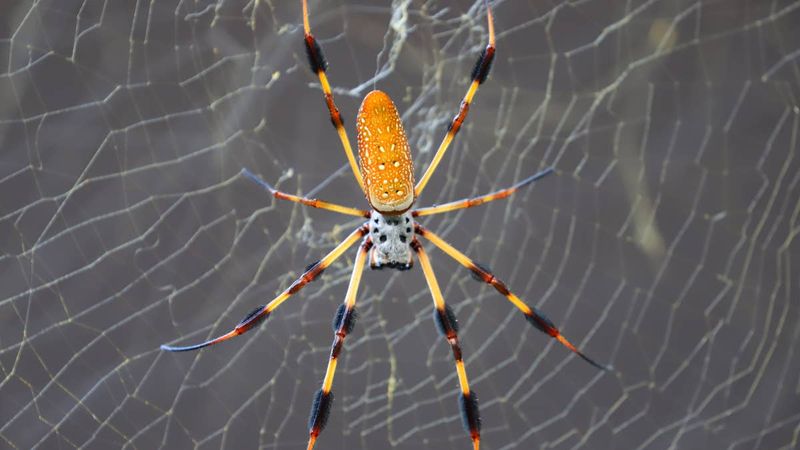
Growers figured this out long before backyard gardeners did. Orange and pecan farmers have quietly appreciated these spiders for generations because they guard the harvest for free.
Golden silk orb-weavers sit high on the list of beneficial garden residents. They manage insect numbers all season without any input from you.
Because they are harmless and helpful, control measures are generally unnecessary. Reaching for sprays or knocking down every web usually removes an ally and does nothing for your actual pest problem.
Broad insecticides make the situation worse in a roundabout way. They reduce the predator population along with the pests, and pests tend to bounce back faster.
Give the spiders a few good spots instead. Shrubs, trellises, fence lines, and unmowed corners give them anchor points for those wide webs.
Leaving a patch of the yard slightly wild supports the whole food chain. More insects means more spiders, and more spiders means fewer insects chewing on your beds.
If you have kids, turn it into a project. Watching a female rebuild her web or wrap a grasshopper beats most nature documentaries.
A yard that welcomes its resident hunters tends to stay in better balance with far less effort from the gardener.
8. Avoid Mistakes When Cleaning Up Fall Garden Webs
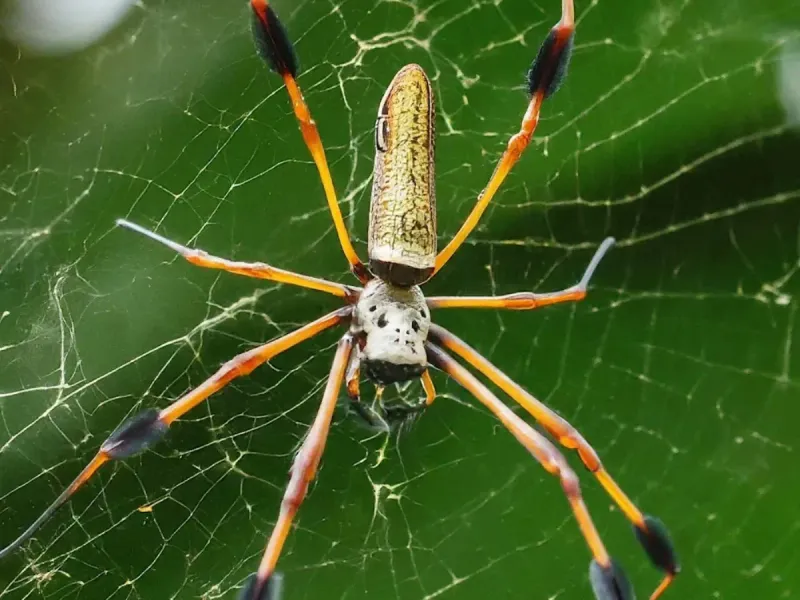
Fall cleanup season sends a lot of webs to the compost pile unnecessarily. A little patience usually solves the problem better than a rake does.
Caution and minimal disturbance work best when you run into a big golden web. Most of the time the spider is not actually in your way once you notice where she sits.
Sometimes a web really does block a doorway or a walkway. In that case, carefully relocating both the spider and her web to a better outdoor spot is the recommended approach.
A long stick or a piece of cardboard lets you move her without contact. She tends to stay within her web rather than running toward you.
These spiders are not aggressive, so slow movements keep things calm for everyone involved. Rushing is what leads to pinched spiders and defensive bites.
Their silk is remarkably strong and durable, which is part of what makes these webs so effective. She may repair sections nightly or rebuild the whole structure over a few nights.
Constant knocking down interrupts her pest-catching work and forces her to spend energy rebuilding. Pick your battles, clear only what genuinely blocks your path, and leave the rest standing through the season.
9. Enjoy A Healthier Garden With These Spider Allies
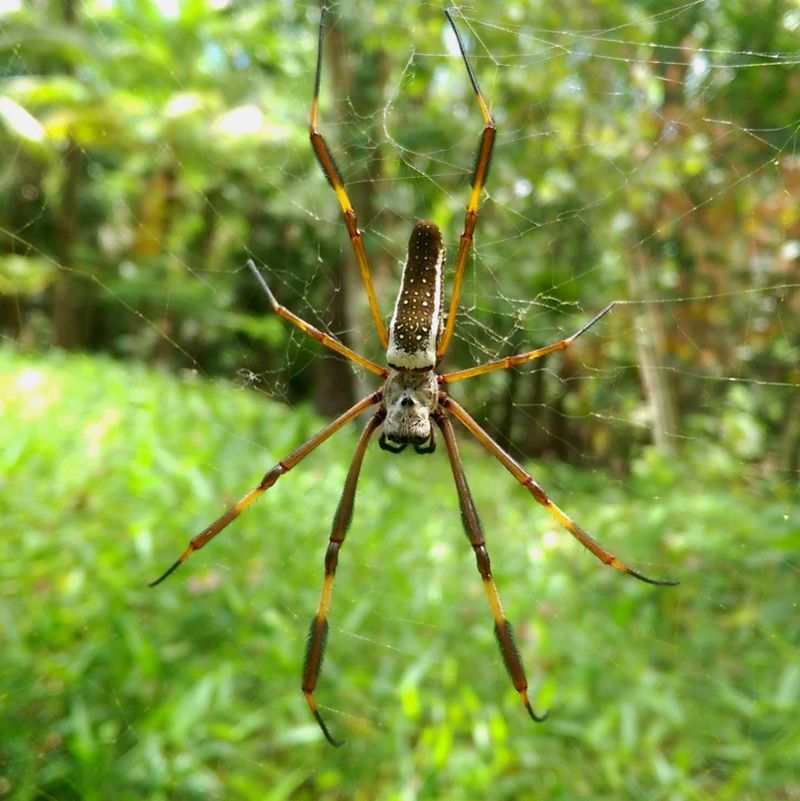
Ask any longtime Florida gardener about their best season and you will usually hear about balance, not bug spray. Spiders play a quiet part in that story.
Golden silk orb-weavers deliver steady, round-the-clock pest management. Every night they reset their traps and go back to work on insects that would otherwise chew through leaves and fruit.
That constant pressure adds up across a whole yard. Fewer moths means fewer caterpillars, and fewer grasshoppers means less damage to tender new growth.
Welcoming these arachnids also reduces how much you lean on other pest management methods. Less spraying saves money and keeps pollinators safer.
There is a bonus most people overlook. A garden full of predators, birds, and pollinators simply feels more alive, and it gives you something new to notice each morning.
Try shifting how you see that giant in the golden web. She is not an intruder, she is a seasonal tenant who pays rent in pest control.
Point her out to neighbors and you might change a few minds about autumn spiders. Fun fact worth sharing: people once experimented with weaving fabric from golden orb-weaver silk, and the shimmering results were genuinely spectacular.
Let her stay, and your garden reaps the benefit.