The Invasive Tree Quietly Spreading Spotted Lanternfly Through North Carolina Yards And What To Plant Instead
Walk your fence line on a muggy Piedmont afternoon and you might spot a fast-growing volunteer tree with enormous feathery leaves that nobody planted. That tree could be Ailanthus altissima, commonly called tree-of-heaven, and it is one of the invasive plants most strongly associated with spotted lanternfly in North Carolina. Understanding why it matters, how to confirm what you actually have, and what to do next can make a real difference for your yard and your neighbors. You do not need to panic, but you do need a plan.
The Preferred Host Hiding In Plain Sight
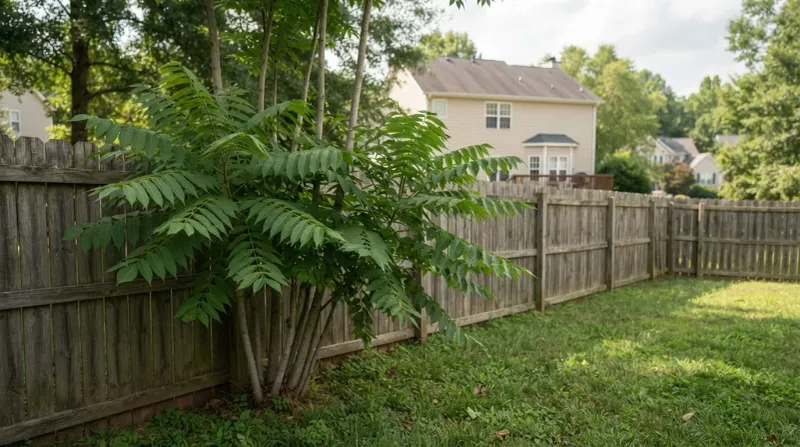
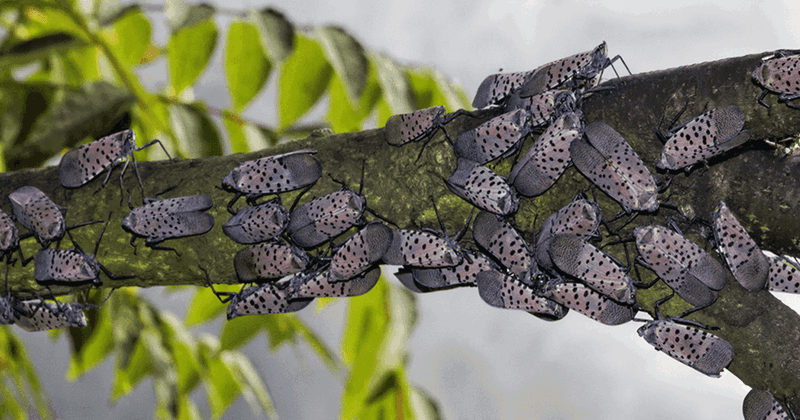
Somewhere between your back fence and the road, a tree you never planted is probably putting on a foot of growth every few weeks. That volunteer could be tree-of-heaven, Ailanthus altissima, and while it does not carry or move spotted lanternfly the way a truck carries cargo, it is the plant that late-stage nymphs and adults strongly prefer when they are feeding in your yard. Think of it less as a vehicle for the insect and more as the restaurant those insects keep coming back to.
When a tree-of-heaven is heavily infested, you will often notice sticky honeydew dripping from the canopy and a black sooty mold coating surfaces underneath. That mold can foul patio furniture, a car hood, or a grill cover in a matter of days. The presence of tree-of-heaven in your yard gives you a useful place to check first if you suspect spotted lanternfly, but it is not proof the insect is there, and its absence does not mean the insect is gone.
According to NC State Extension’s tree-of-heaven profile, the tree turns up most often along roadsides, vacant lots, cracks in pavement, disturbed soil, and fence lines across the state. That description covers a lot of North Carolina backyards, but prevalence is not the same as certainty. A roadside volunteer is not automatically tree-of-heaven, so resist the urge to reach for a saw until you have actually confirmed what you are looking at. Inspect first, remove only after the identification is solid.
Why Tree-Of-Heaven Matters—And Why It Is Not The Whole Problem
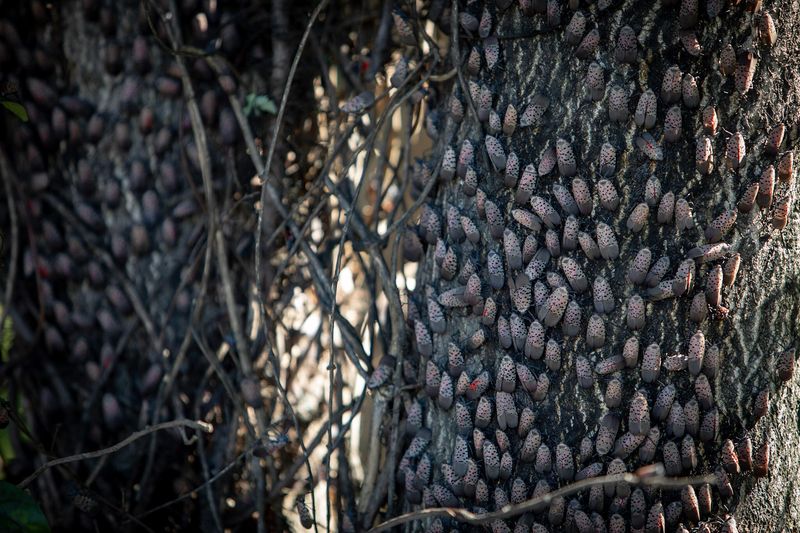
Spotted lanternfly has a surprisingly long guest list. Adults have been documented feeding on grapes, apples, stone fruits, maple, walnut, willow, oak, birch, sycamore, dogwood, and dozens of other plants. NC State Extension confirms that the insect can complete its full development and reproduce without ever touching tree-of-heaven. So calling tree-of-heaven the cause of an infestation misses the bigger picture.
What is accurate is that tree-of-heaven is a preferred host, especially for late nymphs and adults. That preference makes it a reliable place to look for signs of the insect. Removing it can eliminate an important food source and reduce the honeydew and mold problem beneath a heavily infested tree. But adults can fly in from a neighbor’s yard and settle on your grapevines or maples whether or not you have tree-of-heaven on your property.
North Carolina’s situation is real but still developing. The February 10, 2026 NCDA&CS press release confirmed established spotted-lanternfly populations in seven counties: Forsyth, Guilford, Rockingham, Caldwell, Caswell, Davidson, and Rowan. If you live outside those counties, the insect may not yet be established near you, though that picture can change. And even within those counties, established populations do not mean every yard is infested.
Your North Carolina Garden Changes Every Week. Your Plan Should Too.
Gardening in North Carolina changes quickly throughout the season. Every Friday you’ll receive a simple weekly plan showing exactly what to plant, prune, fertilize, harvest, and protect so you never miss the right timing.
Penn State Extension’s guidance for landscape professionals is direct on this point: host removal alone is unlikely to consistently reduce spotted-lanternfly numbers because adults move freely across property lines.
Check The Leaves Before You Reach For A Saw

Plenty of North Carolina trees have big compound leaves, and grabbing the wrong one for removal is a real possibility on a hot Saturday afternoon. Black walnut, staghorn sumac, and elderberry can all fool a quick glance. Getting the identification right before you do anything else protects both you and the tree you might actually want to keep.
NC State Extension’s identification guide describes tree-of-heaven leaves as compound, commonly 2 to 4 feet long, with roughly 10 to 40 leaflets arranged along a central stem. The key detail is in those leaflet edges: they are mostly smooth with only one or two blunt teeth near the base, unlike black walnut or sumac, which have more obvious serrations running the full length of each leaflet. Look for a small rounded gland on the underside near each leaflet’s base, a feature that is almost diagnostic once you know to check for it.
The odor test adds a supporting clue. Crush a leaf or snap a small stem and take a sniff. Many people describe it as rancid peanut butter or something close to burnt rubber. That smell is distinctive, but treat it as a confirmation rather than a stand-alone test because odor perception varies and conditions matter.
Tree-of-heaven also grows fast enough to reach 80 feet and produces clusters of winged seeds called samaras that spin down like helicopter seeds in late summer. Confirming all of these features together, the leaf size, the smooth-edged leaflets with basal glands, the odor, and the growth habit, gives you a reliable identification before a mature tree comes down.
Cutting It Down Can Trigger A New Thicket
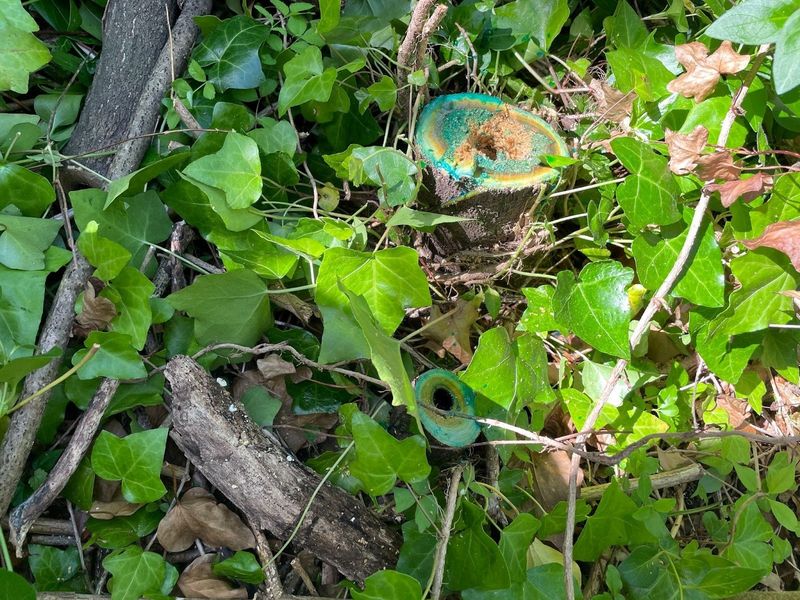
Here is where it gets tricky. Cut a mature tree-of-heaven in July and walk away, and you may come back in August to find a ring of fast-growing sprouts circling the stump, plus new shoots popping up from the root system 10 or 15 feet away. The tree has a biological strategy that turns cutting into a signal to multiply, and a single established specimen can produce dozens of new stems from one removal attempt gone wrong.
Very young seedlings, those pencil-thin sprouts that appear in spring, can be pulled by hand as long as you get the entire root system out. Anything with a trunk thicker than your thumb needs a different approach. NC State Extension recommends treating the stump with an appropriate herbicide such as triclopyr immediately after cutting, and notes that glyphosate or triclopyr applications are options for larger trees as well. The product label is the legal document that governs how, when, and where you apply any pesticide, and North Carolina law requires following it exactly.
For a large tree, one near a structure, a power line, or a septic field, the right call is a licensed arborist or a certified pesticide professional. They have access to basal-bark, hack-and-squirt, and foliar treatments that require equipment and training most homeowners do not have. University of Maryland Extension notes that systemic treatments tend to work best from roughly July until autumn leaf color begins, when the tree moves carbohydrates toward its roots, and that waiting about a month after treatment before cutting can reduce the chance of regrowth. That timing is useful general context, not a substitute for what the product label says or what a professional recommends for your specific site.
Plan for follow-up monitoring over at least one full growing season after any removal attempt.
Look For Lanternfly Eggs On More Than Trees
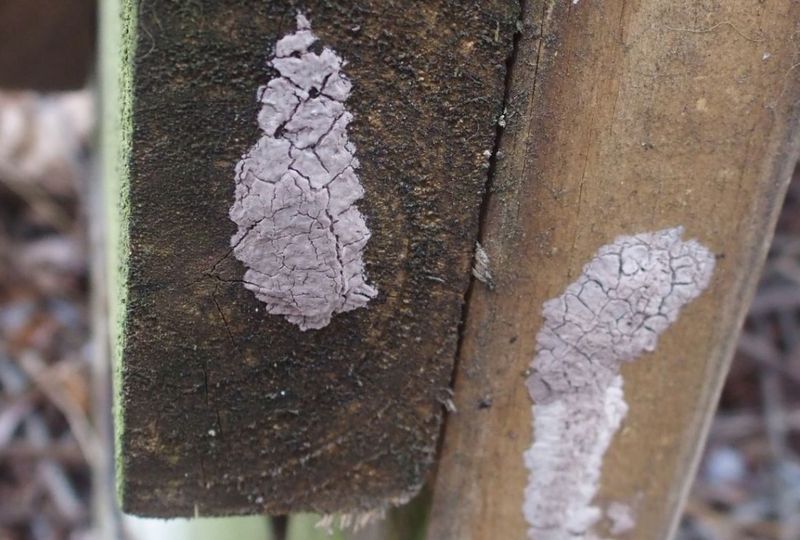
Removing tree-of-heaven from your yard is a good step, but spotted lanternfly does not limit its egg-laying to tree bark. Females deposit egg masses on almost any smooth surface they can find, and that list is longer than most people expect.
An egg mass looks like a patch of cracked gray or brown mud, roughly 1 inch long, and typically contains about 30 to 50 eggs covered in a waxy coating. USDA APHIS confirms that females lay them on bark, bricks, stones, outdoor grills, vehicles, lawn chairs, children’s toys, patio tables, and equipment left outside. Check the underside of your trailer hitch, the legs of your smoker, and the back of any decorative stone in your landscape, especially from late September through early spring when eggs are the life stage most likely to be present.
If you spot something suspicious outside an already known infested area, photograph it with a size reference like a quarter or a pen, note the date and exact location, and report it to NCDA&CS through their spotted-lanternfly reporting page. Early reports genuinely help the state track where the insect is spreading.
If you find an egg mass and want to destroy it, USDA recommends scraping it into a sealed plastic bag containing hand sanitizer or rubbing alcohol, then disposing of the bag in the trash. Before you move any outdoor item, vehicle, or equipment out of an infested county, USDA guidance on cleaning outdoor items walks through exactly what to inspect and how to do it. That one habit, checking before you move things, is one of the most practical ways any homeowner can slow the insect’s spread across North Carolina.
Plant Black Gum For A Better Native Yard
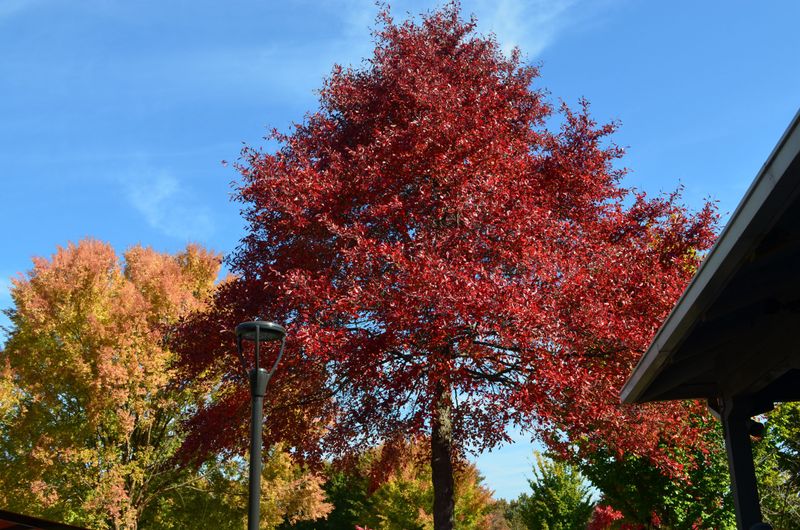
Once tree-of-heaven is out, or while you are still working on it, the space it occupied deserves something that actually belongs in a North Carolina yard. Black gum, also called black tupelo, Nyssa sylvatica, is the single native replacement worth focusing on here. It grows across the mountains, Piedmont, and Coastal Plain, tolerates clay, loam, and sand, handles occasional drought, wet feet, summer heat, wind, and even coastal salt spray. That range of tolerance makes it genuinely useful from Asheville to Wilmington.
According to NC State’s plant database, black gum suits planting spaces ranging from 12 to 24 feet wide and 24 to 60 feet tall in full sun. In cultivation it commonly reaches about 20 to 30 feet, though it can grow taller over time. It is slow-growing and develops a long taproot early, so pick its permanent location carefully and plant it once. Moving an established black gum is genuinely difficult and rarely successful.
The seasonal rewards are real. Summer brings glossy dark green foliage that holds color well through the heat. Female trees produce small blue-black fruit that birds, including thrushes, bluebirds, and warblers, actively seek in fall. And the fall color, a saturated scarlet that arrives before most other trees turn, is among the best of any native tree in the state.
NC State Extension’s native landscaping guide lists black gum as a wildlife-friendly choice, and bees work its small spring flowers reliably.
One honest note: NC State includes black gum on its spotted-lanternfly host plant list, so it is not a repellent and it carries no guarantee against the insect. Plant it because it is a noninvasive, site-adapted, wildlife-supporting native that improves your yard’s long-term health, not because it keeps lanternfly away.
Skip Shortcuts And Build A Layered Plan
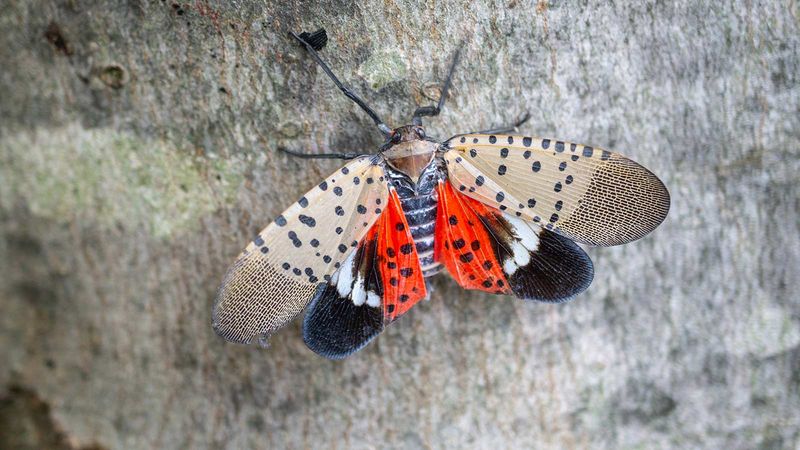
A yard free of every spotted lanternfly is not a realistic goal, and any product or recipe that promises otherwise is not being straight with you. What is realistic is a layered approach that reduces preferred hosts, keeps you informed, and avoids making the situation worse with shortcuts that can harm the yard you are trying to protect.
The sequence looks like this: confirm the identification of any suspected tree-of-heaven before touching it, pull young seedlings completely when the soil is moist, and hire qualified help for any established tree near a structure or utility line. Monitor all outdoor surfaces for egg masses from fall through early spring and report anything suspicious outside a known infested area to NCDA&CS. Keep an eye on your grapevines, maples, and walnuts as well, because spotted lanternfly uses those plants too.
On home remedies: dish soap, vinegar, salt, essential oils, garlic sprays, chili sprays, and milkweed planted as a repellent all fall into the same category. Penn State Extension is clear that these are unsupported, potentially harmful to people, pets, plants, and wildlife, and may violate pesticide law when used contrary to a product label. Skip them.
Broad insecticide spraying across your landscape without a confirmed identification, label compliance, and a plan to protect pollinators and nearby water is also a path to avoid. If you want to use a sticky band trap on a tree, Penn State’s management guide requires a narrow band, a wildlife barrier to protect birds and small animals, and daily checks. A circle trap, described in detail by Penn State’s wildlife-barrier guidance, is a less risky option in many settings.
Black gum in the spot where tree-of-heaven stood is a durable, wildlife-supporting improvement that will outlast the current pest pressure by decades. That is not a small thing, it is the kind of yard that earns a second look every fall when the leaves turn red.