The Invasive Vine Michigan Homeowners Miss Until It Starts Pulling Down Young Trees
A young Michigan tree can start losing its shape long before anything in the yard looks obviously wrong.
One season, the trunk stands straight and the lower branches seem open. Later, a woody strand appears where two stems meet, a branch begins leaning sideways, and the canopy carries more weight than it did before.
The change can look gradual enough to ignore until a storm makes the problem impossible to miss.
Something has been climbing the whole time.
The earliest clues are not dramatic flowers, damaged leaves, or a sudden patch of bare bark. They appear in the way a stem twists, where new growth travels, and how tightly it begins using nearby plants as support.
So what deserves a closer look before a young tree starts carrying a load it never grew to hold?
The answer becomes much easier to spot once you know where to look. A few details along the vine, its fruit, and the host tree can expose the problem while removal is still manageable nearby.
Identify Oriental Bittersweet Before Fall Fruit
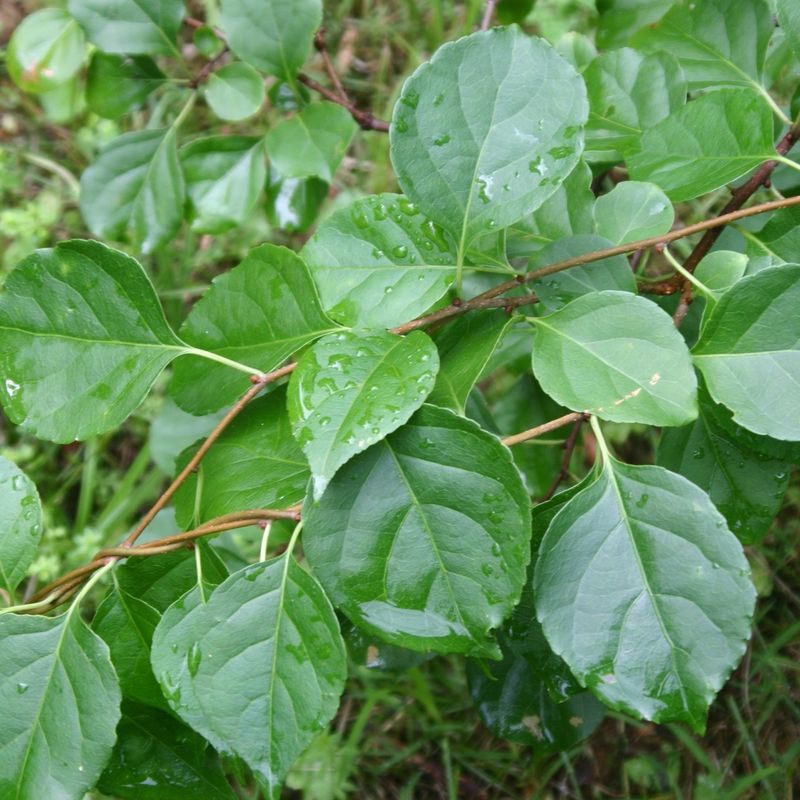
Oriental bittersweet, Celastrus orbiculatus, can hide in plain sight while its stems are still thin.
The leaves are alternate and finely toothed, but their shape varies from rounded to more tapered forms. That variation matters because one leaf is not enough for a confident identification.
Look at the whole vine instead: green new growth, older brown-to-gray woody stems, and a twining habit that sends the plant around nearby supports.
Flowers offer another clue in late spring.
Small greenish-yellow blooms appear along the stem at leaf axils rather than only at the tip. They are easy to overlook, which is exactly why summer identification should rely on several features together.
The vine can eventually climb roughly 60 feet, so catching a young plant near ground level is far easier than dealing with a mature tangle spread through a canopy.
Walk woodland edges, hedgerows, fence lines, and the margins of young tree plantings. Those are common places for new vines to establish.
Do not wait for autumn color to make the identification obvious.
A thin woody stem spiraling through shrubs in June deserves the same attention as a fruit-covered vine in October.
Early recognition means fewer branches involved, less root mass underground, and a much smaller removal job before the vine turns a sapling into its climbing frame.
Look For Vines Twining Around Young Trunks
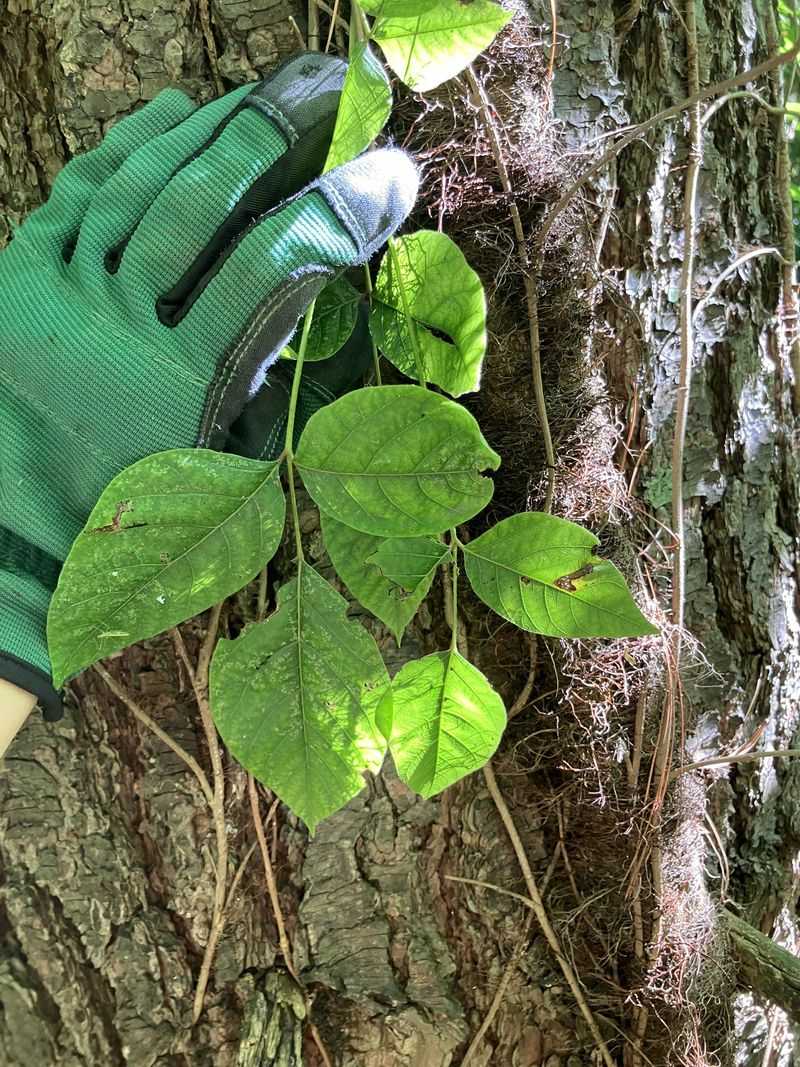
The spiral around a young trunk is the clue that deserves immediate attention.
Oriental bittersweet climbs by twining. As both vine and tree enlarge, that woody coil can tighten around trunks and branches.
The pressure can restrict normal growth, deform stems, and contribute to girdling. Dense vines also spread into the crown, where their foliage competes for light and their weight adds another load to young branches.
Storms make that extra weight more important.
Wind, wet snow, and ice already test flexible young trees. A canopy threaded with woody vines has more mass and more places for branches to catch and pull against one another.
Your Michigan Garden Changes Every Week. Your Plan Should Too.
Gardening in Michigan changes quickly throughout the season. Every Friday you’ll receive a simple weekly plan showing exactly what to plant, prune, fertilize, harvest, and protect so you never miss the right timing.
Breakage can follow even before the host tree shows obvious long-term decline.
Start inspections at ground level.
Trace every unfamiliar woody vine upward instead of assuming it belongs to the tree. A stem disappearing into the canopy may be easy to ignore from several yards away, while the tight corkscrew pattern near the trunk makes the relationship much clearer.
Young maples, saplings along fence lines, and trees beside unmanaged edges deserve special attention because a fast-climbing vine can use them as direct routes toward stronger light.
The warning sign is not simply “a vine near a tree.”
It is a persistent woody vine wrapping around living support and continuing upward. Catch that pattern while the trunk is still visible, and the tree has a much better chance of keeping its own shape.
Check Where Flowers And Fruit Form
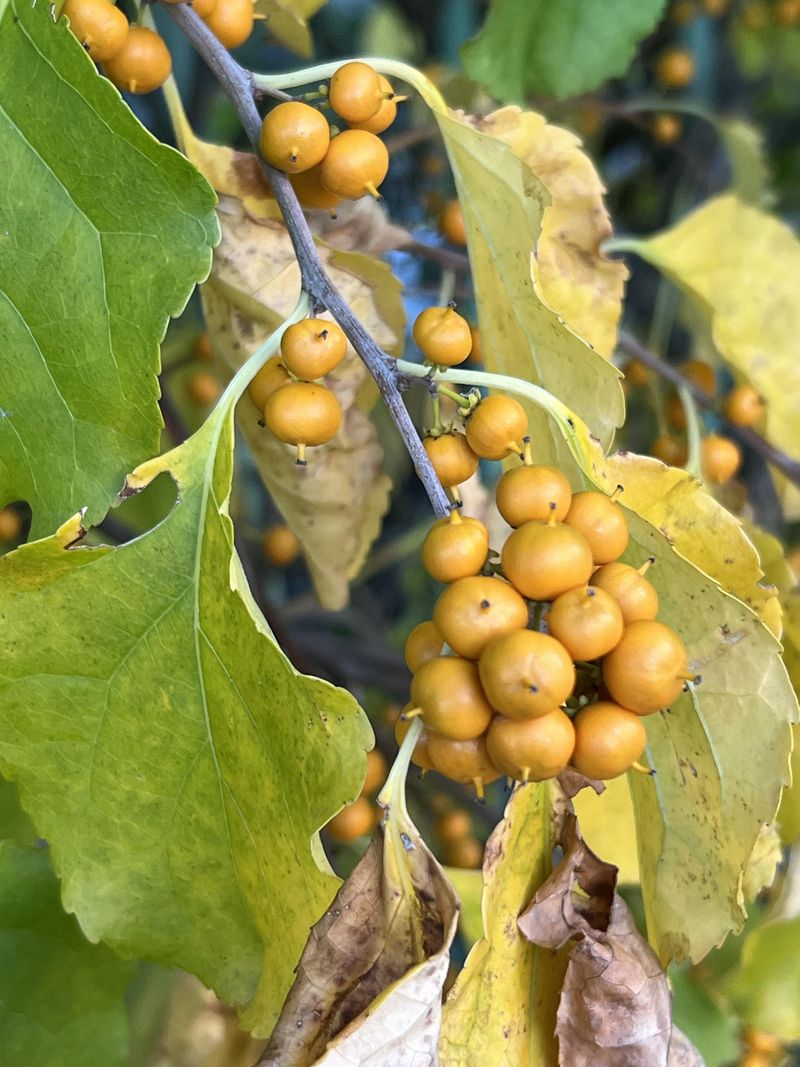
Fall fruit can settle an identification question that summer leaves leave uncertain.
Oriental bittersweet produces flowers and fruit along the stem from the leaf axils. In autumn, yellow outer coverings split to reveal bright red fruit, creating clusters scattered along the vine rather than concentrated only at branch tips.
That placement is one of the strongest field clues.
A fruiting stem with repeated clusters running along its length points toward the invasive species. The pattern also explains why decorative cuttings are such a poor idea.
Berried stems moved for wreaths or porch arrangements can carry viable seed into places the vine had never reached on its own.
Birds and other wildlife spread the seed too.
A vine fruiting beside one backyard fence can become a source for new seedlings elsewhere in the neighborhood, along woodland edges, or beneath perch trees.
Photograph fruiting stems before removal when identification remains uncertain. Include the fruit clusters, several leaves, and enough stem to show where the clusters occur.
Avoid carrying berry-laden vines loosely across the yard.
Seed containment matters once fruit has matured. Keep removed fruiting material together and follow local disposal guidance rather than leaving it in a brush pile.
The autumn display may look ornamental, but it is also the plant’s distribution system.
By the time those yellow capsules open, the vine is no longer just climbing one tree. It is preparing the next round.
Separate It From Native American Bittersweet
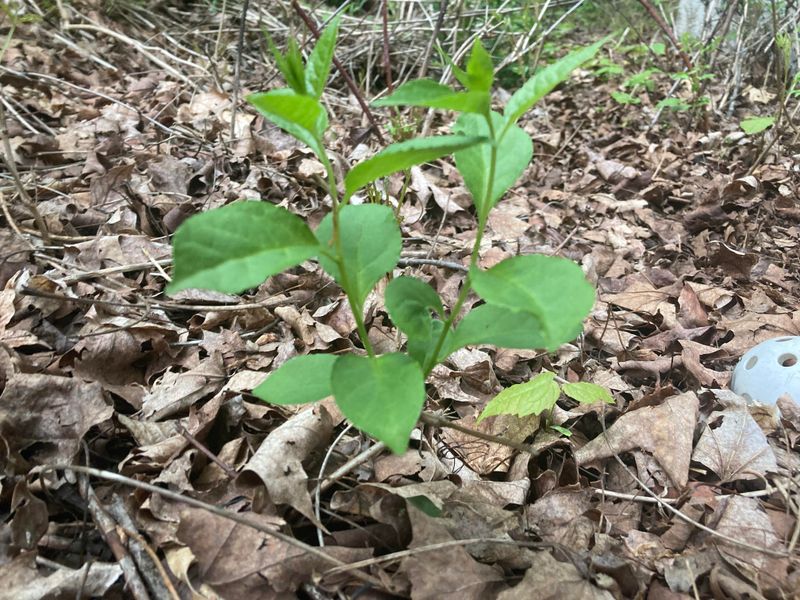
Michigan has a native look-alike, and that makes careful identification more than a botanical detail.
American bittersweet, Celastrus scandens, is native and protected in Michigan. Its fruit and flowers are concentrated at the ends of branches, while Oriental bittersweet carries them along the stem in leaf axils.
That difference is more dependable than judging one leaf.
Leaf shape can still support the call.
American bittersweet generally has more elliptical leaves, while the invasive vine often shows rounder leaves. Both species vary, so leaf shape should stay a supporting clue rather than the entire diagnosis.
Fruit placement deserves the most weight when fruit is present.
Look across several branches. Terminal clusters support American bittersweet. Numerous clusters spaced along the vine support Oriental bittersweet.
Hybridization and variable plant features can make difficult specimens less tidy than a field guide illustration.
A clear photo and a second opinion are sensible before removing an uncertain vine, especially in a natural area or woodland edge where native bittersweet may occur.
Do not use overall vine thickness as the deciding feature.
Age and growing conditions change stem diameter, and both species become woody.
The goal is not removing every bittersweet-looking vine.
It is removing the invasive species without sacrificing a protected native look-alike. A few extra minutes spent checking fruit placement can prevent the kind of cleanup mistake that creates a different ecological problem.
Cut Climbing Vines Before They Add More Weight
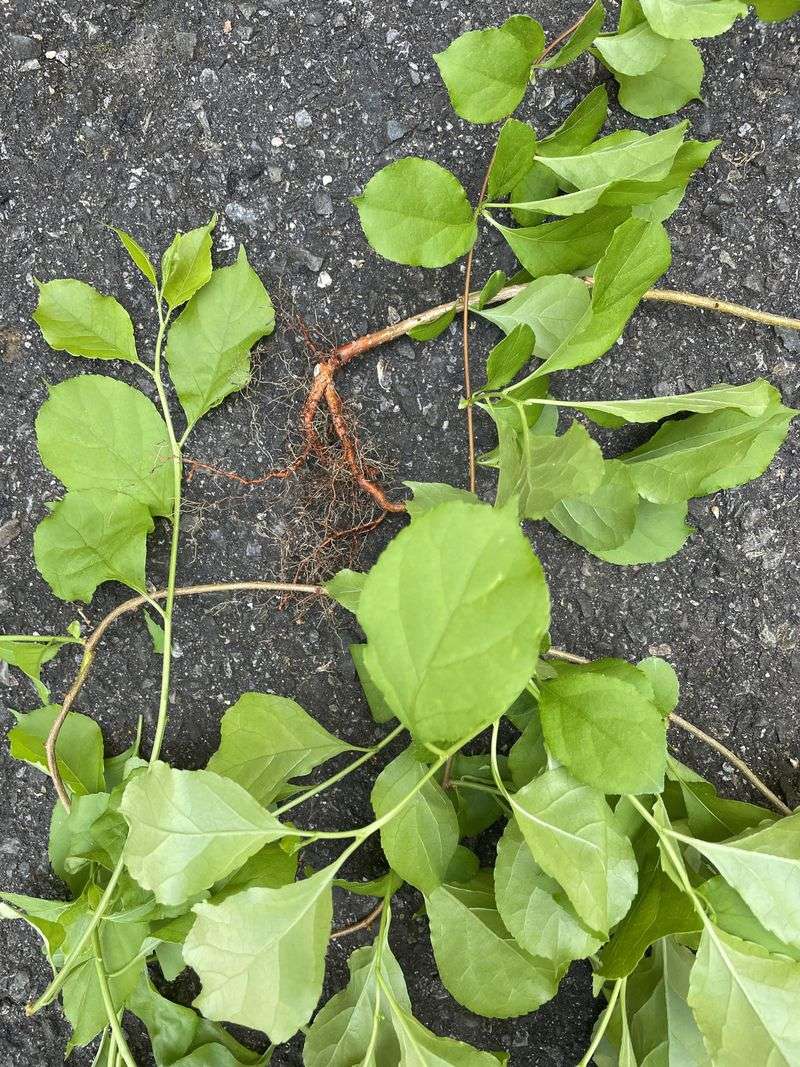
Once a confirmed Oriental bittersweet vine has climbed into a tree, the safest first move is usually to sever its connection to the roots.
Cut the vine near ground level with hand pruners, loppers, or a saw sized for the stem. A second cut several feet higher can create a visible gap and make future inspection easier. The upper vine can remain in the canopy while it dries.
Mechanical guidance calls for severing climbing stems near the root crown rather than leaving them connected underground.
Do not yank a heavy live vine from overhead branches.
Twined stems can be wrapped tightly around small limbs, and pulling from below may break branches or send woody debris downward. A ladder adds another hazard when the vine is high in the canopy.
Let time loosen the upper growth.
Once the climbing section is no longer supplied by the root system, foliage fades and the woody vine becomes easier to assess.
Some material may remain tangled for a long period, and that is less urgent than protecting the tree from fresh growth below.
The root crown still matters.
Cutting alone commonly triggers resprouting, so mark the location and return to it. A bright flag, stake, or note on a garden map prevents one severed vine from disappearing beneath summer vegetation.
Large trees carrying extensive vine loads may deserve professional help.
The goal is to remove pressure without creating a new branch hazard. Cutting the connection first does that quietly. Ripping the whole canopy apart in one afternoon can turn a plant-control job into an arborist appointment.
Pull Small Root Systems When Practical
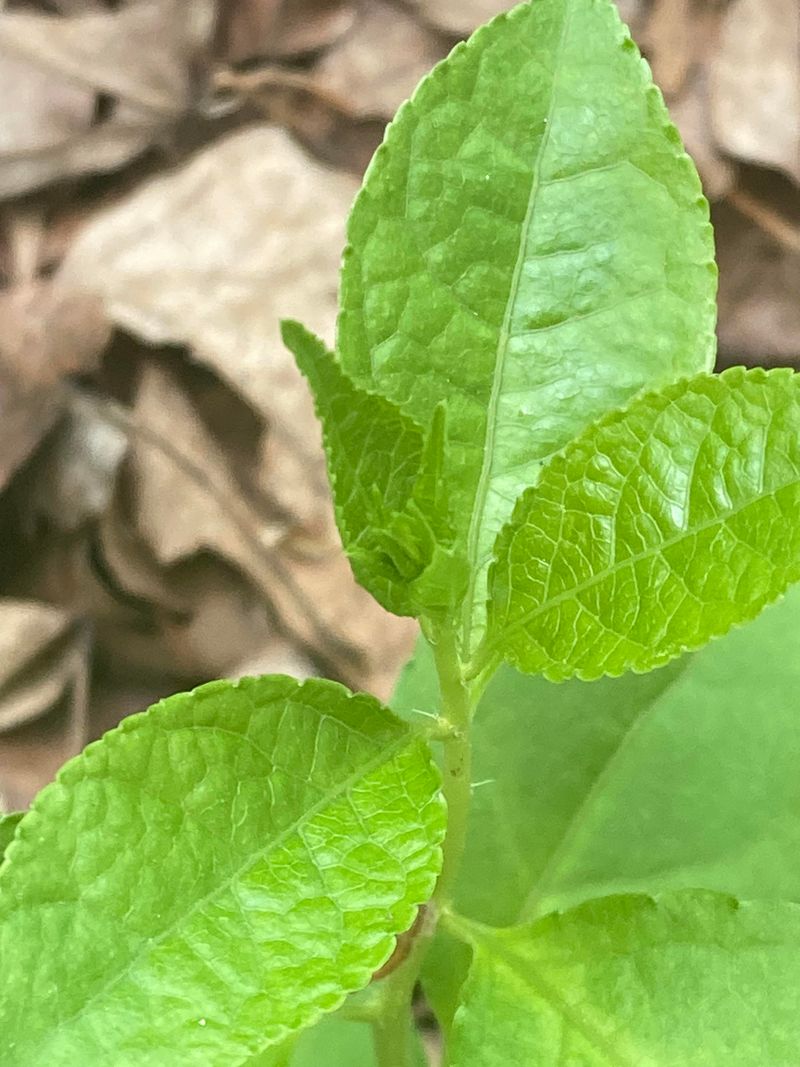
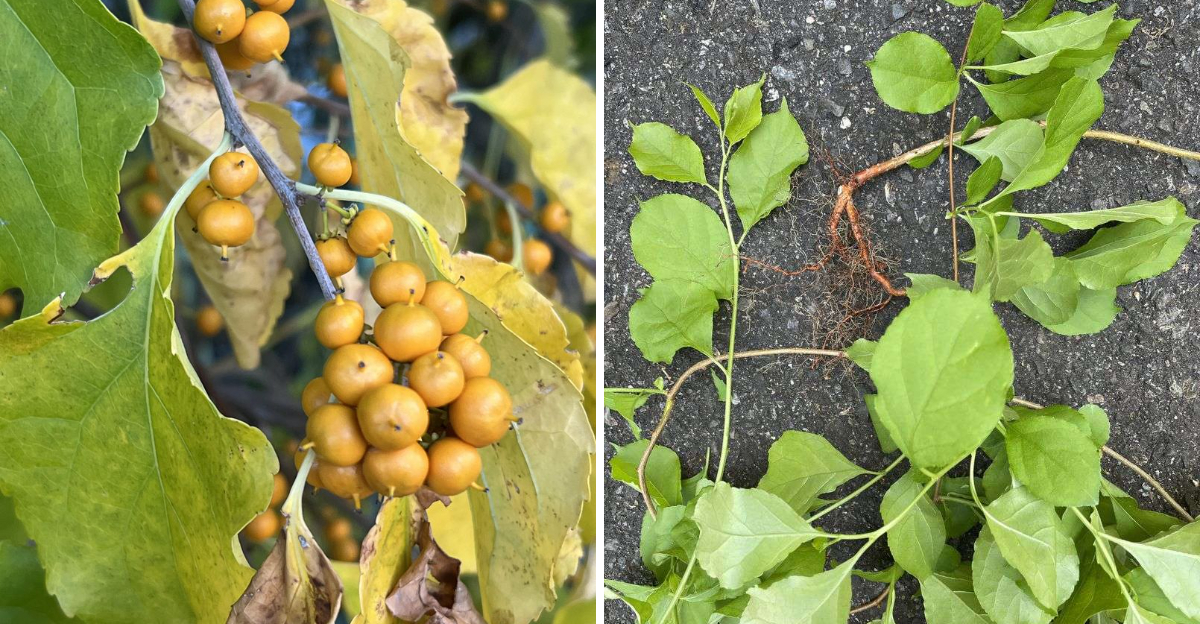
Small seedlings and young vines are the stage where hand removal has the biggest advantage.
Moist soil makes the job easier because roots release with less snapping. Grip the plant near the base, loosen the surrounding ground with a hand fork or trowel, and work the root crown upward with steady pressure.
Aim for the entire root system.
Oriental bittersweet can resprout from roots left behind, so a quick tug that breaks the stem at soil level may only reset the clock. Follow larger roots where practical and remove obvious fragments from the planting hole.
Avoid broad tilling around an infestation.
Disturbing a large patch of soil can damage desirable roots, expose more bare ground, and create an inviting seedbed for whatever arrives next. Targeted digging is usually cleaner around shrubs and young trees.
Move pulled plants off the soil.
Fresh stems and roots left in contact with moist ground can remain a regeneration risk. Bagging or otherwise containing removed material keeps the cleanup from becoming another propagation method.
Young plants are also easier to identify and remove before they reach a support.
A seedling beside a fence may look harmless in May and reach a shrub by late summer. Regular patrols around property edges catch that stage before woody stems form.
Mechanical removal works best when it is complete and repeated.
One small root missed underground is annoying. One small vine ignored aboveground can become a much larger project with excellent climbing ambitions.