The Invasive Vines Taking Over Georgia Fences And Trees Right Now
Not every change in a yard happens because someone planted something new. Sometimes the biggest changes come from plants that were never supposed to take over in the first place.
They start quietly, blend into the background, and seem harmless for a long time. Then one season you notice a tree looking more crowded than it used to.
A fence is harder to see. Parts of the landscape look different, but it is difficult to pinpoint exactly when it happened.
That is what makes aggressive vines so frustrating. They do not announce themselves with colorful flowers or dramatic growth overnight.
They slowly work their way into places where they do not belong and keep spreading while attention is focused elsewhere.
This has become a growing concern in Georgia, where several invasive vines are expanding rapidly during the warm months.
Left unchecked, they can overwhelm fences, trees, shrubs, and natural areas before people realize how much ground they have covered.
Understanding which vines are causing the most trouble is the first step toward keeping them under control.
1. Kudzu Smothers Trees And Shrubs
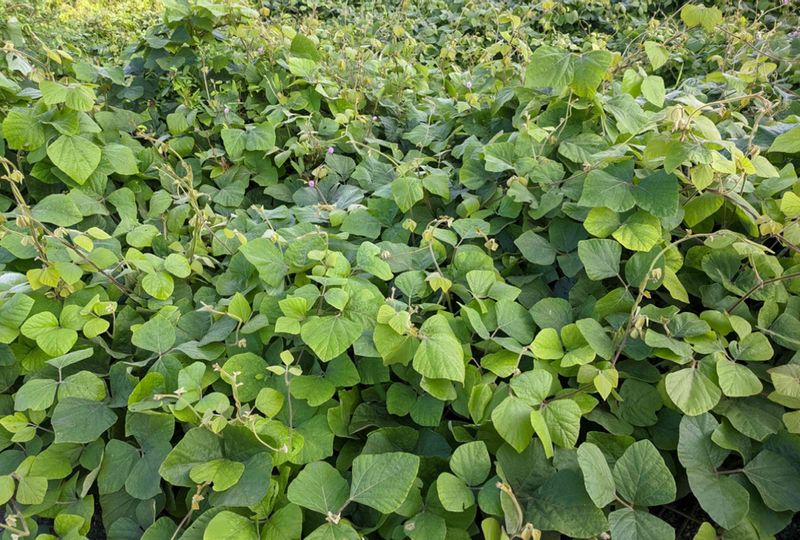
Few plants in the American South carry a reputation as fierce as kudzu. Brought over from Japan in the 1800s for erosion control, it quickly became one of the most aggressive vines on the continent.
Kudzu can grow up to a foot per day during warm months. It blankets everything underneath it, blocking sunlight completely from trees, shrubs, and fences.
Once it takes hold, removal is a serious challenge. Roots can reach several feet deep, storing energy that keeps the plant coming back season after season.
Pulling vines by hand works for small patches. Repeated cutting at the base over multiple growing seasons can weaken established plants significantly.
Goats are sometimes used to graze kudzu back in rural areas. Persistence matters more than any single method here.
Homeowners dealing with fence coverage should check underneath for structural damage. Kudzu holds moisture against wood and metal, which speeds up rot and rust over time.
Early summer is when growth really explodes. Getting ahead of it before July makes management far more realistic for most people.
Purple flowers appear in late summer and smell faintly like grape candy. That pleasant scent is about the only charming thing kudzu offers at this point.
Kudzu also spreads both by runners and by seed, which means new patches can form even when the main vine is already under control.
2. English Ivy Spreads Beyond Intended Planting Areas
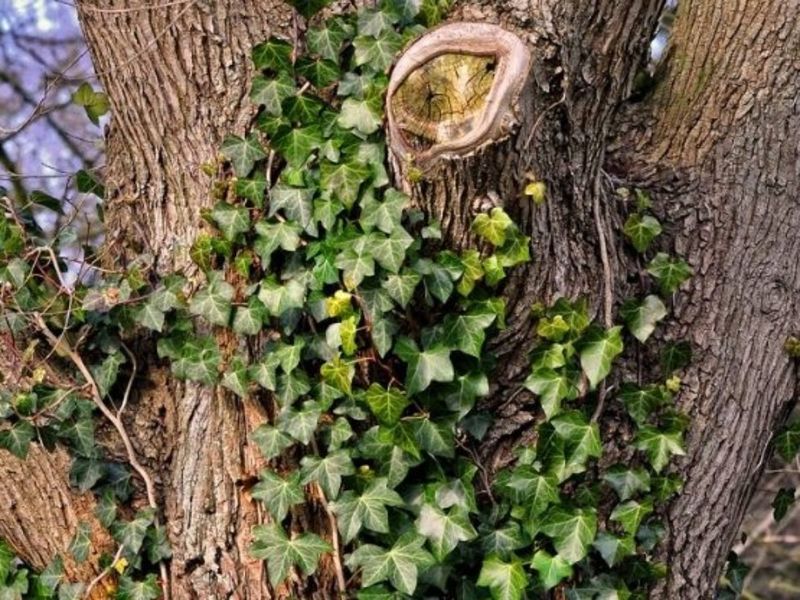
Planted as a tidy ground cover for decades, English ivy has a quiet way of turning into a serious problem before most gardeners notice.
Ground-level spread is steady and dense. Once it reaches a tree trunk, it starts climbing, adding weight and trapping moisture against the bark.
Ivy on tree trunks is sometimes called a “ivy skirt.” That coverage weakens bark integrity and opens the tree up to fungal issues over time.
Removing ivy from a tree takes patience. Cut all stems at the base first and let the upper growth dry out before pulling it away from the bark.
Your Georgia Garden Changes Every Week. Your Plan Should Too.
Gardening in Georgia changes quickly throughout the season. Every Friday you’ll receive a simple weekly plan showing exactly what to plant, prune, fertilize, harvest, and protect so you never miss the right timing.
Never yank living ivy off a tree. The suction-cup-like rootlets can strip bark, causing more damage than the ivy itself.
Ground colonies spread through both runners and bird-dispersed seeds. A patch that looks contained one spring can double in size by fall.
Thick ivy mats also shelter rats and other rodents close to homes. That is a practical reason beyond plant conservation to keep it in check.
New growth can quickly fill in gaps left after partial removal, so consistent follow-up is needed to fully exhaust the root system.
It also competes aggressively with nearby ground plants, often pushing out native species that normally help stabilize shaded soil.
3. Chinese Wisteria Overtakes Fences And Woodlands
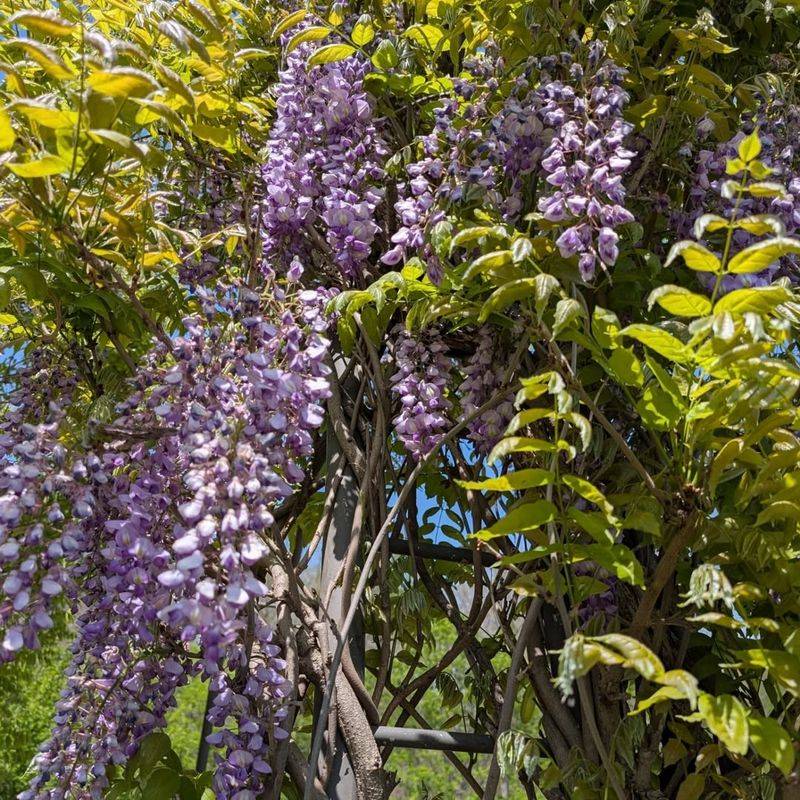
Purple flower clusters make Chinese wisteria look stunning in photos. Up close, though, it is one of the most destructive vines a fence or tree can host.
Woody stems twist tightly around supports as they grow. Over several years, that pressure can crack fence posts, bend metal structures, and girdle tree trunks completely.
Girdling cuts off the flow of water and nutrients through the bark. Trees under a wisteria attack decline slowly but steadily without intervention.
Removal gets harder as stems age. Young vines cut at the base respond faster than established woody trunks that have been growing unchecked for years.
Pulling seedlings in spring is the easiest entry point for control. Roots on young plants have not yet developed the deep anchoring that makes older plants so stubborn.
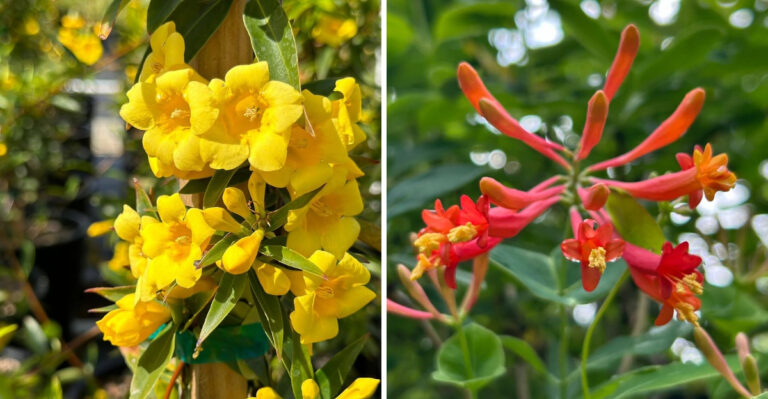
Native wisteria species, like American wisteria, offer similar flowering without the aggressive spread. Swapping them out is a smart move for any fence garden planting.
Chinese wisteria also produces seed pods that pop open and scatter seeds several feet away. New seedlings can establish quickly in disturbed soil near fence bases.
Checking fence lines in late winter before bloom time helps you spot new growth early. Catching it before flowering prevents seed production and limits how far the problem travels.
New seedlings can also establish in nearby open soil, which is why disturbed ground around fences is often where new infestations first take hold.
4. Porcelain Berry Covers Shrubs With Dense Growth
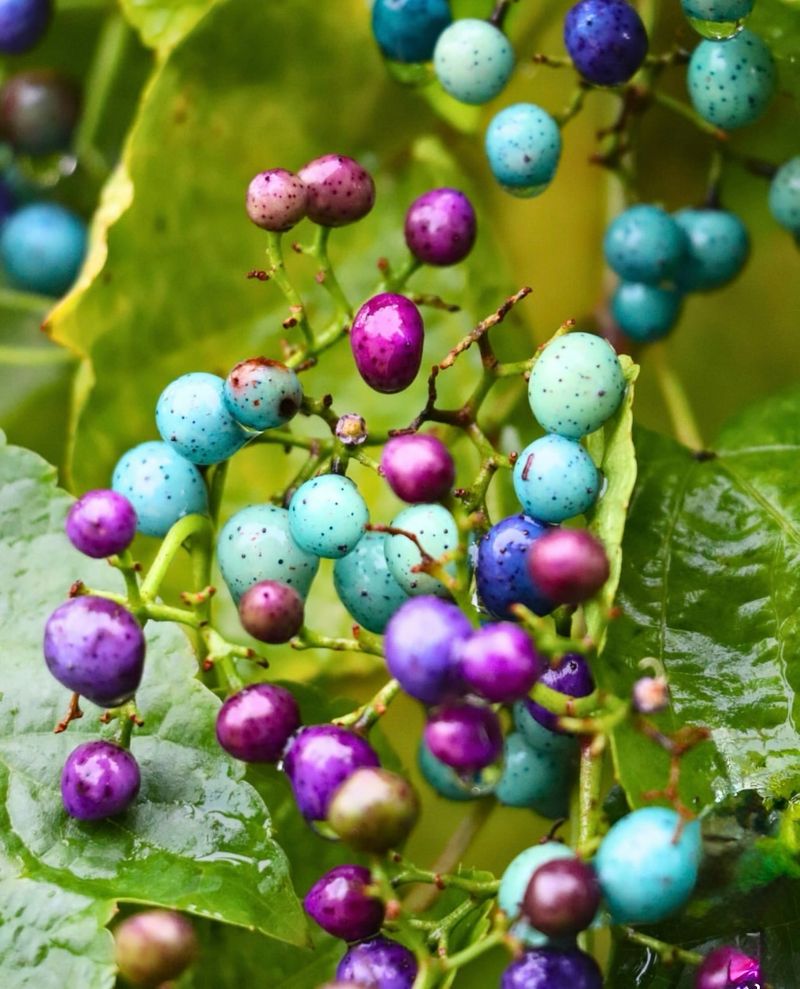
Colorful berries in shades of blue, purple, and green make porcelain berry look almost decorative. But that visual appeal hides a vine that smothers native shrubs faster than most people expect.
Growth is rapid once established. A single vine can cover a medium-sized shrub within one growing season, cutting off light to everything underneath.
Birds love the berries and spread seeds broadly across disturbed areas, roadsides, and woodland edges. New plants pop up far from the original colony with little warning.
Porcelain berry looks similar to native grape vines when young. Checking leaf shape and berry color helps distinguish between them before removal efforts begin.
Pulling vines out by the roots in early spring works well on young plants. Older vines with established root systems require repeated cutting to wear them down over time.
Fence lines near wooded areas are especially vulnerable. Vines climbing through fence gaps can reach neighboring shrubs and trees before the growth becomes obvious from a distance.
Leaving cut vines in place is a mistake many gardeners make. Removing pulled material from the site prevents re-rooting, which porcelain berry can do surprisingly well even after being cut.
Replacing it with native alternatives like Virginia creeper gives fences and structures a similar climbing coverage without feeding invasive spread across the surrounding landscape.
5. Wintercreeper Climbs Trees And Covers The Ground
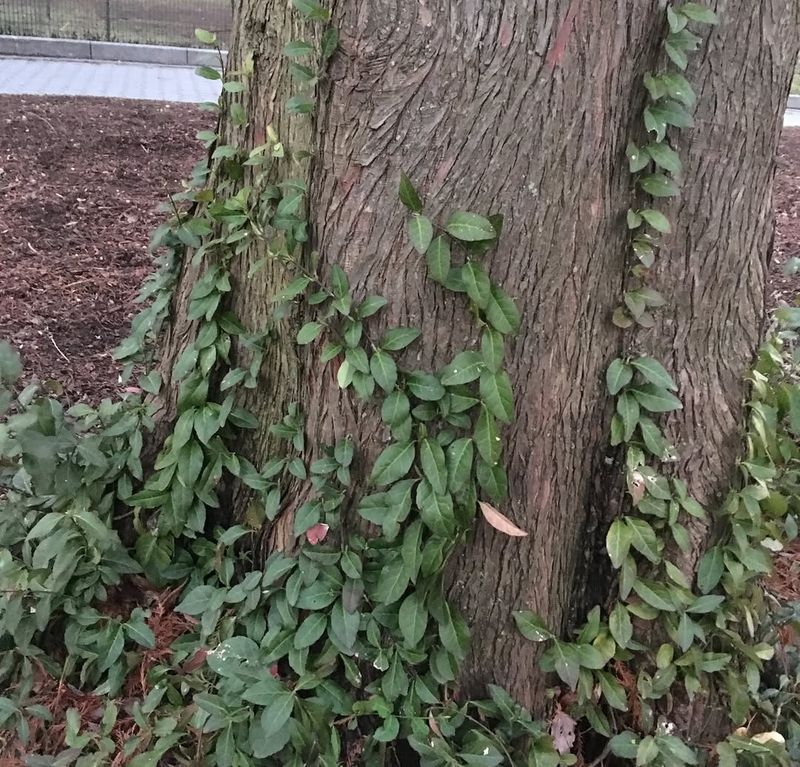
Wintercreeper is sneaky. It starts as a tidy-looking ground cover, then quietly begins climbing any vertical surface it can reach, including tree trunks, fences, and brick walls.
Small, glossy leaves stay green through mild winters. That evergreen persistence lets it outpace native plants that naturally go dormant when temperatures drop.
On the ground, it forms dense mats that block native wildflowers and seedlings from establishing. Forested areas near neighborhoods have seen native understory plants disappear under wintercreeper coverage.
Climbing growth adds weight to tree bark and traps moisture in ways that invite fungal problems. Trees weakened by other stressors are especially at risk from heavy vine coverage.
Hand-pulling works well on loose soil after rain. Roots tend to release more cleanly when the ground is moist, reducing the chance of leaving root fragments behind.
Stems that touch the ground can re-root and start new patches nearby. Bagging pulled material rather than composting it prevents accidental spread during yard cleanup.
Wintercreeper also produces small pink and orange berries that birds carry into natural areas. Seed spread means new plants can establish in spots far from where you are actively managing.
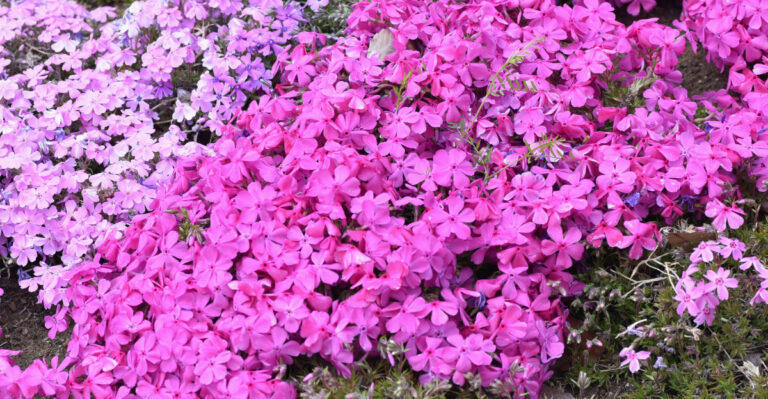
Replacing it with native pachysandra or creeping phlox gives shaded areas ground coverage without the climbing, spreading habit that makes wintercreeper such a persistent problem in yards across the region.
6. Fiveleaf Akebia Forms Thick Tangles In Natural Areas
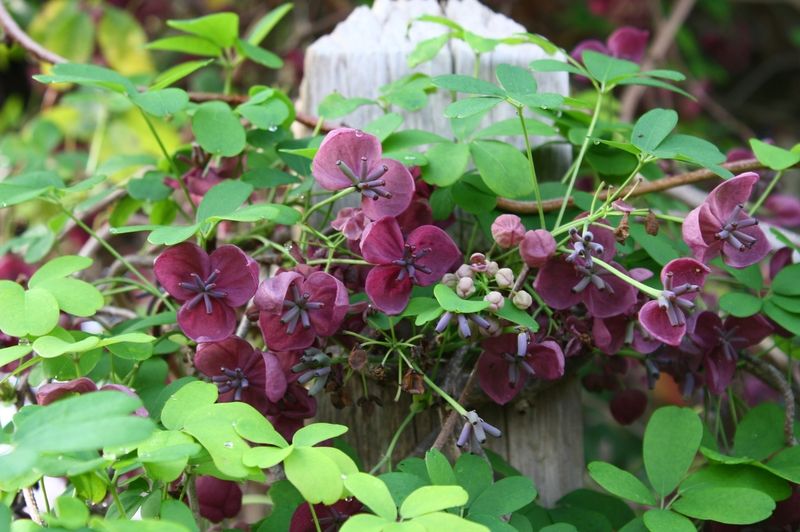
Not many people have heard of fiveleaf akebia, but land managers in the Southeast are well familiar with the tangled mess it leaves behind in natural areas.
Five-leaflet compound leaves make it visually distinctive once you know what to look for. Early identification matters because established plants are significantly harder to manage than young ones.
Vines twine through shrubs and small trees, layering over each other until the mass becomes too heavy for supporting plants to bear. Branches underneath bend and break under the accumulated weight.
Small purple flowers appear in spring and carry a faint, sweet scent. Sausage-shaped fruit follows in fall, splitting open to reveal seeds that birds and other wildlife spread readily.
Seed dispersal into natural areas near yards is one of the main ways fiveleaf akebia moves beyond garden settings. A single plant near a fence can seed into neighboring woodland edges within a few seasons.
Cutting back vines repeatedly through the growing season weakens root energy reserves over time. Digging out root crowns gives faster results but requires more effort on established clumps.
Some nurseries still sell fiveleaf akebia as a trellis plant. Choosing native alternatives like passionflower vine gives similar climbing coverage with genuine ecological value for pollinators and wildlife.
Checking trellis and fence plantings you may have inherited from previous owners is a smart habit. Not every ornamental vine on a property is as harmless as it looks.
7. Oriental Bittersweet Wraps Around Trees And Branches
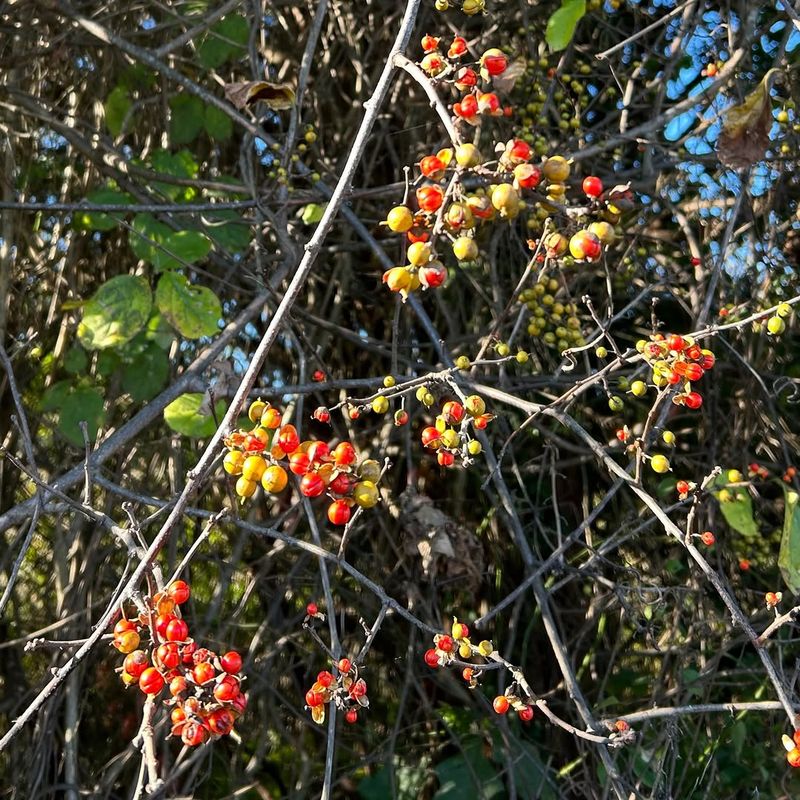
Bright orange and red berries make Oriental bittersweet a popular pick for fall wreaths and decorations. That widespread harvest habit is actually one reason the plant keeps spreading into new areas.
Vines coil tightly around branches and trunks as they grow. Over time, that pressure cuts into bark, disrupts nutrient flow, and causes significant structural damage to host trees.
Growth is fast and the root system is deep. Cutting stems at the base slows top growth, but roots can resprout repeatedly unless the crown is fully removed.
Berries used in dried arrangements still contain viable seeds. Disposing of decorations in trash rather than compost keeps seeds from reaching soil where they can germinate.
Oriental bittersweet looks similar to native American bittersweet when not in fruit. Berry placement is the clearest difference: Oriental bittersweet produces berries all along the stem, while native bittersweet clusters them only at branch tips.
Fence lines near woodland edges in Georgia are common entry points for this vine. Once it crosses from wild land onto a fence structure, it spreads along the line quickly.
Removing vines before berry set in late summer limits seed production significantly. Timing removal to that window is one of the most effective strategies available to homeowners.
Native American bittersweet is a viable ornamental alternative. It offers the same fall color without the aggressive spread that makes the Oriental variety such a persistent regional problem.
8. Japanese Honeysuckle Climbs Through Native Vegetation
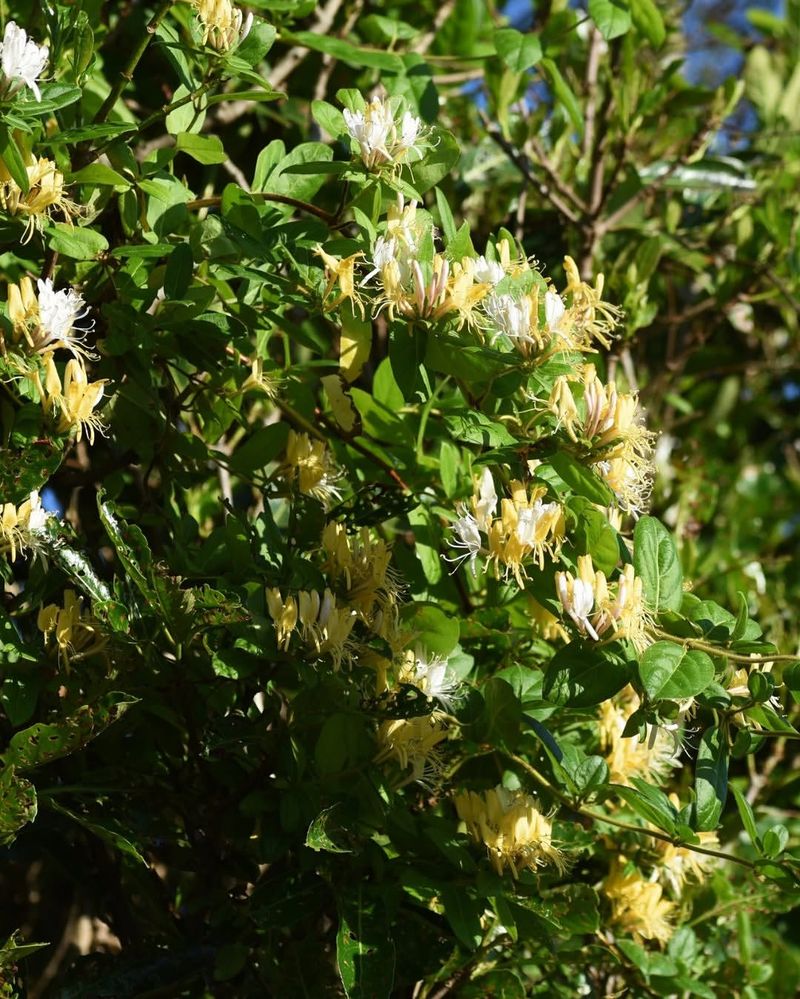
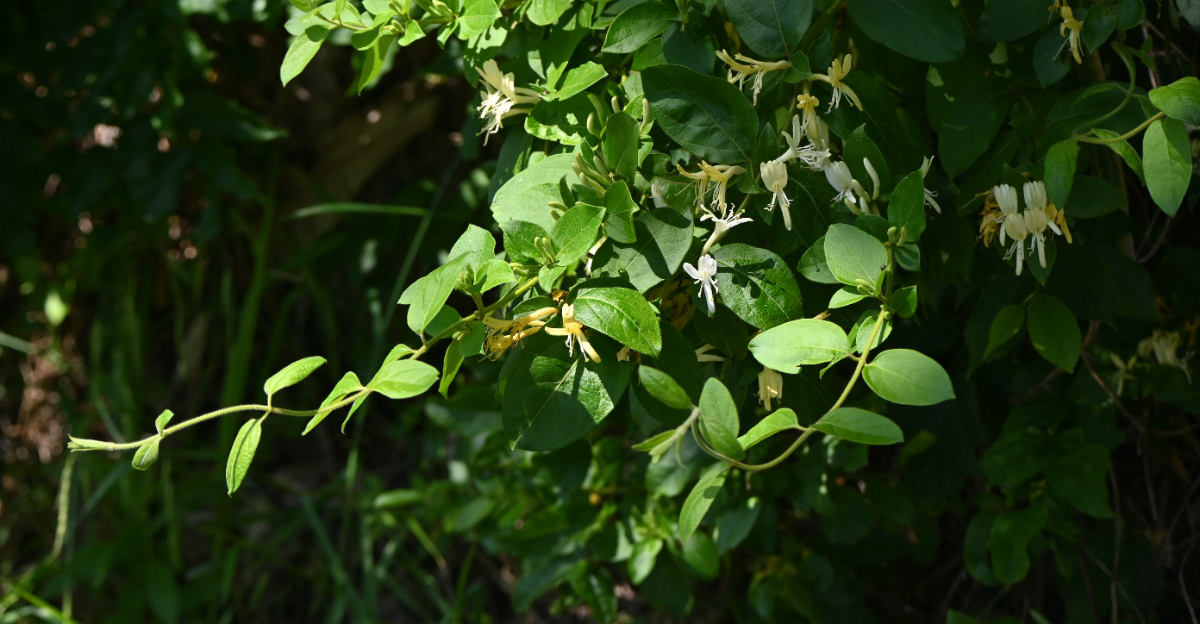
Sweet-smelling flowers make Japanese honeysuckle easy to overlook as a threat. Most people associate its scent with childhood summers, not ecological damage.
It twines aggressively through shrubs and small trees, pulling branches downward under its weight. Native plants underneath lose access to light and eventually stop producing new growth.
Japanese honeysuckle stays semi-evergreen in mild winters, which gives it a head start over native species in early spring. That edge compounds over time.
Cutting vines at the base repeatedly through the growing season weakens root systems gradually. Digging roots out entirely gives better long-term results in smaller areas.
Along fence lines, it can form walls of vegetation within a single season. Those dense mats trap moisture and create habitat for pests near structures.
Birds spread the seeds widely after eating the berries. New patches can appear far from the original plant, making it hard to fully contain.
Native alternatives like coral honeysuckle offer similar visual appeal without the invasive behavior. Making that swap is one of the most practical steps a homeowner can take.
Checking fence lines and woodland borders in spring lets you catch new growth before it gets out of hand. Small patches respond well to manual removal when caught early.
A single plant can send out long trailing vines that root wherever they touch soil, allowing it to expand outward even without seeds.