The July Mistake That Can Leave Arizona Citrus Trees Sunburned
Most citrus tree problems do not begin with insects or disease. Sometimes the damage starts with a well-meaning job that seemed like the right thing to do.
Removing too much growth in the middle of summer can expose parts of the tree that were never meant to sit under direct afternoon sun. That mistake is easy to make because the effects usually appear days later instead of right away.
Waiting until the damage is visible often means the tree has already been under unnecessary stress.
Think twice before reaching for your pruning tools during the hottest part of the season. Leaves do much more than make a tree look full because they also protect branches and fruit from intense sunlight.
Arizona summers bring conditions that can quickly overwhelm newly exposed bark and developing citrus.
A little patience in July can prevent avoidable sunburn and help your tree stay healthier through the toughest weeks of summer.
1. Removing Too Much Canopy Exposes Fruit And Bark
Grabbing those pruning shears in July feels productive, but cutting back too much canopy at once can backfire fast. Citrus trees rely on their own leafy cover to shade the fruit and bark below.
Without that cover, both are left wide open to brutal afternoon sun.
Bark that was shaded all spring can go from protected to scorched within a single afternoon. Fruit sitting in direct sunlight for hours heats up quickly and starts to show damage before you even notice.
Pale, dried-out patches appear where green or bright fruit used to be.
Removing more than about 20 to 25 percent of the canopy at once is generally considered too aggressive, especially in summer.
Some gardeners assume thinning out the tree helps with airflow and fruit production, and that can be true in cooler months. Doing it mid-summer in the low desert, though, creates more problems than it solves.
Waiting until late fall or early winter gives the tree time to grow back protective foliage before the next heat season.
Light trimming to remove crossing or damaged branches is usually fine year-round. Heavy shaping, though, should wait until temperatures drop.
2. Southwest Facing Branches Burn First
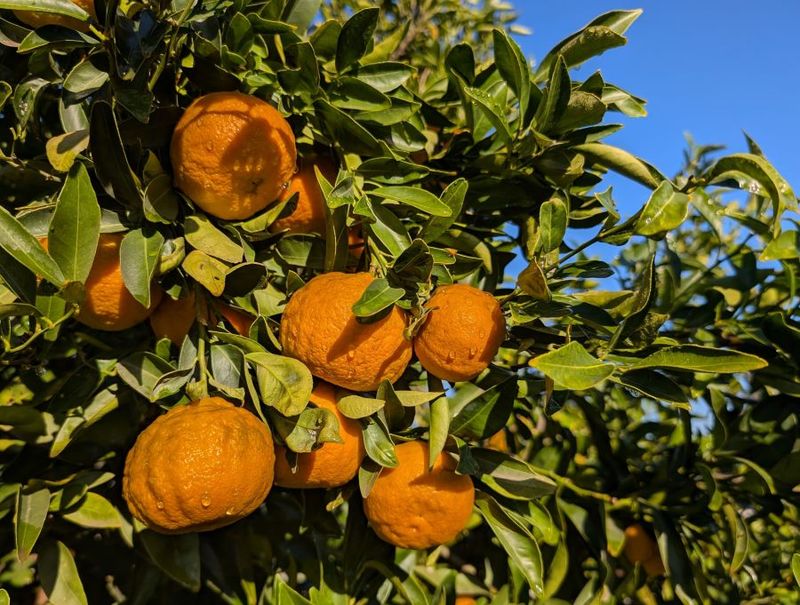
Not all sides of a citrus tree face the same risk. Southwest-facing branches take the hardest hit during summer because that is the direction of the hottest afternoon light.
By the time the sun swings to that angle, temperatures are already at their peak.
Branches on the north or east side of the tree stay relatively cool because they get gentler morning light or stay shaded during the hottest hours. Southwest exposure is different.
It gets full, direct sun right when the heat is most intense, often between 1 p.m. and 5 p.m.
When you prune branches on the southwest side, you remove the buffer that was shading the inner bark and nearby fruit. What gets left behind is suddenly exposed to conditions it was never receiving before.
Bark tissue can begin to break down faster than the tree can repair it.
Your Arizona Garden Changes Every Week. Your Plan Should Too.
Gardening in Arizona changes quickly throughout the season. Every Friday you’ll receive a simple weekly plan showing exactly what to plant, prune, fertilize, harvest, and protect so you never miss the right timing.
Paying attention to which direction branches face before cutting is a smart habit. If a branch is providing shade to the southwest-facing trunk or nearby fruit clusters, think twice before removing it in July.
Marking those branches and waiting until fall is a reasonable approach. Some experienced desert gardeners even leave slightly overgrown growth on that side intentionally through summer.
3. Whitewashed Bark Reflects Intense Sunlight
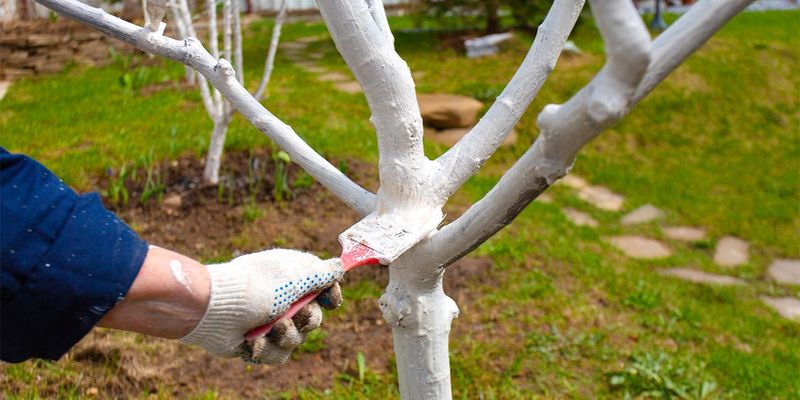
Whitewashing is one of the oldest tricks for protecting exposed tree bark, and it still holds up today. Painting the trunk and lower branches with a diluted white latex paint or a product made specifically for trees helps reflect sunlight away from the bark.
Less absorbed heat means less damage.
When bark gets exposed after pruning or natural leaf drop, it absorbs heat rapidly. Temperatures inside unprotected bark can climb well above the air temperature.
Whitewash acts like a simple shield, bouncing some of that radiation back before it soaks in.
A common mix is one part white interior latex paint to one part water, applied with a brush directly to the bark. Some gardeners use commercial tree paint products, which are also effective.
The goal is coverage on exposed areas, especially the trunk and any large scaffold branches that now face direct sun.
Reapplication may be needed after heavy rain washes some of the coating off. In dry desert summers, though, a single coat often lasts through the hottest stretch.
Whitewashing is not a substitute for good pruning timing, but it is a practical backup when bark gets exposed. Arizona homeowners who have tried it often say it makes a noticeable difference in how well trees hold up through July and August.
4. Damaged Bark Can Crack As Heat Builds
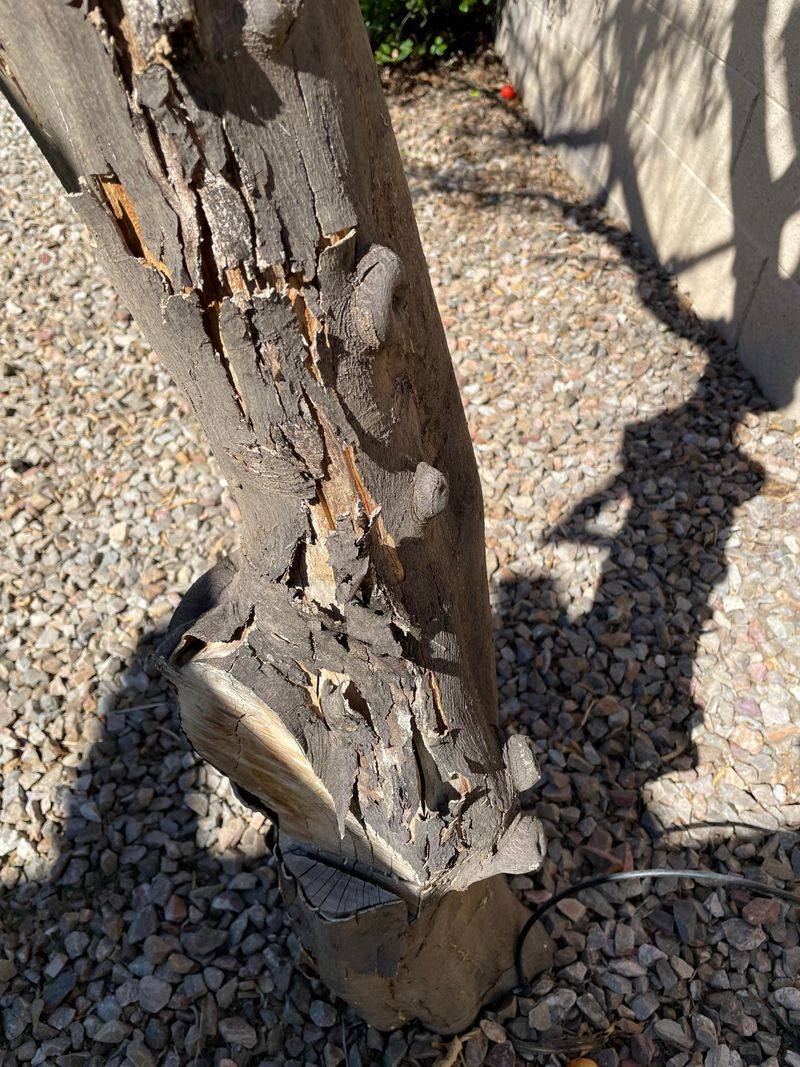
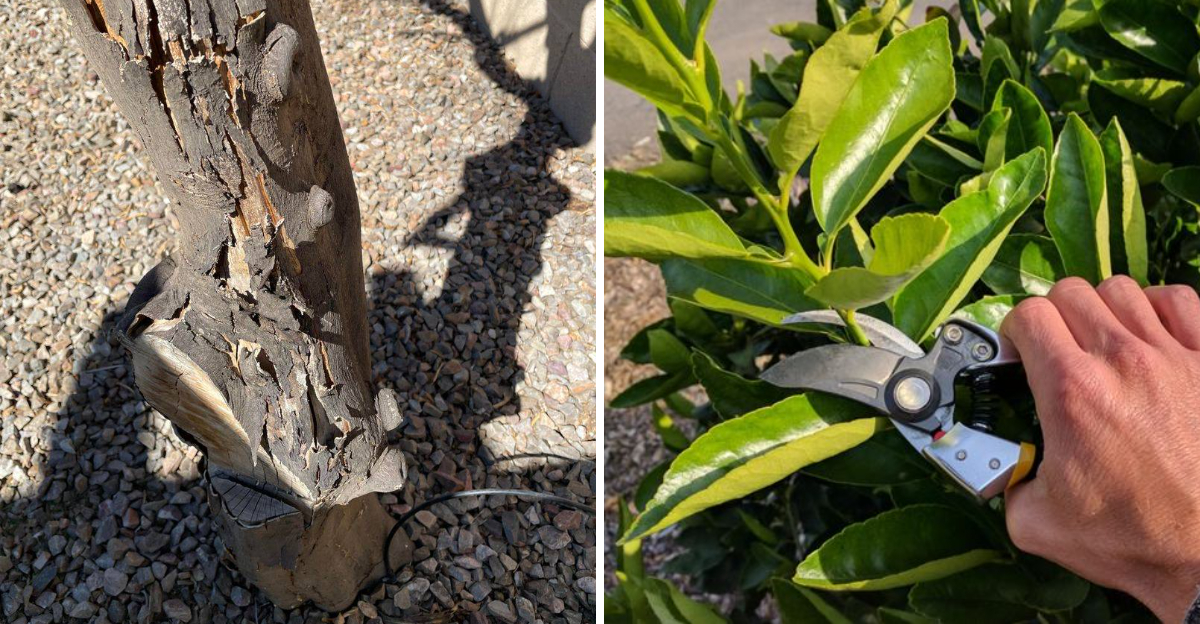
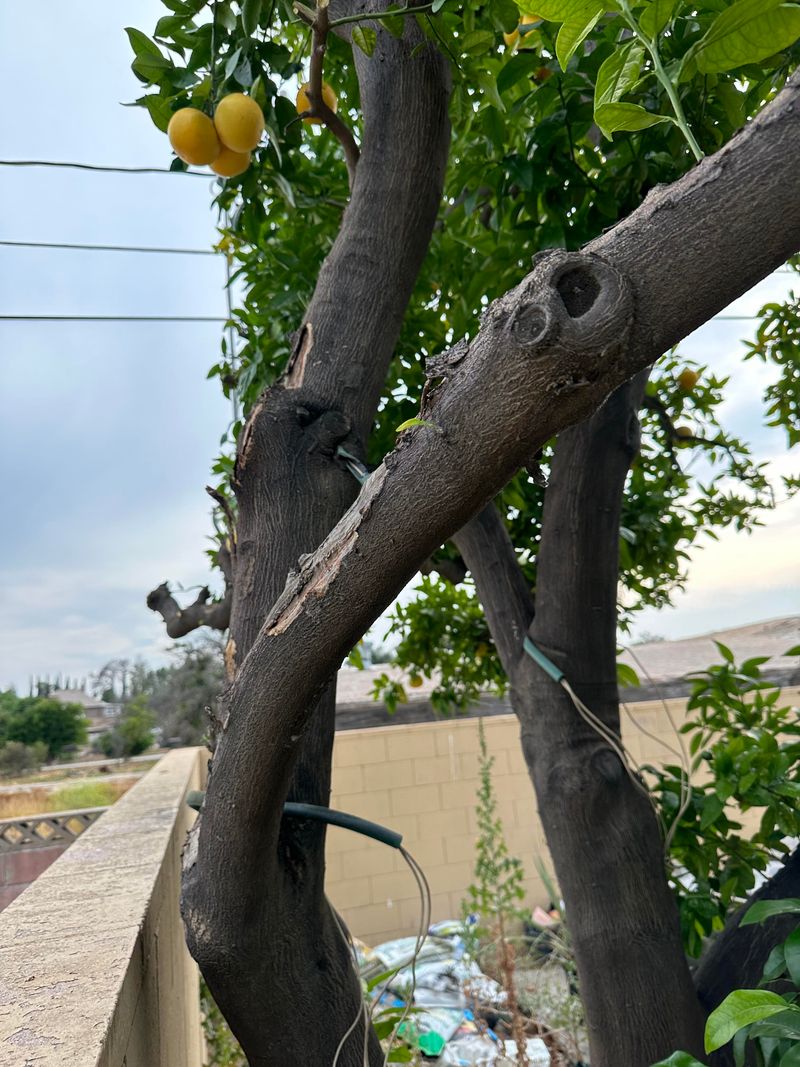
Cracked bark is one of the more visible signs that heat stress has gone too far. When bark tissue overheats, it dries out and loses flexibility.
As temperatures continue to rise and fall between day and night, that dried bark starts to split.
Cracks in the bark are not just cosmetic. Openings in the outer layer expose the inner wood to further drying and can create entry points for pests and fungal issues.
In desert heat, exposed inner wood can deteriorate faster than in more moderate climates.
Bark cracking often starts as a subtle change in color. The surface looks faded or slightly sunken before any actual splitting appears.
Catching it early gives you more options, including applying whitewash to slow further damage or adjusting irrigation to help the tree recover some moisture.
Keeping the soil consistently moist during summer helps the tree maintain some internal hydration, which supports bark health. Deep, slow watering a few times per week is generally more effective than frequent shallow watering.
Mulching around the base of the tree also helps hold soil moisture and keeps root-zone temperatures lower.
Once bark cracks significantly, recovery depends on the tree’s overall health and how much of the trunk is affected. Smaller cracks on otherwise healthy trees often seal over time.
5. Heavy Pruning Removes Natural Sun Protection
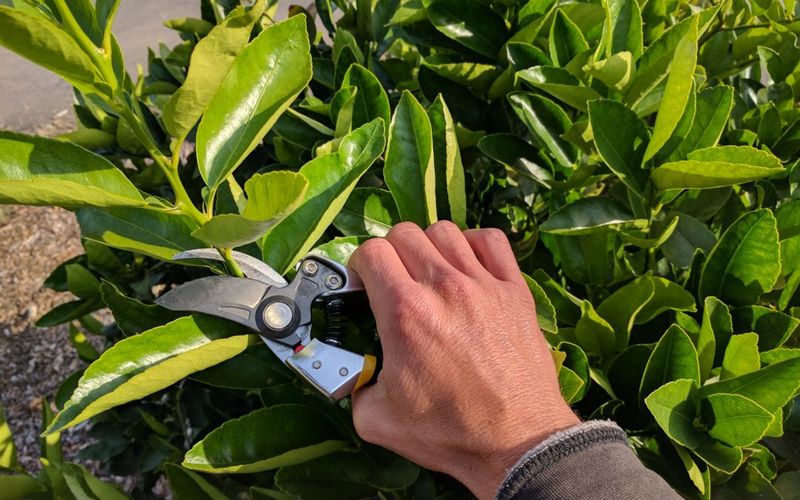
Citrus trees are not just producing fruit. They are also building their own shade system.
Leaves and branches that seem like excess growth are often doing the quiet work of shading the bark below. Strip that away, and the protection disappears with it.
Heavy pruning in July is one of the fastest ways to create sunburn problems. A tree that looked full and healthy one week can end up with significant bark exposure the next, simply because too much was removed at once.
The canopy does not grow back quickly enough to catch up before the heat causes damage.
Experienced desert growers often recommend doing major shaping work in late winter or very early spring, before temperatures climb. By the time summer hits, the tree has had time to fill in gaps and rebuild the natural shade layer.
Pruning done at the right time of year works with the tree instead of against it.
Light maintenance cuts are different. Removing a single damaged branch or trimming a shoot that is rubbing against a fence is unlikely to cause sunburn.
The problem starts when multiple large cuts happen at once, opening up the interior canopy to sudden, intense exposure.
6. Sunburn Starts As Pale Or Bleached Patches
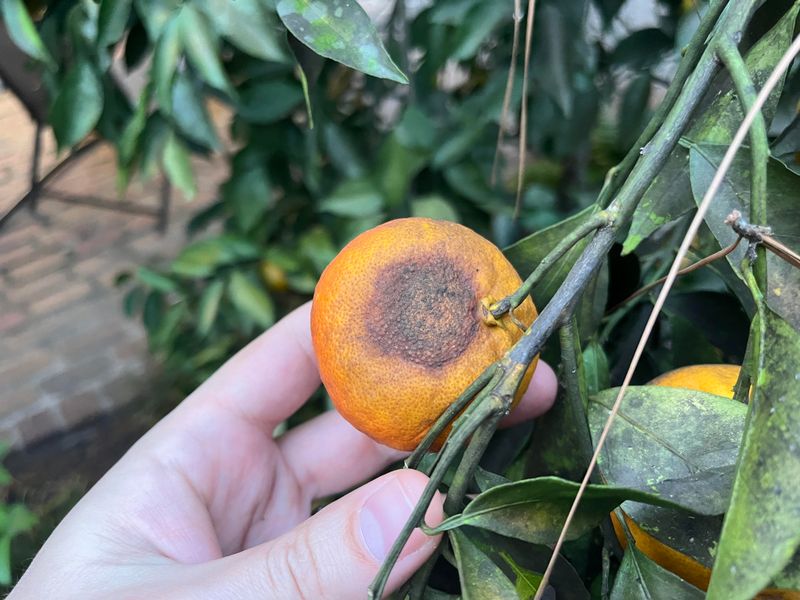
Pale patches on citrus fruit or bark are easy to overlook at first glance. They can look like a minor discoloration or even a natural variation in color.
By the time the damage becomes obvious, the sunburn has already progressed past the early stage.
On fruit, sunburn typically shows up as a whitish or tan area on the side facing the sun. The skin in that spot becomes dry and papery over time.
Underneath, the fruit flesh may be dried out or off-flavored, depending on how long it was exposed.
Bark shows sunburn differently. It starts as a faded or slightly yellowish area on the exposed side.
As the damage worsens, the bark can feel dry and brittle compared to healthy sections nearby. Pressing gently on the affected area often reveals a difference in texture.
Catching sunburn early gives the tree a better chance. Adding shade cloth over the most vulnerable areas can slow further damage.
Temporary shade structures made from burlap or commercial shade fabric are used by some gardeners in the Phoenix and Tucson areas during peak summer weeks.
Adjusting your pruning schedule going forward is the most effective long-term fix.
Letting the tree hold its natural canopy through summer protects both fruit and bark from these pale, bleached patches before they have a chance to develop.
7. Severe Sunburn Can Permanently Damage Bark
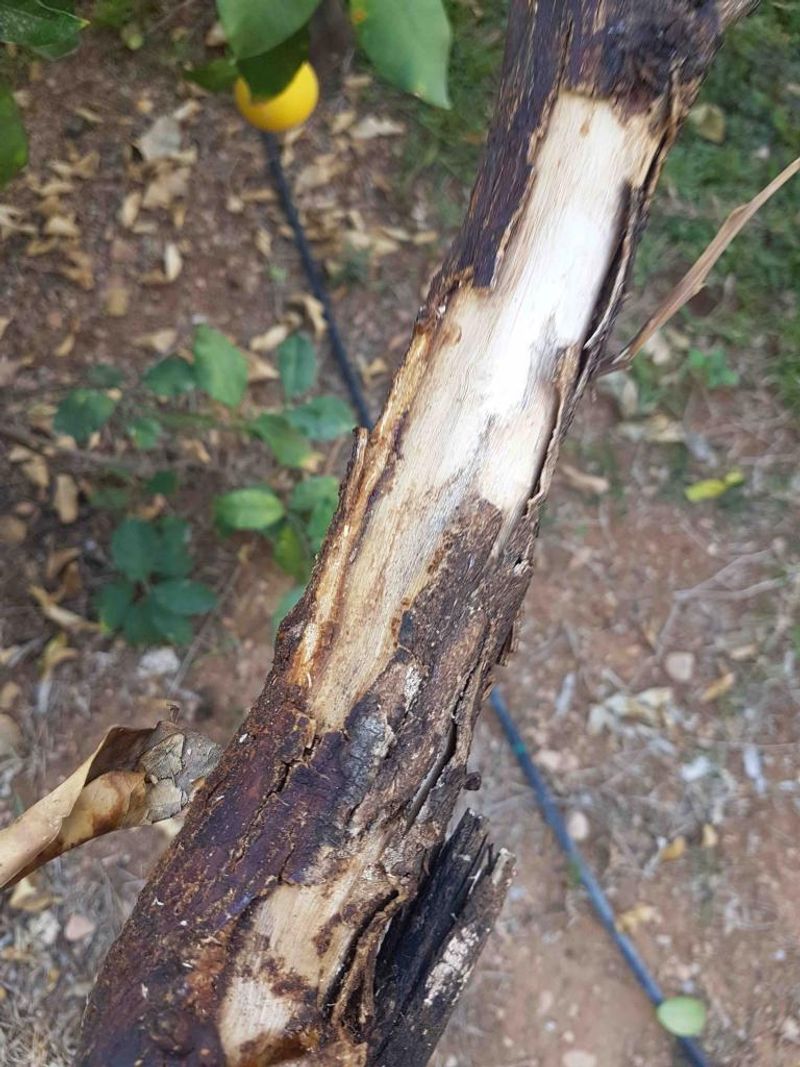
Most sunburn on citrus is recoverable if caught early, but severe cases are a different story. When bark tissue is exposed to extreme heat for extended periods, the damage can go deep enough that the affected area does not recover fully.
Scarring and long-term bark loss are possible outcomes.
Severely damaged bark loses its ability to transport water and nutrients efficiently in that section of the trunk or branch. Over time, the affected area may dry out further, shrink, or peel away.
Adjacent healthy bark may try to grow around the damaged zone, but that process is slow and not always complete.
Trees with significant bark damage are also more vulnerable to secondary problems. Pests that target stressed trees may move in.
Fungal growth can take hold in areas where bark has lifted or cracked. Keeping a close eye on damaged trees through the rest of the season is worth the effort.
Recovery depends heavily on how much bark surface is involved and how healthy the tree was before the damage occurred. A young tree with a large affected area faces a harder road than a mature, well-established one with a small patch.
Providing consistent water and avoiding any additional stress gives the tree the best environment to recover.