The Lawn Problems Florida Homeowners Should Look For Before September Ends
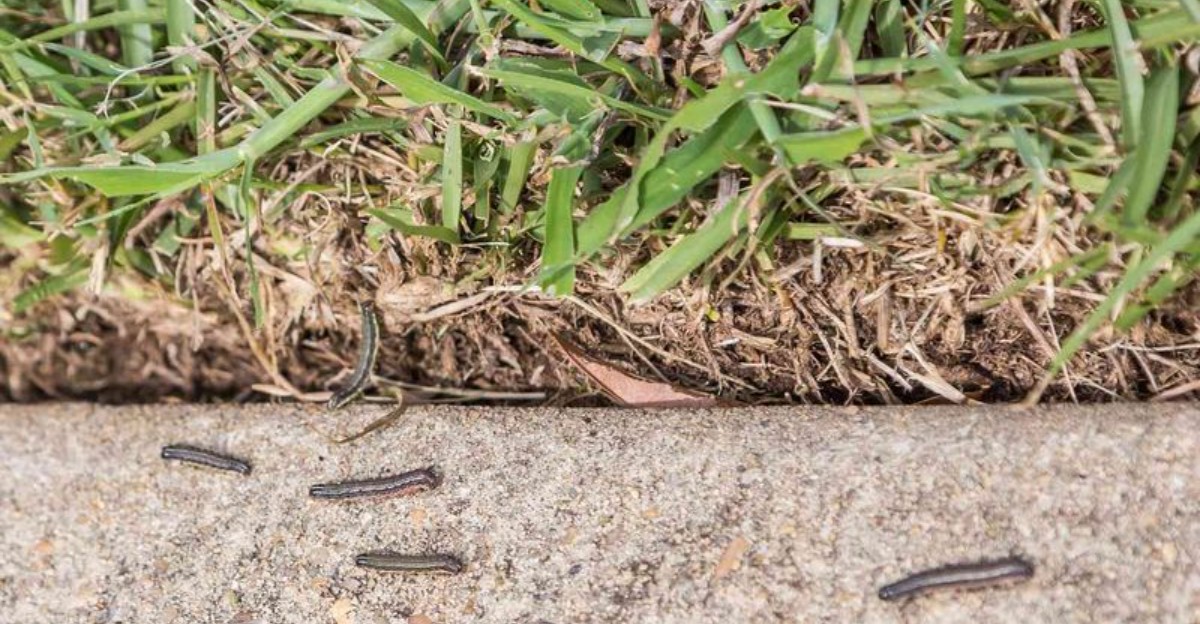
Your lawn probably still looks decent from the street, green enough that September feels like a month you can coast through. Nothing about it screams urgent.
Nothing tempts you to get down on your knees for a closer look. That’s usually when problems sneak past you.
A handful of issues take root right around now, quietly enough that you won’t notice until they’re already visible from the sidewalk. A brown patch that seems to show up overnight.
A thin spot spreading faster than it should. Grass that just feels different underfoot than it did a few weeks back.
Trace any of it and you’ll usually find something that started well before you noticed. Florida’s late summer conditions set the stage for exactly this kind of trouble, and you’re running out of time to catch it before fall lets it take hold.
Here’s what to check for while you still can.
1. Fall Armyworms Marching Through Overnight
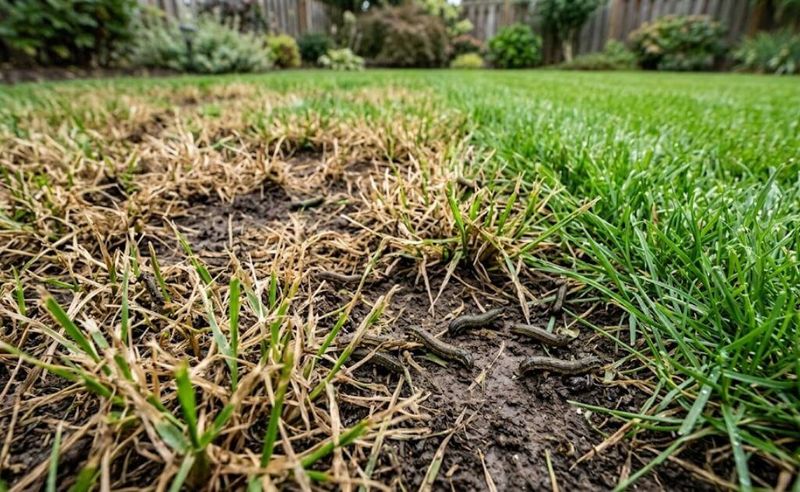
Picture waking up, glancing outside, and wondering when someone mowed a jagged stripe across your yard. Late summer and early fall are common times for fall armyworm outbreaks in Florida lawns, especially after favorable weather conditions.
These striped caterpillars can appear in large numbers, feeding across sections of turf and leaving ragged grass blades behind. Look closely and you may spot an upside-down Y shape on the head, plus long stripes running down the body.
They favor Bermudagrass and St. Augustinegrass, though zoysia, centipede, and fescue are also on the menu. Small tan patches can widen across the yard in a day or two, which is why folks often think their sprinkler system failed.
Check in the early morning or near dusk, since that is when feeding picks up. A mild soapy water flush can help bring larvae to the surface, but avoid using overly concentrated mixtures that may damage grass.
Heavy rain and storms often trigger population surges, because moths lay huge egg batches once the weather settles. That means the week after a tropical downpour deserves extra attention.
Treat quickly with a labeled insecticide while the caterpillars are small. Grass roots usually stay intact, so lawns often bounce back with steady watering and a light feeding.
2. Mole Crickets Tunneling Under Your Feet
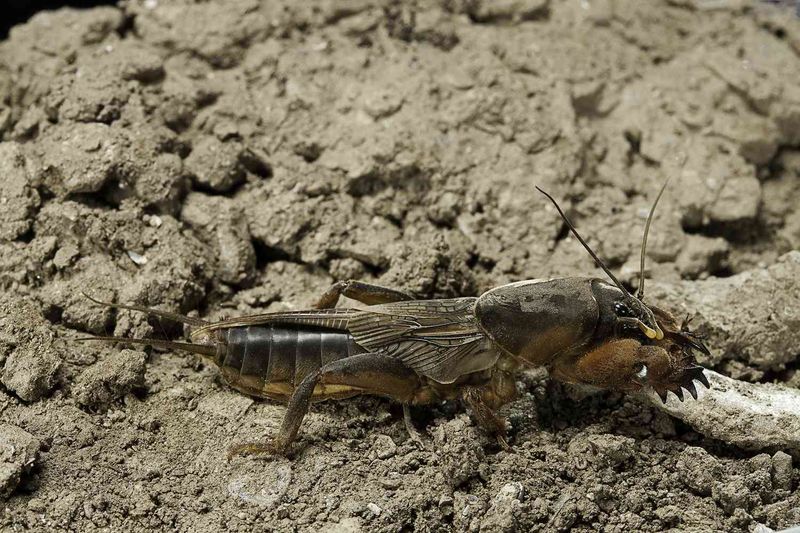
Step across the yard and notice a strange spongy bounce, almost like walking on a cheap mattress. Late summer and fall are important periods to watch for mole cricket damage, especially when young stages are active.
Built with shovel-shaped front legs, these odd insects burrow through sandy soil and clip grass roots along the way. Their tunneling can disturb roots and soil structure, leaving turf weakened and uneven.
Bahiagrass and Bermudagrass get hit hard, but centipedegrass, seashore paspalum, zoysia, and St. Augustinegrass all suffer too. Damaged areas look thirsty even right after irrigation, because there simply are not enough roots left to pull up moisture.
Another clue comes from your wildlife visitors. Armadillos digging craters, raccoons flipping sod, and birds pecking in tight circles usually mean a buffet waits underground.
Your Florida Garden Changes Every Week. Your Plan Should Too.
Gardening in Florida changes quickly throughout the season. Every Friday you’ll receive a simple weekly plan showing exactly what to plant, prune, fertilize, harvest, and protect so you never miss the right timing.
Try the same soapy water flush used for caterpillars, pouring it over two square feet of turf. Crickets that surface within a few minutes confirm your suspicion.
Moist, sandy ground suits them perfectly, which describes much of the state. Treating in late summer while the crickets are still small gives far better results than waiting for winter.
Water lightly before applying a product so the insects move closer to the surface, then follow label directions carefully.
3. Southern Chinch Bugs Along Hot Sidewalks
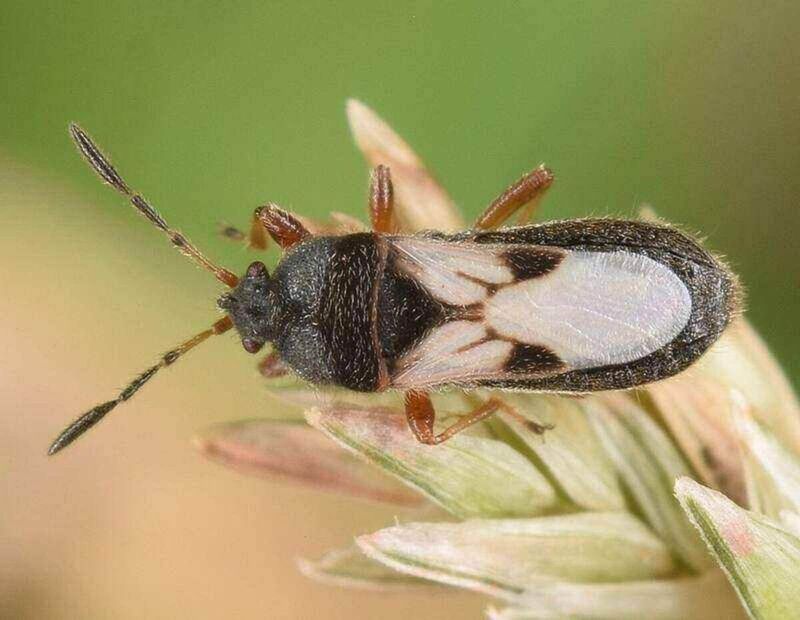
Ever notice how the grass next to your driveway browns out first? Southern chinch bugs love those baking hot edges, and they stay busy from late June straight through September.
Barely the size of a grain of rice, they pierce St. Augustinegrass blades and sip the juices while injecting saliva that damages plant tissue and causes grass to lose its ability to recover normally.
The result looks like drought stress, so homeowners crank up the sprinklers and the patches keep spreading anyway.
Floratam catches the worst of it, though Palmetto and other St. Augustine types are fair game. Damage usually begins in sunny, dry spots beside sidewalks, curbs, and south-facing walls where concrete radiates extra heat.
Finding them takes patience. Part the grass at the edge of a yellowing patch, right where green meets brown, and watch for small dark bugs with white wing markings scurrying across the soil.
In warm parts of South Florida, chinch bugs can remain active for much of the year.
Deep, less frequent watering helps grass handle the pressure better than daily sprinkles. Skip heavy nitrogen during hot spells, since lush new growth practically rings the dinner bell for these pests.
4. Sod Webworms Leaving Ragged Grass Blades
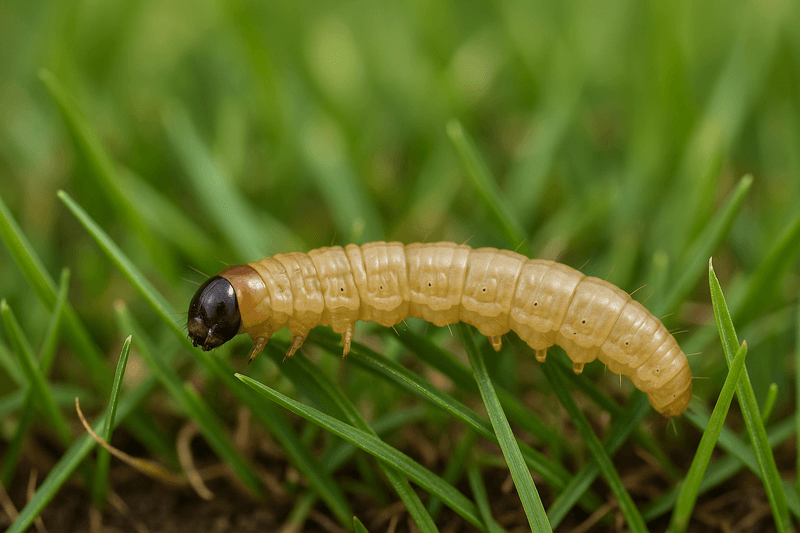
Small tan moths zigzagging low over the lawn at dusk are not just enjoying the evening. They are laying eggs, and their offspring do the real damage.
Sod webworm larvae chew grass blades from the edges, leaving notched, ragged tips that look like someone attacked the yard with pinking shears. Turf thins out and turns brown in irregular sections rather than neat circles.
North Florida sees populations climb sharply from September through November, while South Florida deals with them nearly year-round, peaking in the steamiest months.
Every warm-season grass is vulnerable, including Bermudagrass, centipedegrass, zoysia, bahiagrass, seashore paspalum, and St. Augustinegrass.
Get down on your knees and inspect the soil line for tiny green pellets, which are essentially caterpillar droppings. Spotting those confirms an active feeding crew hiding in the thatch during daylight hours.
Thick thatch gives larvae a cozy hideout, so dethatching heavy layers reduces future trouble. Stressed, poorly watered turf also takes longer to recover from the chewing.
Since caterpillars feed at night, evening applications of a labeled product tend to work best. Mow first, skip watering right afterward, and give the treatment time to sit where the larvae travel.
Most lawns green up again within a few weeks.
5. White Grubs Chewing Roots Below Ground
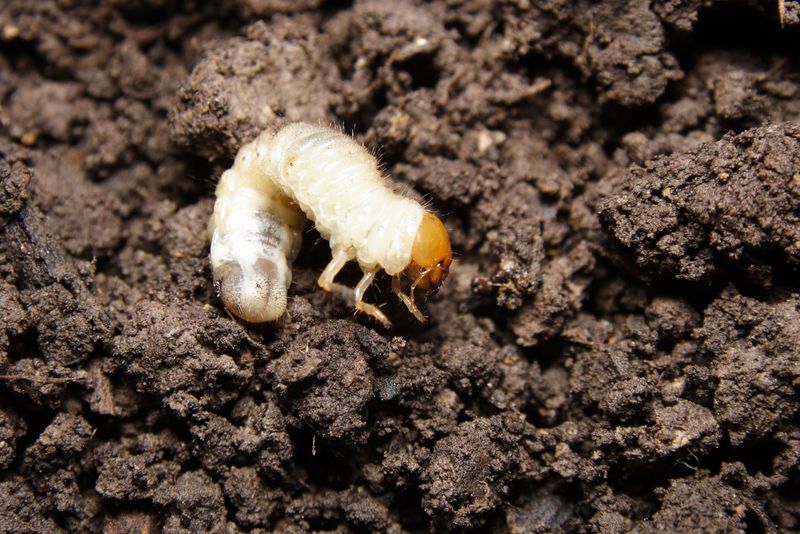
Here is a quick test that tells you a lot: tug on a brown patch of turf. If it peels back like a loose rug, white grubs are the likely culprits.
Beetles lay eggs through the summer, and the larvae hatch in the soil during late summer and early fall. Curled into a C shape and pale white with brown heads, they munch roots just below the surface.
Without a solid root system, grass yellows, wilts, and refuses to perk up no matter how much you water. The symptoms mimic drought so convincingly that many homeowners waste weeks adjusting irrigation timers.
Dig a small square of sod about four inches deep and count what you find. A handful of grubs per square foot generally signals a problem worth treating.
Birds pecking persistently or animals digging shallow holes overnight also hint at a buried snack bar.
Late summer and early fall can be an important treatment period because many young grubs are still near the surface and easier to target. Water the product in thoroughly so it reaches the root zone.
Afterward, help the lawn rebuild roots with light fertilizer and steady moisture. Recovery takes a few weeks, but healthy turf usually fills back in.
6. Take-All Root Rot After Endless Rain
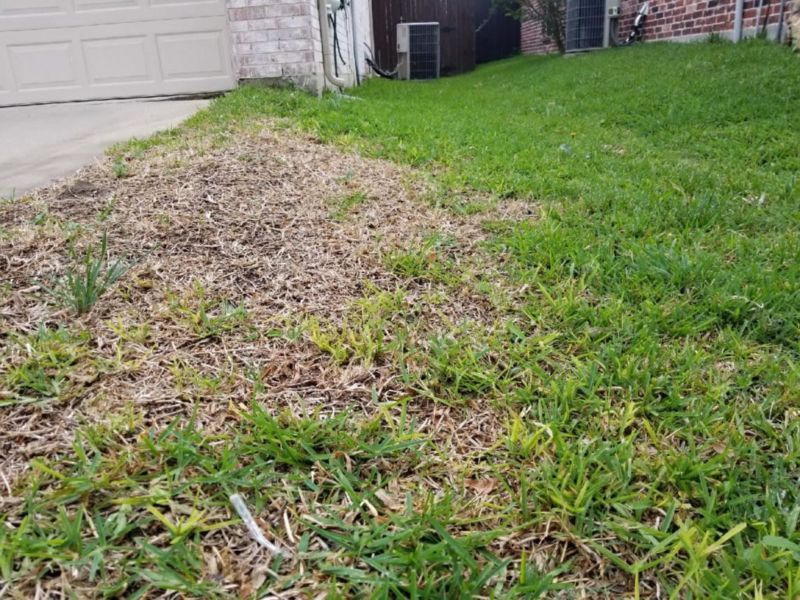
Weeks of afternoon storms feel great for the plants, but soggy soil sets the stage for a sneaky fungus. Take-all root rot works underground long before you see anything up top.
The disease attacks roots and stolons of warm-season grasses, so the first visible clue is usually a washed-out yellow or pale green color in irregular shapes. Turf gradually thins until bare soil peeks through.
Pull up a plug and inspect the roots. Healthy ones look white and stringy, while infected roots appear short, dark, and mushy.
St. Augustinegrass takes the biggest hit, though Bermudagrass, centipedegrass, and zoysia can also come down with it. Prolonged rainfall, constantly wet soil, and already-stressed turf create the ideal setup.
Fungicides help somewhat, but the real fix is reducing stress. Raise the mower height, ease off heavy nitrogen, and check that low spots drain instead of holding puddles.
Improving drainage, correcting soil conditions, and reducing stress are usually more important than adding products to chase the disease.
Recovery is slow because roots have to regrow from scratch. Patience plus consistent care beats piling on more water and fertilizer, which usually makes matters worse.
7. Large Patch Waiting For Cooler Nights
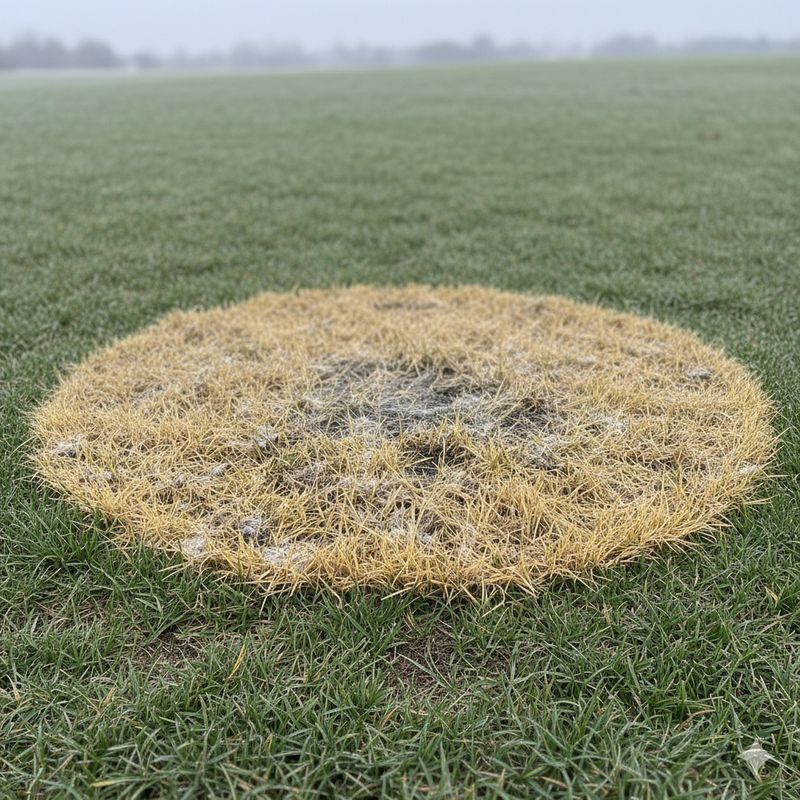
Cooler evenings sound wonderful after a Florida summer, and one particular fungus agrees. Large patch becomes more active when cooler temperatures combine with prolonged moisture and humid conditions.
Round discolored circles appear and slowly widen, sometimes reaching several feet across. Borders often glow a rusty orange where the fungus is actively spreading, while centers turn brown and slightly sunken.
Tug a blade near the edge and it may slide right out of the sheath, with a dark, foul-smelling base attached. That rotten stem is the giveaway.
St. Augustinegrass and zoysia are especially prone, though every warm-season turf can catch it. Damp weather, overwatering, and evening irrigation give the fungus exactly the conditions it wants.
Here is why September matters: North Florida homeowners can apply preventive fungicide at the end of the month, ahead of the fall window when symptoms typically show. Prevention costs far less effort than fixing widespread circles later.
Adjust sprinklers to run in the early morning so blades dry quickly. Avoid heavy nitrogen once nights cool, since soft new growth invites infection.
Mowing at the proper height and clearing excess thatch also improves airflow. A drier, less crowded lawn simply gives the fungus fewer openings.
8. Gray Leaf Spot Speckling Shady Corners
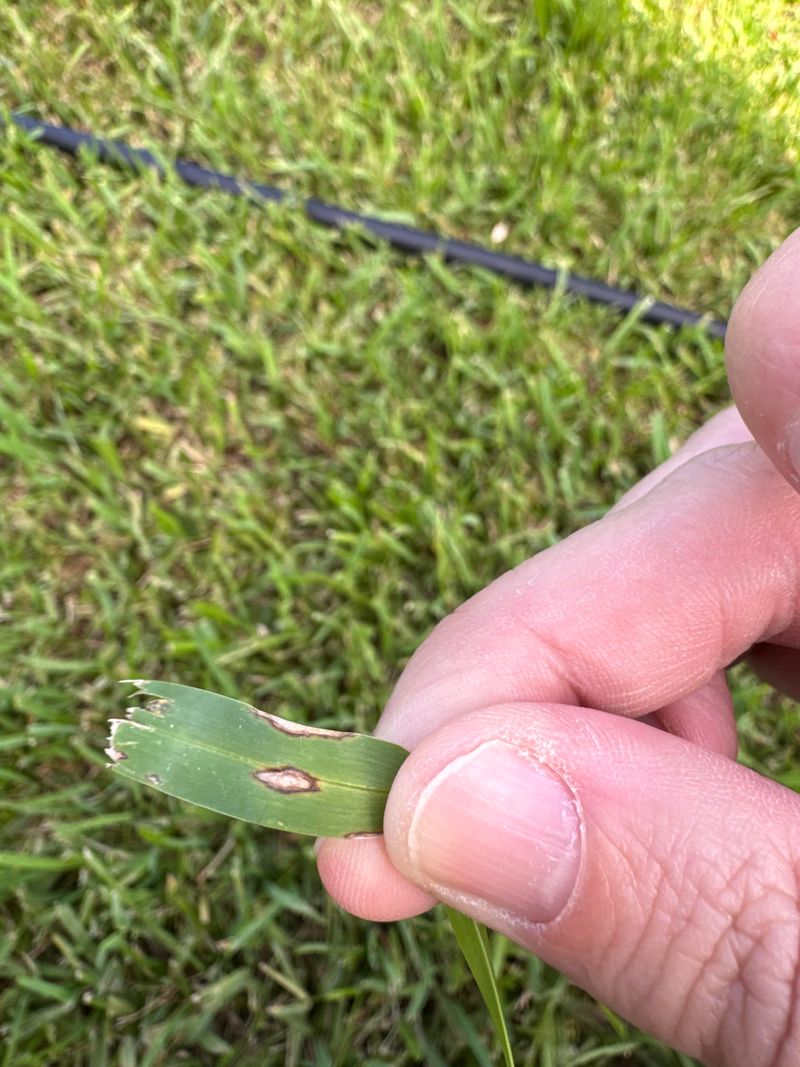
Shady side yards in Florida hold moisture like a damp towel, and that is precisely where gray leaf spot thrives. Humid summers from May into October keep it going strong.
Individual blades develop oblong tan spots ringed with dark brown or purple borders. Look closely under good light and the centers may show a gray, fuzzy layer of spores.
When infection runs heavy, whole sections take on a scorched, grayish cast that looks like someone waved a torch across the lawn.
St. Augustinegrass is the main target, though tall fescue, ryegrass, Bermudagrass, and centipedegrass occasionally join the guest list.
Extended leaf wetness and high humidity create ideal conditions for gray leaf spot development. Shady spots stay wet the longest, so they usually show damage first.
Cut back on nitrogen during warm, rainy stretches, because tender new growth is the most vulnerable tissue. Trim overhanging branches where possible to let sunlight and breeze reach the turf.
Water deeply in the early morning rather than sprinkling every evening. If spots keep spreading, a labeled fungicide can slow things down while you correct the moisture pattern.
Most lawns outgrow the blemishes once conditions dry out.
9. Brown Patch Fungus Circling In September
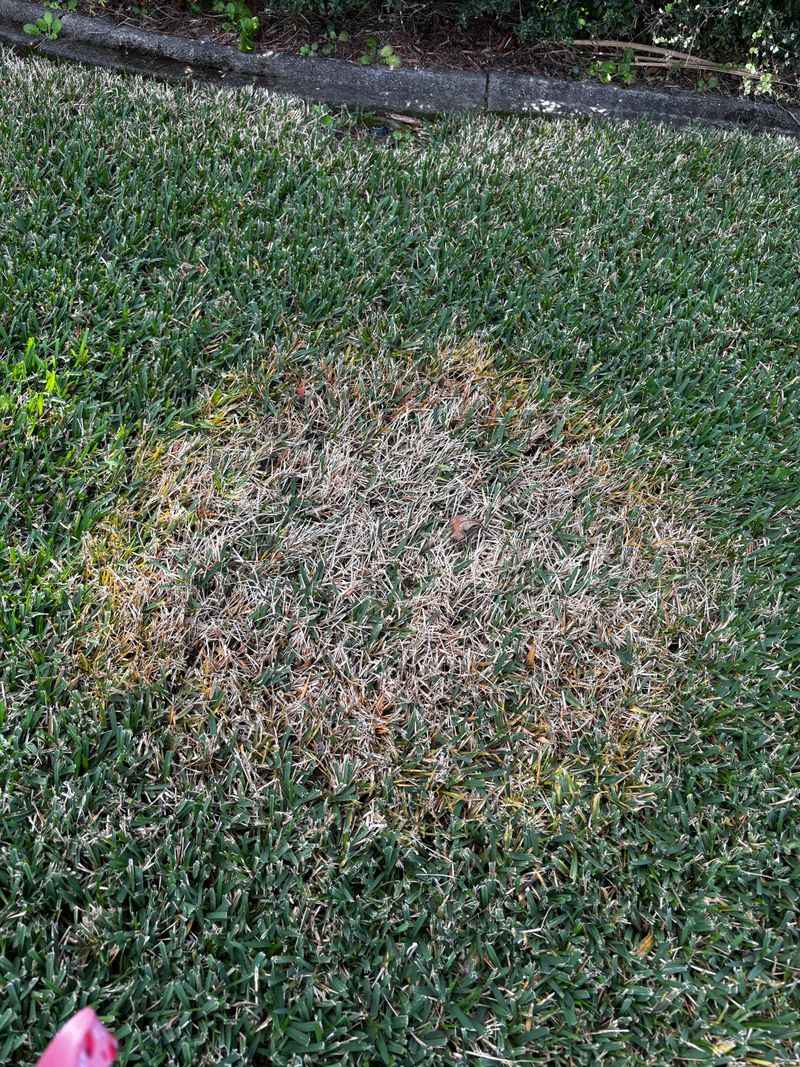
Fall can bring renewed brown patch activity in Florida lawns as temperatures become more favorable for the disease. The trigger is a temperature combo: days between 70 and 85 degrees with nights dipping under 68.
Circles start out yellow, fade to tan, then settle into brown, sometimes widening until they merge across an entire lawn. An active infection often carries a light yellow-orange halo around the outer edge.
Here is the encouraging part. The fungus mostly damages blades while leaving roots alone, so turf can recover once conditions improve.
St. Augustinegrass gets targeted most often, with zoysia and Bermudagrass also susceptible. Long periods of leaf wetness greatly increase the risk of brown patch development.
Thick thatch traps humidity right where the fungus lives, so reducing that layer helps a great deal. Excess nitrogen fertilizer is another common contributor, since soft growth offers easy entry.
Shift irrigation to sunrise hours and let the lawn dry through the afternoon. Rinse or brush off your mower deck after cutting affected areas so you are not spreading spores around the yard.
If patches keep expanding, apply a fungicide labeled for brown patch and repeat according to directions. Combined with smarter watering, most lawns knit back together by spring.