The Little Brown Sleepers Hanging On Minnesota Evergreens Are Waiting For Spring
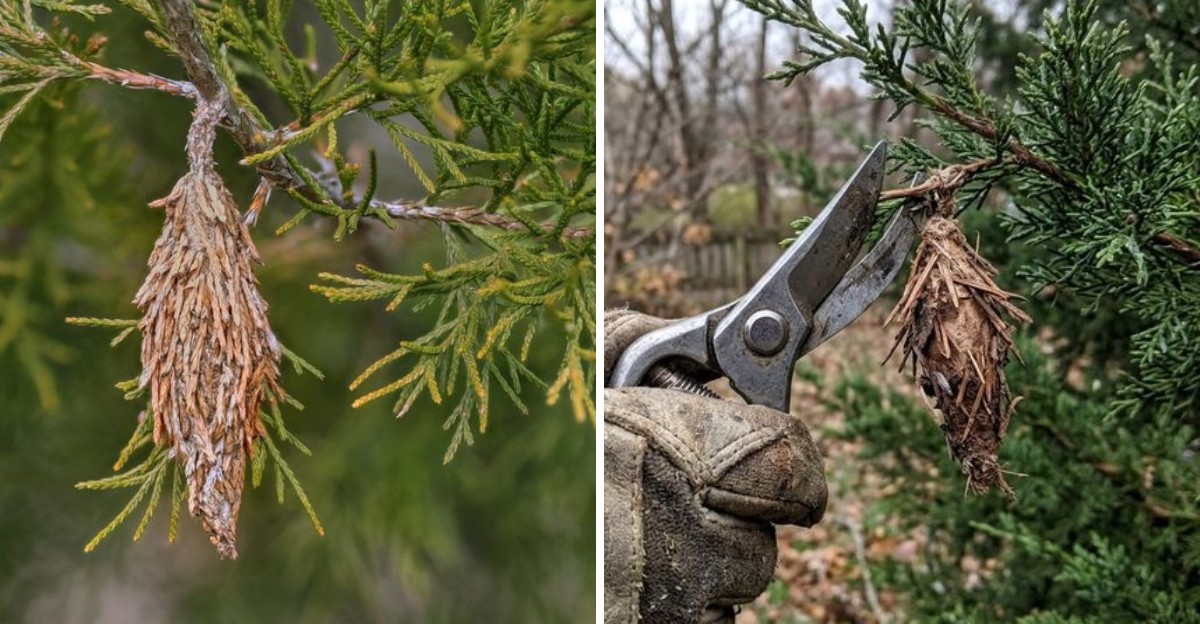
Some Minnesota evergreens are carrying hundreds of tiny eggs right now, packed inside brown pouches built from silk and chewed needles. Each pouch was stitched together by a moth that has no wings.
She spent her adult life inside it. I first mistook them for shriveled cones on a juniper. Then I tugged one, and it held on like it was tied with fishing line. A cone does not do that.
You might notice them most in late winter, swaying on arborvitae, spruce, and juniper while everything else looks bare.
They blend in so well that many people walk past them for years, even in Minnesota yards where they turn up every season.
The trick is that they look like part of the tree. Inside, the next generation is waiting for warm June days. I had to find out more. What exactly is hiding in there, and should you pluck it off before it wakes up?
Those Brown Cones on Your Juniper Are Holding On a Little Too Tight
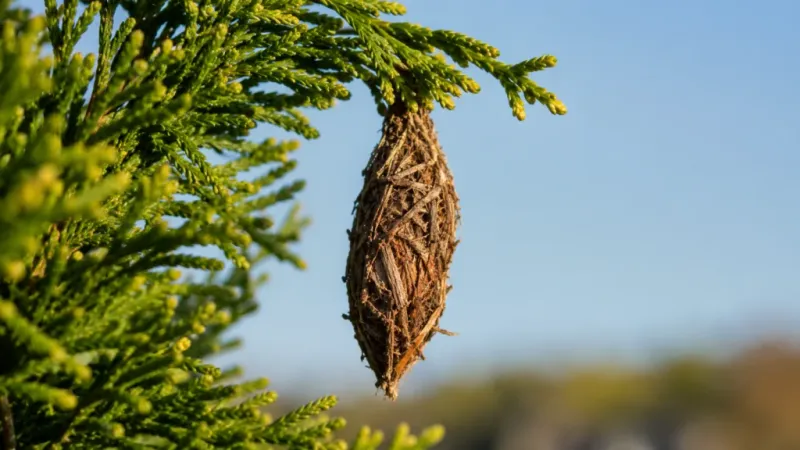
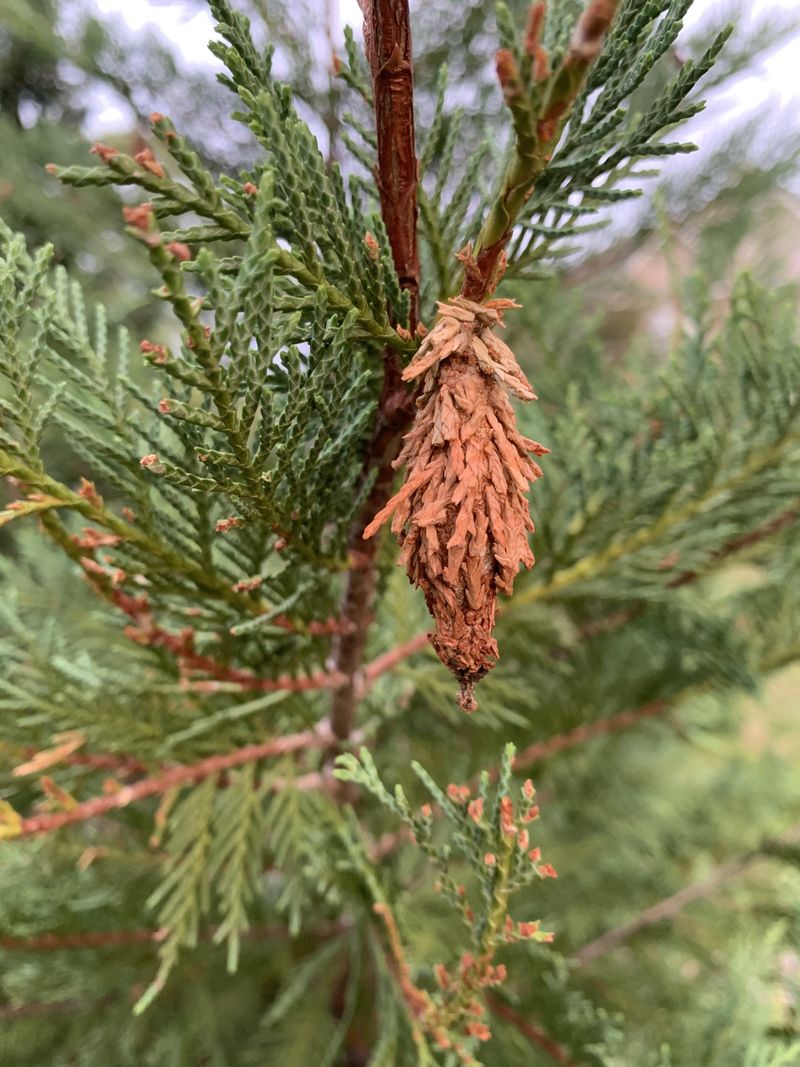
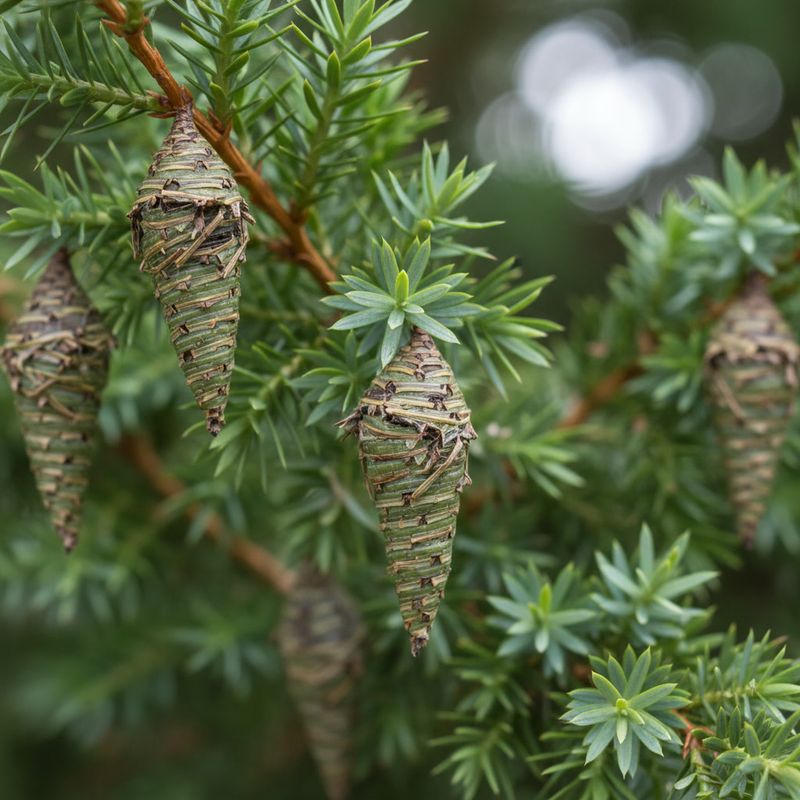
Cones fall off. That simple fact is your first clue. Give one of those brown spindles a gentle tug, and it stays put. It is fastened to the twig with a tough band of silk, and the outside is shingled with bits of needles and bark.
The disguise works so well that most people assume they are looking at old cones or clumps of dried foliage.
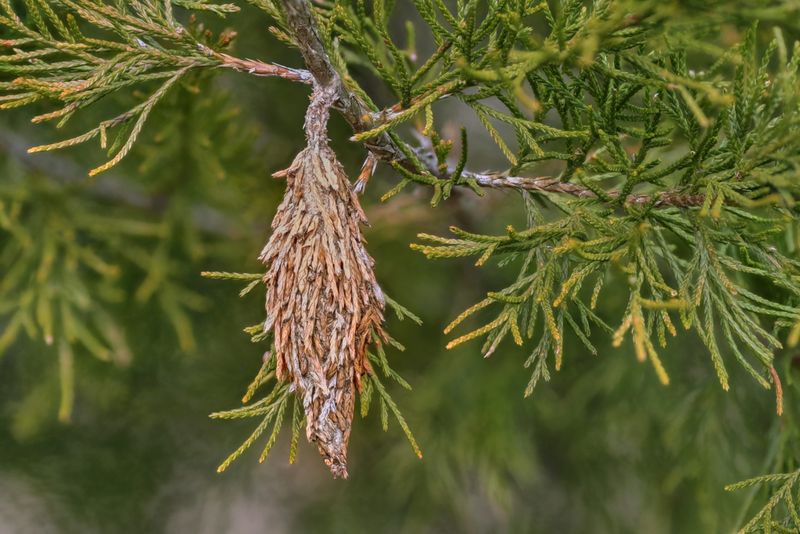
What you have found are bagworm bags. Each one was built by a caterpillar of the moth Thyridopteryx ephemeraeformis, which carried its homemade shelter everywhere it went last summer. Most bags measure about one to two inches long when fully grown.
A few other brown objects show up on Minnesota shrubs in winter, so it helps to compare. Praying mantis egg cases are foamy, tan, and lumpy, with no needle pieces stuck to them.
Large moth cocoons, like those of the cecropia, are baggier and often run along a twig instead of dangling from it.
Bagworm bags hang down like tiny ornaments and taper at both ends. Once you see a few, your eyes start finding them everywhere, especially on junipers and arborvitae near homes.
Bagworm Bags Are Tiny Nurseries Packed With Eggs
Nature got a little strange with this one. The mother moth that built each bag cannot fly, and she has no wings at all. That oddity shapes everything about how this insect spreads.
Male bagworms grow wings and flutter around in late summer and early fall. Females stay inside their bags, looking more like a soft grub than a moth.
A male finds her, they mate, and she lays her eggs right there in the shelter she built as a caterpillar.
One bag can hold several hundred eggs, and some counts top 1,000. Once the eggs are laid, the female drops out of the bag and her life cycle ends.
The bag becomes a sealed, silk-lined nursery for winter. That is why the bags you see now matter so much. Each one is not a single pest.
It is a whole future colony waiting for the right temperatures. Ignore a dozen bags this winter, and you could face thousands of hungry caterpillars by July.
Bags from males are empty after they fly off, so not every bag holds eggs. You can sometimes tell because male bags tend to be slimmer. Still, it is hard to sort them by eye, so most experts suggest treating every bag as if it is full.
Hand-Picking Bagworm Bags Before June Is Your Best Move
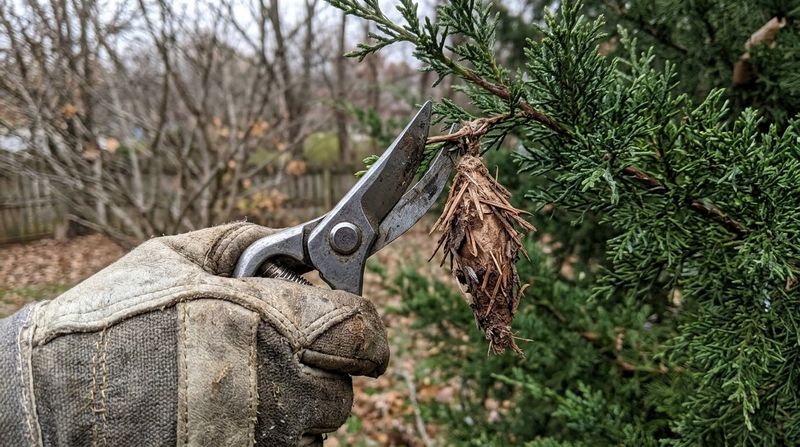
Grab a pair of pruners and a small bucket. Honestly, that is the whole toolkit for the best bagworm control method out there.
Bagworms are more common to the south and east, and Minnesota sits near the northern edge of their range.
Late fall through spring is the ideal window, since the eggs are sitting still and the bags are easy to spot. In Minnesota, aim to finish before eggs hatch in late May or June.
I like doing this on a calm, sunny day in March or April. Work your way around each shrub slowly, checking from the bottom branches up to the top. Bags tend to cluster, so finding one usually means more are close by.
Disposal matters. Dropping bags on the ground lets the eggs hatch right under the plant, and the tiny caterpillars will crawl back up.
Instead, toss them into a bucket of soapy water, seal them in a bag for the trash, or crush them.
Spraying in winter does nothing useful, because the eggs are protected by the bag. Save any sprays for after hatching, when the caterpillars are small and exposed. Picking now often means you skip spraying later.
Snip the Silk Band So It Does Not Choke the Branch
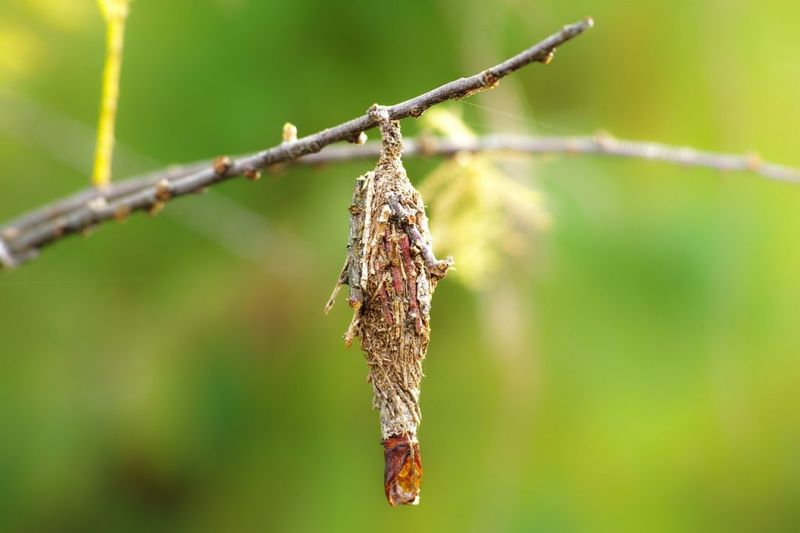
A forgotten thread can cause more trouble than the bag itself. That surprised me the first time I read about it.
Bagworms anchor their bags with a band of silk wrapped around the twig. This silk is incredibly strong and does not break down quickly.
As the branch grows thicker over the next year or two, the band can tighten and cut into the bark, much like a wire left around a tree trunk.
That squeeze, called girdling, blocks water and nutrients from moving past the band. The tip beyond it may turn brown and decline, leaving an odd gap in an otherwise healthy shrub.
So when you pick bags, take a few extra seconds. Use pruners or small scissors to snip the silk right where it meets the twig, then peel away any leftover strands with your fingers.
Pulling the bag straight off often leaves the band behind. A pocketknife works, but pruners give you better control.
Check older branches too. You may find silk bands from bags that fell off years ago, still hugging the wood.
Gently clip those away as well. Your arborvitae will grow cleaner, fuller tips without those tiny tourniquets pinching them.
Arborvitae and Spruce Take the Hardest Hit From Hungry Caterpillars
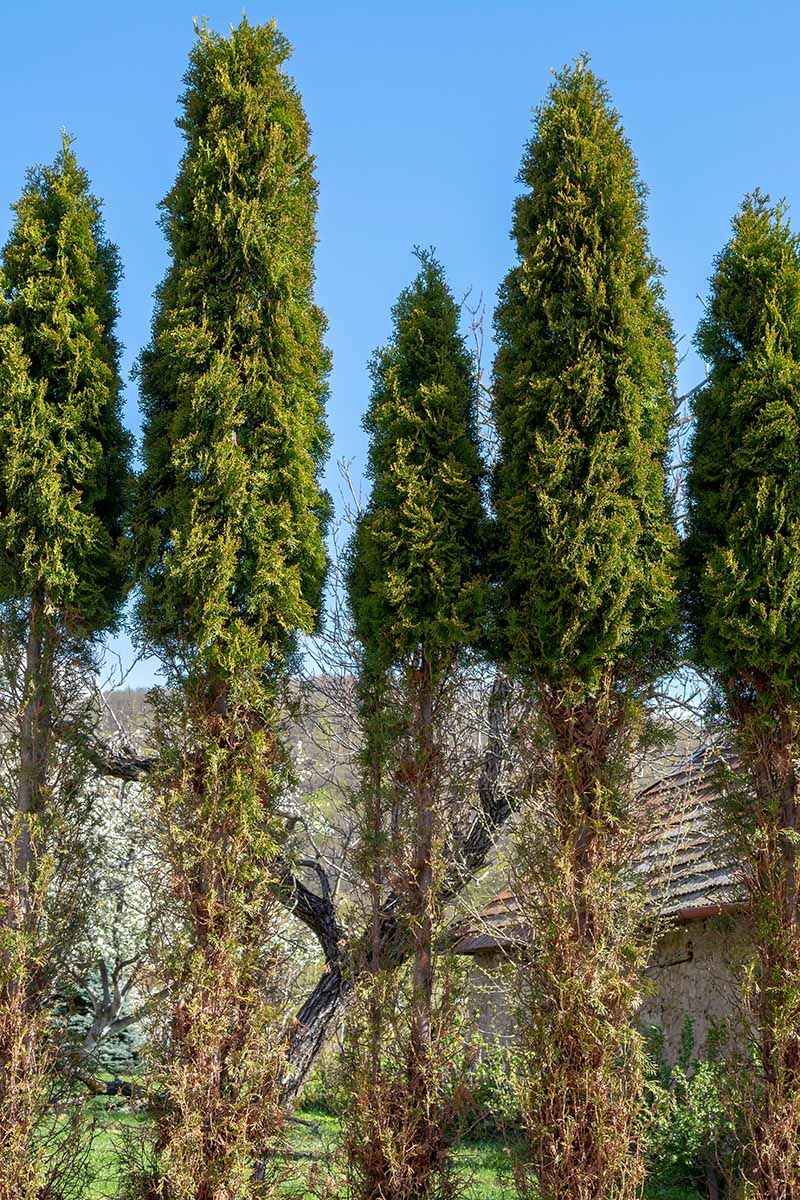
Junipers, arborvitae, spruce, and pine top the bagworm menu. These caterpillars will also nibble on deciduous trees like maple, linden, and honeylocust, but evergreens take the worst of it.
The reason comes down to recovery. A maple that loses leaves in June can push out a new set the same summer.
Most evergreens do not regrow needles on bare branch sections, so heavy feeding can leave thin, brown patches that last for years.
Young caterpillars start small, scraping the surface of needles. By midsummer, larger larvae strip needles down to the twig.
A shrub with dozens of bags can look ragged by August, and repeated heavy feeding over several seasons can cause serious decline.
You might notice the bags first on hedges or foundation plantings. Arborvitae rows and juniper groundcovers give caterpillars an easy buffet, with plants touching one another so larvae spread without much effort.
Even one neglected shrub can become a source for the whole block. Healthy plants handle light feeding better, so basic care helps.
Water evergreens deeply during dry spells in summer and fall, and spread two to three inches of mulch over the root zone without piling it against the trunk. A stressed shrub has fewer reserves to bounce back.
Harsh Winters Can Thin Out Bagworms Hiding on Spruce Branches
Cold might be your quiet helper this year. Bagworms are much more common to the south and east, and Minnesota sits near the northern edge of their range.
University of Minnesota Extension notes that bagworms are found mostly in the southern part of the state and are not a common problem statewide.
Their eggs are sensitive to very low temperatures, and research suggests that extended cold snaps well below 0°F can reduce how many survive.
That does not mean every bag is empty after a harsh January. The bag offers some insulation, and snow cover or a sheltered spot near a warm house wall can protect eggs. Survival varies from yard to yard and winter to winter.
Bagworms can also arrive on nursery stock. A new arborvitae from a warmer region might carry a bag or two tucked deep in its branches, so inspect new evergreens before planting.
Rather than guessing, play it safe. Treat the bags you find as active until proven otherwise. If you are curious, carefully cut one open in late spring and look for cream-colored eggs or tiny, wriggling larvae. Either way, removing them costs you very little time.
Watch for Tiny Bagworm Caterpillars Ballooning in Early Summer
Late May and June bring a strange sight. Tiny bagworm caterpillars climb out of their mother’s bag, spin a silk thread, and let the wind carry them away.
Scientists call this ballooning. It is how bagworms spread from shrub to shrub, since adult females cannot fly.
In Minnesota, hatching usually happens from late May into June, depending on the weather.
Within a day or so, each caterpillar starts building a fresh bag from silk and needle bits. Look closely and you will see tiny cone-shaped bags, smaller than a pencil eraser, standing upright on the needles.
Missed some bags this spring? This is your second chance. Young caterpillars are easiest to control while they are small, usually in June. A spray of Bacillus thuringiensis, often sold as Bt, targets caterpillars and is gentle on bees and birds.
Follow the label carefully, and spray again in a week or two if new bags keep appearing. The biggest takeaway is simple. A few quiet minutes with your pruners now saves a summer of chewed needles.
Check your evergreens this week, and those little brown sleepers will not get the wake-up call they are waiting for.