The Meaning Behind A Cardinal Pair Staying In Your Ohio Yard All Winter
The red bird on your snowy fence in January may be the same bird that sang outside your window last May. Most of these birds spend their whole lives within a mile or so of where they hatched.
That pair in your Ohio yard is not passing through. They know your shrubs, your feeder, and probably your schedule better than you think.
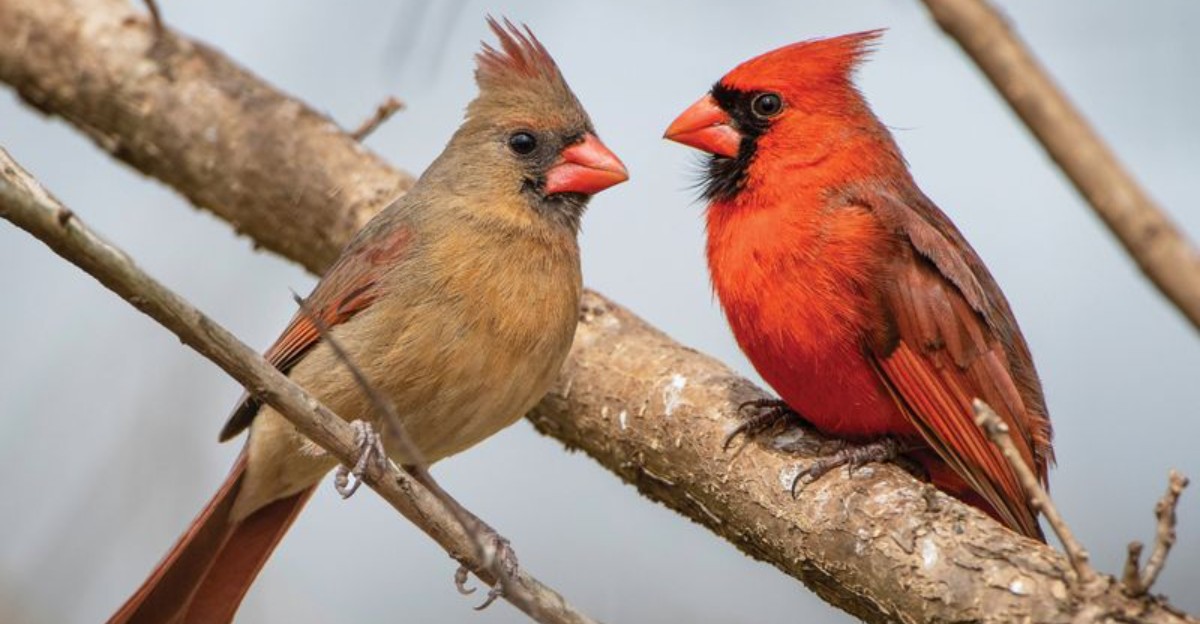
I love how a flash of crimson can make a gray morning feel brighter. Personally, I keep a pair of binoculars by the kitchen window just for them. You might notice the female is a warm tan with red accents, and she is every bit as bold as her mate.
So why do they stick together through the coldest months? And what does it mean when they pick your yard?
That Red Cardinal Pair On Your Feeder Picked Your Yard For A Reason
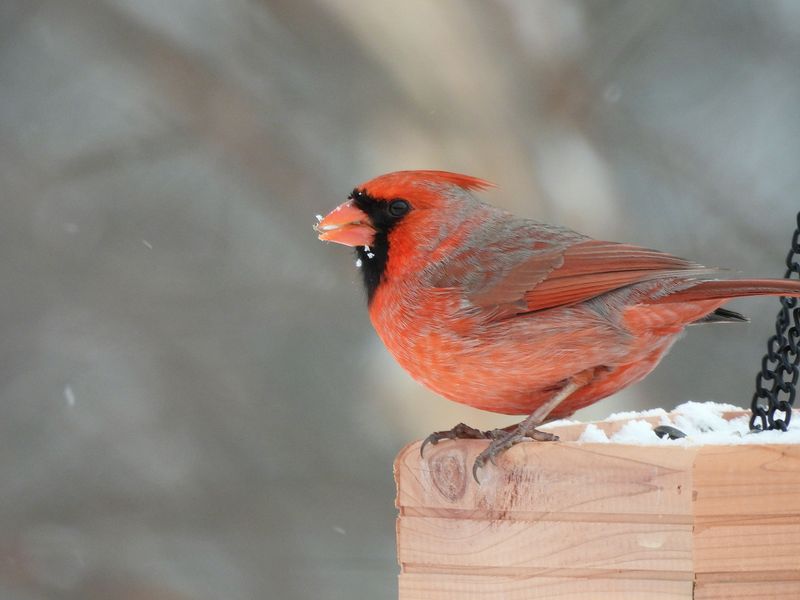
Cardinals are homebodies at heart. Ohio’s state bird does not migrate, so the pair you see in December has likely been nearby all year.
Banding studies show many cardinals stay within a small area for most of their lives. A pair that sticks around your yard all winter is telling you something simple and practical.
Your space checks the boxes they care about most.
Those boxes are food, shelter, and safety. A yard with a steady feeder, thick shrubs, and a few evergreens is like a cozy motel with a free breakfast bar.
When cold winds roll across the state, cardinals need places to hide and refuel quickly.
You can read their presence as a quiet compliment. Your habitat is working.
Many backyard birders feel proud when a pair shows up day after day, and they should.
Watch when they arrive. Cardinals are famous for visiting feeders early at dawn and again around dusk, often before other birds show up.
If you see them in that soft, dim light, you are catching their regular routine.
Keep that routine reliable. Birds that count on your yard will return as long as the food and cover stay put through the season.
Cardinal Couples Often Stay Together Year Round
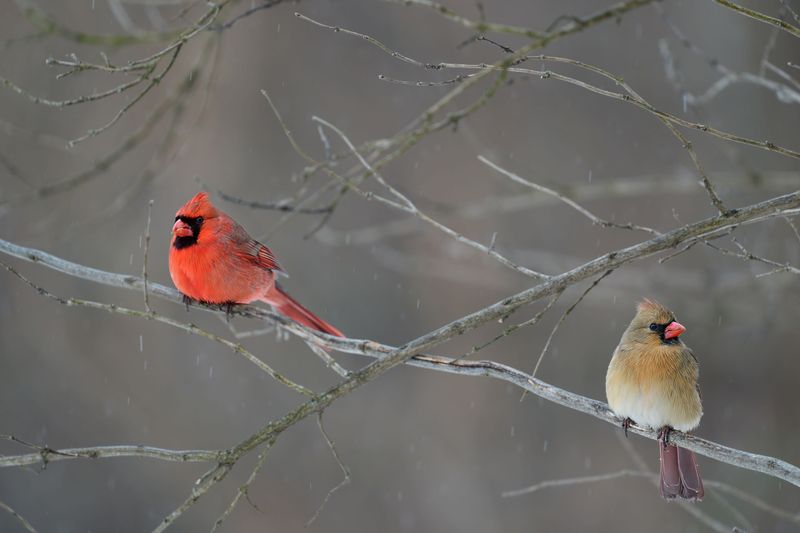
Romance fans, this one is for you. Northern Cardinals usually form pair bonds that hold through the winter and into the next nesting season.
Scientists call them socially monogamous. That means a male and female team up, raise young together, and often stay close even when nesting ends.
Many pairs remain together for several years.
The science adds a little honesty, though. Pairs sometimes split between seasons, especially after failed nests.
If one partner is lost, the other usually finds a new mate fairly quickly. So a pair in your yard may be longtime partners, or a newer couple getting settled.
Look for teamwork clues. Pairs often travel together, take turns at the feeder, and call softly to keep in touch.
Those little metallic chip notes are their way of saying, “I’m over here.”
In late winter, you may catch the sweetest behavior of all. The male picks up a seed and passes it beak to beak to the female.
Your Ohio Garden Changes Every Week. Your Plan Should Too.
Gardening in Ohio changes quickly throughout the season. Every Friday you’ll receive a simple weekly plan showing exactly what to plant, prune, fertilize, harvest, and protect so you never miss the right timing.
This mate feeding often ramps up as spring approaches.
I think it is one of the best shows a backyard can offer. Keep your camera handy near the feeder in February and March, because those moments happen fast.
Winter Cardinal Flocks Loosen The Rules For A While
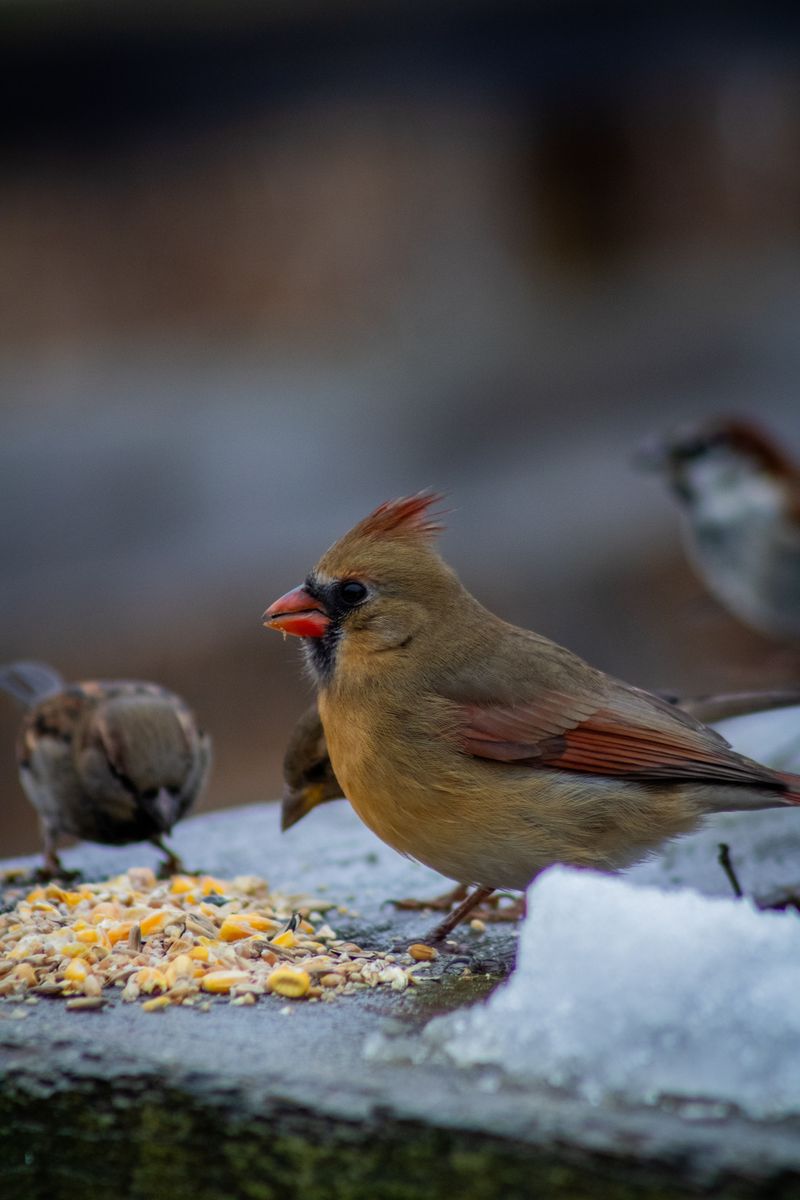
Here is a surprise for anyone who only sees one pair. In winter, cardinals often relax their strict territory rules and gather in loose flocks.
These groups can include a handful of birds or sometimes a dozen or more. They may mix with juncos, sparrows, chickadees, and titmice.
More eyes mean better odds of spotting hawks and finding food.
Your pair might be part of that larger crew. One morning you count two cardinals, and the next morning you count eight.
Nothing odd is happening. The birds are simply sharing a good food source during the hardest months.
You can support these winter groups easily. Scatter some seed on the ground or on a low platform, since cardinals like to feed low.
Place it near shrubs so birds can dash to cover in seconds.
Spacing helps too. Set feeders about 10 feet from dense shrubs, close enough for quick escapes but far enough that cats cannot ambush from hiding.
If you keep cats, keeping them indoors helps the birds a lot.
As days lengthen in late winter, flocks break up. Males start singing louder and chasing rivals, and your pair may claim the yard as their own again.
Black Oil Sunflower And Safflower Seeds Keep Cardinals Coming Back
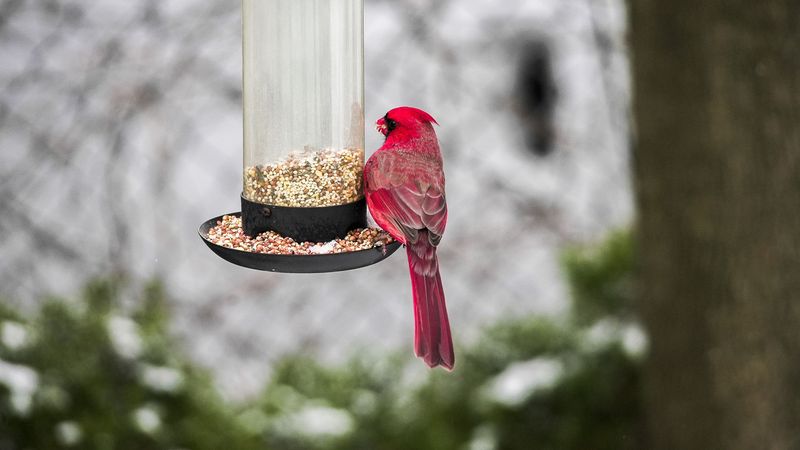
A cardinal’s beak is built like a little nutcracker. That thick, cone-shaped bill crushes seeds that smaller birds struggle to open.
Black oil sunflower seed is the top pick for most backyards. The thin shells crack easily, and the seeds are packed with fat for winter energy.
Safflower seed is another favorite, and squirrels and starlings tend to leave it alone.
Feeder style matters as much as the menu. Cardinals are not great at clinging to skinny perches.
They prefer platform feeders, hopper feeders with wide ledges, or tray feeders.
Keep it clean, too. Wet seed can mold quickly during Ohio thaws, so scrape out clumps and wash feeders every couple of weeks with hot soapy water.
Let them dry before refilling.
Fun fact time. Cardinals get their red color from carotenoid pigments in their food, mostly from fruits and some seeds.
Healthy diets help males keep that bright plumage.
Consistency is your secret weapon. During snowstorms and deep freezes, a full feeder can make a real difference.
Refill before big storms hit, and your pair will learn your yard is a dependable stop.
Dense Evergreens Give Cardinals A Warm Place To Roost
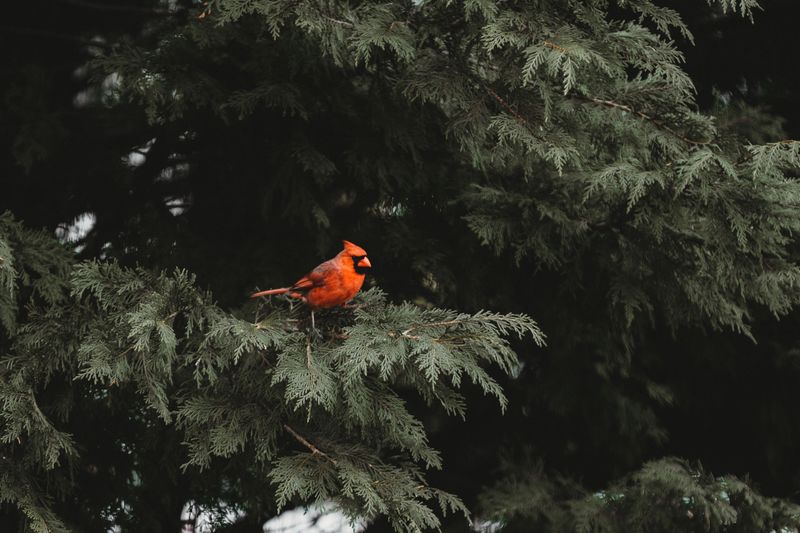
Ever wonder where your cardinals go after sundown? Most slip into thick shrubs, vines, or evergreens to roost for the night.
Shelter can matter as much as seed. Thick branches block wind, hide birds from owls, and hold a little extra warmth.
On bitter nights, cardinals fluff up their feathers to trap heat, a bit like wearing a puffy coat.
Native evergreens are great picks for Ohio yards. Eastern red cedar is a top choice, offering dense cover plus berry-like cones birds eat.
American holly works well in many parts of the state, and white pine adds height.
Brush piles help, too. Stack fallen branches loosely in a back corner, and you have instant cover that costs nothing.
Small birds will dart in and out of it all winter.
Skip invasive shrubs like bush honeysuckle and burning bush, even if birds eat their berries. These plants crowd out native woods, and Ohio has listed several as invasive.
Plant new evergreens in spring or early fall, not mid-winter. Meanwhile, avoid heavy pruning on existing shrubs until late winter.
That cozy tangle is somebody’s bedroom.
Listen Closely Because The Female Cardinal Sings Too
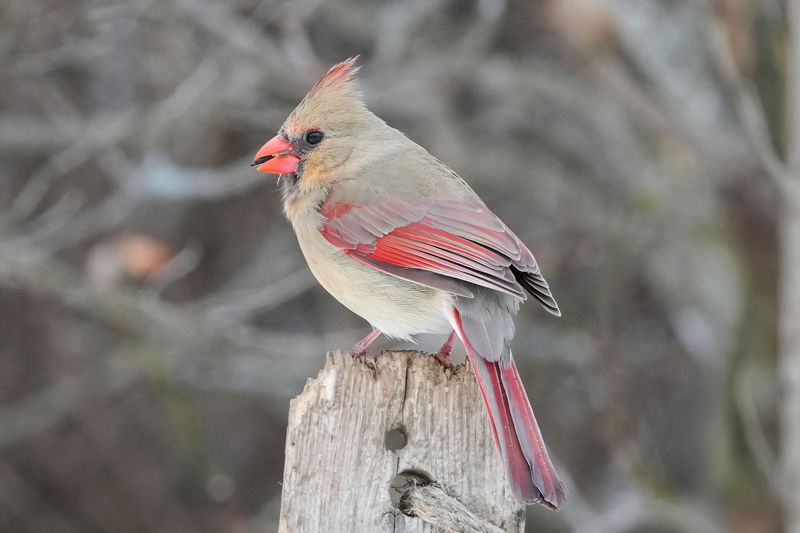
Plenty of folks are shocked to learn this. Female Northern Cardinals sing, and their songs can be just as rich as the males’.
That is unusual among North American songbirds, where singing is mostly a male job. Female cardinals often sing from the nest in spring.
Researchers think some of those songs may tell the male when to bring food.
Winter is a great time to learn their voices. You will mostly hear the sharp “chip” call that pairs use to stay in touch.
By late January or February, males start practicing the classic “cheer, cheer, cheer” and “birdie, birdie” songs.
Pairs sometimes trade song phrases back and forth. It sounds like a duet, and it may help strengthen their bond.
Want to tell them apart by eye? The male is bright red with a black mask.
The female is warm brown with red tinges on her crest, wings, and tail, plus an orange-red beak.
Try a free app like Merlin from the Cornell Lab of Ornithology. Hold your phone near the window, and it can help identify who is singing.
It is a fun winter project for kids and grownups alike.
Many People See A Red Bird As A Sign Of Hope And Loved Ones
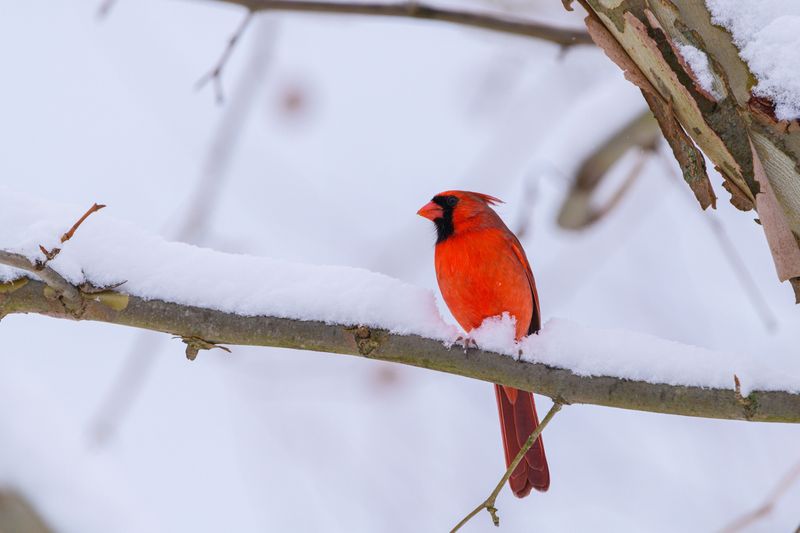
Ask around at any family gathering, and someone will have a cardinal story. Maybe a bird showed up right after a funeral, or landed near the house on a hard day.
A popular saying goes, “When cardinals appear, angels are near.” Many people see these birds as gentle reminders of loved ones they miss. Others view the bright red against snow as a symbol of hope and steady warmth during the darkest season.
A pair adds another layer. Because cardinals often stay together, couples are widely seen as a sign of loyalty, partnership, and lasting love.
Some people even give cardinal ornaments as anniversary or sympathy gifts.
These meanings come from folklore and personal belief, not science. Still, they matter to a lot of people, and I find them comforting.
Birds have carried meaning for humans for a very long time.
You can honor both sides. Enjoy the biology, and let the moment mean something personal too.
Nothing says you have to choose.
One idea I love is keeping a simple winter journal. Jot down the date, weather, and how you felt when the pair showed up.
Years later, those notes become a sweet keepsake.
Plant Native Winterberry And Water Sources To Welcome Cardinals Next Year
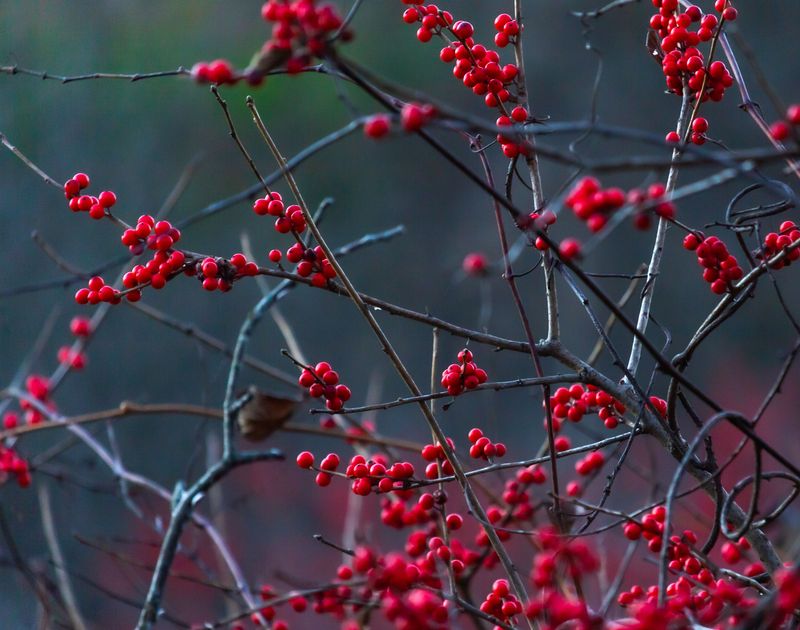
Feeders are great, but plants keep the party going for years. A yard full of native shrubs gives cardinals food, shelter, and nesting spots in one package.
Winterberry holly is a showstopper in Ohio. Its red berries hang on bare branches deep into winter.
Plant at least one male shrub nearby so the females produce fruit.
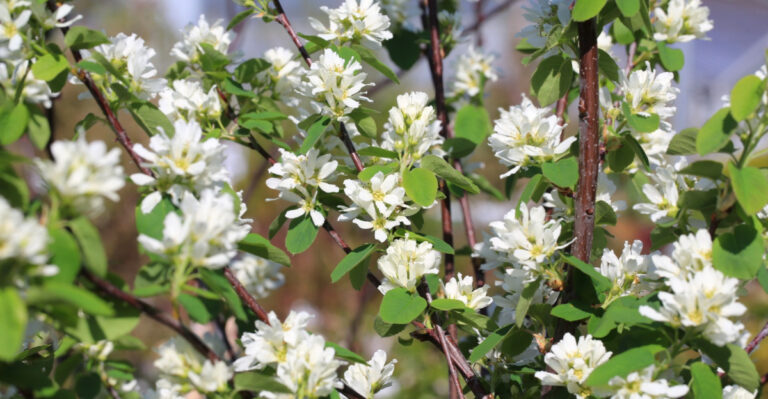
Other strong native picks include gray dogwood, American cranberrybush viburnum, serviceberry, and staghorn sumac. Serviceberry fruits in early summer, while sumac and dogwood provide food later in the year.
Plant these in spring or fall when the ground is workable.
Water is a big deal too. Birds need to drink in winter, and frozen puddles leave few choices.
A heated birdbath keeps water open on freezing days, and cardinals will visit often.
Leave some messiness behind. Seed heads on coneflowers and native grasses offer bonus snacks, and leaf litter shelters insects that cardinals feed to babies in spring.
My best advice is to think in layers. Tall trees, middle shrubs, and low plants together create the kind of cover cardinals love.
Build that, and your red pair may become a familiar part of every season, not just winter.