The Meaning Behind a Flock of Starlings Swirling Over Your Ohio Yard
A single bird in a swirling flock keeps track of only about seven neighbors. That tiny rule is enough to steer thousands of wings at once, with no leader calling the shots.
I still get goosebumps when the evening sky over my garden suddenly darkens and starts to ripple. The shape bends like smoke, then folds into itself, then stretches out again. It looks planned, yet nobody is in charge.
On a chilly Ohio evening, you might catch this show while dragging the trash cans to the curb. Most of us stop, stare, and wonder if something strange is happening. Is it a sign of bad weather, or a warning about your yard?
The real answer is more practical than spooky. It also says a lot about predators, cold nights, and the clever survival tricks hiding above your rooftop.
That Swirling Black Bird Cloud Has a Bedtime Purpose
Most folks guess it means a storm is coming, but the timing tells a different story. These dazzling sky shows usually happen in the last half hour before sunset.
That clue points straight to one thing: bedtime.
European starlings spend their days spread out, feeding in fields, lawns, and parking lots. As dusk nears, small groups stream in from miles around and join together near a shared nighttime roost.
The swirling you see is the gathering phase, a kind of noisy check-in before everyone settles down.
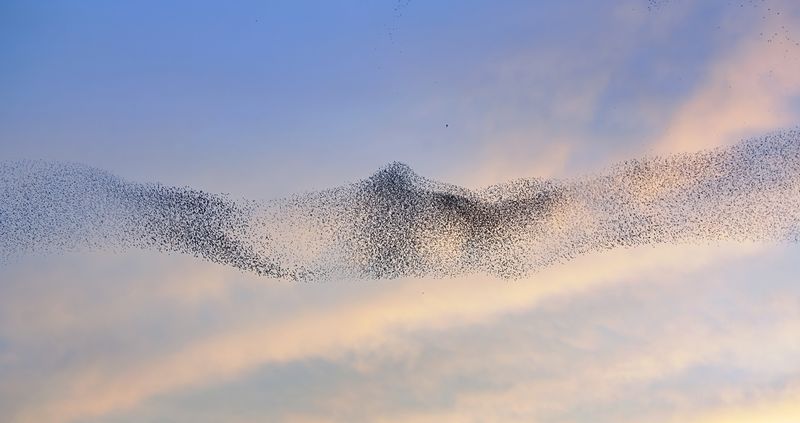
Scientists call this display a murmuration. The name comes from the soft rushing sound thousands of wings make as they turn together.
If you stand outside on a quiet evening, you can actually hear it, and I promise it sounds like wind through dry leaves.
So what does it mean for your yard? Mostly, it means you live close to a roost site or along a flight path leading to one.
Your property sits under a busy evening commute route.
There is no reliable link between murmurations and bad luck, weather changes, or anything mystical. Folklore is fun, but the birds are simply heading home.
Grab a jacket, look up, and enjoy the free show.
Hungry Falcons and Hawks Hate Those Shape-Shifting Starling Flocks
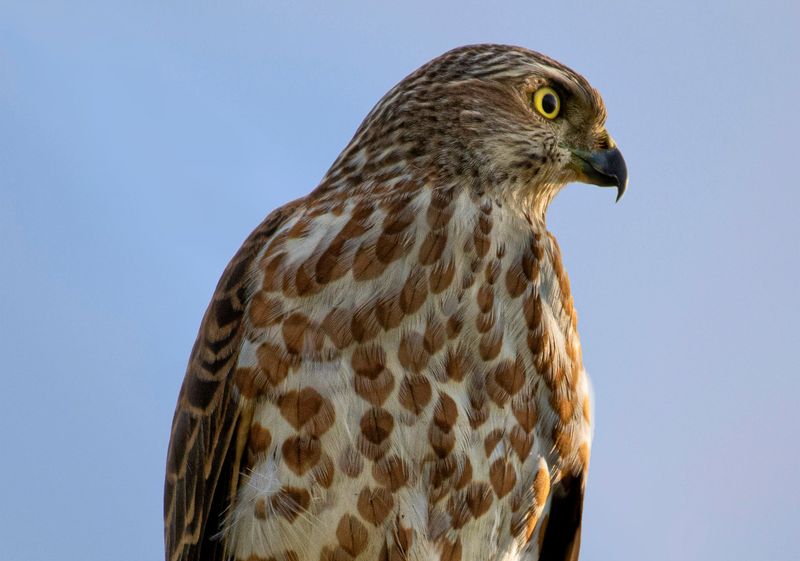
Watch closely during a murmuration, and you may spot a lone dark shape slicing toward the flock. That is often a hawk or a peregrine falcon looking for supper.
Suddenly the whole cloud bulges, splits, or folds away like a wave.
Safety in numbers is the leading explanation for this behavior, backed by plenty of field research. A predator chasing a huge, shifting mass struggles to lock onto one bird.
Every sharp turn makes the target harder to pick out.
Researchers in Europe found that murmurations tend to get bigger and more dramatic when predators show up. The flock tightens up and ripples faster under pressure.
In other words, the more danger nearby, the wilder the display often gets.
Cooper’s hawks, sharp-shinned hawks, and peregrine falcons all hunt in Ohio. Peregrines even nest on tall buildings and bridges in cities like Columbus, Cleveland, and Cincinnati.
Your Ohio Garden Changes Every Week. Your Plan Should Too.
Gardening in Ohio changes quickly throughout the season. Every Friday you’ll receive a simple weekly plan showing exactly what to plant, prune, fertilize, harvest, and protect so you never miss the right timing.
So the drama above your yard might include a real chase.
Bring binoculars next time you see the flock forming. Look for a single bird moving against the pattern, usually diving from above.
Spotting the hunter turns a pretty sunset moment into a nature documentary playing live over your fence.
Starlings Copy About Seven Neighbors Instead of Following a Leader
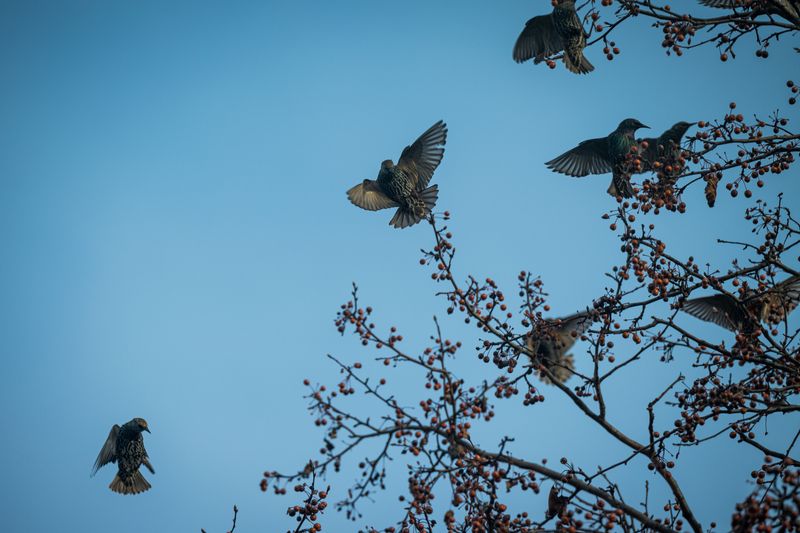
No bird is the boss up there. A team of Italian physicists studying starling flocks discovered that each bird pays attention to roughly six or seven nearby flockmates.
It matches their speed and direction, and that is basically the whole rulebook.
Here is why that matters. When one bird reacts to a threat, its neighbors react, then their neighbors react.
The change ripples across the flock in a fraction of a second, faster than any single leader could signal.
Scientists compare this to how a crowd at a stadium does the wave. Nobody plans the entire wave, yet it travels smoothly around the stands.
Starlings do the same thing in three dimensions, with turns, dips, and spirals.
Personally, I find this the most mind-blowing part of the whole spectacle. Brains smaller than a grape create patterns that engineers now study for drone swarms and self-driving cars.
That is a pretty impressive resume for a bird many people shrug off.
Try this the next time a flock passes over. Pick one edge and follow it as it moves.
You will see dark bands sweep through the cloud as birds tilt their wings at the same moment, a visual trace of those neighbor-to-neighbor messages.
Cold Ohio Nights Push Starlings Into Huge Winter Roosts
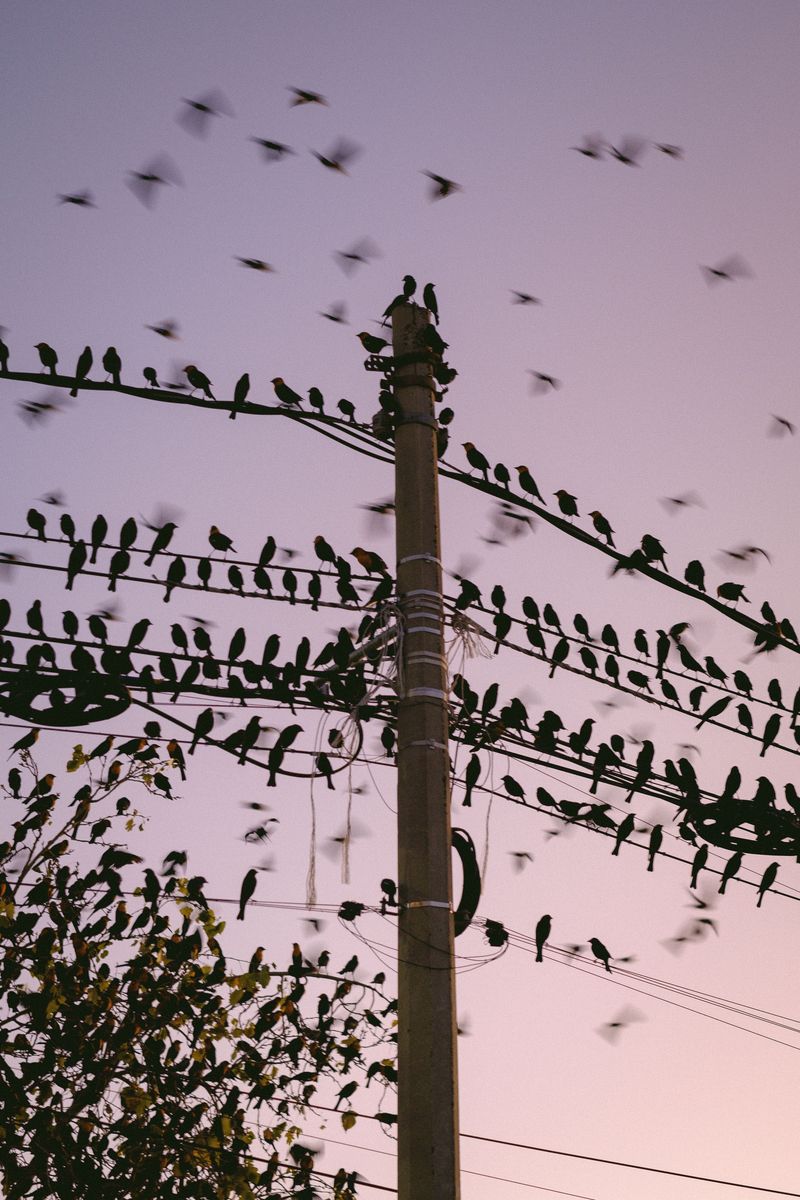
Brr is the word that explains a lot about winter flocks. Starlings are year-round residents across most of the state, and they need to survive nights that can dip well below freezing.
Roosting together helps them do it.
Packed into dense trees, evergreens, or sheltered structures, the birds lose less heat to wind and cold air. Crowded branches create a little pocket of shelter.
Many roosts also face away from harsh winds or sit inside thick cover.
Big roosts may also work like a gossip hub. One idea researchers have proposed is that birds learn about good feeding spots by following successful neighbors out in the morning.
That theory is still debated, but it would make the group bed even more useful.
Roost numbers swell in late fall and winter, roughly from October through February in Ohio. Some local roosts hold thousands of birds, and a few in the Midwest have topped hundreds of thousands.
Summer looks different, since pairs split off to nest in cavities.
If murmurations appear over your yard every chilly evening, the roost may sit within a few miles. Keep an eye on which way the flock drops at the end.
You might find the exact patch of trees they call home.
Catch the Best Starling Murmurations Right Around Sunset
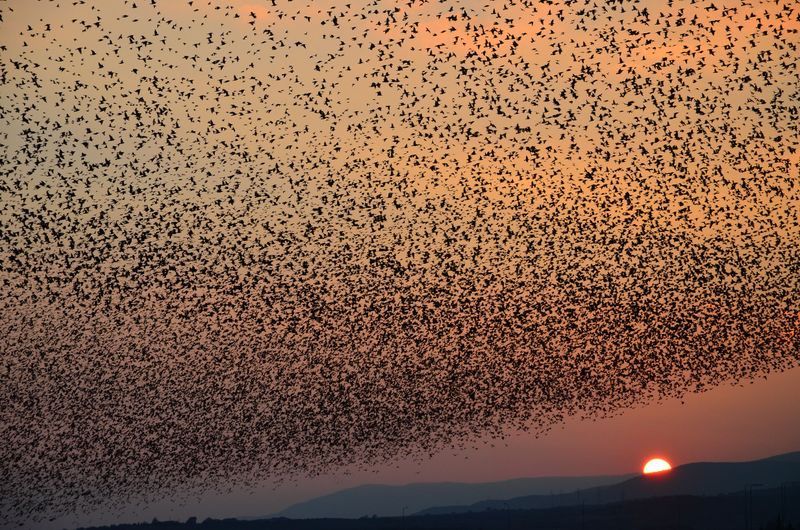
Timing is everything with this show. Head outside about 30 to 45 minutes before sunset on a calm, clear evening.
That window usually gives you the most action as flocks stream in.
Late autumn through winter offers the best odds in Ohio. November, December, and January bring larger gatherings because more birds join the roost when food is spread thin and nights are long.
Mild, still evenings often produce the most graceful swirls.
Open views help a lot. Fields, lakeshores, wetlands, and edges of town with tall trees or bridges nearby make great watching spots.
Lake Erie marshes and river corridors can be especially lively when starlings and blackbirds mix together.
A few simple tips make the experience better:
Dress warmly, since you will be standing still. Bring binoculars for close looks at turning flocks.
Turn off your phone flashlight and keep pets calm, because sudden noise can scatter birds early.
I like to make it a small evening ritual with a thermos of hot cocoa. Kids especially love counting the waves or guessing the next shape.
Snap a video, too, since photos rarely capture the motion as well as moving footage does.
A Flock of Starlings Pecking Your Lawn Is Usually Hunting Grubs
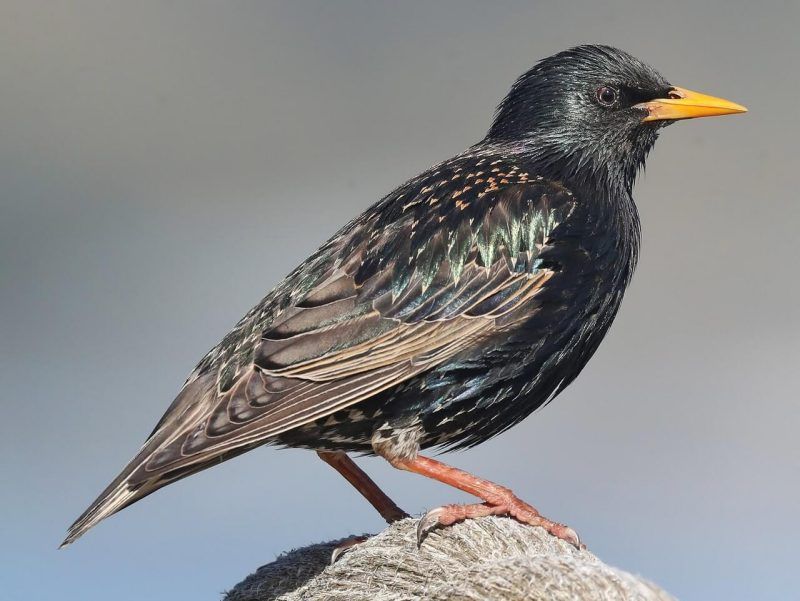
Sometimes the swirl ends right on your grass. A crowd of speckled birds lands, marches forward, and jabs the turf like tiny sewing machines.
That busy probing has a purpose.
Starlings use a special trick called open-bill probing. They push a closed beak into the soil, then spring it open to part the grass and spot hidden insects.
Their strong jaw muscles make this move surprisingly effective.
Their favorite lawn snacks include white grubs, cutworms, and other soil insects. Many Ohio gardeners battle Japanese beetle grubs, so a flock working your yard can actually trim that population.
Heavy starling activity may even hint that your lawn has a grub problem worth checking.
Want to know for sure? Ohio State University Extension suggests cutting a square foot of sod and peeling it back.
Counting several grubs or more per square foot often signals a real infestation.
Small holes from probing usually heal quickly. Patchy, loose turf that lifts like carpet points more toward grubs than birds.
In fall and winter, flocks may also feast on berries, seeds, and spilled birdseed, so food around your yard draws them in fast.
European Starlings Arrived Thanks to One Famous Release in New York
Every starling over your roof likely traces its family tree back to New York City. In 1890 and 1891, about 100 birds were released in Central Park.
Within decades, they spread across the continent.
A popular story links that release to a group wanting all the birds from Shakespeare’s plays in America. Historians now question how much of that tale is true.
The release itself is well documented, though.
Today North America holds tens of millions of starlings. Because they are not native, they get no protection under the federal Migratory Bird Treaty Act.
Ohio also treats them as an unprotected species, unlike cardinals, robins, and bluebirds.
That status matters for gardeners. Starlings compete hard for tree cavities and nest boxes, sometimes pushing out bluebirds, woodpeckers, and purple martins.
Their big flocks can also raid fruit crops like cherries and grapes.
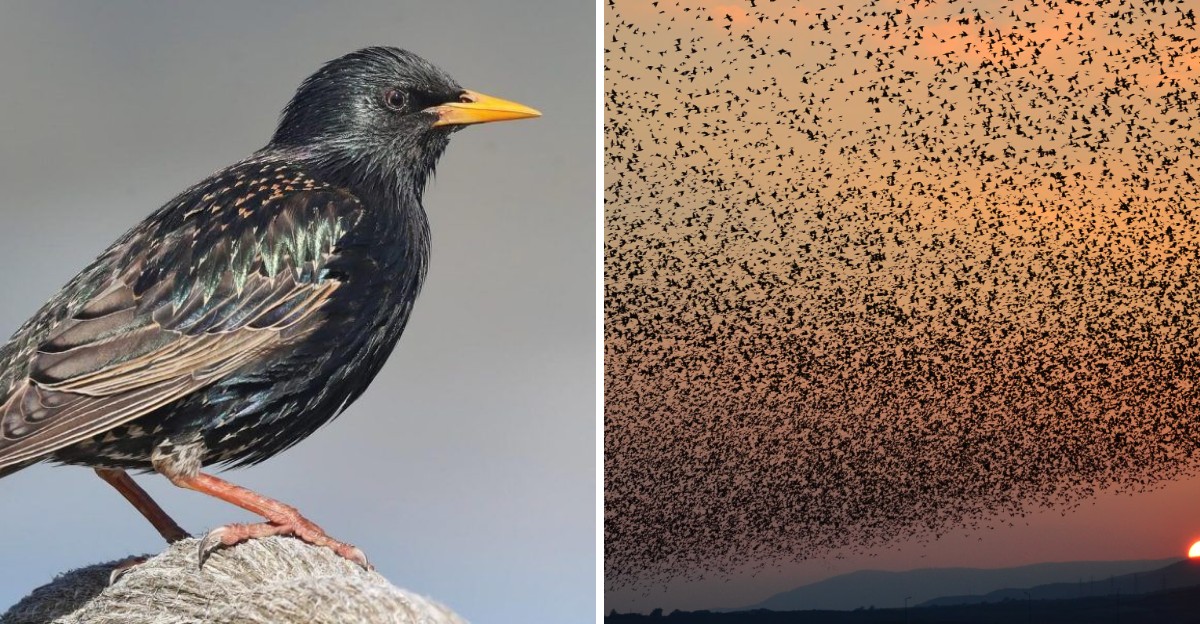
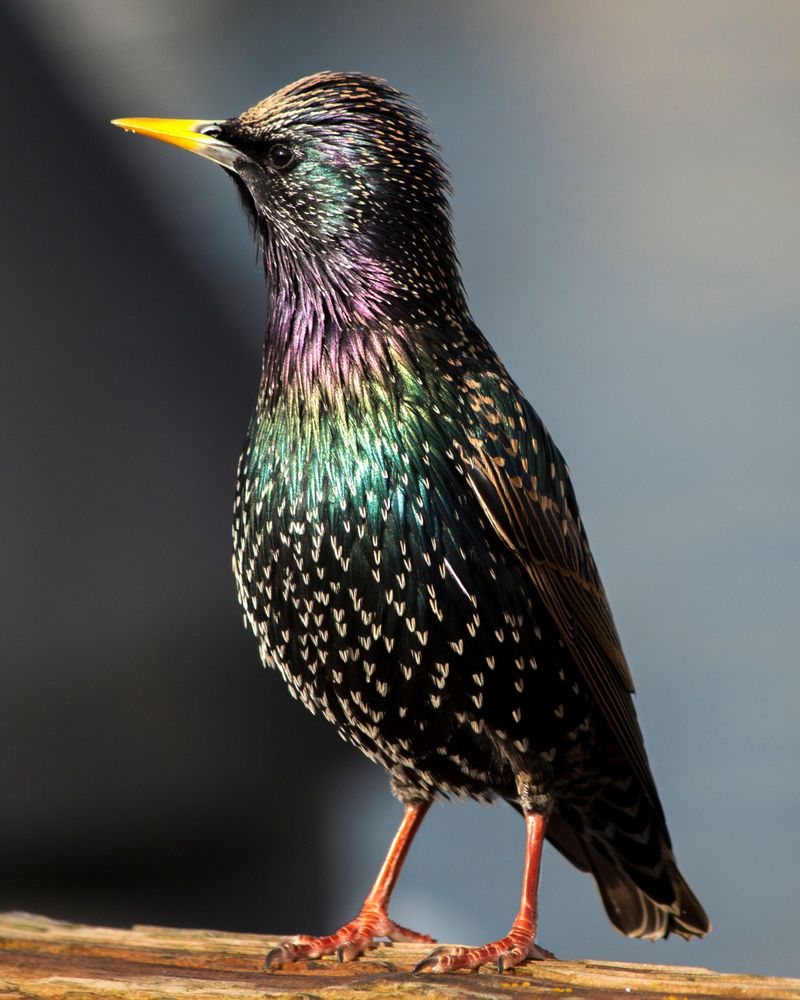
Still, the birds themselves are striking up close. Fresh fall feathers show bright white spots that look like stars, which wear away by spring to reveal glossy purple and green.
They are also talented mimics that can copy car alarms, phones, and other birds.
Protect Your Bluebird Boxes and Enjoy the Starling Sky Show
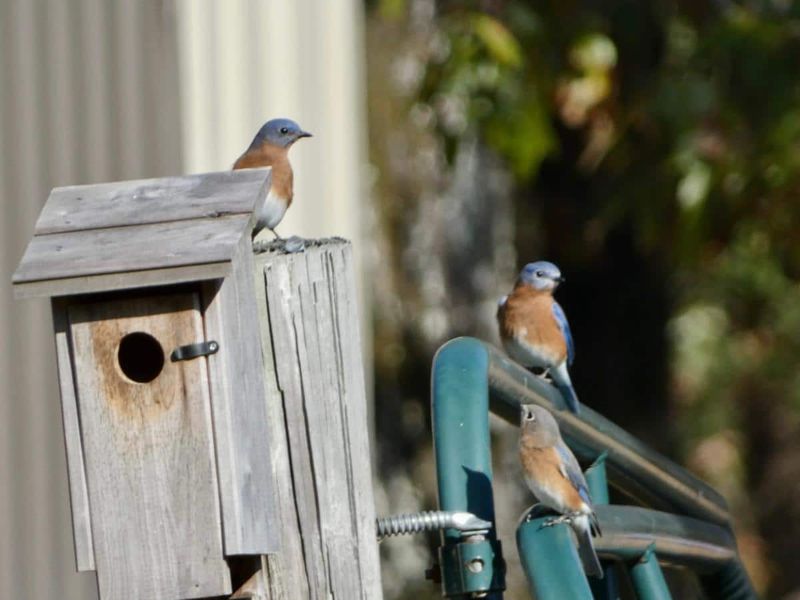
Enjoying murmurations and helping native birds can go hand in hand. A few smart yard choices let you admire the sky show while keeping starlings from crowding out local favorites.
Small tweaks make a big difference.
Start with nest boxes. An entrance hole of 1.5 inches welcomes Eastern bluebirds but blocks most starlings, which need a slightly larger opening.
Skip perches on boxes, since native cavity birds do not need them.
Feeders matter, too. Starlings love suet, bread scraps, and cheap seed mixes.
Upside-down suet feeders, tube feeders with short perches, and nyjer or safflower seed tend to favor chickadees, finches, and woodpeckers instead.
Plant native shrubs like serviceberry, spicebush, and gray dogwood for fruit and cover that benefit a wide range of birds. Avoid invasive plants such as Callery pear and bush honeysuckle, whose fruit helps spread trouble.
If a huge roost forms right on your property, contact the Ohio Division of Wildlife or USDA Wildlife Services for guidance. For most of us, though, the swirling flock is simply a winter gift.
Step outside at dusk, look up, and let it remind you how much life moves around your garden.