How to Build a Bee Hotel Before Florida’s Pollinators Slow Down for Winter
Some of the bees in my yard cut perfect little circles out of rose leaves. They fly off with each piece tucked under their bodies like a tiny green taco.
Those leaf pieces become walls for a nursery hidden inside a narrow tunnel. Florida has more than 300 native bee species, and a good chunk of them nest in holes like this. Most are solitary, so there is no hive, no queen, and very little interest in stinging you.
I love that you can invite these quiet workers home with scrap wood and a drill. Fall is a smart moment to do it, while goldenrod and asters still feed the late crowd.
So what kind of tiny real estate will they actually move into? The answer comes down to hole size, a dry roof, and one cleaning habit most people skip.
1. Those Tiny Leaf-Lined Tunnels Hold a Fall Secret
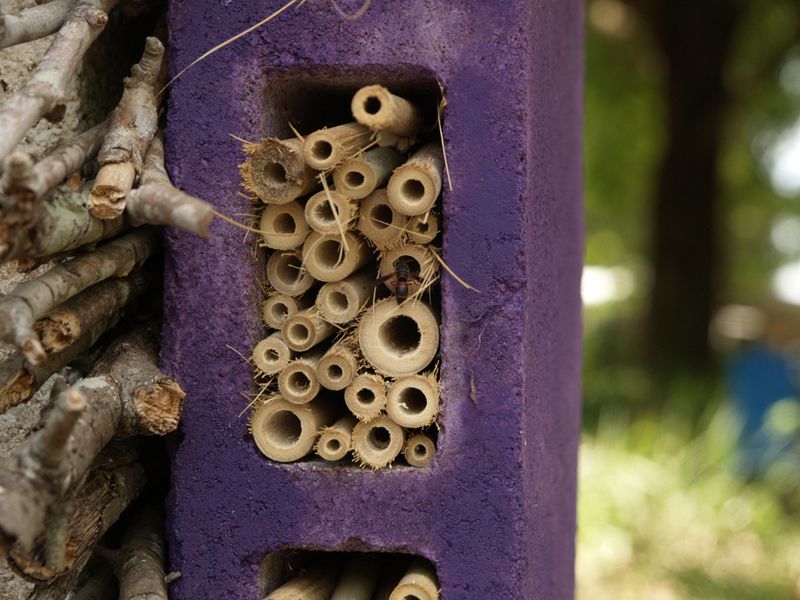
Peek inside a sealed nesting tube and you would find a row of tiny rooms, each stocked with pollen and a single egg. That little pantry is the whole parenting plan for a solitary bee.
Many cavity-nesting bees lay their final batch of eggs in late summer and fall. Those young bees stay tucked inside the tunnel as larvae or resting pupae through the cooler months.
When spring warms up, they chew their way out and start the cycle again.
Florida bees rarely shut down the way bees up north do. Activity mostly slows rather than stops, especially in the southern half of the state.
In North Florida, cool snaps can quiet things down for weeks at a time.
Putting up a nest box now gives late-season females a safe spot to finish their work. It also means your hotel is weathered, settled, and ready when the first spring bees go house hunting.
I like to think of fall setup as a head start. The bees that check in now become next year’s garden helpers.
Even if only a few tubes fill this season, you have planted the seed for a busier spring.
2. Drill Your Bee Hotel Holes the Right Size and Depth
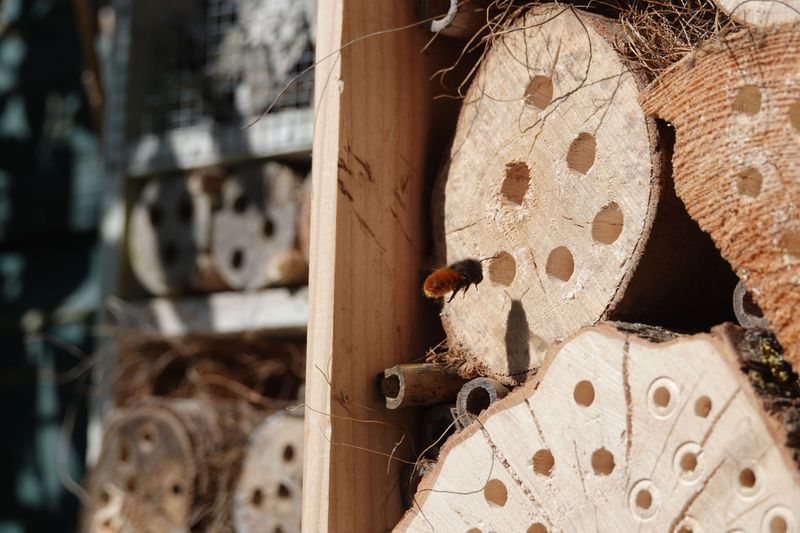
Grab a drill and a block of scrap lumber, and you are halfway to opening day. The trick is getting the holes right, because bees are picky tenants.
Most cavity nesters prefer holes between 1/8 inch and 3/8 inch wide. Smaller holes suit tiny resin bees, while wider ones attract leafcutter bees.
Offering a mix of sizes invites a wider variety of guests.
Depth matters just as much. Aim for tunnels about 3 to 5 inches deep for smaller holes, and 5 to 6 inches for the larger ones.
Deeper tunnels let mother bees lay more female eggs, which they usually place at the back.
Stop short of drilling all the way through the block. Bees want a closed back wall, like a cozy cave with one door.
If your bit pokes out the back, seal it with a piece of wood glued on firmly.
Smooth walls are a big deal too. Splinters can tear delicate wings, so use a sharp bit and sand the entrances lightly.
Your Florida Garden Changes Every Week. Your Plan Should Too.
Gardening in Florida changes quickly throughout the season. Every Friday you’ll receive a simple weekly plan showing exactly what to plant, prune, fertilize, harvest, and protect so you never miss the right timing.
Space holes about 3/4 inch apart so the wood stays strong and neighbors are not crammed together.
3. Untreated Wood Blocks and Paper Tubes Beat Pine Cone Clutter
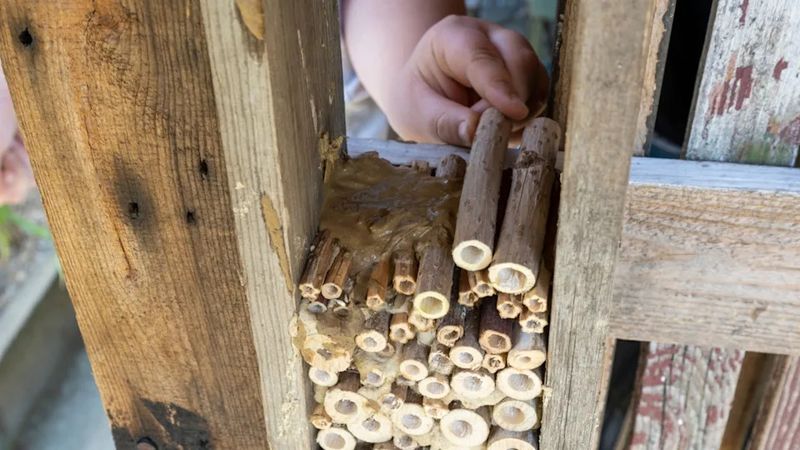
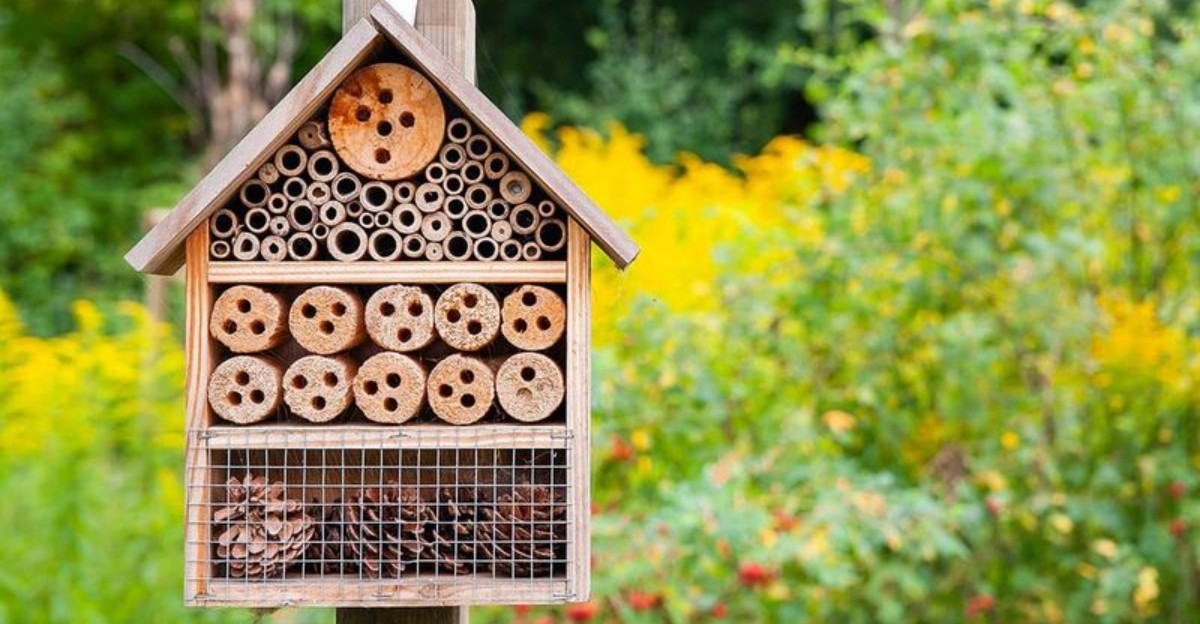
Cute store-bought bee hotels often come stuffed with pine cones, straw, and random sticks. They look charming on a fence, but bees mostly ignore that filler.
Stick with materials that match how wild bees really nest. Untreated wood such as pine, cedar, or poplar works well for drilled blocks.
Skip pressure-treated lumber and painted surfaces inside the holes, since chemicals can harm developing bees.
Hollow plant stems are another solid choice. Native reeds, cane, or bamboo can work if you cut each piece just below a joint so one end stays closed.
Check that the inside is smooth and the opening is not cracked.
Paper tubes and parchment liners slide into drilled holes and make cleanup much easier. In our humid climate, paper can help pull a bit of moisture away from the nest.
You simply pull the old tubes out after bees emerge and slip in fresh ones.
Keep the hotel modest in size. A small house with 20 to 40 tunnels is easier to manage than a giant wall of holes.
Huge bee apartments can attract more parasites and predators, which defeats the whole purpose.
4. Hang the Bee House Facing Morning Sun, Not Swinging From a Branch
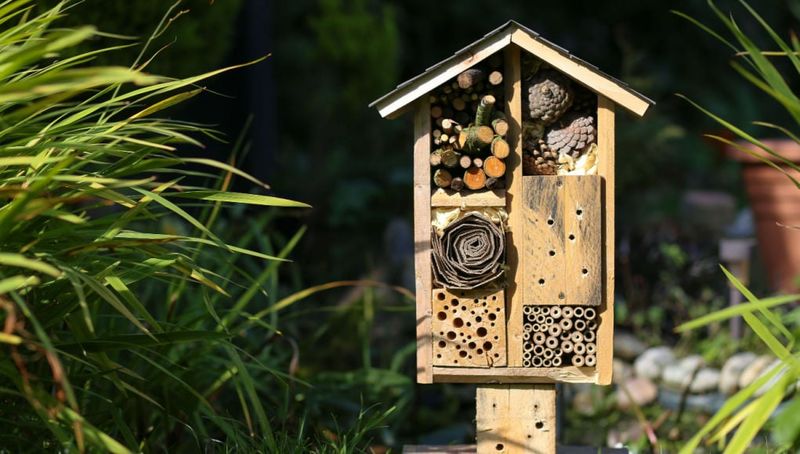
Bees are cold-blooded, so they need a warm-up before work. A spot that catches early sunlight helps them get moving sooner each day.
Face the front of your hotel east or southeast. Morning sun warms the tunnels, while some afternoon shade keeps them from baking.
Our summer heat can turn a west-facing box into a little oven, so that extra shade truly helps.
Mount it firmly about 3 to 5 feet off the ground. A sturdy post, fence, or wall works great.
Hanging it from a tree branch is a common mistake, because a swaying house makes landing tricky and can shake eggs loose from their pollen.
Pick a place sheltered from strong wind and sideways rain. A covered porch edge or the side of a shed often works beautifully.
Just make sure the entrance is not blocked by plants or furniture.
Personally, I put mine where I can see it from the kitchen window. Watching a leafcutter bee back into a tunnel with a leaf piece is better than most TV.
You also notice problems faster when the hotel is part of your daily view.
5. A Slanted Roof Keeps Florida Rain Out of Nesting Tubes
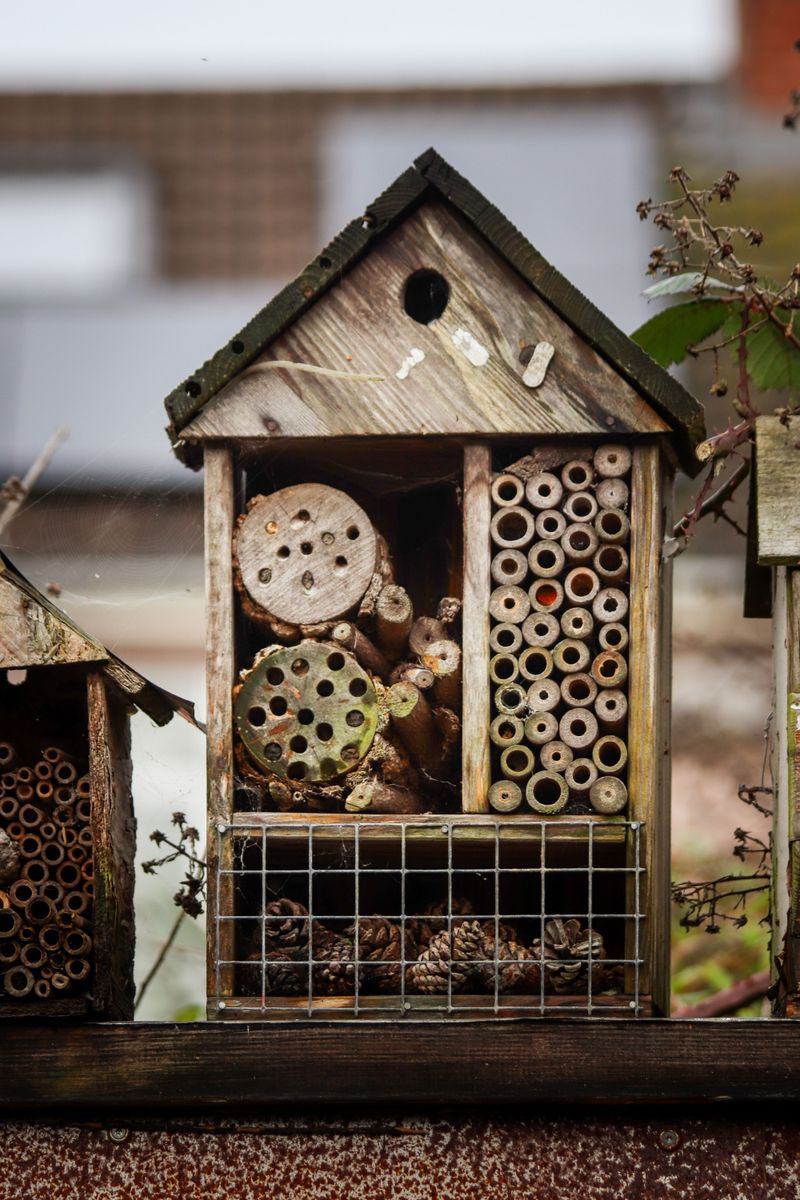
Afternoon thunderstorms roll in like clockwork for much of the year here. That steady soaking is tough on bee nests, so a good roof is non-negotiable.
Build a slanted top that sticks out at least 2 inches past the front of the tunnels. The overhang keeps rain from blowing straight into the openings.
A slight forward tilt of the whole box helps water drip away instead of pooling.
Moisture invites mold, and mold can spoil the pollen stores that young bees depend on. Wet nests also attract fungi and certain pests.
Keeping things dry gives each larva a much better shot at reaching adulthood.
You can use a scrap of cedar, a piece of metal flashing, or even a small shingle for the roof. Avoid sealing the inner tubes with paint or varnish, but feel free to coat the outer shell with a non-toxic finish.
Leave the back and sides solid so storms cannot sneak in. A little airflow around the box still matters, though, so do not wrap it in plastic.
Think of it like a sturdy umbrella rather than a raincoat zipped up tight.
6. Leafcutter Bees Will Probably Be Your First Guests
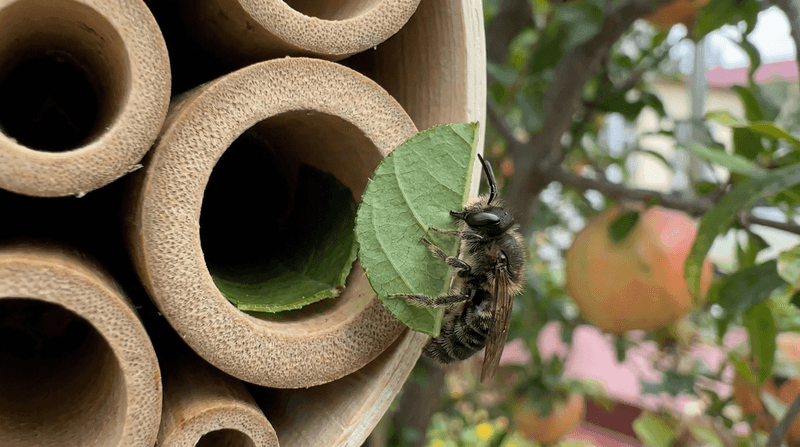
Leaf circles plugging the holes are a sure sign your hotel has a booking. Leafcutter bees are some of the most common cavity nesters across the state.
These busy bees carry pollen on fuzzy hairs under their bellies instead of on their legs. That belly brush makes them excellent pollinators for flowers, vegetables, and native wildflowers.
They use cut leaf pieces to line and seal each nest cell.
Resin bees may show up too, sealing tunnels with plant sap and tiny bits of debris. Small carpenter bees and a few others sometimes check in as well.
Mason bees, famous in other regions, are less common in most Florida yards.
Do not be surprised if some solitary wasps move in. Many of them hunt caterpillars or spiders and are helpful in the garden.
They are usually calm and rarely bother people.
Leafcutter bees can trim neat semicircles from roses, redbuds, and other soft leaves. The damage is cosmetic and plants usually shrug it off.
I treat those little bites like a thank-you note.
Male solitary bees cannot sting at all, and females rarely do. Kids can watch up close with very little worry.
7. Swap Out Old Nesting Tubes Before Mites and Mold Move In
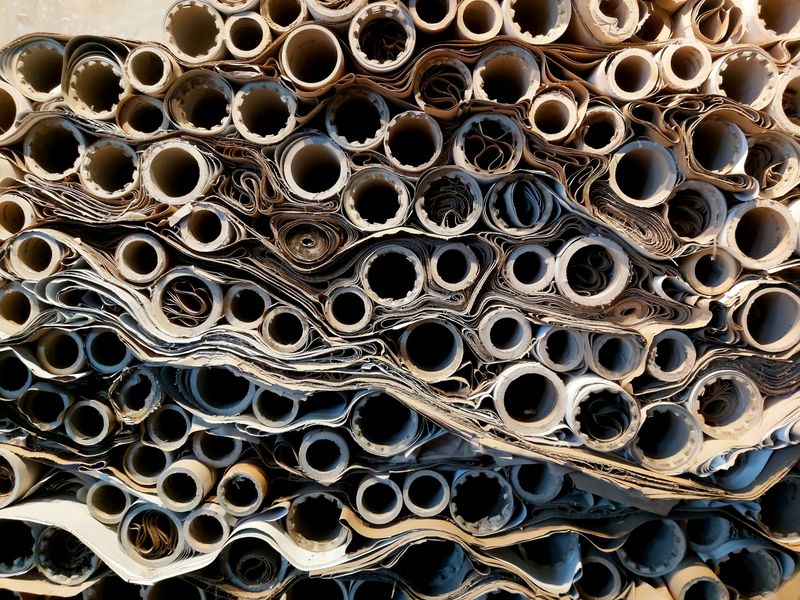
A bee hotel left alone for years can turn into a hotspot for pests. Pollen mites, fungus, and parasitic wasps build up quickly in old tunnels.
Plan a refresh every one to two years. Wait until bees have emerged from a tube, which you can spot by the open, chewed-out entrance.
Then remove and toss used paper liners or reed stems and replace them with fresh ones.
Drilled wood blocks are harder to clean. Some gardeners run a bottle brush through each hole and let the block dry fully in the sun.
Others simply retire old blocks and drill new ones, which is often the safer bet.
Never mind perfection here. Even swapping out half the tubes each season keeps disease pressure down.
Rotating two blocks also works well, giving one a rest while the other hosts bees.
Take care not to toss tubes that are still sealed. Those hold sleeping young bees waiting for spring.
If you need to move them, keep them dry, shaded, and outdoors so they feel normal seasonal temperatures.
A clean hotel is a healthy hotel. Your future guests will thank you with more flowers and fruit.
8. Plant Goldenrod and Native Asters Right Beside Your Bee Hotel

Even the fanciest bee house stays empty without food nearby. Most solitary bees forage within a few hundred feet of their nest, so flowers need to be close.
Fall is prime time for native bloomers. Goldenrod, Elliott’s aster, blazing star, and dotted horsemint all feed late-season bees.
Spanish needles, a scrappy native, blooms nearly year-round and draws a crowd.
For spring and summer, try coreopsis, Florida’s state wildflower, along with blanket flower and beautyberry. Mixing bloom times keeps the pantry stocked through the year.
Check with your local UF/IFAS Extension office for plants suited to your region.
Remember that most native bees nest in the ground, not in hotels. Leave a few patches of bare, sunny soil unmulched for them.
A small pile of withered stems or brush gives other nesters a home too.
Skip insecticides around your pollinator patch, especially on open blooms. Even products labeled for gardens can harm bees that land on treated flowers.
Your best next step is simple. Build the box this weekend, plant a few natives beside it, and keep an eye out for those first leaf-sealed doors.