The Meaning Behind An Indigo Bunting Appearing In Your Pennsylvania Garden During Summer
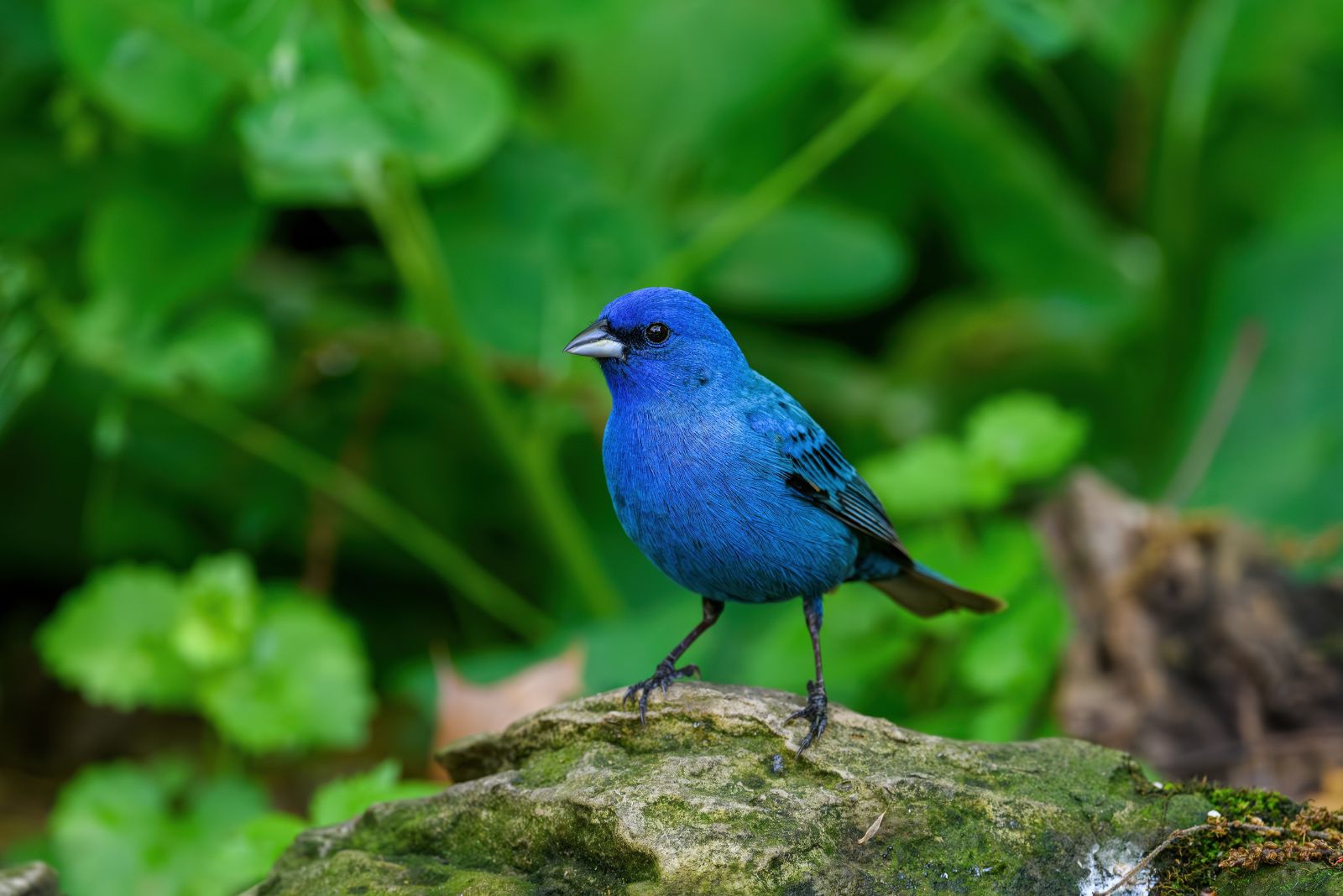
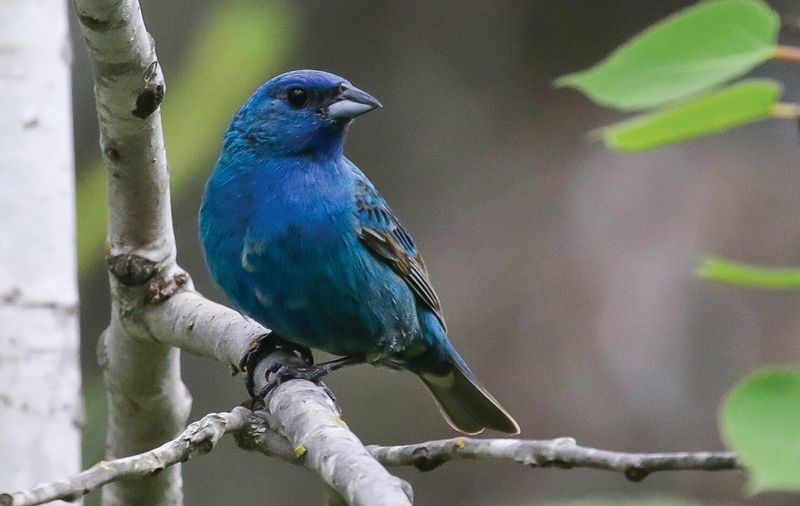
Few bird sightings in a Pennsylvania garden stop people quite like an indigo bunting. That electric, almost unreal blue is the kind of color that makes you question what you’re looking at for a moment.
It doesn’t seem like something that belongs in a backyard. It looks like it flew in from somewhere far more tropical and exotic.
And yet here it is, perched in your garden on a summer afternoon. Once you’ve seen one, you don’t forget it.
For many Pennsylvania gardeners, an indigo bunting sighting carries a feeling that’s hard to put into words. Something between pure wonder and the quiet sense that the moment meant something.
And across many cultures and traditions, people have long believed that it does. These brilliantly colored birds carry rich symbolic meaning that has been passed down through generations, and their summer appearance in Pennsylvania gardens tends to inspire the kind of reflection that most backyard wildlife simply doesn’t.
Here’s what people believe about seeing an indigo bunting and why this little bird feels so significant.
1. Your Garden Has The Shrubby Edges They Like
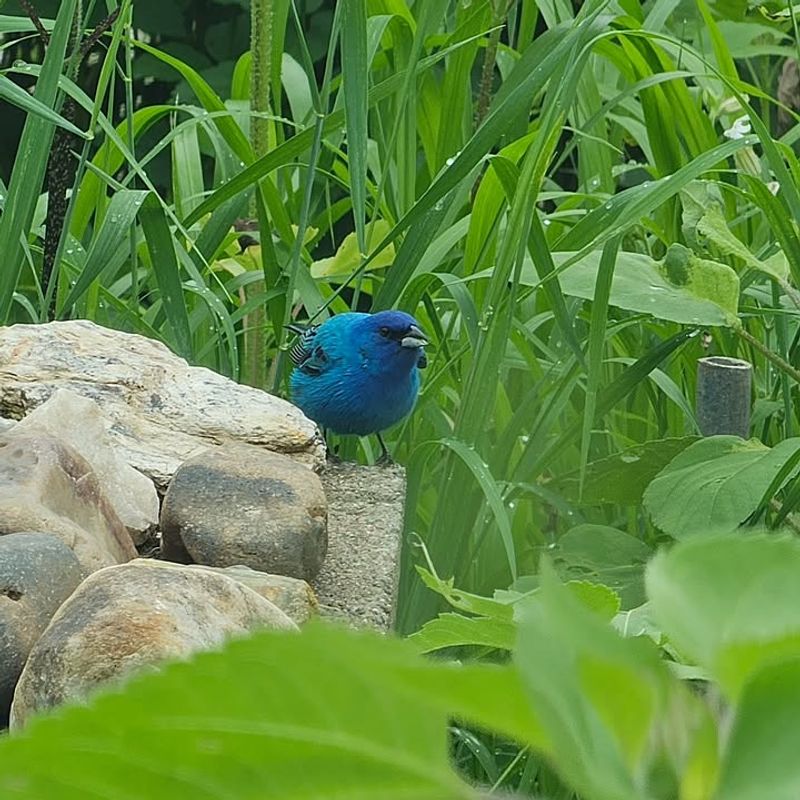
Not every yard catches the eye of an indigo bunting, but yours just did. That says something real about the structure of your garden.
Indigo buntings are strongly drawn to brushy edges, hedgerows, thickets, and layered vegetation where open space gradually gives way to denser cover. If your yard has that kind of semi-wild feel, you have created exactly the kind of place these birds seek out.
Think about the edges of your property. Are there overgrown borders, tangled shrubs, or spots where grass meets a hedgerow or tree line?
Those layered transitions are like a welcome sign for indigo buntings. They feel safe in places where they can quickly move from an open feeding area into dense cover if a predator appears.
Many Pennsylvania gardeners spend a lot of effort keeping everything neat and trimmed. But leaving at least one brushy corner or a slightly wild border can make a huge difference for wildlife.
Native shrubs like gray dogwood, elderberry, or wild rose create the kind of layered edge habitat indigo buntings love. You do not need a large yard to offer this.
Even a narrow hedgerow along a fence line can be enough to attract these vivid little birds and keep them coming back throughout the summer season.
Fun fact: Indigo buntings navigate during migration using the stars. They memorize the night sky as young birds and use it as a compass for the rest of their lives. A bird that smart deserves a garden worth visiting.
2. There May Be Good Nesting Habitat Nearby
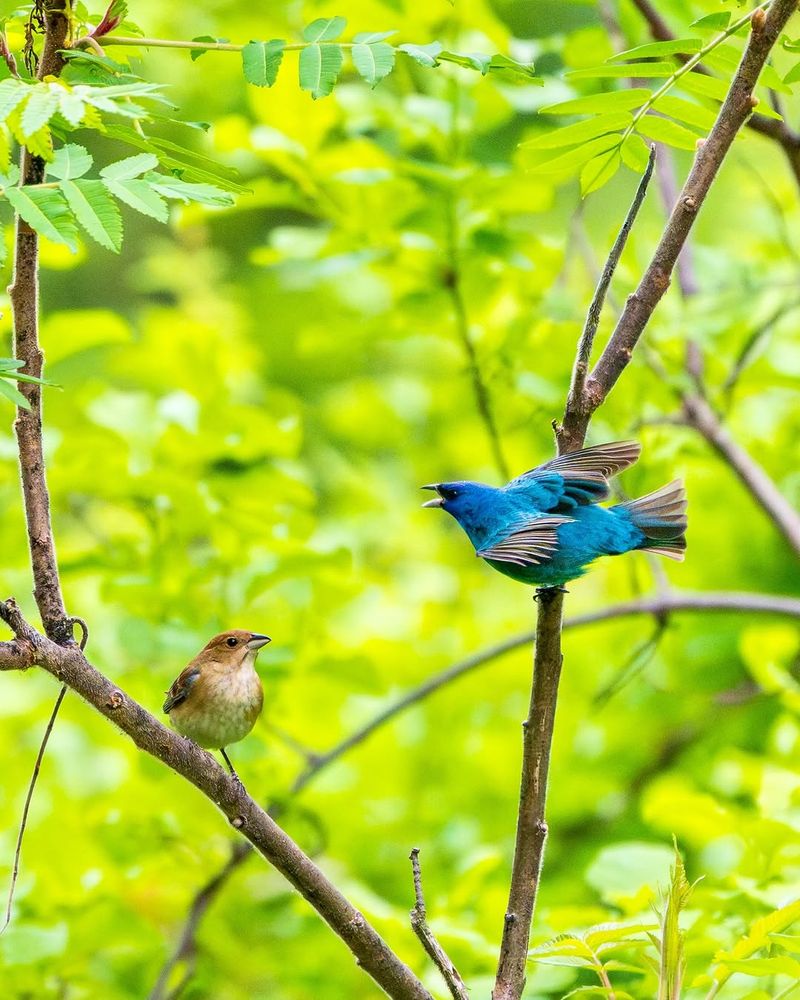
Summer is breeding season for indigo buntings across Pennsylvania, and a bird showing up in your garden during June or July could mean there is active nesting happening very close by.
Female indigo buntings build small, cup-shaped nests low to the ground, usually tucked into dense shrubs, tall weeds, blackberry canes, or thick native vegetation.
Your Pennsylvania Garden Changes Every Week. Your Plan Should Too.
Gardening in Pennsylvania changes quickly throughout the season. Every Friday you’ll receive a simple weekly plan showing exactly what to plant, prune, fertilize, harvest, and protect so you never miss the right timing.
If your yard or a neighbor’s property has those features, a nest may already be in place just a short flight away.
You may notice the female less often than the male because she blends in beautifully with her surroundings. Her soft brown coloring makes her nearly invisible in dense vegetation.
The male, however, will stay active and visible nearby, singing frequently and keeping watch. Seeing a bright blue male repeatedly returning to your garden is a strong clue that a female is nesting somewhere close.
Leaving unmowed areas, native shrubs, and quiet corners in your yard supports nesting birds in a real and practical way.
Tall grasses, goldenrod, blackberry thickets, and dense native plantings all provide the kind of low, sheltered spots indigo buntings prefer for nesting.
Avoiding heavy foot traffic in wild corners during June and July helps, too. Nesting birds need calm, undisturbed spaces to raise their young successfully.
If you want to encourage nesting habitat, consider planting native shrubs along a fence or property edge and letting a small patch of your lawn grow a little wild.
Even a modest strip of unmowed grass and native wildflowers can signal to nesting birds that your garden is a safe and food-rich place to raise a family.
3. Your Yard Has Seeds And Insects
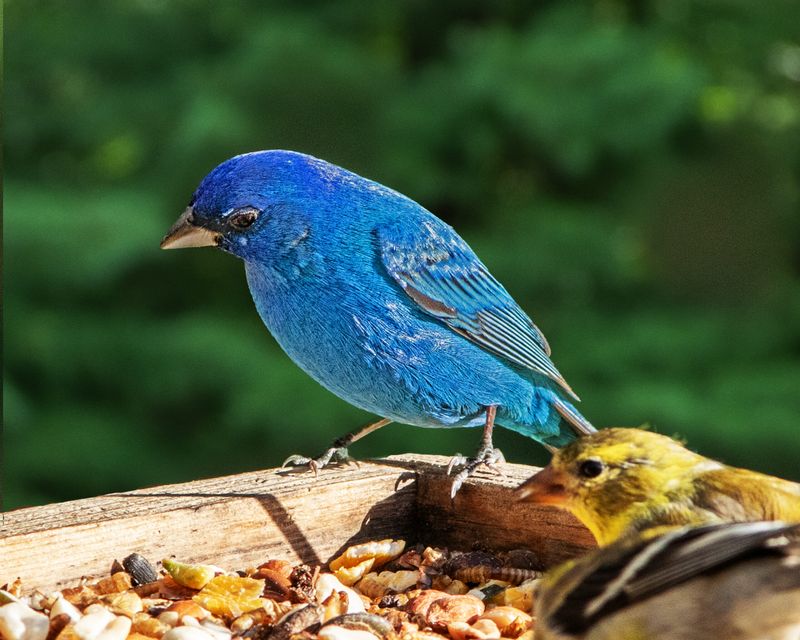
Food brings birds to gardens, plain and simple. Indigo buntings eat a wide variety of small seeds, including grass seeds, thistle, goldenrod, and weed seeds.
During the breeding season, they also eat large numbers of insects such as beetles, grasshoppers, caterpillars, and spiders. Both food types are essential, and a garden that provides both is genuinely attractive to these birds throughout the summer months.
Native wildflowers and grasses are among the best food sources you can offer. Plants like coneflowers, black-eyed Susans, native grasses, and goldenrod produce abundant seeds that indigo buntings and many other birds rely on.
Letting seedheads remain on plants rather than cutting them back too early extends the food supply well into late summer and early fall. That simple choice can make your garden much more valuable to visiting birds.
Insects are equally important, especially when adults are feeding nestlings. A pesticide-free garden supports healthy insect populations, which in turn support birds.
Native plants host far more insects than non-native ornamentals do, so adding even a few native species to your borders can increase the insect life available to foraging birds. Think of your garden as a living food web, and every native plant you add strengthens that web.
Indigo buntings are not regular feeder birds, so you are unlikely to attract them with a standard seed feeder. However, a small platform feeder stocked with white millet placed near dense cover can sometimes bring them in.
More reliably, planting native grasses and wildflowers and leaving natural seedheads standing is the best long-term strategy for keeping them coming back to your Pennsylvania garden.
4. You May Be Seeing A Breeding Male Defending Territory
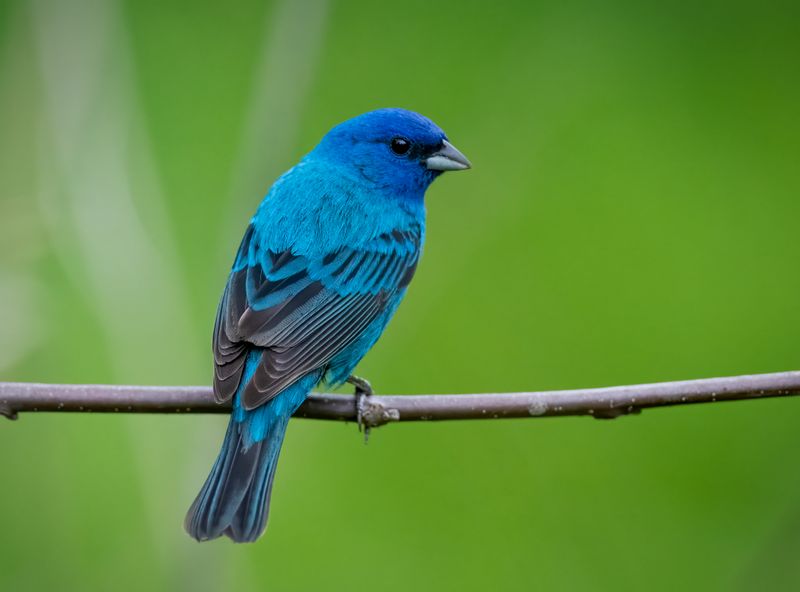
There is something almost theatrical about a male indigo bunting in full breeding plumage. His feathers are not actually blue from pigment the way a bluebird’s are.
Instead, his feathers have a microscopic structure that scatters light and produces that stunning, electric blue color. In direct sunlight, he practically glows.
Watching one sing from a high perch is one of the most memorable bird sightings a Pennsylvania gardener can have.
During summer, male indigo buntings are highly territorial. A male will choose specific singing perches and return to them again and again throughout the day.
He is not just singing for the joy of it. He is broadcasting a clear message to other males: this territory is taken.
Fence posts, trellises, small tree tops, and shrub tips all serve as perfect singing stages. If you see the same bright blue bird returning to the same spot repeatedly, you are almost certainly watching a territorial male at work.
His song is a series of paired, high-pitched notes that sound a little like sweet-sweet, chew-chew, see-see. Once you learn it, you will start hearing it everywhere on summer mornings in Pennsylvania.
Many birders describe it as one of the most cheerful and energetic songs of the breeding season. He can sing hundreds of times per hour on a warm summer morning.
Having structures like fence posts, trellises, or small ornamental trees in your garden gives territorial males the elevated perches they need.
If your yard already has these features, the indigo bunting likely sees your space as a well-equipped territory worth defending. That is a genuine compliment to your garden layout.
5. Your Garden Is Acting Like A Natural Edge Habitat
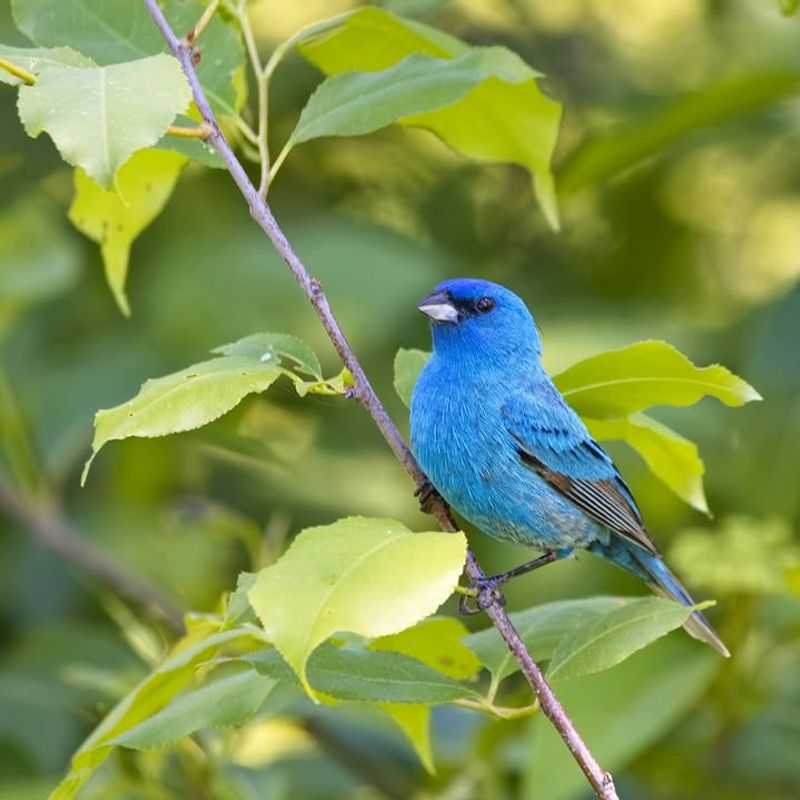
Edge habitat is one of the most productive environments in nature. It is the zone where two different types of habitat meet, like where a meadow transitions into a woodland, or where an open lawn gives way to a thicket of shrubs and small trees.
These transitional zones offer birds the best of both worlds: open space for foraging and dense cover for shelter and nesting. Indigo buntings are classic edge-habitat birds, and they seek out these zones instinctively.
Your Pennsylvania garden may be doing a better job of mimicking edge habitat than you realize.
A yard that blends open lawn with a patch of native meadow, a border of native shrubs, and a few small trees creates a layered, varied landscape that functions very much like a natural edge.
That mix of open and covered space, low and tall vegetation, and sunny and shaded areas is exactly what indigo buntings look for when choosing a summer territory.
You can strengthen the edge habitat quality of your garden with a few thoughtful additions. Planting a mix of native shrubs at different heights along a fence or property edge creates a layered structure birds love.
Adding a small meadow patch with native grasses and wildflowers next to a shrubby border mimics the grassland-to-woodland transition that indigo buntings naturally prefer. Even a modest version of this setup can dramatically increase bird activity in your yard.
Pennsylvania is fortunate to have a strong native plant community that supports edge habitat beautifully.
Species like spicebush, native viburnums, buttonbush, and wild bergamot are all excellent choices for building a bird-friendly edge garden that will attract indigo buntings and many other summer species year after year.
6. It Is A Sign To Keep The Garden Wildlife-Friendly
When an indigo bunting visits your garden, consider it a small reward for the choices you have already made. These birds do not show up in heavily manicured, chemically treated, or bare-lawn yards.
They appear where there is real habitat: native plants, insects, seeds, cover, and quiet space. A visit from one of these birds is a sign that your garden has genuine ecological value, even if it does not look like a formal nature reserve.
Keeping that value alive is simpler than many people think. Avoiding heavy pesticide use is one of the most impactful things you can do.
Pesticides reduce insect populations, which removes a critical food source for breeding birds like indigo buntings.
Switching to organic pest management or simply tolerating a few leaf-chewing insects can make your garden dramatically more bird-friendly over time. Insects are not the enemy of a wildlife garden. They are the engine that powers it.
Leaving seedheads standing on native plants through late summer and into fall provides an extended food supply for seed-eating birds. Planting native shrubs and grasses adds both food and cover.
Keeping a small water source like a shallow birdbath clean and filled gives birds a reliable place to drink and bathe. These small, consistent actions add up to a garden that wildlife trusts and returns to season after season.
An indigo bunting choosing your Pennsylvania garden in summer is genuinely meaningful. It tells you that your yard is already doing something right.
With a few small adjustments and a commitment to keeping things a little wild, you can make it even better and enjoy these spectacular blue visitors for many summers to come.