The Meaning Behind Seeing A Bluebird In Your Ohio Yard
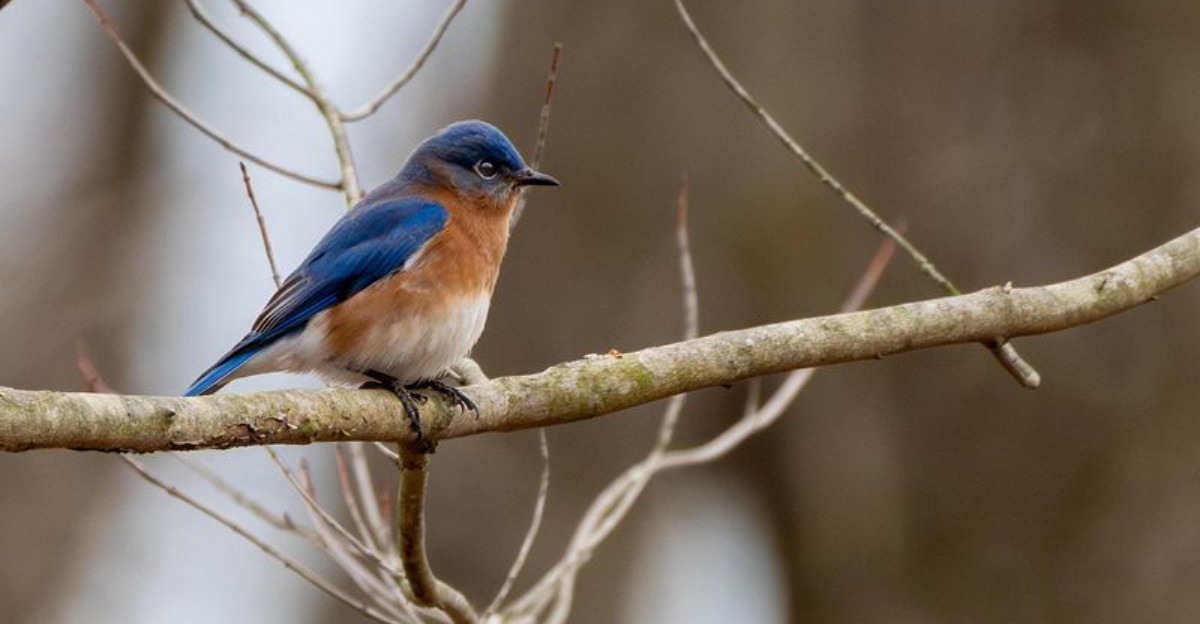
A flash of blue on the fence post is easy to catch out of the corner of your eye and just as easy to write off as one more bird passing through. Look again, though, and it’s clearly something different.
Fewer people spot these regularly than most realize. Bluebirds showing up in a yard usually means something specific about the space itself, not just luck or timing.
They’re picky about habitat in ways most backyard visitors aren’t, favoring open areas with scattered perches and a reliable supply of insects nearby.
A bluebird sighting is less a random encounter and more a sign the yard is quietly checking boxes most yards don’t.
Ohio’s bluebird population dropped hard at one point. Conservation efforts brought the numbers back.
A sighting today still carries a little more weight than it seems to at first glance.
1. Notice Bluebirds As Signs Of A Healthy Yard
Back in the early 1900s, Ohio nearly lost these birds. Habitat changes and pushy non-native species squeezed them out of the spaces they once owned.
Then thousands of volunteers started building nest boxes, and the blue came back. That recovery story is exactly why a bluebird in your yard feels like a small award ceremony.
Conservationists track bluebird numbers because the species acts like a report card for the land around it. Bluebirds settle where there is short grass, insects that have not been sprayed away, berry-loaded shrubs, and a hollow spot to raise a family.
If your property offers those four things, a bluebird notices long before you do. So when one shows up, read it as feedback rather than luck.
Take a walk and look at your yard the way a bird might. Is there open lawn with a perch nearby?
Are there shrubs with fruit? Did you skip the broad-spectrum bug spray this summer?
Every yes on that list nudges your odds upward. Folks across the state have turned ordinary quarter-acre lots into bluebird stopovers with a few thoughtful changes.
The bird is not judging your landscaping style. It is simply confirming that your patch of Ohio still works as habitat, and that is worth celebrating.
2. Understand Why Bluebirds Visit In Fall
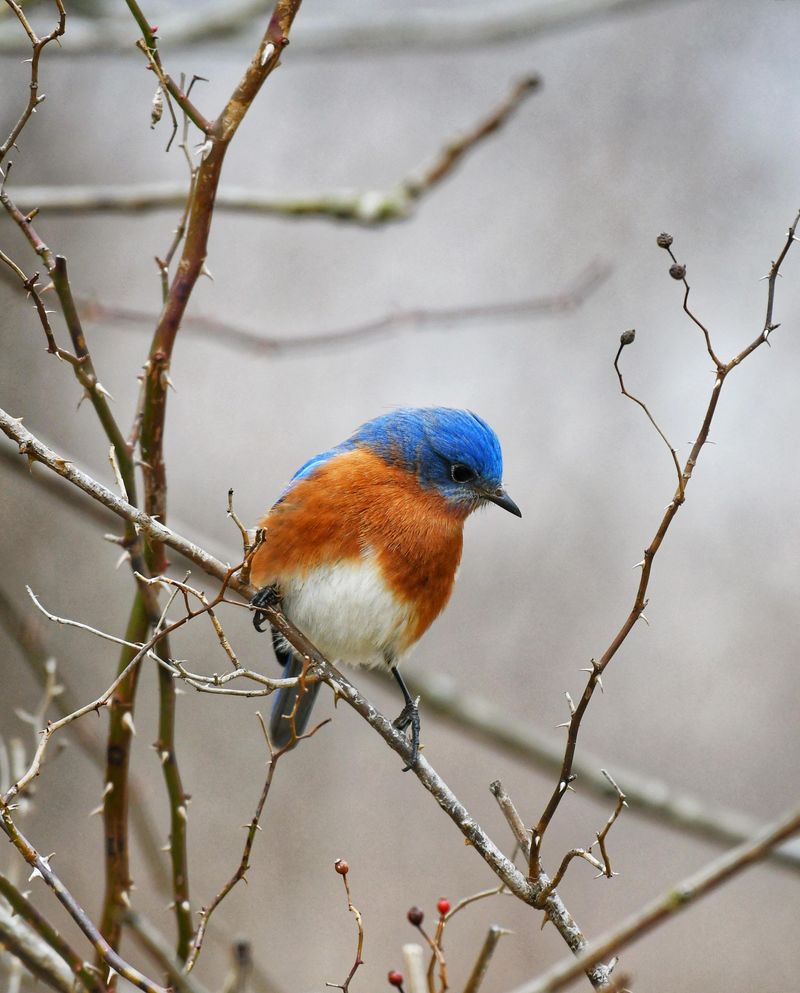
Autumn changes the bluebird playbook. Warm-weather bluebirds spend their days hunting beetles, crickets, and caterpillars in short grass, but once frost arrives, that buffet closes.
Their answer is to switch menus entirely. Fruit and seeds take over, and berries become the main course from roughly October through March.
Something else shifts too. The fiercely territorial pairs of summer relax and start traveling in loose flocks, sometimes a dozen or more moving together through fields and neighborhoods.
A group that size suddenly landing in your crabapple can feel like a surprise parade. Many residents see more bluebirds in November than they ever did in June for exactly that reason.
Not all of them leave, either. Some Eastern Bluebirds head south for winter while others stay put, especially across southern Ohio where conditions stay a bit milder.
So a fall sighting might be a neighbor you never noticed or a traveler passing through. Either way, the visit usually means your yard has something edible.
Check what is fruiting near where the birds landed. That plant is doing heavy lifting, and protecting it keeps the flock coming back.
Adding a heated birdbath or a platform of mealworms sweetens the deal considerably during those gray afternoons when everything else is frozen solid.
3. Grow Native Plants That Attract Bluebirds
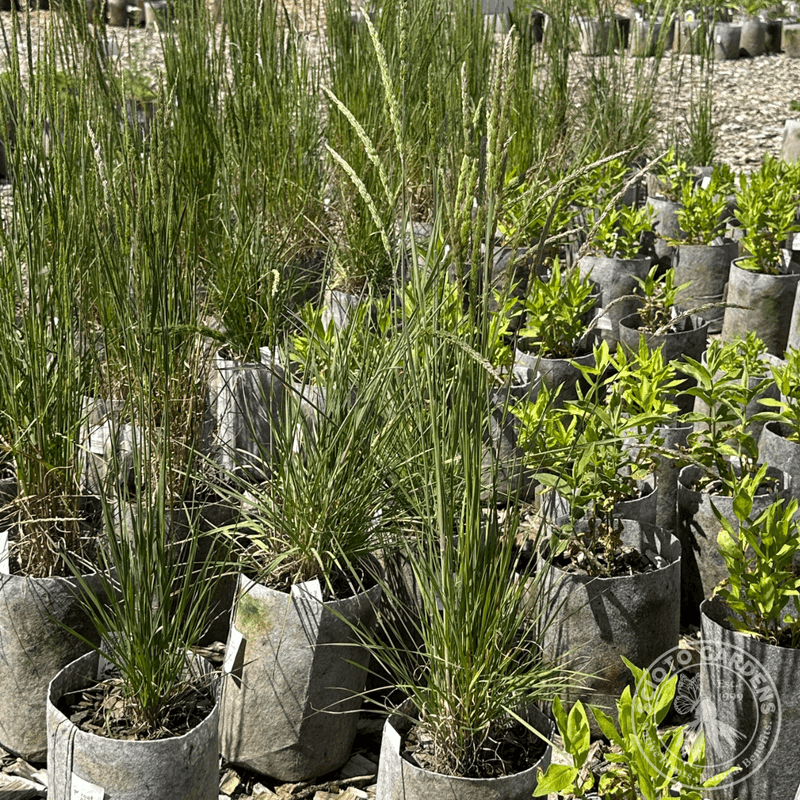
Native plants are the quiet secret behind every yard that seems to attract bluebirds effortlessly. Ohio natives feed insects, and insects feed bluebirds, so the chain starts in the soil.
Then those same plants produce fruit right when the bugs disappear. That double duty is hard to beat.
Worth planting: Flowering Dogwood, Holly, Eastern Red Cedar, Elderberry, Viburnum, Bayberry, Blueberry, and Serviceberry. Sumac, Black Cherry, Hackberry, Juniper, Mountain Ash, Pokeberry, and Virginia Creeper round out a generous menu.
Mix early fruiters with late ones so something is ripe in September and something else still hangs on in February. Bluebirds remember reliable addresses.
Some plants work against you, though. Russian and autumn olive, English Ivy, Barberry, Boxwood, Japanese Honeysuckle, Multiflora Rose, and Porcelain Berry crowd out better options and offer weaker nutrition.
Pulling those out creates space for something the birds actually need. Local nurseries increasingly stock natives, and many county soil and water districts run spring tree sales at low prices.
Start small if the list feels overwhelming. One serviceberry near a window gives you front-row seating and gives bluebirds a June snack.
Add a viburnum the following year. Within three or four seasons, your yard will quietly become one of the better restaurants on the block.
4. Protect Nesting Spaces Around Your Property
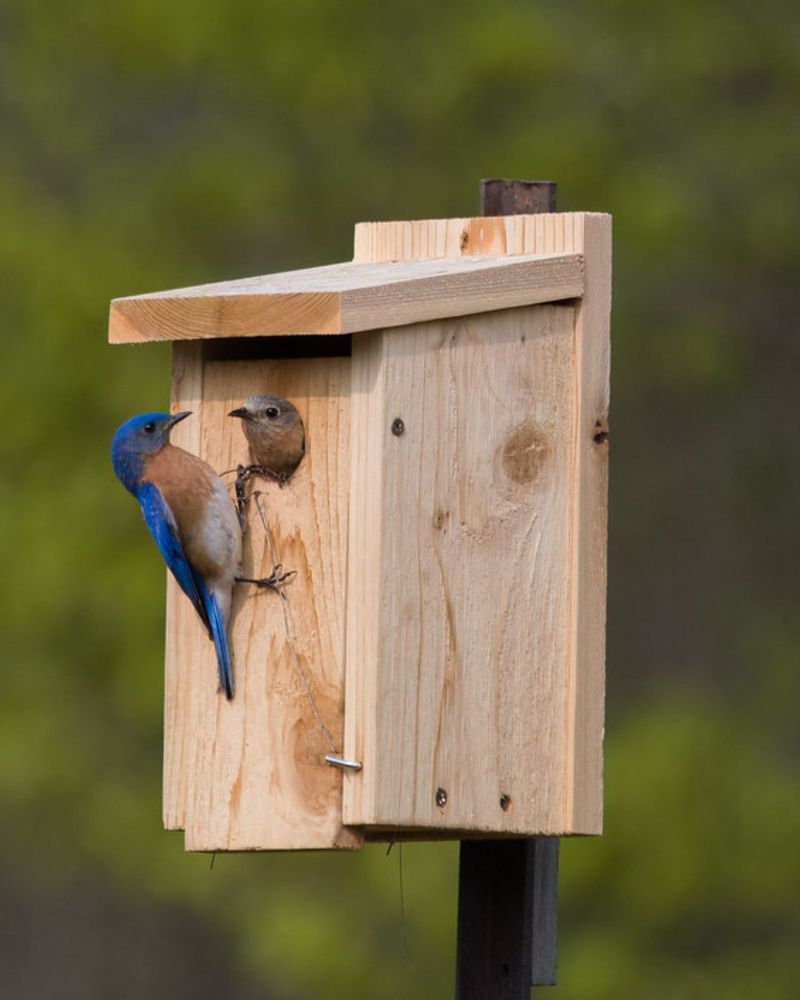
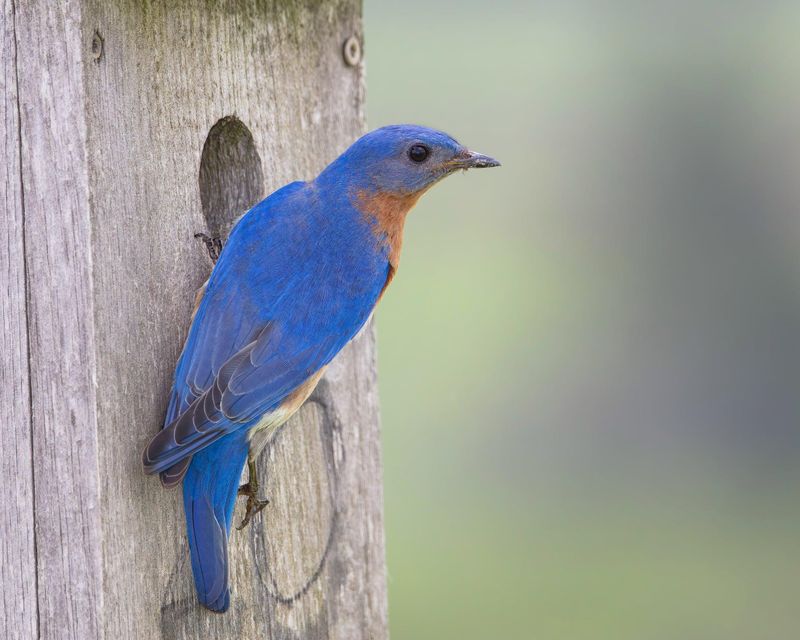
Here is a fact that surprises people: bluebirds cannot excavate their own homes. They are secondary cavity nesters, which means they move into old woodpecker holes, knot holes in posts, or boxes that humans build.
That dependence is precisely why nest boxes changed their fortunes in the state. A well-placed box is real conservation.
Ohio’s breeding season runs roughly March through August or September, with the busiest stretches in April and July. Pairs commonly raise two broods in a single year, so one good box can launch a lot of birds.
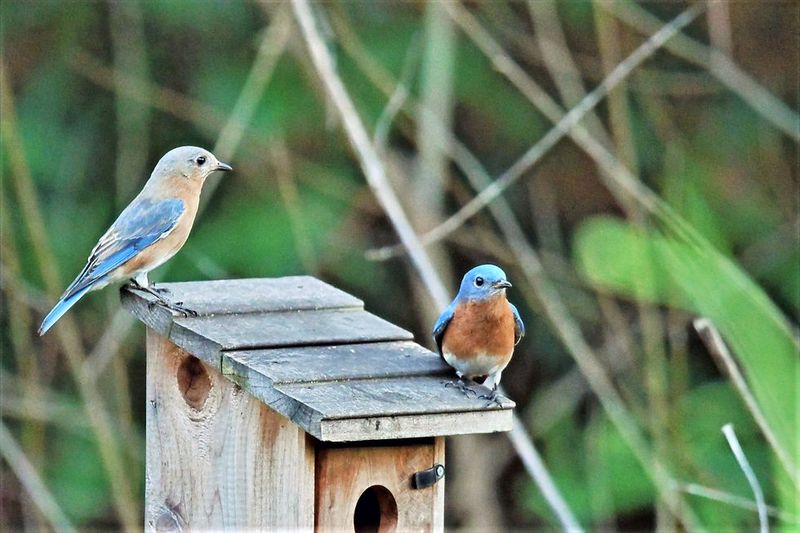
Placement matters more than fancy design. Put boxes in open areas with short grass, mount them at least five feet up, and space them about 100 yards apart since pairs defend territory.
Face the entrance north, east, or northeast to dodge blazing afternoon sun and driving wind. Slide a baffle onto the pole to discourage climbing raccoons and snakes.
Competition is the other hurdle. European Starlings and House Sparrows aggressively claim cavities, so skip spots where those species swarm, like feedlots or busy parking areas.
House Wrens compete too, and they favor brushy, wooded edges. Keeping boxes out in the open, away from tree lines, tilts the odds toward the blue birds you are hoping to host.
5. Add Berry Producing Plants For Winter Food
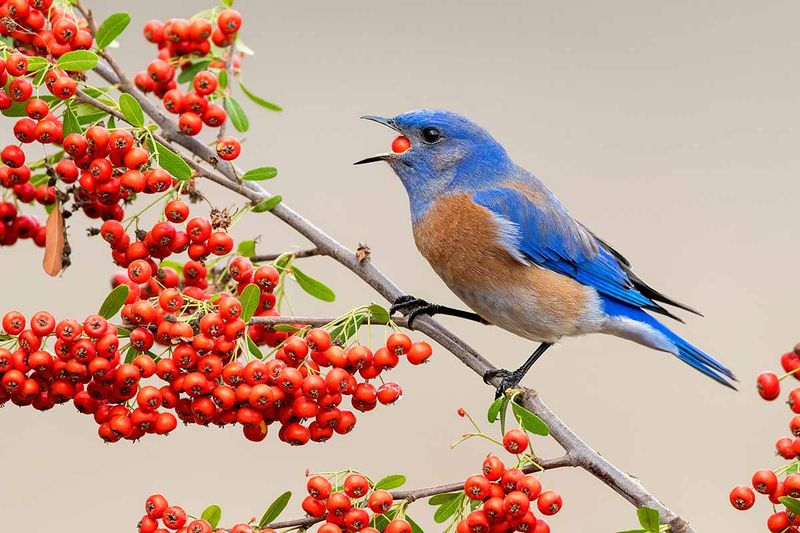
Picture a January morning in Ohio with everything locked under frost. No beetles, no crickets, no caterpillars anywhere.
Berries become the difference between a hard winter and a survivable one. Fruit becomes an important winter food source when insects are harder to find.
Eastern Red Cedar earns special praise here because its blue-gray berries cling through deep cold when softer fruits have vanished. Holly does similar work, holding scarlet berries into late winter.
Pair those with Flowering Dogwood and Serviceberry for early-season fruit, then add Viburnum, Elderberry, Bayberry, and Blueberry to fill the calendar between them.
Planting in clusters helps more than scattering single shrubs. A group of three or five gives a flock enough food to justify a return trip and offers windbreak cover at the same time.
Tuck them along a fence line or property edge where they will not shade your vegetable beds. Resist the urge to tidy every berry-laden branch in fall.
Those fruits are pantry supplies, not clutter. Leaving them intact through March supports bluebirds, robins, cedar waxwings, and mockingbirds all at once.
If you want a quick win this season, hang a platform feeder near your shrubs and offer dried mealworms or suet. Birds find the food faster when a familiar plant marks the spot.
6. Keep Open Areas Bluebirds Prefer
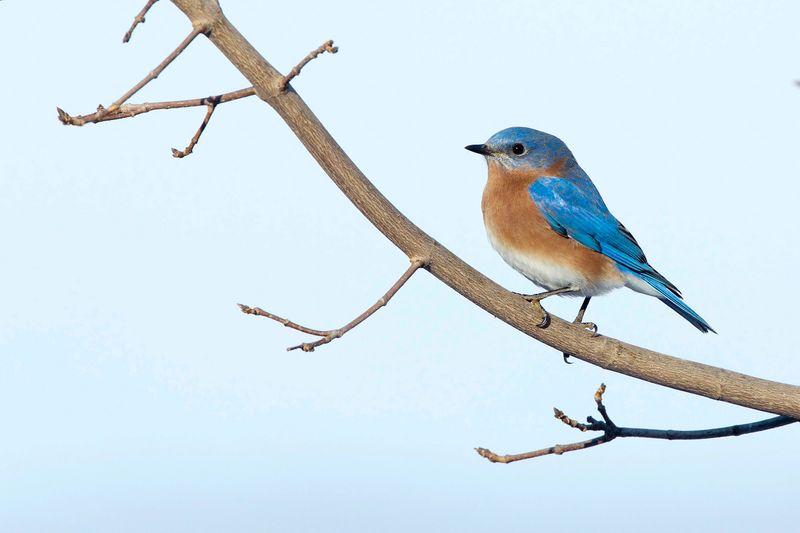
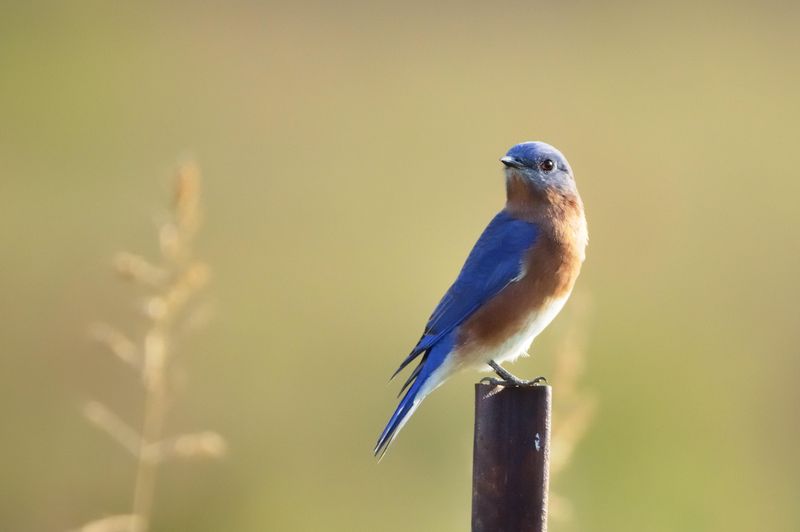
Bluebirds are hunters who work from above. They perch on a wire, a low branch, or a fence rail, then drop straight down onto an insect spotted in the grass.
Tall, thick vegetation ruins that strategy. They simply cannot see through it.
Their favorite landscapes across Ohio tell the story: old field borders, meadows, prairies, orchards, golf courses, cemeteries, and park edges. Every one of those shares the same recipe of short grass with scattered trees and shrubs nearby.
You do not need acreage to copy it. Mowed lawn beside a small tree line works fine.
Practical moves include keeping a section of turf trimmed rather than letting everything grow shaggy, and installing a few perch points at different heights. A single bare branch, a T-shaped post, or even a garden stake gives a bluebird its lookout.
Avoid crowding every square foot with dense plantings. Structure beats density here.
If your yard is heavily wooded, focus on the sunniest clearing you have, maybe near a driveway or a side yard. Open that space a bit and add a perch.
Bluebirds have excellent eyesight that helps them spot insects from a perch. Give them a clear runway and that eyesight does the rest.
7. Create A Safer Habitat For Songbirds
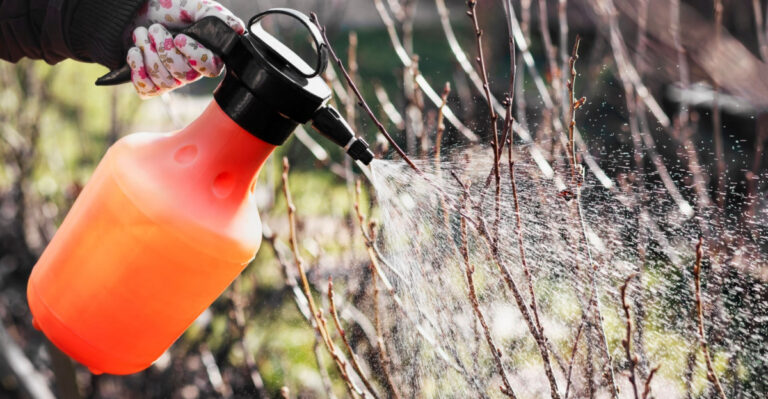
Safety for songbirds starts with what you choose not to spray. Insecticides and pesticides wipe out the beetles, spiders, and caterpillars that bluebirds feed to their nestlings all summer.
Cutting back on chemicals restores the food supply overnight. Your yard gets louder and busier within a season or two.
Cover matters next. Native trees and shrubs give birds a place to duck when a hawk sails overhead or a storm rolls across the county.
If a standing snag or a thick deceased limb sits somewhere it cannot hurt anyone or anything, consider leaving it. Cavity nesters treat those old trunks like apartment buildings.
Water pulls in birds that ignore feeders entirely. A shallow birdbath works, but adding motion with a small dripper or bubbler makes it far more noticeable.
Scrub it often and refill with fresh water so it stays clean and inviting. In cold months, a heated basin becomes the most popular spot in the neighborhood.
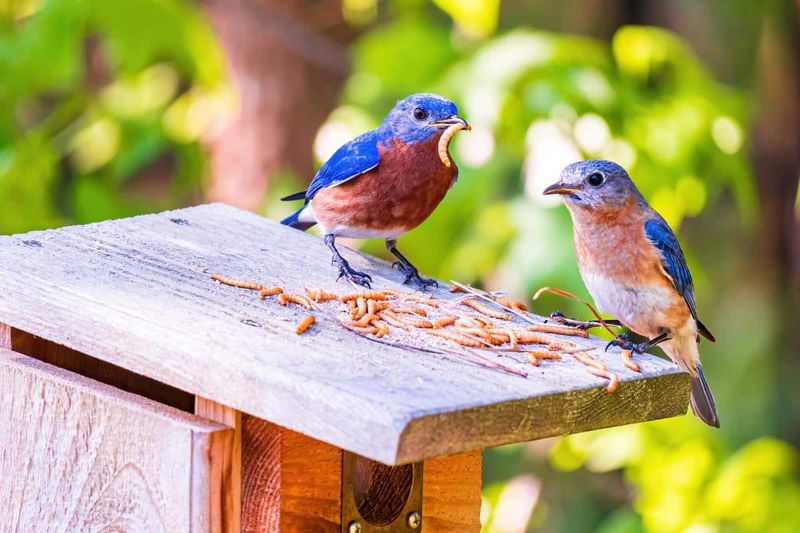
For extra feeding, bluebirds go for live or dried mealworms, suet, sunflower chips, and bluebird blends. Flat platform feeders suit them best since they dislike clinging to tube perches.
Place the feeder within sight of a shrub so shy visitors have an escape route close by.
8. Watch Seasonal Changes Through Bird Visits
Long before calendars existed, people read the seasons through birds. Ohioans still do it, often without realizing.
The first bluebird song of late February or early March lands like an announcement that winter is loosening its grip.
What makes bluebirds especially interesting is that their movements are not tidy. Some individuals migrate south for winter while others stay in Ohio year-round, particularly in the southern counties.
So the bird you see in April may have traveled hundreds of miles or may have been three fields away the whole time.
Keeping a simple log turns casual sightings into something meaningful. Jot the date, the number of birds, and what they were doing, whether feeding, singing, or checking out a nest box.
After two or three years, patterns emerge that no weather app can give you. You start predicting arrivals before they happen.
Our state has an active community around this, including the Ohio Bluebird Society and local metro park monitoring programs. Sharing your notes contributes to real data about how the species is faring statewide.
There is also plain joy in the practice. Watching one species across twelve months teaches you more about your own yard than any guidebook, and it connects ordinary Tuesdays to something much larger.
9. Welcome More Bluebirds To Ohio Gardens
Everything covered so far folds into one simple idea. Give bluebirds food, shelter, safe nesting, and clean water, and they will find you.
No magic required, just a yard arranged with their needs in mind.
Build your plan in layers. Start with a properly sited nest box on a baffled pole, add two or three native berry producers, keep a stretch of short grass with a perch, and put away the bug spray.
Toss in a birdbath and you have covered every essential. Most yards can manage that within a single season.
Patience helps, since birds evaluate a property over time rather than all at once. A box ignored in year one may host two broods in year two.
Clean it out each late winter, tighten any loose screws, and stay consistent.
The reward goes beyond the birds themselves. Neighbors notice, kids press their faces to windows, and a plain lawn starts feeling like a place where something meaningful is happening.
That flash of blue on a fence post carries centuries of folklore about happiness and hope. Whether or not you believe the old stories, the practical version holds up beautifully: a yard that welcomes bluebirds is a yard that is working well for everyone living in it.