The Meaning Behind Seeing A Goldfinch In Your Pennsylvania Yard
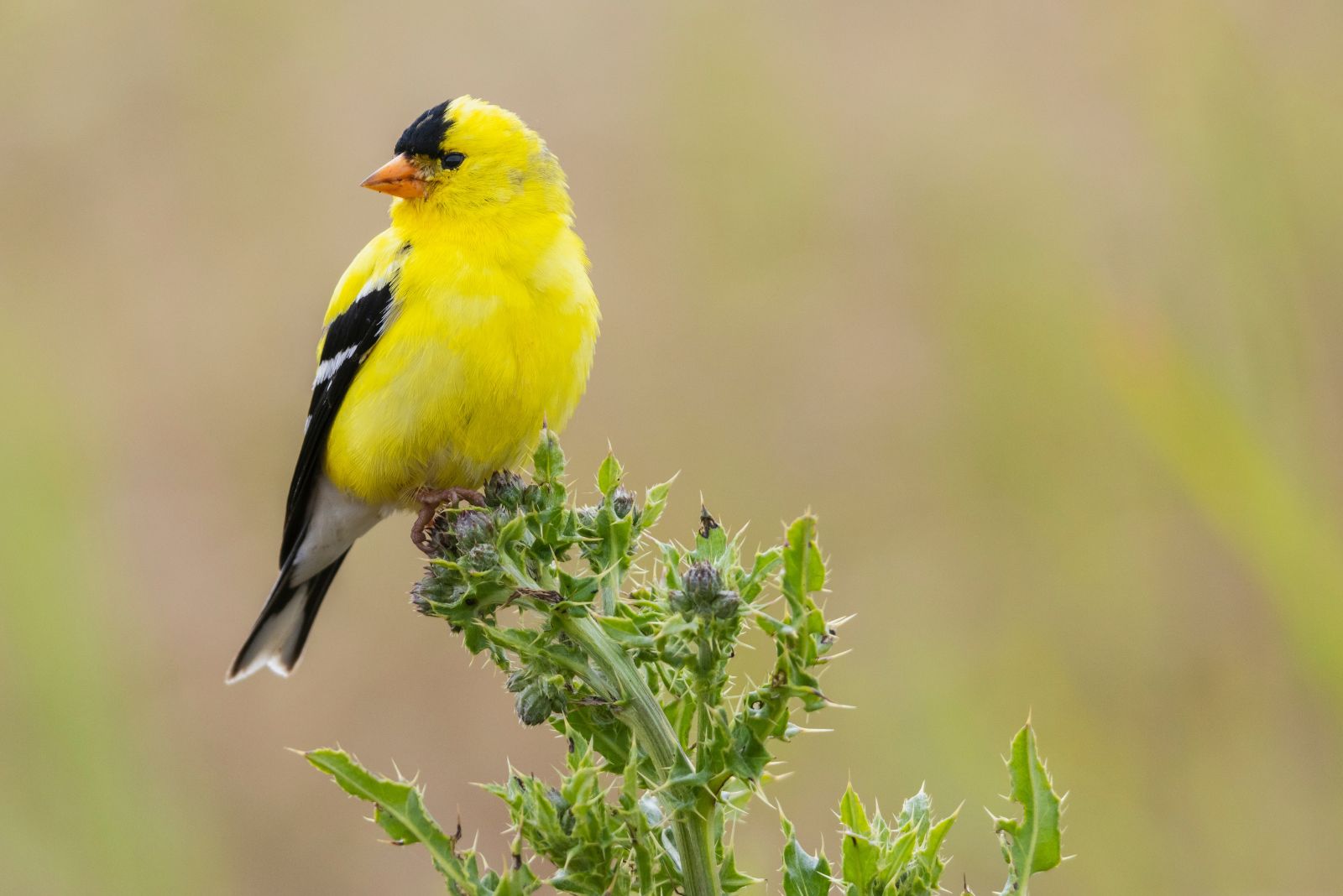
Few backyard birds brighten a Pennsylvania yard quite like a goldfinch in full summer plumage.
That vivid, almost electric yellow is one of the most cheerful sights a garden can offer, and for a lot of Pennsylvania homeowners, a goldfinch visit feels like more than just a pleasant encounter with wildlife.
There’s something about these birds that tends to lift the mood of whoever spots them. And for many people, that feeling comes with a sense of meaning they find difficult to dismiss.
Goldfinches have carried symbolic significance across cultures and spiritual traditions for centuries. They appear in folk beliefs, in religious iconography, and in the personal traditions of families who have watched for them across generations.
A goldfinch appearing in your yard at a particular moment often feels significant in ways that are hard to explain purely through the lens of birdwatching.
Whether the meaning resonates personally or you simply appreciate the rich cultural history behind one of Pennsylvania’s most beloved backyard birds, the stories behind a goldfinch visit are worth knowing.
1. Your Yard Contains The Seed-Producing Plants It Prefers
Picture a tiny flash of yellow balancing on a nodding flower head, picking at seeds with a quick, precise beak. That is exactly what an American Goldfinch looks like when it finds a yard it loves.
If one showed up in yours, there is a good chance your garden is already growing the foods it craves most.
American Goldfinches are serious seed eaters. They rely heavily on seeds from thistles, sunflowers, dandelions, ragweed, asters, and grasses.
These plants are not just pretty additions to a Pennsylvania yard. For a goldfinch, they are a full grocery store packed with energy-rich food.
When you see one clinging to a fading flower head, it is not causing any damage. It is carefully harvesting the seeds that have formed as the bloom dried out.
Many gardeners mistake this behavior for a pest problem, but the bird is actually doing the plant a small favor by spreading seeds as it moves around.
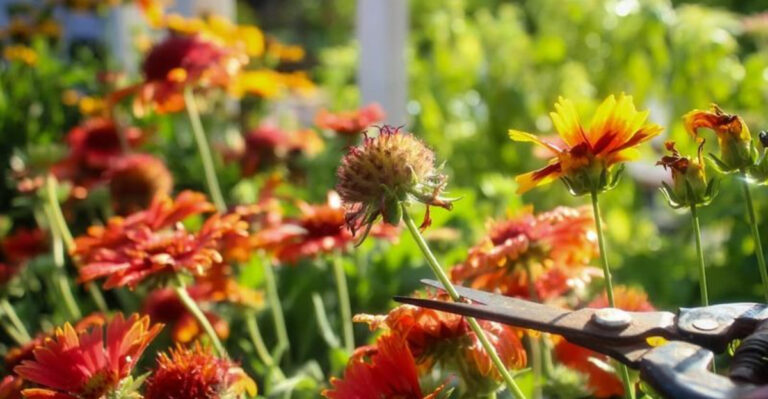
Letting flowers go to seed at the end of the season is one of the best things you can do to attract goldfinches. Resist the urge to deadhead every bloom.
Leave some coneflowers, black-eyed Susans, and sunflowers standing through late summer and fall. The birds will find them.
Native plants are especially valuable because they produce seeds that match what goldfinches have eaten for thousands of years.
If your yard already has a mix of these plants growing naturally or intentionally, you have essentially set up a welcome sign for one of Pennsylvania’s most beloved songbirds. A goldfinch visit is a sign your garden is thriving in the best possible way.
2. Your Feeder Has Become A Reliable Food Stop
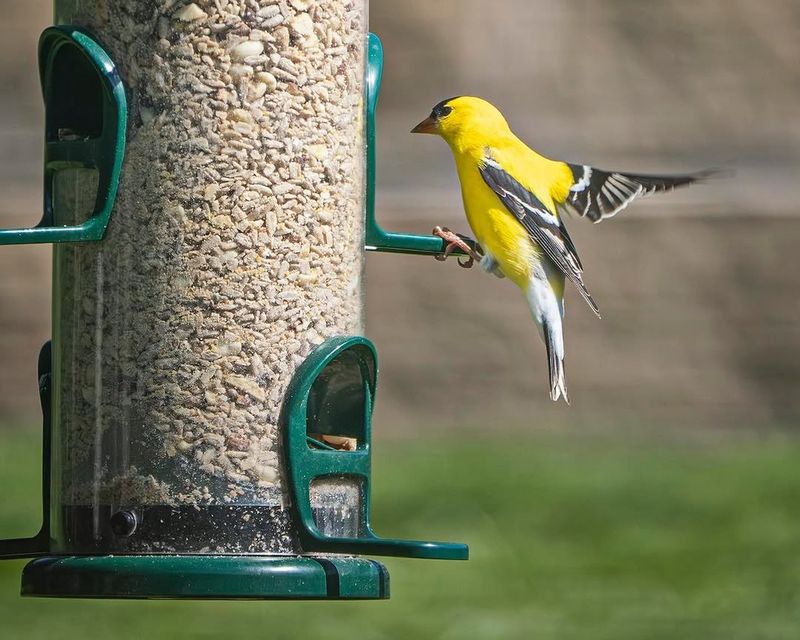
Goldfinches are creatures of habit. Once they discover a feeder that offers what they need, they come back again and again, often bringing friends.
If you have been noticing goldfinch visits on a regular schedule, your feeder has officially made it onto their mental map of reliable food sources in the neighborhood.
Your Pennsylvania Garden Changes Every Week. Your Plan Should Too.
Gardening in Pennsylvania changes quickly throughout the season. Every Friday you’ll receive a simple weekly plan showing exactly what to plant, prune, fertilize, harvest, and protect so you never miss the right timing.
Nyjer seed, also called thistle seed, is the number one draw for goldfinches at feeders. It is a tiny, oil-rich seed that fits perfectly in their small beaks.
Tube feeders with small ports work best because the narrow openings keep larger birds from emptying the feeder before the goldfinches get a turn.
Sunflower chips, which are hulled sunflower seeds, are another favorite. Goldfinches appreciate not having to crack open a shell, so offering pre-hulled seeds can make your feeder even more popular.
Keeping the feeder clean and the seed fresh is just as important as the seed type itself. Spilled seed on the ground beneath the feeder is not wasted either.
Goldfinches will drop down and forage through fallen seeds, especially during cooler months when food is harder to find.
Placing a tray feeder just below the main feeder can help catch spills and give more birds a chance to feed at the same time.
Consistency is the real key. Goldfinches remember where food is available, and they return to those spots regularly.
If your feeder runs empty for too long, they may shift their route. Keeping it stocked, especially from late summer through early spring, sends a clear message that your yard is a dependable and welcoming place to eat.
3. A Nest May Be Nearby During Midsummer
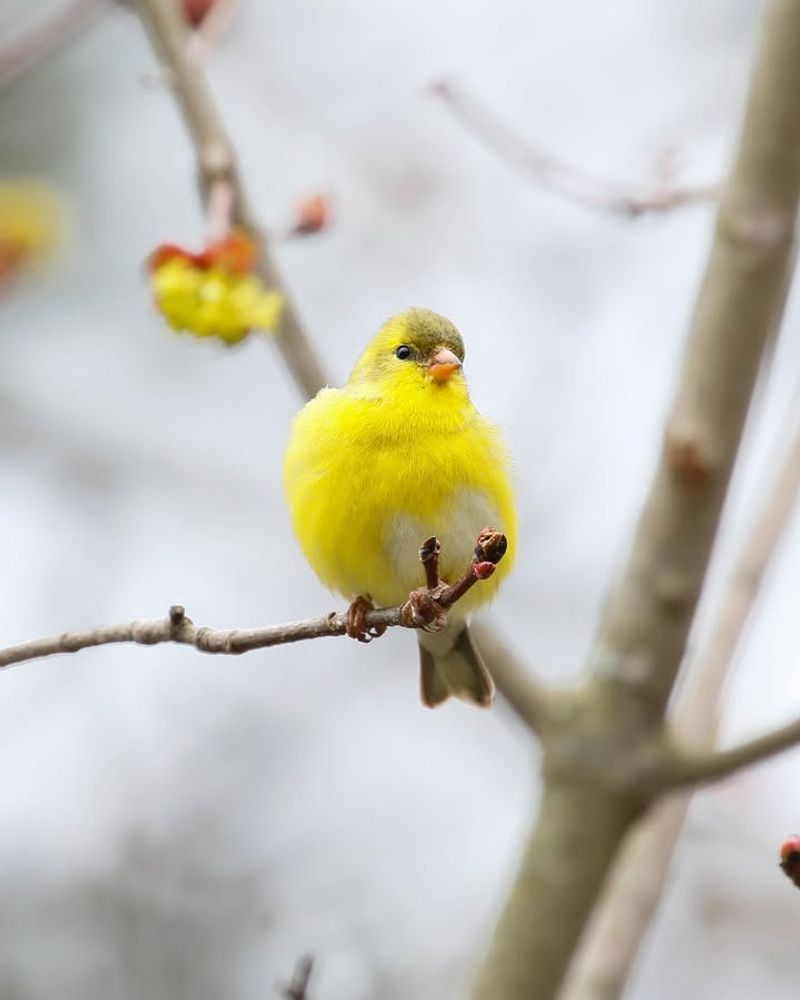
Most backyard songbirds in Pennsylvania wrap up their nesting by early summer, but goldfinches are famously late bloomers when it comes to raising a family. Spotting one in your yard during July or August could mean something exciting is happening very close by.
American Goldfinches typically begin nesting in June or July, which is much later than robins, sparrows, or wrens. They time their breeding season with purpose.
By waiting until midsummer, they ensure that plant fibers are ready for building nests and that seeds are becoming abundant enough to feed their young.
Goldfinch nests are small, cup-shaped structures woven tightly enough to hold water. They are usually tucked into the fork of a shrub or small tree, often just a few feet off the ground.
The female does most of the construction, and the finished nest is remarkably neat and compact for such a small bird.
Young goldfinches are fed a diet of regurgitated seeds rather than insects, which is unusual among songbirds. This is another reason the timing matters so much.
The parents need a generous and reliable seed supply nearby to keep their chicks growing strong through the summer weeks.
If you notice a goldfinch visiting your yard frequently in July or August, especially if it is carrying food or acting protective near a particular shrub, look carefully without getting too close. A nest may be tucked just out of sight.
Giving the area some space and keeping pets indoors during that period is a simple and kind way to support the family until the young birds are ready to fly on their own.
4. Uncut Flowers May Be Supplying Nesting Material
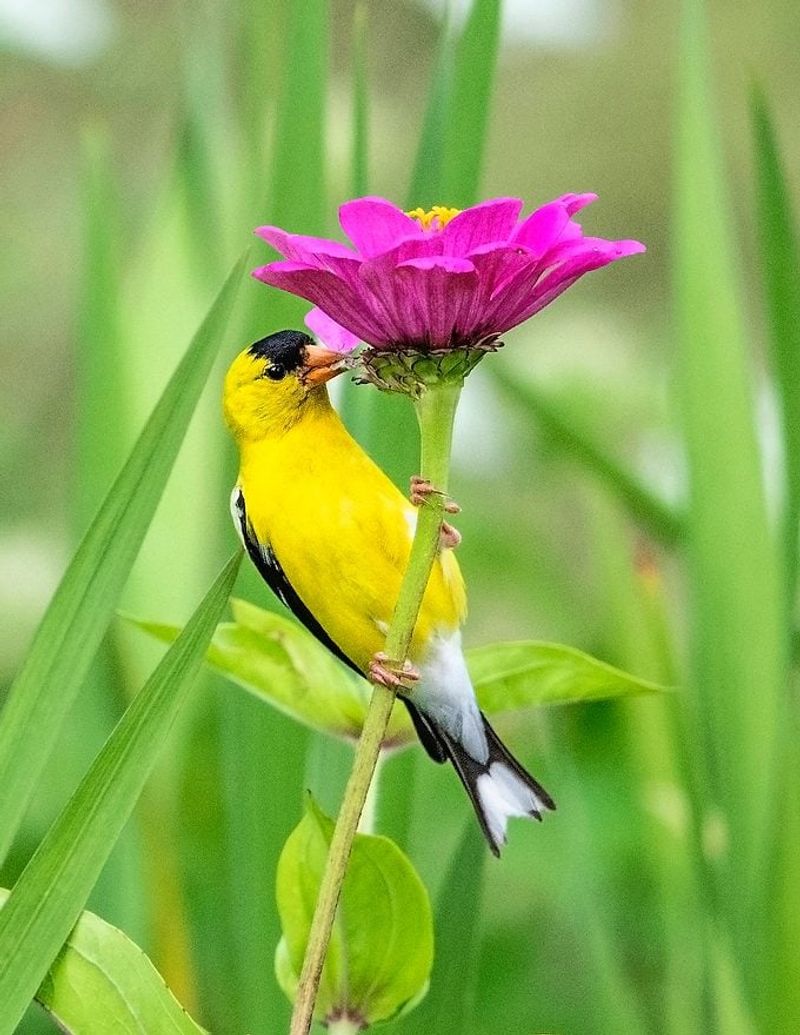
Here is something many people never think about when they see a goldfinch tugging at a plant in the garden. It might not be eating at all.
It could be shopping for building supplies. Female goldfinches are highly selective about the materials they use to construct their nests, and certain plants in your yard may be exactly what she is looking for.
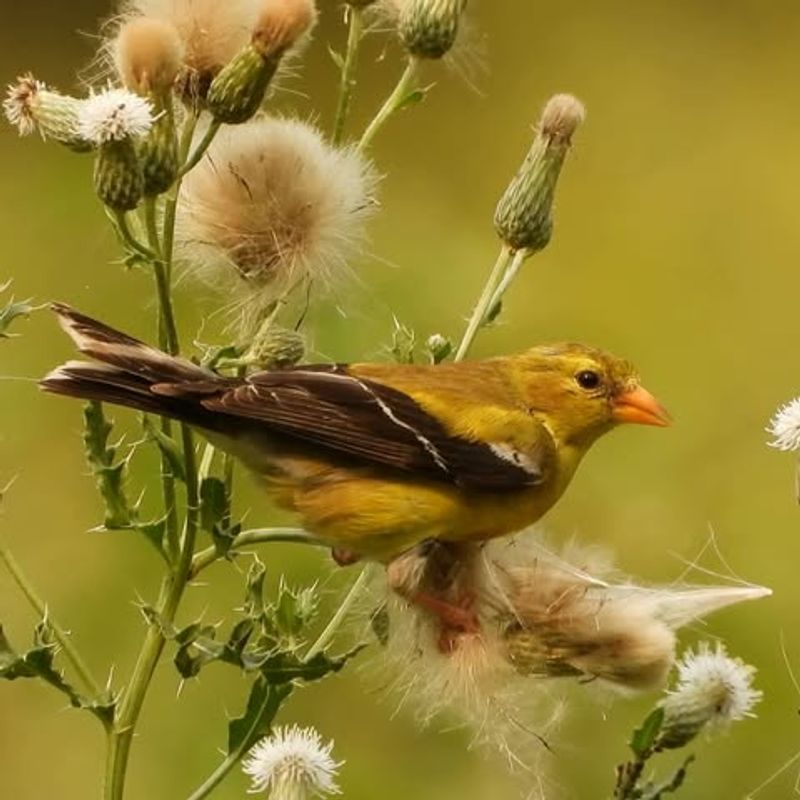
Milkweed fibers and thistle down are among the most prized nesting materials a goldfinch can find.
These soft, silky plant fibers help create the tightly woven, flexible cup that makes a goldfinch nest so distinctive. Without them, nest construction becomes much harder for the female.
If you watch closely, you might see a female goldfinch land on a milkweed pod or a spent thistle head and pull out long threads of fluffy fiber with her beak.
She will gather a beakful, then fly off in a specific direction. That flight path often points straight toward where the nest is being built.
Keep in mind that seeing this behavior alone does not guarantee a completed nest is already in your yard. She may be gathering material from your plants and building in a neighbor’s shrub or a nearby hedgerow.
Still, it means your garden is playing an important supporting role in the nesting process.
Leaving milkweed, thistles, and other fibrous native plants uncut through the summer is one of the kindest things you can do for local goldfinches. Many gardeners are tempted to tidy up too early.
Holding off just a little longer gives these birds access to the raw materials they need to raise a healthy next generation right in your community.
5. Your Landscape Resembles Its Preferred Open Habitat
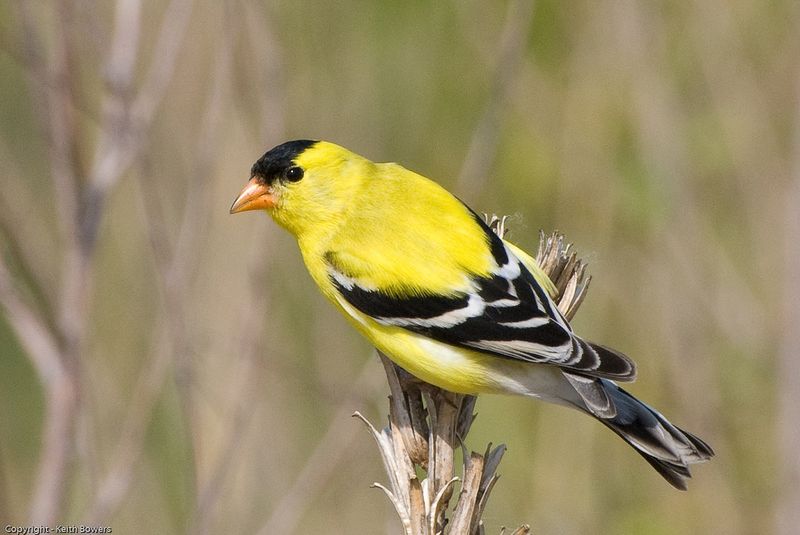
Not every yard appeals to a goldfinch. These birds are picky about their surroundings in ways that most people never consider.
If one keeps showing up in your space, take it as a compliment. Your landscape has the right kind of look and feel for one of Pennsylvania’s most cheerful little residents.
American Goldfinches are not forest birds. They prefer open areas with plenty of sunlight, scattered shrubs, and access to seed-producing plants.
Roadsides, brushy meadow edges, suburban gardens, and open woodland borders are their sweet spots. Dense, unbroken forest holds very little appeal for them.
A yard that has some informal character tends to attract them more than a perfectly manicured lawn. Neat rows of trimmed hedges and bare grass do not offer much.
But a yard with sunny flower beds, patches of native wildflowers, a few shrubby corners, and some open ground? That checks nearly every box on a goldfinch’s wish list.
Even small changes can make a big difference. Adding a border of native flowering plants along a fence, letting a corner of the yard grow a little wilder, or planting a few sunflowers near a sunny window can shift your landscape into goldfinch territory quickly.
You do not need acres of land to make it work. Pennsylvania’s mix of suburban neighborhoods, farmland edges, and open green spaces makes it ideal goldfinch country across the entire state.
Your yard sits within that landscape, and if it mirrors the open, seed-rich character these birds seek out naturally, a visiting goldfinch is simply recognizing a good thing when it sees one.
Your outdoor space is doing something right.
6. The Bird May Be A Year-Round Resident, Not A Temporary Visitor
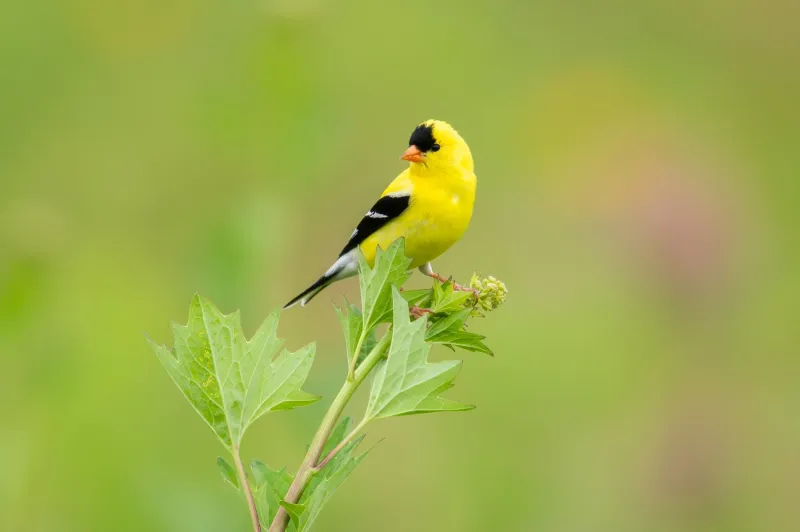
Many Pennsylvania homeowners assume that goldfinches are only summer visitors, bright and fleeting like the warm weather itself.
That assumption leads to a surprising discovery every winter when a small, dull-colored bird shows up at the feeder and turns out to be the same species that dazzled them back in July.
American Goldfinches are year-round residents across Pennsylvania. They do not migrate out of the state the way many other songbirds do.
Some individuals move short distances seasonally, but the species as a whole stays put, shifting their range only slightly depending on food availability and weather conditions.
The big trick is recognizing them in winter. Male goldfinches trade their brilliant lemon-yellow breeding plumage for a much duller, olive-tinged coat once fall arrives.
Females, who are already less vibrant than males in summer, become even more muted. Both sexes can look so different that many people assume they are looking at an entirely new species.
Knowing this can completely change how you manage your feeder setup through the colder months. Keeping nyjer and sunflower chips stocked from October through March means you are supporting the same birds that brightened your yard all summer long.
They remember your feeder and will continue visiting as long as the food supply stays reliable.
A fun detail worth knowing: goldfinches are one of the few bird species that molt twice a year, which is why the seasonal color change is so dramatic in males.
Watching for that transformation in your own yard, from vivid yellow in summer to subtle olive in winter and back again in spring, is one of the most rewarding parts of getting to know this remarkable little bird.