The Meaning Behind Seeing A Great Egret In Your Florida Yard
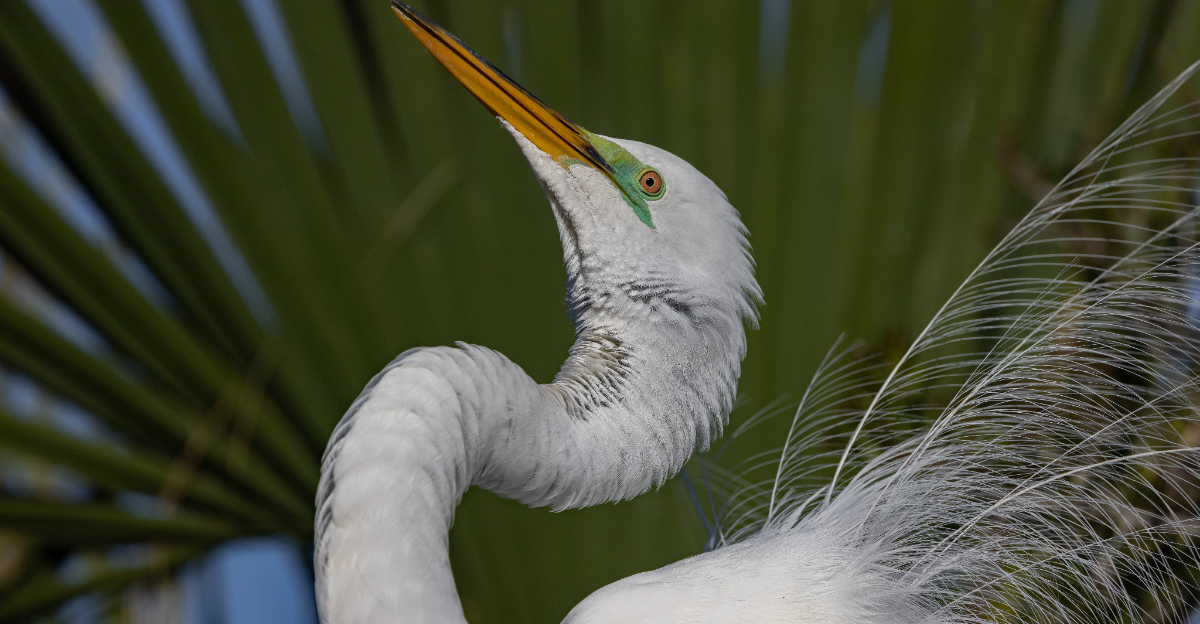
A great egret in your Florida yard is not just a pretty surprise. It usually means your lawn, pond, ditch, or garden beds have become a reliable food stop.
Frogs, lizards, insects, small fish, and even young snakes can draw this tall white hunter close to patios, pools, and flower borders.
One visit may last only minutes, but repeat appearances can reveal a wet area, drainage issue, or prey-rich corner that deserves a closer look.
The bird itself rarely harms a yard, though its sharp bill, large size, and appetite can create problems near koi ponds or small water features. Its presence can also signal that your landscape offers the shelter and moisture local wildlife needs.
Before you chase it away or celebrate the visit, take a look at what brought it there. The answer may expose a hidden feature of your yard that you have overlooked until now.
1. Read The Visit As A Sign Of Easy Hunting
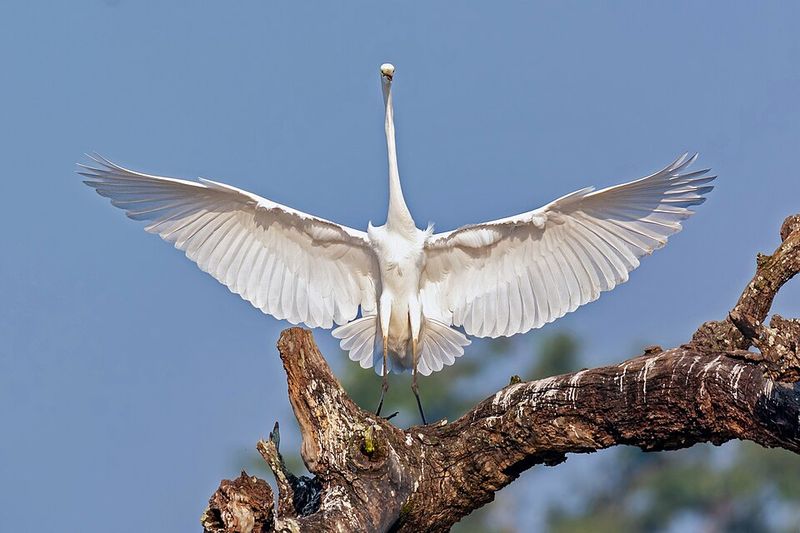
A sudden freeze in the middle of your Florida yard tells you something is happening. That stillness is deliberate, not random.
A Great Egret uses patience as its primary tool, locking onto movement before committing to a strike.
The most practical explanation for the visit is that the yard offered a visible hunting opportunity. A frog near a garden edge, a lizard crossing an open patch, or a cluster of insects on damp ground may be enough to draw the bird in.
It likely arrived from a nearby pond, canal, drainage swale, or wetland. Those habitats are common across southern neighborhoods, and a bird that spots accessible prey in an adjacent yard will often cross into it without hesitation.
One important thing to keep in mind is that the visit does not signal an infestation. A single small animal can hold the bird’s attention for several minutes.
It may stand, take a few slow steps, and stand again, repeating that routine until it either strikes or loses interest. The yard has not replaced its normal habitat.
It simply offered a brief, convenient extension of it. Avoid reading loyalty or preference into the visit.
The bird is responding to what it can see and reach at that moment, nothing more.
2. Watch The Grass For Frogs Lizards And Insects
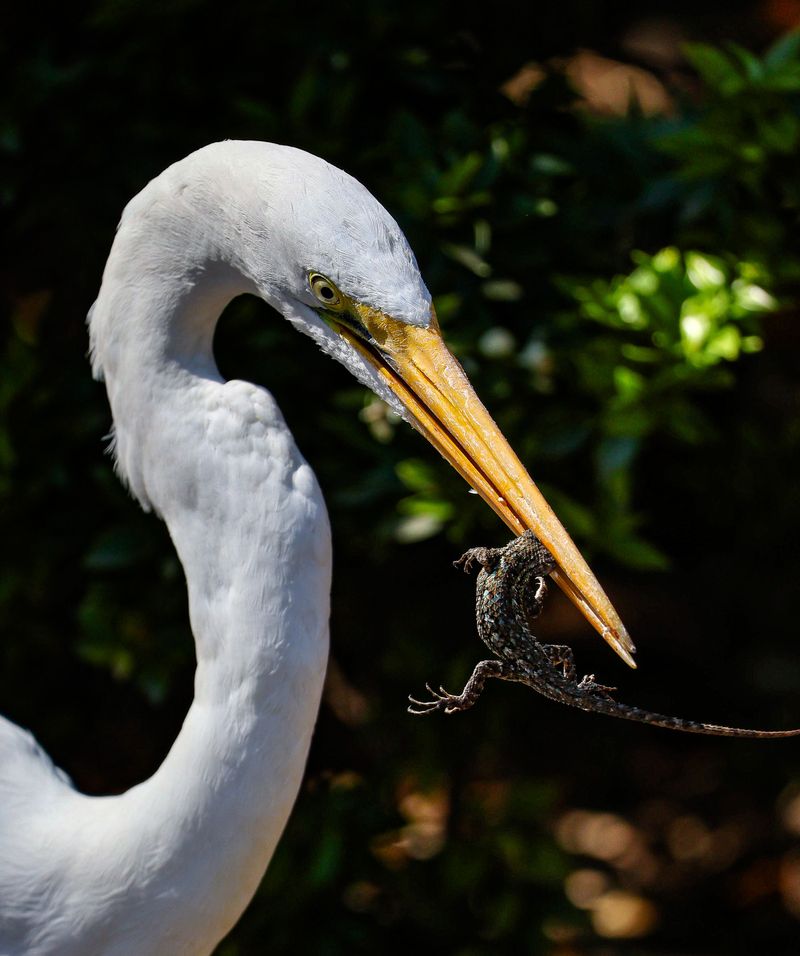
Movement in the grass catches the bird’s eye long before you notice anything yourself. A twitch from a small frog, a lizard darting across bare soil, or a beetle pushing through damp turf can all trigger that slow, focused stalk.
The diet of a Great Egret is broader than many people expect. Fish get most of the attention.
However, the species also eats frogs, small lizards, large insects, and other invertebrates. It may occasionally take small mammals when the opportunity arises.
Not every yard contains all of these animals, and the bird is not guaranteed to find what it came for. It may investigate several spots, stare at a patch of ground for a long moment, and move on without catching anything.
Your Florida Garden Changes Every Week. Your Plan Should Too.
Gardening in Florida changes quickly throughout the season. Every Friday you’ll receive a simple weekly plan showing exactly what to plant, prune, fertilize, harvest, and protect so you never miss the right timing.
Swallowing happens fast when a strike does connect. Small prey disappears in one or two quick head tilts.
The bird shows no dramatic celebration. It simply resets its posture and begins scanning again.
Damp turf, low-growing plants near a pond edge, and shaded spots along a fence line tend to shelter the kinds of small animals worth investigating. None of those animals need to be removed to discourage the bird.
It will leave on its own schedule, guided entirely by what it finds or fails to find.
3. Notice How Rain And Irrigation Draw Prey Closer
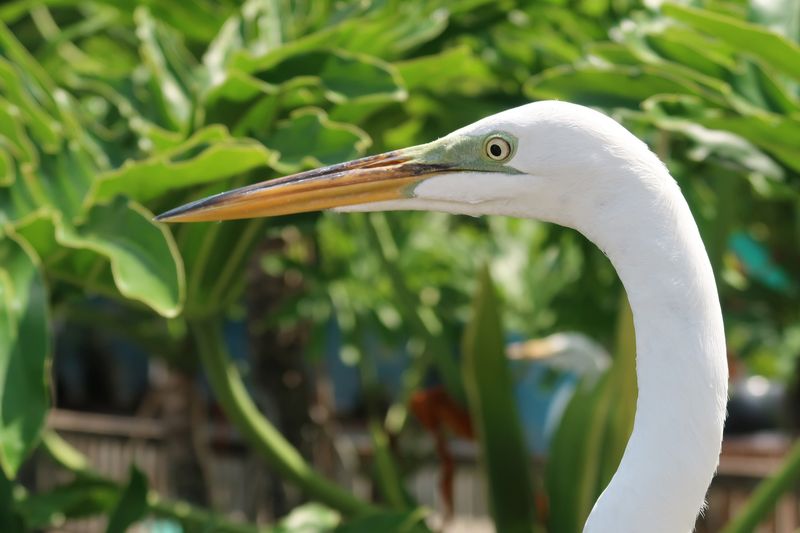
Damp soil after a shower or a morning irrigation cycle changes the surface of a lawn in ways that matter to a hunting bird. Moisture softens the ground, and some animals that normally stay hidden move closer to the surface or into the open.
Earthworms may emerge onto wet turf. Frogs become more active after rain.
Shallow puddles can briefly attract small aquatic invertebrates. Wet soil also carries surface vibrations more clearly, which may make it easier for the bird to detect movement.
None of this means that every sprinkler cycle will produce a visit, and not every rain event creates a useful feeding situation. The response depends on the specific prey present, the depth of moisture, and the time of day.
Irrigation is one possible factor, not a reliable attractant. Overwatering a Florida lawn to encourage wildlife visits is not a good idea.
Excessive irrigation can damage turf roots, contribute to fungal problems, and waste water. Persistent puddles may also signal a drainage issue worth addressing.
Once the surface dries and small animals retreat, the bird will typically move on. The connection between wet conditions and a yard visit is real in some situations, but it is not a rule that applies every time water hits the ground.
4. See Why Open Lawns Make Hunting Easier
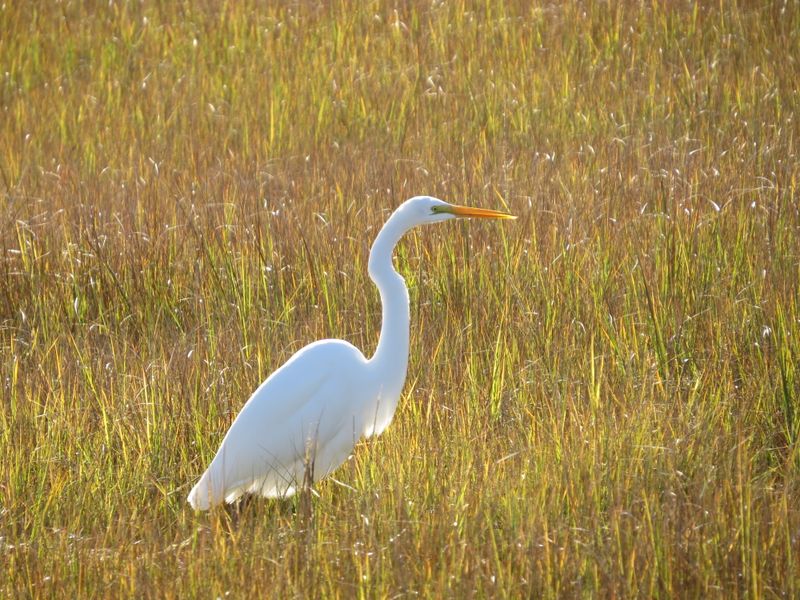
Long black legs crossing a wide, open stretch of turf make for a striking image. That open space is not coincidental.
A tall bird with a long neck and a straight bill benefits from clear sightlines when scanning for small animals.
Short or moderately maintained grass exposes movement that taller, denser cover would hide. A lizard crossing a bare patch is easy to spot.
A frog sitting at the edge of a low-cut lawn is visible from several yards away. Open planting beds, drainage swales, and the margins around ornamental ponds offer similar advantages.
The bird may pause at any of these spots and hold completely still before deciding whether to move closer.
Open turf does not create prey. It only makes existing animals easier to notice and reach.
Dense weeds or taller ground cover are not automatically bad for a yard, and removing them purely to attract wading birds is not a practical goal. The bird’s anatomy works in its favor in open settings.
Its height gives it a wide field of view, its neck can extend quickly, and its bill strikes with precision. Those tools are simply more effective when nothing is blocking the path between the bird and what it spotted.
Sightlines and space matter more than any single feature of a well-kept Florida lawn.
5. Expect A Solitary Visit Instead Of A Flock
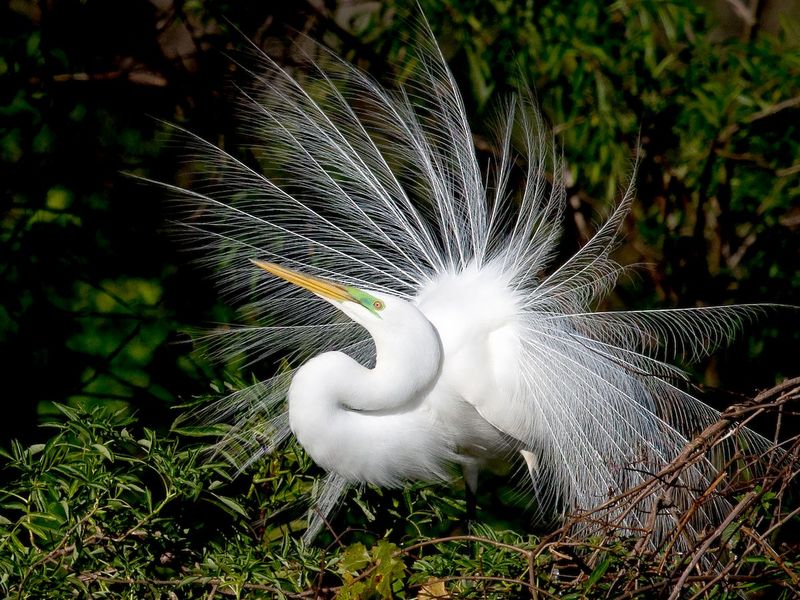
One white figure standing apart from everything else in the yard is a reliable visual clue. Unlike White Ibises, which often move through neighborhoods in loose groups, a Great Egret searching for a meal typically works alone.
Solitary foraging is common for this species, but it is not universal. Several individuals may gather at a spot where prey is concentrated, such as a canal edge during low water or a flooded field after heavy rain.
Nesting and roosting behavior also differs from feeding behavior. Great Egrets may share colony sites with other wading birds during breeding season.
A single bird in a residential yard, though, is almost always foraging independently.
If you see a group of small white birds moving together through a neighborhood, they are more likely to be White Ibises or Western Cattle-Egrets than Great Egrets.
A Snowy Egret is another possibility, but it is noticeably smaller and has yellow feet rather than black legs.
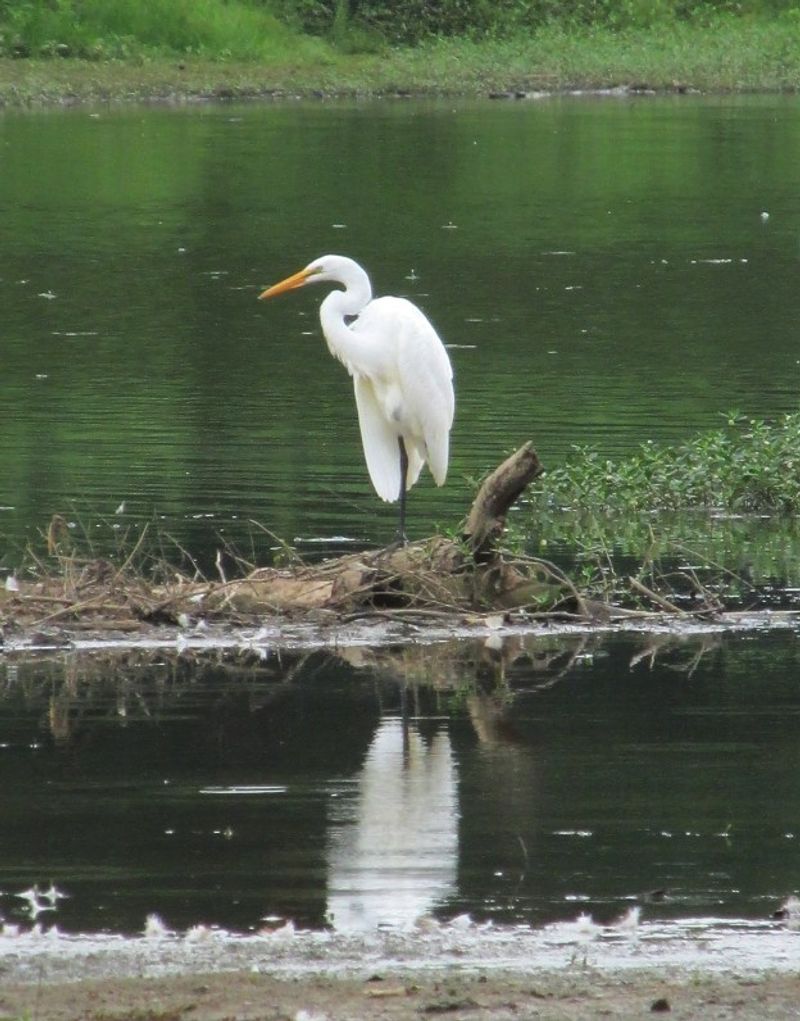
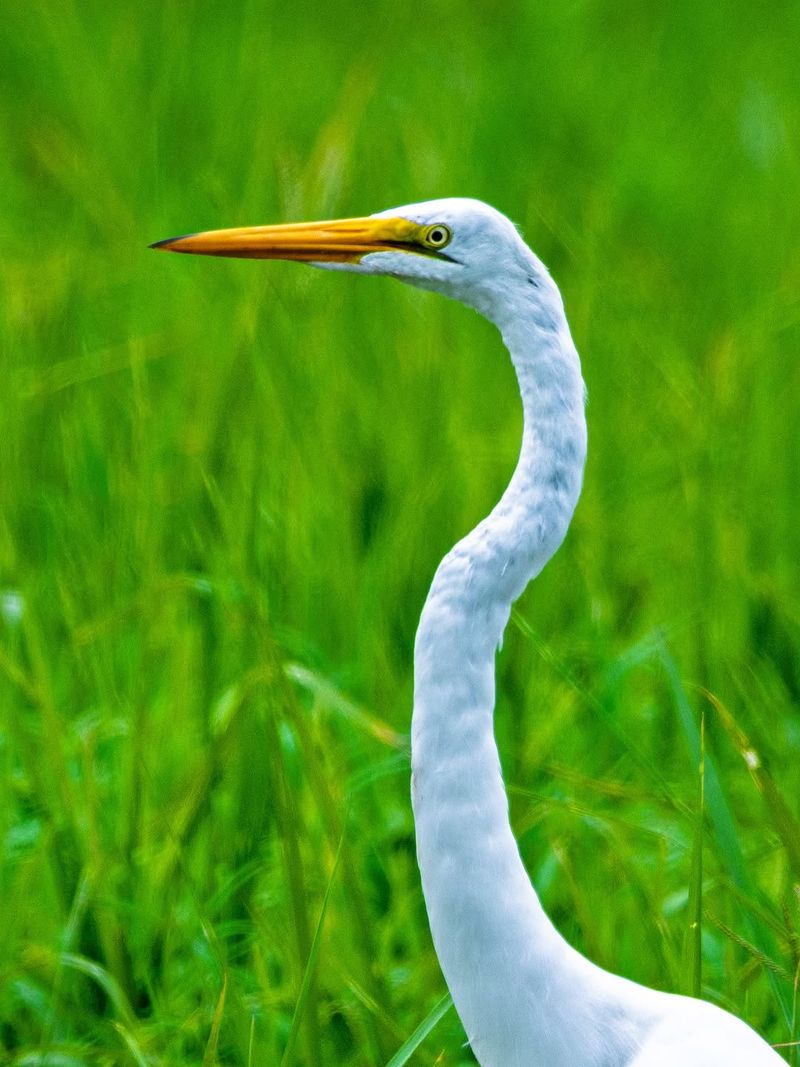
The Great Egret is a large bird, roughly the height of a great blue heron, with all-white plumage, a yellow-orange bill, and black legs. That combination is distinctive.
One bird standing quietly in an open area, scanning the ground with a slow, deliberate posture, fits the profile precisely. There is no reason to assume it is lost or separated from a group.
6. Give The Egret Space To Search Undisturbed
A dog pausing at the back door or a child stopping at the edge of the patio is already closer than the bird prefers. Wading birds that are actively foraging are alert to movement, sound, and approach from any direction.
Watching from inside or from a comfortable distance gives the bird room to continue its search. If it raises its head, stretches its neck upright, or begins stepping toward an exit, that is a signal you have moved too close.
Back away slowly and give it more room. Repeated retreats or sudden flight are signs of real disturbance, not just caution.
A wild bird that feels cornered may defend itself, so handling or trapping is never appropriate.
Keep dogs and cats indoors or on a leash when the bird is nearby. Children should be encouraged to watch quietly rather than approach.
A camera zoom brings you closer without moving your feet, and that is the right tool for a good photograph. Make sure gates and open pathways are clear so the bird can leave freely when it chooses.
It will move on without any intervention once the search ends or the opportunity disappears.
Watching a wild animal behave naturally in your own yard is a genuinely rewarding experience, and it costs nothing except a little patience and a respectful distance.
7. Skip Handouts And Let Natural Foraging Continue
Outdoor food left near a door or on a patio can attract the wrong kind of attention. A Great Egret that finds easy access to pet food, fish scraps, or discarded meat near a house may begin associating human activity with an easy meal.
Artificial feeding changes normal behavior in ways that rarely benefit the bird. It may linger closer to roads, fences, pets, or entry points than it would otherwise.
That proximity raises the risk of stress, conflict with pets, or accidental injury. No handout, including bread, raw fish, or pet kibble, provides the right nutrition for a wild wading bird, and offering food is not recommended by wildlife agencies.
Bring pet bowls inside when not in use, and secure any outdoor food waste.
Ornamental ponds deserve a mention here. A Great Egret may notice small fish in a backyard pond and take one when the chance appears.
That is natural foraging behavior, not malicious intent. If protecting ornamental fish matters to you, a motion-activated deterrent or a physical barrier can reduce access without harming the bird.
Avoid netting that could trap or injure wildlife. Watching the bird search on its own terms provides far more interesting behavior than anything a handout could produce.
Natural foraging keeps the animal wild, self-sufficient, and behaving exactly as it should.
8. Treat Its Arrival As A Healthy Wildlife Moment
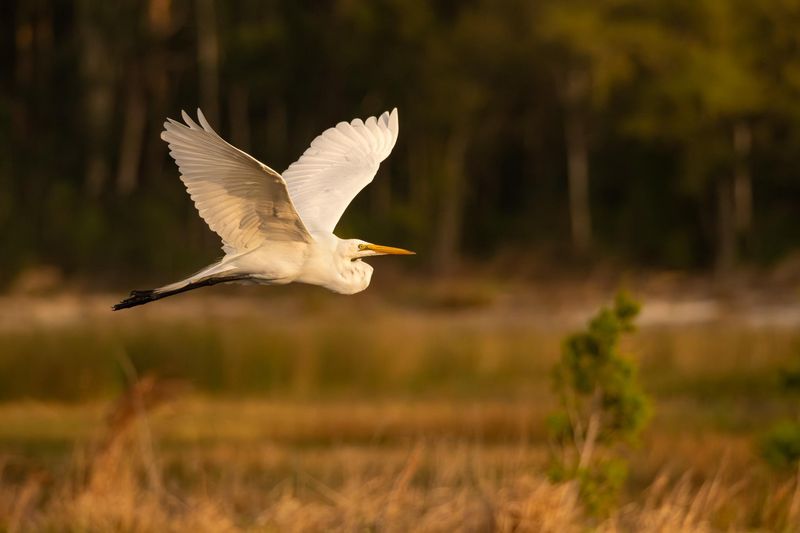
When the search ends, the bird lifts off with slow, steady wingbeats and disappears over a rooftop or tree line. That quiet exit is a good reminder of what the visit actually was: a wild animal following its instincts in a landscape that briefly offered something useful.
Calling the visit a healthy wildlife moment is a reasonable way to frame it, as long as the framing stays accurate. The sighting shows that a wild bird found a temporary resource in your yard.
It does not confirm that your soil is rich, your ecosystem is thriving, or your Florida lawn is free of problems. Limiting unnecessary broad-spectrum pesticide use is still worth considering.
Chemicals applied to a lawn may reduce the small animals that wading birds seek. Some products can also create exposure concerns for wildlife moving through treated areas.
Follow label directions and any local guidance when applying treatments.
Remove hazardous litter from yard edges, drainage areas, and pond margins. Discarded fishing line, plastic loops, and sharp debris can injure birds that forage near water.
Under federal law, Great Egrets are protected as migratory birds. Harming, harassing, or capturing one is not permitted.
Enjoy the visit from where you stand, note the posture, the stillness, and the sudden strike if you are lucky enough to see it. That sequence of behaviors is the real meaning behind the whole encounter.