The Meaning Behind Seeing A Great Horned Owl Near Your California Home At Night
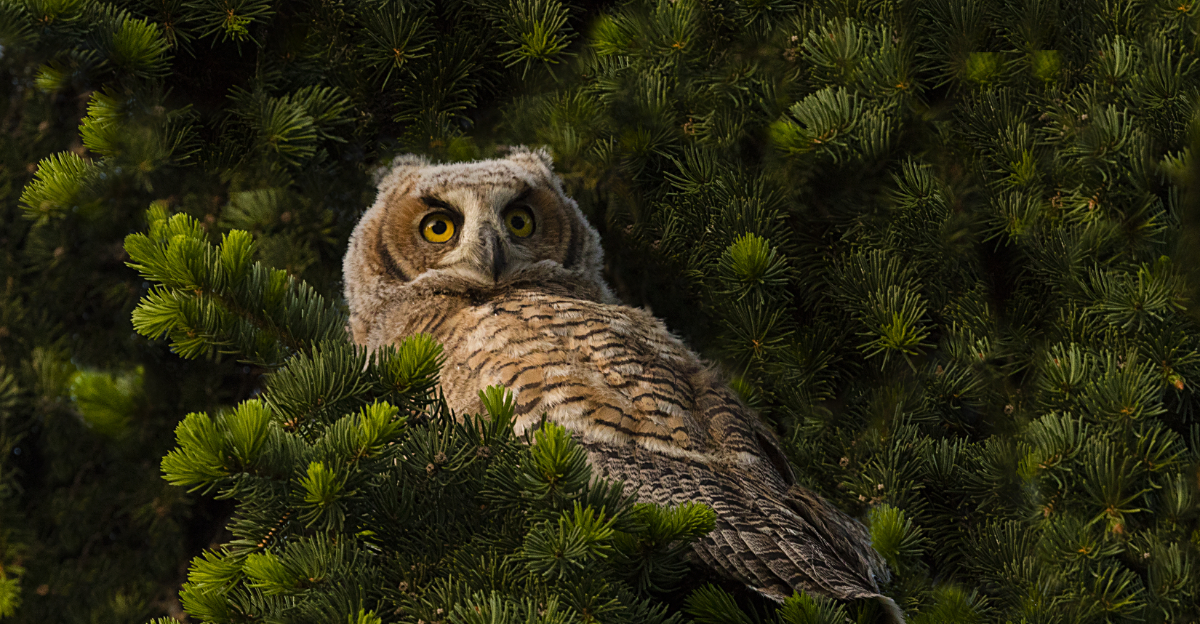
A great horned owl near your California home can make an ordinary night feel almost cinematic.
One deep hoot drifts through the dark, a shadow moves across the roofline, and suddenly the backyard seems far more mysterious than it did five minutes ago.
These powerful birds rarely blend into the background once they make their presence known.
Their size commands attention, while their quiet movements can leave homeowners curious about why one chose that particular spot.
Apparently, your yard has earned some serious nighttime interest.
The visit may feel random, but the owl likely noticed something useful nearby. A familiar tree, an open perch, or activity below could all play a role without offering an obvious clue.
That late-night appearance can reveal more about the property than most people expect. Once you understand what draws a great horned owl close, the encounter becomes even more fascinating.
Your Yard May Be Part Of Its Hunting Route
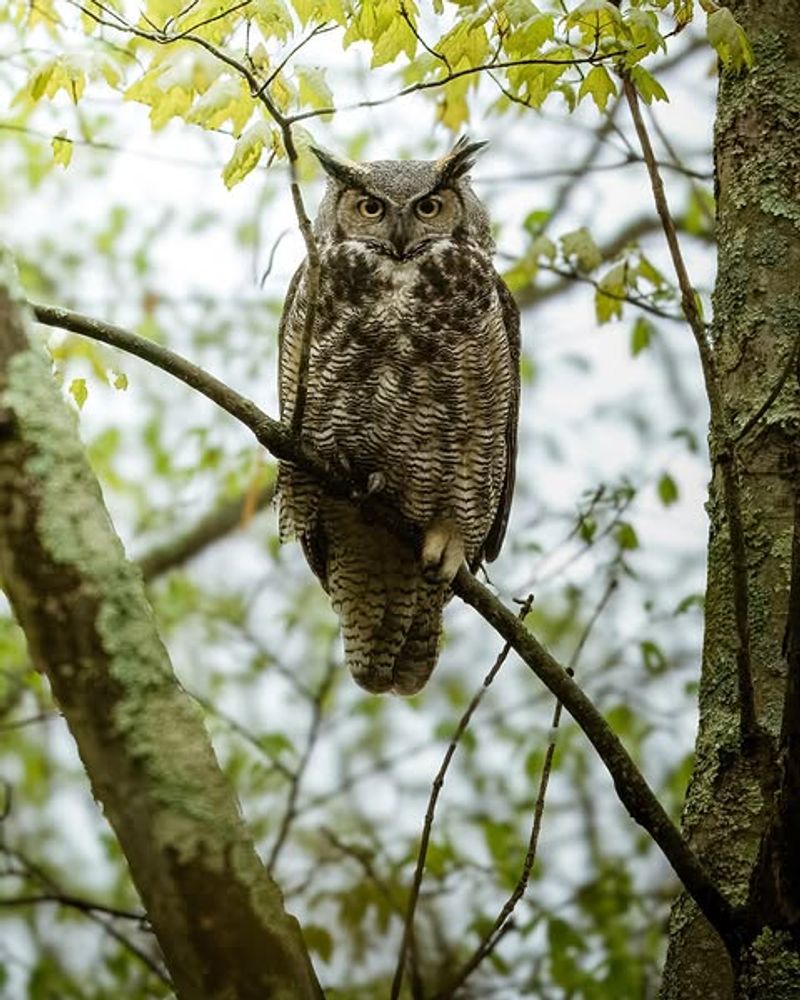
Great horned owls do not wander randomly. They follow the same flight paths night after night, covering large areas in search of food.
If one keeps appearing near your home, your yard is likely part of a regular hunting route.
These birds can patrol territories that stretch over several miles. They memorize the layout of their hunting ground, including where prey tends to hide.
Your yard, garden, or open lawn may sit right in the middle of that route.
Owls prefer to fly low and quietly over open ground. A yard with short grass or cleared space gives them a clear view of any movement below.
Even a small patch of open lawn between two houses can serve as a regular stop on their nightly patrol.
If you have noticed the owl appearing around the same time each night, that is a strong clue. Owls are creatures of habit.
They return to productive spots again and again because it saves energy and increases their chances of catching something.
You do not need to do anything alarming if you enjoy watching them. Simply keep outdoor pets inside at night and secure small animals in enclosed spaces.
The owl is just doing its job, and your yard happens to be a useful stop along the way.
Night Activity Usually Means Prey Is Nearby
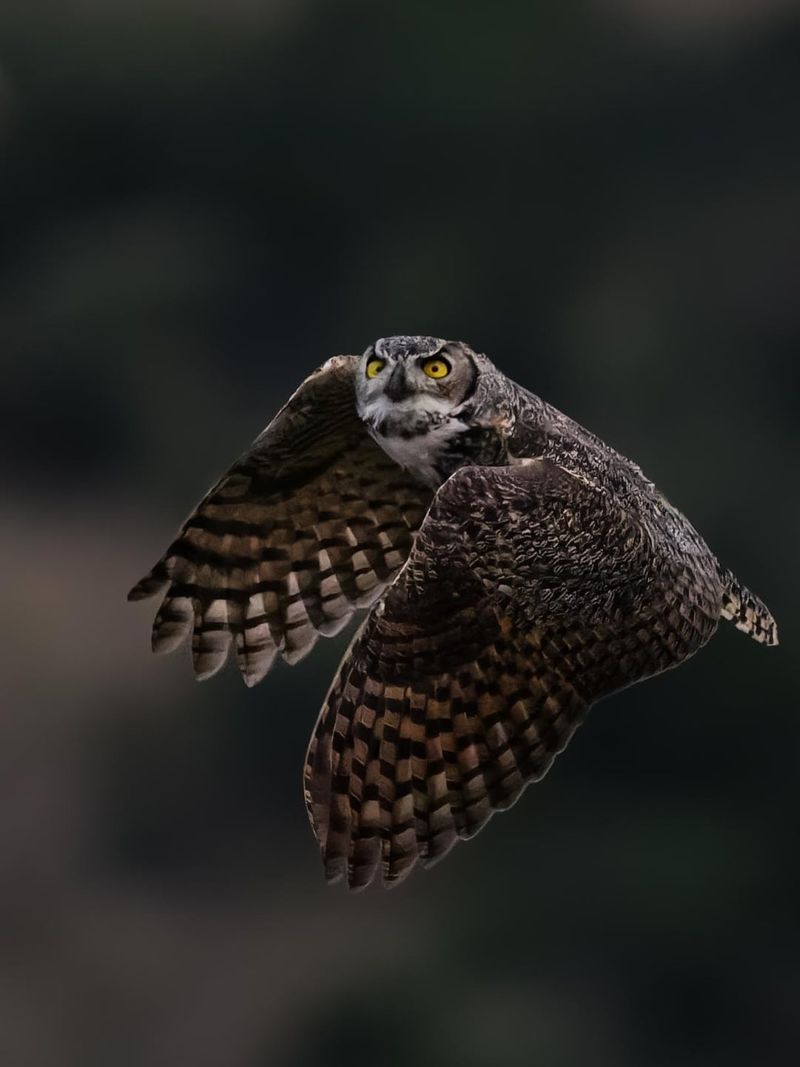
When a great horned owl shows up after dark, it is almost always hunting. These birds are built for nighttime activity.
Their eyes are designed to see in low light, and their ears can pinpoint the exact location of a sound in total darkness.
If an owl is active near your home, that usually means there is prey close by. Small mammals like gophers, rabbits, and squirrels are common targets.
Even larger insects or frogs can attract an owl to a yard with standing water or dense ground cover.
Owls do not waste time in places where food is scarce. Their presence is almost always a sign that the local food supply is healthy.
In many ways, seeing one is a good indicator that your neighborhood has a balanced and active ecosystem.
Your California Garden Changes Every Week. Your Plan Should Too.
Gardening in California changes quickly throughout the season. Every Friday you’ll receive a simple weekly plan showing exactly what to plant, prune, fertilize, harvest, and protect so you never miss the right timing.
Many homeowners are surprised to learn that owls will also go after skunks. Great horned owls have almost no sense of smell, which makes skunks a perfectly acceptable meal.
If you have noticed skunk activity nearby, that could be drawing the owl in.
Watching where the owl looks and flies can give you clues about what it is after. If it keeps focusing on one corner of your yard, there is likely something living or moving there that you have not yet noticed.
Rats And Mice Can Bring Owls Closer
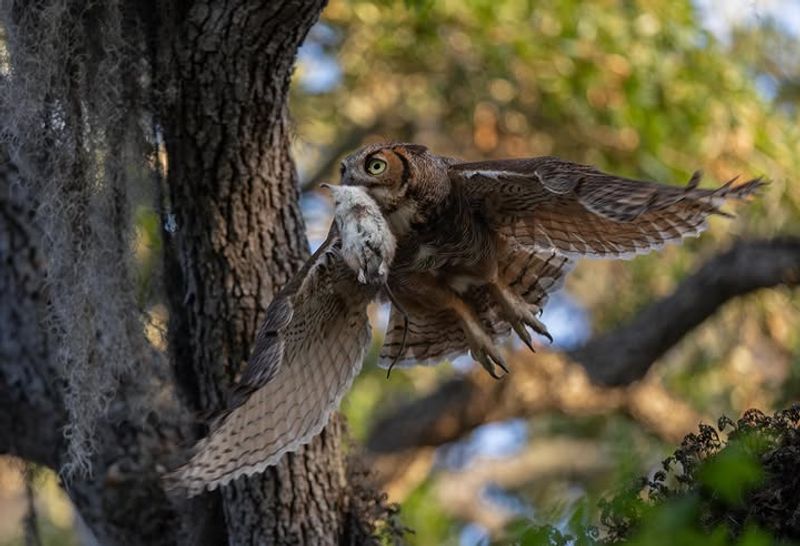
One of the most common reasons a great horned owl hangs around residential areas is the presence of rats and mice. Rodents tend to thrive near human homes because of easy access to food scraps, pet food, compost, and shelter inside walls or under structures.
Owls know this. They have learned that neighborhoods with houses, garages, and trash bins often have a reliable supply of small rodents.
A single great horned owl can catch several rats or mice in one night, making a rodent-heavy yard a very attractive hunting spot.
If you have been dealing with a rodent problem, the owl may actually be helping you. Many wildlife experts across California encourage homeowners to welcome owls as a natural form of pest control.
A nesting pair of great horned owls can remove hundreds of rodents from an area each year.
Rather than using traps or poison, some people install owl nesting boxes to attract these birds on purpose. Rodent poison is especially dangerous because owls that eat poisoned rodents can become seriously ill.
Supporting natural predators is a much safer approach for both the wildlife and your family.
Check your yard and garage for signs of rodent activity. Droppings, chewed materials, or small burrows in the soil are all clues.
If rodents are present, the owl will likely keep coming back until the food source runs out.
Tall Trees Make Good Night Perches
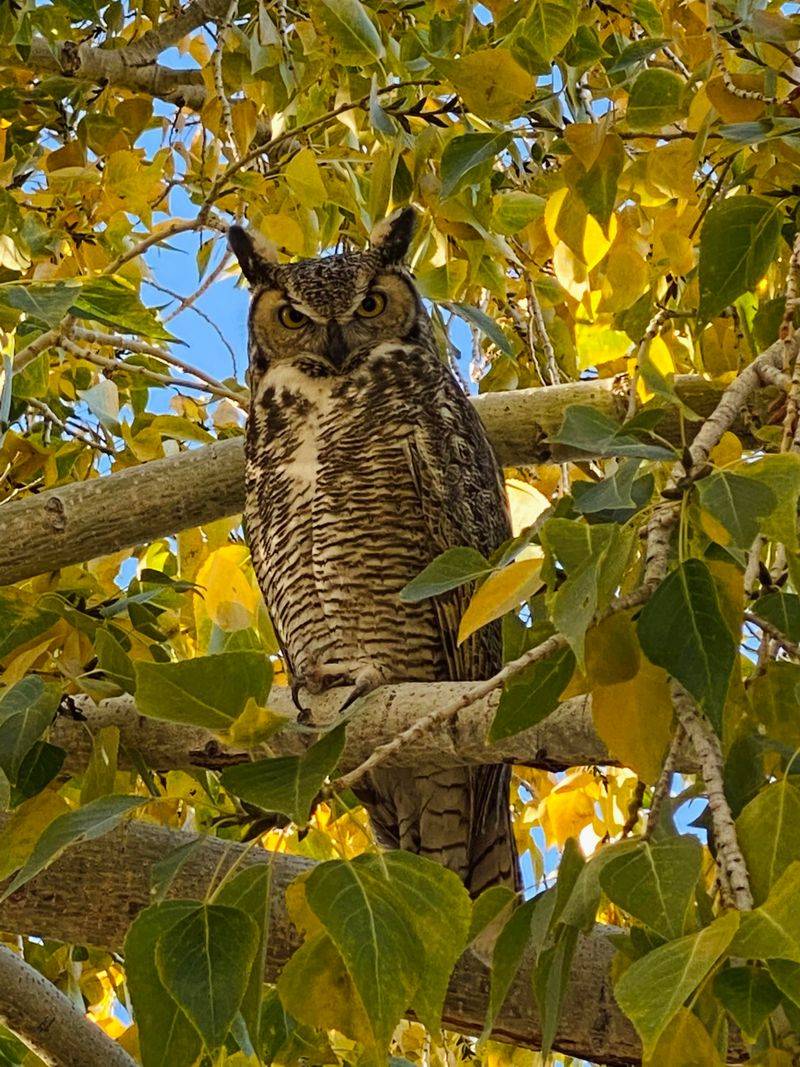
Great horned owls are not ground birds. They spend most of their time up high, scanning the area below from a safe and elevated position.
Tall trees near your home are one of the biggest reasons an owl might choose your property as a regular stop.
In California, common trees like eucalyptus, oak, pine, and sycamore provide the kind of sturdy, high branches that owls love.
These trees give the bird a wide view of the surrounding area without exposing it to danger from below. Height equals safety and visibility for a hunting owl.
An owl will often sit completely still for long stretches of time while watching for movement below. Its feathers blend naturally into the bark and shadows of a tree, making it almost invisible to the untrained eye.
Many homeowners never realize an owl has been watching from their yard for weeks.
If you have mature trees on your property, especially large ones with open canopies, you are essentially offering prime real estate for a great horned owl. The bird is not there to cause trouble.
It is simply using your tree as a watchtower before swooping down to hunt.
Older neighborhoods with established trees tend to see more owl activity than newer developments.
The presence of tall, mature trees in your yard is one of the clearest signals that owls will find your property useful and worth visiting regularly.
Rooflines And Poles Make Good Lookout Spots
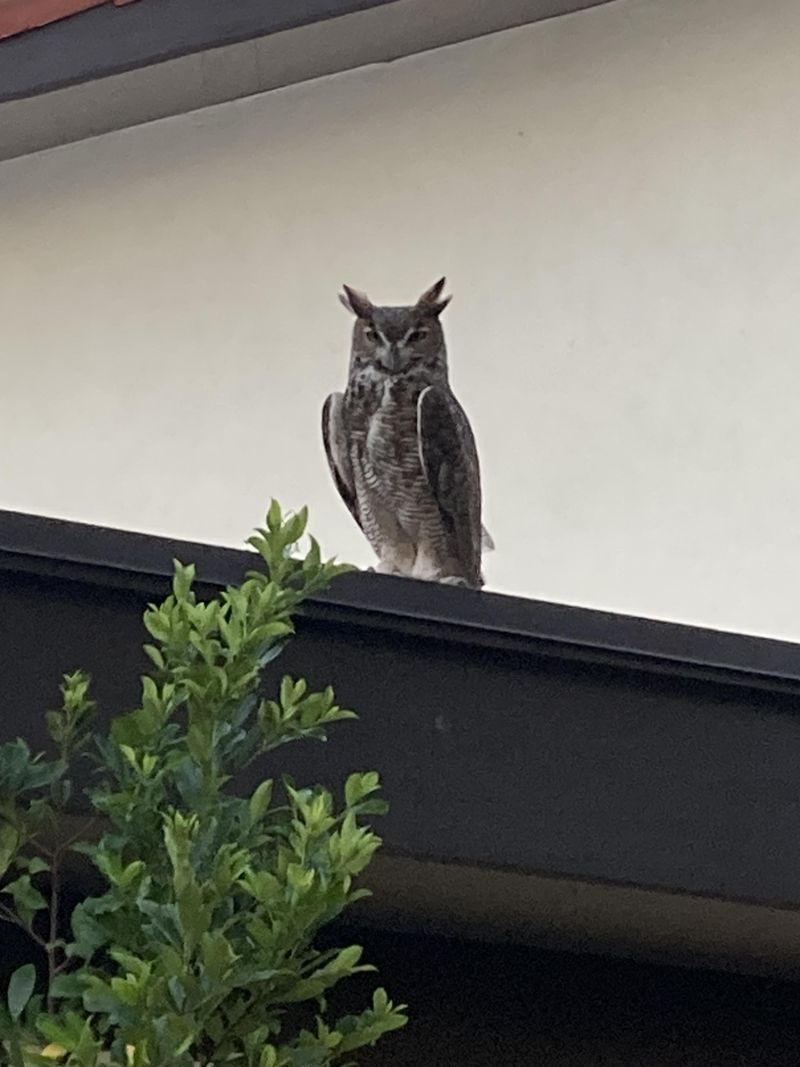
Not every owl visit involves a tree. Great horned owls are highly adaptable birds, and they will use whatever elevated structure gives them the best view.
Rooftops, chimney caps, fence posts, and utility poles are all fair game.
Suburban neighborhoods in California are full of these man-made structures, and owls have figured out how to use them to their advantage.
A roofline provides an elevated, flat surface with a wide view of the surrounding yard and street.
It is essentially the same function as a tall tree branch, just made of shingles instead of wood.
If you have spotted an owl sitting on your roof or on a nearby power pole, it is likely scanning the ground below for movement. Owls have extraordinary vision and can spot a small mouse from a surprisingly long distance, even in very dim light.
Utility poles are especially popular perches in areas where large trees are sparse. In newer developments or more open parts of our state, these poles may be the tallest structures available.
The owl uses what is there, and it does not need much to make a good lookout spot.
There is no need to shoo the bird away. It will move on its own once it has finished hunting or has found what it was looking for.
Enjoy the rare chance to observe one of nature’s most skilled nighttime predators up close from the comfort of your own home.
Quiet Yards Are Easier To Hunt
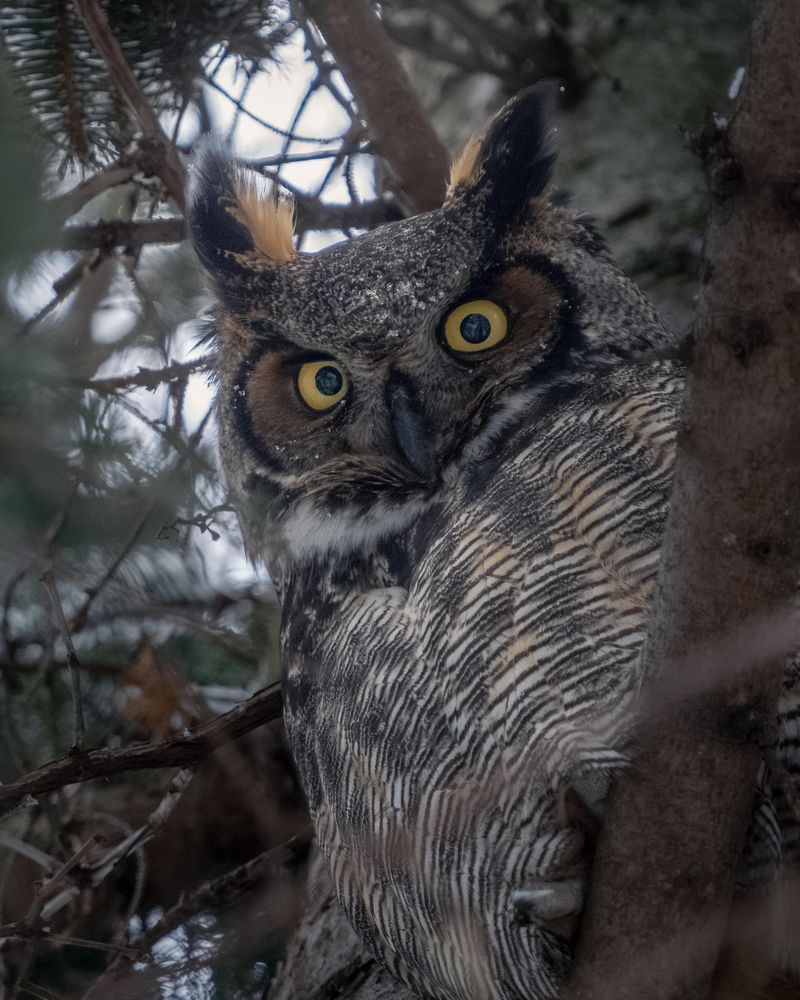
Noise is one of the biggest things that keeps owls away. These birds rely heavily on sound to locate their prey in the dark.
If a yard is full of loud music, barking dogs, bright floodlights, or heavy foot traffic, an owl will likely avoid it altogether.
A quiet yard is a productive yard for a hunting owl. When things settle down at night, small animals become more active.
Rodents come out to forage, frogs begin to call, and insects buzz near lights. All of that activity draws in owls looking for an easy meal.
Many people in California notice that owl sightings increase during quieter times of the year, like late fall and winter. During those months, yards tend to have less foot traffic and outdoor activity.
The reduced noise and movement make it much easier for an owl to hunt effectively.
If you want to attract owls to your property, keeping nighttime activity low is one of the simplest things you can do. Turn off harsh outdoor lights, keep pets inside after dark, and avoid loud activities in the evening hours.
Motion-sensitive lights that turn off quickly are less disruptive than lights that stay on all night.
Your yard does not have to be a wildlife sanctuary to attract owls. It just needs to be calm enough for them to work.
Even a small, quiet backyard in a busy neighborhood can become a regular hunting spot if the conditions are right.
Dense Trees Can Provide Daytime Roosts
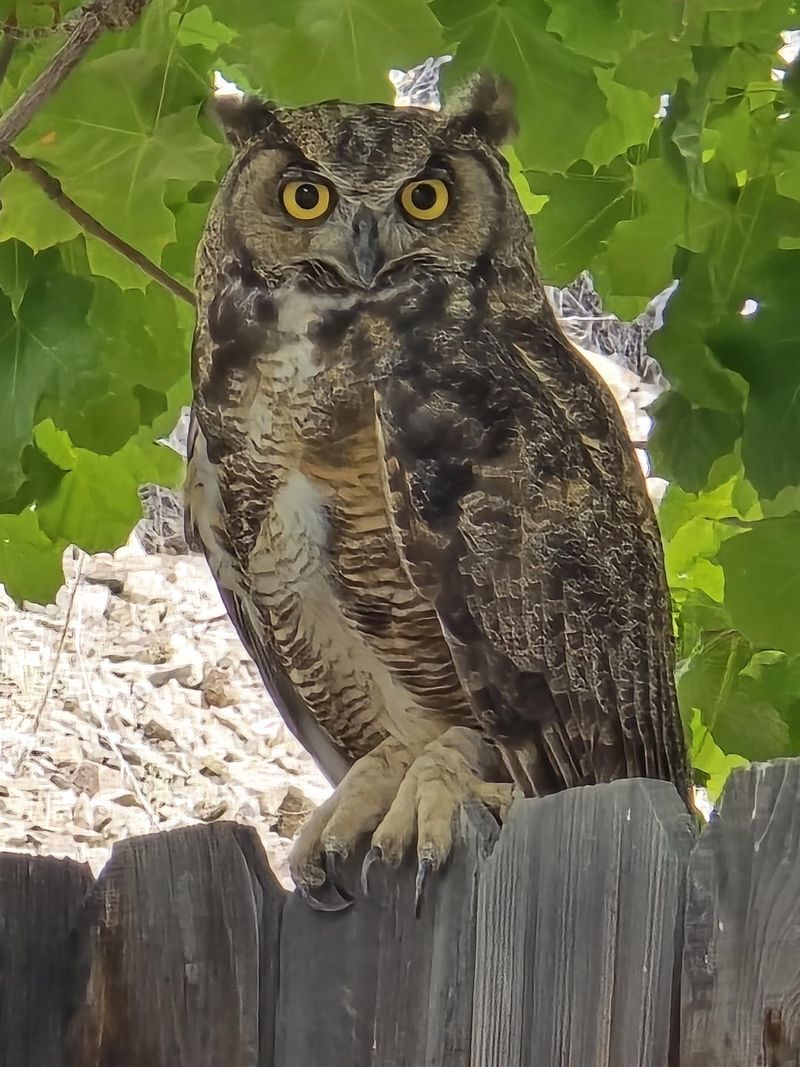
Great horned owls are nocturnal, which means they are most active at night and rest during the day. But they need a safe, sheltered spot to sleep while the sun is up.
Dense clusters of trees near your home can serve as the perfect daytime roost.
Unlike birds that build elaborate nests, great horned owls prefer to use existing structures. They often take over old hawk or crow nests, or simply find a thick cluster of branches where they can press close to a trunk and stay hidden.
Their brown and gray feathers blend almost perfectly into tree bark. Stands of pine, cedar, eucalyptus, and dense oak are all common roosting spots.
If you have a thick grove or a row of mature trees on your property, an owl may be sleeping there during the day without you ever knowing it.
Many homeowners are shocked to find one when they go out to trim branches.
Crows are often the first to alert you to a hidden owl. They will gather loudly around a roosting owl and mob it until it moves.
If you hear a sudden commotion of crows in your trees during the day, it is worth taking a closer look.
A roosting owl near your home is a sign that your trees offer real shelter. It is a compliment to the quality of your yard and the cover your vegetation provides for local wildlife.
A Hoot May Signal Territory Nearby
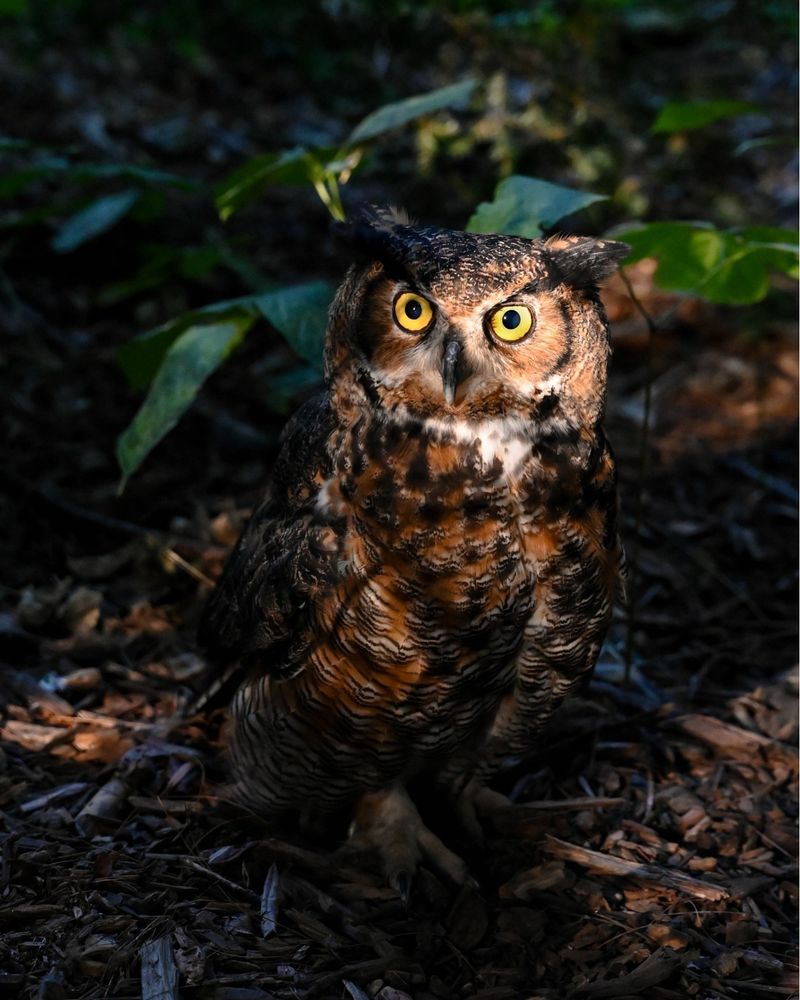
That deep, rhythmic hooting you hear on a quiet night is not random. Great horned owls use their calls to communicate with other owls, establish territory, and attract mates.
If you hear hooting near your home, there is likely a pair or a solo owl that considers your neighborhood part of its territory.
Male great horned owls typically have a deeper, slower hoot. Females answer with a slightly higher pitch.
When you hear two owls calling back and forth, you are likely listening to a bonded pair. These pairs often stay together for many years and return to the same territory each breeding season.
Breeding season in California typically runs from late fall through early spring. During this time, owl calls become more frequent and more intense.
The birds are working out boundaries with neighboring owls and reinforcing their bond with each other. Hearing hooting during these months is very common in wooded suburban areas.
If you hear hooting coming from the same direction night after night, the owl has likely claimed a perch or a nest site nearby. It is using sound to tell other owls to stay out of its space.
This kind of territorial behavior is completely normal and harmless to humans.
Take a moment to listen the next time you hear it. The call of a great horned owl at night is one of the most iconic sounds of the wild, and having it echo through your neighborhood is a reminder that nature is still very much alive around us.