The Meaning Behind Seeing Robins In Your Ohio Yard Before A Storm
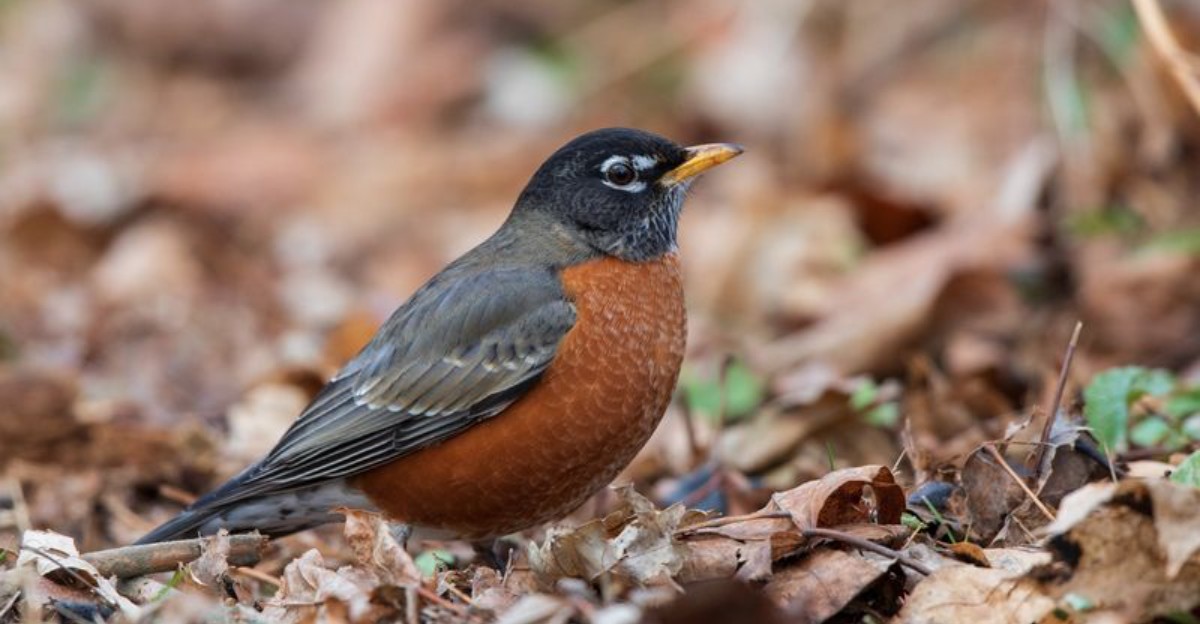
A dozen robins land on your lawn at once, heads cocked, hopping around like they’ve got somewhere to be. The sky says nothing yet.
Ohio folks have been reading this scene for generations. Grandparents swore the birds knew something the weather report didn’t, and they planned their afternoons around it.
Some neighbors still do. Others call it a coincidence and move on.
The truth lands somewhere in between, and it’s more interesting than either side admits. What the birds are doing, and why they’re doing it right now, comes down to a few real things you can actually observe.
Next time a crowd gathers on the grass, look at what they’re doing instead of how many there are. The behavior is where the clue hides.
1. Many Birds Can Sense A Storm Coming
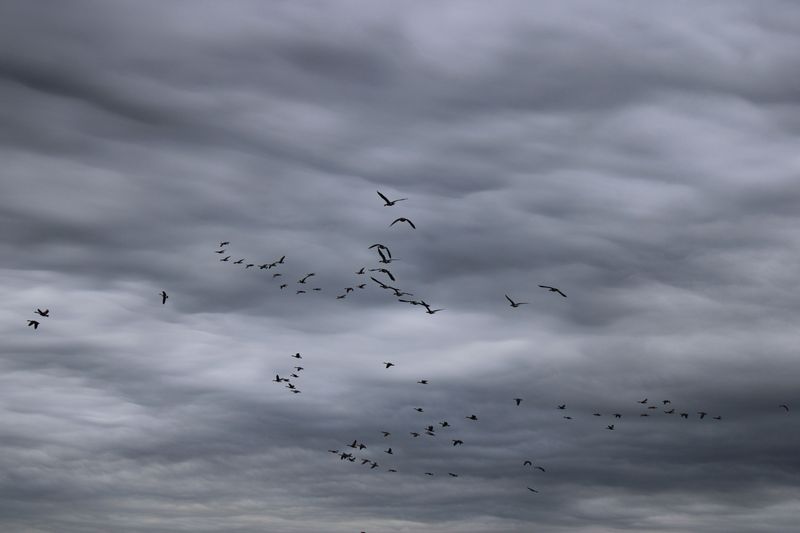
Picture a tiny weather station tucked inside a bird’s head. That is pretty close to the truth, and scientists find it amazing.
Birds notice changes in the air long before we feel a single raindrop.
Deep in the inner ear, many birds have a special part called the paratympanic organ, or Vitali organ. It helps them pick up small drops in air pressure.
When a storm rolls toward Ohio, the pressure usually starts to fall hours ahead.
Birds also track shifts in humidity and temperature. Some can even hear infrasound, which is a deep, low rumble made by big storms.
Humans cannot hear it at all, but it can travel hundreds of miles.
So when your robins seem a little restless, they may be reacting to signals you simply cannot sense. It is like they are listening to a radio station that only birds can tune into.
Pretty cool, right?
Here is a fun way to test it yourself. Keep a simple notebook by the window and jot down when birds act busy or jumpy.
Then check the weather app and see if a storm followed later that day.
Over a few weeks, you may start spotting patterns. You will also gain a whole new respect for the small birds hopping across your lawn.
2. Falling Air Pressure Can Trigger A Feeding Rush
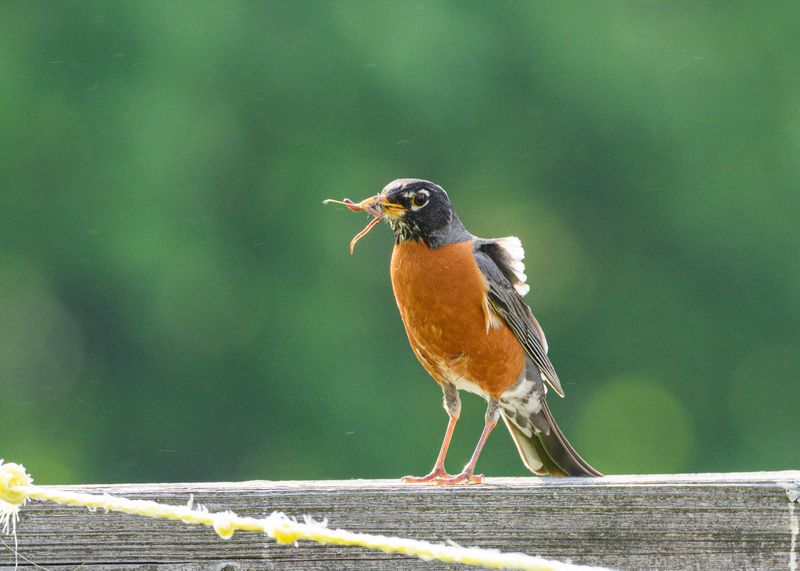
Ever raced to the grocery store when a big snowstorm was on the way? Birds do their own version of that.
Bird watchers often call it a feeding frenzy.
When air pressure drops, birds seem to know that tougher times may be coming. Rain, wind, and cold can make it hard to find food for a while.
So they eat as much as they can before the weather turns.
Robins will gobble up worms, bugs, and berries in a hurry. Feeders nearby might suddenly get crowded with cardinals, chickadees, and sparrows too.
The whole yard can feel like a busy diner during the lunch rush.
Extra food gives birds energy reserves. Think of it like charging your phone to full before a long trip.
That stored energy helps them stay warm and safe while they wait out the storm.
Your Ohio Garden Changes Every Week. Your Plan Should Too.
Gardening in Ohio changes quickly throughout the season. Every Friday you’ll receive a simple weekly plan showing exactly what to plant, prune, fertilize, harvest, and protect so you never miss the right timing.
You can lend a hand during these moments. Keep feeders filled with seed and suet when the forecast looks stormy.
A shallow dish of fresh water helps as well.
Just remember that robins rarely visit seed feeders. They prefer fruit, mealworms, or a lawn full of crawly treats.
Tossing a few chopped apples or raisins on a low tray might bring them right to your window for a closer look.
3. Flying Gets Harder In Low Pressure, So Birds Perch More
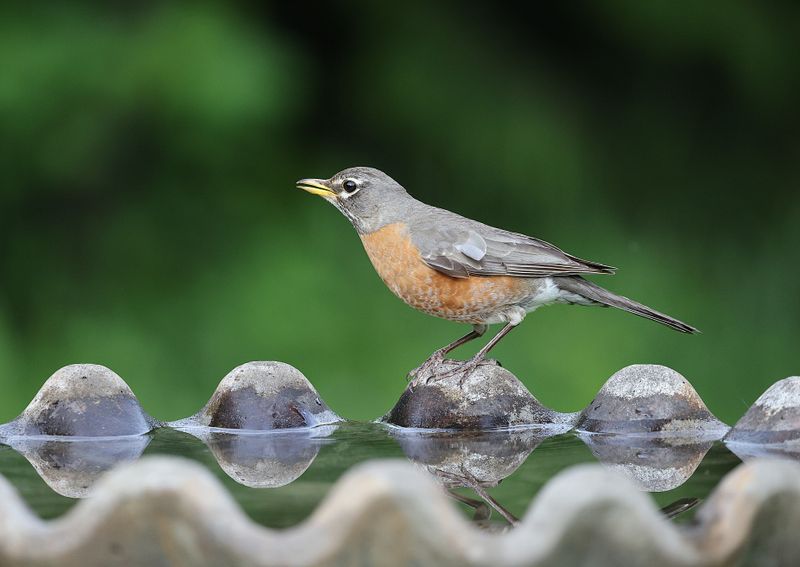
Thin air makes flying a real workout. When pressure falls, the air gets less dense, so wings have less to push against.
Staying in the sky takes more effort and burns more energy.
That is one reason you might notice birds sitting still more often before a storm. They rest on branches, fences, and rooftops to save their strength.
It is a smart move, kind of like taking the elevator instead of the stairs on a tired day.
Bugs change their habits too. As humidity rises and pressure drops, many insects fly closer to the ground.
Swallows and other bug-catching birds follow them down, swooping low over fields and lawns.
Old farmers had a saying about this. When swallows fly low, rain is on the go.
It turns out there is real science hiding inside that rhyme.
Robins may also tuck themselves into thick shrubs or trees for shelter. Dense evergreens make great hideouts when wind starts to pick up.
If your yard has a few, you are offering a safe spot without even trying.
Next time clouds roll in, look up and around. Count how many birds are perched instead of flying.
You might be surprised at how quiet the sky gets while the branches fill up.
4. Robins Head To Lawns After Rain To Hunt Worms
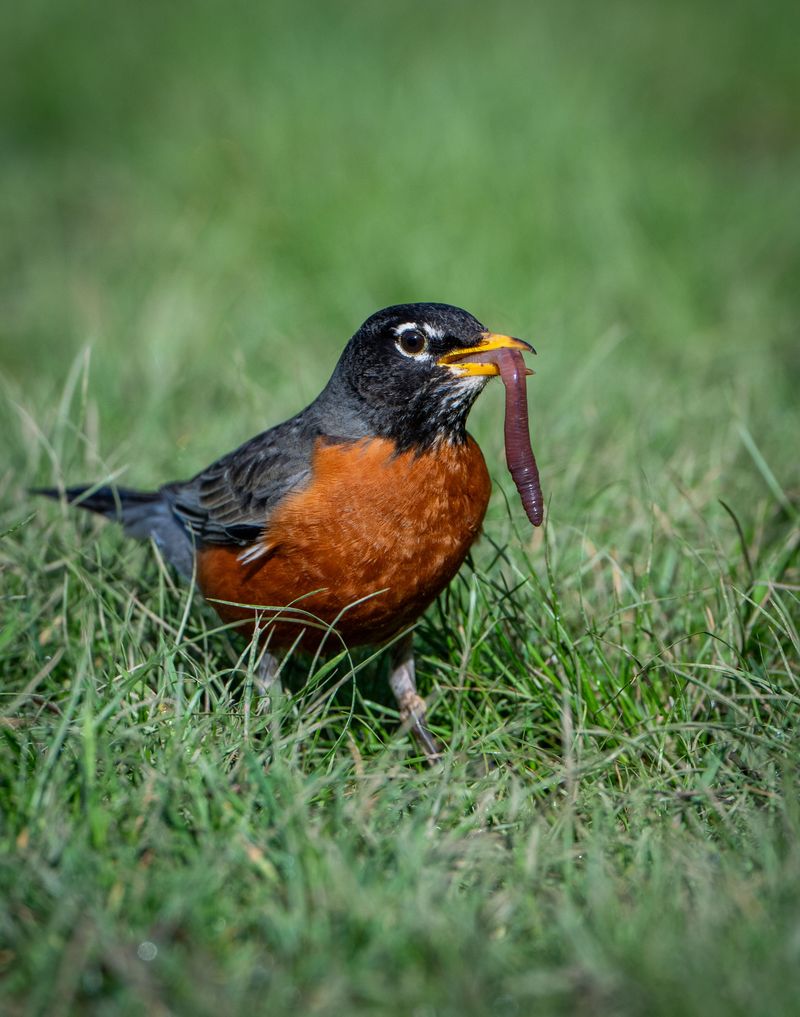
Tilt, listen, pounce. That is the classic robin move, and you can watch it right after a good rain.
It is one of the best free shows in any Ohio yard.
Wet soil turns soft and easy to dig through. Earthworms wiggle up closer to the surface, which makes them simple to grab.
For a hungry robin, a damp lawn is like an open buffet.
Many people think worms come up to escape drowning. Some scientists now believe raindrops might feel like the vibrations of a digging mole.
Worms may simply be trying to get away from what they think is a hungry hunter.
Robins have their own clever trick. They tilt their heads to bring one ear closer to the ground.
They are listening for tiny sounds of worms moving underneath, and they also use their sharp eyes.
Want to see more of this in your yard? Skip heavy chemical sprays on the lawn, since they can harm worms and the birds that eat them.
A healthy patch of grass with some bare soil gives robins room to hunt.
Grab a seat by the window after the next shower. Watch for that famous head tilt and the quick tug.
Kids especially love counting how many worms one robin can catch.
5. Fall Flocks Pass Through Ohio In September And October
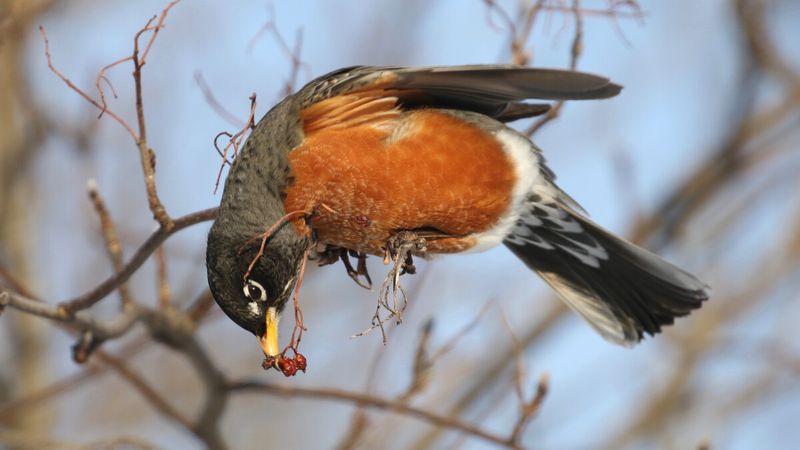
Autumn in Ohio brings pumpkins, crunchy leaves, and sometimes a surprise crowd of robins. One day your yard has two or three.
The next, dozens might be scattered across the grass and trees.
September and October are busy travel months for many robins. October is usually the peak time for birds heading south through the state.
Flocks from farther north often stop to rest and refuel along the way.
Robin migration is not as neat and tidy as you might expect. Some birds fly far south, while others only move a short way.
A few populations hardly travel at all, depending on food and weather.
Fall storms can make these flocks even easier to spot. Birds may pause their journey when a front moves through and wait for better flying conditions.
That can mean lots of robins gathered in one spot before or after a big rain.
Here is a fun fact to share at dinner. Robins often travel in loose groups during the day, unlike many songbirds that migrate at night.
That makes them easier to notice as they move across the sky.
Keep your binoculars handy this fall. Check fruit trees, open lawns, and tall treelines for wandering flocks.
You might catch a big crowd passing through.
6. Many Robins Stay In Ohio All Winter
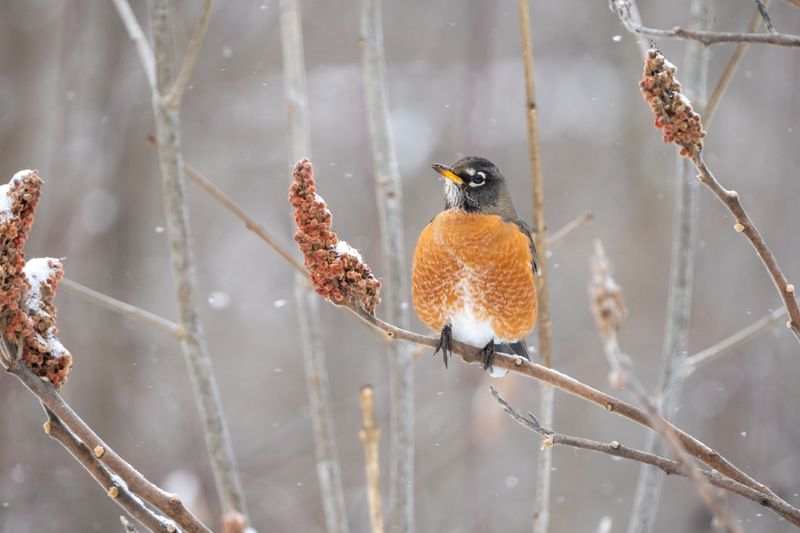
Spotted a robin in January and wondered if it got lost? You are not alone in that thought.
Plenty of Ohioans think robins disappear every winter, but many stick around.
Lots of robins spend the cold months right here in the Buckeye State. They are more common in southern Ohio, especially when winters are on the mild side.
Food matters more to them than chilly temperatures do.
To handle the cold, robins grow extra feathers. They fluff up to trap warm air, looking a bit like round little balls.
It is their version of a puffy winter coat.
Winter robins also change how they live. Instead of guarding a territory, they gather in big, loose flocks.
Some groups can number in the hundreds or even thousands.
Being in a crowd has real perks. More eyes help spot hawks and other dangers.
Huddling in trees together at night can also help them stay a bit warmer.
Because they spend more time in woods and thickets, winter robins can be hard to see. They are quieter too, since they are not singing to claim space.
So when one pops into your yard, enjoy the treat and know it is right where it belongs.
7. Winter Robins Switch To Fruit And Berries
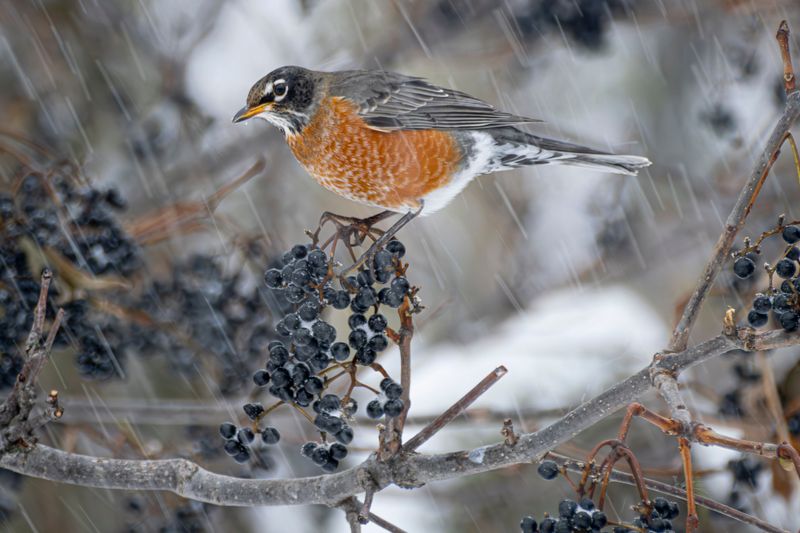
Worms are off the menu once the ground freezes. Picture a robin tapping on frozen dirt and finding nothing but ice.
So these clever birds make a big change to their diet.
In colder months, earthworms burrow deep and insects get scarce. Robins turn to fruits and berries instead.
Some studies show fruit can make up about 60 percent of what they eat in winter.
You will notice robins spending more time up in trees and bushes. That is where the berries hang.
They pluck fruit right off the branch and swallow it whole.
Here is a quirky fact. Robins sometimes eat berries that have fermented on the branch.
Every so often, a bird might act a little wobbly after a big snack.
Want to help winter robins in your yard? Offer chopped apples, raisins soaked in water, or frozen berries on a low platform feeder.
Fresh water is also a huge help when ponds and puddles freeze over.
A heated birdbath can turn your yard into a hot spot. Robins love a drink and a quick splash, even on cold days.
Set it near shrubs so they feel safe while visiting.
8. Crabapples, Hawthorns And Holly Help Feed Them
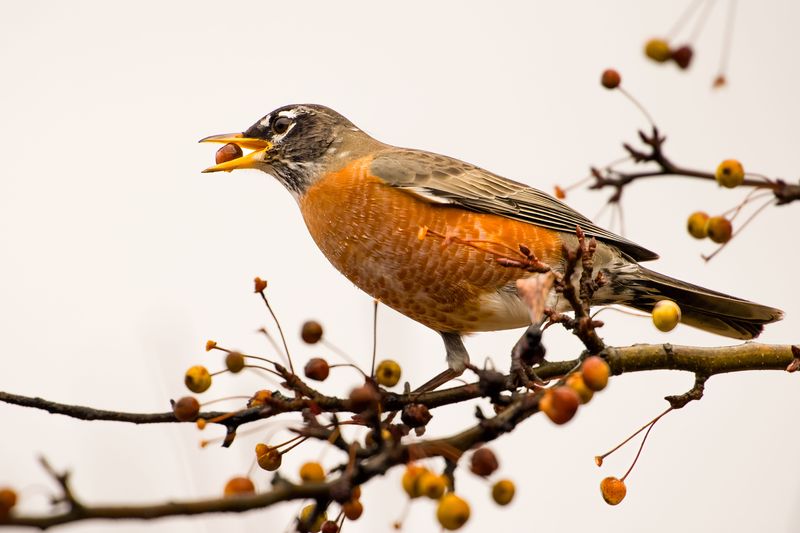
Want a yard robins will love all year? Start with the right plants.
A few smart picks can turn your space into a winter snack bar.
Crabapples are a top choice. Their small fruits cling to branches long after the leaves drop.
Hawthorns offer tiny red berries, and American holly adds bright fruit against shiny green leaves.
Other great options grow well in Ohio too. Try dogwood, eastern red cedar, sumac, wild cherry, juniper, chokeberry, and elderberry.
Many of these provide rich calories that help birds stay warm.
The secret is fruit that lasts. Plants that hold berries into December and January give robins food when they need it most.
Mixing several kinds means something is ready to eat across the whole season.
Native plants are a bonus. They support local insects in summer, which robins also eat.
That means one shrub can feed birds in more than one way.
A few tips for planting success. Holly needs both male and female plants nearby to make berries.
Plant shrubs in groups so birds have cover from hawks while they snack.
Fall is a great time to plant many trees and shrubs. Visit a local nursery and ask about bird-friendly natives.
9. Their Behavior Is A Clue, Not A Forecast
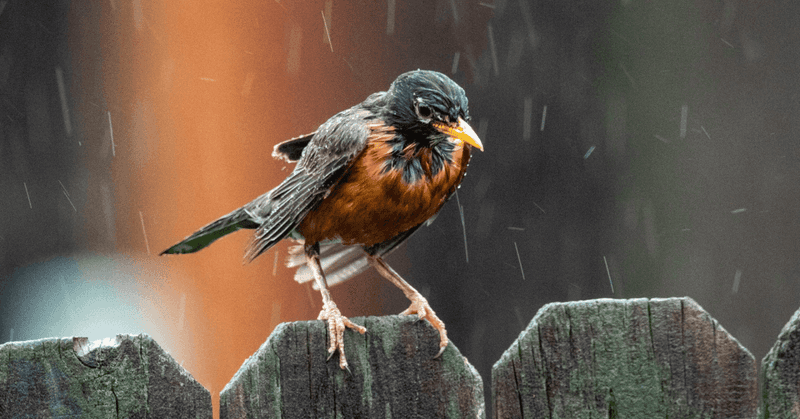
Robins are amazing, but they are not meteorologists. They do not study radar maps or check weather models.
They simply react to what their bodies feel in the air around them.
Millions of years of nature have shaped their senses. That helps them notice pressure drops and other changes before a storm arrives.
Their actions are honest responses, not planned predictions.
So what should you make of a yard full of busy robins? Treat it as a fun hint that weather might be shifting.
It is a great reason to glance at the sky and check your local forecast.
Keep in mind that robins act busy for plenty of other reasons. A freshly mowed lawn, a sprinkler, or a ripe berry bush can draw a crowd too.
Context matters when reading bird behavior.
For safety, rely on the National Weather Service and trusted weather apps. Ohio storms can bring lightning, hail, and even tornadoes.
Birds can tip you off, but official alerts keep your family safe.
Still, there is something special about noticing these small signals. Watching robins connects you with nature in a simple, peaceful way.
The next time clouds gather, take a moment to see what your feathered neighbors are telling you.