The Strange Fungi In Your Virginia Mulch Are Spookier Than Any Decoration
Forget the plastic skeletons. Your flower beds may already be hosting the creepiest show on the block.
After a warm rain, odd shapes start poking up through the mulch overnight. Some smell like spoiled meat, while others look like tiny stars or bony fingers reaching for the sky.
A few even hatch from slimy eggs, as if something from a monster movie moved in. Most of these strange guests aren’t trouble at all, and many actually help your garden grow.
A few do deserve caution, especially around curious kids or snack-happy pets. Knowing what’s living in Virginia mulch turns every backyard walk into a nature mystery.
Stinkhorns Smell Like Rotting Meat
Picture stepping outside with your coffee and catching a whiff of something like spoiled hamburger. Before you blame the trash can, look down at your mulch beds.
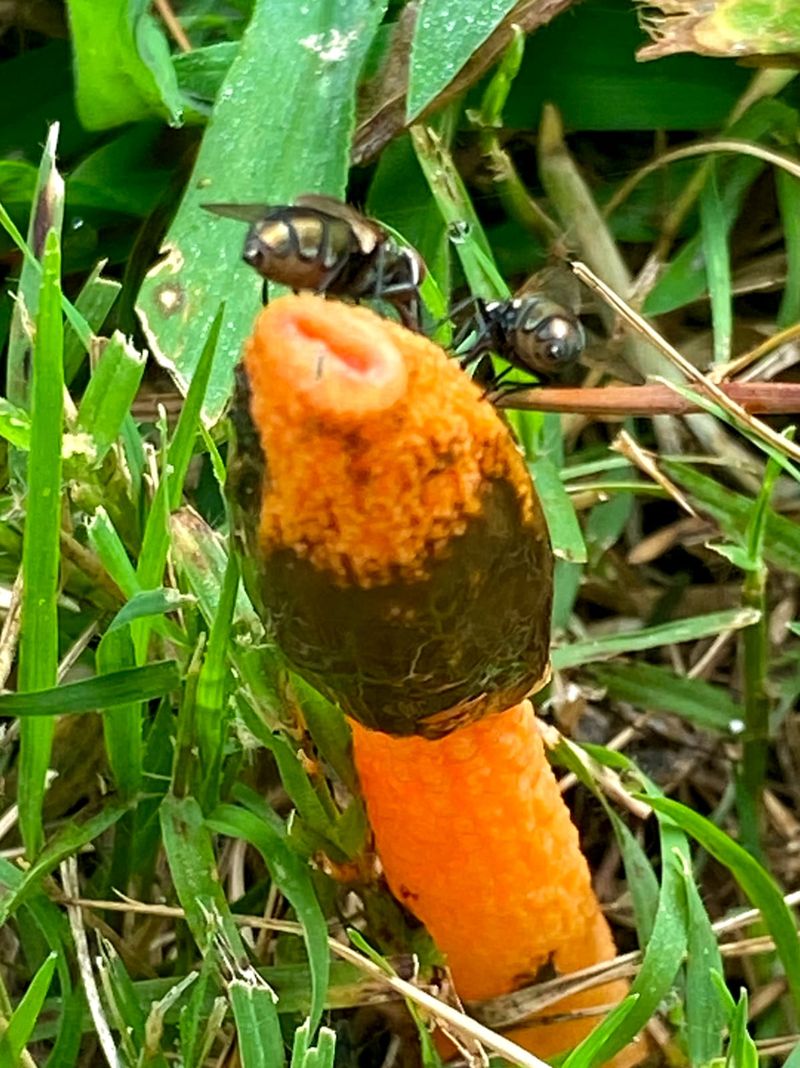
Stinkhorns are fungi that grow tall, spongy stalks topped with a slimy, olive-brown cap. That goo holds the spores, and it carries one of the worst smells in the garden.
The stink has a clever purpose, though. Flies love the odor of rotting meat, so they land on the cap and feed on the slime.
When the flies buzz away, they carry sticky spores on their legs and bodies. In other words, the fungus hires insects as free delivery drivers.
Several kinds pop up across Virginia, including the elegant stinkhorn and the bright orange column stinkhorn. Some look like little red lanterns, while others resemble skinny orange fingers.
The smell can drift several feet, especially on warm, humid mornings after rain. Many people notice the odor long before they spot the fungus itself.
Want the smell gone fast? Slip on gloves, scoop the stinkhorn into a plastic bag, and toss it in the trash.
Removing the slimy cap early helps, since it means fewer flies and fewer spores spreading around. Luckily, each stinkhorn only lasts a day or two before it collapses.
Here is a fun bonus fact for curious readers. Scientists named one common type Phallus, and the reason becomes obvious once you see it.
Kids often find stinkhorns hilarious and gross at the same time. Turn it into a science lesson about how fungi spread, then wash hands well.
They Hatch From A Gooey “Witch’s Egg”
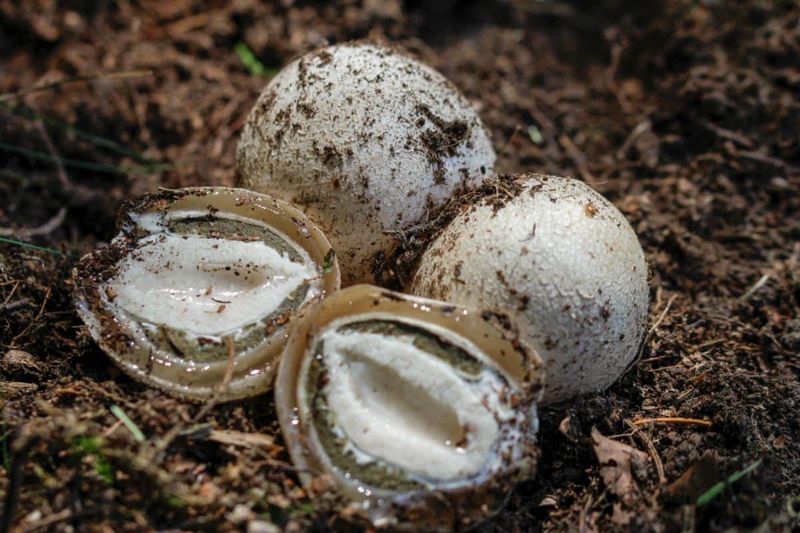
Long before the stink arrives, a stinkhorn spends its early days hidden inside a soft, rubbery ball. Folks call it a witch’s egg, and the name fits perfectly.
Each egg is whitish or pinkish and usually about two inches tall. They sit half buried in mulch, looking like something a lizard might have left behind.
Gently slice one open and you will find a surprise. A layer of clear jelly wraps around a firm white core, which is the folded-up stalk.
The jelly acts like a cushion and a water tank for the growing fungus. Once conditions feel right, the stalk can burst out in just a few hours.
Some gardeners have watched an egg in the morning and found a full stinkhorn by evening. Few things in the yard grow that fast, and it feels a little like magic.
Your Virginia Garden Changes Every Week. Your Plan Should Too.
Gardening in Virginia changes quickly throughout the season. Every Friday you’ll receive a simple weekly plan showing exactly what to plant, prune, fertilize, harvest, and protect so you never miss the right timing.
Here is the smart move for homeowners who dislike the smell. Pluck the eggs before they hatch, and you stop the stink before it starts.
Use a trowel to lift each one, since there may be a thin white cord attached underneath. Drop them in a bag rather than your compost bin.
A word of caution belongs here too. Young poisonous mushrooms can also start out egg-shaped, so nobody should taste one out of curiosity.
For a fun family project, place one egg in a jar with damp paper towels. Watch it over a day or two, but keep the lid handy for when it stinks.
Spooky Black “Fingers” Rise From Old Stumps
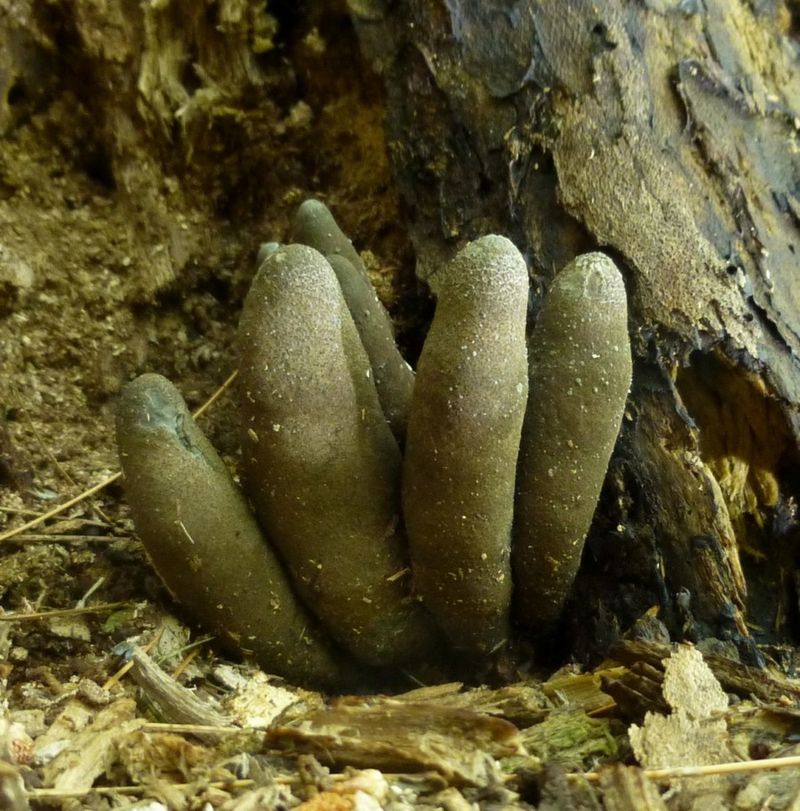
Imagine a creepy hand reaching up from the soil beside an old oak stump. Halloween props wish they looked this convincing.
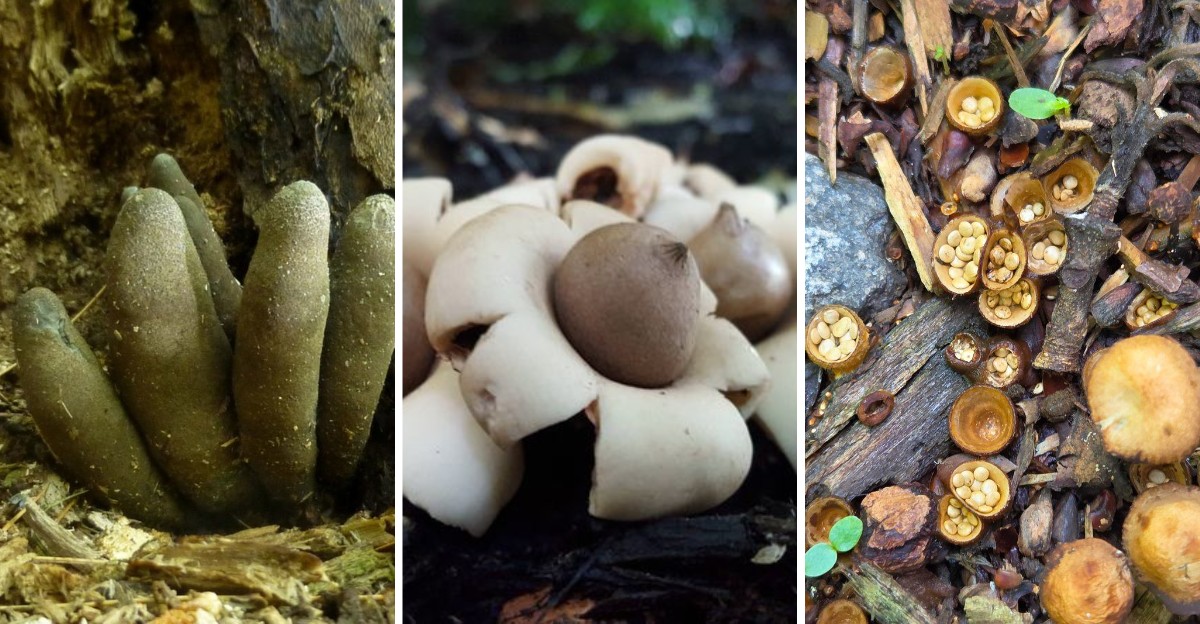
The fungus behind the scare is Xylaria polymorpha, a wood-loving species found throughout Virginia. It grows in clusters of black, club-shaped stalks that look like knobby fingers.
Each finger can reach about three inches tall. In spring, the tips often look pale or bluish, as if dusted with powder.
As the season moves along, they darken to a charcoal black. By late summer, the clusters look burnt, wrinkled, and wonderfully spooky.
You will spot them near old stumps, buried roots, or decaying hardwood logs. Mulch beds built around a removed tree are prime territory.
Behind the creepy look, the fungus does honest work. It breaks down tough wood fibers and turns them back into soil over time.
Still, its presence can tell you something. If the fingers sprout at the base of a living tree, the roots or trunk may have hidden decay.
Ask a certified arborist to check that tree, especially if it stands near your house or driveway. Catching weak wood early can prevent a scary surprise during a storm.
On a stump, though, there is little reason to worry. Let the fingers keep chewing away, and the stump will slowly soften and crumble.
Kids love hunting for these on autumn walks. Bring a magnifying glass, since the surface looks rough and crusty up close.
Fun fact: the tough texture lets them last for weeks. Unlike many fleeting mushrooms, these fingers stick around long enough to greet trick-or-treaters.
Earthstars Open Like Little Stars
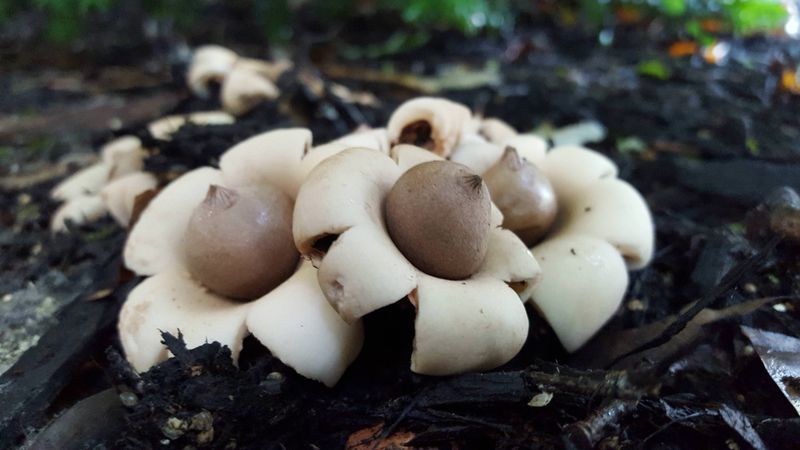
Did a tiny star fall into your flower bed overnight? If so, you may have met an earthstar.
Earthstars belong to the Geastrum group, and they are cousins of the puffball. They begin as small, round lumps that look a bit like onions or flower bulbs.
When mature, the outer skin splits into several pointed rays. Those rays peel back and spread out, forming a star shape around a papery ball.
The central ball is the spore sac, and it has a small hole on top. When a raindrop smacks it, a puff of brown spore dust shoots out like smoke.
Some species can even open and close with the weather. In dry spells, the rays curl inward, and after a rain they stretch wide again.
Most earthstars measure about one to two inches across. Their tan and brown colors blend into shredded bark, so look closely after a soaking storm.
Older mulch and leaf litter often hide them in late summer and fall. Shady corners near trees tend to be good hunting spots.
Feel free to leave them where they are. Earthstars cause no trouble for shrubs or flowers and simply help break down plant matter.
For a quick science trick, gently tap the spore sac with your finger. You will see a tiny cloud drift away, showing how rain spreads them naturally.
Avoid breathing in that dust directly, though. Afterward, wash your hands and enjoy telling friends about your backyard stars.
Bird’s Nest Fungi Hold Tiny Egg-Like Spores
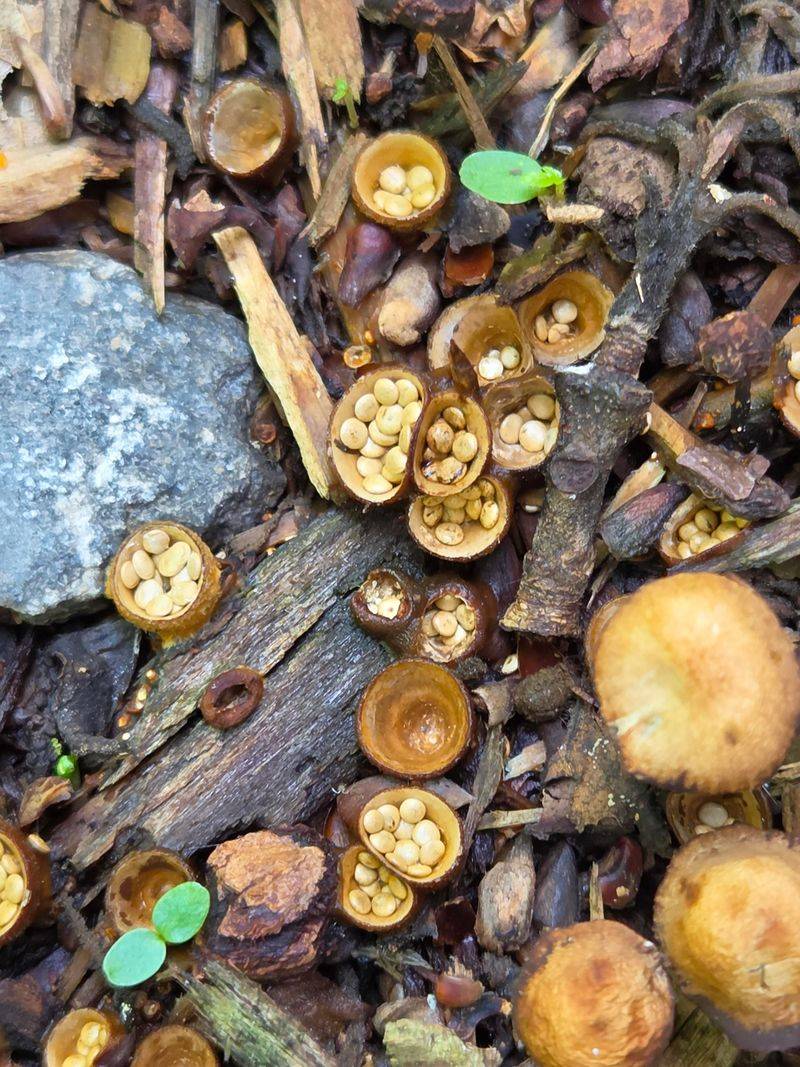
Here is a fungus small enough to sit on your fingernail. Bird’s nest fungi look exactly like miniature nests, complete with a clutch of tiny eggs.
Each cup is usually less than half an inch wide. Inside sit several flat, gray or brown pellets called peridioles.
Those little eggs hold the spores, and the fungus spreads them in a clever way. The cup works like a splash bowl when rain falls.
A falling raindrop can launch the eggs several feet away. Some kinds even have a sticky cord that snags onto nearby twigs or leaves.
You can find them on wood chips, twigs, and other woody debris in many yards. Damp, shady mulch beds in summer and fall are favorite spots.
Gardeners often miss them because they are so tiny. Kneel down, move slowly, and look for clusters of brownish cups among the chips.
Good news for plant lovers comes next. These cute fungi are harmless to living plants and feed only on decaying wood.
One related fungus, the artillery fungus, can shoot sticky black specks onto siding and cars. If you see stubborn dots on light walls, it may be the culprit.
Swapping old hardwood mulch for pine bark nuggets may reduce artillery fungus problems. Bird’s nest fungi, however, deserve a spot in your garden scavenger hunt.
Snap a close-up photo with your phone camera to really see the tiny details. The eggs look surprisingly perfect once enlarged.
Fresh Mulch Often Brings Them On
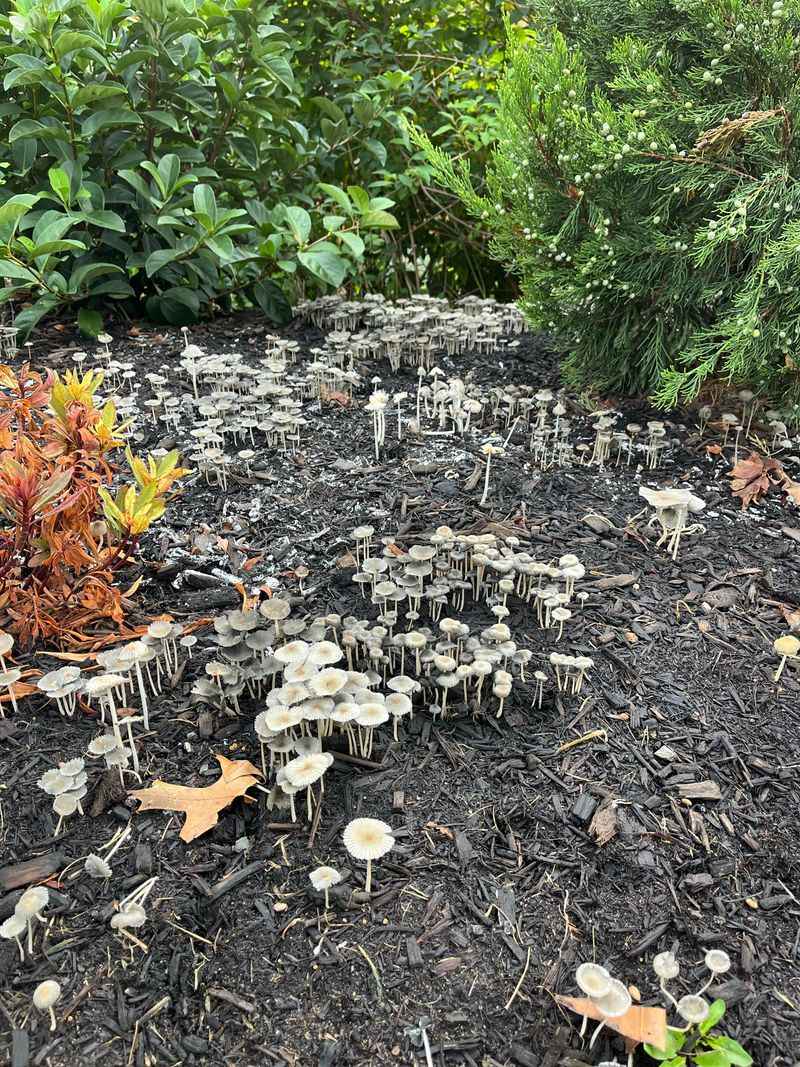
Spread a fresh layer of mulch in spring, and the fungi soon throw a welcome party. Gardeners all over Virginia notice strange growths within weeks of mulching.
Mulch holds moisture, and fungi need steady dampness to grow. It also offers a buffet of wood fibers, which many fungi love to eat.
Fresh hardwood mulch contains lots of cellulose, a tough material found in plant cell walls. Fungi break it down with natural enzymes and grow quickly in the process.
Summers bring heat and sticky humidity, which speed things up even more. After a week of rain, a mulch bed can sprout fungi almost overnight.
Keeping mulch two to three inches deep helps a lot. Thick piles stay soggy and give fungi more to feed on.
Rake your mulch now and then to break up matted layers. Fluffing it lets air in and helps the surface dry faster.
Watering in the morning instead of evening also makes a difference. Beds dry out during the day, so fungi get fewer cozy damp nights.
Some gardeners switch to pine bark or pine straw, which tend to host fewer fungi. Rubber or stone mulch avoids the issue, but it adds nothing to the soil.
Remember that fungi show up because your mulch is doing its job. Their arrival means the bark is slowly becoming rich, crumbly soil.
Most outbreaks fade as the mulch ages and the weather cools. By late fall, many beds look calm and tidy again.
Most Are Harmless To Your Plants
Seeing odd growths near your roses might make your heart skip a beat. Relax, because most mulch fungi pose no threat to healthy plants.
Think of them as tiny recycling workers. They break down bark, leaves, and twigs that would otherwise just sit there.
As they feed, they release nitrogen, phosphorus, and other nutrients back into the soil. Your plant roots soak up those goodies and grow stronger.
Many fungi also form helpful threads underground called mycelium. That web holds soil together and helps it store water during dry summers.
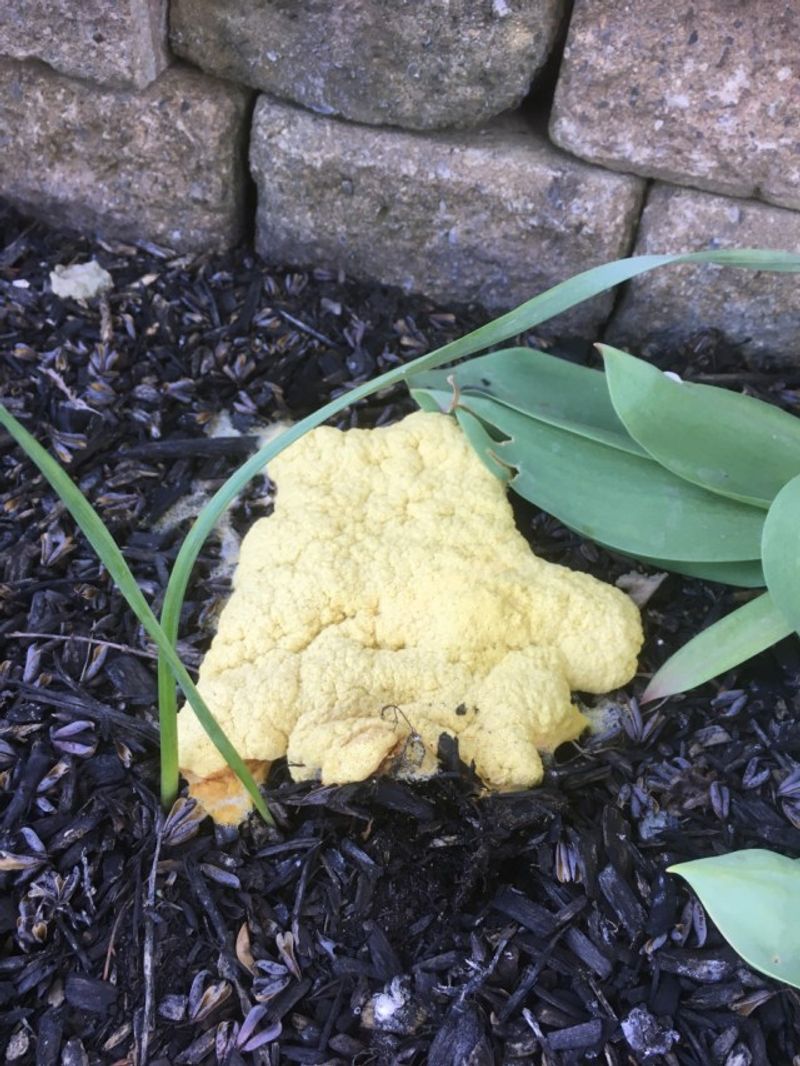
Slime molds sometimes join the party, too. One called dog vomit slime mold looks like a yellow foamy blob, and yes, the name fits.
It may creep onto a hosta leaf or a low stem. Even so, it simply sits on the surface and does not attack the plant.
If the look bothers you, scoop it up with a shovel. You can also break it apart and let the sun dry it out.
A few warning signs deserve a closer look, though. Mushrooms growing directly from a living trunk or wilting branches may point to root rot.
In those cases, call your local Virginia Cooperative Extension office for advice. Their experts can help identify the fungus and suggest next steps.
Fungicides are rarely worth the money for mulch fungi. The spores float everywhere, so new ones simply return after the spray wears off.
Otherwise, consider leaving the fungi alone. Your garden ecosystem runs better with these quiet helpers on the job.
Keep Kids And Pets From Eating Any
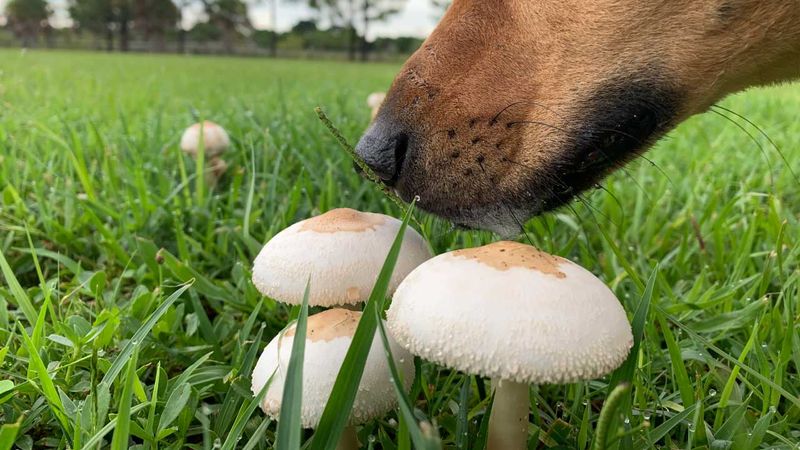
A curious toddler or a sniffing puppy can turn a mushroom sighting into an emergency. Safety comes first, even when most mulch fungi are harmless.
Some wild mushrooms contain toxins that can cause serious illness or liver damage. Even experts struggle to tell certain species apart by sight alone.
Egg-shaped young mushrooms are especially tricky. The early stage of a dangerous Amanita can look a lot like a harmless stinkhorn egg.
Dogs face a real risk because they often gulp first and ask questions later. Stinkhorns, with their meaty smell, can tempt a hungry pup.
Make a quick mushroom sweep part of your routine after rainy Virginia weekends. Wear gloves, bag anything you find, and toss it in the trash.
Teach kids a simple rule: look, but leave it alone. Turning fungi spotting into a photo game keeps curiosity alive without the danger.
Watch pets for vomiting, drooling, stumbling, or diarrhea after time in the yard. Call your veterinarian or the ASPCA Animal Poison Control line right away if symptoms appear.
If a child eats a mushroom, contact Poison Control at 1-800-222-1222. Save a sample in a paper bag to help with identification.
Snapping a photo of the fungus where it grew also helps experts. Note the color, size, and anything growing underneath.
A few minutes of care keeps your Halloween fun from turning frightening. Enjoy the spooky show from a safe distance.