The Minnesota Turtle Species Quietly Burrowing Into Pond Mud Before Winter Sets In
Picture your pond turning quiet before winter settles in. Shells that filled a half-sunken log near your dock disappear overnight. Weeks earlier you counted them stacked there in plain daylight.
Below the muck, a small shelled creature has settled in, hidden from view. Minnesota winters push pond dwellers into a slowdown you can hardly imagine. Ice thick enough to hold a loaded truck seals the water above you.
Down there, a heart ticks only a few times each minute. Oxygen still reaches that hidden creature, just not the way you would expect. Skin alone can pull air from icy cold water around you. That trick keeps it breathing quietly beneath your cold feet all winter.
Few places make this stranger for you than a Minnesota pond in deep winter. Even seasoned naturalists find Minnesota’s turtles hard to picture down there. You need to see what happens next beneath that ice.
Meet The Painted Turtle On Every Sunny Log
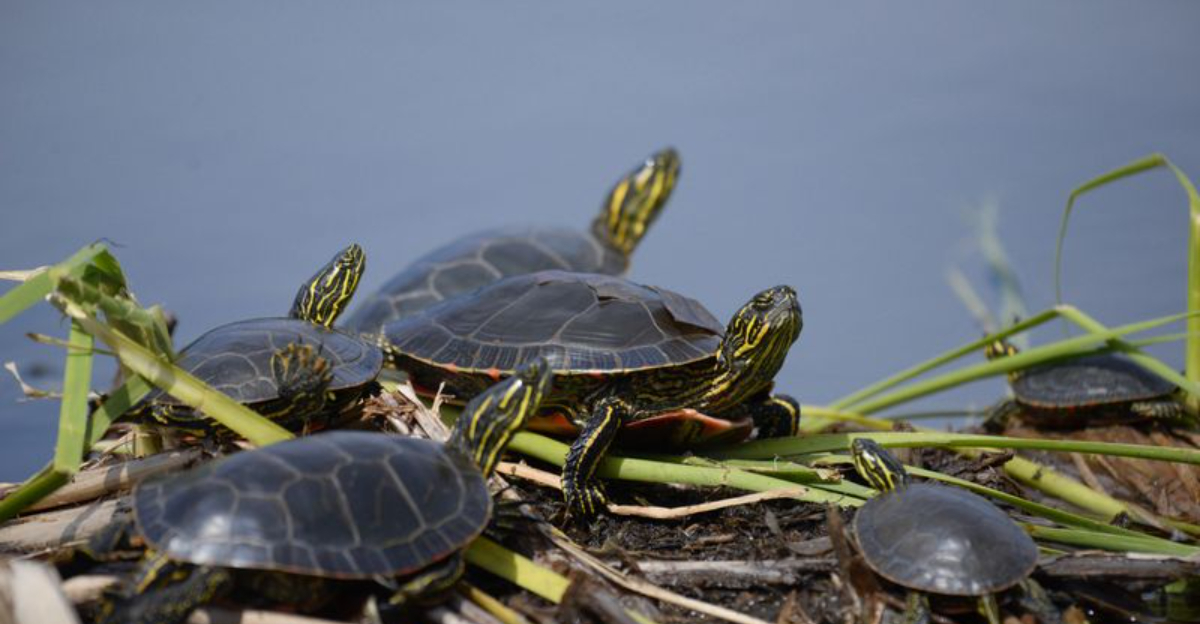
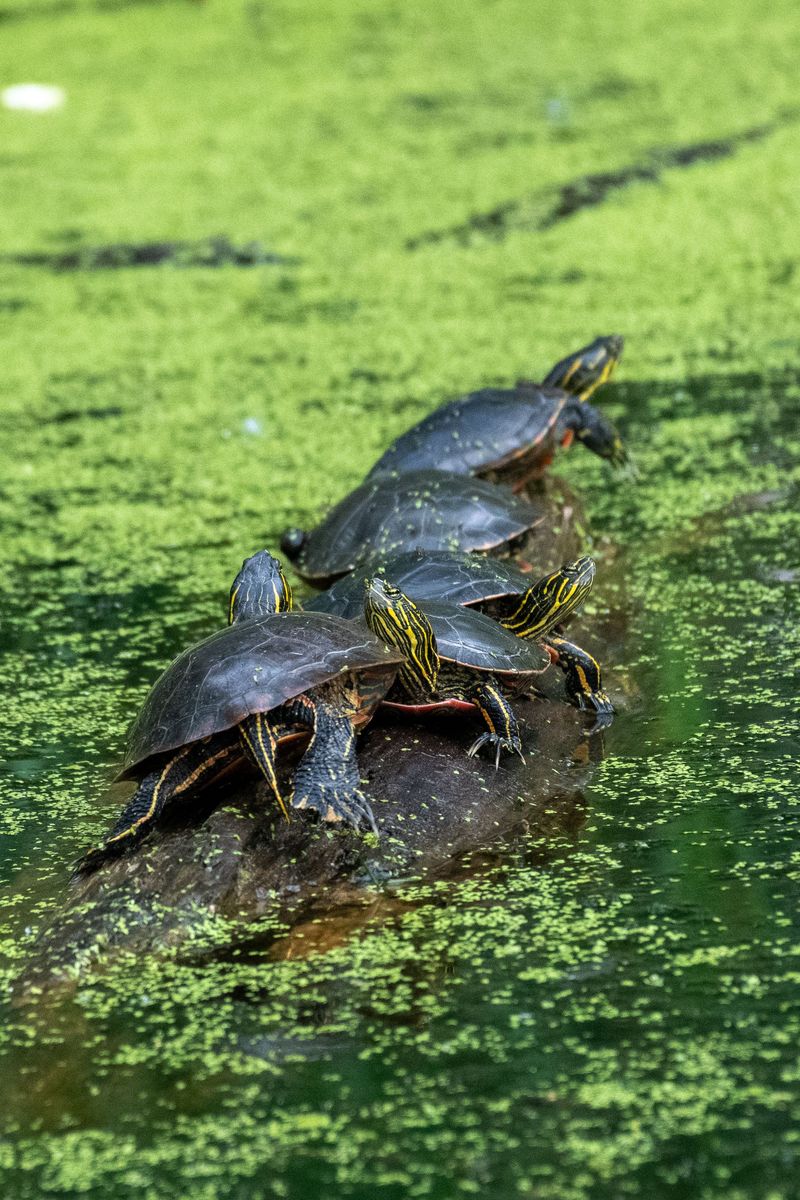
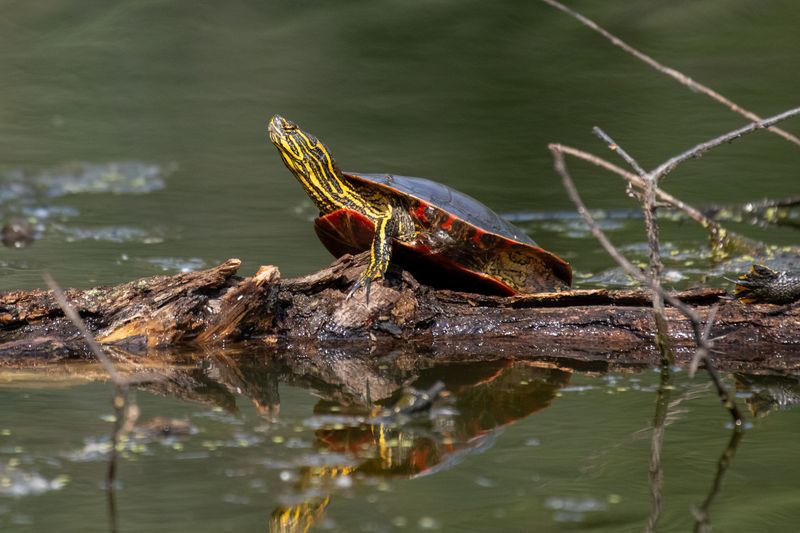
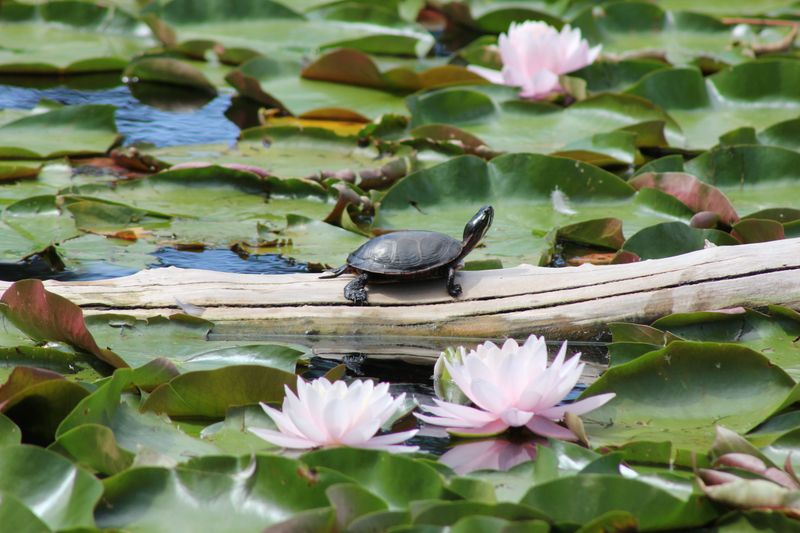
Slide past a cattail-lined pond in July and you might spot a row of shells on a half-sunken log, each one tilted toward the sun like a small solar panel. Those sunbathers are painted turtles, the most widespread turtle in the state.
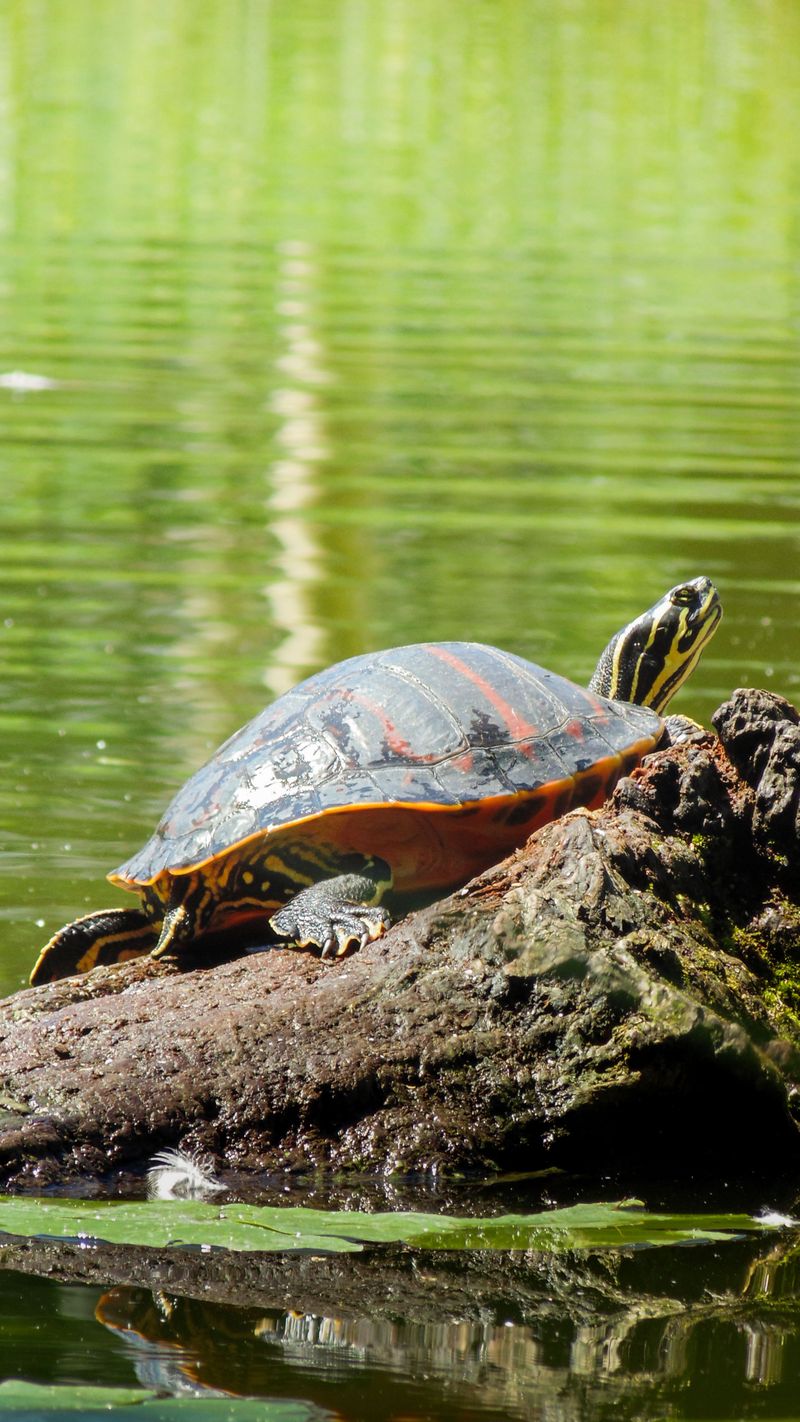
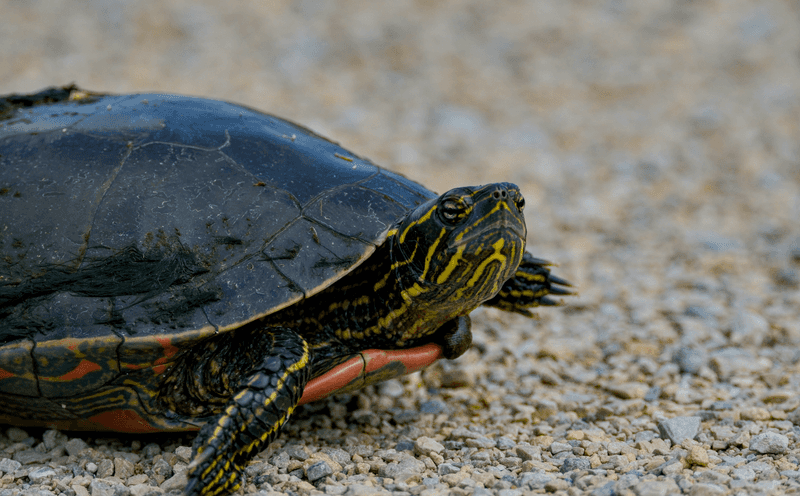
Their smooth, olive-to-black shells typically range from four to nearly ten inches, with western Minnesota females often at the larger end. Look for red and orange bars along the shell rim and bright yellow stripes running down the neck and legs.
Two subspecies share Minnesota. The western painted turtle claims most of the state, while the midland painted turtle shows up in the southeast, and the two blend where their ranges overlap.
Painted turtles are not picky eaters. Young ones chase insect larvae, snails, and tadpoles, while older adults lean more on pond weeds, duckweed, and algae.
Because they tolerate shallow, mucky water, they thrive in farm ponds, marshes, roadside wetlands, and quiet lake bays. That flexibility explains why a single pond can hold dozens of them.
Fun fact: a painted turtle can reach thirty or forty years in the wild, and some marked females in northern studies passed fifty. The turtle basking on your dock may have been in that pond longer than your house has stood.
Spend ten quiet minutes at the water’s edge and you will notice a pattern. One turtle slips off the log, and within seconds the whole row follows, splashing down like dominoes. Their eyesight for movement is sharp, which is why patience beats sneaking.
Autumn Signals That Start The Countdown
Around late September, something shifts at the pond. Basking sessions get longer in the morning and shorter overall, and the turtles start hugging deeper water.
Water temperature runs the schedule, not the calendar. Once the pond drifts below roughly 50 degrees Fahrenheit, painted turtles stop feeding because their stomachs can no longer process a meal.
Cold slows their entire body chemistry. A turtle at 40 degrees uses a tiny fraction of the oxygen and energy it burned in August, and its heartbeat may drop to one beat every few minutes.
Your Minnesota Garden Changes Every Week. Your Plan Should Too.
Gardening in Minnesota changes quickly throughout the season. Every Friday you’ll receive a simple weekly plan showing exactly what to plant, prune, fertilize, harvest, and protect so you never miss the right timing.
Shorter daylight adds a second signal. Fewer hours of light nudge hormones that tell the body to shift from growing and mating toward storing and settling.
Watch for a final flurry of activity on sunny October afternoons. Turtles top off their warmth, swim a slow lap of the shallows, and then disappear for months.
In Minnesota, most are tucked in by mid to late October, though a mild autumn can stretch that into early November. You may still glimpse one drifting under thin ice in December, which is normal rather than alarming.
Backyard tip: resist the urge to feed pond turtles in fall. Food they cannot digest sits in the gut and causes trouble once the water chills.
If you keep a garden pond, this is the season to skim heavy leaf loads while leaving a soft bottom layer. Clean water plus soft sediment gives them exactly what they are hunting for.
How Painted Turtles Use Mud As A Winter Quilt
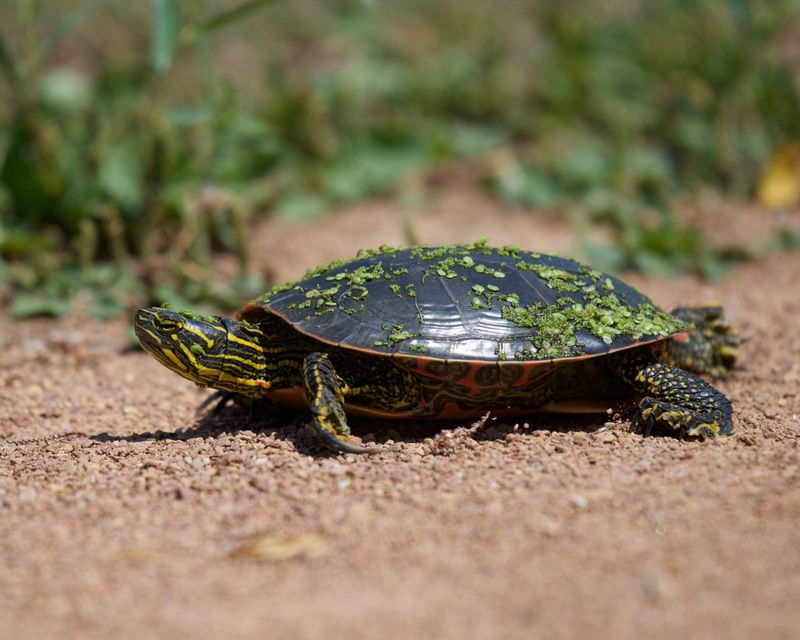
Picture a turtle doing a slow backstroke into a pillow of muck, and you are close to the truth.
A painted turtle picks a spot where the bottom stays soft and the water runs deep enough to stay liquid, often several feet down. It shuffles its back legs, rocks its shell side to side, and works itself into the top few inches of sediment.
Full burial is not the goal. Many rest partly covered, with a shell edge or head poking into open water, and some simply wedge under a log, an undercut bank, or an old muskrat tunnel.
Mud acts like a quilt. Water near the bottom of an ice-covered pond hovers a few degrees above freezing, and sediment holds that temperature steady even when the air above hits twenty below.
Steady is the key word here. Sudden swings cost energy, and a turtle running on stored fat lives on a strict budget from October through April.
Sites get reused, too. Radio-transmitter studies show individuals returning to familiar wintering areas year after year, sometimes within a few yards of last winter’s spot.
One more detail worth knowing: the mud does not cut off their air. Loose sediment holds pockets of water, and slow currents keep a thin supply of oxygen moving past the shell.
Pond bottoms with heavy muck and low oxygen can be risky, while spring-fed ponds are prime real estate. Turtles seem to know the difference.
Breathing Without Coming Up For Air
Here is a detail that surprises many readers: a painted turtle spends winter taking in oxygen through its back end.
Turtles do have lungs, and they use them all summer long. Under ice, though, surfacing is off the table, so the body switches to a slower and much stranger method.
Thin, blood-rich tissue lines the cloaca, the opening at the base of the tail. Oxygen dissolved in cold water seeps across that tissue and into the bloodstream, a process biologists call cloacal respiration.
Skin and the lining of the throat pitch in as well. Cold water holds more oxygen than warm water, which makes the whole trick workable at temperatures near freezing.
When oxygen runs short, painted turtles pull off something few animals manage. They shift to anaerobic metabolism and buffer the acid that builds up by drawing calcium and other minerals from their own shell and bones.
Lab studies have shown adults surviving many weeks without oxygen at near-freezing temperatures. That endurance is one reason heart researchers study this species so closely.
By spring the shell rebuilds and the lungs take over again. Early warm days bring turtles back to their logs looking a little pale and extremely hungry.
For pond owners, the lesson is practical. Thick mats of rotting leaves or a pond sealed under snow-covered ice for months strip oxygen from the water, while healthy submerged plants and a small open patch both help.
Painted Turtle Hatchlings That Wait Out Winter Underground
The most cold-hardy painted turtles in Minnesota weigh less than a golf ball. Females dig nests in sandy, sunny soil during June, lay four to a dozen eggs, and head back to water.
The eggs hatch in late August or September, but the babies frequently stay right where they are.
Instead of digging out in fall, hatchlings spend the whole winter inside the nest chamber, just a few inches under frost-hardened ground. They surface the following May.
Getting through that takes a rare skill. Their body fluids can supercool, staying liquid below the normal freezing point, and their tissues tolerate some ice forming in the spaces between cells.
Snow cover matters more than most folks guess. A steady blanket of snow insulates the nest, while a bare, windswept winter is much harder on the little ones.
Nest temperature also decides sex. Cooler nests tend to produce males and warmer nests produce females, which is why shifting climate patterns interest turtle researchers.
If you find a nest in your yard, a simple wire cage staked over the soil keeps raccoons and skunks out while letting hatchlings slip away in spring.
Leave the leaf litter and skip fall tilling in that corner. Come May, the ground gives up dozens of quarter-sized travelers headed for water.
Slow down on rural roads near wetlands, because that short walk is the most hazardous part of their year, and a gentle lift in the direction they are already facing is the best help you can offer.
Simple Ways To Make Your Pond Turtle-Friendly
Small choices around a pond add up, and turtles notice. You do not need a biology degree or a big budget to make your shoreline friendlier.
Leave a soft bottom. Dredging out every scrap of sediment removes the exact layer painted turtles depend on from October through April.
Keep some logs and rocks in the water. Basking spots let turtles warm up fast in spring, dry their shells, and shed clinging algae.
Go easy on lawn chemicals near the shoreline. Runoff feeds algae blooms, and a heavy bloom that collapses under ice pulls oxygen out of the water right when turtles need it most.
Skip the heavy ice-clearing machinery. Snowmobiles, augers in the wrong spot, and equipment on thin ice can disturb animals resting below.
Aerators are a mixed bag. A bubbler that keeps a small opening helps gas exchange, but one that churns deep water can stir cold currents and unsettle resting turtles, so keep it shallow and close to shore.
Native plants along the bank pull double duty. They filter runoff and give hatchlings cover during their spring walk to water.
If a turtle shows up in your driveway in June, she is likely a female hunting for sandy soil. Give her room, and she will usually finish her errand and head back on her own.
Photograph unusual sightings and report them through Minnesota’s citizen science wildlife reporting programs if that appeals to you.