The Most Underrated North Carolina Perennial That Blooms From Spring Through Fall In Full Sun
Most perennials offer a straightforward trade. You get a few weeks of color, then months of greenery you learn to work around.
You plan for the gaps, add annuals to fill them, and accept that rhythm as part of the gardening process. But there is a perennial growing in North Carolina gardens that ignores that pattern entirely.
It blooms from the first warm weeks of spring all the way through fall, in full sun, without much help from anyone. It rarely earns a spot on recommendation lists and nurseries tend to overlook it.
Most people walk right past it. The gardeners who do stop to try it tend to fill entire beds with it the following season and wonder why it took them so long.
1. Why Catmint Deserves A Spot In Every North Carolina Garden
Most gardeners walk right past catmint at the nursery, drawn instead to flashier plants that end up struggling through a Carolina summer. That is a real shame, because catmint quietly outperforms almost everything else in a sunny bed.
It blooms heavily, stays tidy, and asks for almost nothing once it settles in. Catmint belongs to the genus Nepeta, and the most popular garden varieties include Nepeta x faassenii and Nepeta racemosa.
These hybrids were bred for exactly the kind of performance North Carolina gardeners need: heat tolerance, drought resilience, and a long flowering season that stretches from late spring deep into autumn.
What makes catmint especially valuable here is how well it handles Carolina humidity. Many cottage garden favorites, like delphiniums or lupines, simply melt in the summer heat.
Catmint shrugs it off. The aromatic, slightly fuzzy foliage actually helps repel moisture-related issues that plague softer-leaved plants.
For gardeners who want reliable color without constant fussing, catmint is genuinely hard to beat. Plant it once and enjoy it for years.
2. Catmint Keeps Blooming Through North Carolina Heat When Many Perennials Fade
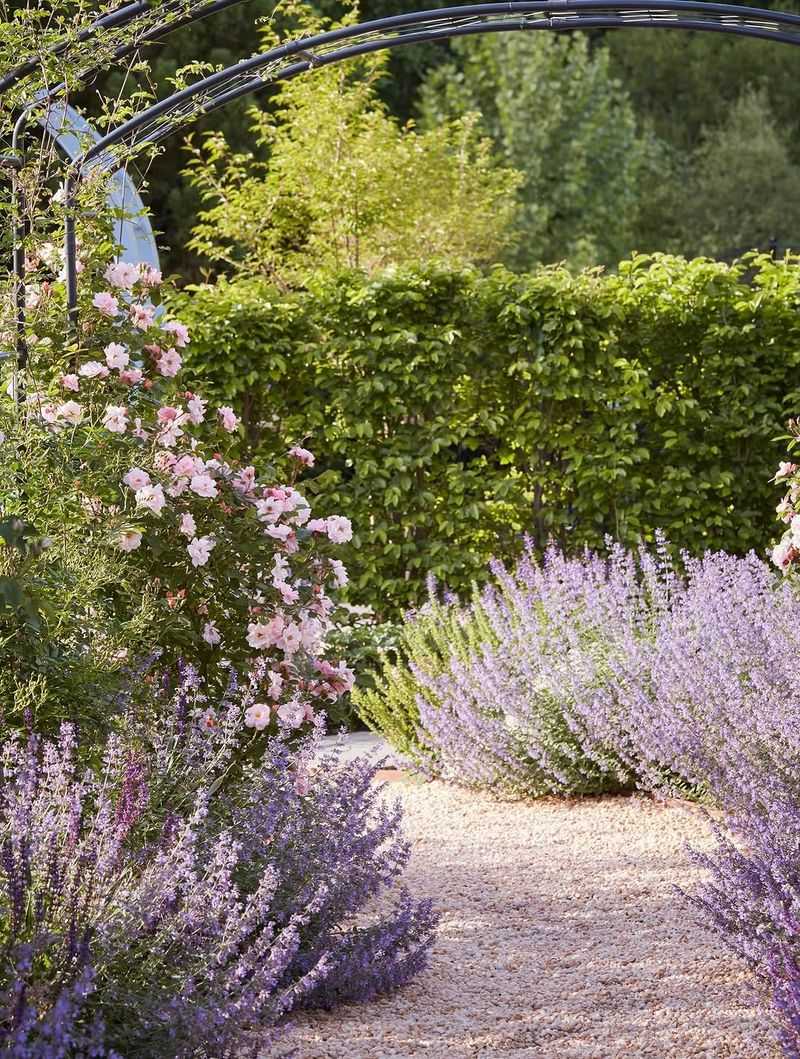
July in North Carolina can be brutal. Temperatures climb into the 90s, humidity thickens the air, and plenty of perennials that looked gorgeous in May start looking worn out and tired.
Catmint, though, just keeps going. It is one of the rare plants that actually handles sustained summer heat without missing a beat.
Part of the reason catmint holds up so well is its naturally aromatic foliage. The essential oils in the leaves help the plant manage heat stress in ways that softer, more water-dependent perennials simply cannot.
Good airflow around the plant also matters, and catmint’s open, mounding form encourages that naturally. Planting it with a little space between neighboring plants helps prevent any moisture buildup at the base.
Realistic expectations matter here. During the absolute hottest weeks of a Carolina summer, catmint may slow its flower production slightly.
That is completely normal. A light trim during that period encourages fresh growth that kicks back into bloom as temperatures ease in late August and September.
The plant is not struggling; it is simply pacing itself for the long season ahead. That kind of endurance is exactly what a sunny North Carolina border needs.
Your North Carolina Garden Changes Every Week. Your Plan Should Too.
Gardening in North Carolina changes quickly throughout the season. Every Friday you’ll receive a simple weekly plan showing exactly what to plant, prune, fertilize, harvest, and protect so you never miss the right timing.
3. Full Sun Creates The Strongest Growth And Most Flowers
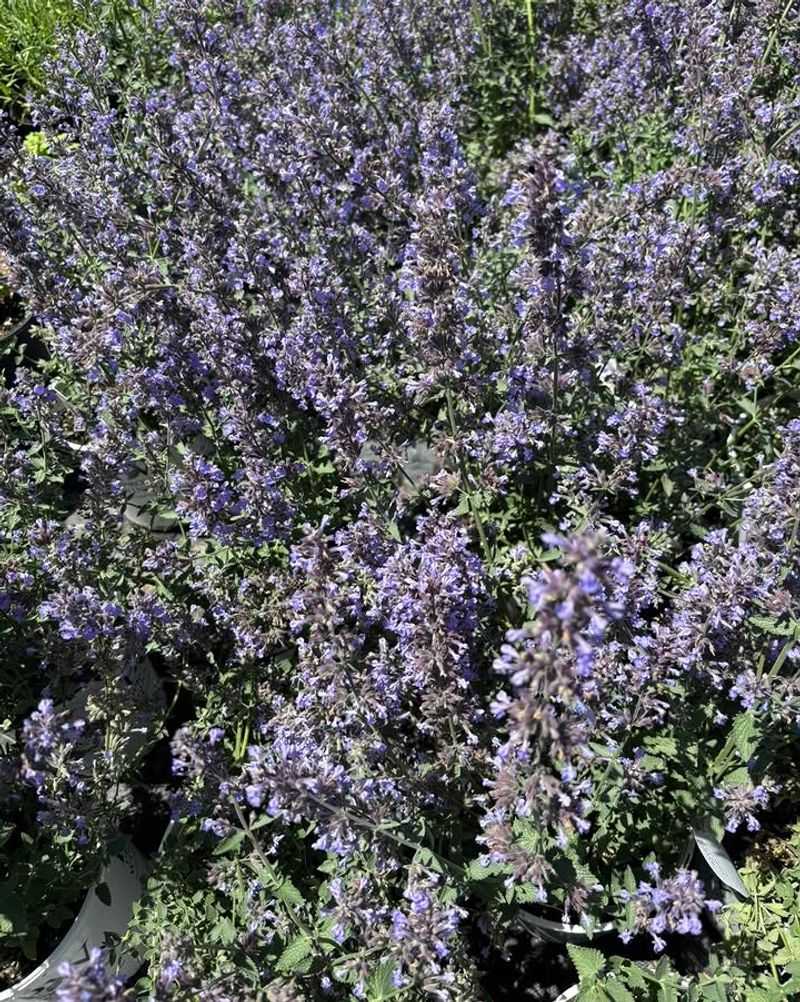
Give catmint a spot with at least six hours of direct sunlight each day and it will reward you with the densest, most flower-covered growth possible. Shade is really the enemy here.
Even partial shade causes the stems to stretch and flop, the blooms to thin out, and the overall shape of the plant to become loose and unruly.
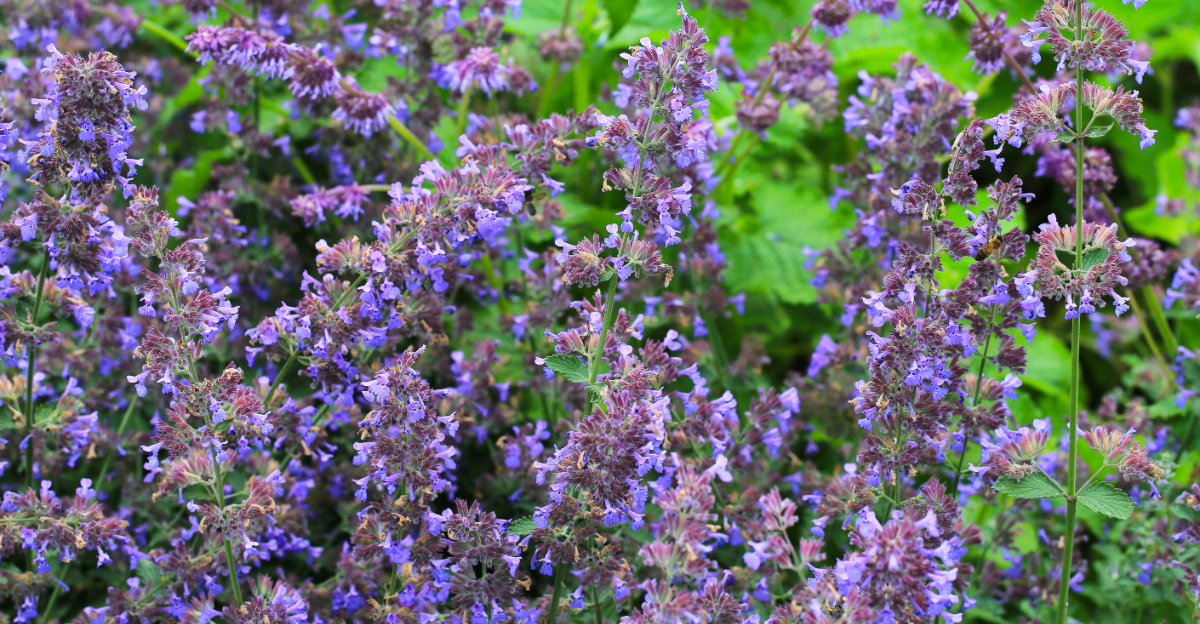
Full sun exposure triggers the plant to produce tight, compact mounds loaded with those signature lavender-blue flower spikes. The stems stay sturdy and upright, which means less flopping and less need for staking.
In North Carolina, where the sun shines generously for most of the growing season, catmint has everything it needs to perform at its absolute best.
South-facing and west-facing borders are ideal placements. Raised beds and sloped areas that drain freely also work beautifully because catmint loves the warmth that radiates from well-drained soil in full sun.
If your garden bed gets afternoon shade from a tree or fence, consider moving catmint to a sunnier spot. The difference in bloom production between a shaded plant and a fully sun-exposed plant is dramatic.
Once you see catmint thriving in true full sun, you will never want to plant it anywhere else.
4. Catmint Needs Less Water Than Most Flowering Perennials

Water bills and summer drought are real concerns for North Carolina gardeners. Catmint makes both of those problems much easier to manage.
Once established, this plant handles dry spells with impressive composure, making it a smart choice for water-conscious landscapes across the state.
During the first growing season, regular watering is important. Newly planted catmint needs consistent moisture while its root system develops, roughly once or twice per week depending on rainfall and soil type.
Sandy soils dry out faster than clay-heavy soils, so keep an eye on moisture levels during that first summer. A layer of mulch around the base helps retain soil moisture and keeps roots cool during heat waves.
After the first full year in the ground, established catmint becomes remarkably self-sufficient. It can go two weeks or longer without supplemental water during dry stretches and still look presentable.
Deep, infrequent watering is always better than frequent shallow watering because it encourages roots to grow downward, which builds long-term drought resilience. Overwatering is actually a bigger risk than underwatering for mature plants.
Soggy soil invites root problems that even tough catmint cannot easily overcome. Water smart, not often, and your catmint will thrive for many seasons ahead.
5. Pollinators Constantly Visit Catmint Flowers
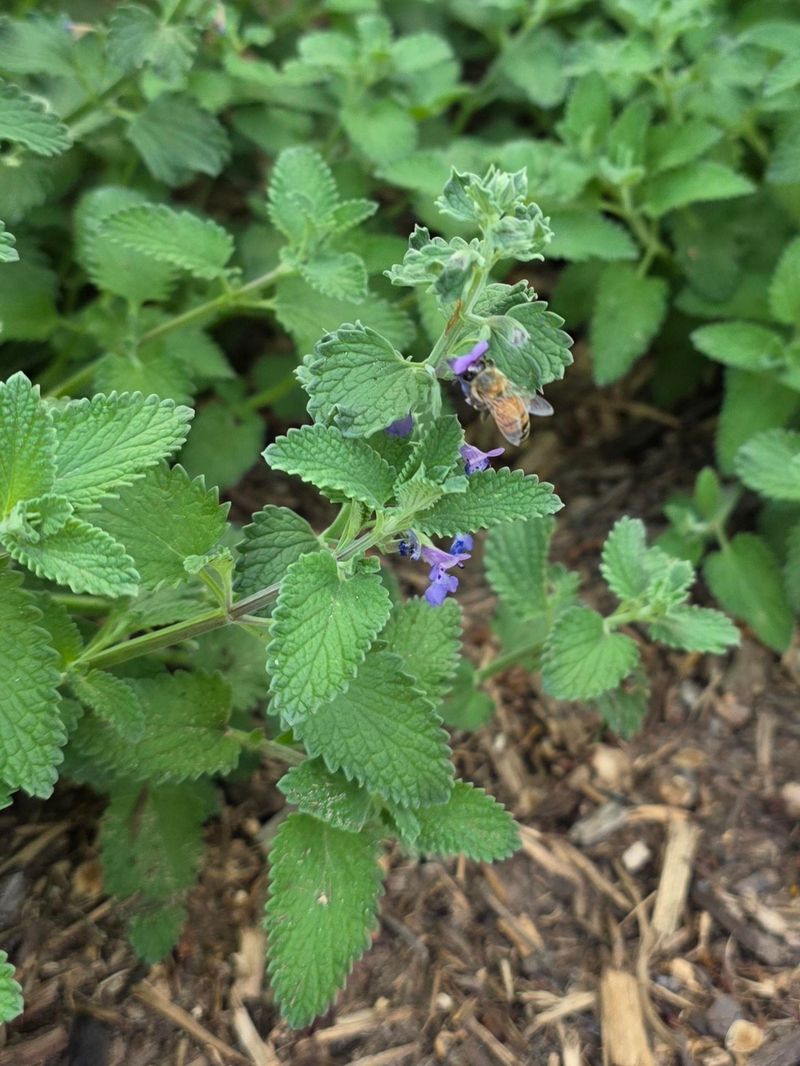
Few plants in a sunny garden attract as many pollinators as catmint does during its long bloom season. From the moment the first flower spikes open in late spring, bees arrive in remarkable numbers.
Bumblebees, honeybees, and native solitary bees all visit regularly, sometimes making the entire plant hum with activity on warm afternoons.
Butterflies are frequent visitors too. Skippers, swallowtails, and cabbage whites all find catmint irresistible.
The tubular flower shape is perfectly sized for many native bee species, making catmint especially valuable in pollinator-focused garden designs.
Beneficial insects like hoverflies also patrol catmint blooms, helping control soft-bodied pests elsewhere in the garden as a bonus.
What sets catmint apart from many single-flush bloomers is its ability to support pollinators across multiple seasons.
A plant that blooms in May, rests briefly, and then blooms again in late summer provides food sources during periods when other flowers may be scarce.
That repeated flowering cycle creates a reliable feeding station from spring straight into fall.
If supporting local pollinator populations matters to you, and it genuinely should, adding catmint to a sunny border is one of the most impactful and beautiful choices you can make for your North Carolina garden.
6. Light Trimming Helps Catmint Bloom Again And Again
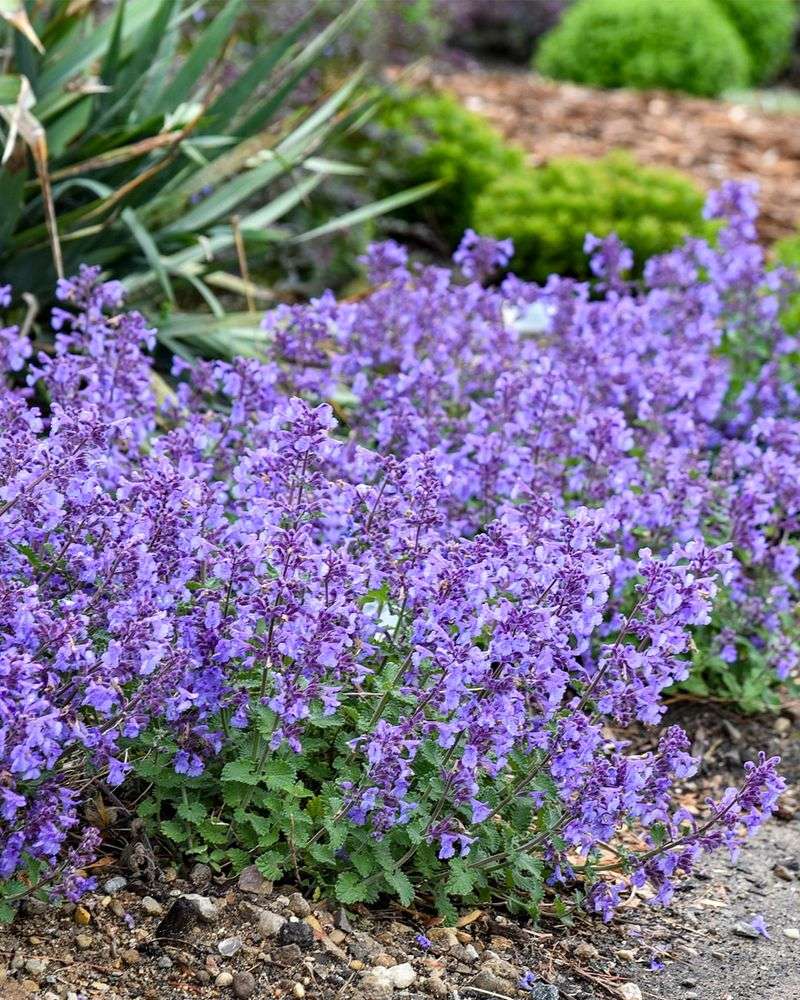
One of the most satisfying things about growing catmint is how generously it responds to a simple trim. After the first big flush of flowers fades in late spring or early summer, the plant looks a bit tired and spent.
That is the perfect moment to step in with a pair of shears and give it a fresh start. Cutting catmint back by about one-third to one-half of its height removes the spent flower spikes and encourages the plant to push out a fresh wave of new growth.
Within two to three weeks, new stems emerge, followed by another round of those beloved lavender-blue flowers.
In North Carolina’s long growing season, this cycle can repeat two or even three times between spring and fall, giving you months of continuous color.
Timing matters. The first trim typically happens in June after the initial bloom fades.
A second light trim in late July or early August refreshes the plant for a strong fall showing. Avoid heavy pruning after September because the plant needs time to harden off before cooler temperatures arrive.
Sharp, clean shears make the job easy and reduce any stress on the stems. Regular trimming is the single most effective thing you can do to maximize catmint’s flowering potential all season long.
7. Catmint Handles Poor Soil Better Than Many Garden Favorites
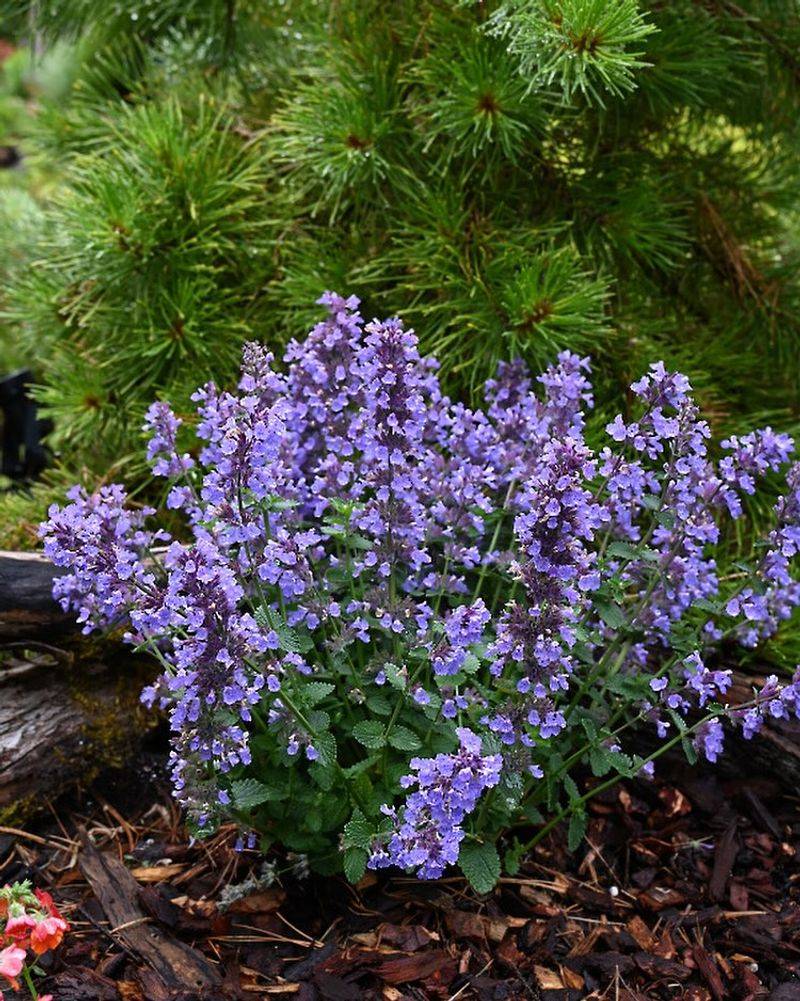
Here is something surprising about catmint: it actually prefers average or even slightly poor soil over rich, heavily amended garden beds. Most gardeners are conditioned to add compost and fertilizer to everything, but catmint breaks that rule in the best possible way.
Too much fertility leads to lush, floppy growth with fewer flowers and weaker stems.
Well-drained soil is the one non-negotiable requirement. Catmint absolutely cannot tolerate sitting in wet, waterlogged ground for extended periods.
Whether your soil is sandy, rocky, or average loam, as long as water moves through it freely, catmint will adapt and thrive. Raised beds, sloped borders, and gravel gardens are all excellent placements because drainage is naturally reliable in those settings.
Clay-heavy North Carolina soils present the biggest challenge. Heavy clay holds water too long and compacts around roots.
If clay soil is unavoidable, amend the planting area with coarse sand or fine gravel to improve drainage before planting. Avoid adding large amounts of compost to clay beds for catmint specifically, as it can retain extra moisture.
A modest top dressing of compost in early spring is plenty. Once catmint finds its footing in decent-draining soil, it settles in and grows stronger each year without needing much attention at all.
8. Deer And Rabbits Usually Leave Catmint Alone
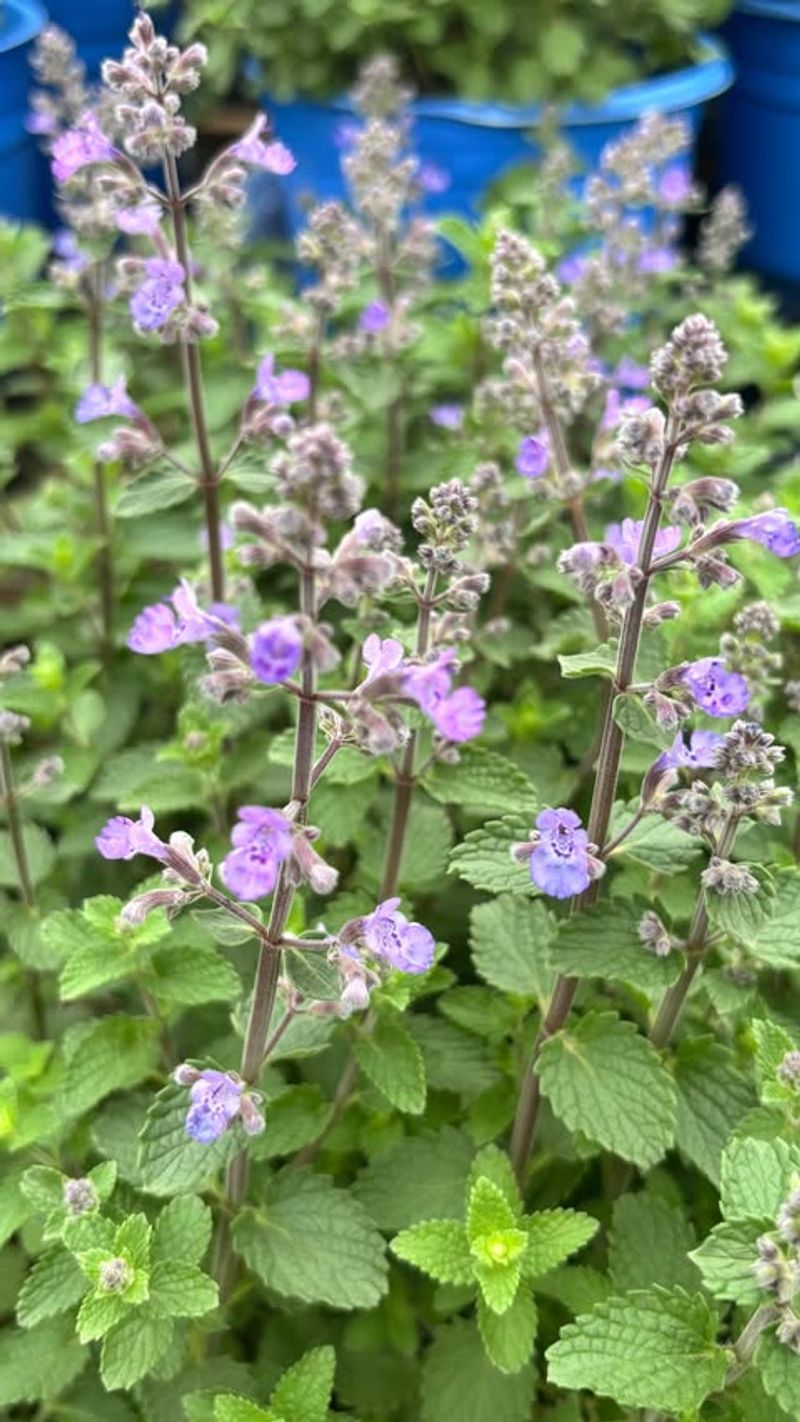
Gardening in North Carolina often means sharing your yard with deer, rabbits, and other wildlife that have strong opinions about what they want to snack on. Hostas, daylilies, and tulips are practically fast food for deer in suburban and rural areas.
Catmint, thankfully, is a very different story. The aromatic oils that give catmint its distinctive scent are the same properties that make most browsing animals hesitant to eat it.
Deer tend to avoid strongly scented plants, and catmint’s fuzzy, textured foliage adds another layer of deterrence.
Rabbits similarly tend to pass it by in favor of softer, more palatable plants nearby. This makes catmint a genuinely practical choice for gardens where wildlife pressure is a real and ongoing frustration.
Realistic expectations are fair here. No plant is completely browse-proof under every condition.
During very dry summers when food sources are limited, hungry deer may sample almost anything, including catmint. But compared to many popular flowering perennials, catmint holds up remarkably well against casual browsing.
Planting it near more vulnerable favorites like coneflowers or black-eyed Susans may even offer some indirect protection, since deer often move on quickly when they encounter plants they find unappealing.
It is not a guarantee, but it is a genuinely helpful advantage in a wildlife-heavy yard.
9. Catmint Looks Good Even When It Is Not Blooming
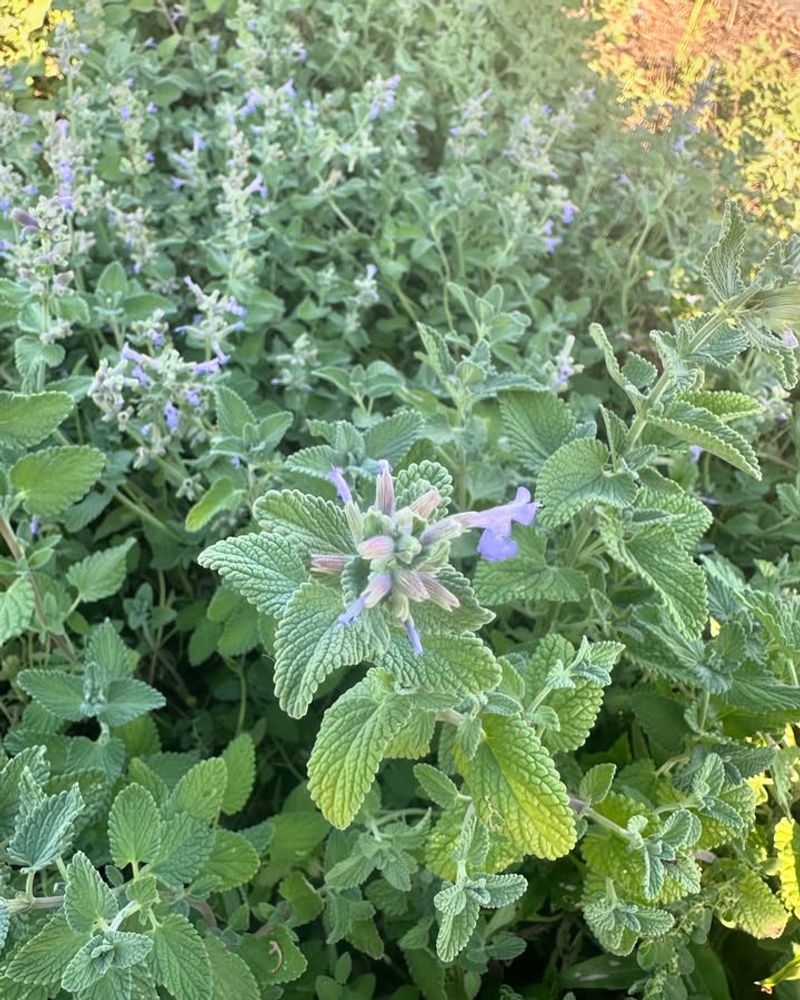
Plenty of perennials look spectacular in full bloom and completely forgettable the rest of the time. Catmint is genuinely different.
Even between flowering cycles, the soft gray-green foliage holds its own as a textural element in the garden, adding subtle color and structure that makes the whole border feel more polished.
The leaves are small, slightly scalloped, and covered in fine hairs that give them a silvery, almost frosted appearance in certain light.
That cool gray-green tone pairs beautifully with bolder colors like the deep purple of salvia, the bright yellow of coreopsis, or the rich red of gaillardia.
Catmint acts almost like a living mulch, filling space between showier plants and softening hard edges along pathways or bed borders.
The mounding growth habit is another asset. Catmint naturally forms rounded, dome-shaped clumps that stay relatively tidy without much intervention.
That shape adds visual rhythm to a border, especially when several plants are grouped together in a flowing drift.
After the final fall bloom fades, the foliage often persists into early winter in North Carolina’s mild climate, providing structure in the garden long after most other perennials have gone dormant.
It is the kind of plant that earns its space every single month of the growing season, not just during peak bloom.
10. Catmint Works In Nearly Every Sunny North Carolina Garden Style

Versatility is one of catmint’s most underappreciated qualities. Whether your garden style leans toward formal English borders, relaxed cottage plantings, modern pollinator beds, or practical drought-tolerant landscapes, catmint fits right in without looking out of place.
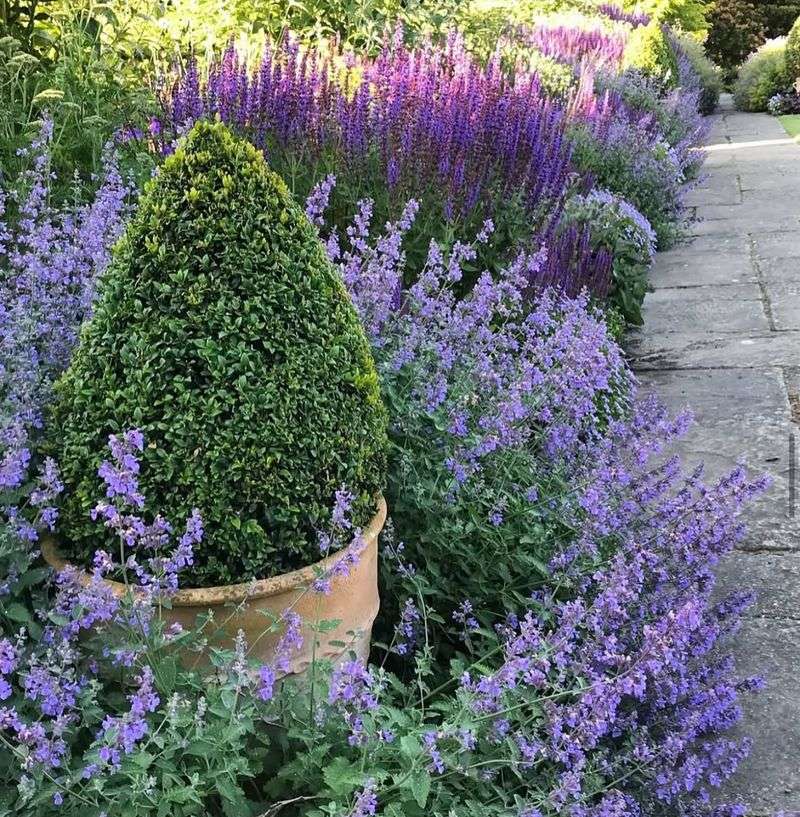
Very few perennials can honestly make that claim. For walkway borders, catmint is nearly perfect. Plant it about 18 to 24 inches apart along a sunny path and it will soften the edge beautifully while releasing a pleasant herbal scent when brushed by passing legs.
In cottage gardens, it blends naturally with roses, salvias, and ornamental grasses. In pollinator gardens, it anchors the design with long-season blooms that support insects from May through October.
Raised beds with good drainage suit catmint especially well, and gravel or rock gardens are another excellent fit.
Companion planting options are plentiful. Russian sage, purple coneflower, black-eyed Susan, and ornamental grasses all pair wonderfully with catmint in full sun North Carolina beds.
Spacing plants 18 to 24 inches apart gives each one room to develop its natural mounding shape without crowding.
Popular varieties like Walker’s Low, which is actually a medium-sized plant despite its name, and Six Hills Giant are both widely available at North Carolina nurseries and reliably hardy across most of the state.
Start with one clump and you will almost certainly want more.