Native North Carolina Shrubs To Plant Instead Of Loropetalum In Front Yards
Loropetalum has become a common choice in North Carolina front yards, but it is not always the best long term option.
While it offers bold color, it can grow unevenly, become hard to manage, or struggle in certain conditions.
Many homeowners are now looking for shrubs that stay more balanced, need less upkeep, and fit more naturally into the landscape.
Native shrubs are a great alternative because they are already adapted to North Carolina’s climate, soil, and seasonal changes.
They often grow with fewer problems and bring added benefits like supporting pollinators and birds.
Some offer soft blooms, others provide rich foliage or seasonal color that keeps the yard looking fresh.
If you want a front yard that feels more natural, polished, and easy to maintain, these native shrubs are a smart replacement worth considering.
1. Dwarf Fothergilla (Fothergilla gardenii)
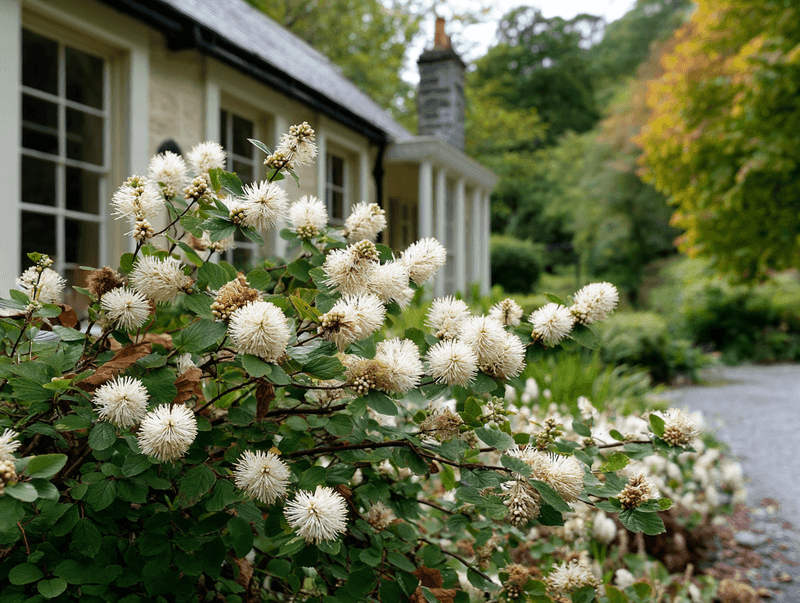
Few shrubs pack as much seasonal punch into such a tidy, compact form as Dwarf Fothergilla.
Native to the coastal plains and piedmont regions of the Southeast, this little gem stays around three feet tall, making it a perfect fit for foundation plantings in North Carolina front yards.
In early spring, before the leaves even open, it bursts into fragrant white bottlebrush flowers that bees absolutely love.
The scent is soft and honey-like, drifting pleasantly through the yard on a warm spring morning.
Once flowering wraps up, the rounded green leaves take over and give the shrub a clean, polished look all summer long.
No aggressive pruning needed, no fighting with invasive roots, just easy, reliable growth that suits the North Carolina climate naturally.
Fall is where Dwarf Fothergilla truly steals the show. The foliage turns a fiery mix of orange, red, and yellow that rivals any ornamental shrub on the market.
It grows well in full sun to partial shade and prefers moist, acidic, well-drained soil, which is exactly what many North Carolina yards already offer.
Plant it in groupings of three for maximum visual impact, or use a single specimen as a low-maintenance focal point near your front entrance. It is a genuinely outstanding native replacement for loropetalum.
2. Virginia Sweetspire (Itea virginica)
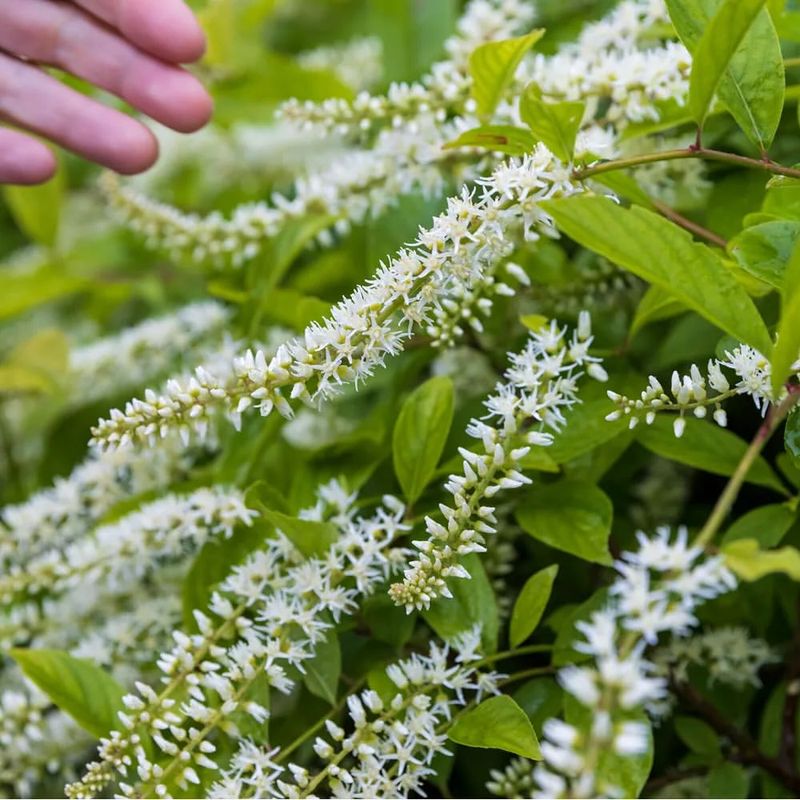
Virginia Sweetspire is the kind of shrub that earns compliments without demanding much in return.
Native across much of the eastern United States, including throughout North Carolina, it brings graceful arching branches tipped with fragrant white flower spikes every spring.
Those blooms are a magnet for butterflies and native bees, turning your front yard into a quiet little wildlife hub without any extra effort on your part.
One of the best things about Virginia Sweetspire is how well it handles difficult soil conditions.
Clay soil, wet spots, dry spells after establishment, it adapts to all of these with surprising ease.
That flexibility makes it an especially smart choice for North Carolina homeowners who deal with unpredictable seasonal moisture or heavy red clay in their planting beds.
Come fall, the leaves shift into brilliant shades of red, orange, and burgundy that hold on the plant longer than most other shrubs.
Your North Carolina Garden Changes Every Week. Your Plan Should Too.
Gardening in North Carolina changes quickly throughout the season. Every Friday you’ll receive a simple weekly plan showing exactly what to plant, prune, fertilize, harvest, and protect so you never miss the right timing.
The fall color display can last well into November in many parts of North Carolina, giving your yard interest long after other plants have faded.
Virginia Sweetspire typically grows three to five feet tall and wide, with a naturally neat, rounded form that works beautifully along house foundations.
Compact cultivars like ‘Henry’s Garnet’ are widely available and stay on the smaller side, making them even easier to fit into a well-designed front yard planting scheme.
3. Inkberry Holly (Ilex glabra)
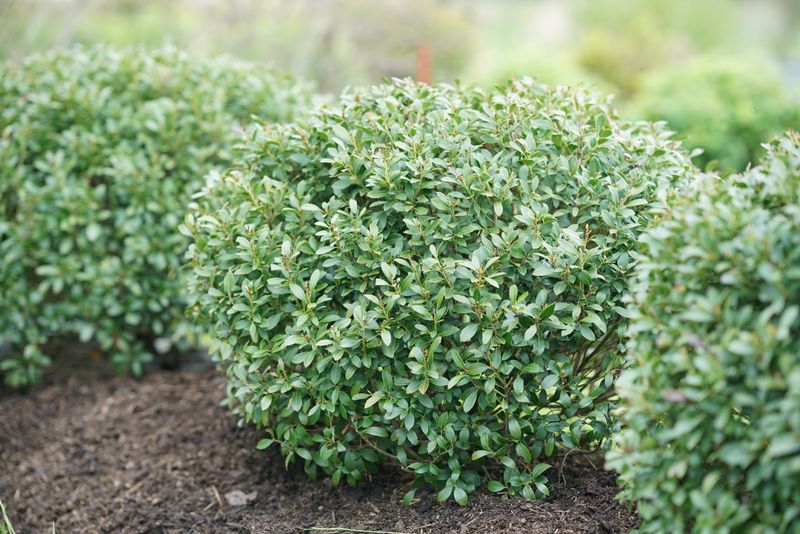
If you love the year-round green structure that loropetalum provides but want something that actually belongs in North Carolina’s ecosystem, Inkberry Holly is your answer.
This native evergreen holly keeps its glossy dark green leaves through all four seasons, giving your front yard a clean, structured look every single month of the year.
It is a workhorse of a shrub, steady and dependable in a way that few ornamentals can match.
Inkberry Holly thrives in moist to wet soils, which makes it a standout choice for low-lying front yard areas or spots where water tends to collect after heavy North Carolina rainstorms.
It tolerates full sun and partial shade, so it is genuinely flexible across a wide range of planting conditions.
Small white flowers appear in late spring, and by fall, clusters of shiny black berries develop along the stems, providing food for more than a dozen species of birds.
The shrub grows four to eight feet tall without much fuss, and compact cultivars like ‘Shamrock’ and ‘Compacta’ stay smaller and rounder for tighter spaces.
Unlike loropetalum, Inkberry Holly supports native insects and birds in a meaningful way, connecting your landscape to the broader North Carolina ecosystem.
It is low-maintenance once established, rarely needs pruning, and holds its shape naturally. For homeowners wanting a no-drama, high-reward evergreen native, this one is hard to beat.
4. Oakleaf Hydrangea (Hydrangea quercifolia)
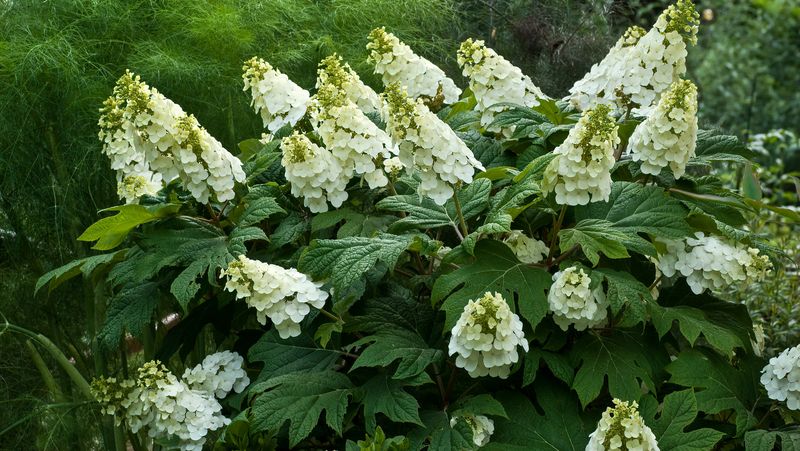
Bold, beautiful, and completely at home in North Carolina, Oakleaf Hydrangea is a showstopper that earns its place in any front yard.
The large, oak-shaped leaves give this shrub a rich, textural quality that most other shrubs simply cannot match.
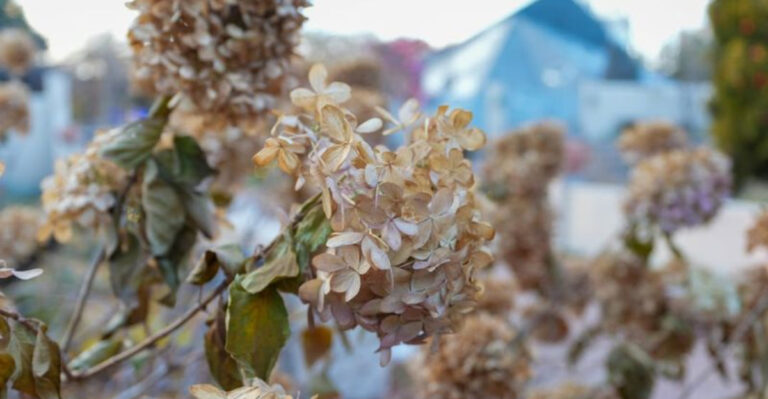
In late spring and early summer, it produces massive cone-shaped clusters of white flowers that gradually fade to a dusty pinkish-tan as the season progresses, creating months of continuous visual interest.
The ecological benefits are just as impressive as the looks. Native pollinators flock to the blooms, and the dense branching structure provides excellent nesting cover for small birds.
In North Carolina, where native habitat is increasingly fragmented, a single Oakleaf Hydrangea in your front yard can make a real difference for local wildlife populations. Fall color on this shrub is genuinely spectacular.
The leaves turn deep shades of red, burgundy, and purple before dropping, and the dried flower heads persist through winter, adding texture to an otherwise bare landscape.
It grows best in partial shade with well-drained, organic-rich soil, making it ideal for the shadier side of a North Carolina front yard or under the canopy of a large tree. Mature plants can reach six to eight feet tall and wide, so give it room to spread naturally.
Cultivars like ‘Pee Wee’ and ‘Sike’s Dwarf’ offer a more compact option for smaller planting areas near the front of the home.
5. Carolina Allspice (Calycanthus floridus)
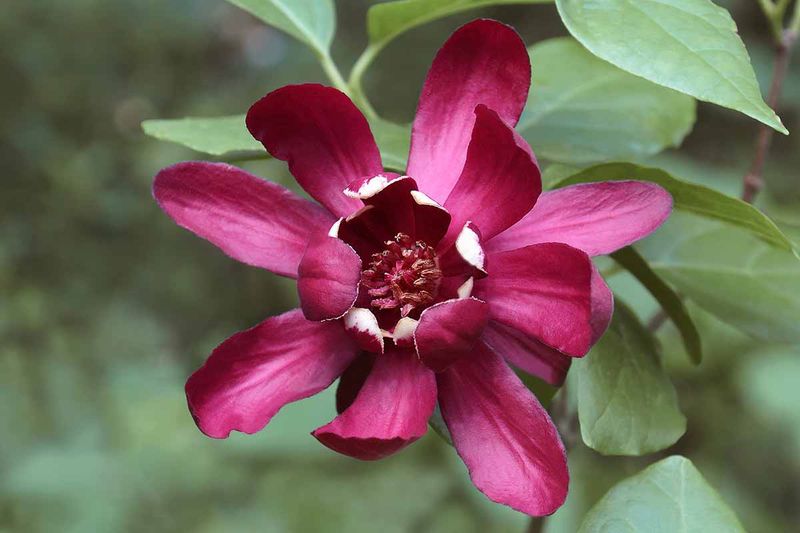
Walk past a Carolina Allspice in bloom and you will stop in your tracks.
The deep burgundy-red flowers carry a rich, fruity fragrance that some describe as a blend of strawberry, banana, and spice, and it drifts through the yard in a way that makes the whole space feel alive.
This native North Carolina shrub has been cherished in Southern gardens for centuries, and once you plant one, it is easy to understand why.
Carolina Allspice grows in a relaxed, rounded form, typically reaching six to nine feet tall and wide at maturity.
It suits front yards where a slightly larger, more naturalistic presence is welcome, particularly in spots with partial shade and moist, fertile soil.
The broad, dark green leaves have a velvety texture and stay attractive throughout the entire growing season without much intervention from the gardener.
Beyond the fragrance, this shrub is a strong performer in the North Carolina landscape. It is drought-tolerant once established, adapts to a range of soil types, and rarely suffers from serious pest or disease problems.
The flowers bloom from late spring into early summer, and some plants even rebloom lightly in fall.
Pollinators are drawn to the unusual flowers, which have a beetle-pollination strategy that goes back millions of years.
For a front yard shrub that combines fragrance, history, wildlife value, and low-maintenance performance, Carolina Allspice delivers on every level.
6. Buttonbush (Cephalanthus occidentalis)
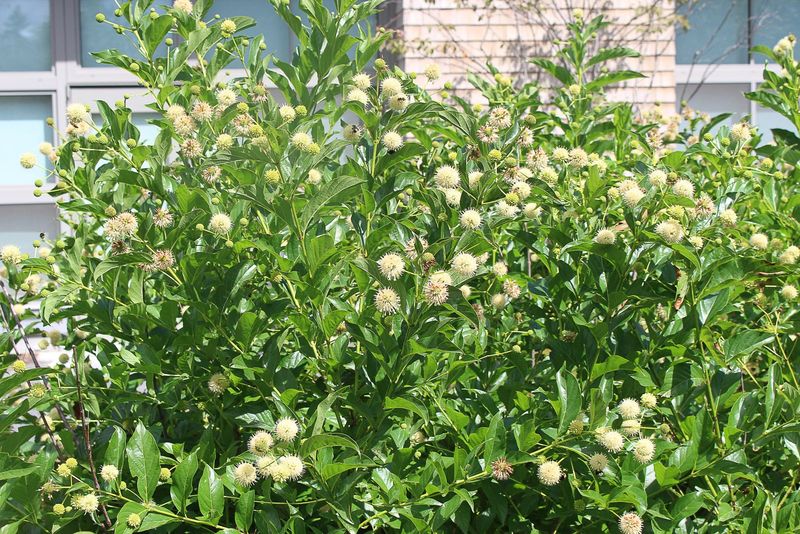
Buttonbush is the kind of native shrub that makes people stop and ask, what is that?
The flowers are unlike anything else in the garden: perfectly round, white, one-inch spheres covered in tiny protruding stamens that look almost like miniature fireworks frozen in mid-burst.
They bloom throughout summer, which is a welcome trait when most shrubs have already finished flowering in the North Carolina heat.
This shrub thrives in wet or consistently moist soils, making it an ideal solution for front yard areas that stay soggy after rain.
Low spots, rain gardens, and areas near downspouts that are difficult to plant can all benefit from a well-placed Buttonbush.
Instead of fighting the wet conditions, this native plant actually welcomes them, growing vigorously where other shrubs would struggle. The ecological value of Buttonbush is off the charts.
It is considered one of the top pollinator plants in eastern North America, attracting bees, butterflies, and hummingbirds in remarkable numbers.
The small round seed heads that follow the blooms feed waterfowl and songbirds through fall and winter.
In North Carolina, where native pollinators face ongoing habitat loss, planting a Buttonbush in your front yard is a genuinely meaningful act.
It grows six to twelve feet tall in ideal conditions, though regular pruning keeps it tidy and more manageable for a residential front yard setting.
7. Wax Myrtle (Morella cerifera)
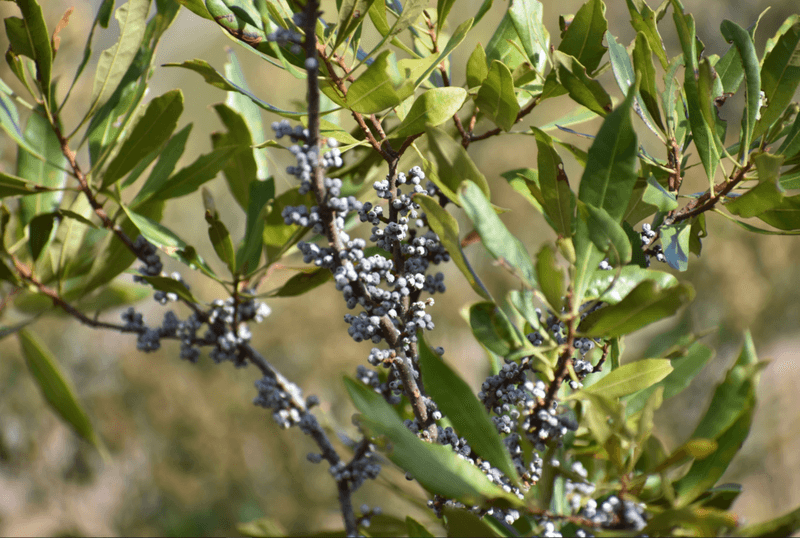
Wax Myrtle is a North Carolina native that has been quietly doing the hard work in coastal and piedmont landscapes for a very long time.
It grows fast, stays evergreen, and brings a fine-textured, aromatic quality to the front yard that is completely its own.
When you brush against the leaves, a clean, spicy scent releases into the air, a small but memorable sensory detail that makes the garden feel more alive.
This shrub excels as a privacy screen or structural anchor in larger front yards, particularly across coastal North Carolina where salty air and sandy soils challenge most ornamentals.
Wax Myrtle handles those conditions with ease, growing six to twelve feet tall with a multi-stemmed, upright form that can be pruned into a small tree shape or left to grow as a natural shrub.
It tolerates both wet and dry soils, full sun and partial shade, giving it remarkable versatility across different North Carolina landscapes.
The small waxy berries that appear in fall and winter are a favorite food source for yellow-rumped warblers and more than 40 other bird species.
Planting Wax Myrtle near the front of your home essentially rolls out a welcome mat for native wildlife.
Compared to loropetalum, which crowds out native species and spreads aggressively, Wax Myrtle plays by the ecological rules while still delivering the bold, evergreen structure that homeowners love in their front yards.
8. American Beautyberry (Callicarpa americana)
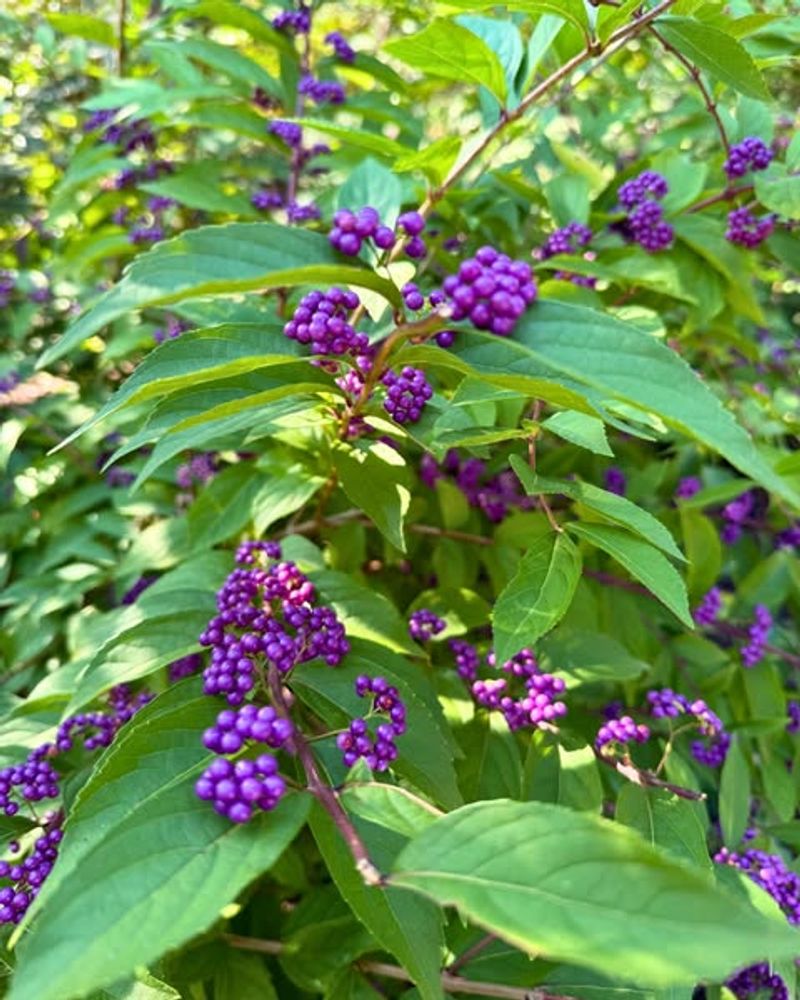
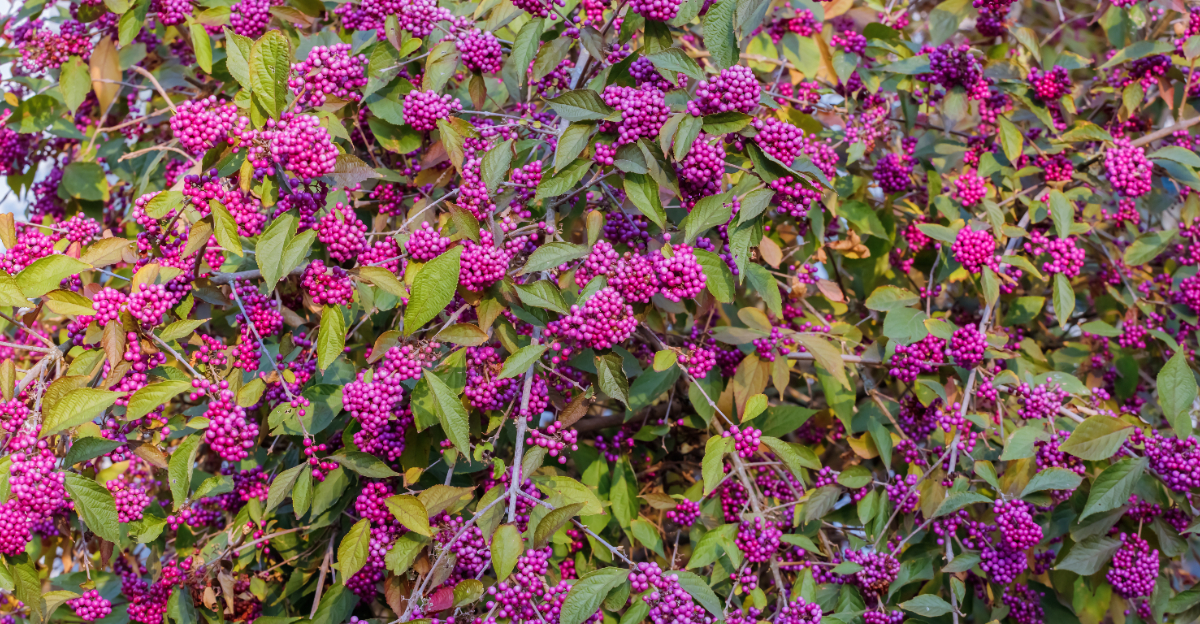
Nothing in the fall garden quite matches the electric, almost unreal purple of American Beautyberry berries.
They cluster tightly around the arching stems in dense rings of magenta-violet that look almost too vivid to be natural.
In North Carolina front yards, a well-placed American Beautyberry becomes the single most talked-about plant in the neighborhood every September and October, drawing admiring glances from neighbors and passersby alike.
Growing six to eight feet tall with a loose, fountain-like form, American Beautyberry is not the tidiest shrub in the lineup, but its seasonal drama more than makes up for it.
Small lilac-pink flowers bloom along the stems in summer before the berries develop, and these attract a steady stream of native bees and butterflies.
The berries that follow feed mockingbirds, cardinals, robins, and dozens of other bird species through the fall migration season.
American Beautyberry grows well in full sun to partial shade and adapts to a wide range of soil types found across North Carolina, from sandy coastal soils to heavier piedmont clay.
It bounces back strongly from hard pruning in late winter, which helps keep the plant compact and encourages the most vigorous berry production on new growth.
For homeowners who want a native shrub that delivers genuine wow-factor rather than just blending into the background, American Beautyberry is an inspired choice that never disappoints.
9. Sweetshrub ‘Athens’ (Calycanthus floridus ‘Athens’)
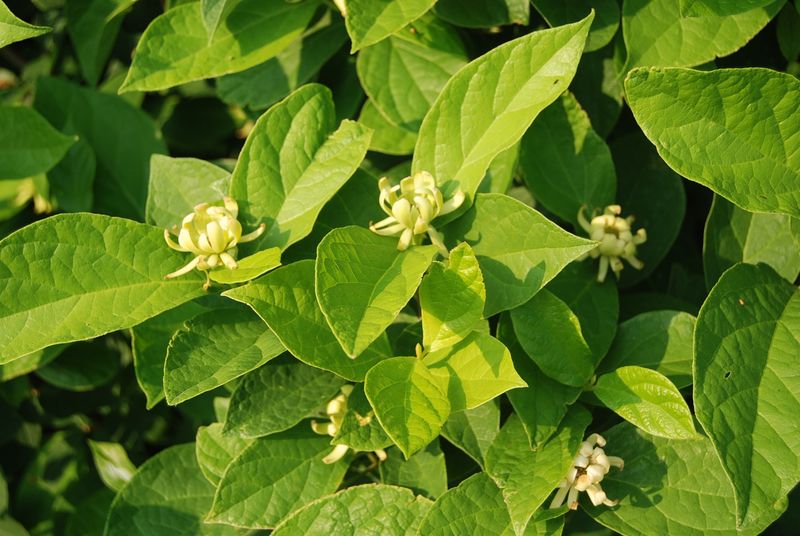
While Carolina Allspice is known for its deep red blooms, the ‘Athens’ cultivar flips the script entirely with soft, creamy yellow flowers that bring a lighter, more refined energy to the front yard.
Discovered at the University of Georgia, this selection of Calycanthus floridus has quickly become a favorite among native plant enthusiasts across the Southeast, including throughout North Carolina, for its unusual flower color and equally intoxicating fragrance.
The scent of ‘Athens’ sweetshrub is often described as a mix of cantaloupe and sweet spice, a combination that makes it genuinely irresistible up close.
The flowers open in late spring and continue sporadically through early summer, nestled among large, glossy, deep green leaves that stay handsome all season long.
The overall effect in a front yard planting is one of quiet elegance rather than bold drama, which suits certain landscape styles beautifully.
Like its parent species, ‘Athens’ is a tough, adaptable shrub that performs well across a range of North Carolina growing conditions.
It handles partial shade with ease, tolerates some drought once established, and rarely attracts pest problems.
Mature plants reach six to eight feet in height and width, giving them real presence in the landscape.
For gardeners who love the idea of Carolina Allspice but want something a little softer and more unexpected, ‘Athens’ sweetshrub is a brilliant native alternative worth seeking out at local nurseries.
10. Arrowwood Viburnum (Viburnum dentatum)
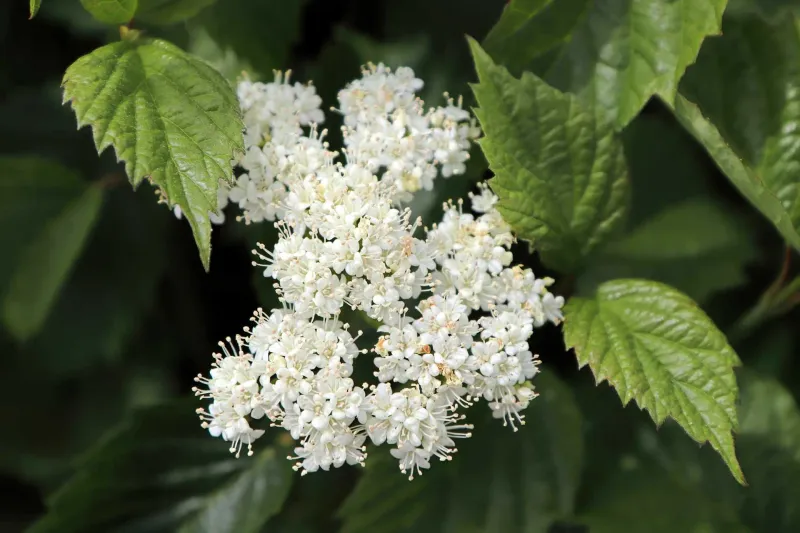
Arrowwood Viburnum is one of those native shrubs that quietly does everything right across all four seasons in North Carolina.
Spring brings flat-topped clusters of creamy white flowers that hum with native bee activity.
Summer offers dense, dark green foliage with a clean, upright form that suits formal and informal front yard styles equally well.
Then fall arrives and the whole plant transforms, with leaves turning shades of red, orange, and yellow while clusters of blue-black berries ripen along the branches. Those berries are not just decorative.
Over 35 species of birds feed on Viburnum berries, making Arrowwood one of the most ecologically valuable shrubs a North Carolina homeowner can plant.
Thrushes, cedar waxwings, bluebirds, and woodpeckers are among the frequent visitors, turning your front yard into a lively wildlife corridor during fall migration. That kind of ecological return is something loropetalum simply cannot offer.
Arrowwood Viburnum grows six to ten feet tall and adapts to full sun, partial shade, moist soils, and dry soils with impressive flexibility. It is one of the most site-tolerant native shrubs available for North Carolina landscapes.
Compact cultivars like ‘Blue Muffin’ stay smaller and tighter, making them a smart fit for foundation plantings close to the house.
Whether you use it as a single specimen or a naturalistic mass planting, Arrowwood Viburnum brings lasting beauty and real ecological purpose to any North Carolina front yard.