The Native North Carolica Wildflower You Should Never Transplant In Summer No Matter How Carefully You Dig It
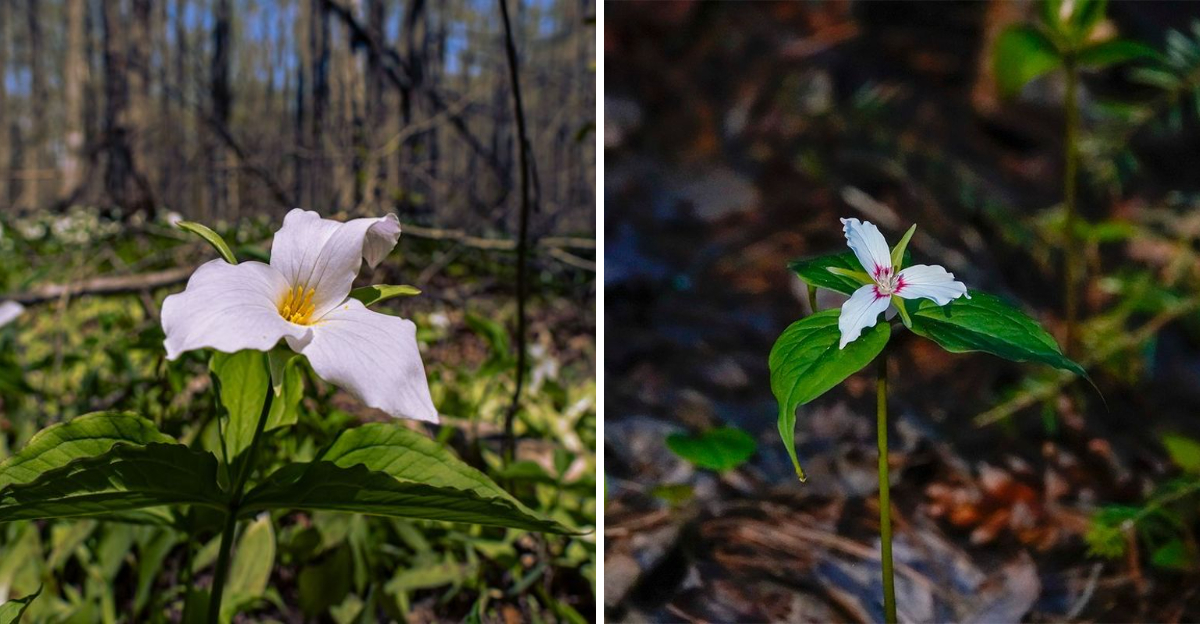
A shady North Carolina garden can hide one of its most valuable plants in plain sight.
By July, the broad leaves are gone. The spring flower has vanished. Leaf litter settles over the spot, and the bed suddenly looks open enough for another planting.
That is when the shovel becomes dangerous.
Under that apparently empty soil, a trillium may be resting inside a slow-growing rhizome that has spent years storing enough energy for another spring appearance.
Disturb it during peak summer dormancy and the plant has very little above-ground growth available to help it recover.
So why does careful digging still cause problems?
The answer lies in what you cannot see. Fine roots spread beyond the obvious crown. The rhizome carries future growth points.
Moist woodland soil protects a biological system that does not appreciate being exposed during hot weather.
Moving trillium is sometimes possible at better times and for legitimate garden reasons.
But in midsummer, the smartest tool is often a marker, not a spade in your garden bed.
Leave Summer Dormant Trilliums Alone
A bare patch under the oaks can be one of the most misleading sights in a July woodland garden.
Spring trilliums often disappear completely above ground by midsummer. Their leaves yellow, stems collapse, and the entire plant retreats into dormancy. Nothing visible remains to warn you that a living rhizome still occupies the soil below.
That disappearance is normal.
The plant has already completed its brief season of leaf growth, flowering, and energy storage. Much of that stored energy now sits underground, waiting for the next spring cycle.
Digging at this stage can slice through feeder roots or expose the rhizome during hot, humid weather. Even a careful gardener may not know exactly how far the roots extend because there is no foliage left to mark the center accurately.
That is why the safest summer move is often no move at all.
Mark known trillium locations before the foliage disappears and keep new planting holes outside those areas. A bamboo stake, discreet stone, or simple garden map can prevent an accidental collision later.
Dormancy makes the bed look vacant, but it is more like a shop with the lights off.
The tenant is still inside.
Give that hidden rhizome its quiet season, and you have a much better chance of seeing those familiar three leaves return next spring.
Respect The Underground Rhizome
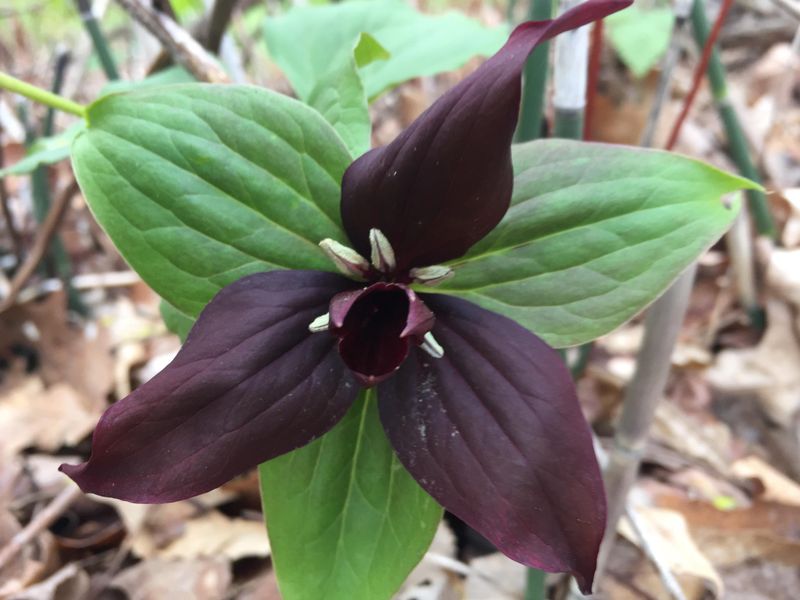
Years of growth can be packed into a surprisingly small piece of underground plant tissue.
A trillium rhizome stores carbohydrates, holds growth buds, and supports the roots that keep the plant alive between spring appearances. That slow-growing structure is one reason mature clumps deserve more respect than their size suggests.
Many trilliums take years to reach flowering maturity from seed.
That means a blooming clump may represent a long stretch of invisible development before you ever noticed it in the garden. A shovel cut through the rhizome can damage future shoots along with the roots attached to it.
The tricky part is that careful digging does not eliminate all risk.
Your North Carolina Garden Changes Every Week. Your Plan Should Too.
Gardening in North Carolina changes quickly throughout the season. Every Friday you’ll receive a simple weekly plan showing exactly what to plant, prune, fertilize, harvest, and protect so you never miss the right timing.
Fine feeder roots can extend beyond the obvious crown, and they are easy to sever before the main rhizome even comes into view.
Summer dormancy makes the job harder because there is no leafy top showing exactly where the plant is centered.
Established clumps also recover slowly from major disturbance.
A plant may return weakly, skip flowering, or take several seasons to regain its former size after a poorly timed move.
Treat an old trillium more like an heirloom than a disposable border perennial.
Its underground parts may look modest, but they carry years of stored progress.
One careless spade cut can turn a five-minute garden project into a very long wait for the next flower.
Wait For A Better Moving Window
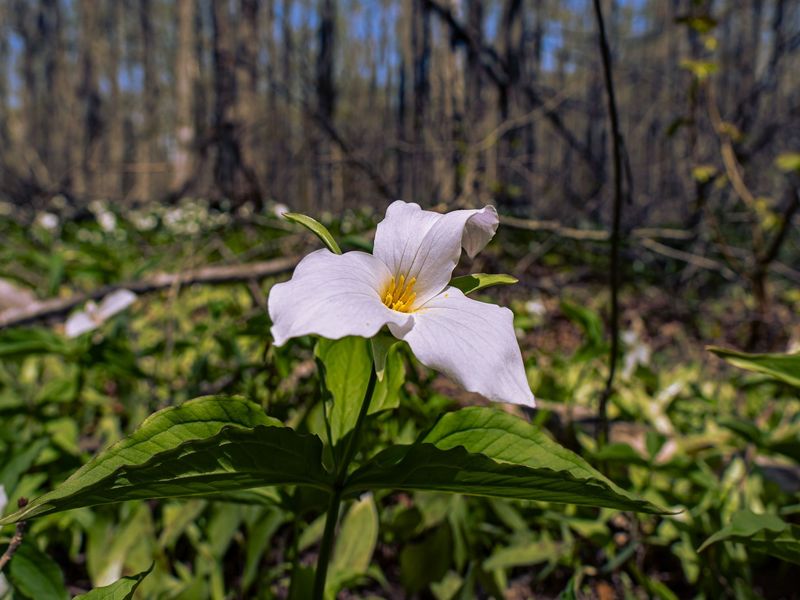
Hot July soil adds another problem to an already delicate transplanting job.
A dormant trillium has no active canopy above ground pushing new growth and helping the plant respond quickly to root loss.
Unearthing it during peak summer heat exposes roots and rhizomes at the exact time they are least equipped for a sudden move.
Moisture can disappear quickly too.
Even shaded North Carolina beds warm during summer, and a root ball left exposed for a short period can lose moisture faster than expected. Replanting into warm soil does not erase that stress immediately.
A better moving window depends on the species, region, and how the plant was grown.
For legitimately owned garden plants, experienced growers often favor early spring as shoots begin emerging or a later-season period when conditions have cooled and the plant can settle before the next growth cycle.
That is why the headline warning is really about peak summer dormancy, not a claim that every calendar day labeled summer makes transplanting impossible.
Do not move a healthy trillium simply because another corner looks prettier.
Save relocation for a real need, such as construction, drainage changes, or a clearly unsuitable site.
Then choose the timing around the plant rather than your weekend schedule.
Trilliums already operate on a slow calendar.
They are not particularly interested in squeezing an emergency move between lunch and a North Carolina thunderstorm.
Keep Woodland Soil Around The Roots
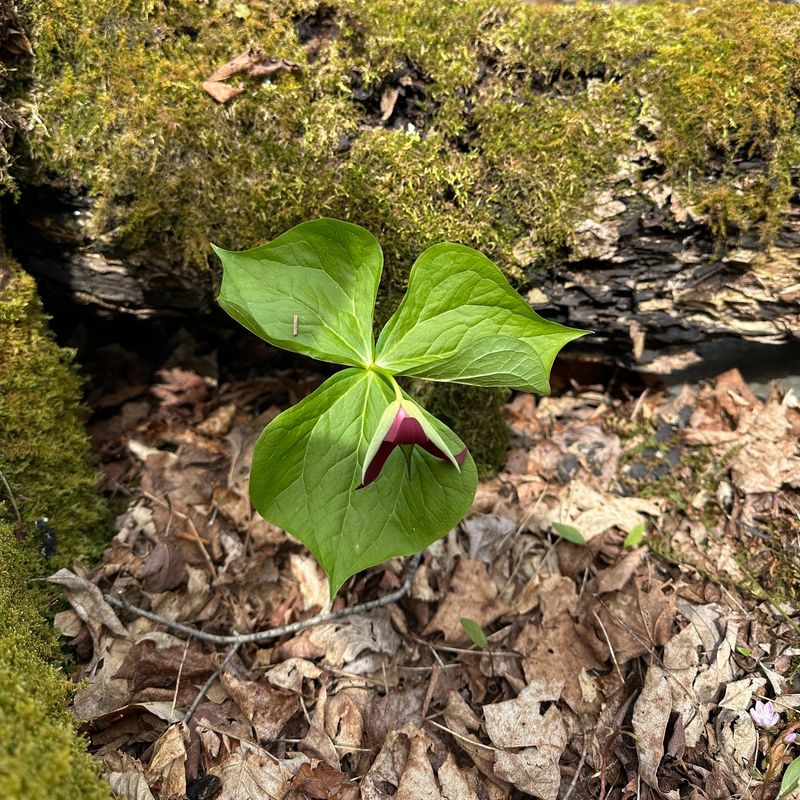
A root ball from a woodland perennial is carrying more than dirt.
Trilliums grow best in soil rich with decomposed leaves, organic matter, moisture, roots, fungi, and microorganisms. Disturbing that environment can add another layer of stress to an already sensitive plant.
That makes bare-root treatment a poor idea for an established garden clump.
Do not dig a trillium and shake every crumb of soil away just to make the plant lighter to carry. Keep as much of the surrounding root zone intact as practical, and never wash the roots clean before replanting.
Moisture matters during the move as well.
Prepare the new hole before lifting anything so the plant spends as little time exposed as possible. Keep the root ball shaded and damp, not sitting in direct sun while you decide where the shovel went.
The destination should resemble the conditions the plant already prefers.
Loose, humus-rich soil with good drainage is more useful than a hole packed with fertilizer. Leaf mold and decomposed woodland organic matter fit the setting better than a strong synthetic feeding.
Avoid burying the rhizome drastically deeper than it grew before.
This is not a tomato transplant that benefits from creative planting depth.
The less dramatically you change the root environment, the easier the transition tends to be.
When a move becomes necessary, relocate the little woodland neighborhood with the plant, not just the rhizome at its center.
Never Dig Trilliums From The Wild
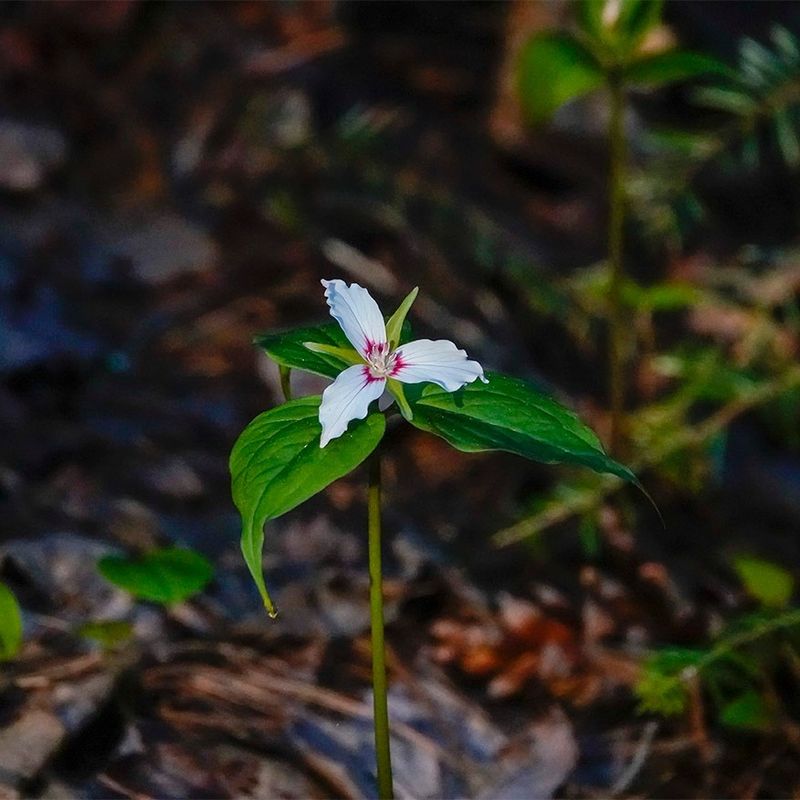
A beautiful colony beside a mountain trail is not a free plant display.
Wild trilliums should remain where they are growing. Removing them from public land can violate collection rules, and some North Carolina trillium species carry conservation concerns that make casual digging especially damaging.
Even abundant-looking colonies deserve restraint.
Trilliums reproduce slowly, and a patch that seems large may have taken decades to develop. Pulling flowering plants removes future seed production from that population and can disturb neighboring rhizomes in the process.
Some rare species make the issue even more serious.
North Carolina supports trilliums with restricted ranges and vulnerable populations, particularly in the mountains and Piedmont.
A gardener who cannot identify the exact species should never assume a wild plant is common enough to spare.
Survival after wild collection is another problem.
A plant adapted to a particular woodland slope, soil community, moisture pattern, and tree canopy may respond poorly after being moved into a suburban bed, even when the gardener believes the new spot looks similar.
Photograph wild trilliums instead.
Return during another spring. Watch the colony change. Let the plants keep contributing seed and pollen where they already belong.
For home landscapes, buy nursery-propagated stock from a source that can explain where its plants came from.
The best souvenir from a trillium hike is a photo.
It fits in the car much better anyway.
Mark The Spot Before Foliage Vanishes
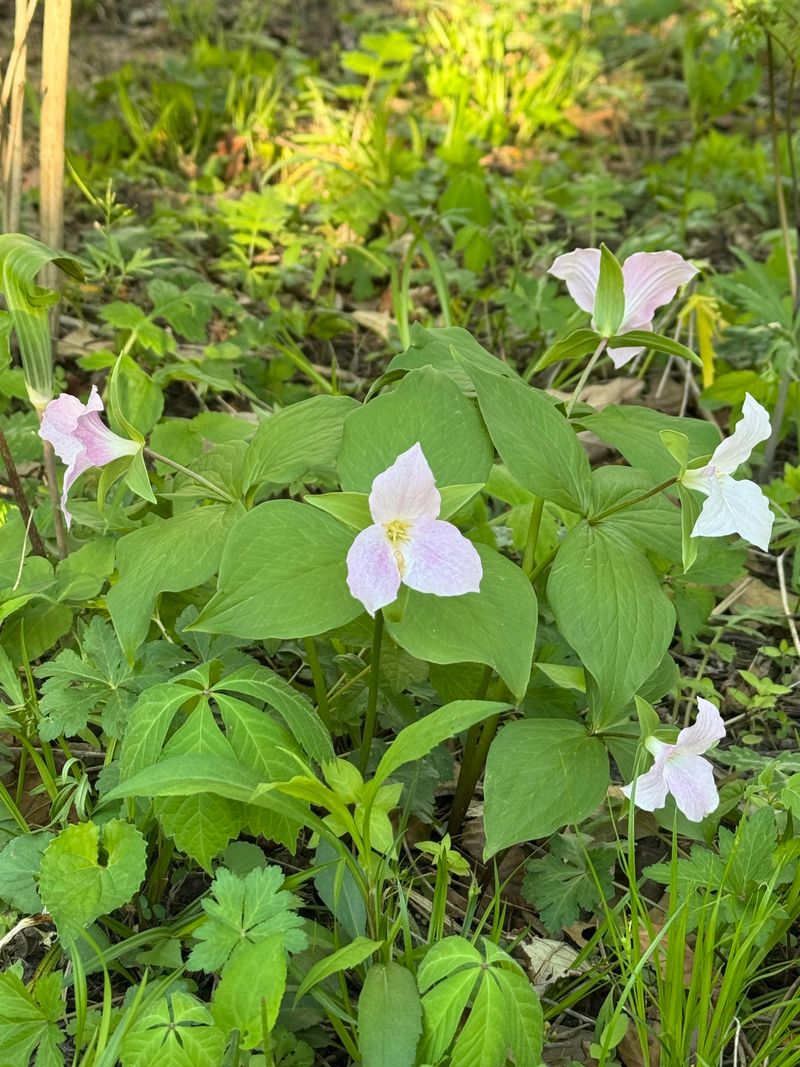
The most dangerous shovel strike may happen months after you forgot the flower was ever there.
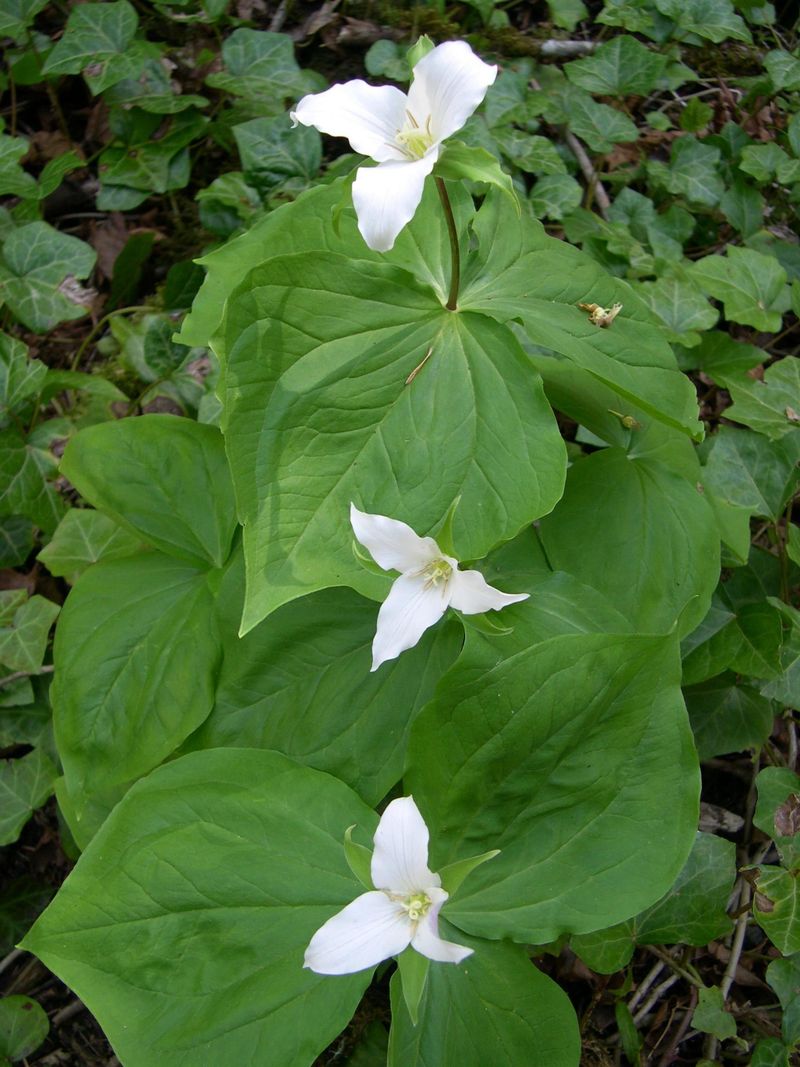
Spring makes trilliums easy to notice. Three broad leaves and a distinctive bloom practically announce the location. By summer, that visual marker can disappear completely under ordinary leaf litter.
Then fall planting season arrives.
A gardener starts adding bulbs, woodland sedges, or another shade perennial and suddenly finds something firm underground that was never supposed to meet a spade.
Preventing that accident is wonderfully low-tech.
Place a small marker beside the clump while the foliage is still visible. A bamboo stake, labeled plant marker, flat stone, or discreet wooden peg can preserve the location without making the woodland bed look like a parking lot.
A simple sketch works too.
Note the plant’s position relative to permanent landmarks such as an oak trunk, path edge, boulder, or fence post. That map becomes especially useful when a patch contains several spring ephemerals that disappear by midsummer.
Keep markers outside the crown rather than pushing them directly through the root zone.
The goal is to identify the space, not poke around underground trying to locate the rhizome.
This habit also helps with watering, mulching, and future planting decisions.
Once the foliage vanishes, memory becomes surprisingly unreliable.
A ten-cent marker can protect a plant that took years to flower.
That is probably the best return on investment in the entire shade garden.