What It Really Means When Green Anoles Take Over Your North Carolina Yard This Summer

A sudden and noticeable increase in green anole activity across a North Carolina yard is not a random population fluctuation.
These little lizards expand their presence when a yard provides the perfect mix of dense cover for safety and a high insect population for food, signaling that your yard’s ecosystem is healthy and highly productive.
Prey availability, temperature conditions, vegetation structure, and the relative absence of predators all factor into where anole populations concentrate during summer.
Understanding what drove the population increase in a particular yard reveals a surprising amount about the garden’s overall health and the biological activity happening at levels most homeowners never directly observe.
1. Your Yard Has The Humid Shelter They Like
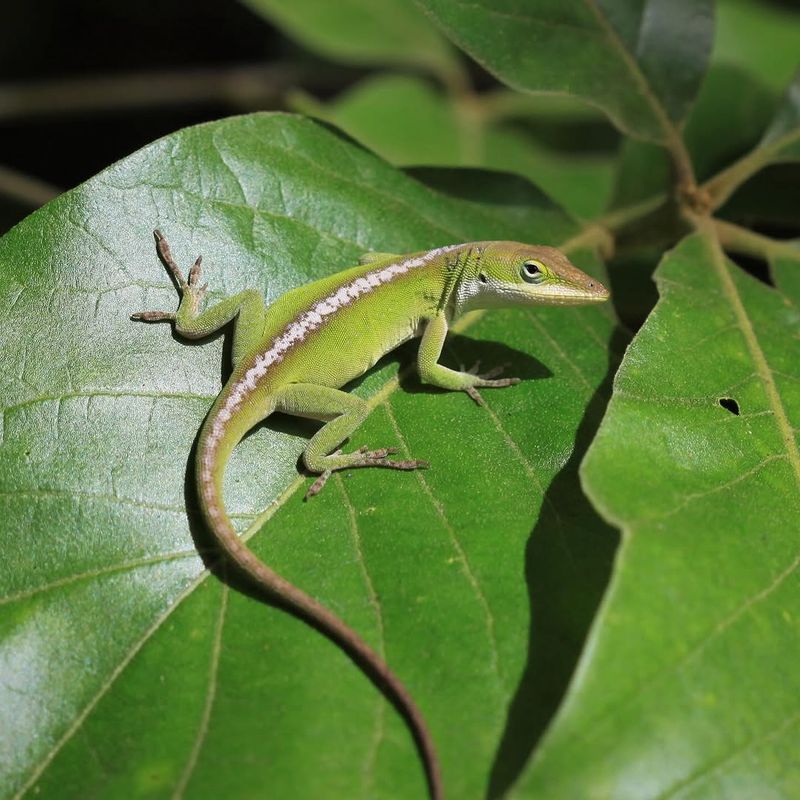
Walk through almost any shaded corner of a North Carolina yard in July, and you might catch a flash of bright green darting under a shrub.
Green Anoles are drawn to environments that feel layered, humid, and sheltered, and your yard may be giving them exactly what they need.
Thick shrubs, climbing vines, wooden fences, and dense garden beds all create the kind of cool, hidden pockets these lizards actively seek out.
North Carolina summers can get intense, especially in the Piedmont and Coastal Plain regions where temperatures regularly climb into the upper 80s and 90s.
Anoles need spots where they can escape direct sun, stay close to moisture, and feel protected from larger animals. Leaf litter near garden beds, stacked wood, and overgrown fence lines are especially attractive to them.
Layered gardens, meaning those with ground cover, mid-level shrubs, and taller trees, tend to create the most useful habitat. Each layer traps a little more humidity and provides more surfaces for the anoles to cling to and rest on.
Native plantings like oakleaf hydrangea, Virginia creeper, and beautyberry create exactly this kind of structure.
If anoles are clustering in one section of your yard, look around at what that area offers. Chances are it has more vertical cover, more shade, or more moisture than other parts.
Keeping those areas intact and avoiding heavy pruning during summer can help anoles feel comfortable while also benefiting other small garden wildlife that depends on similar shelter.
2. Your Garden Has Plenty Of Small Insects
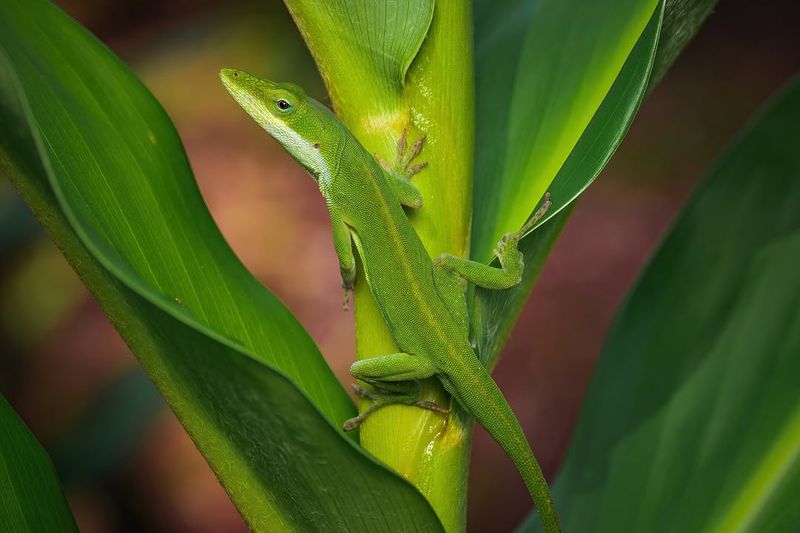
Spot a green anole frozen on a leaf with its eyes locked on something tiny, and you are watching a natural pest manager at work. Green Anoles are insectivores, meaning insects and other small arthropods make up the bulk of their diet.
Flies, crickets, small beetles, moths, ants, and caterpillars are all fair targets, and a yard full of anoles usually means a yard full of food for them.
A healthy garden naturally supports a wide variety of insect life, especially one with flowering plants, native grasses, and mulched beds.
These features attract pollinators, decomposers, and countless other small creatures that form the base of the food web.
Anoles slot right into that web as mid-level hunters, keeping certain insect populations from growing too large.
For gardeners, this is genuinely good news. Having anoles around means you have a living, breathing pest management system operating quietly in the background.
Your North Carolina Garden Changes Every Week. Your Plan Should Too.
Gardening in North Carolina changes quickly throughout the season. Every Friday you’ll receive a simple weekly plan showing exactly what to plant, prune, fertilize, harvest, and protect so you never miss the right timing.
They are particularly active during the warm morning hours when many insects are also moving, which makes them surprisingly effective hunters throughout the growing season.
Avoiding broad-spectrum insect sprays in your garden can help keep this balance intact. When insect populations stay diverse and active, anoles have more food options and tend to stick around longer.
Think of their presence as a sign that your garden ecosystem is working the way it should, with different species supporting each other rather than one group overwhelming everything else. A garden buzzing with life is a garden where anoles thrive.
3. Summer Breeding Season Is Making Them Easier To Notice
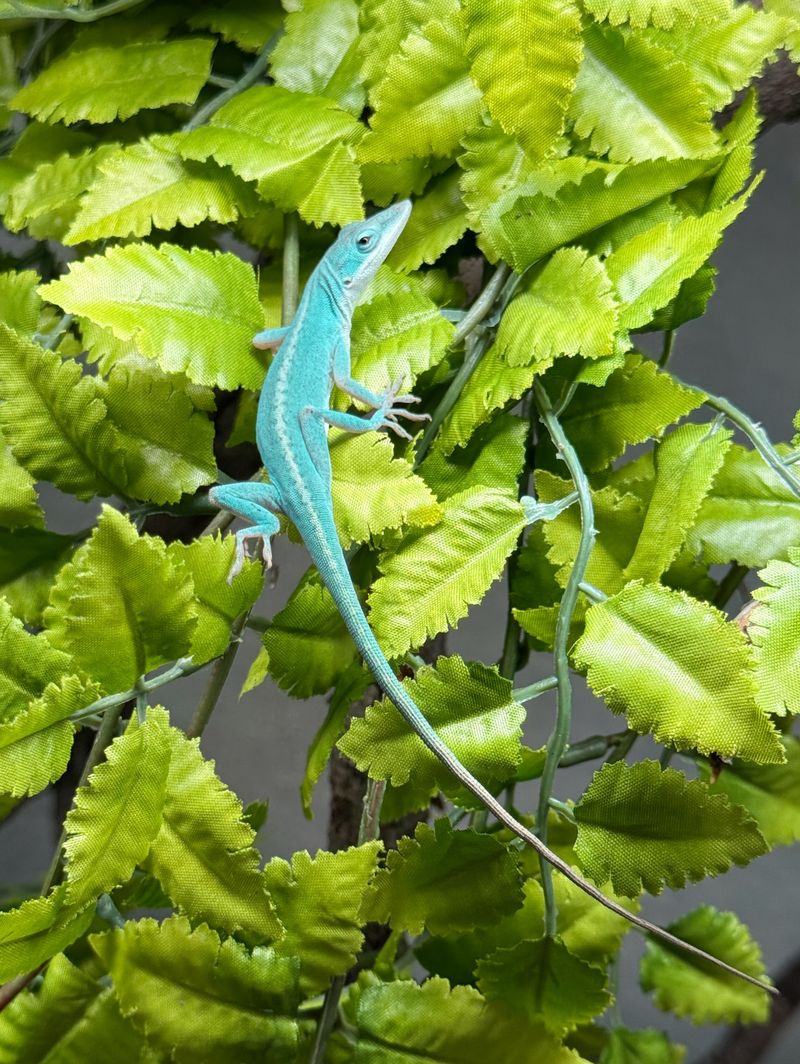
Suddenly seeing anoles everywhere in June and July is not your imagination running wild.
Breeding season is one of the biggest reasons Green Anoles become so visible during summer, and the behavior they show during this time is genuinely interesting to watch.
Males become especially active and bold, spending more time in open spots where they can be seen and heard by rivals and potential mates.
The most recognizable display is the dewlap, a flap of skin under the chin that males extend to show off a vivid pink or reddish fan. Combined with rhythmic head bobbing and push-up movements, this display is meant to signal strength and territory.
You might see two males facing off near a fence post or garden trellis, each trying to out-display the other without making direct contact.
Females are also active during this period, though they tend to stay lower and closer to vegetation. After mating, females begin laying single eggs in moist soil, leaf litter, or soft organic material throughout the summer.
The breeding season for Green Anoles in North Carolina runs roughly from April through August, which covers most of the period when gardeners are spending the most time outside.
Watching this behavior up close is one of the more entertaining parts of gardening in the Southeast. Rather than worrying that something unusual is happening, you can feel confident knowing that what you are seeing is completely normal seasonal activity.
The yard is simply becoming a stage for one of nature’s more colorful summer performances.
4. The Yard Has Good Climbing Surfaces
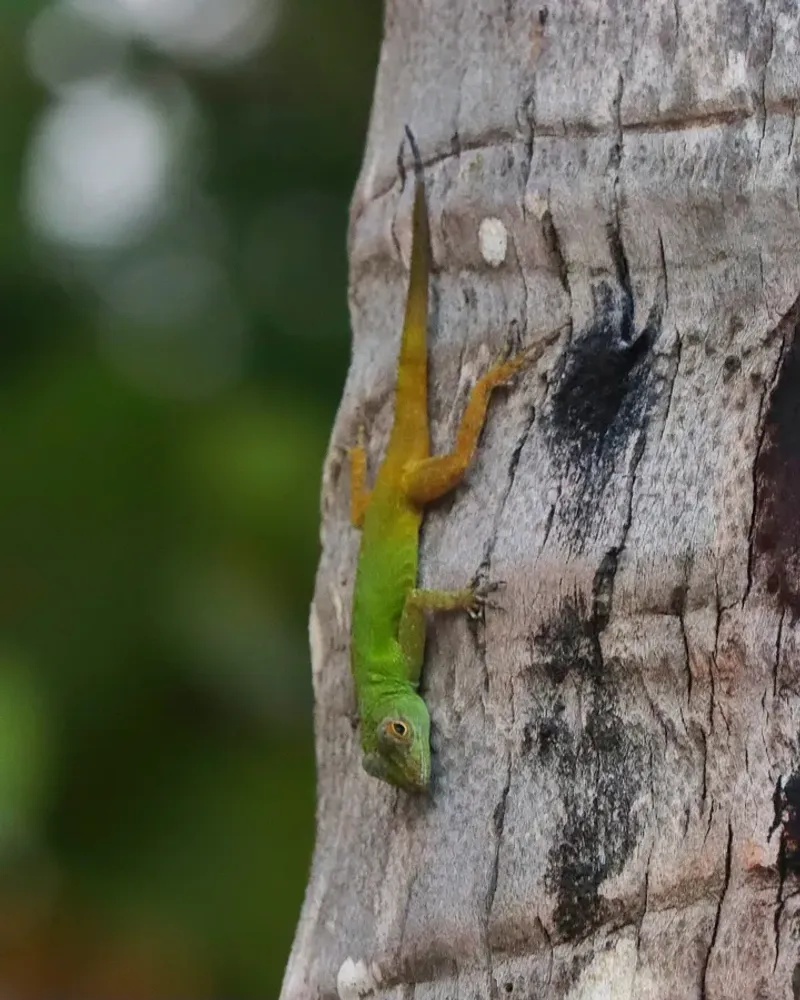
Green Anoles are built to climb, and they are remarkably good at it. Their toe pads contain tiny structures called lamellae that create friction and grip on a wide variety of surfaces, including wood, bark, painted fences, and even smooth plastic.
A yard with lots of vertical structure is essentially an anole paradise, giving them elevated vantage points for hunting, basking, and watching for anything that might want to chase them.
Fences, trellises, porch railings, tree trunks, garden stakes, and climbing plants all qualify as prime anole real estate.
If your yard has a mix of these features alongside nearby shrubs or ground cover, anoles can move freely between sun and shade, between elevated and low positions, and between open hunting spots and safe hiding areas.
That kind of flexibility is exactly what they look for. Trellises covered in vines are especially popular because they combine vertical climbing space with built-in camouflage.
A green anole pressed flat against a leafy trellis is nearly invisible, which gives it a hunting advantage while also keeping it safe.
Gardeners who grow jasmine, passionflower, or native clematis on garden structures often find anoles returning to those spots season after season.
If you want to encourage more anole activity, adding a simple wooden trellis or leaving a section of rough-barked tree trunk accessible near your garden beds can make a noticeable difference.
These lizards respond well to environments that give them options, and a yard with varied vertical surfaces tends to support more of them naturally and consistently over time.
5. They Are Using Sun And Shade To Manage Heat
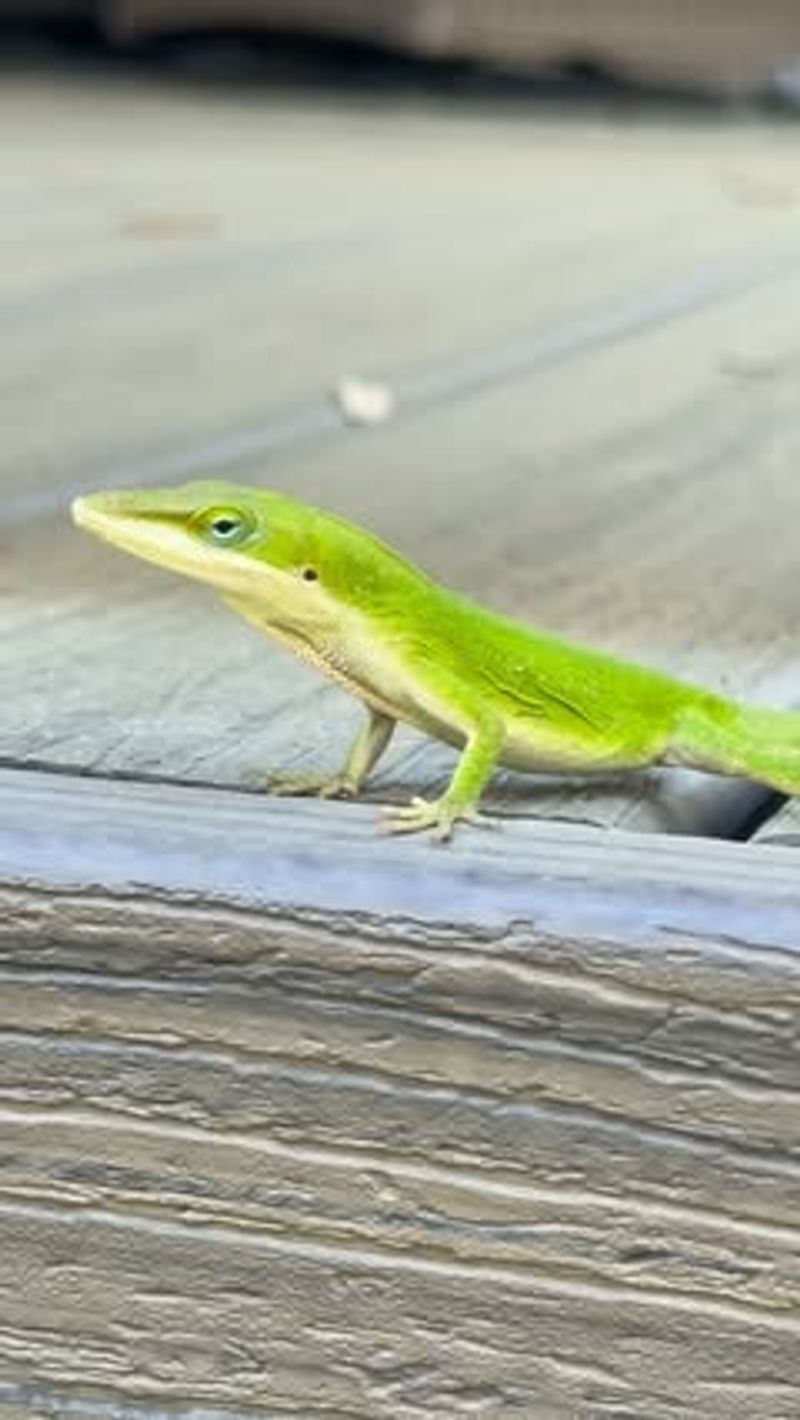
One of the more fascinating things about Green Anoles is that they are ectothermic, which means they rely on their surrounding environment to regulate their body temperature rather than generating heat internally the way mammals do.
Watching how they move through a yard during different times of day actually reveals a lot about how they use the landscape as a kind of temperature management system.
Early in the morning, anoles tend to position themselves on warm surfaces like stone, brick, wood, or sun-facing fence boards. Soaking up that early warmth gets their bodies active and ready for hunting.
As the day heats up and the sun gets stronger, they shift into shadier spots under shrubs, inside thick vines, or down into leaf litter where temperatures stay cooler and humidity stays higher.
This movement pattern is why you might see anoles in completely different parts of your yard depending on the time of day. A lizard basking on the front porch railing at 8 in the morning might be deep inside a boxwood hedge by noon.
By late afternoon, when temperatures begin to drop slightly, it may return to a partially sunny spot for another warm-up session before night arrives.
Understanding this rhythm makes it easier to appreciate why a diverse yard with both sunny open areas and dense shaded plantings is so useful to them.
Gardens that offer both extremes essentially give anoles everything they need to stay active and comfortable all day long, which is why yards with good habitat variety tend to attract and hold more of them.
6. Your Garden May Be Safer Than Nearby Open Areas
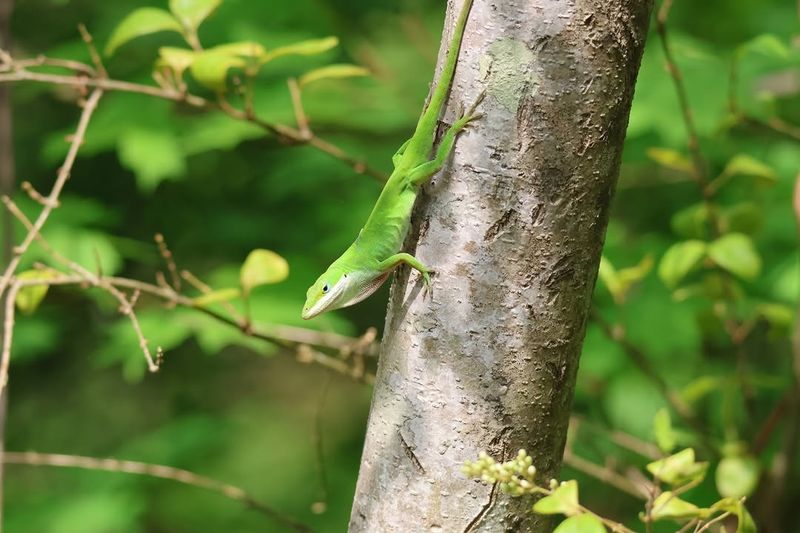
Not every yard in a neighborhood offers the same quality of habitat, and anoles are surprisingly good at figuring out which spaces give them the best chance of thriving.
If your garden has dense plantings, native shrubs, thick mulch, and quiet corners while neighboring yards have mostly open lawn or paved surfaces, your yard becomes a natural refuge.
Anoles actively gravitate toward cover-rich environments, especially in areas where open ground leaves them exposed.
Bare, manicured lawns and heavily paved areas offer very little in terms of shelter or food. Without low shrubs, ground cover, or organic material like leaf litter and mulch, there is nowhere to hide and very little insect activity to support a hunting lizard.
A garden with layered plantings creates a completely different experience, one where shade, moisture, insects, and hiding spots exist within just a few feet of each other.
Native plants play a particularly important role here. Species like beautyberry, switchgrass, inkberry, and wax myrtle create dense, textured growth that anoles can move through easily.
These plants also support more insect diversity than non-native ornamentals, which means the food supply stays reliable throughout the season.
A yard planted with natives is essentially putting out a welcome sign for anoles and the rest of the local wildlife community.
Keeping mulched beds thick, leaving a log or two in a quiet corner, and avoiding heavy cleanup of leaf piles near shrub borders can all contribute to making your yard feel more secure.
Small choices in garden management add up to meaningful habitat improvements that anoles and other small wildlife will notice and use.
7. You May Be Seeing Young Anoles After Eggs Hatch
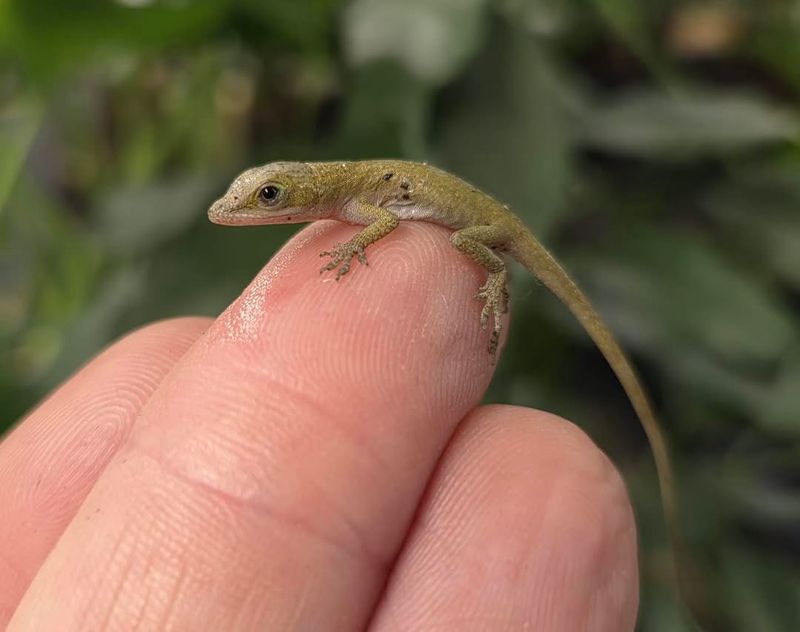
If you have started noticing a bunch of very tiny, slender green lizards that seem almost too small to be real, there is a good chance a batch of eggs hatched nearby.
Female Green Anoles lay eggs throughout the warm season, typically from May through August in North Carolina.
Each female lays a single egg at a time, burying it in moist soil, tucking it into leaf litter, or placing it inside soft, slightly decayed organic material.
The eggs incubate for roughly five to seven weeks depending on soil temperature and moisture, which means multiple waves of hatchlings can appear throughout the summer.
Newly hatched anoles are completely independent from the moment they emerge. No parental involvement, no nest to return to, just a tiny lizard instantly figuring out how to navigate the world on its own.
Young anoles are noticeably smaller and sometimes slightly browner than adults, though they can shift toward green as they mature. They tend to stay lower to the ground and closer to dense cover since they are more vulnerable at that size.
Leaf litter, low shrubs, and the base of garden structures are common spots to find them in the weeks after hatching.
Seeing lots of juveniles in late summer is a strong sign that breeding has been successful in or very near your yard.
It also means your garden has the moist, sheltered soil conditions that females chose for egg-laying, which is itself a meaningful indicator of good habitat quality. A yard supporting multiple generations of anoles is a yard doing something right.
8. It Usually Means Your Yard Is Supporting Wildlife
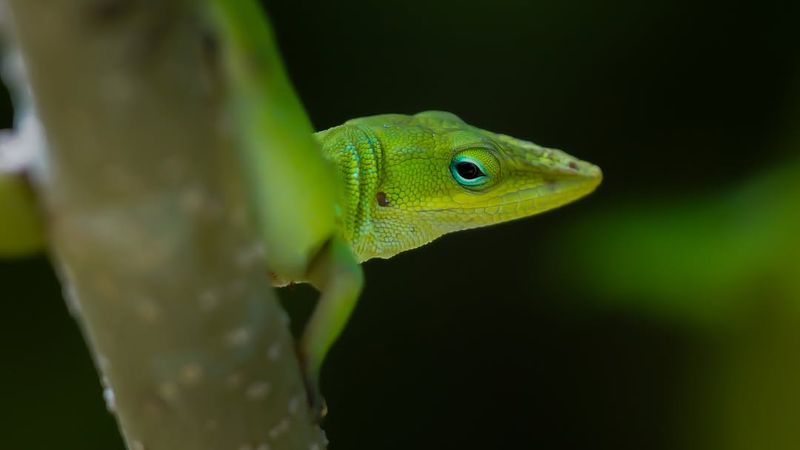
When Green Anoles seem to be everywhere in your yard, the simplest and most accurate interpretation is that your garden is doing something genuinely right.
Their presence brings together humidity, shelter, a healthy insect population, good climbing surfaces, seasonal breeding activity, and quality habitat cover all at once.
Anoles do not show up in large numbers in yards that are bare, chemically saturated, or lacking in structure.
Green Anoles are a completely normal part of the ecosystem across much of North Carolina, particularly in the Coastal Plain and the southern Piedmont where humidity stays high and native vegetation is abundant.
They are not invasive, not aggressive, and not harmful to gardens or people. They are simply lizards living their best summer lives in a space that happens to meet their needs.
For gardeners, this is something worth celebrating. An active anole population signals that your yard has become part of a functioning local food web.
They eat insects, they get eaten occasionally by larger wildlife like birds and garden snakes, and their presence supports the kind of biodiversity that keeps a garden ecosystem balanced and resilient over time.
Keeping layered plantings intact, holding off on broad insecticide applications, maintaining mulched beds, and letting a few wild corners stay a little untidy are all simple ways to keep that habitat quality strong.
You do not need to do anything dramatic to support them. Just keep gardening thoughtfully, and your yard will continue to be the kind of place Green Anoles choose, season after season, as their summer home.