The Native North Carolina Tree That Likely Supports Wildlife Across Seasons (And What To Actually Do About Ticks)
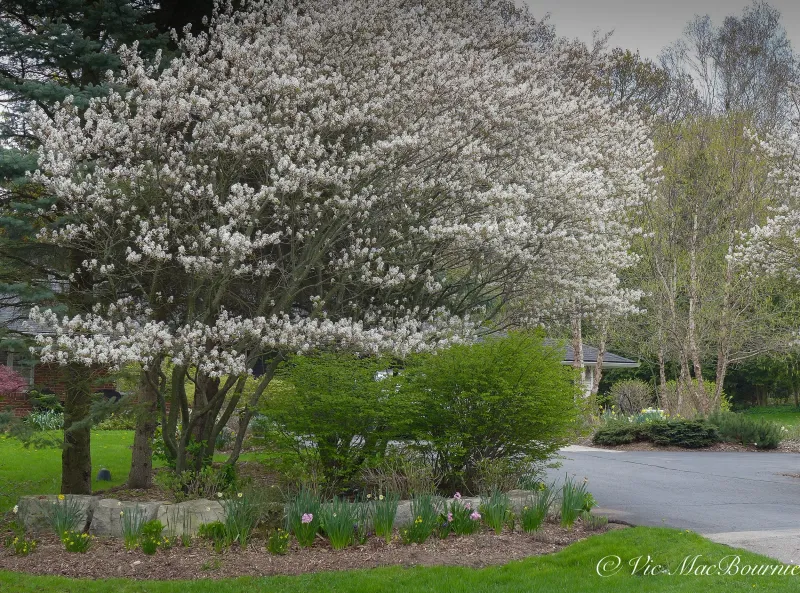
A small native tree blooms along North Carolina roadsides and woodland edges every spring before most yards have leafed out, drawing bees and early butterflies to its white flowers. That tree is most likely downy serviceberry, Amelanchier arborea, and it genuinely earns its place in a wildlife-friendly yard. But a popular claim says it also quietly keeps ticks down, and that part deserves a closer look before you plant one expecting pest control.
The Hidden Tree Is Likely Downy Serviceberry
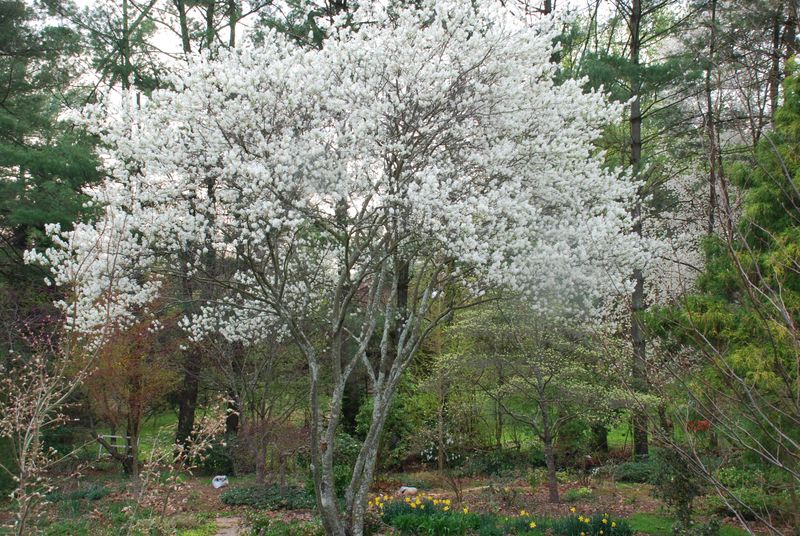
Spend a few minutes on gardening social media and you will find articles promising one underrated native tree that feeds wildlife all season and discourages ticks. The tree behind that headline is most likely downy serviceberry, Amelanchier arborea, based on a June 2026 article using nearly identical language. That article identifies serviceberry as the species and makes the tick claim, but it is not an authoritative horticultural or public health source, and no reliable evidence from NC State Extension, the CDC, or peer-reviewed research supports the idea that serviceberry reduces tick populations.
Set the tick claim aside for now, and the wildlife case for this tree is genuinely strong. NC State Extension’s plant profile for downy serviceberry describes a small, multistemmed native tree found throughout North Carolina, from the mountains down through the Piedmont and into the Coastal Plain. It typically reaches 15 to 25 feet tall in a yard setting, though wild specimens can stretch to 40 feet. Its growth habit is upright and somewhat open, which gives it a light, graceful look along a woodland edge or tucked beside a larger canopy tree.
Downy serviceberry tolerates full sun to partial shade and grows in acidic to neutral soils ranging from sandy to loamy to clay, as long as drainage is adequate. Those are practical site conditions that fit a wide range of North Carolina properties. The wildlife benefits, which include spring flowers, summer-to-fall berries, and host value for butterfly caterpillars, are well documented and worth planting for on their own terms. The tick-control promise is a different matter, and the rest of this article separates what the tree actually does from what one nonauthoritative source claims it does.
Choose the Serviceberry That Fits Your Site
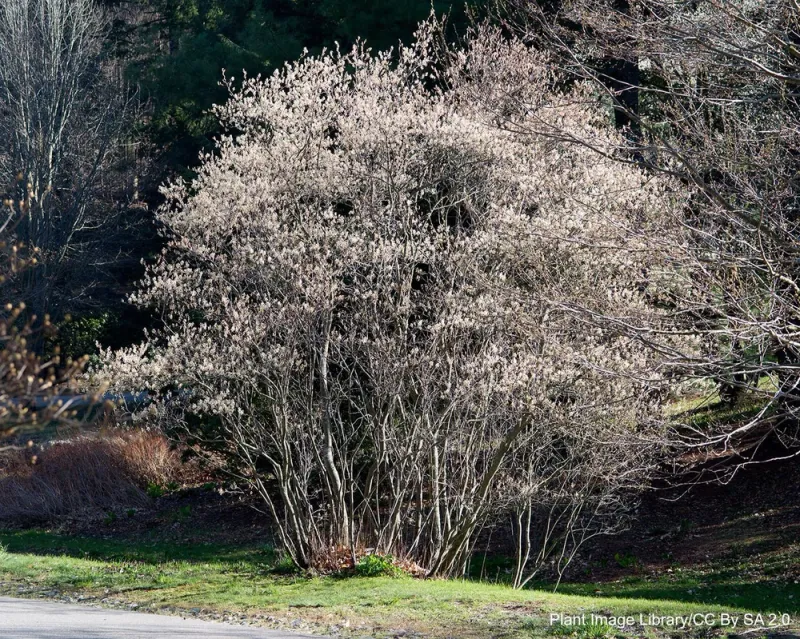
Not every serviceberry is the same plant, and treating them as interchangeable can lead to a disappointing result. Two species are most relevant to North Carolina homeowners. Downy serviceberry, Amelanchier arborea, is found across all three of the state’s major regions: the mountains, the Piedmont, and the Coastal Plain. It handles a range of soil types and is the species most likely to thrive in a typical yard from Asheville to Raleigh to Wilmington, provided drainage is good and the spot gets at least a few hours of direct sun each day.
Shadblow serviceberry, Amelanchier canadensis, is a related small tree or large shrub found mainly in the Coastal Plain and Piedmont. NC State’s profile for shadblow serviceberry notes that it generally grows 15 to 25 feet tall and can spread 15 to 20 feet wide, and that it does best with some afternoon shade in the hotter parts of the state. If you are gardening near the coast or in the lower Piedmont and your summers regularly push past 95 degrees Fahrenheit, shadblow may be a more comfortable fit than downy serviceberry in an exposed, sunny spot.
Your North Carolina Garden Changes Every Week. Your Plan Should Too.
Gardening in North Carolina changes quickly throughout the season. Every Friday you’ll receive a simple weekly plan showing exactly what to plant, prune, fertilize, harvest, and protect so you never miss the right timing.
A practical fit test covers four things: sunlight, drainage, soil texture, and mature spread. Both species want moist, well-drained soil and will struggle in permanently wet ground. In the Piedmont, where red clay can stay compacted and slow to drain, loosening the soil across a wide planting area rather than just inside the hole gives roots a better start. Plan spacing of at least 15 feet from a structure or large neighboring plant for downy serviceberry.
NC State’s native plants handbook notes that site conditions matter as much as species selection when choosing regionally appropriate natives.
Its Wildlife Benefits Arrive in Seasonal Waves
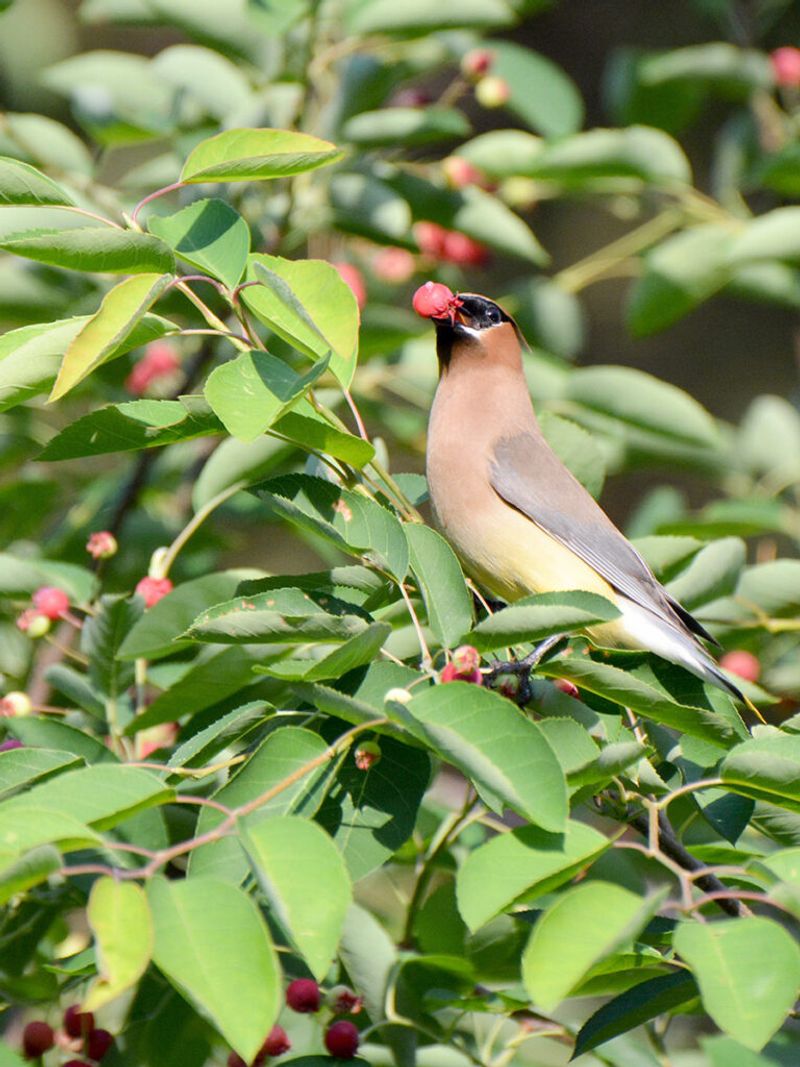
Serviceberry earns its reputation as a wildlife tree, but the benefits come in distinct waves rather than as a continuous, year-round buffet. Spring is when the tree makes its first contribution. The white flowers open early, often before most common landscape plants have leafed out, and they provide nectar and pollen for native bees, honeybees, and early butterflies at a time when food sources are still scarce. That early bloom window genuinely matters for pollinators coming out of winter.
Summer into fall is when the fruit takes over. NC State’s downy serviceberry profile notes that the red to purple berries ripen and attract songbirds and small mammals. Cedar waxwings, in particular, are drawn to serviceberry fruit, and a well-placed tree during peak ripening can bring a whole flock through the yard. The berries go fast, which is part of why the “all year” framing in the original headline overstates things.
Once the fruit is gone, usually by late summer or early fall, that food source is done for the season.
The third contribution is less visible but ecologically meaningful. Serviceberry serves as a host plant for red-spotted purple and viceroy butterfly caterpillars. Host plant means the caterpillars feed on the leaves, not simply that adult butterflies visit the flowers. The branches also provide perching and nesting cover through the rest of the year.
What serviceberry does not do is supply food through winter. NC State’s guidance on managing urban habitats for birds recommends pairing serviceberry with plants that produce food at different times, such as hollies, native dogwoods, oaks, and cedars, so that something is always available across the seasons.
The Tick-Control Claim Does Not Hold Up
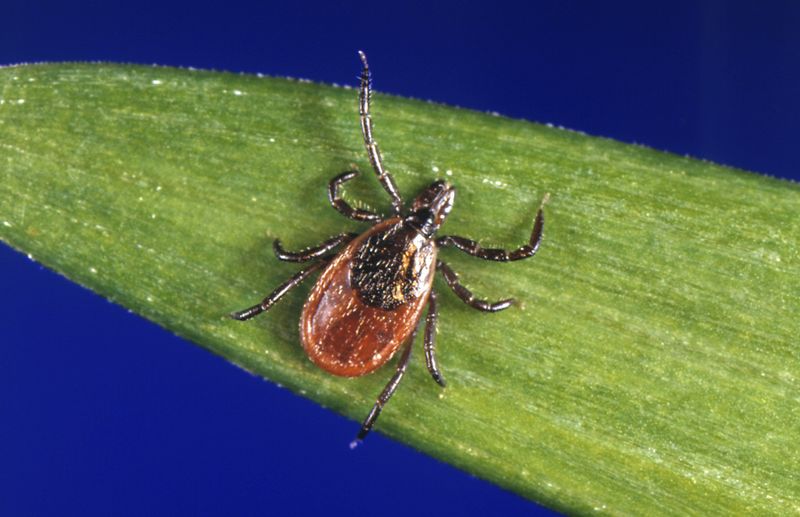
The headline behind this article promises that one native tree quietly keeps ticks down. That is a specific and reassuring claim, and it deserves a direct answer: no reliable source found in this research, including NC State Extension, the CDC, or peer-reviewed literature, shows that planting serviceberry reduces tick abundance, tick bites, or tick-borne disease risk in North Carolina. The original article making this claim is a gardening website post, not an Extension publication or a public health document, and it does not cite evidence for the tick-control effect.
The mechanism the original article suggests is that dense, multistemmed growth shades the soil and makes the ground drier, which supposedly discourages ticks. CDC guidance on tick prevention points in the opposite direction. The CDC recommends trimming branches and shrubs to let in more sunlight, clearing brush and tall grass, and removing leaf litter near the home. Shady, brushy, humid edges are actually the kind of microhabitat where black-legged ticks are most likely to be found waiting for a host.
A dense multistemmed planting beside unmanaged woods or a leaf-litter pile is a different risk situation than an open specimen in a mowed lawn.
Placement matters more than species. A serviceberry growing as a single specimen in an open, sunny part of the yard, with a maintained edge around it, does not create the same conditions as a thicket planted against an overgrown fence line. The tree itself is not the problem, and wildlife habitat is not the problem. The risk comes from the surrounding microhabitat: tall grass, dense brush, accumulated leaf litter, and shaded, humid ground near areas where people and pets spend time.
CDC Lyme disease prevention guidance reinforces that the goal is to keep high-use areas clear and well-maintained, not to remove native plants from the yard entirely.
Plant It for Habitat, Not as a Tick Barrier
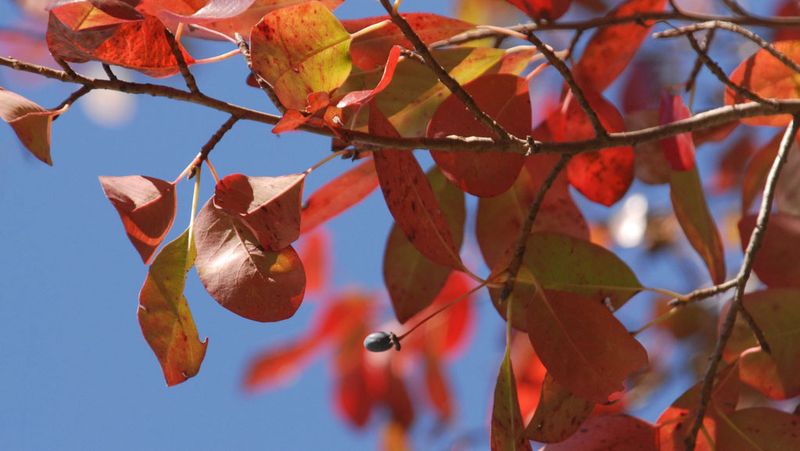
Downy serviceberry is worth planting, just for the right reasons. Choose a spot with full sun or at least 4 to 6 hours of direct sun daily, and make sure drainage is good before you dig. Standing water after a heavy rain is a warning sign. In the Coastal Plain, where sandy soil drains quickly but low spots can stay wet after storms, pick a slightly elevated position.
Along the coast, avoid low-lying areas that collect water during hurricane season, which runs June through November in North Carolina.
Piedmont gardeners working with heavy red clay should loosen the soil across a wide area, ideally 3 to 5 feet in diameter around the planting hole, rather than simply digging a tight hole and backfilling. Roots that hit a wall of hard clay at the hole’s edge tend to circle rather than spread. Allow at least 15 feet of clearance from a house wall, large shrub, or neighboring tree to give a downy serviceberry room for its mature spread. NC State’s serviceberry profile lists mature spread as roughly equal to mature height in many cases.
Late fall through early winter is a generally favorable window for planting trees in North Carolina, provided the ground is workable. NC State’s tree fruit and nuts handbook identifies late fall through early winter as the preferred general planting period for trees in the state, and that timing applies reasonably well to serviceberry. Cooler temperatures reduce transplant stress while roots can still establish before spring growth begins. Think of placement as a habitat decision rather than a pest-management one: put the tree where it will thrive and bring in birds, away from the patio, play equipment, and main paths where tick exposure is a daily concern.
Use Simple Care During Establishment
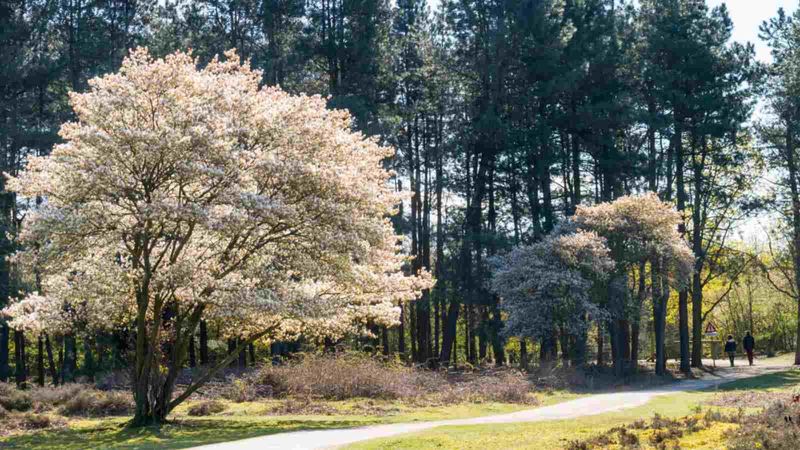
Serviceberry is not a plant-it-and-forget-it tree. The first growing season after planting is the most demanding, and consistent watering during that period makes a real difference in how well the tree establishes. Water deeply and less frequently rather than giving the soil a quick sprinkle every day. NC State’s woody ornamentals handbook recommends deep, infrequent watering for newly planted trees, and for established woody plants during prolonged dry spells, it offers approximately 10-day intervals as a general starting point, adjusted for soil type, summer heat, and recent rainfall.
Mulch helps retain moisture and moderate soil temperature around the root zone. Apply 2 to 3 inches of organic mulch over the planting area, but keep it at least 6 inches away from the trunk. Mulch piled against bark traps moisture and can encourage rot and pests. A wide, flat mulch ring looks more intentional than a mulch volcano and actually does more good for the tree.
NC State’s downy serviceberry profile lists several potential problems to watch for over time. Suckers, which are shoots that sprout from the base or roots, may appear and can be removed if you want a cleaner single-trunk form. Disease issues can include rust, leaf spot, powdery mildew, and fire blight. Insect problems may involve leaf miners, sawflies, aphids, scale, or borers.
Most of these are manageable with good siting and basic care, but serviceberry is not immune to problems. If you notice something unusual, your local NC State Extension office is a reliable first stop for diagnosis and regionally appropriate advice.
Manage Tick Exposure Around High-Use Spaces
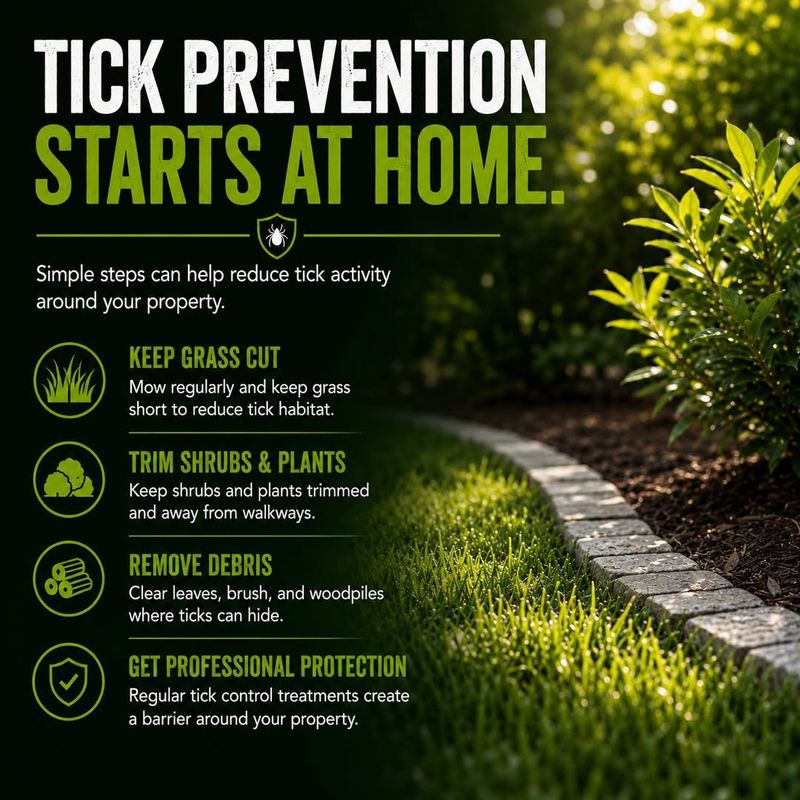
Protecting your yard from tick exposure starts with the places where you actually spend time. Patios, play areas, garden paths, and lawn edges near the house are the spaces that need the most attention, and the steps that work there come from CDC tick prevention guidance, not from any particular plant choice. Mow regularly and keep grass below 4 inches in areas where people and pets walk. Clear tall grass and brush along fence lines and at the edges where lawn meets woods or shrub borders.
Leaf litter management is one of the more practical steps you can take. Keep accumulated leaves away from patios, play equipment, and entry paths. You do not need to remove every leaf from the property, and doing so would actually harm overwintering insects and other wildlife. The goal is to keep high-use zones clear while retaining leaf litter and denser plantings in lower-traffic parts of the yard where wildlife habitat is the priority.
A 3-foot-wide barrier of wood chips or gravel between the lawn and a woodland edge is an evidence-based landscape measure for reducing how readily black-legged ticks move from wooded areas into recreational spaces. It does not eliminate ticks, but it creates a transition zone that ticks are reluctant to cross. Keep play equipment, seating, and garden furniture at least 6 to 9 feet from wooded edges and dense shrub plantings when possible.
Personal precautions remain the most reliable layer of protection. Check your body, clothing, and gear after any time outdoors, paying attention to the scalp, behind the knees, and around the waistband. The CDC Tick Management Handbook recommends showering within 2 hours of coming indoors and using EPA-registered repellents according to label directions. Check pets before they come inside.
Serviceberry and other native plants belong in a wildlife-friendly North Carolina yard, and they can coexist with a maintained, lower-risk edge around the spaces where your family actually lives. The two goals support each other when the yard is laid out thoughtfully.