What It Means When A Roadrunner Visits Your California Backyard
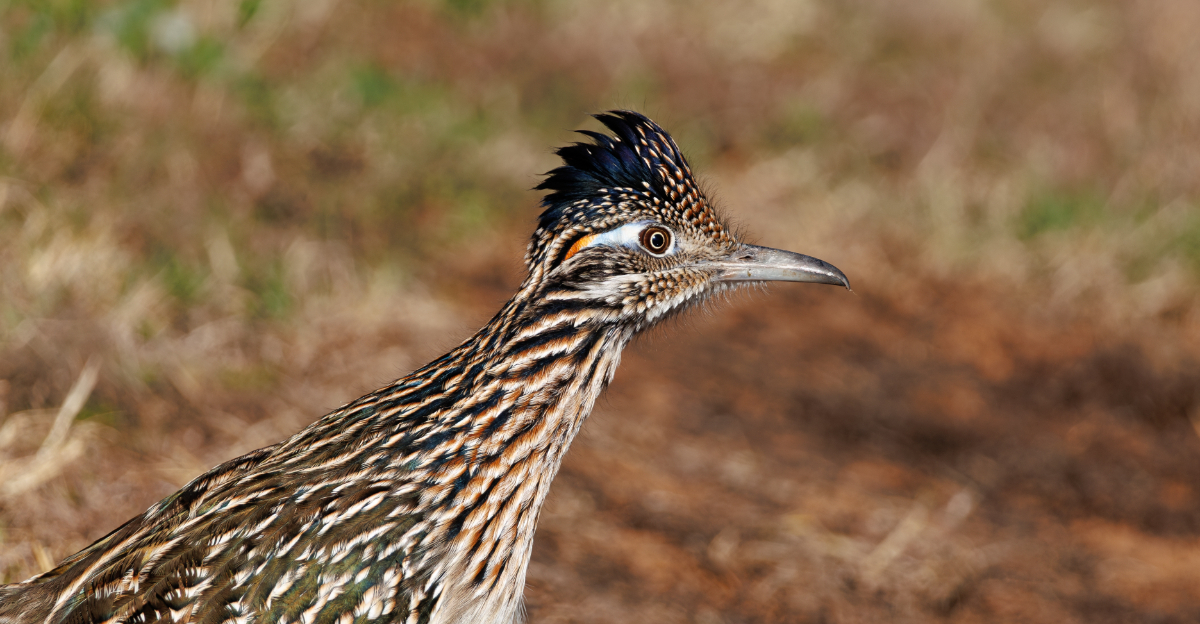
A roadrunner appearing in your backyard can make an ordinary California morning feel instantly more interesting. One moment, the yard is quiet.
The next, a long-legged visitor is strutting across the patio like it has an appointment and absolutely no time for small talk.
These birds are memorable for good reason. Their speed, sharp posture, and curious behavior make them hard to ignore, especially when they start returning to the same space.
A visit may seem random, but the yard is likely offering something that caught their attention. The clue could be hiding in the landscape or moving quietly near the ground.
Seeing a roadrunner nearby can reveal more about the backyard than most homeowners realize. It may also explain why this unusual guest chose your property instead of racing straight past it.
1. Your Yard Has Open Hunting Ground
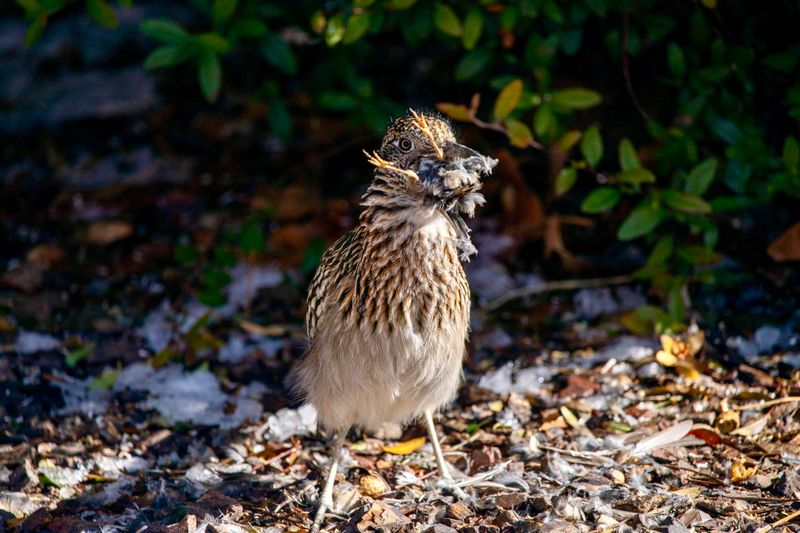
Few birds are as bold and purposeful as the roadrunner, and when one shows up in your yard, the first thing it is looking for is open space. Roadrunners are ground hunters.
They need room to run, spot prey, and chase it down without obstacles getting in the way.
If your yard has patches of bare ground, dry grass, or wide open areas between plants, you have basically created a natural hunting zone.
The bird can scan the ground easily and move fast when something catches its eye. Open space is not just convenient for roadrunners, it is essential to how they hunt.
Yards with large lawns, gravel areas, or cleared garden beds tend to attract these birds more than dense, overgrown spaces.
If your California yard fits that description, a roadrunner probably scoped it out and liked what it saw.
It is a sign your space resembles the dry, open scrublands this bird naturally prefers.
You do not need to change anything to welcome them back. Just know that your yard’s layout is doing the work.
Roadrunners are incredibly observant. Once they find a good hunting ground, they tend to return.
Keep the open areas maintained, and you may get regular visits from this fast and fascinating bird.
2. Roadrunners Are Looking For Easy Prey
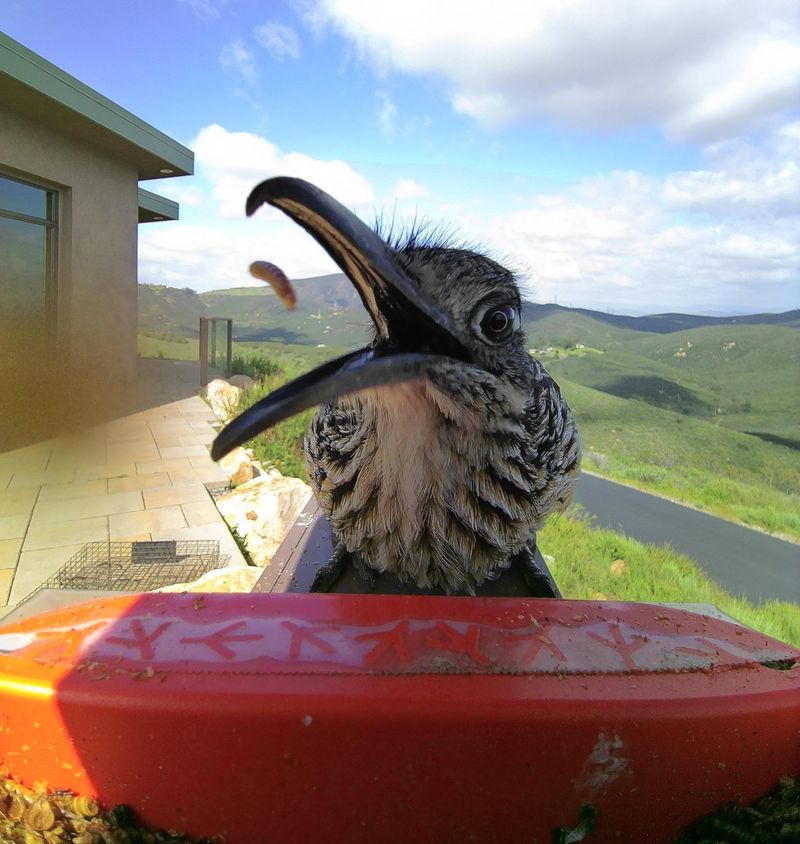
Roadrunners are not picky eaters, but they are smart ones. When one visits your yard, it is almost always on the hunt.
These birds eat lizards, small snakes, large insects, mice, and even other small birds. If your yard has any of these, the roadrunner already knows.
Their eyesight is sharp, and their memory is surprisingly good. They will revisit spots where they found food before.
So if a roadrunner keeps coming back, it has likely caught something in your yard at least once. That first meal is usually all it takes to make your space a regular stop.
What makes a roadrunner such an effective hunter is its speed and patience. It can stand completely still, watching for movement, and then sprint after prey in a flash.
Watching one hunt is genuinely thrilling. They are fast, focused, and efficient in a way that feels almost calculated.
Your California Garden Changes Every Week. Your Plan Should Too.
Gardening in California changes quickly throughout the season. Every Friday you’ll receive a simple weekly plan showing exactly what to plant, prune, fertilize, harvest, and protect so you never miss the right timing.
You do not need to set out food to attract them. In fact, roadrunners prefer to earn their meals.
The real draw is having a yard that naturally supports small wildlife. If your garden has a healthy, active ecosystem, a roadrunner will find it.
Think of their presence as a sign that your yard is full of life and natural energy worth chasing.
3. Lizards Can Bring Them Closer
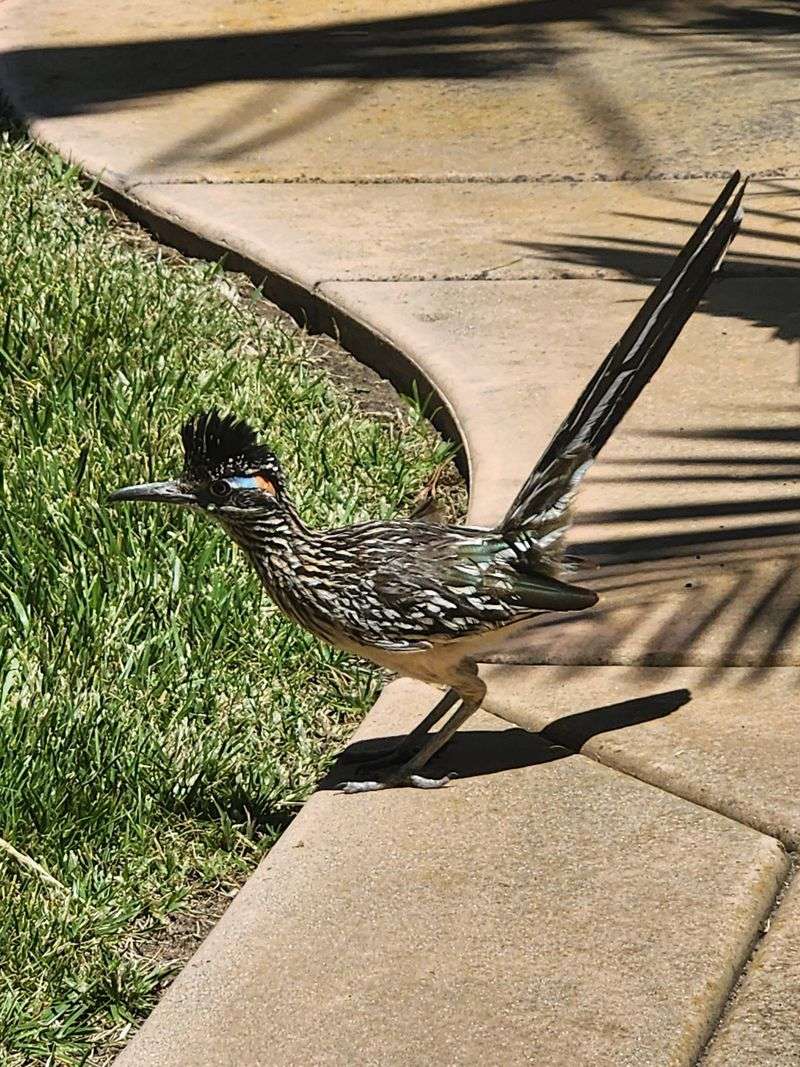
Lizards are one of the roadrunner’s favorite foods, and California has plenty of them. Western fence lizards, skinks, and alligator lizards are common in many backyards across the region.
If your yard has a good lizard population, a roadrunner will eventually notice.
Lizards tend to hang around sunny rocks, wooden fences, garden borders, and dry patches of soil. These are also the exact spots a roadrunner will patrol.
The two species have been crossing paths in the wild for thousands of years, and your backyard is just the latest stage for that ancient interaction.
Having lizards in your yard is actually a good ecological sign. It means your space supports a healthy food web.
Plants attract insects, insects attract lizards, and lizards attract roadrunners. Each piece of the puzzle builds on the next.
A roadrunner showing up is almost like a reward for maintaining a yard that supports native wildlife.
If you want to keep both lizards and roadrunners visiting, avoid using pesticides heavily. Chemicals reduce insect populations, which then reduces lizard activity, which makes your yard less interesting to a roadrunner.
Letting nature do its thing tends to bring the most wildlife. A few flat rocks in a sunny corner can also give lizards a place to warm up and make your yard even more appealing to these speedy, striking birds.
4. Insects Make The Yard Worth Checking
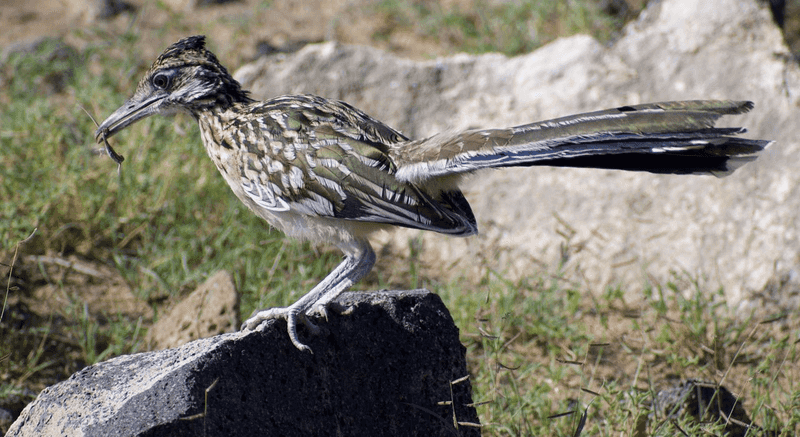
Not every roadrunner visit is about lizards or snakes. Sometimes, a yard full of large insects is enough to pull one in.
Grasshoppers, beetles, centipedes, and scorpions are all on the menu. If your yard has tall grass edges, mulch piles, or leaf litter, you are likely hosting a buffet for this bird.
Roadrunners are opportunistic feeders. They will take whatever is easiest to catch in the moment.
During certain times of year, insect populations spike, and that is when roadrunners may show up more frequently.
Warm months in the inland valleys and foothill regions tend to bring out the most insect activity, which in turn draws these birds in.
There is something almost comical about watching a roadrunner chase down a grasshopper. It hops, darts, and snatches with impressive precision.
Even insects that try to hide under rocks or bark are not safe from a determined roadrunner. These birds will flip objects and dig around to find what they are after.
A yard that supports insect life is a healthy yard. Native plants, composting areas, and reduced chemical use all help insects thrive.
The more insect activity your yard has, the more interesting it becomes to a wide range of wildlife.
A roadrunner checking your yard for bugs is actually a great compliment to how naturally alive your outdoor space has become.
5. Low Shrubs Offer Quick Cover
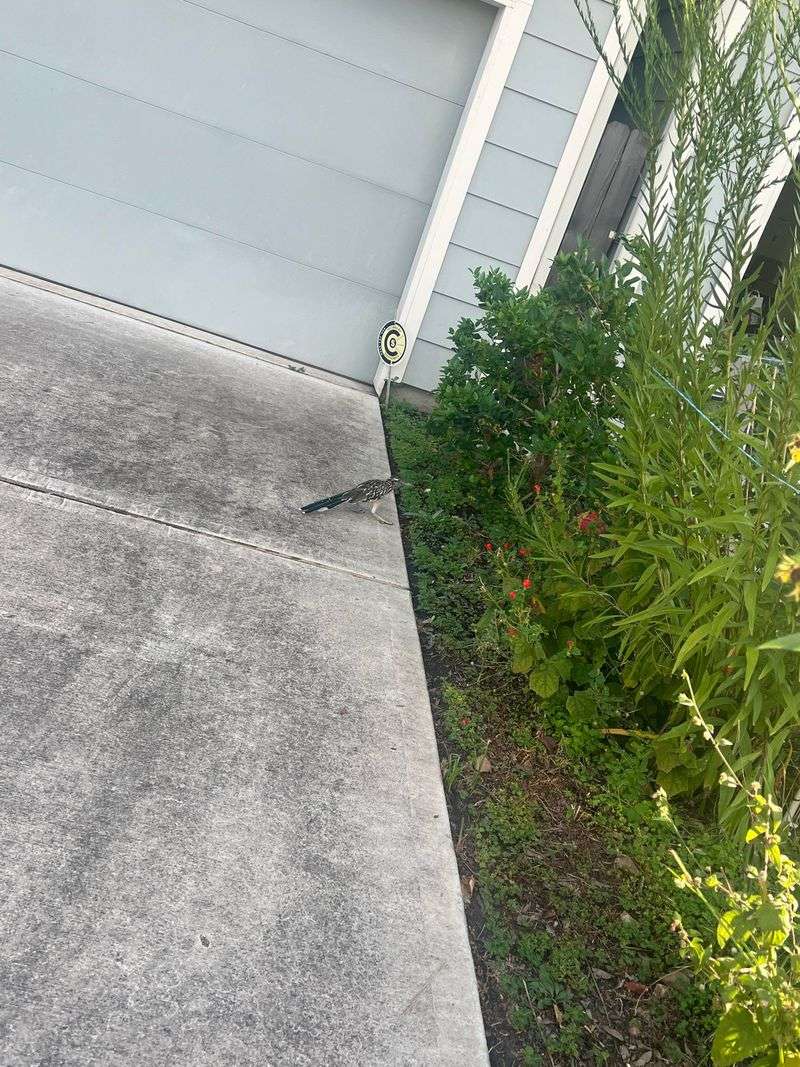
Speed is the roadrunner’s most famous trait, but cover is just as important to its survival. These birds do not fly much.
They prefer to stay low and use dense shrubs, brush piles, or thick groundcover to hide when they feel threatened. If your yard has low, dense plants, you are offering something very valuable.
Native shrubs like coyote brush, sage, and toyon are especially attractive. They grow close to the ground, branch out wide, and create shaded hiding spots that are easy to slip into quickly.
A roadrunner that feels safe in your yard will spend more time there and return more often.
Cover also matters for nesting. Roadrunners build low nests in shrubs or small trees, usually just a few feet off the ground.
If your yard has the right combination of open hunting space and nearby dense cover, it might actually become a nesting site. That would be an extraordinary thing to witness up close.
You do not need a perfectly manicured yard to attract roadrunners. In fact, a slightly wild look works better.
Letting some shrubs grow out, leaving a brush pile in a corner, or planting native groundcover can all make your space more roadrunner-friendly.
Think of the messier parts of your yard as intentional habitat, not neglect. The bird will appreciate it more than you know.
6. Open Paths Help Them Move Fast
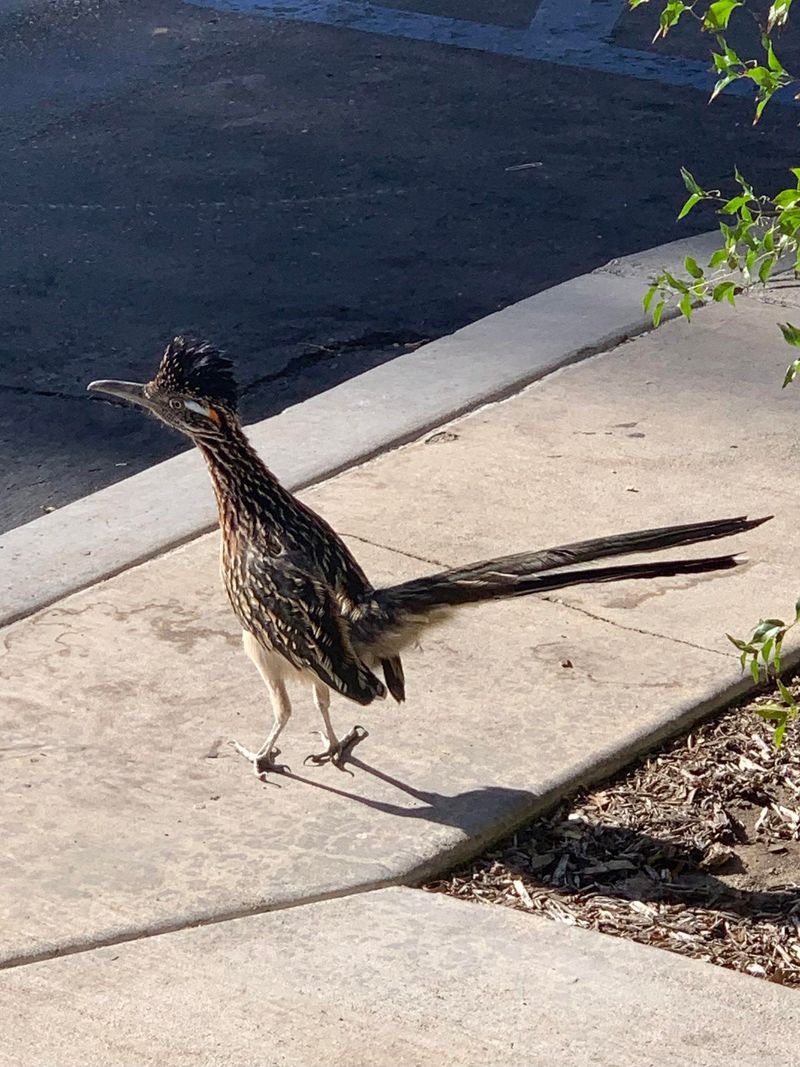
Roadrunners are built for speed on the ground. They can run up to 20 miles per hour, which is fast enough to outpace most small prey.
But to use that speed, they need clear paths. If your yard has open walkways, gravel trails, or clear stretches between plants, a roadrunner can move through it easily.
Yards with too much dense vegetation or obstacles at ground level are harder for roadrunners to navigate. They tend to avoid areas where every step requires squeezing through brush.
Open paths are like highways for these birds. They follow them to patrol, hunt, and move between sections of the yard without slowing down.
Interestingly, roadrunners often follow the same routes repeatedly. Once they find a clear path through your yard, they will use it again and again.
You might start noticing the bird appearing at the same spot along your fence or cutting through the same corner of the garden each time it visits.
If you want to encourage more visits, keep at least one or two clear ground-level paths open through your landscaping. You do not have to sacrifice aesthetics.
A simple gravel strip or a cleared border along a fence line is enough. Roadrunners are creatures of habit, and giving them a reliable route through your yard makes it feel like a familiar and safe territory worth coming back to regularly.
7. Water May Matter During Hot Weather
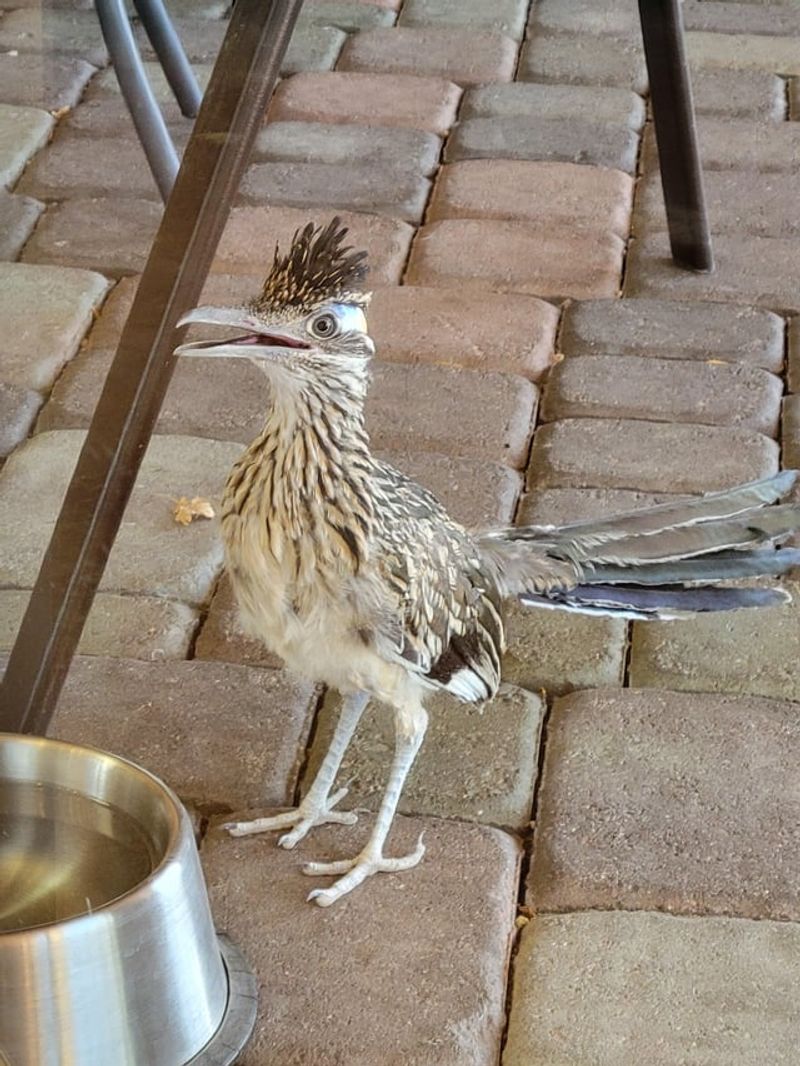
California is known for its dry summers, and water can become scarce in many neighborhoods and rural areas during peak heat. Roadrunners, like most wildlife, need water to survive.
A birdbath, a dripping hose, or even a small puddle can be enough to bring one in when temperatures climb.
What makes this interesting is that roadrunners get a lot of their moisture from the prey they eat.
But during extreme heat, especially in the hotter inland valleys and desert-edge communities, they will actively seek out water sources.
Seeing one near your yard’s water feature during a heat wave is not a coincidence.
Unlike many birds, roadrunners do not splash around in birdbaths. They prefer to drink quietly and quickly, then move on.
A low, shallow dish on the ground is more appealing to them than a tall pedestal bath. Placing it near some cover gives them a sense of security while they drink.
Keeping fresh water available in your yard during summer is one of the simplest ways to support local wildlife. It benefits birds, lizards, insects, and small mammals all at once.
If a roadrunner starts showing up near your water source, take it as a sign that your yard is a genuine refuge during the harshest months of the year. That is something worth feeling good about.
8. Fences Are Not Much Of A Barrier
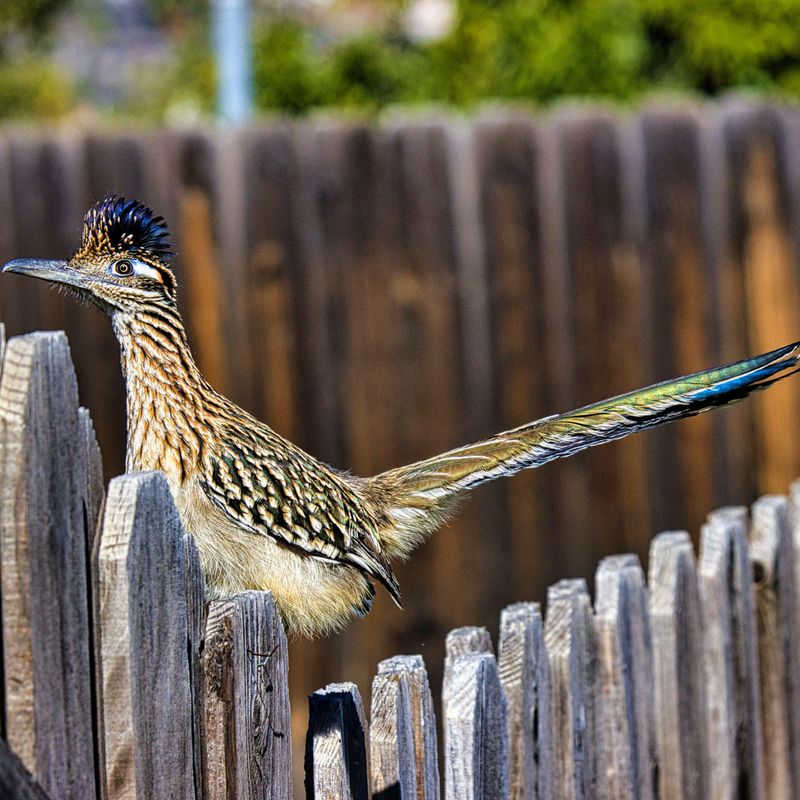
One thing that surprises a lot of California homeowners is how easily a roadrunner moves through a fenced yard.
You might assume a tall fence would keep these ground birds out, but roadrunners are remarkably agile.
They can hop a standard fence without much effort and often use fence tops as lookout points.
Fences actually serve the roadrunner well. They use them to scan the yard from above, spot movement below, and then drop down to investigate.
A wooden or block wall is just another perch in their world. If you have seen one sitting on your fence rail, it was probably doing a full survey of your yard before deciding where to go next.
This also means that a roadrunner visiting your yard has likely chosen it intentionally. It saw something worth exploring from up high and made its way down.
That kind of deliberate behavior tells you a lot about what your yard is offering in terms of food, cover, and open space.
Do not worry about trying to block or redirect a roadrunner. They are native wildlife and are protected under federal law.
Enjoy the visits instead. These birds are curious, bold, and endlessly entertaining to watch.
A roadrunner that treats your fence like its personal highway is one of the best signs that your yard has become a true piece of thriving, connected habitat in your neighborhood.