The Native Ohio Plant That Brings Luna Moths To Late Summer Backyards
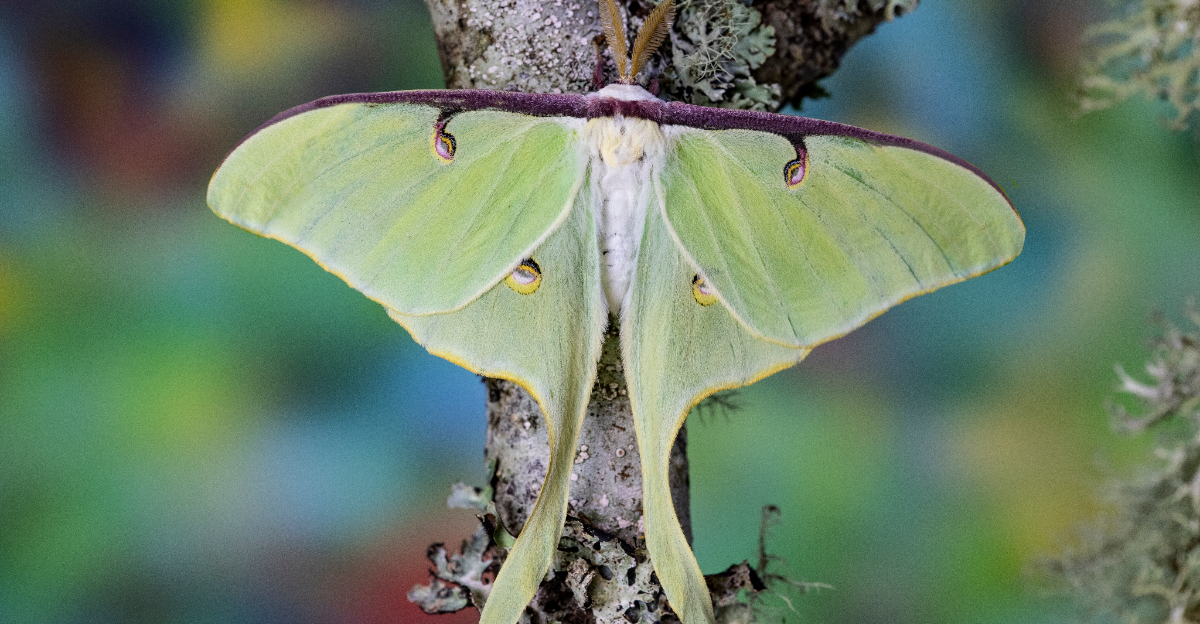
Late summer luna moth sightings in Ohio carry a weight that early season encounters rarely produce. The nights are cooling.
The season is winding down. A luna moth appearing after dark feels like something the yard earned rather than stumbled into.
Luna moths are not wandering. They follow a biological map.
A yard that earns a late summer visit has something specific worth finding. One Ohio native plant sits closer to the center of that map than most people realize.
Not the tree species field guides associate with luna moths. Something more accessible, more common in residential landscapes, and more likely to already be growing in an Ohio yard without anyone knowing what it was quietly supporting.
Late summer luna moths have reasons for where they land. This plant is often one of them.
1. Plant Smooth Sumac For Luna Caterpillars
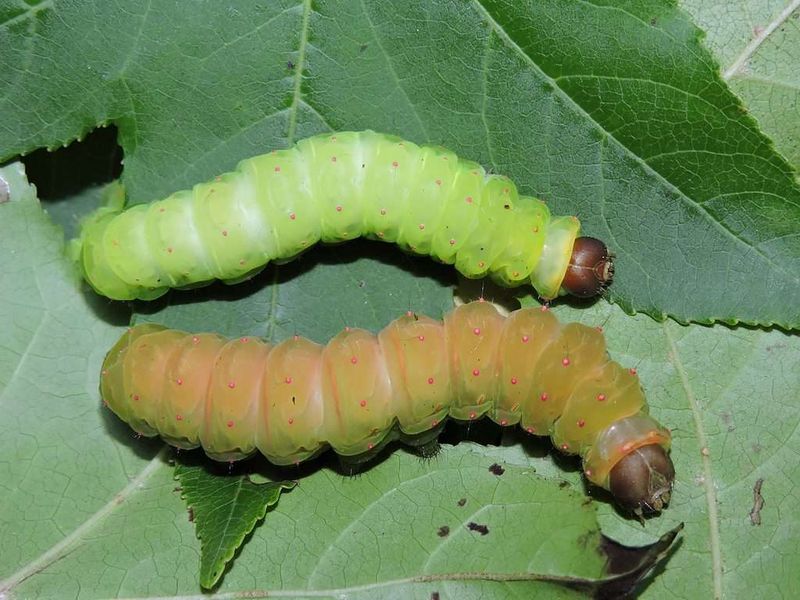
A large, bright green caterpillar moving quietly among compound leaves is not always easy to spot, but finding one on a smooth sumac can be a genuine surprise.
Rhus glabra is a documented host plant for Actias luna, the luna moth, meaning its foliage may be consumed by developing caterpillars after hatching.
A host plant differs from a nectar plant in a fundamental way: it feeds larvae, not adults.
Female luna moths may place eggs on the leaf surfaces of several documented hosts, including black walnut, white birch, persimmon, and sweetgum, among others. Smooth sumac is one option in that group, not the exclusive choice.
Females select based on availability, familiarity, and local conditions, so no single shrub is guaranteed to receive eggs.
Chewed leaf edges or sections of missing foliage may suggest caterpillar activity, but leaf damage alone does not confirm the species. Many insects feed on sumac foliage.
Before drawing conclusions, use a reliable regional field guide or extension identification resource. Rhus glabra is native across much of the eastern and central United States, including throughout Ohio.
It grows well in a range of open, sunny conditions suited to backyard planting.
2. Give Late Summer Broods Fresh Foliage
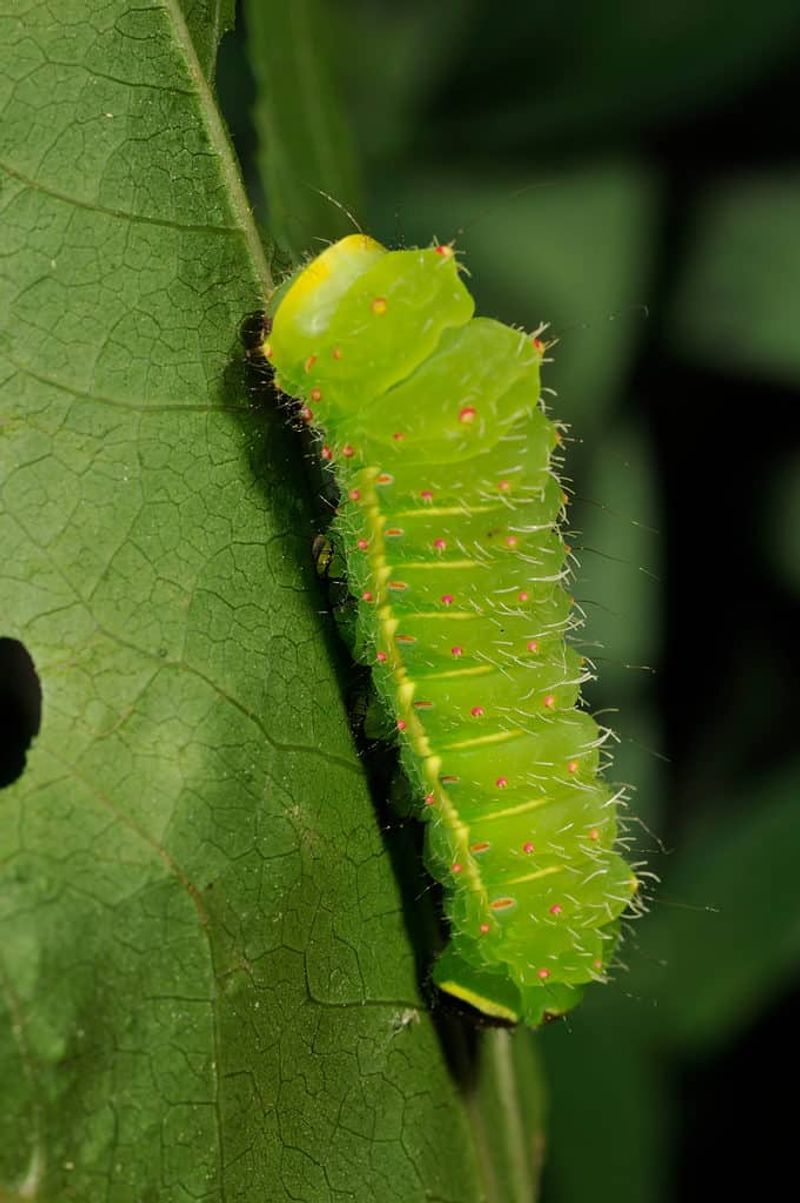
Fresh foliage still clinging to the stems as August nights grow noticeably shorter matters more than most gardeners realize.
In warmer parts of the region, luna moth populations may complete a second generation, with caterpillars developing during late summer or into early fall.
Cooler northern areas of Ohio may support only one generation annually, so brood timing is not uniform across every county.
Temperature, latitude, and seasonal weather patterns all influence whether a second brood develops. A caterpillar feeding during August or September may belong to that later cycle.
Not every late-season larva can be confirmed as part of a second brood without careful observation, though.
Healthy, undisturbed foliage supports feeding larvae through each instar stage of their growth. Avoid stripping, heavily shearing, or aggressively cutting back the shrub during the active caterpillar season.
A broken or clearly hazardous branch may still be removed with care, but routine heavy pruning during this window reduces available food.
Established smooth sumacs are generally tolerant of moderate caterpillar feeding without lasting harm to the plant.
Your Ohio Garden Changes Every Week. Your Plan Should Too.
Gardening in Ohio changes quickly throughout the season. Every Friday you’ll receive a simple weekly plan showing exactly what to plant, prune, fertilize, harvest, and protect so you never miss the right timing.
A few chewed leaflets do not signal a problem requiring treatment. Patience and observation serve the shrub and its visitors far better than intervention.
3. Place The Shrub Where Sun Fuels Fuller Growth
Strong sunlight falling across an open slope or property edge is exactly where Rhus glabra tends to perform best. Full sun produces denser branching, stronger flowering, richer fall color, and more vigorous overall growth.
Partial shade is sometimes tolerated, but reduced light typically results in a looser, less productive form that offers less foliage for feeding caterpillars.
Soil flexibility is one of this shrub’s genuine strengths. It grows in lean, rocky, sandy, and disturbed soils, and handles dry to moderately moist conditions without much fuss.
That tolerance does not mean every site works equally well. Spots with persistent standing water or heavy clay that stays saturated tend to weaken the roots over time.
Mature specimens typically reach six to fifteen feet in height and can spread considerably through root suckering, so available space matters at planting time.
Sunny property edges, naturalized areas, erosion-prone slopes, large borders, and meadow-style plantings suit its habit well.
Placing it beside a narrow walkway, a foundation, a utility box, or a compact formal bed creates maintenance headaches that are easier to avoid from the start.
A correct location reduces the need for repeated cutting and lets the shrub develop the full, leafy canopy that makes it genuinely useful as a host.
4. Let Scarlet Seed Clusters Extend The Show
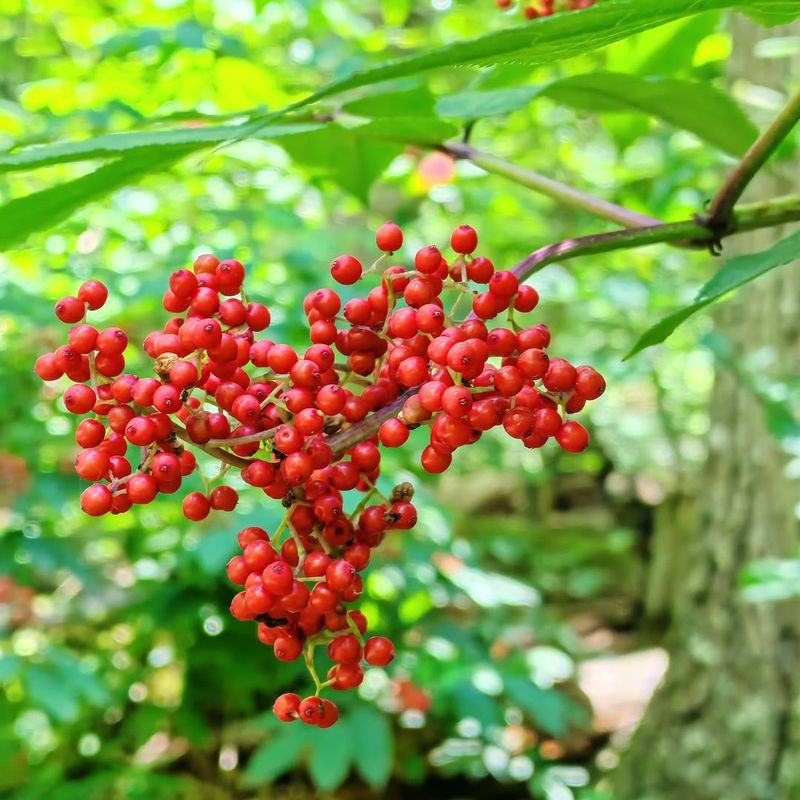
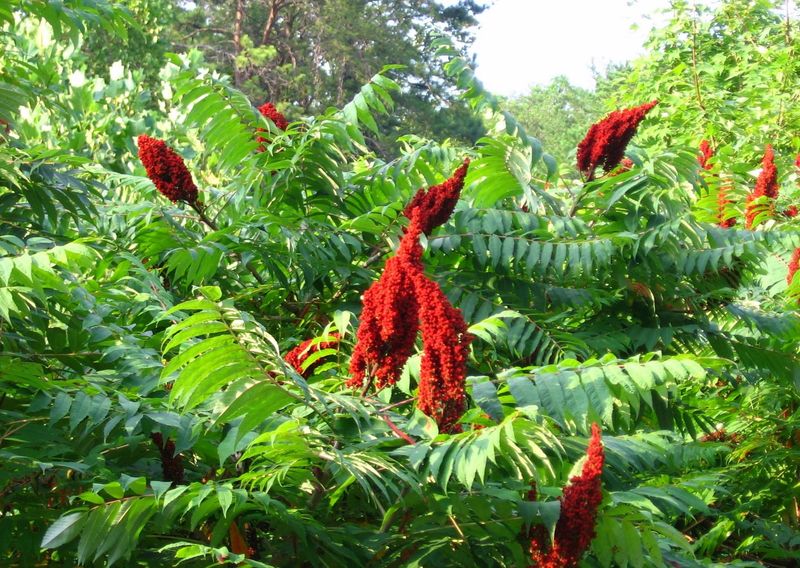
Upright clusters of deep red fruit appearing above changing foliage give smooth sumac a second season of visual interest that many gardeners overlook. The tightly packed clusters are technically drupes, small fruits with a thin outer skin and a seed inside.
They rise above the foliage in dense, cone-shaped formations that remain visible well after the leaves have dropped.
Rhus glabra is dioecious, meaning individual plants are either male or female. Only female plants produce those showy fruit clusters, and only after successful pollination from a nearby male.
A lone unidentified plant may turn out to be male, or it may lack a suitable pollinator nearby, so fruit production is not guaranteed for every planting.
Foliage color in autumn can shift into rich shades of scarlet, orange, and deep purple, adding another layer of seasonal appeal. These traits are worth appreciating on their own terms.
The fruit clusters do not attract adult luna moths, and caterpillars do not depend on the drupes for food. Birds and small mammals may consume the fruit during fall and winter, though this wildlife benefit is secondary to the shrub’s role as a foliage host.
Always confirm plant identity before handling any part of the fruit. Do not confuse this species with poison sumac, which grows in wet habitats and carries white fruit clusters.
5. Control New Shoots Before The Colony Spreads
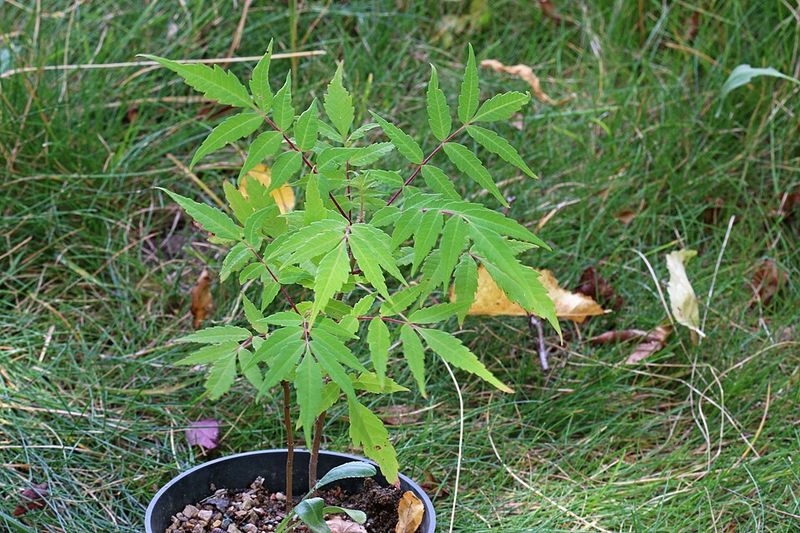
A new stem pushing up from the soil several feet beyond the original planting is not a sign that something went wrong. Smooth sumac spreads naturally through root suckers, which are stems that emerge from the root system rather than from the main crown.
Over time, this process can create a spreading colony of connected stems, which is exactly how the species behaves in the wild.
That colony habit has real value in the right setting. On erosion-prone slopes, along property boundaries used as screens, or in large naturalized areas, the expanding root network holds soil and fills space productively.
The same behavior becomes inconvenient in a small formal bed or a tightly managed border where spread is unwanted.
Managing the expansion is straightforward when started early. Removing unwanted young shoots close to the ground before they establish is the most practical approach.
Mowing regularly beyond a defined planting boundary can also limit outward spread. Installing the shrub where natural features like pavement edges, mown lawn, or structures limit movement reduces ongoing effort.
Cutting the main stems back hard does not stop new shoots from emerging from the roots, so location choice matters more than any pruning schedule. Repeated severe cutting also removes foliage that caterpillars could use during the growing season.
6. Skip Sprays That Reach Feeding Caterpillars
A gardener reaching toward a spray bottle after spotting chewed leaves on a shrub is a common reaction, but it is worth pausing before acting. A treatment applied to address one yard insect can easily contact non-target larvae feeding on nearby foliage.
Luna moth caterpillars are large Ohio native larvae that may be mistaken for unwanted foliage feeders because of their size and appetite.
Verified descriptions note that mature luna moth caterpillars are stout, bright green, and may display faint lateral lines or small colored markings along the sides.
Spotting a large green caterpillar on sumac foliage does not confirm species identity, but it is a reasonable prompt to look more carefully before spraying anything.
Broad-spectrum insecticides and systemic treatments vary widely in their effects on non-target insects. Product risks depend on formulation, timing, application method, and environmental conditions.
Follow product labels and current extension guidance for any treatment decision. Spraying nearby plants also matters, since drifting material can reach host foliage even when the sumac itself is not the intended target.
Tolerate limited cosmetic feeding when the shrub appears vigorous and no confirmed pest problem is present.
Targeted treatment based on accurate identification and genuine plant-health concerns is a far more responsible approach than routine preventive spraying.
7. Leave Fallen Leaves To Shelter Hidden Cocoons
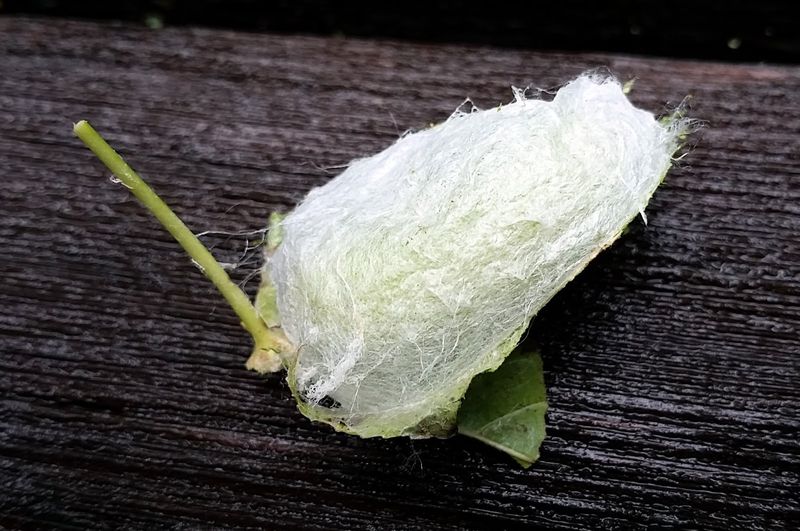
A curled brown leaf resting quietly beneath a sumac in October may be sheltering something worth protecting. Mature luna moth caterpillars descend from their host plants when they are ready to pupate.
They spin cocoons that often become wrapped in fallen leaves near the ground. These cocoons are well camouflaged and easy to miss during a standard yard cleanup.
Aggressive leaf blowing, vacuuming, shredding, raking, or bagging in areas near host plants may remove or crush cocoons that are not visible to the naked eye. A balanced approach does not require leaving every leaf across the entire lawn.
Sidewalks, drains, entrances, and high-traffic areas can still be cleared without guilt.
Moving whole, undisturbed leaves into protected beds, beneath established shrubs, or along quiet property edges preserves potential overwintering habitat. It does this without creating a maintenance burden.
Avoid building deep, compacted piles against trunks, foundations, or sensitive plant crowns, since excessive moisture buildup can harm plants over winter.
Cocoon development and overwintering timing may vary with the brood and local conditions, so not every autumn cocoon will produce an adult the following spring.
An undisturbed leaf layer also supports beetles, spiders, ground-nesting bees, and other invertebrates that contribute to a healthy yard ecosystem.
8. Dim The Porch Lights For Better Moth Visits
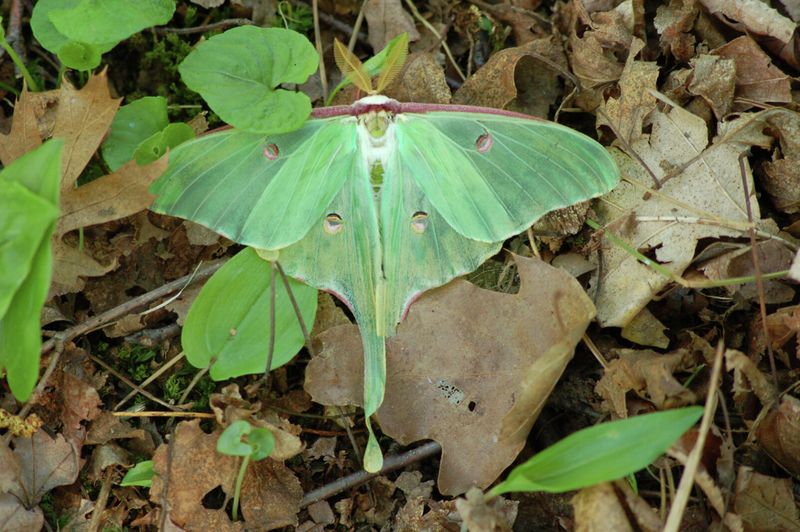
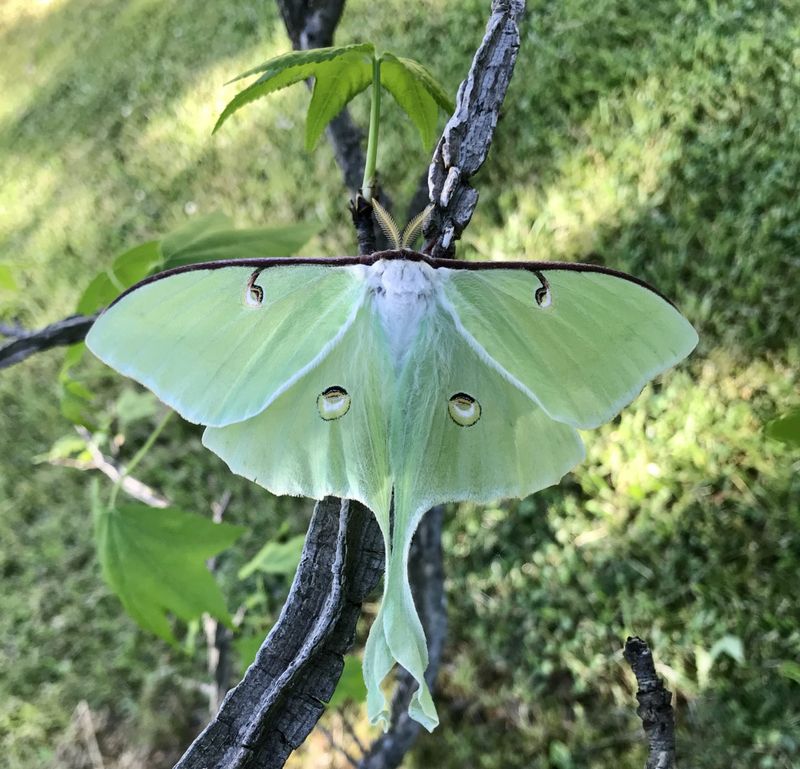
A pale green adult circling a glowing porch fixture on a warm night is one of the more striking sights a home landscape can offer. Adult luna moths are active primarily after dark, and they do not feed at all during their adult stage.
Their mouthparts are vestigial, meaning the adults survive on energy stored during the caterpillar stage and focus entirely on finding mates and reproducing.
Bright outdoor lighting may attract night-active moths and disrupt their orientation. It can potentially draw them away from mates or keep them circling a fixture until they are exhausted.
Not every light fixture creates the same level of disruption, and research on specific bulb types and wavelengths is ongoing. Still, reducing unnecessary outdoor lighting near host plantings is a reasonable and practical step.
Turning off lights that are not needed, using timers or motion sensors, and choosing lower brightness levels all help. So does directing fixtures toward the ground rather than outward, and together they reduce light pollution in a manageable way.
Seeing an adult near your porch light does not confirm that eggs or caterpillars are present on a nearby sumac. The connection between a well-placed Ohio native host, careful seasonal maintenance, and sheltered leaf litter matters.
Darker nights matter too, and together they give the full life cycle its best chance of completing quietly in a home landscape.