Ohio’s Weirdest Native Fruit Is Finally Ripening
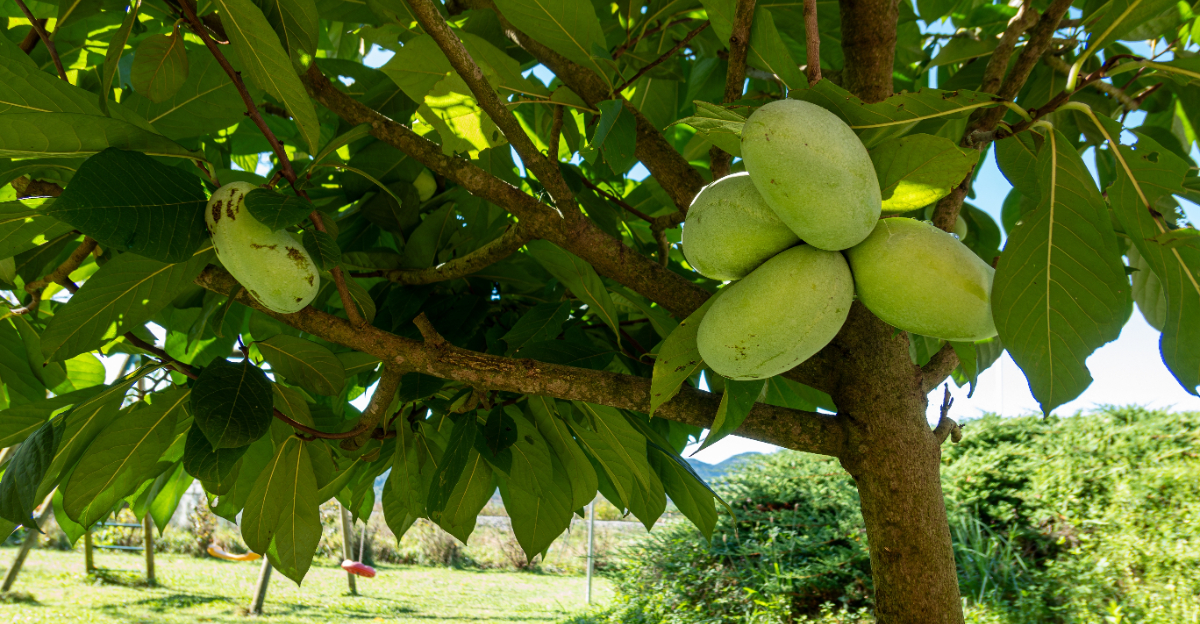
A fruit that looks like it belongs somewhere tropical is hanging from trees across Ohio right now. It has a soft, custard-like texture, a strange tropical aroma, and a flavor that makes many people stop and ask what they are eating.
For a native fruit, it feels almost out of place. You are more likely to find it tucked beneath woodland trees than lined up in a grocery store produce section.
That is part of what makes it so interesting. The ripening window is short, the fruit is easy to miss, and once it falls, the opportunity does not last long.
Those who know where to look watch for the signs because the difference between perfectly ripe and past its best can happen quickly.
Ohio’s landscape hides plenty of surprises, but few are as unusual as this late-summer treat waiting quietly beneath the trees.
1. Pawpaw Season Arrives Fast And Leaves Fast
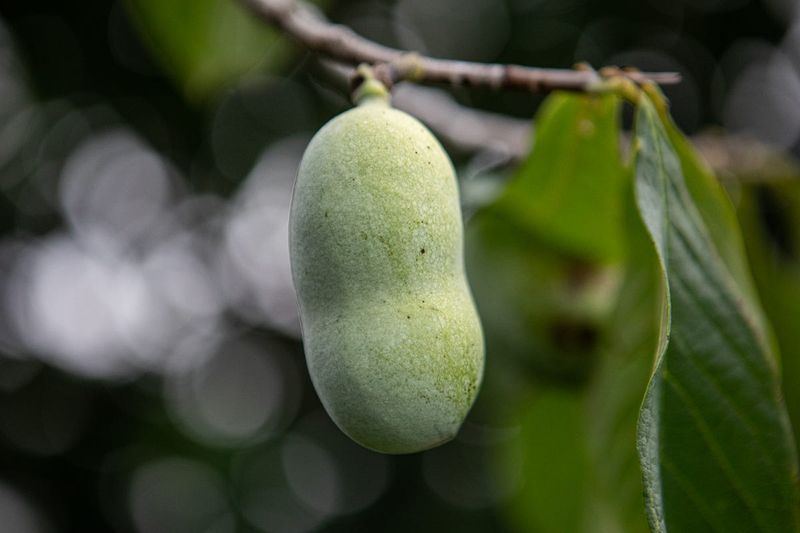
Late summer has a way of moving faster than anyone expects, and pawpaw season moves right along with it. Ohio State University Extension notes that pawpaw fruit typically ripens from late August through October.
September is a common peak period for many locations across the state. Timing can shift depending on the cultivar, local weather patterns, elevation, and how warm or cool the growing season has been.
Growers who check their trees once a week during this stretch may be surprised by how quickly fruit transitions from firm and unripe to soft and ready. A fruit that felt solid on Monday might be perfectly ripe by Thursday.
Missing that window means losing the harvest to the ground, to wildlife, or to over-ripening on the branch.
Watching the fruit closely once late summer arrives is the most reliable strategy. Gentle daily checks take only a few minutes and give growers a real advantage.
A pawpaw patch rewards attentive eyes more than almost any other native fruit tree in the region. Ripening does not happen uniformly across an entire patch or even across one tree.
Individual fruits within the same cluster can ripen at slightly different rates, so checking often rather than harvesting all at once tends to give the best results.
2. Soft Fruit Means The Harvest Is Ready
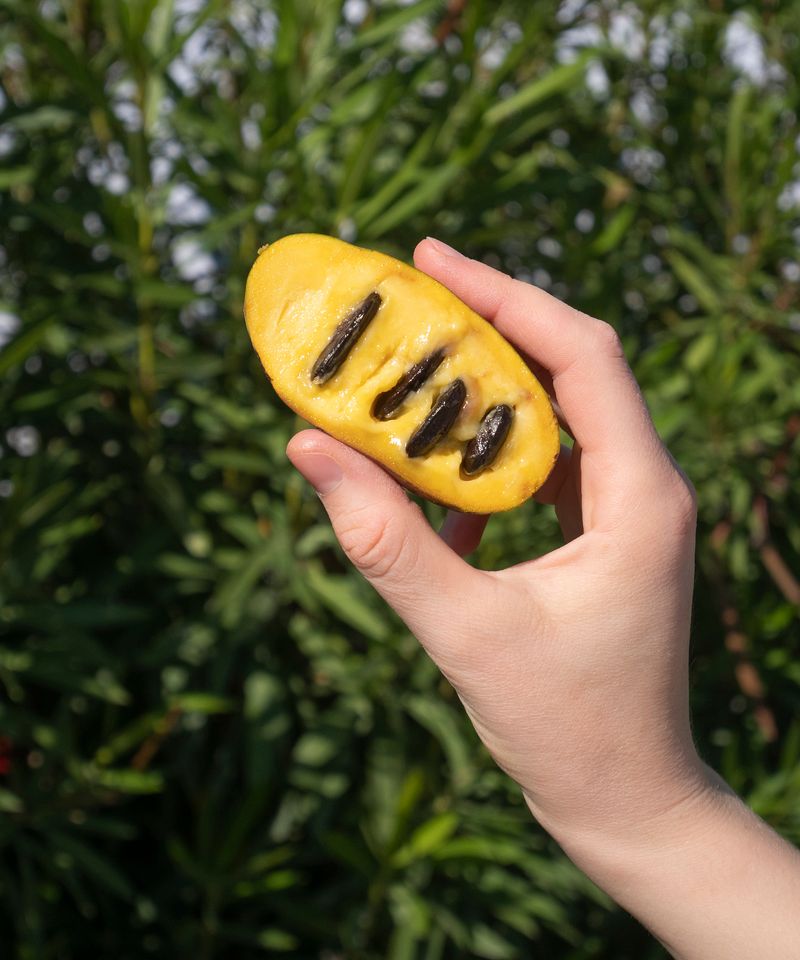
Checking ripeness by touch is the most practical method for pawpaw growers. A ripe pawpaw gives slightly under gentle pressure, similar to a ripe avocado or peach.
Ohio State University Extension guidance suggests that softening of the skin is one reliable indicator of ripeness. A noticeable sweet fragrance is another among the most reliable indicators that fruit is approaching or at peak ripeness.
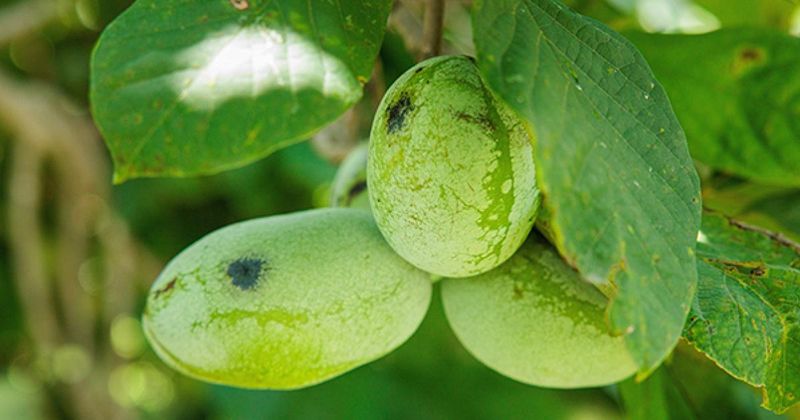
Color alone is not a dependable guide. Many pawpaw varieties stay green or shift to a yellow-green even when fully ripe.
Relying on skin color as the only signal can lead to harvesting too early or too late. A gentle squeeze, not a forceful one, is enough to feel whether the flesh beneath the skin has softened.
Pressing too hard bruises the delicate pulp and shortens the time before the fruit deteriorates.
Your Ohio Garden Changes Every Week. Your Plan Should Too.
Gardening in Ohio changes quickly throughout the season. Every Friday you’ll receive a simple weekly plan showing exactly what to plant, prune, fertilize, harvest, and protect so you never miss the right timing.
Some ripe fruit will drop naturally from the tree. Finding a freshly fallen pawpaw on the ground does not automatically mean it is ready to eat.
Fruit that fell from a height may have bruised on impact, and any visible damage should be checked before consuming. Harvesting by hand just before natural drop, when the fruit gives slightly to a light touch, tends to preserve quality better.
Bringing a soft cloth or padded basket to the tree helps protect the tender skin during collection and transport.
3. The Flavor Tastes Almost Tropical
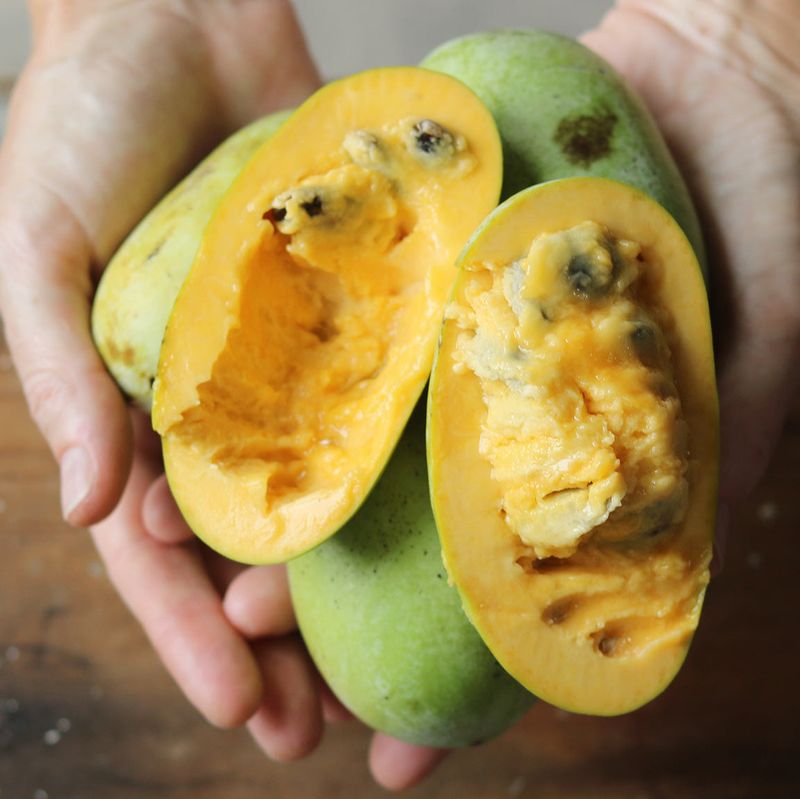
Biting into a ripe pawpaw for the first time catches most people off guard. The flavor profile has been compared to a blend of banana, mango, and hints of vanilla or pineapple.
That feels completely unexpected from a fruit growing wild in a temperate forest. Kentucky State University, which operates a USDA-funded pawpaw research program, has documented the fruit’s aromatic compounds.
Those compounds contribute to its distinctly tropical character.
Not every pawpaw tastes identical. Flavor varies noticeably between cultivars.
Even fruit from the same tree can taste slightly different depending on ripeness at harvest and growing conditions during the season. A fruit picked a day too early may taste starchy or bland.
One allowed to ripen fully tends to develop the sweet, custardy quality that surprises first-time tasters.
Personal preference also plays a role. Some people find the richness of the flesh immediately appealing.
Others need a second or third taste before they appreciate the unusual combination of sweetness and soft texture. The flesh is often described as creamy and smooth, with a consistency that some compare to a ripe banana or a soft pudding.
For a fruit that grows in native woodland without any tropical climate, that flavor profile is genuinely unexpected. It is one of the more surprising things a local forager or backyard grower can discover.
4. Huge Seeds Hide Inside The Custard-Like Flesh
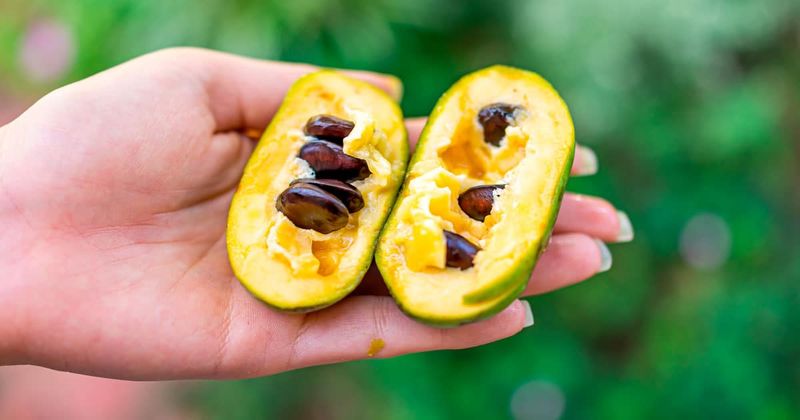
Slicing open a ripe pawpaw reveals something that surprises most first-timers. Nestled inside the soft, pale yellow flesh are several large, dark brown seeds arranged in two rows.
The seeds are smooth, shiny, and noticeably large relative to the size of the fruit, which makes the actual edible portion smaller than the outer dimensions suggest.
According to botanical descriptions of Asimina triloba, the seeds can range from roughly half an inch to over an inch in length. Multiple seeds typically run through the center of each fruit, and their size means that working around them requires a little patience.
Scooping the flesh away from the seeds with a spoon is a common approach, similar to eating a papaya. The seeds are not edible and should be set aside.
No reliable sources support consuming pawpaw seeds, and some sources indicate that parts of the plant outside the ripe flesh may cause irritation. Focusing on the pulp is the straightforward approach.
The flesh itself separates from the seeds fairly easily once the fruit is fully ripe, which makes the process less difficult than it might first appear. Despite the space taken up by the seeds, a large pawpaw can still yield a generous amount of soft pulp.
That pulp is the part worth saving, whether for eating fresh, blending into smoothies, or folding into baked recipes.
5. Wildlife May Reach The Ripe Fruit First
Finding a cluster of fruit missing or partly consumed beneath a pawpaw tree is a familiar experience for anyone who grows these trees near natural areas. Ripe and fallen pawpaws attract wildlife because the soft, fragrant flesh becomes more noticeable as it softens.
Raccoons, opossums, and fox squirrels have been documented feeding on ripe pawpaw fruit. This comes from sources including wildlife references associated with native plant research.
A fruit that softens on the branch or drops to the ground sends out a stronger scent that can draw animals quickly. Growers near wooded edges or stream corridors tend to notice more wildlife pressure than those in open suburban yards.
Monitoring the patch more frequently as peak ripeness approaches helps reduce losses to foraging animals.
Harvesting fruit by hand just before it reaches the ground is one practical way to stay ahead of wildlife. Fruit collected at the early-ripe stage, when it gives slightly under gentle pressure, can be allowed to finish softening indoors over a day or two.
Leaving fruit on the tree past peak ripeness or letting it accumulate on the ground increases the chance that animals will find it first. A small harvest gathered over several visits tends to work better than waiting for a single large collection.
Checking the base of the tree each morning during peak season helps growers track what is falling and when.
6. One Pawpaw Patch May Be Just One Clone
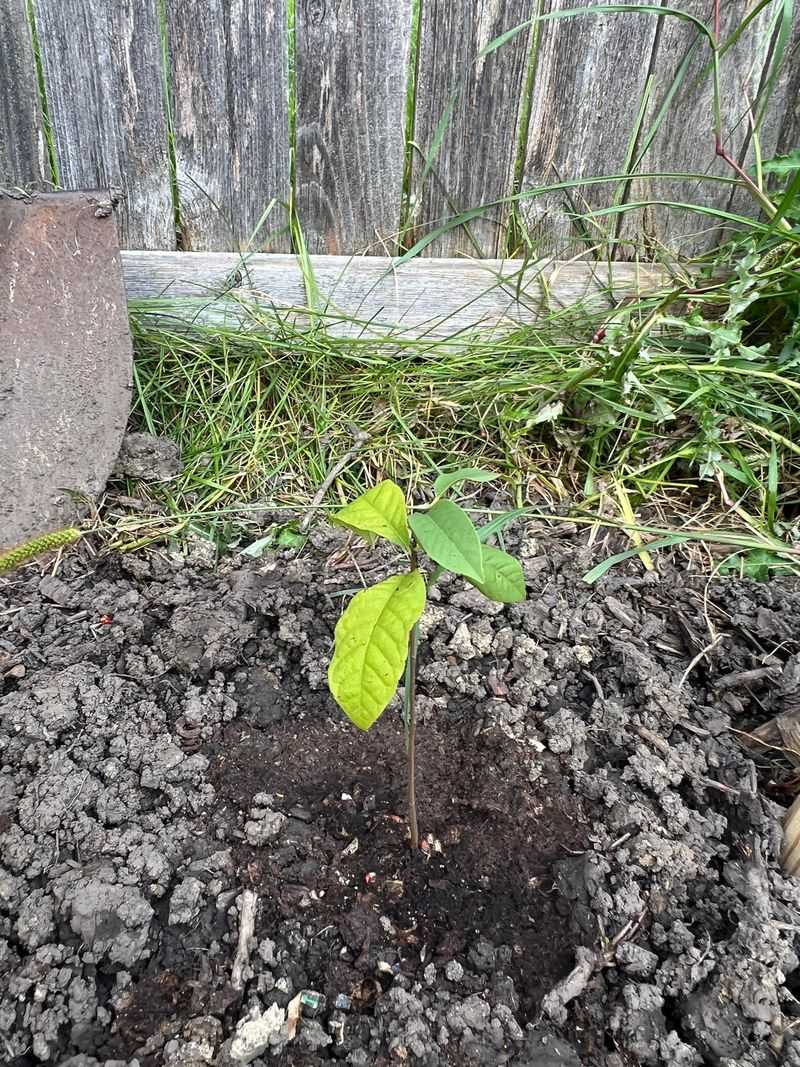
A cluster of pawpaw stems growing close together can look like a small grove of separate trees. In many cases, those stems actually share the same root system.
Pawpaws spread readily through root suckers, which are new shoots that emerge from the roots of an existing tree. Ohio State University Extension has noted this clonal growth habit as an important consideration for anyone hoping to get fruit from a wild or backyard patch.
Several stems rising from one root mass are often genetically identical. From a pollination standpoint, that matters a great deal.
Pawpaw flowers need pollen from a genetically different tree to set fruit reliably. A patch made up entirely of root suckers from one original plant functions as a single individual for pollination purposes.
That holds true even if it looks like multiple trees from the outside.
Growers who discover they have a clonal patch are not out of options. Adding a seedling-grown tree or a different named cultivar nearby introduces the genetic variety that improves fruit set.
Identifying whether a patch is clonal is not always straightforward without knowing the history of the planting. A practical starting point is to assume that stems within a tight cluster sharing root connections may be clones, and to plan for supplemental planting accordingly.
Understanding this quirk of pawpaw biology helps explain why some patches flower generously year after year but produce very little fruit.
7. Two Different Trees Improve Your Chances Of Fruit
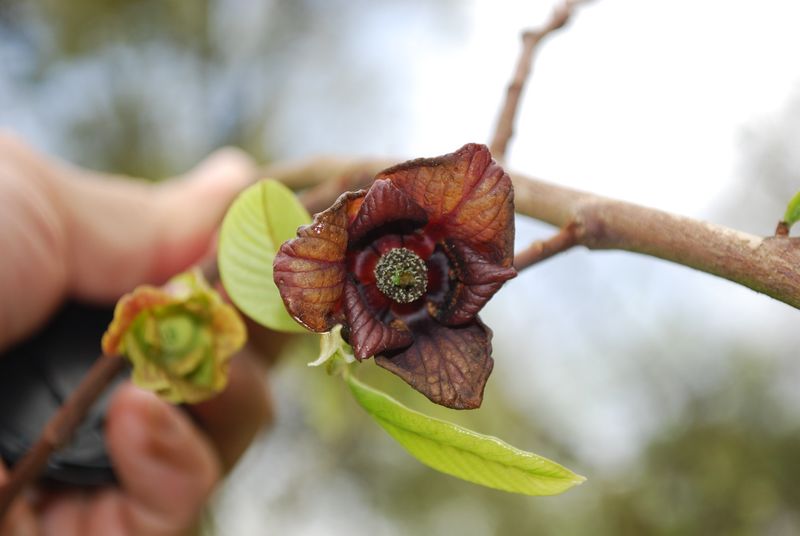
A healthy pawpaw tree that flowers reliably but produces almost no fruit is a common frustration for backyard growers. The most frequent reason is a lack of cross-pollination.
Pawpaw flowers are designed to receive pollen from a genetically different individual. Relying on a single tree or a group of clonal root suckers limits fruit set significantly.
Ohio State University Extension and Kentucky State University research both support planting two or more genetically distinct trees. That approach improves the likelihood of fruit production.
Two seedlings grown from separate seeds, or two different named cultivars, provide the genetic diversity that makes cross-pollination more effective. Simply planting two trees is not enough if both came from root suckers of the same parent plant, because they are genetically the same individual.
Pawpaw flowers are pollinated primarily by flies and beetles rather than honeybees, according to research from Kentucky State University. Providing conditions that support those natural pollinators, such as avoiding broad pesticide use near the trees, can help.
Fruit production is never guaranteed regardless of how the trees are arranged, since weather during bloom, temperature, and other seasonal factors also play a role. Backyard growers who plant two distinct seedlings or cultivars within a reasonable distance of each other help their patch.
That gives the patch the best realistic foundation for a consistent harvest over time.
8. Fresh Pawpaws Rarely Make It To Grocery Stores
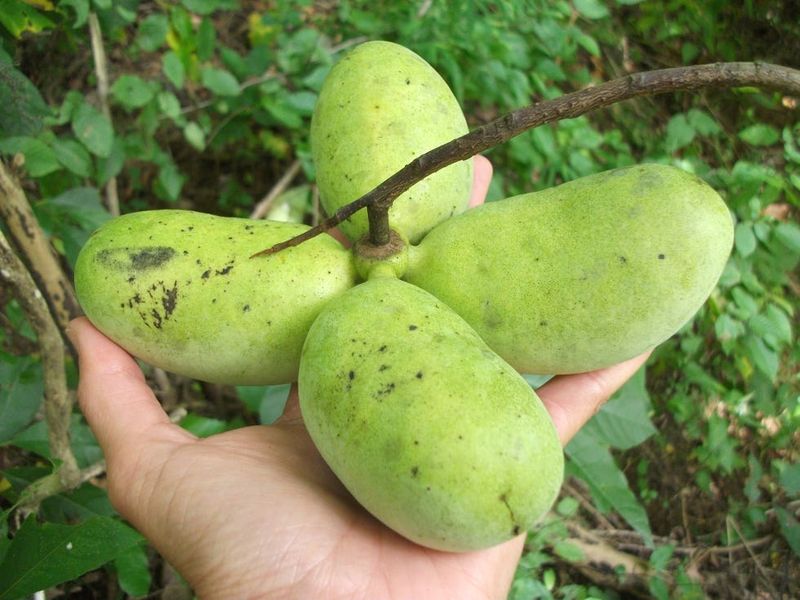
Ripe pawpaws have a shelf life that makes commercial distribution genuinely difficult. Once fully ripe, the fruit softens quickly and does not hold up well to the handling, packaging, and long-distance shipping that most grocery store supply chains require.
Kentucky State University researchers have noted that ripe pawpaws may last only a few days at room temperature. That is a sharp contrast to apples or oranges, which can travel hundreds of miles without issue.
Refrigeration can extend the window somewhat, but even chilled pawpaws have a limited time before quality declines. That fragility is the main reason fresh pawpaws are far more common at local farmers markets, roadside stands, and pick-your-own orchards.
Home gardens are another common source, unlike supermarket shelves. Some specialty grocers in areas with active local pawpaw growers carry the fruit during peak season, but availability is inconsistent and supply is small.
For most people, the most reliable path to a fresh pawpaw is knowing a local grower, visiting a farmers market during September, or planting a tree at home.
Frozen pawpaw pulp is available from some specialty sources and holds quality better than fresh fruit for longer-term storage or cooking.
The combination of native woodland origins, a tropical-style flavor, and a narrow harvest window is unusual. Add fragile ripe fruit, and it’s exactly what makes the pawpaw feel unlike anything else growing in the region.
It rewards the curious and the patient, not the casual shopper.