What It Means When A Blue Jay Keeps Screaming In Your Pennsylvania Yard
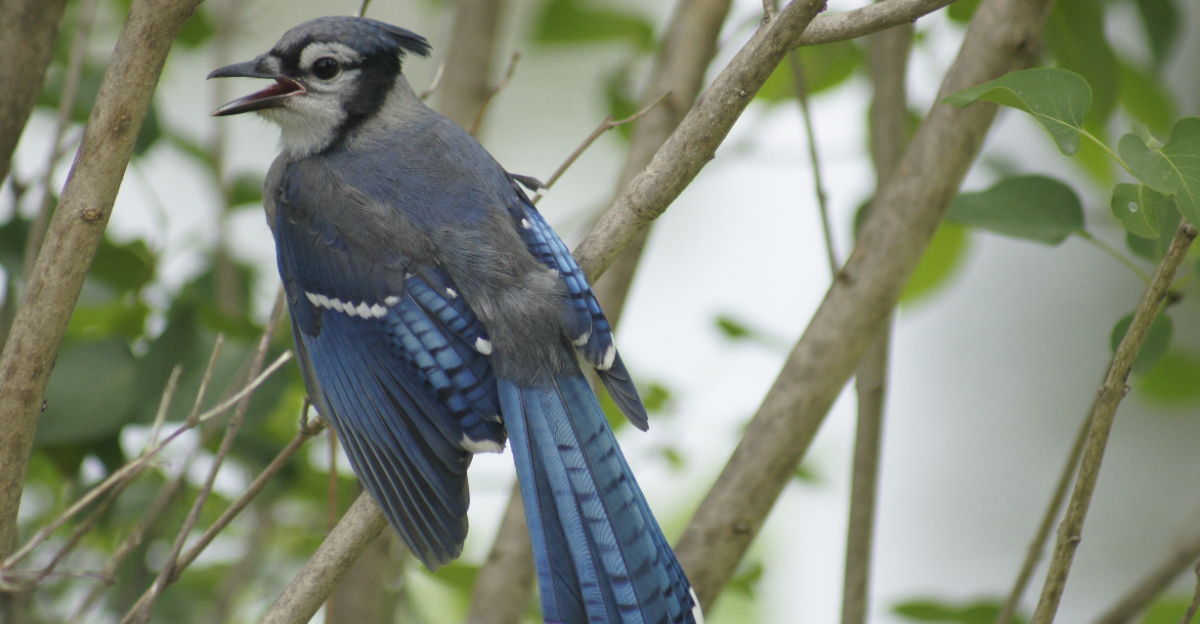
You are halfway across the yard when the blue jay cuts loose from the oak. It is not a chirp. It is a siren, looping over and over like it has something to report.
Most people just shrug and keep walking. That is a mistake, because this bird rarely wastes its lungs on nothing.
Blue jays do not scream out of boredom. Something has crossed into their territory, and their piercing call is basically a live broadcast warning every creature within earshot.
Tune into that racket and you stop being a bystander in your own backyard. You start catching signals other people miss entirely, and your feeders, nests, and garden might thank you for it.
Predator Warnings Explain Most Repeated Blue Jay Screaming
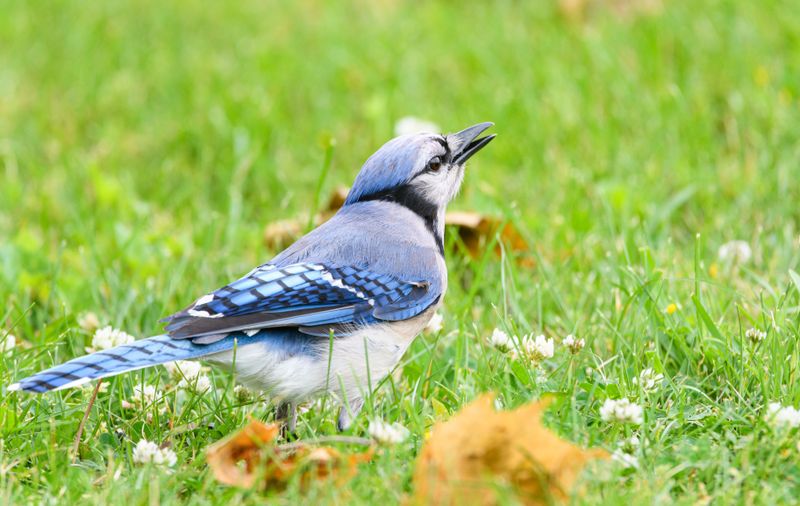
A hawk just flew over your yard. That is the single most common reason a blue jay keeps screaming in your Pennsylvania yard, and it happens more than most people realize.
Blue jays are natural sentinels of the forest edge. They spot predators fast, and they broadcast that danger to every creature within earshot.
When a hawk, owl, or cat enters their territory, jays launch into a rapid, repeated alarm call. The sound is urgent, high-pitched, and relentless until the threat leaves.
Other birds actually depend on this warning system. Sparrows, robins, and finches freeze or flee when they hear a jay sounding off nearby.
Squirrels respond too, darting up trunks or pressing flat against branches. The blue jay essentially runs a neighborhood watch program, free of charge.
If you notice repeated screaming in the same general area of your yard, scan the trees slowly. A Cooper’s hawk or sharp-shinned hawk is likely perched somewhere close, watching your feeder.
Red-tailed hawks are also common in Pennsylvania and trigger intense jay reactions. Even a neighborhood cat crouching under a shrub will set off a full alarm sequence.
Pay attention to where the jay is facing when it calls. Birds almost always orient toward the threat, giving you a helpful directional clue.
Once the predator moves on, the screaming stops fairly quickly. That sudden silence after a long alarm session usually means the danger has passed.
Territorial Disputes With Other Birds Trigger Loud Calls
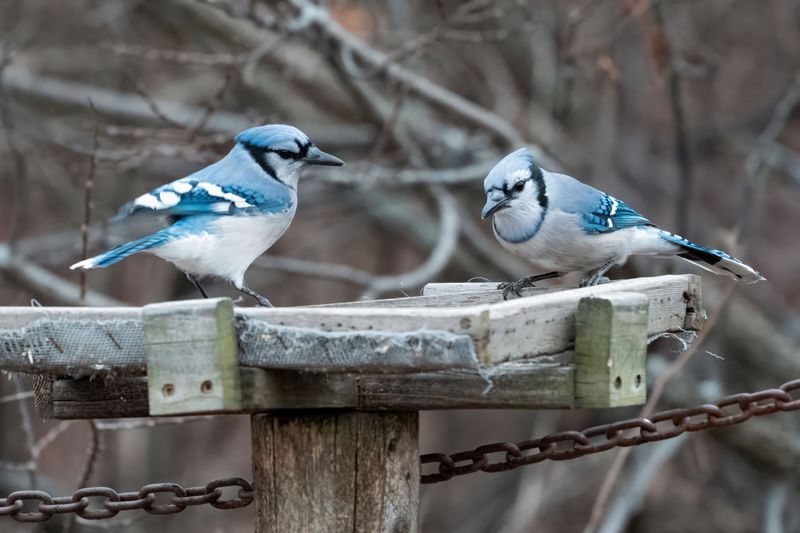
Blue jays do not share space graciously. When another bird crosses into their claimed territory, the screaming can escalate fast and grow surprisingly personal.
These birds are bold enough to challenge crows, grackles, and even red-bellied woodpeckers. Size does not intimidate a blue jay when it feels its patch is under threat.
Territorial calling tends to sound slightly different from predator alarms. It often includes shorter, more rhythmic bursts mixed with chattering and body posturing near the intruder.
Blue jay pairs become especially territorial during late winter and early spring. That is when pair bonds form and nesting boundaries get established across Pennsylvania neighborhoods.
You might see two jays chasing each other through the canopy while screaming nonstop. That aerial argument is a boundary dispute playing out in real time above your yard.
Your Pennsylvania Garden Changes Every Week. Your Plan Should Too.
Gardening in Pennsylvania changes quickly throughout the season. Every Friday you’ll receive a simple weekly plan showing exactly what to plant, prune, fertilize, harvest, and protect so you never miss the right timing.
Feeders are hotspots for this behavior. A blue jay that considers your sunflower seed station its personal buffet will scream at any bird that lands there without permission.
Cardinals, mourning doves, and house finches often scatter when a jay starts its territorial display near a feeder. The jay wins most of these standoffs through sheer volume and persistence.
Watching which direction the jay faces and whether it chases the other bird helps you identify territorial behavior versus predator response. Context is everything with these vocal birds.
Setting up a second feeder in a separate corner of your yard can reduce some of this drama. Spreading resources out gives other species a fighting chance.
Mimicked Hawk Calls Serve As A Clever Defense Tactic
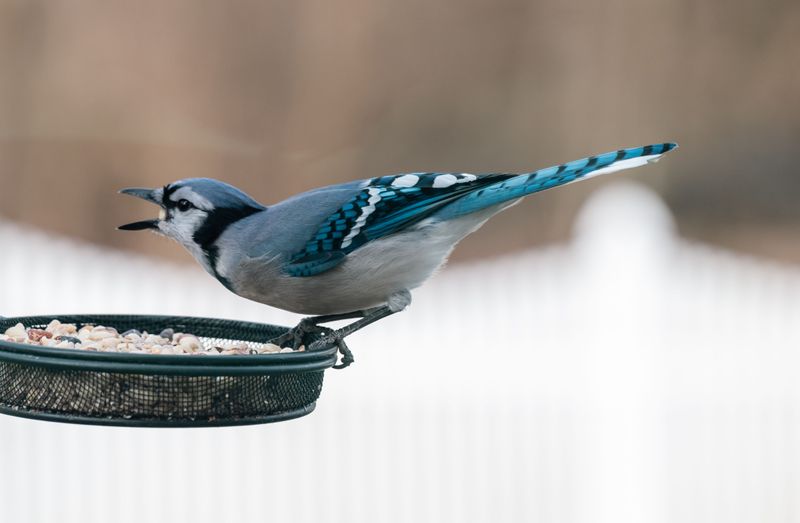
Not every screaming sound from a blue jay is its own voice. Sometimes the bird you are hearing is actually doing a spot-on impression of a red-shouldered hawk.
Blue jays are skilled mimics, and hawk impersonation is one of their most effective survival tricks. They deploy it to scare competitors away from food sources without a physical fight.
When a jay mimics a hawk near your feeder, smaller birds bolt instantly. The jay then swoops in and claims the seeds or suet without burning much energy at all.
This behavior has been documented by ornithologists for decades. It is a form of acoustic deception, and blue jays execute it with impressive accuracy and timing.
You can learn to tell the difference with some practice. A real hawk call is usually isolated and comes from above, while a jay mimicking one tends to repeat the sound rapidly from a perch.
Listen for the jay’s natural calls mixed in between the hawk sounds. That alternating pattern is a strong giveaway that you are hearing mimicry rather than an actual raptor.
Pennsylvania yards near wooded edges hear this most often in late summer and fall. That is when jays are actively caching acorns and competition for food peaks sharply.
Jays also mimic other sounds occasionally, especially calls from other bird species. Their vocal range is genuinely impressive for a bird that most people just consider noisy.
Appreciating this trick reframes the screaming entirely. That chaos in your oak tree might actually be a masterclass in avian strategy.
Nesting Season Stress Increases Vocal Alarm Behavior
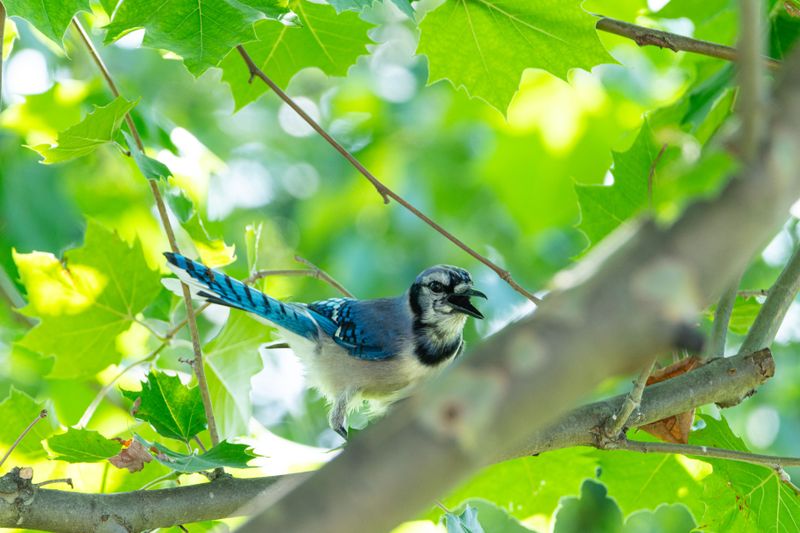
Spring arrives in Pennsylvania, and blue jays become a different level of loud. Nesting season cranks their already dramatic personalities up several notches.
From late April through June, a pair of blue jays guards their nest with fierce dedication. Any movement near that nest triggers a screaming response that can last for several minutes.
The nest is usually built 10 to 25 feet up in a deciduous tree. Oaks, maples, and ornamental trees in suburban yards are popular choices across central and eastern Pennsylvania.
Both parents take turns guarding the eggs and chicks. When one returns to relieve the other, they often call back and forth in a way that sounds alarming but is actually communication.
Squirrels near a nest get the full treatment. Jays will dive-bomb squirrels repeatedly while screaming, and they are not bluffing about the physical contact they are willing to make.
If you hear intense, sustained screaming from one spot in your yard, look up carefully. A nest with eggs or young chicks is probably closer than you think.
Avoid trimming trees or running loud equipment near a suspected nest site. The added stress can cause adult jays to abandon eggs in rare but documented cases.
Young jays leave the nest after about 17 to 21 days. During that fledgling period, the parents get even louder as they guide their babies through the yard.
Once the young jays become independent, the screaming settles down noticeably. That quiet stretch in midsummer is your reward for tolerating the chaos.
Food Competition At Feeders Sparks Aggressive Screaming Bouts
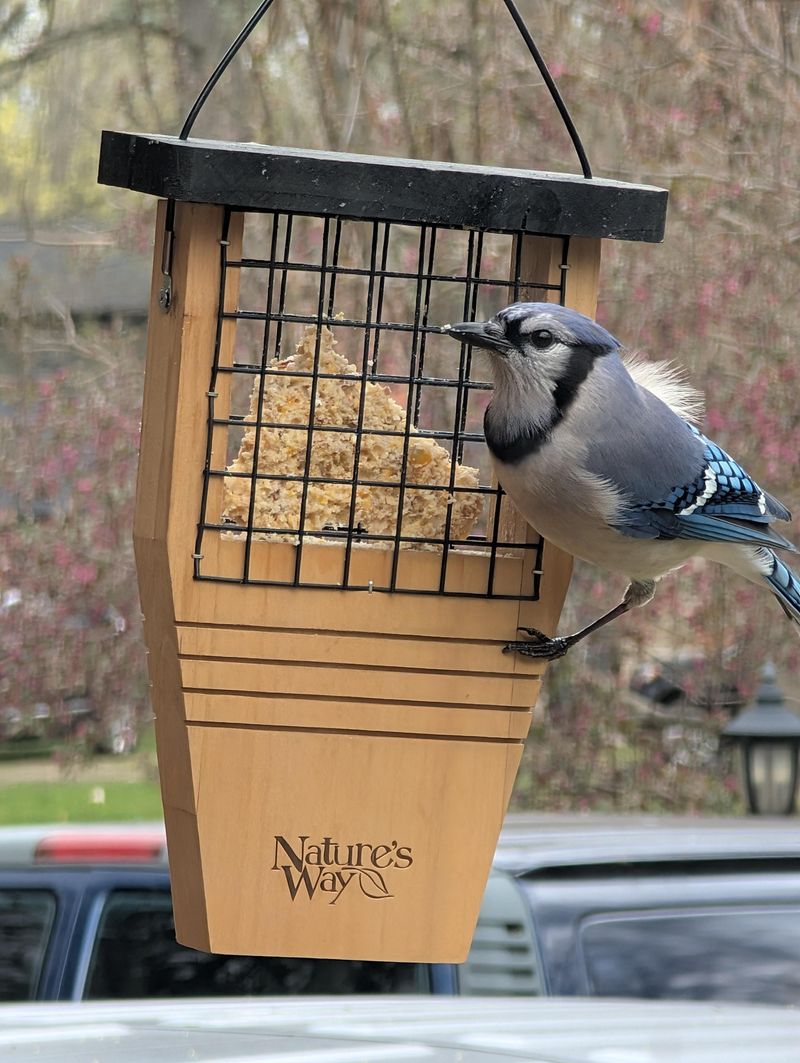
Put out a tray of sunflower seeds, and a blue jay will treat it like a personal announcement that the buffet is open. Food competition is one of the most reliable triggers for feeder screaming.
Blue jays are scatter-hoarders, meaning they collect food and cache it in multiple hidden spots. During fall especially, they are in a frantic race to stockpile as many calories as possible.
A jay that finds a well-stocked feeder will scream to intimidate other birds away. The goal is simple: eat fast, grab more, and come back before anyone else empties the tray.
Peanuts and whole sunflower seeds are the biggest triggers for this competitive behavior. Jays will carry multiple seeds in their expandable throat pouches and fly off to cache them nearby.
You might notice a jay screaming even when no other birds are present at the feeder. That preemptive noise is a territorial claim meant to discourage arrivals before they happen.
Multiple jays competing with each other creates a particularly chaotic scene. Family groups of four to six birds sometimes visit together in late summer, and the noise level spikes dramatically.
Offering food in two or three separate stations reduces some of the intensity. Spreading resources across your yard lowers the stakes at any single location.
Cage-style feeders with small openings exclude jays entirely and give smaller birds a peaceful place to eat. That simple fix can restore some calm to your yard fairly quickly.
Watching feeder competition reminds you that your yard is a working ecosystem. Every scream has a strategy behind it.
Recognizing Normal Versus Concerning Blue Jay Vocal Patterns
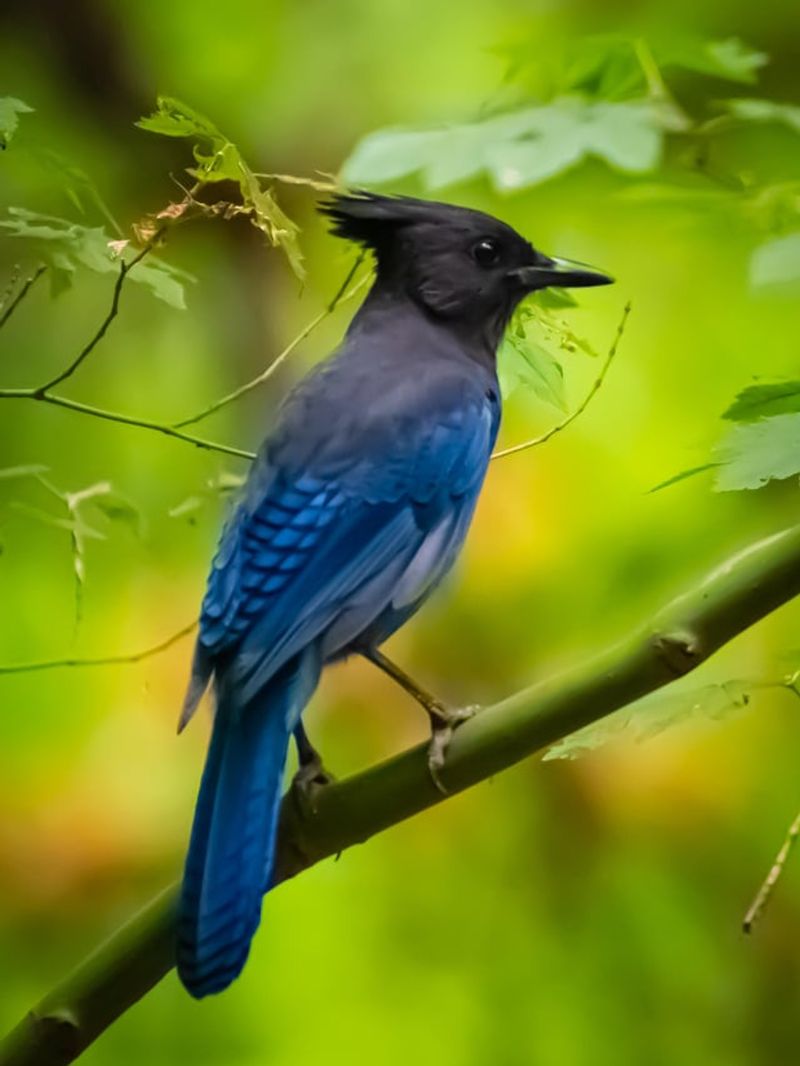
Not all blue jay screaming means the same thing. Learning to read the difference between normal alarm calls and unusual patterns makes you a far more informed backyard observer.
Normal alarm calls are sharp and repetitive but follow a rhythm. The jay calls several times, pauses, scans, and either repeats or stops once the threat is gone.
A concerning pattern looks different. Constant, non-stop screaming with no apparent trigger and no breaks can sometimes signal a disoriented or distressed bird.
West Nile virus affects blue jays harder than almost any other North American species. An infected jay may act lethargic, lose coordination, or call in an erratic, garbled way.
If a jay is screaming while sitting low to the ground and not flying away, something is wrong. Healthy jays typically maintain a safe perch height when they feel threatened.
Contact your local Pennsylvania wildlife rehabilitator if you spot a jay on the ground acting confused. Do not attempt to handle the bird yourself without protective gloves.
On the normal end of the spectrum, jays also make soft, quiet calls. These gentle gurgling sounds are used between mated pairs and are easy to miss unless you listen closely.
Jays also produce a bell-like call that many people never associate with blue jays at all. Hearing that sound for the first time often surprises even experienced backyard birders.
Knowing what normal sounds like helps you catch abnormal faster. When a blue jay keeps screaming in your Pennsylvania yard, your ears are now your best diagnostic tool.