The Native Texas Plants To Use Instead Of Mulch That Look Better
Mulch does its job, but no one has to pretend it is the most exciting part of a yard. It helps with moisture, keeps weeds down, and gives garden beds a finished look, yet it can also feel flat, overused, and a little boring after a while.
If you want your landscape to look more alive and more connected to Texas, there is another option worth considering. Native Texas plants can do many of the same jobs as mulch while adding color, texture, movement, and seasonal interest that wood chips simply cannot match.
Ground-hugging natives, spreading perennials, and low-growing shrubs can cover bare soil in a way that feels fuller and far more natural.
They also bring extra benefits, like helping pollinators, handling local weather better, and cutting down on the need for constant refreshing and replacement.
Instead of filling every open space with mulch, you can turn those spots into something greener and more eye-catching. For Texas gardeners who want practical landscaping that also looks better, native plants can be a smart and beautiful swap.
1. Frogfruit (Phyla Nodiflora)
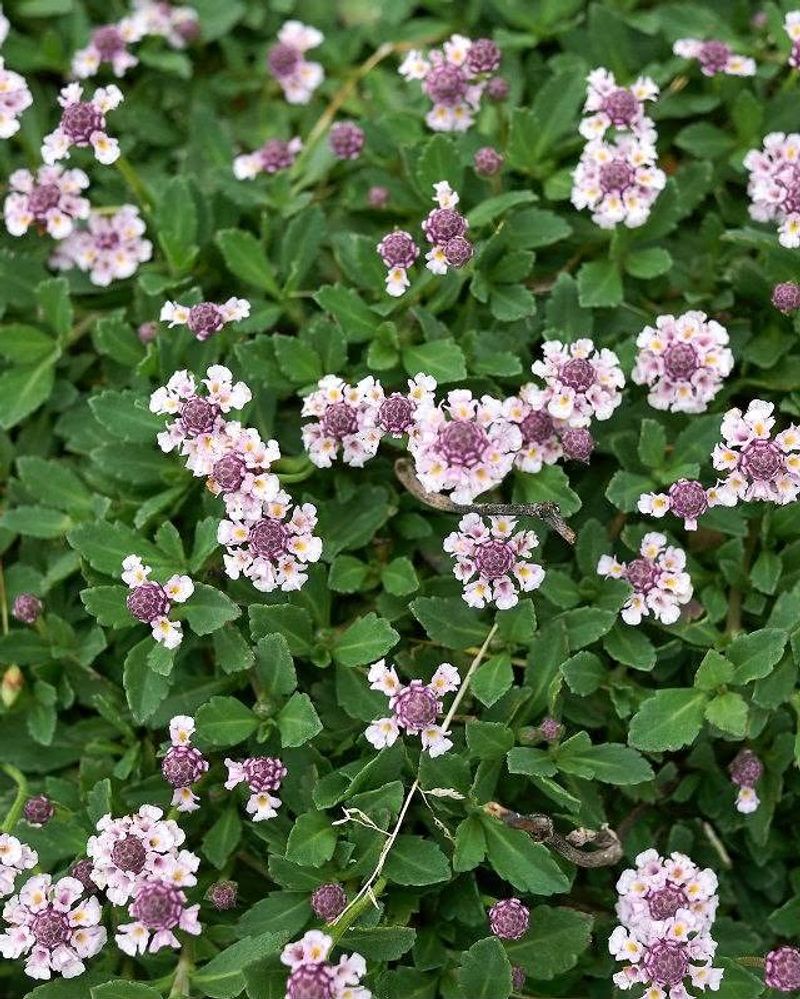
Walk barefoot across a yard covered in Frogfruit and you will quickly understand why so many Texas gardeners are obsessed with it. This tough little native spreads quickly across the ground, forming a tight, low mat that crowds out weeds without any help from you.
It loves sunny spots and handles the brutal Texas summer heat better than most plants you will find at a nursery.
Frogfruit produces tiny white and purple flowers almost all year long in warmer parts of Texas.
Those small blooms might not look like much from a distance, but up close they are stunning, and butterflies absolutely love them. If you want to attract pollinators to your yard, this plant is one of the best tools you have.
One of the biggest advantages of Frogfruit is how little water it needs once it gets settled in. During dry spells, it may look a little tired, but it bounces right back after rain.
It handles foot traffic surprisingly well, which makes it a smart choice for areas where kids or pets roam. Unlike mulch, which fades and needs replacing every year or two, Frogfruit keeps improving with age.
It fills in gaps on its own and gets thicker over time. You spend less money, less time, and get a yard that actually looks alive.
For sunny Texas landscapes that need a low-maintenance, beautiful ground cover, Frogfruit is a genuine game-changer that deserves way more attention than it gets.
2. Horseherb (Calyptocarpus Vialis)
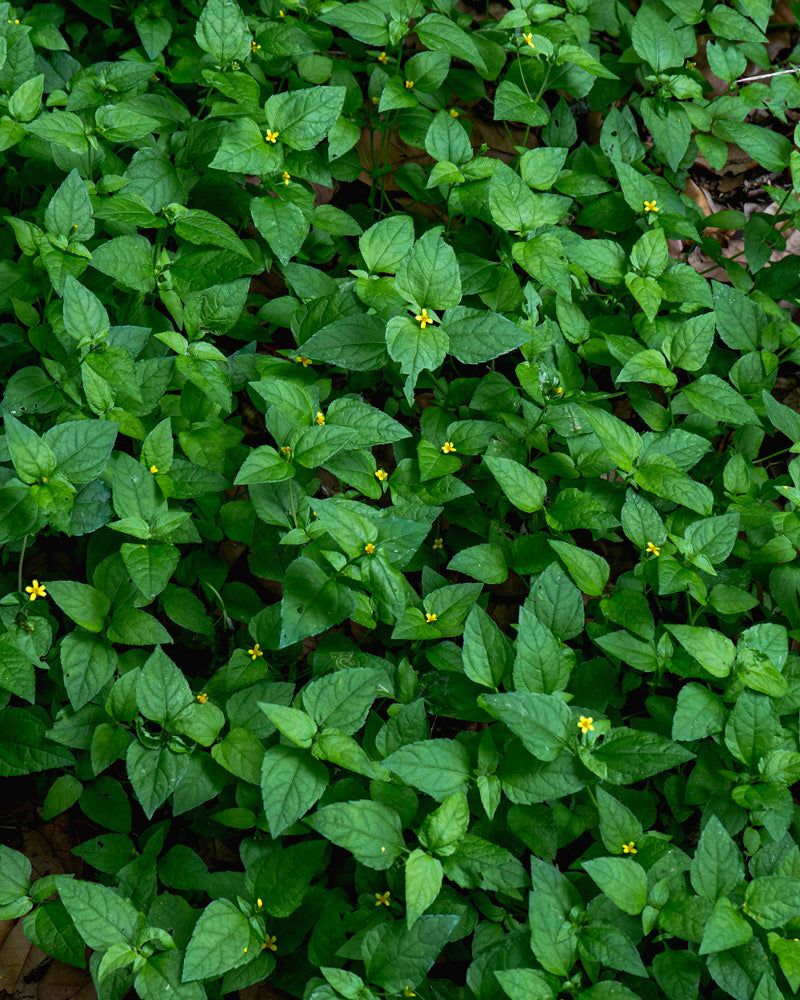
Most groundcovers throw a fit when you put them in the shade, but Horseherb practically thrives on it. Native to Texas and much of the South, this low-growing plant creates a soft, lush green carpet that looks right at home under big oak trees or along shaded fence lines.
Gardeners across Central Texas have been quietly using it for years, and once you see it in person, you will understand why.
Your Texas Garden Changes Every Week. Your Plan Should Too.
Gardening in Texas changes quickly throughout the season. Every Friday you’ll receive a simple weekly plan showing exactly what to plant, prune, fertilize, harvest, and protect so you never miss the right timing.
The tiny yellow flowers that pop up throughout the growing season give Horseherb a cheerful, finished look that plain mulch simply cannot match.
It spreads at a steady pace without becoming invasive, so you get good coverage without worrying about it taking over your entire yard.
It is also a favorite of bees and other small pollinators, adding real ecological value to your outdoor space.
Here is something that surprises a lot of people: Horseherb handles moderate foot traffic really well. You can walk across it regularly and it will keep spreading and filling in.
It does not need fertilizing, rarely needs watering once established, and almost never has pest problems. For shaded areas under trees where grass refuses to grow and mulch keeps washing away, Horseherb is the answer you have been looking for.
It naturally suppresses weeds, keeps moisture in the soil, and looks genuinely beautiful through most of the year. If your Texas yard has a dark, stubborn corner that nothing seems to love, give Horseherb a try.
You will likely be amazed at how quickly it transforms that problem spot into something you are proud to show off.
3. Silver Ponyfoot (Dichondra Argentea)
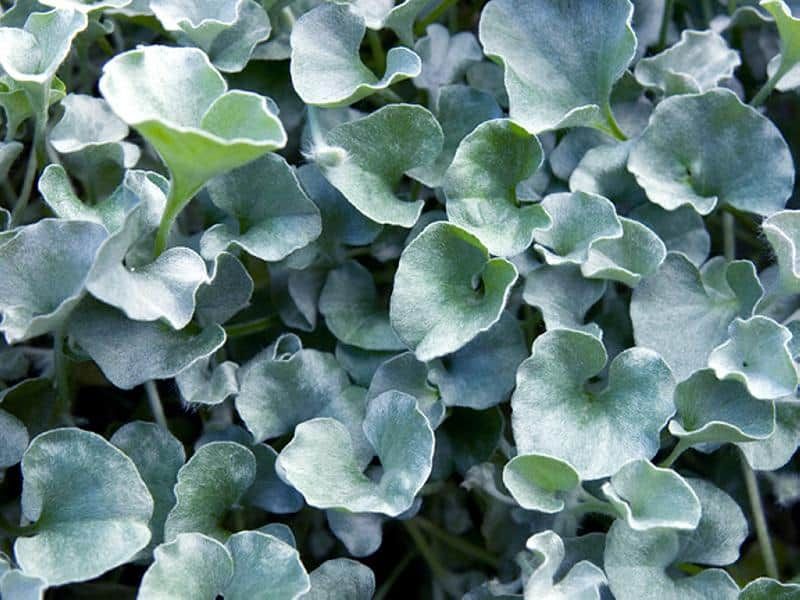
There is something almost magical about the way Silver Ponyfoot catches the light. Its small, round leaves are covered in a fine silver fuzz that shimmers in the Texas sun, giving your garden an almost metallic glow.
Most plants look washed out in full sun during a Texas summer, but Silver Ponyfoot looks like it was made for exactly those conditions, because it was.
Native to dry, rocky areas of West and Central Texas, this trailing groundcover is built for drought. Once established, it needs very little water and thrives in the kind of poor, rocky soil that would defeat most other plants.
It spreads gracefully over the ground, draping over rocks and garden borders with a soft, flowing look that no bag of mulch could ever replicate.
Silver Ponyfoot works beautifully in spots where you need texture and brightness without a lot of fuss. It pairs well with other drought-tolerant natives like Texas sage and black-eyed Susans, adding contrast and a cool silvery tone to warm-colored blooms.
Gardeners across the Hill Country and West Texas regions have long used it along pathways, in rock gardens, and as edging along raised beds. It does not tolerate standing water or heavy clay soil, so make sure your drainage is good before planting.
Beyond that, it is remarkably forgiving and easy to grow. For anyone who wants a groundcover that looks polished and interesting without demanding constant attention, Silver Ponyfoot is one of the most underrated native plants in all of Texas. Give it a sunny, dry spot and watch it shine.
4. Texas Sedge (Carex Texensis)
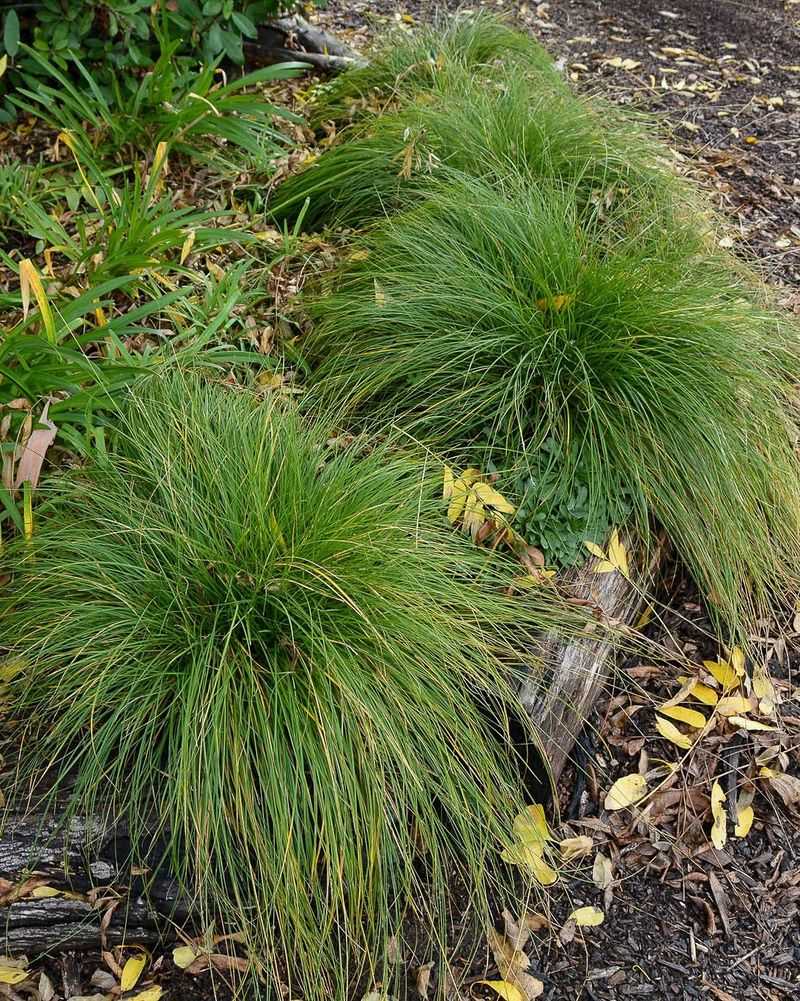
Not every yard needs bold flowers to look great. Sometimes, rich, layered greenery is exactly what a space needs, and that is where Texas Sedge comes in.
This native grass-like plant forms tidy little clumps that spread slowly over time, eventually creating a soft, meadow-like carpet that looks completely natural and incredibly elegant.
It is one of those plants that makes your yard look like it was designed by someone who really knows what they are doing.
Texas Sedge is a shade lover, which makes it perfect for the spots under your trees where grass has given up and mulch keeps blowing away. It stays relatively short, usually under a foot tall, and does not need mowing to look tidy.
The fine-textured leaves sway gently in the breeze, adding a sense of movement and softness that static mulch simply cannot provide.
Did you know that sedges are some of the oldest plant families on Earth? They have been around for millions of years, and Texas Sedge has been quietly thriving in the woodland edges and creek banks of Central and East Texas long before anyone thought to put it in a garden.
It is not flashy, but it is deeply reliable. It handles drought reasonably well once established and rarely deals with serious pest or disease issues.
For homeowners across Texas who want a refined, low-maintenance alternative to mulch in shaded beds, Texas Sedge delivers beautifully. Plant several clumps close together for faster coverage and enjoy a groundcover that gets better looking with every passing season.
5. Woolly Stemodia (Stemodia Lanata)
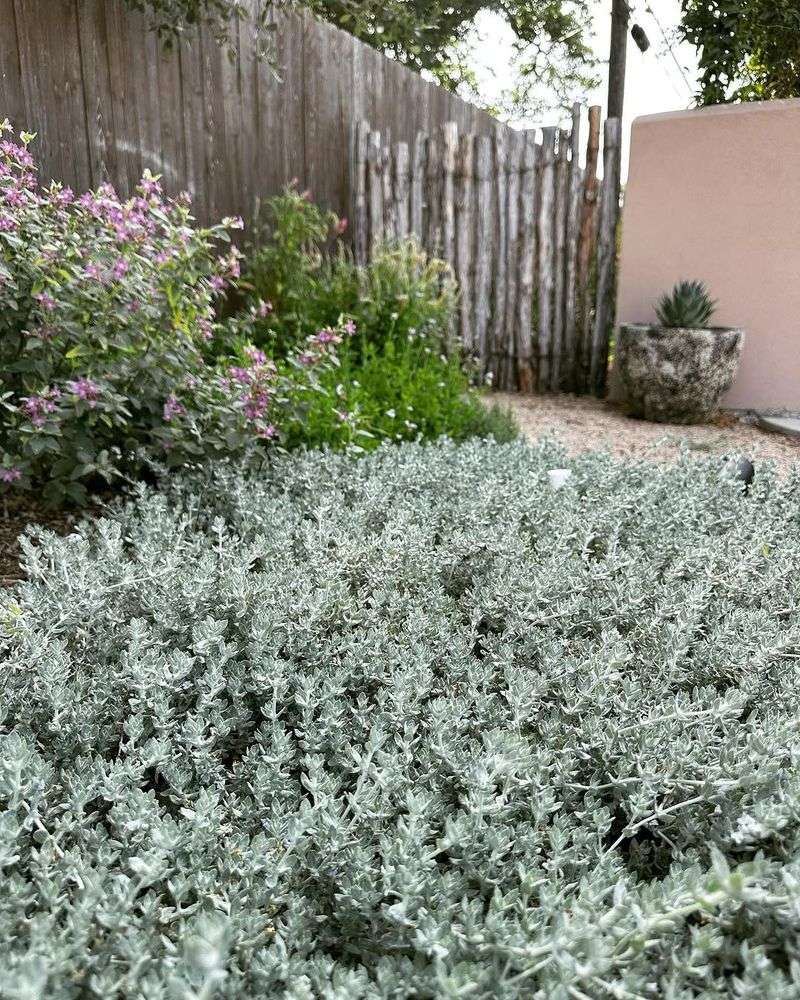
If your yard has a spot that gets absolutely cooked by the sun all day long, Woolly Stemodia might just become your new best friend. This compact native groundcover is built for heat.
Its fuzzy, silvery-gray leaves feel soft to the touch and give the plant a woolly appearance that stands out beautifully against the browns and tans of a dry Texas summer landscape. It looks interesting even when nothing else wants to grow.
Small purple flowers appear on and off throughout the warm season, adding just enough color to keep things lively without overwhelming the delicate texture of the foliage. The whole plant stays low and tidy, rarely growing more than a few inches tall.
That makes it ideal for filling in gaps between stepping stones, along sunny borders, or in rock gardens where you need something tough and good-looking.
Woolly Stemodia is native to the hot, arid regions of Texas and northern Mexico, so it knows how to survive without much water or pampering. It actually prefers lean, well-drained soil and can struggle if it gets too much moisture or fertilizer.
Keep it lean and sunny, and it will reward you with season after season of soft, silvery beauty. Many Texas landscapers are starting to use it more frequently as homeowners look for smarter, more sustainable alternatives to mulch and traditional ornamental plants.
It supports pollinators, cuts down on watering needs, and adds a uniquely textured look to any sunny bed. For hot, dry Texas gardens that need something genuinely tough and beautiful, Woolly Stemodia checks every box.
6. Trailing Lantana (Lantana Urticoides)
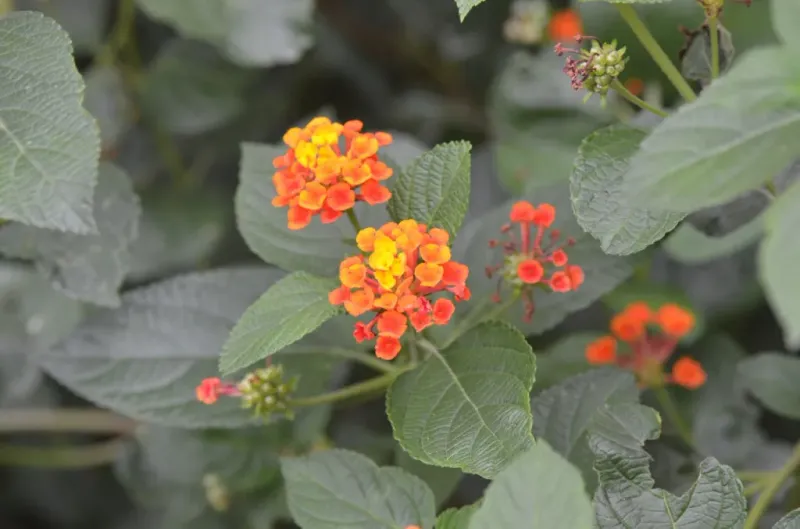
Few native plants put on a show quite like Trailing Lantana. From late spring through the first cool snap of fall, this spreading groundcover pumps out clusters of bright, cheerful flowers in shades of orange, yellow, and red.
Butterflies flock to it like it is the best restaurant in the neighborhood, and honestly, for them, it might be. If you want color, movement, and wildlife activity in your Texas yard, this plant delivers all three at once.
Trailing Lantana is not just pretty, it is also incredibly tough. It thrives in full sun and handles poor, rocky soil without complaint.
Once established, it needs very little water, making it a smart choice for Texas homeowners who want to cut back on irrigation.
It spreads laterally rather than growing tall, which means it works perfectly as a weed-suppressing groundcover in sunny beds, along slopes, or beside driveways where reflected heat is intense.
One thing worth knowing is that Trailing Lantana is a true Texas native, different from the non-native lantana varieties you often see at big-box garden centers. The native species is better adapted to local conditions and supports native butterfly species more effectively.
It is also more cold-hardy than its non-native cousins, bouncing back reliably after mild Texas winters. For gardeners across Texas who want a groundcover that replaces mulch while also turning their yard into a butterfly garden, Trailing Lantana is a standout choice.
It is bold, reliable, low-maintenance, and undeniably gorgeous from the first warm day of spring to the last golden afternoon of fall.
7. Creeping Phlox (Phlox Subulata)
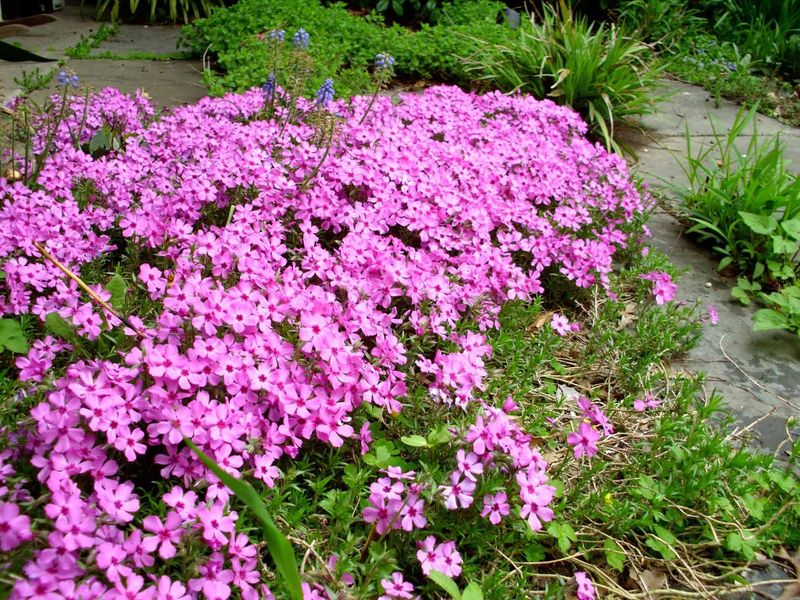
Every spring, gardeners who have Creeping Phlox in their yards get a moment that makes all the planting and waiting completely worth it.
This low-growing perennial explodes into a carpet of color, covering itself so thoroughly in blooms that you can barely see the leaves underneath.
Pink, purple, lavender, and white flowers blanket the plant for several weeks, turning ordinary garden borders into something that looks like a painting.
Creeping Phlox forms a dense, weed-smothering mat that works brilliantly as a mulch alternative in sunny spots. It stays low to the ground all year, with needle-like evergreen foliage that keeps your beds looking neat even when the flowers are not in bloom.
For Texas homeowners who want year-round coverage with a big seasonal payoff, it is hard to beat this plant.
It grows best in well-drained soil and full to partial sun, which suits a huge range of Texas landscapes from the Hill Country to North Texas. Once established, it is quite drought-tolerant and rarely needs fertilizing.
Dividing clumps every few years keeps it looking full and vigorous, and those divisions can be used to spread coverage across more of your beds for free. Unlike mulch, which breaks down and needs topping off every year, Creeping Phlox just keeps growing and improving.
It also attracts early spring butterflies and bees that are hungry after winter, making it a genuinely useful plant for your local ecosystem. If you want a groundcover that earns its place in your Texas yard every single spring, Creeping Phlox is a wonderful place to start.