The Ohio Lawn Overseeding Mistake That Wastes Seed Every Single Fall
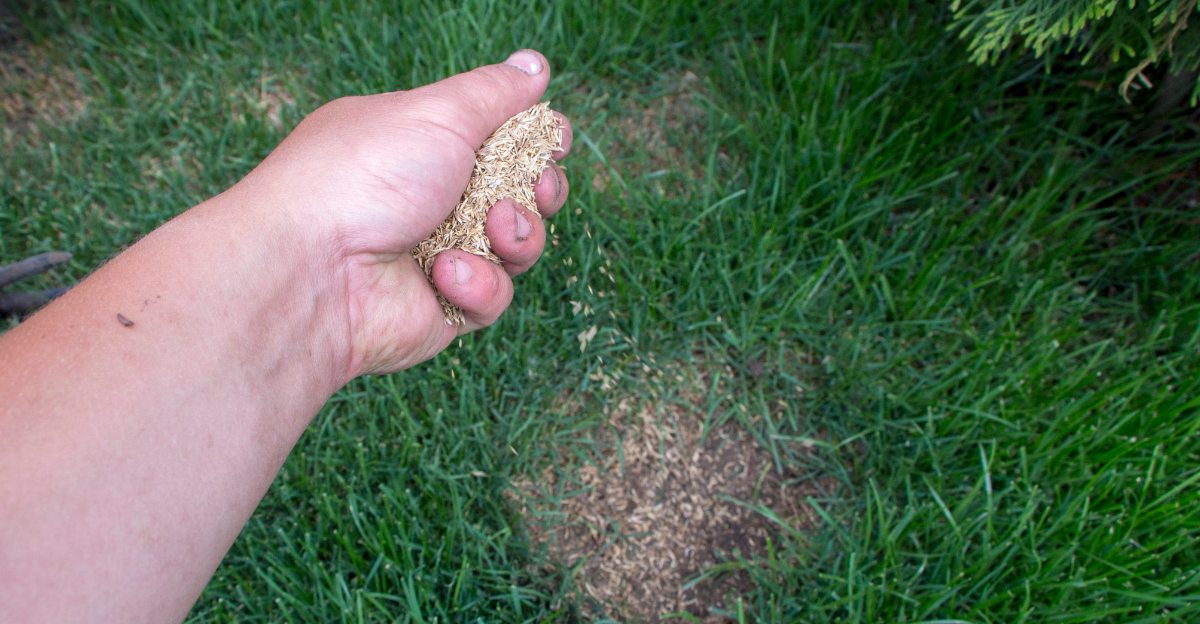
Every fall, homeowners across Ohio drag out a bag of grass seed, walk the yard, and spread it across a lawn that looks thin and tired. The effort feels productive.
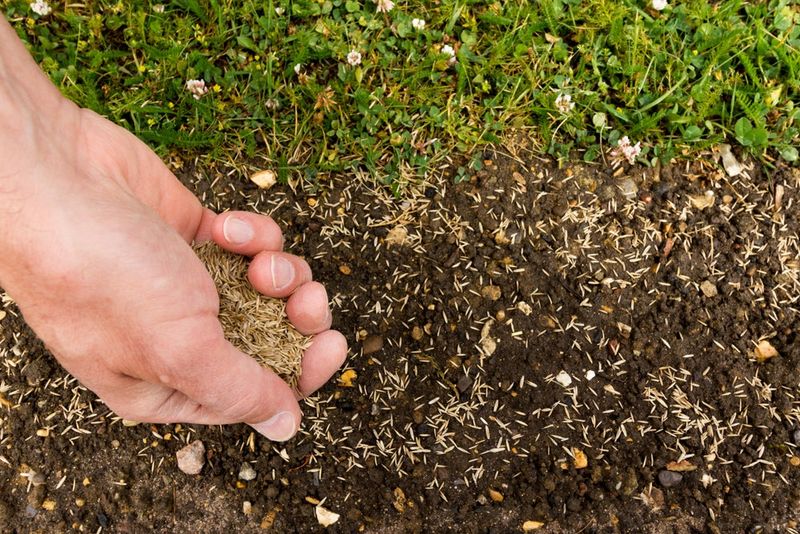
The results, though, often disappoint. Seed that never touches real soil has almost no chance of rooting, no matter how good the bag looks or how carefully it was spread.
A thick layer of thatch, dry clippings, compacted ground, or loose debris acts like a barrier between the seed and the soil it needs to survive. Understanding why seed fails is the first step toward stopping the waste.
Fall is genuinely one of the better seasons for overseeding cool-season grasses in this region, because temperatures cool down and soil stays workable. But the season alone cannot save seed that lands in the wrong place.
The tips below cover the most common reasons seed gets wasted every single fall, starting with the biggest mistake most home lawn owners make without even realizing it.
1. Stop Throwing Seed On Top Of Thatch
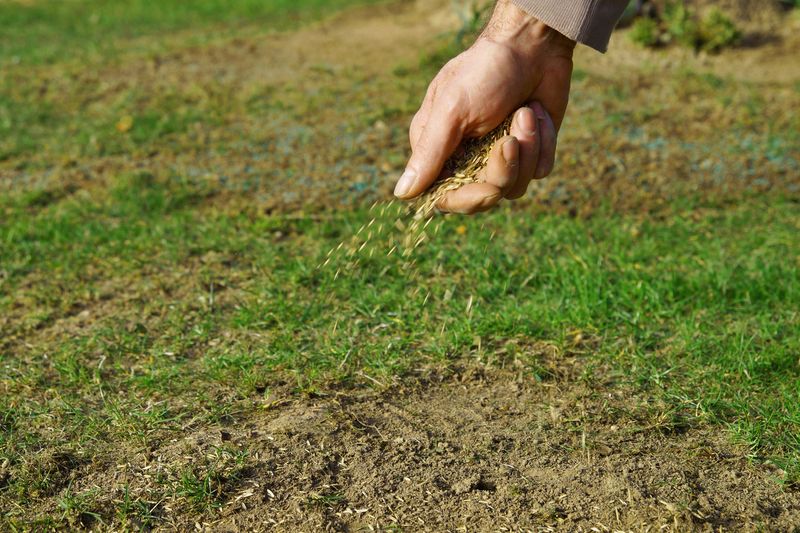
A thin patch can look ready for seed until a rake pulls up a mat of old grass and debris sitting just below the surface. That spongy layer is thatch, and it is one of the biggest reasons overseeding fails in home lawns across this state.
Seed that lands on thatch sits above the root zone. Even if a seed sprouts, the tiny root has nowhere to go.
Thatch builds up over time from clippings, stems, and old root material that breaks down slowly. A layer thicker than half an inch can block water, push seed away from soil, and create dry pockets where seedlings struggle.
Most Ohio homeowners do not realize the thatch is even there until they press a finger into the lawn and feel the cushion.
Before spreading any seed this fall, check the thatch depth. Use a small trowel or even a screwdriver to probe the lawn surface.
If the thatch feels thick and spongy, rake the area firmly or use a dethatching tool to thin it out. Removing that layer gives seed a real path to soil.
Skipping this step is the single most common reason a full bag of seed produces almost nothing by spring.
2. Rake Bare Spots Before You Overseed
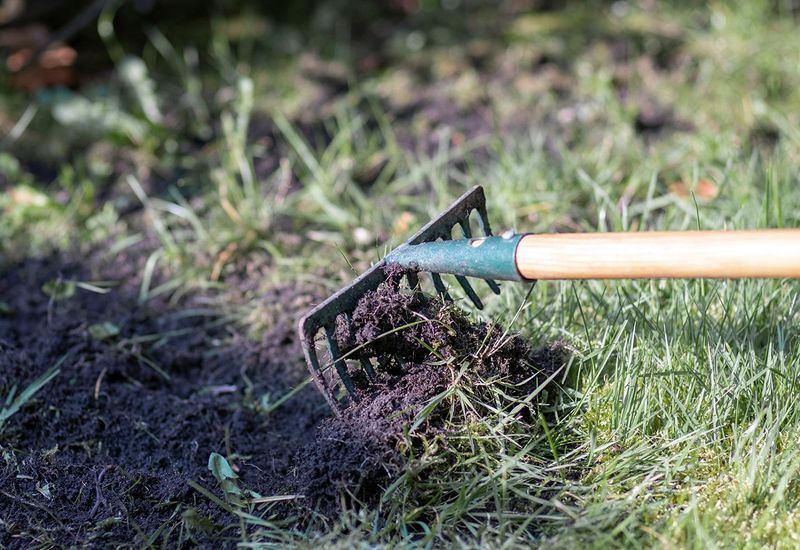
Bare spots in a lawn can be misleading. They look open and ready, but the surface is often covered with dried debris, loose dirt crust, or leftover clippings from the last mow.
Spreading seed over that layer without any prep work means most of it will sit on top, exposed to wind and birds, without ever rooting.
Raking bare areas before overseeding serves two purposes. First, it clears away loose material that blocks seed contact.
Second, it lightly scratches the soil surface, which helps seed settle into small grooves where moisture can reach it. A basic leaf rake or garden rake works fine for most small areas.
A few firm passes across the spot are usually enough to open the surface.
Your Ohio Garden Changes Every Week. Your Plan Should Too.
Gardening in Ohio changes quickly throughout the season. Every Friday you’ll receive a simple weekly plan showing exactly what to plant, prune, fertilize, harvest, and protect so you never miss the right timing.
After raking, spread seed evenly across the area. Then rake lightly again to work the seed into the loosened surface rather than leaving it sitting on top.
Pressing the area down gently with a flat tool or even a piece of plywood helps close air gaps around the seed. The goal is simple contact.
Seed that touches soil has a real chance. Seed resting on a dry, undisturbed surface mostly does not.
3. Make Sure Seed Touches Soil
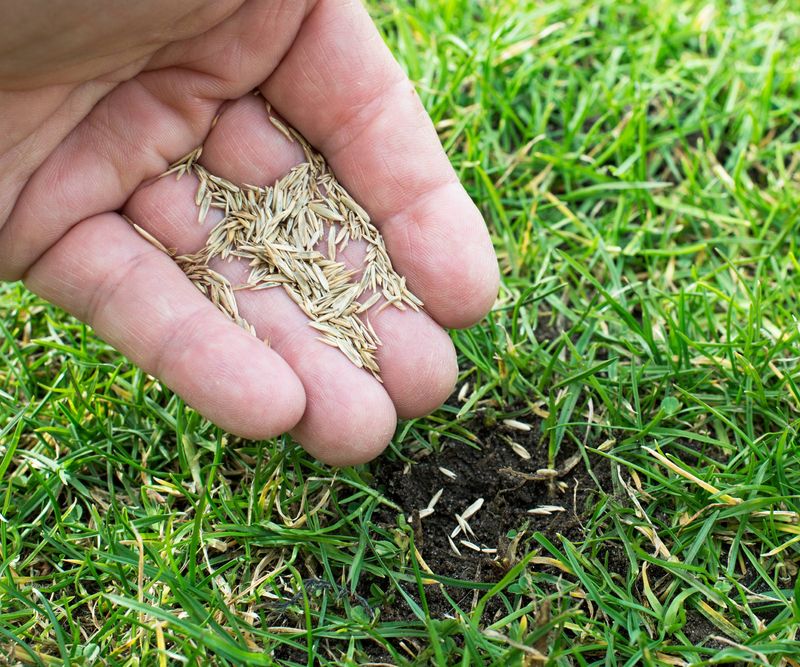
Seed-to-soil contact is not a complicated concept, but it is the one thing that separates a successful overseeding from a wasted bag. Moisture moves through soil.
When a seed sits directly against soil particles, it can pull in that moisture and begin the germination process. When it sits on debris, clippings, or a hard crust, the connection is broken.
Lightly raking seed into prepared areas is one of the most reliable ways to improve contact. After spreading seed, a quick pass with a leaf rake turned upside down can press seed gently into the surface without burying it too deep.
Seed buried more than a quarter inch tends to struggle, especially small-seeded varieties like fine fescue or Kentucky bluegrass.
For larger lawn areas, a lawn roller or a slit-seeder can improve contact more efficiently. A slit-seeder cuts small grooves directly into the soil and drops seed into them at the same time.
Rental options are available at many local equipment yards. For most Ohio home lawns, though, hand-raking prepared spots and pressing seed in firmly covers the basics.
The effort takes maybe twenty extra minutes. The difference in results can be dramatic compared to just broadcasting seed over an unprepared surface.
4. Loosen Compacted Areas Before Spreading Seed
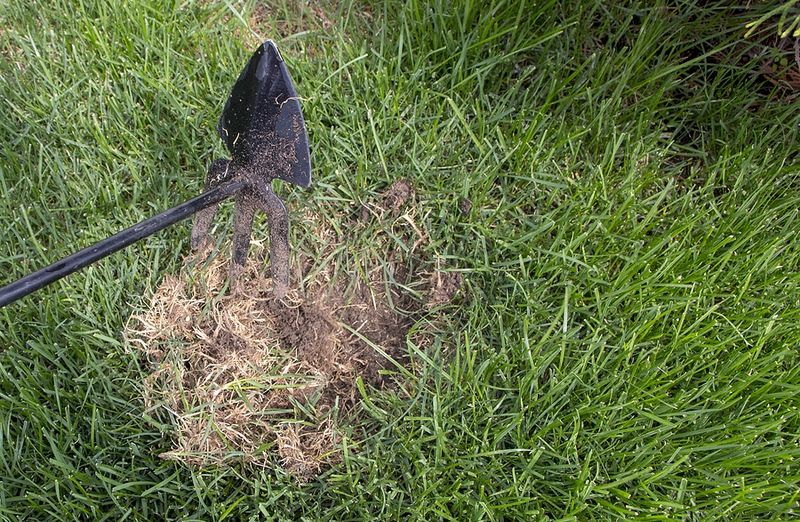
High-traffic areas take a beating over spring and summer. The soil under a frequently used path, a play area, or a parking strip can become packed so tightly that water barely moves through it.
Spreading seed over compacted ground is one of the quieter overseeding mistakes because the surface can look perfectly fine from a distance.
Compaction pushes soil particles close together, leaving little room for air or water to move. Seedling roots need both.
Even if seed sprouts on a compacted spot, the young plant often struggles to push roots deep enough to survive its first dry stretch. The lawn may look patchy again within a season.
Loosening compacted areas before overseeding can make a real difference. Core aeration pulls small plugs of soil out of the ground, opening channels for water, air, and roots.
A garden fork works for smaller spots. Not every lawn needs full aeration every fall, but areas that feel hard underfoot, shed water quickly, or stay bare despite repeated seeding are good candidates.
Core aeration also breaks up thatch slightly as a bonus. Loosening the soil first is one of those preparation steps that takes effort upfront but pays off when the seed actually roots instead of just sitting there.
5. Mow Low Enough To Help Seed Reach The Ground
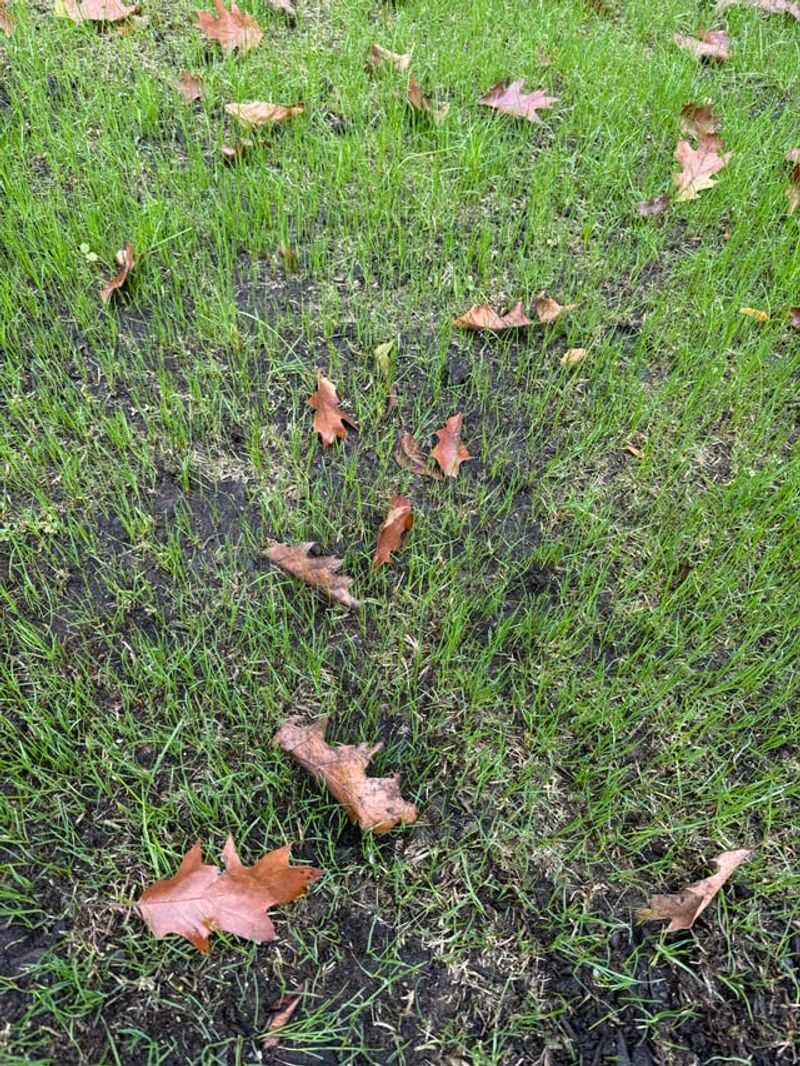
Mowing before overseeding is a step that many homeowners skip because the lawn looks fine at its regular height. The problem is that tall grass acts like a canopy.
Seed broadcast over a lawn cut at four inches can float down onto leaf blades and stems instead of reaching the soil below. By the time it works its way down, birds may have found it first.
Cutting the lawn a bit shorter than usual before overseeding helps seed reach the soil more easily. A mowing height around two to two and a half inches is commonly suggested as a prep cut.
This is not about scalping the lawn or removing so much leaf material that the existing grass is stressed. It is simply about reducing the distance between the seed and the ground.
Clippings management matters here too. If the mower leaves a thick layer of clippings behind, rake them up or bag them before spreading seed.
A light scatter of clippings is not a problem and can actually hold a little moisture. But a thick mat of fresh-cut grass is just another barrier between seed and soil.
One clean mow with the bag attached, right before overseeding, handles both issues at once and sets the lawn up for better results.
6. Keep New Seed Moist Until Roots Take Hold
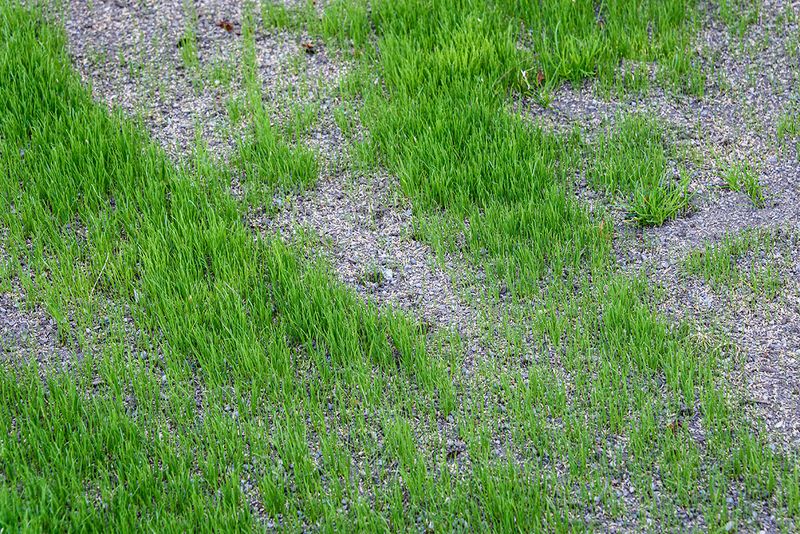
Watering after overseeding is where a lot of good prep work falls apart. Seed that has been carefully worked into prepared soil still needs consistent moisture to germinate.
If the surface dries out completely for even a day or two during the germination window, young sprouts can shrivel. They may have just begun to root but never become real plants.
The watering approach for new seed is different from regular lawn watering. Light, frequent watering keeps the top layer of soil moist without soaking the ground.
Two or three short watering sessions per day can work well during the first week, depending on temperature and sun exposure. The goal is to keep the seed zone damp, not flooded.
Standing water on the surface can move seed around and create bare patches.
As seedlings push up and begin to look established, shift to less frequent but deeper watering. This encourages roots to grow downward rather than staying near the surface.
A shallow root system makes young grass more vulnerable during dry spells. Most cool-season grasses need consistent moisture for two to three weeks after germination before they are truly rooted.
Staying on top of watering during that window is one of the most direct ways to protect the investment already made in seed and prep work.
7. Avoid Overseeding Right Before Heavy Rain
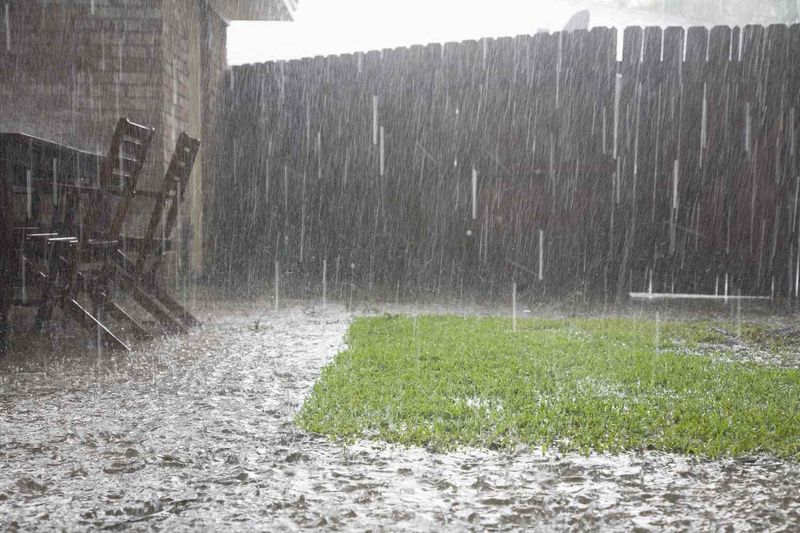
Checking the forecast before spreading seed is a habit that saves a lot of frustration. A moderate rain after overseeding is not a problem.
It can actually help settle seed into the soil and add the moisture new seed needs. A heavy downpour, though, is a different story.
Hard rain moves seed. It pools in low spots, washes along slopes, and leaves some areas with too much seed and others with almost none.
Uneven coverage after a storm is one of those problems that does not show up until weeks later. The lawn may come in patchy and thin in places that should have filled in.
By then, the window for fall overseeding may have passed. Reseeding late in the season carries its own risks because seedlings need enough time to establish before cold slows growth.
A forecast of light to moderate rain within a day or two of overseeding is generally fine. Heavy rain, thunderstorms, or extended downpours in the immediate forecast are worth waiting out.
Most weather apps now show hourly precipitation amounts, which makes it easy to find a three or four day window with manageable conditions.
Spreading seed on a calm, dry afternoon with mild rain expected a day or two later is close to an ideal setup for fall overseeding in this region.
8. Choose Fall Timing That Gives Seed A Fair Start
Timing is one of those overseeding factors that feels flexible until it is too late. Cool-season grasses like tall fescue, Kentucky bluegrass, and perennial ryegrass are the most common choices for lawns in this state.
They germinate best when soil temperatures are between 50 and 65 degrees Fahrenheit. That window typically falls somewhere in late summer through mid-fall, depending on the year and the part of the state.
Seeding too early in late summer means the seedlings may face heat stress before they are established. Seeding too late in fall means the ground may cool off before germination is complete.
Seedlings that are still very young when the first hard frost arrives may not survive winter in good condition. The goal is to give new grass enough time to develop a real root system before growth slows for the season.
OSU Extension recommends mid-August through mid-October as a general target window for overseeding cool-season lawns in this state. Northern regions may want to aim for the earlier part of that range.
Southern regions have a bit more flexibility. Local extension offices and the OSU Ohioline website are reliable resources for region-specific timing guidance.
Starting even a week earlier than planned is usually better than waiting for conditions that feel perfect but never quite arrive.