The Ohio Native That Looks Better Than Hostas In Shady Fall Gardens
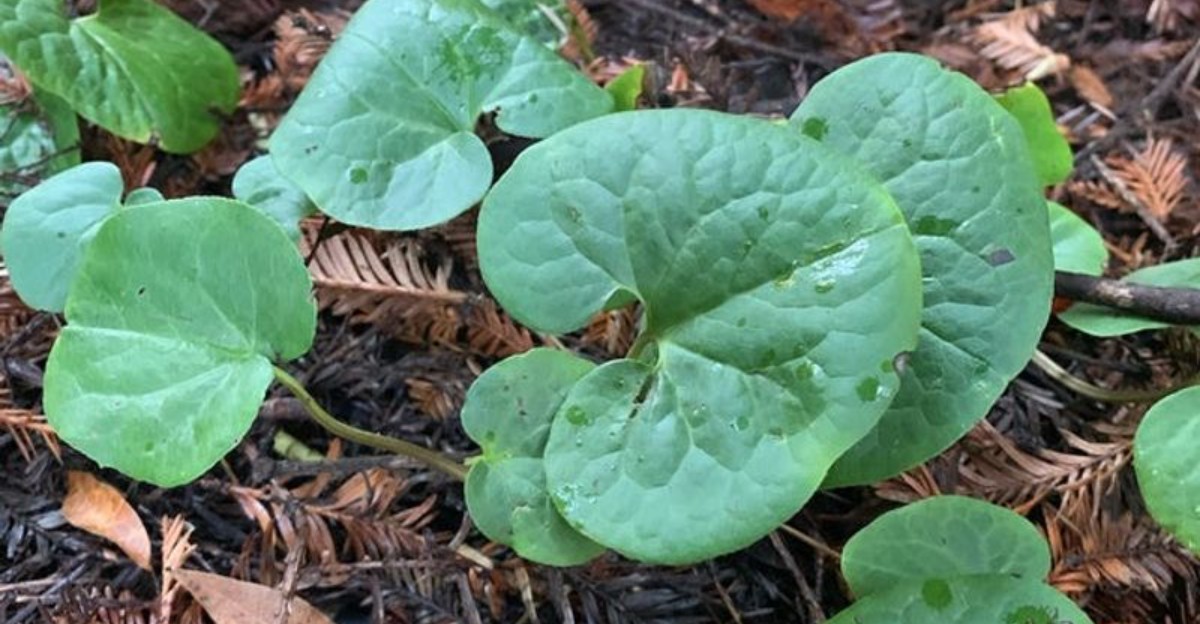
Your shady garden bed has been settling for second best, and you didn’t even know a better option grew right under your nose.
Hostas get all the credit for filling in those dim, tricky corners of Ohio yards, but a native ground cover quietly outshines them once fall rolls around.
It hugs the soil in low, glossy mounds, shrugs off slug damage that turns hosta leaves into swiss cheese, and holds its color long after hostas start to look ragged and worn.
This plant spreads on its own terms, filling gaps without turning into a nuisance, and it plays nice with the native pollinators your yard depends on. Garden centers rarely stock it, which explains why so few homeowners know it exists.
Once you spot it thriving under a maple or along a fence line, you’ll wonder why hostas ever got so much attention. Your shade garden deserves an upgrade, and this one’s hiding in plain sight.
1. Meet Wild Ginger, Ohio’s Woodland Shade Native
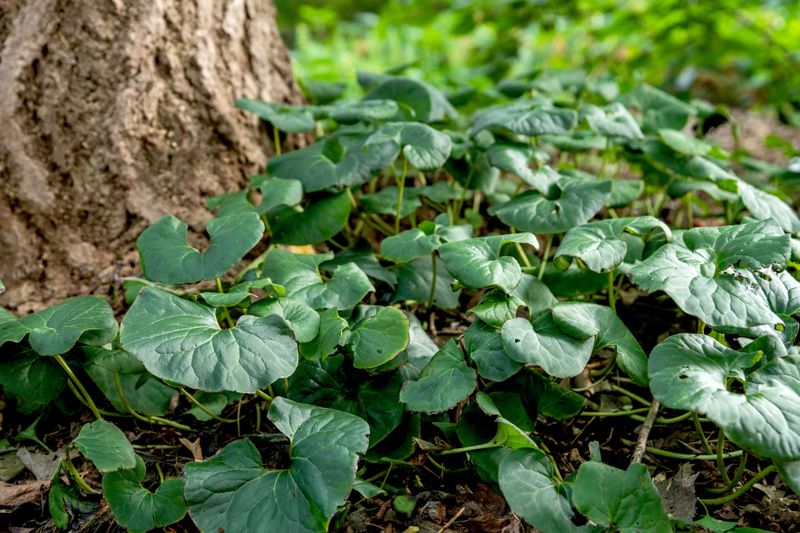
Asarum canadense has been quietly carpeting eastern North American woodlands, Ohio included, since long before anyone planted a lawn. Botanists call it Canadian wild ginger, though it is not related to the ginger in your spice drawer.
The roots do carry a warm, spicy scent when scratched, which is exactly how the common name got started. Early settlers noticed that smell and the name stuck for good.
Growing conditions are refreshingly simple. Partial shade to full shade suits it best, and it wants soil that stays moist yet drains well, ideally loaded with humus or leaf mold.
Cold weather is no trouble either. Wild ginger is hardy through USDA zones 3 to 8, which covers every county in the state with room to spare.
What makes it stand out in autumn is stamina. Many spring woodland wildflowers fade away by midsummer, leaving gaps, but this one holds its foliage right through the growing season and into fall.
Deer and rabbit browsing is often less of a concern with wild ginger than with many other shade plants, although pressure can vary by location.
Add in its low-maintenance habit and you have a plant that rewards neglect. Set it in decent soil, water it the first season, then mostly step back and let the woods take over.
2. Fill Empty Shade With Heart-Shaped Leaves
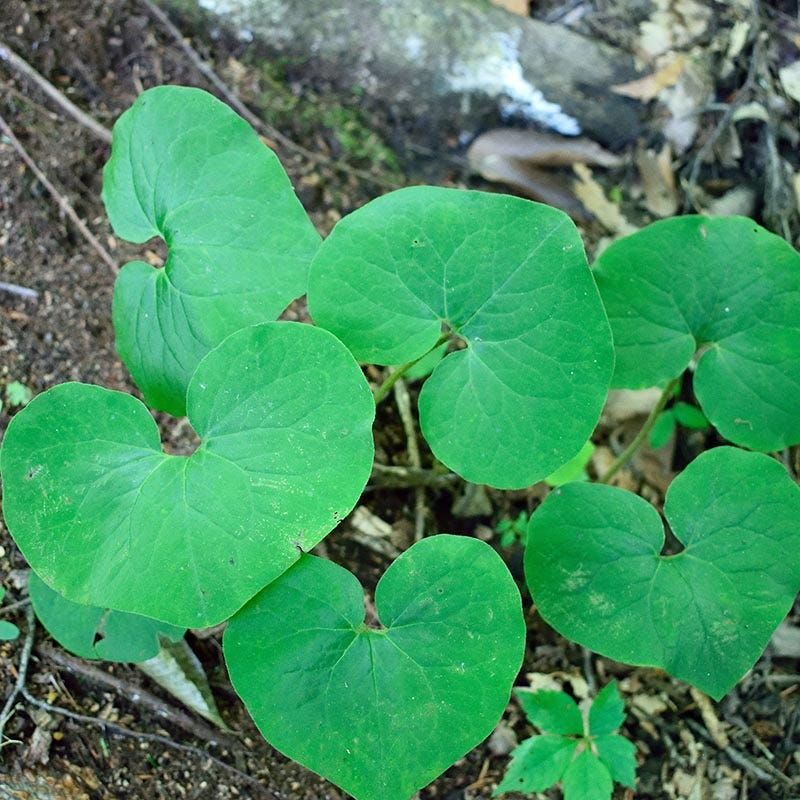
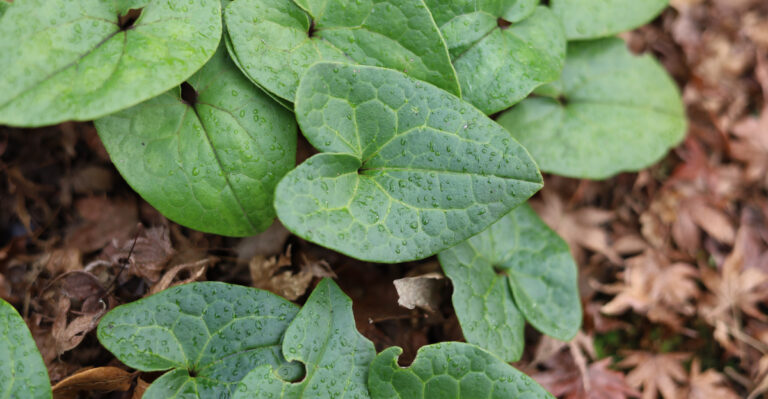
Picture two green hearts held up on slender stalks, side by side, about six inches off the ground. That is the basic architecture of a single wild ginger plant, repeated a few thousand times across a woodland floor.
Most clumps settle in around 4 to 8 inches tall, occasionally stretching to 10 inches in rich ground. Low, yes, but far from boring.
Each leaf can widen to 4 to 6 inches across, shaped like a heart or a kidney depending on which one you pick up. The surface is deep green and coated in fine hairs that catch morning dew and hold it like tiny beads.
Run a finger across one and it feels almost like felt. Kids notice this instantly and usually want to touch every leaf in the patch.
Your Ohio Garden Changes Every Week. Your Plan Should Too.
Gardening in Ohio changes quickly throughout the season. Every Friday you’ll receive a simple weekly plan showing exactly what to plant, prune, fertilize, harvest, and protect so you never miss the right timing.
Foliage pushes up in early spring, unfurling from the soil like small folded fans. From there it stays plump and glossy straight through autumn, while hostas nearby are already looking ragged and chewed.
The effect in a bare shade bed is instant texture. Where you once had thin mulch and a few weeds, you get a rolling green surface with real depth.
For pure foliage value in low light, few Ohio natives match it.
3. Create A Low Groundcover Layer Under Trees
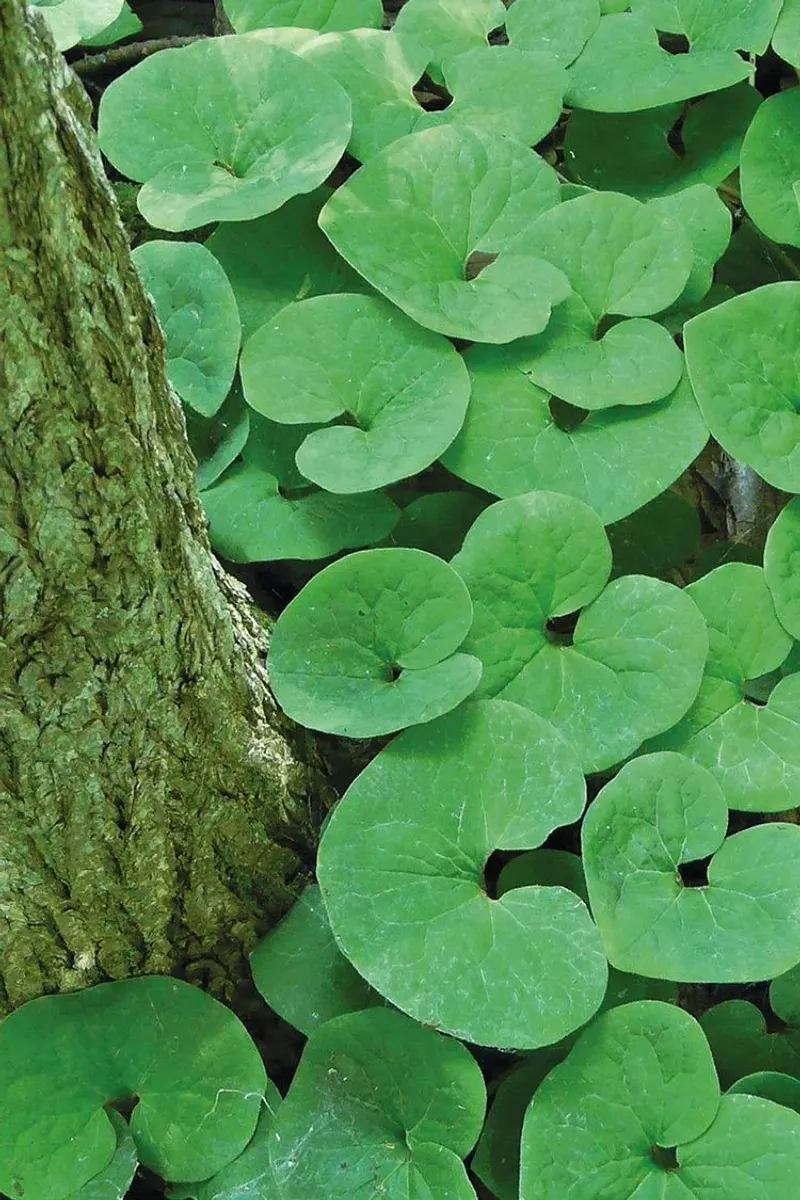
Under a big maple, the soil is dry, root-packed, and shaded for months. Most bedding plants throw in the towel there within one season.
Wild ginger treats that same spot as home turf. It evolved beneath Ohio hardwoods, so tree roots and low light are simply normal conditions rather than obstacles.
Spreading happens underground through rhizomes, which are thick horizontal stems that travel just beneath the surface. New leaf pairs pop up along those rhizomes, gradually knitting separate plants into one continuous colony.
Speed is slow to moderate, which is honestly the sweet spot. You get a mat that fills in steadily without the plant elbowing its way into the vegetable garden.
Gardeners sometimes worry that any spreading groundcover means trouble later. Not here.
Wild ginger is generally considered a manageable native groundcover, and unwanted sections can be lifted out with a hand trowel when needed.
The finished look is a tidy green floor that hides bare dirt, softens tree roots, and makes the whole area read as intentional rather than neglected.
One practical tip: plant it in fall or early spring while soil is cool and damp, and add a couple inches of shredded leaves on top. That mimics the forest and gives the rhizomes exactly the cushion they prefer.
4. Keep Soil Moist For Lush Fall Foliage
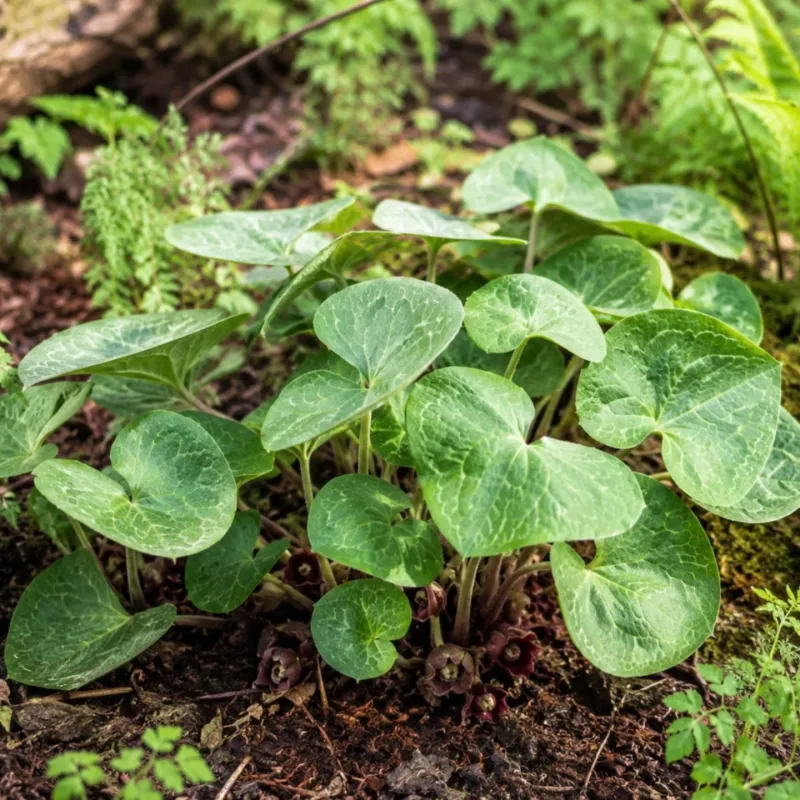
Ask any Ohio woods what keeps its floor so green in October and the answer is moisture. Deciduous forests hold cool, damp soil all season, and wild ginger built its whole lifestyle around that.
Rich organic matter matters just as much. Soil full of decomposed leaves drains well while still staying sponge-like, which is the balance these plants want.
Summer is the season to pay attention. During August dry spells, give the patch a deep soak once a week rather than a daily sprinkle, so water reaches the shallow rhizomes.
Established colonies can ride out short dry stretches without much fuss. They simply look better, fuller, and greener when moisture stays steady.
Mulch is the easiest insurance policy available. A yearly topping of shredded leaves or fine bark in late fall keeps the ground cool, slows evaporation, and feeds the soil as it breaks down.
Sun exposure deserves a warning. Hot afternoon sun can scorch the leaves, leaving brown crispy edges that ruin the effect you planted it for, so keep it under a canopy or on the north side of the house.
Get water and shade right and the autumn payoff is real. While other shade plants collapse, this one stays plump and glossy into the cool months.
5. Use Wild Ginger In Naturalized Borders
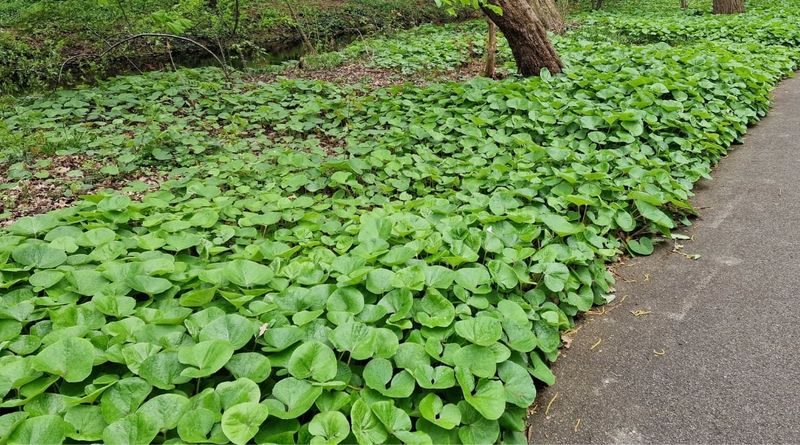
Edging a shade bed with impatiens gets expensive fast, and you do it again every May. A border of wild ginger costs money once and then quietly improves each year.
Woodland gardens, shaded borders, and naturalized areas are where this plant genuinely belongs. Landscape designers reach for it whenever a bed needs a finished edge that does not look fussy.
Along a curving path, the low mounded leaves define the line without hiding what grows behind them. Nothing gets blocked, since the whole plant stays under a foot tall.
Given a couple of seasons, the border naturalizes on its own. Individual plants merge, edges soften, and the bed starts looking like a slice of forest rather than a row of nursery pots.
Fun detail for history buffs: colonists once dried and candied the spicy rhizome as a sweet-tasting treat, which is partly why the plant traveled into home gardens in the first place.
For a natural look, skip straight lines. Plant in loose drifts of five or seven, let the spacing vary slightly, and the colony will read as something that seeded itself.
Foliage stays presentable from April through frost, so the border never goes through an awkward bare stage midseason. That reliability is what keeps gardeners coming back to it.
6. Give Pollinators A Hidden Spring Resource
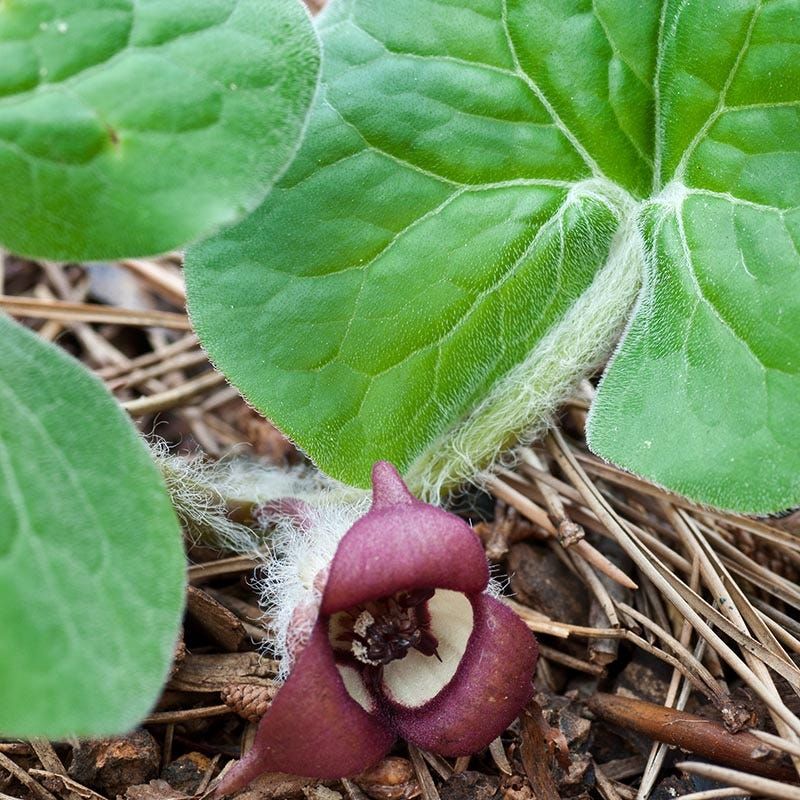
Here is a flower most gardeners have never seen, even after growing the plant for years. Wild ginger blooms in April and May, but the blossoms hide down at soil level, tucked beneath those broad leaves.
Lift a pair of leaves and you will spot a small bell, brownish purple or reddish brown, sitting practically in the dirt. It looks more like a little clay jug than a typical flower.
The location is no accident. Pollination here comes from ground-level visitors like ants, tiny flies, beetles, and gnats, all drawn in by an earthy scent rather than bright petals.
Ants get a second job too. They carry the seeds away to their nests, which is how colonies leap to new spots a few feet off.
Butterfly fans have another reason to plant it. Wild ginger serves as a host plant for the Pipevine Swallowtail, a striking blue-black butterfly whose caterpillars feed on the foliage.
A few nibbled leaves in summer usually means something good is happening, not a pest problem. Leave the caterpillars alone and enjoy the show.
These early hidden blooms appear during a season when some woodland insects are becoming active again. Not bad for a flower nobody notices.
7. Pair It With Ferns And Other Ohio Natives
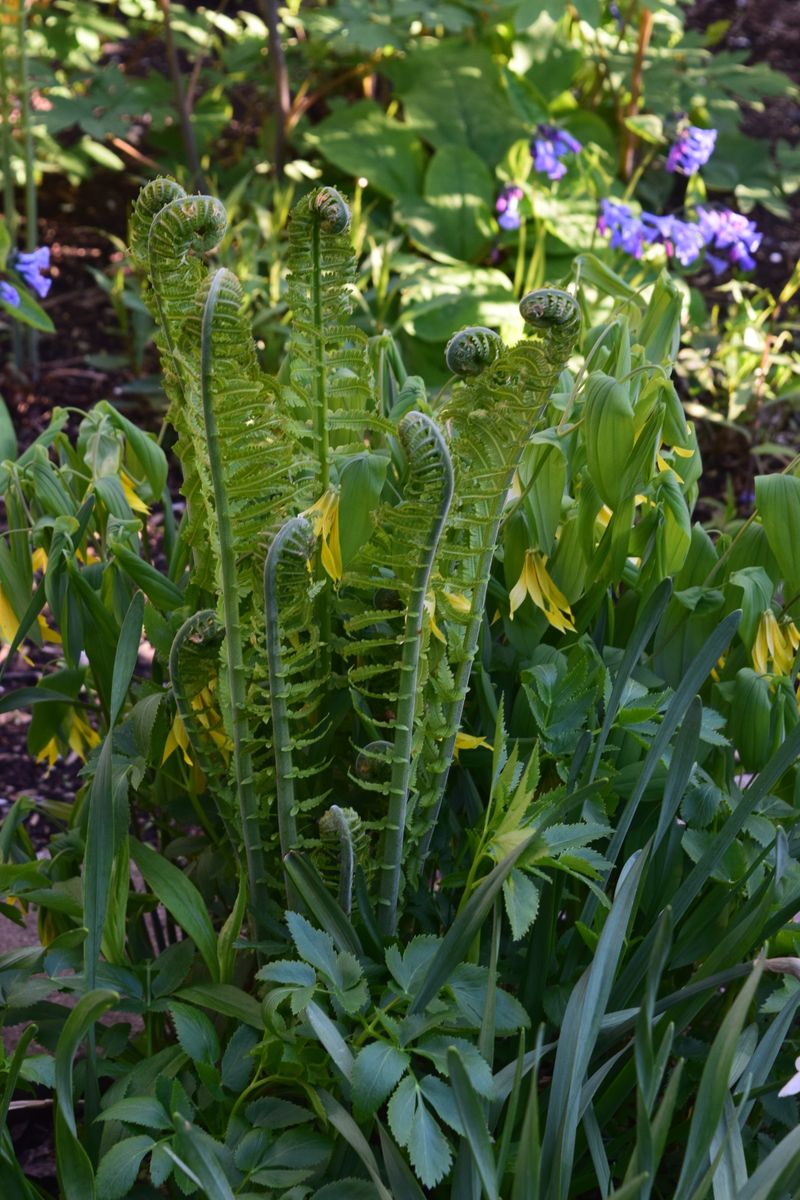
Great shade gardens work in layers, and wild ginger claims the bottom one. Everything else stacks above it.
Ferns make the most natural partners. Maidenhair fern brings airy fan-shaped fronds, lady fern adds lacy softness, and ostrich fern supplies bold vertical height behind the low green mat.
Spring wildflowers fit beautifully too. Virginia bluebells, bloodroot, wild geranium, bellwort, Jack-in-the-pulpit, and wild blue phlox all share the same appetite for rich, shaded, moist ground.
There is a timing bonus worth planning around. Bluebells and bloodroot go dormant and vanish by early summer, leaving holes, and the ginger foliage simply grows over those spots and covers them.
Foamflower and Jacob’s ladder round out the mix nicely, offering flower spikes and finer leaf texture at a slightly taller level. Evergreen shrubs behind the group give the whole scene a backbone through winter.
Color contrast helps too. Pale green fern fronds against the dark, glossy ginger leaves keeps the planting from looking like one flat sheet of green.
Think of it as building a small piece of Ohio forest in your yard. Canopy above, shrubs in the middle, wildflowers and ferns next, and this heart-leaved native tying everything together at ground level where the eye finishes.
8. Replace High-Maintenance Lawn In Shady Spots
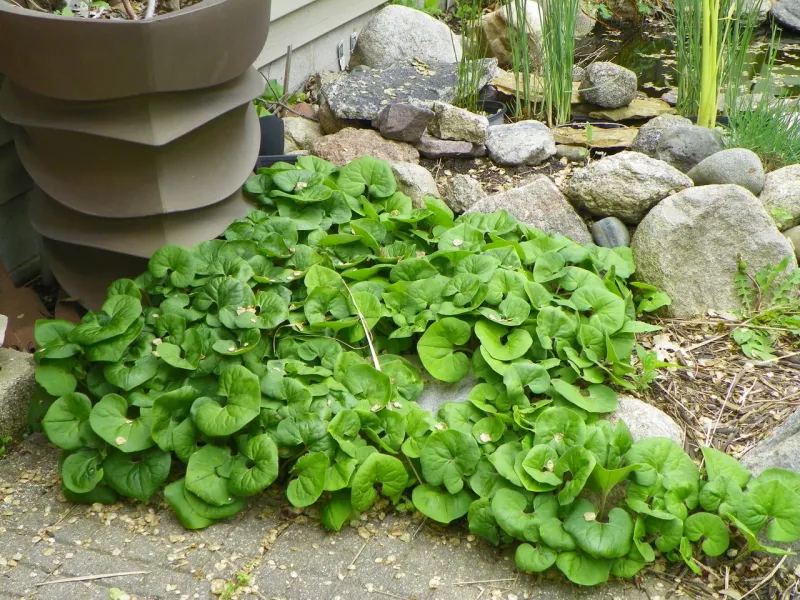
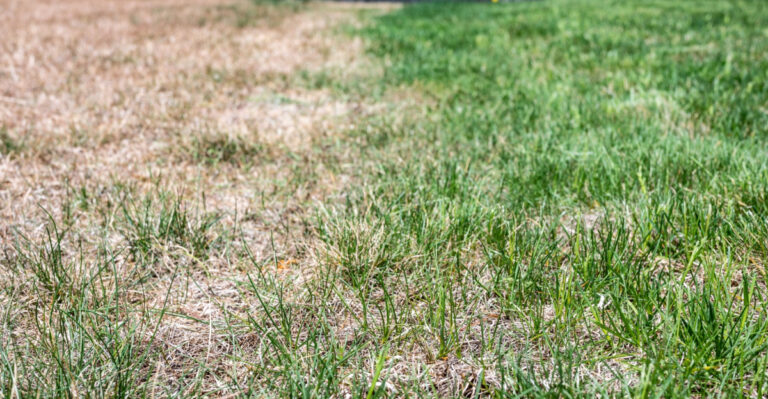
Thin, patchy grass under a shade tree is one of the most frustrating sights in any Ohio backyard. You reseed every spring, and by August it is bare dirt and moss again.
Turfgrass needs sun to make food, and a mature canopy simply does not allow enough of it. Fighting that battle year after year rarely ends well.
Swapping in wild ginger flips the problem into an advantage. Shade becomes the reason the planting succeeds instead of the reason it struggles.
Once the colony knits together, it forms a dense cover that holds soil moisture and shades out weed seedlings before they get going. Less weeding, less watering, no mowing in that zone at all.
Compare that to English ivy, a common shady-lawn substitute that climbs trees and escapes into woodlots. Wild ginger stays polite and belongs here in the first place.
Starting is straightforward. Smother the struggling grass with cardboard and a few inches of leaf compost in fall, then plant through it the following spring.
Give the new plants regular water through their first summer and mulch the gaps while they fill. With time and proper establishment, that stubborn bare patch can become a soft green floor that requires far less maintenance than struggling turf.
9. Let This Woodland Plant Spread Into A Living Carpet
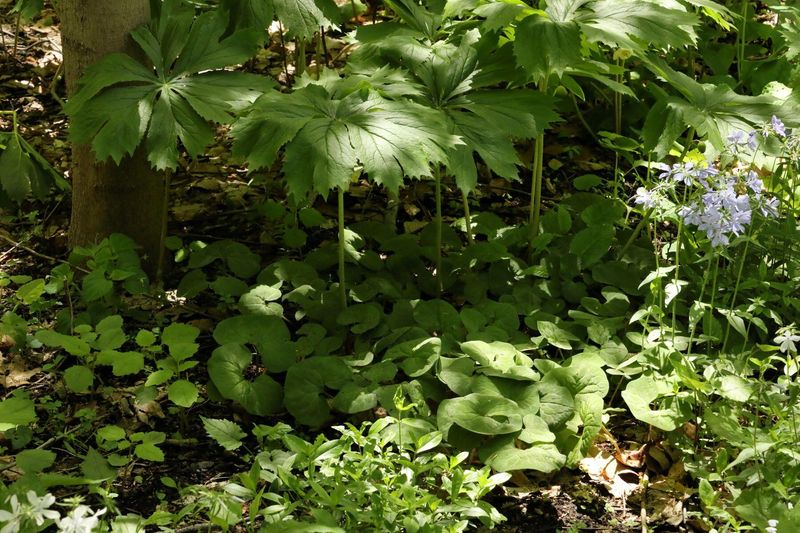
Patience pays off with this one. Year one looks like scattered green hearts, year two looks better, and by year three you start seeing an actual carpet.
Expansion runs on rhizomes creeping outward just under the soil. After the plants settle in, expect roughly 6 to 8 inches of new spread each year in each direction.
Spacing at planting time controls how fast the gaps close. Set plants 12 inches apart for quicker coverage, or stretch to 24 inches if your budget is tight and you do not mind waiting.
Filling the in-between space with shredded leaf mulch keeps weeds down while the colony works. That mulch also breaks down into exactly the humus these roots crave.
Division is the cheapest way to expand. In early spring, slice off a chunk of rhizome with a leaf pair and roots attached, then tuck it into a new shady spot and water it in.
Mature colonies in the wild can stretch for many feet across a forest floor, all from a single slow creep over decades. Home gardens can get a convincing version of that in about five years.
The reward is a shade bed that keeps improving on its own. Fewer weeds, fewer chores, and a floor of green hearts that holds strong into fall.