The Ohio Owl That Helps Keep Chipmunks Out Of Your Garden
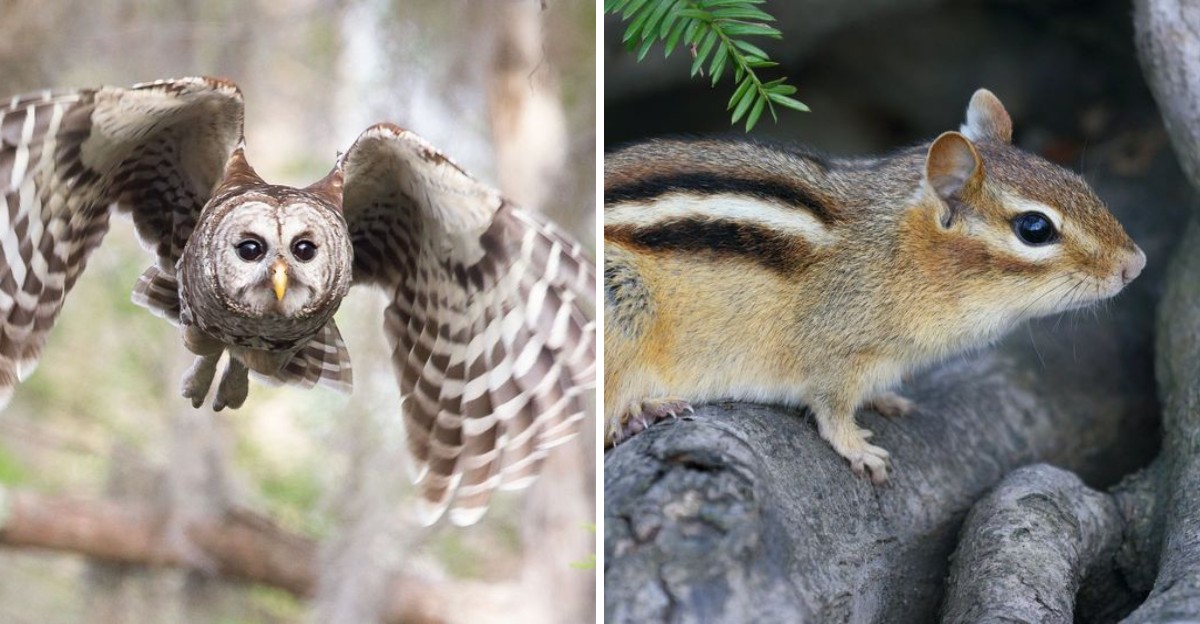
Some owls swallow small rodents whole, then cough up tidy pellets of fur and bones hours later. One local species even hunts in daylight now and then, which puts it on the same clock as the striped bandits raiding your tulip bulbs.
Chipmunks in Ohio spend their days digging, stuffing their cheeks, and nibbling strawberries before you get a chance.
Most owls sleep through all that action. This one bends the rules, calling at dusk and swooping from shady branches on cloudy afternoons.
Few things sound better to me than a guard who patrols on silent wings and never asks for a paycheck.
You don’t have to buy anything or set a single trap. Still, a wild bird won’t solve every garden problem by itself, and the real story is more interesting than the hype.
Could a few backyard tweaks convince this feathered hunter to clock in at your place?
That Big Owl In Your Oak Tree Might Be Watching Your Chipmunks
A few summers ago, I found a gray pellet the size of my thumb under a backyard oak. Inside were tiny bones and a scrap of striped fur.
Something had been eating well, and it wasn’t my cat.
Owls are one of nature’s quiet rodent managers. They swallow small prey whole, digest the soft parts, and then cough up the fur and bones in a neat bundle.
Scientists study these pellets to learn exactly what owls eat, and small mammals show up again and again.
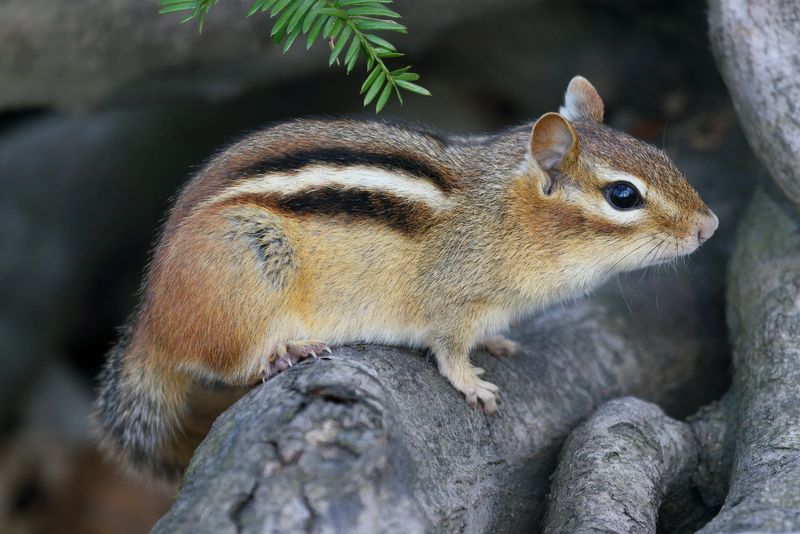
Chipmunks land on that menu more often than you might guess. These busy diggers spend their mornings and late afternoons scurrying along stone walls, woodpiles, and garden edges.
That open movement makes them easy to spot from a branch overhead.
So when you hear a deep call drifting from the trees, pay attention. A hunting owl is a sign that your yard has a working food web.
It also means the chipmunks digging up your crocus bulbs are not the top of the chain.
Look under tall trees for pellets and whitewash on the trunk. Those clues tell you an owl is already patrolling, even if you rarely see it.
The Barred Owl Bends The Usual Nighttime Rules
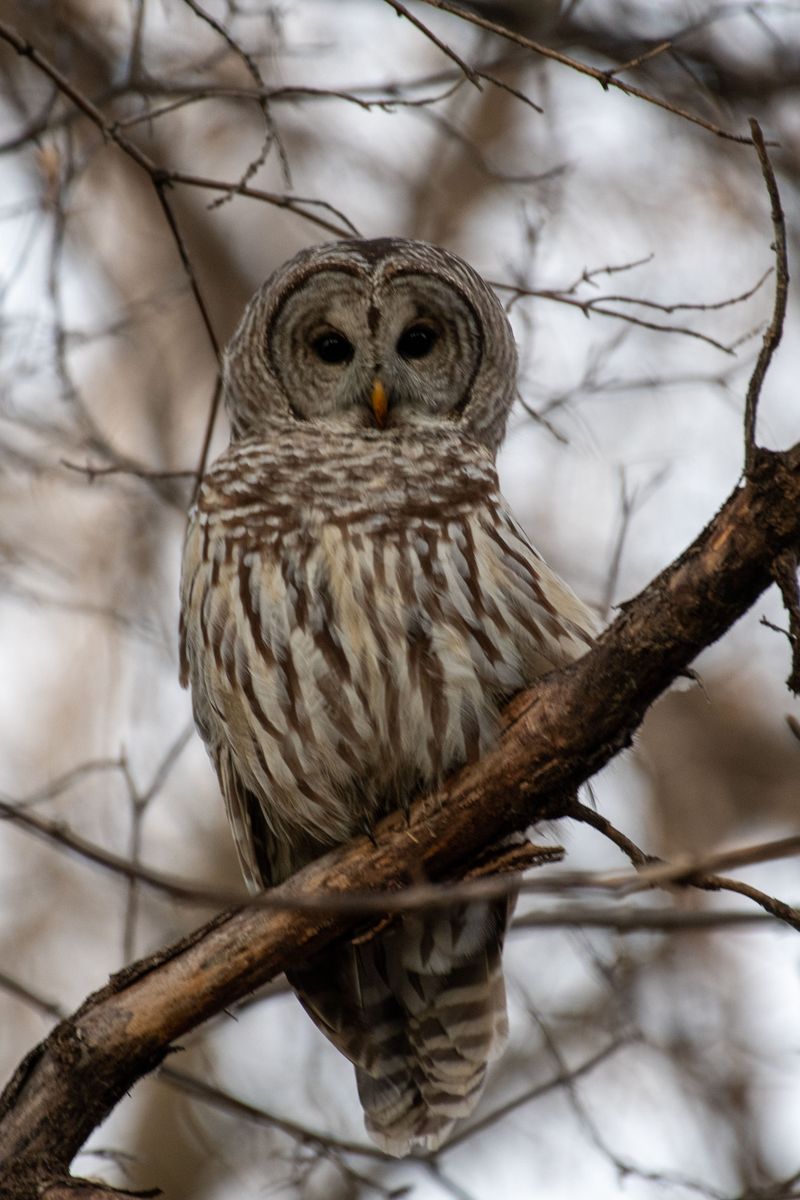
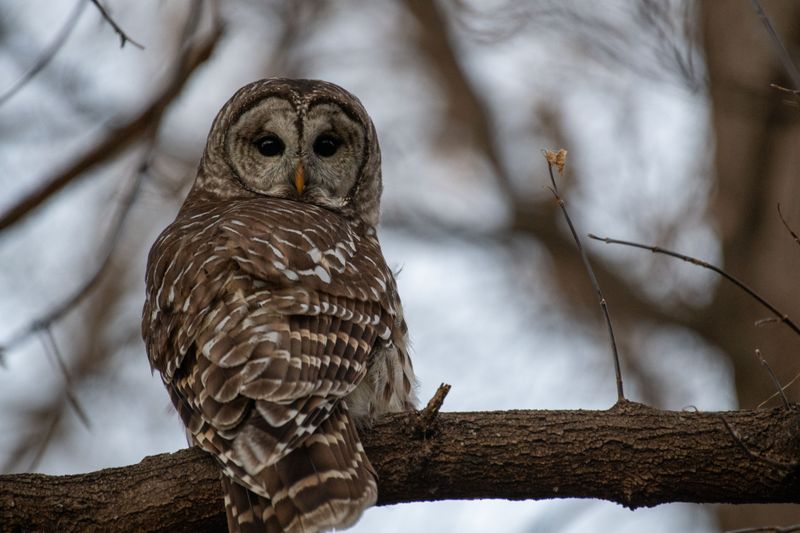
Dark brown eyes, a round head with no ear tufts, and a call that sounds like “Who cooks for you?” That’s the Barred Owl, and it’s the best candidate for your chipmunk helper.
Most owls hunt deep in the night. Barred Owls are more flexible.
They often hunt at dusk and dawn, and they sometimes hunt during the day, especially on cloudy days or when feeding hungry owlets in late spring.
That schedule matters. Chipmunks are active in daylight and settle into their burrows at night, so a strictly nocturnal hunter rarely crosses paths with them.
A Barred Owl hunting at sunrise or early evening has a much better shot.
These owls live year-round across much of Ohio, favoring wooded areas near streams, ravines, and older neighborhoods with big trees. They eat mice, voles, chipmunks, squirrels, frogs, crayfish, and even large insects.
In other words, they grab whatever is handy.
The Great Horned Owl also takes chipmunks, though it hunts mostly after dark. The small Eastern Screech-Owl leans toward insects and mice.
If you want a feathered partner that overlaps with chipmunk hours, the Barred Owl is the one to cheer for.
Chipmunk Burrows Keep Many Striped Diggers Safe From Owls
Honesty time. One owl will not empty your yard of chipmunks, and anyone who promises that is stretching the truth.
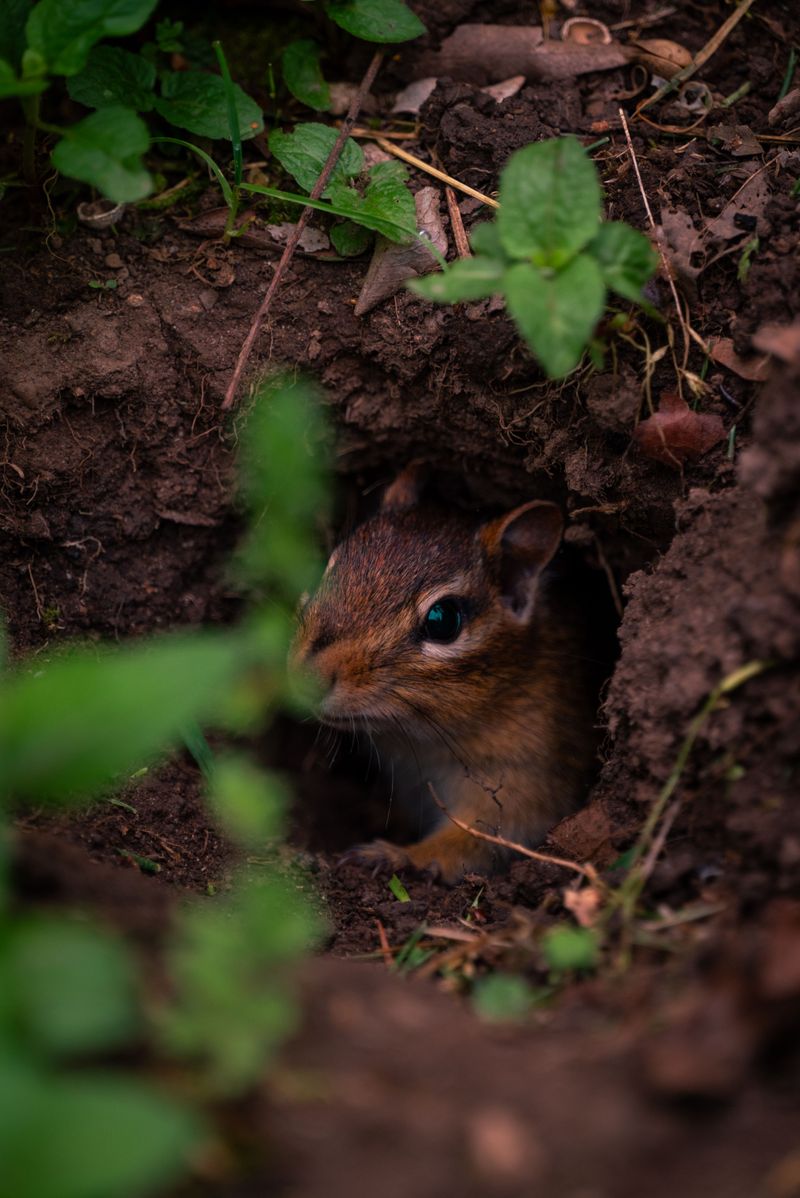
Eastern chipmunks are clever survivors. They dig burrows that can run more than 10 feet long, with tidy entrances about two inches wide and often no dirt pile nearby.
When danger appears, they dash underground in seconds and give a sharp chipping alarm call.
They also have plenty of other enemies. Hawks, foxes, snakes, weasels, and house cats all hunt them.
Owls are one piece of a bigger team, not a solo fix.
What owls can do is help keep numbers in check over time. A hunting pair working your neighborhood takes some chipmunks, and the rest grow more cautious.
Nervous chipmunks spend less time lounging in the open around your tomatoes.
Food supply plays a huge role too. In years when oaks drop lots of acorns, chipmunk numbers often rise the next season, no matter how many predators live nearby.
So think of the owl as a helpful neighbor rather than a hired exterminator. Combined with smart garden habits, it can tip things in your favor.
Expecting miracles only leads to disappointment.
Tall Trees And Hollow Trunks Bring Barred Owls Closer
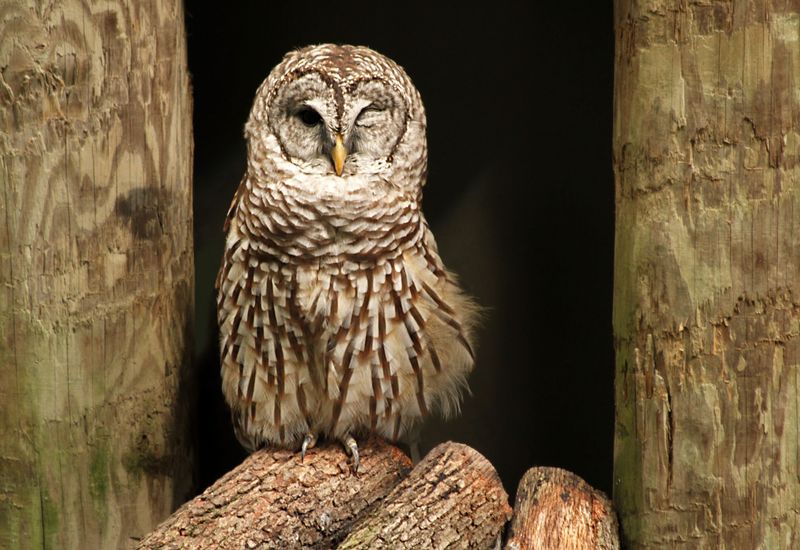
Big old trees are like five-star hotels for Barred Owls. They nest in natural cavities in large hardwoods, and they sometimes reuse old hawk or squirrel nests.
If you have a mature tree with a hollow trunk or broken top, consider keeping it when it’s safe to do so. Have an arborist check that it won’t fall on your house or a walkway.
A standing trunk that’s no longer leafing out, called a snag, can also offer roosting spots and woodpecker holes.
Nest boxes help too. Barred Owls will use large wooden boxes mounted 15 to 30 feet high in a wooded area.
The Cornell Lab of Ornithology’s NestWatch site offers free plans with exact measurements.
Thick evergreens give owls a shady place to rest during the day. Native choices like eastern white pine, eastern hemlock, and eastern red cedar work well in Ohio landscapes.
Finally, dim things down at night. Bright floodlights can make hunting harder for owls and confuse other wildlife.
Motion-activated lights or warm, downward-facing fixtures keep your yard safe for you while leaving the shadows to the owls.
Rodent Poison Puts Your Backyard Owls At Risk
Please hear me on this one. If you want owls hunting your chipmunks, keep rodent poison out of your yard.
Rodenticides don’t stop working once a chipmunk or mouse eats the bait. The poisoned animal often becomes slow and wobbly, which makes it an easy target.
When an owl swallows it, the owl takes in the toxin too.
Wildlife experts call this secondary poisoning. Studies across North America have found rodenticide residue in many owls and hawks, and it can make them sick or cause internal bleeding.
A single bait station could undo all your hard work attracting a helpful hunter.
Glue traps cause problems as well. Birds, snakes, and pets can get stuck in them, and they’re cruel to the rodents too.
If you need to remove chipmunks directly, use live traps or snap traps placed inside covered boxes so birds can’t reach them. Check your local rules before relocating any animal, since moving wildlife can be restricted.
Talk with neighbors about this as well. Owls hunt over a wide area, so one poison-free yard helps, but a whole poison-free block helps far more.
Hardware Cloth And Smart Bulb Choices Back Up Your Owl
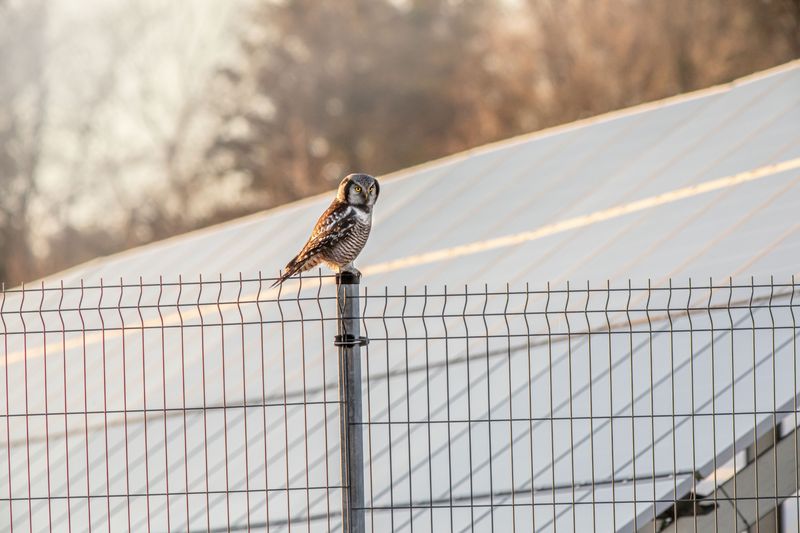
Owls handle the hunting, but you can handle the defense. A few simple tricks make your garden far less tempting to chipmunks.
Start with bulbs. Chipmunks love tulip and crocus bulbs, yet they mostly skip daffodils, which taste bitter and contain toxic compounds.
Alliums and snowdrops are also good picks. For tulips you can’t live without, plant them in wire bulb cages or lay hardware cloth over the bed and cover it with soil.
Clean up the snack bar next. Spilled birdseed under feeders is a chipmunk buffet.
Use a tray to catch seed, or switch to hulled seed that leaves less mess.
Penn State Extension and other experts suggest reducing hiding spots too. Keep woodpiles, rock piles, and thick ground covers away from your house and garden beds.
A gravel strip along your foundation discourages burrowing.
Owl decoys get a lot of buzz, but chipmunks catch on quickly. If you try one, move it every few days.
Scent sprays with pepper or garlic may help a little, but they wash off in rain.
A real owl plus fewer hiding places works much better than any plastic statue.
Listen For That “Who Cooks For You” Call And Enjoy The Show
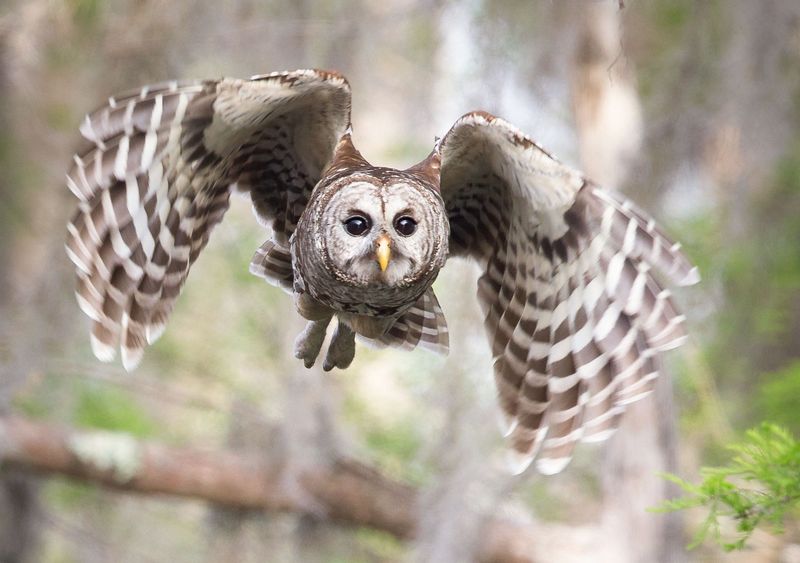
On a calm spring evening, step outside and just listen. A rolling “Who cooks for you, who cooks for you-all?” means a Barred Owl is nearby, and sometimes a pair will cackle back and forth like noisy neighbors.
Late winter is a great time to hear them. Barred Owls start courting in January and February, and they often lay eggs by March in Ohio.
By early summer, fluffy young owls are out of the nest and learning to hunt.
Enjoy them from a distance. All native owls are protected under the federal Migratory Bird Treaty Act and state law.
That means you can’t capture, keep, or harm them, or disturb an active nest. Barn Owls are especially rare here and listed as a threatened species.
Avoid playing recorded calls over and over to lure owls in. It stresses them and pulls them away from hunting and caring for young.
My best advice is simple. Make your yard friendly to owls, protect your bulbs, skip the poison, and let nature do some of the work.
You’ll lose fewer plants and gain a front-row seat to one of the coolest birds in Ohio.