The Ohio Tree Planting Mistake That Costs Homeowners Thousands To Fix
A tree can make an Ohio yard look better almost overnight. It adds shade, boosts curb appeal, and gives homeowners that satisfying feeling of putting down roots in a real, lasting way.
But one planting mistake has a habit of hiding in plain sight, and by the time it shows up, the price tag can be brutal. A lot of homeowners think the hard part ends after the hole is dug and the tree is in the ground.
That is where trouble often starts.
In Ohio, where heavy soils, wet springs, and tight suburban planting spaces can all work against a young tree, one bad decision at planting time can lead to root problems, poor growth, sidewalk damage, foundation issues, or a tree that never settles in the way it should.
What looks small in year one can snowball into a major fix later. And for plenty of Ohio homeowners, that lesson ends up costing far more than they ever expected.
1. Most Trees Are Planted Too Deep Without Homeowners Realizing It
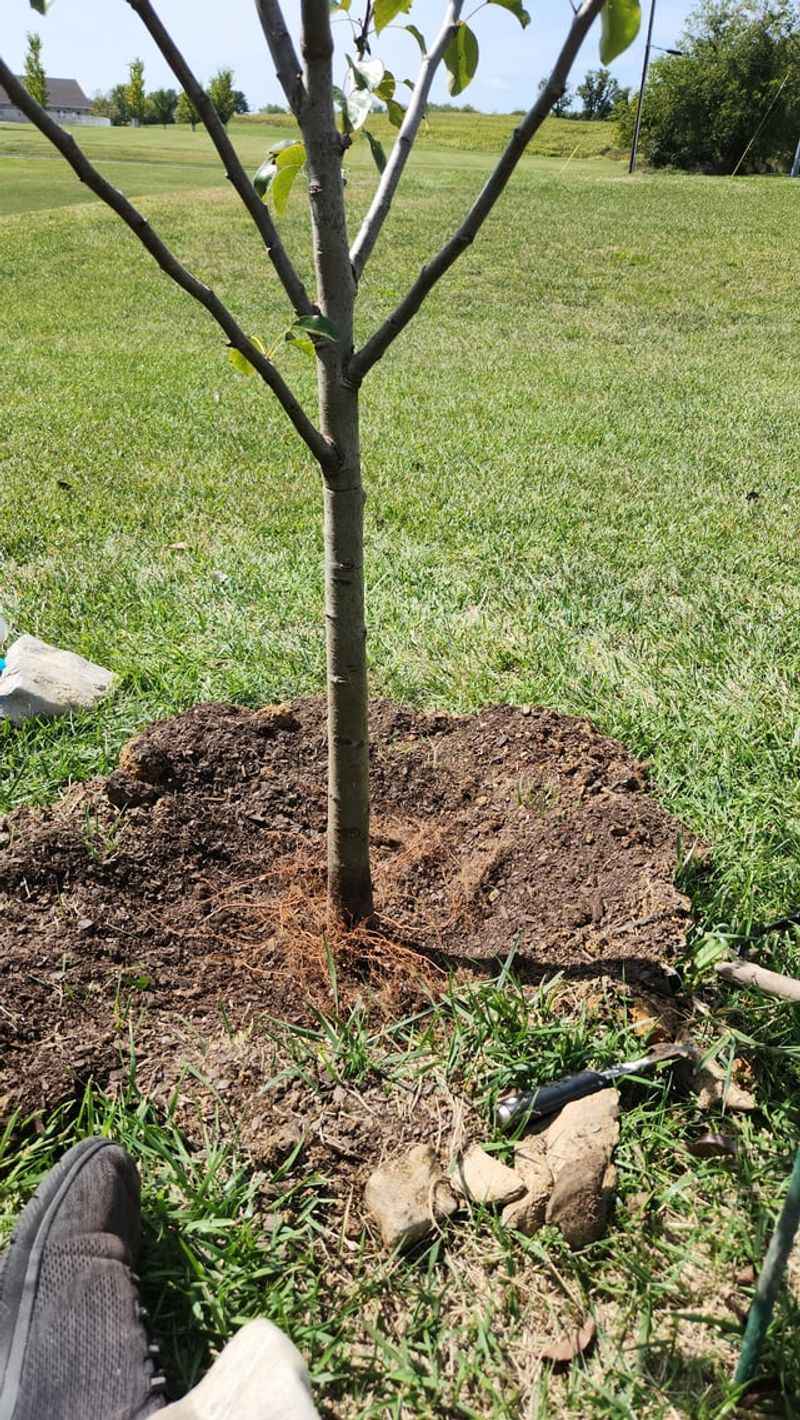
Walk through any Ohio neighborhood and count the trees with no visible trunk flare at the base. Chances are, you will spot more than a few.
Planting trees too deep is one of the most widespread errors in residential landscaping, and most homeowners have absolutely no idea it is happening.
A big part of the problem starts at the nursery. Trees grown in containers are often already sitting too low in their pots.
Soil, bark, and organic material accumulate over time, slowly burying the base of the trunk before the tree ever leaves the lot.
When a homeowner follows the common advice to plant at the same level as the container, they are unknowingly continuing a mistake that started before they even picked up a shovel.
Matching the soil line in the pot is not the same as planting correctly. The root flare, which is the natural widening at the very base of the trunk, should always be visible above the ground.
If the pot’s soil line is already covering that flare, planting flush with it just buries the problem deeper.
Ohio State University Extension recommends inspecting every container tree before planting to locate the actual root flare. Scraping away the top inch or two of potting mix often reveals that the true base of the tree is lower than it appears.
Catching this early makes a significant difference in long-term tree health.
2. The Root Flare Gets Buried And Causes Long-Term Damage
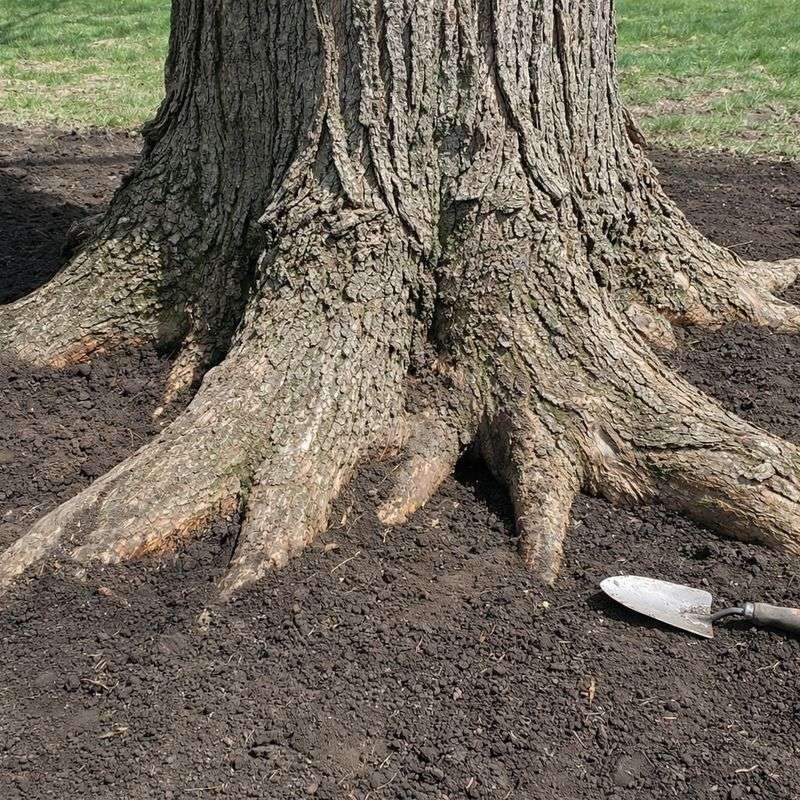
Picture the base of a healthy, mature oak tree. Notice how the trunk does not go straight into the ground like a fence post.
Instead, it widens and flares outward before meeting the soil. That widening section is called the root flare, and it plays a critical role in how a tree functions and stays structurally sound.
The root flare is the transition zone between the trunk and the root system. It is designed to be exposed to air, not buried under soil or mulch.
Your Ohio Garden Changes Every Week. Your Plan Should Too.
Gardening in Ohio changes quickly throughout the season. Every Friday you’ll receive a simple weekly plan showing exactly what to plant, prune, fertilize, harvest, and protect so you never miss the right timing.
When it gets covered, the bark in that area stays constantly moist.
Over time, that moisture creates conditions where fungal pathogens and rot organisms thrive, slowly breaking down the tissue that the tree depends on for stability and movement of water and nutrients.
Before planting any tree, finding the root flare should be your first step. Gently brush or scrape away the top layer of soil in the container until you find where the trunk starts to widen.
That point needs to sit at or slightly above the final soil grade in your yard. According to ISA arborist guidelines, the root flare should always be visible after planting is complete.
A buried root flare does not cause obvious damage overnight. The harm builds slowly over years, making it easy to overlook until the tree is already in serious trouble and expensive intervention becomes necessary.
3. Girdling Roots Slowly Strangle The Tree Over Time
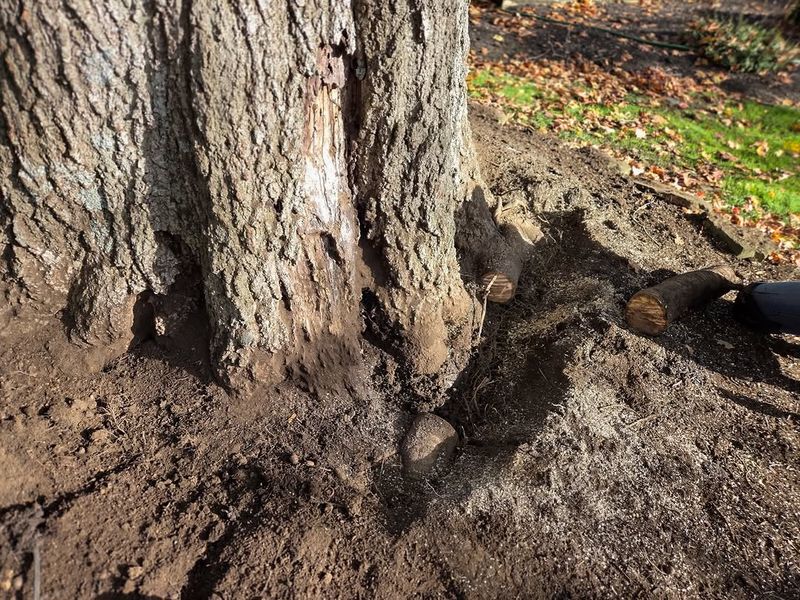
Buried too deep, a tree does not just sit there and struggle quietly. It responds by sending out new roots in search of oxygen, which is scarce deeper in the soil.
Those roots often grow in circles near the surface, wrapping around the base of the trunk in what arborists call girdling roots.
Girdling roots are particularly dangerous because they act like a slow tightening band around the trunk. As both the trunk and the roots grow wider over the years, the circling roots press harder against the vascular tissue just beneath the bark.
That tissue is responsible for moving water and nutrients up from the roots and sugars down from the leaves. When it gets compressed, the whole system starts to break down.
Think of it like a garden hose with a kink in it. Water pressure drops, flow slows, and over time the hose wears out at the bend.
A girdling root does the same thing to a tree, restricting the flow of everything the tree needs to survive and grow.
The tricky part is that girdling roots are often hidden underground. By the time they cause noticeable symptoms above ground, the damage has already been building for years.
Trees with circling roots may look fine for a decade before the canopy starts thinning and growth slows to a crawl. Early intervention from a certified arborist is the best way to catch and address this problem before it becomes irreversible.
4. Early Warning Signs Often Go Unnoticed For Years
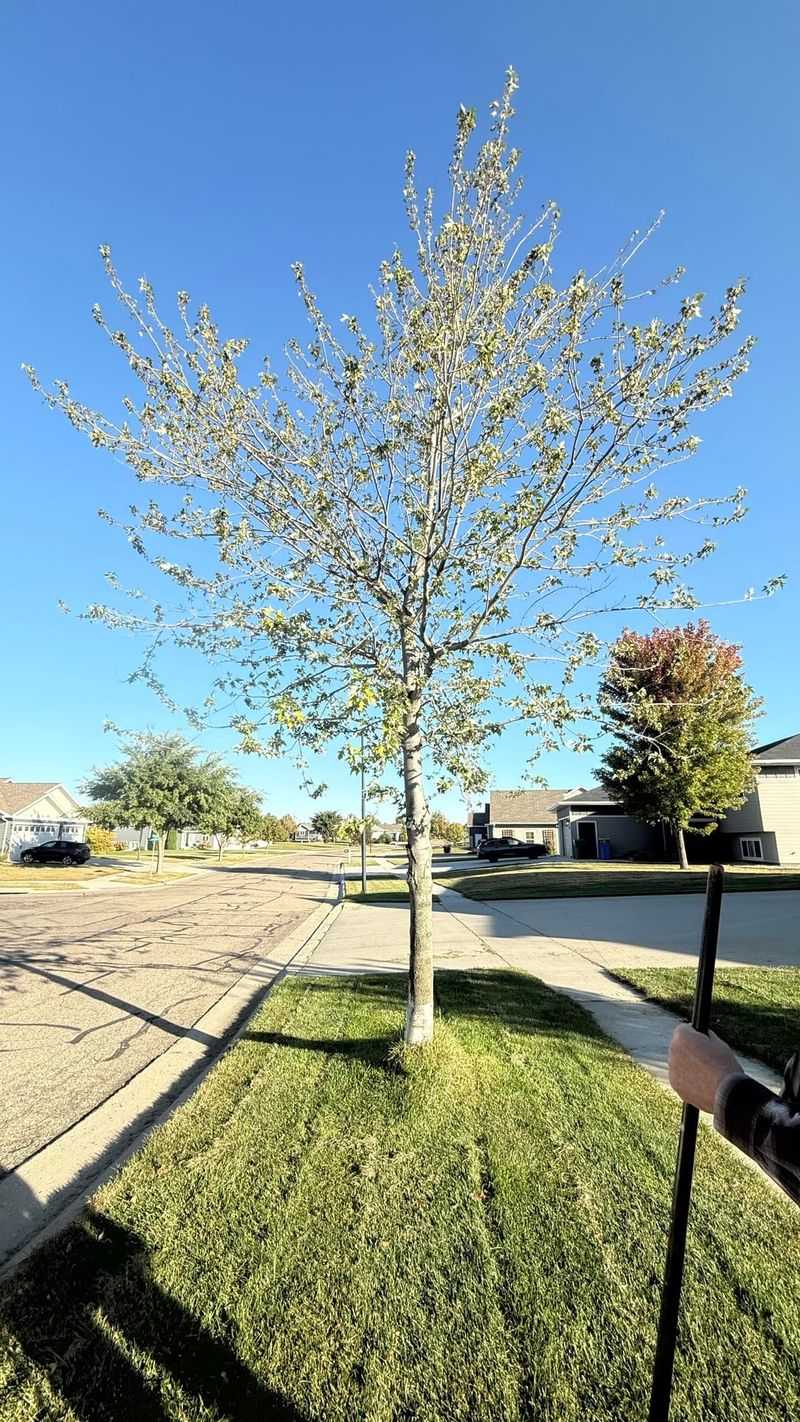
Most homeowners notice something is off with their tree but cannot quite put a finger on it. The tree is not thriving the way it should.
Leaves seem sparse. New growth is slower than expected.
These vague signals are easy to chalk up to weather, insects, or just a bad year. In reality, they may be the first signs of deep planting damage that has been building for years.
One of the clearest early warning signs is the absence of a visible root flare. Stand back and look at the base of your tree.
If the trunk goes straight into the ground like a telephone pole, that is a red flag worth investigating. A healthy, correctly planted tree should show a noticeable outward flare at the base.
Other symptoms include a thin or sparse canopy even during peak growing season, leaves that are smaller than normal, yellowing foliage that is not explained by drought or pests, and slow or stunted annual growth.
Bark near the base of the trunk may also show cracking, discoloration, or soft spots, all of which point to problems below the soil surface.
According to Ohio State University Extension, these symptoms often do not appear until five to fifteen years after planting. That long delay is exactly why so many homeowners are caught off guard.
By the time the tree looks obviously distressed, significant damage has already occurred, and the cost of correction has gone up considerably.
5. Clay Soils In Ohio Make The Problem Worse
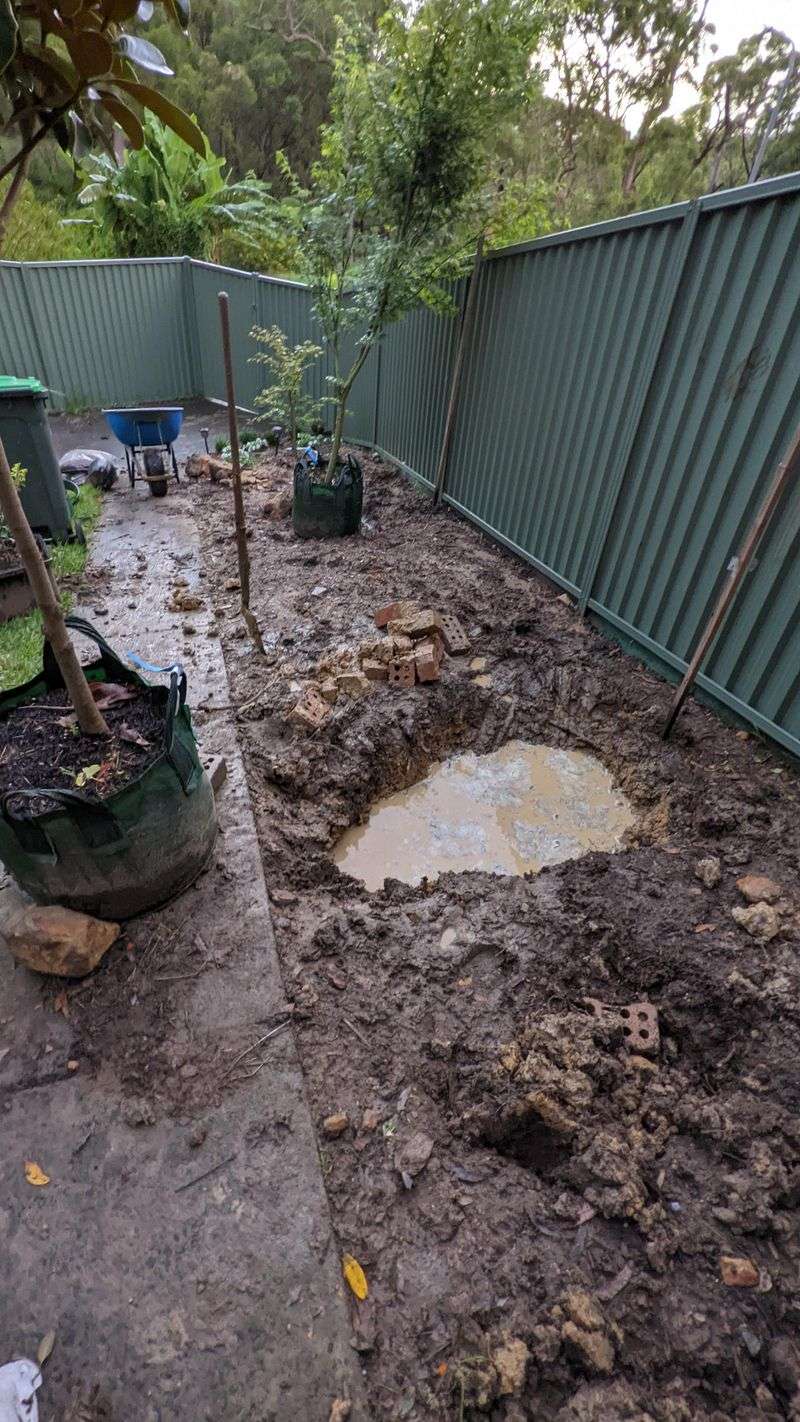
Ohio sits on some of the heaviest clay soils in the Midwest. If you have ever tried to dig a hole in your backyard after a rainstorm, you already know what that means.
The soil clumps together, sticks to your shovel, and holds water like a sponge long after the rain has stopped. For a deep-planted tree, that water retention creates a serious problem.
Clay soil limits the movement of oxygen through the ground. Tree roots, especially those buried too deep, need oxygen just as much as they need water.
When clay stays saturated for days at a time, oxygen levels in the soil drop sharply. Roots in those conditions cannot function properly, and the stress on an already struggling tree compounds quickly.
A tree with a buried root flare in sandy or loamy soil might struggle, but it can sometimes compensate. Put that same tree in Ohio clay, and the moisture that builds up around the buried trunk bark creates near-perfect conditions for fungal rot and disease.
The bark softens, the cambium layer underneath gets damaged, and the tree loses its ability to move resources efficiently.
The combination of deep planting and clay soil is particularly punishing. Many Ohio homeowners plant a tree correctly in terms of location and species choice, but the soil conditions beneath the surface are already working against them.
Amending the planting area and ensuring proper drainage can help reduce the risk, but avoiding deep planting in the first place is still the most effective solution.
6. Mulch Piled Too High Adds To The Damage
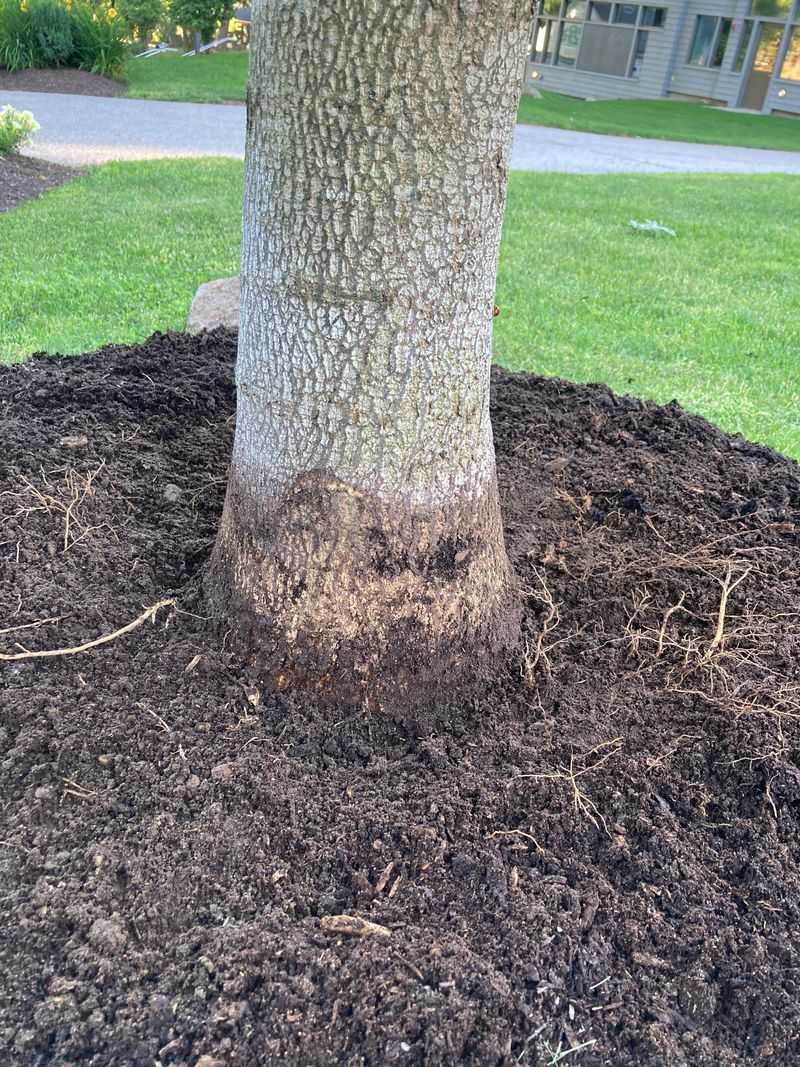
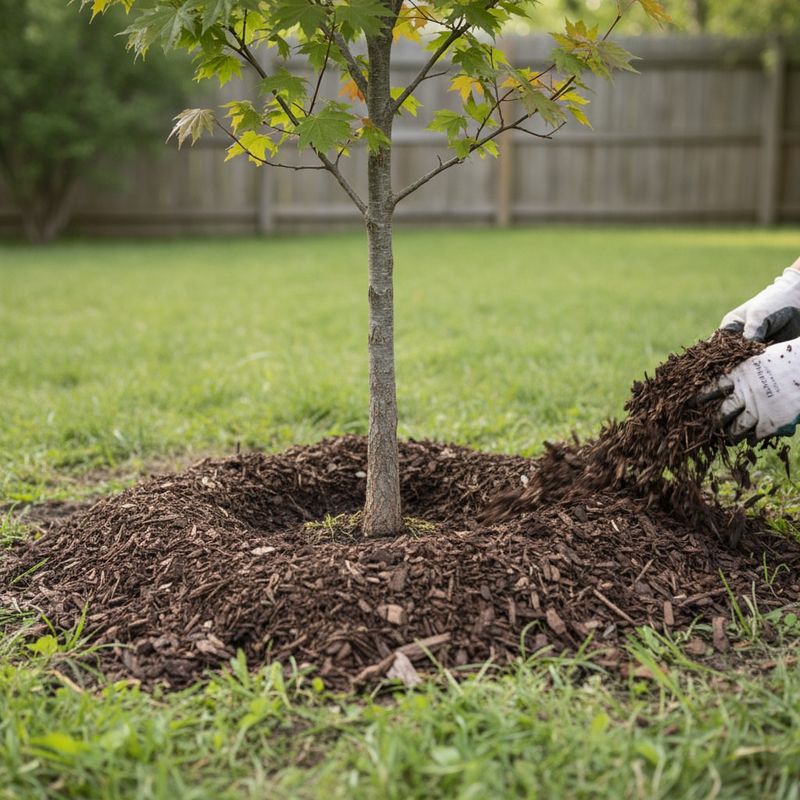
You have probably seen it in almost every neighborhood: a young tree surrounded by a mound of mulch piled up against the trunk like a small volcano. It looks tidy and well-maintained, and many homeowners assume that more mulch means better care.
Unfortunately, that assumption causes real harm to trees that may already be struggling from deep planting.
Mulch volcanoes, as arborists call them, keep the bark around the trunk constantly moist. Bark is not designed to stay wet for extended periods.
When it does, it begins to break down, and the soft, damaged tissue becomes an entry point for insects, fungal infections, and rot organisms.
For a tree whose root flare is already buried, adding a thick mound of mulch at the base only extends how far up the trunk that damage can reach.
The correct way to mulch a tree is to spread a two to three inch layer of organic mulch in a wide ring around the tree, extending out to the drip line if possible. The mulch should never touch the trunk.
Leave a clear gap of a few inches between the mulch and the base of the tree so that air can circulate and the bark stays dry.
ISA guidelines consistently recommend the donut shape over the volcano shape when mulching.
Pulling back excess mulch from trees that have been over-mulched is a simple, free fix that can meaningfully reduce stress on the tree and slow the progression of bark damage near the base.
7. Fixing A Deep-Planted Tree Gets Expensive Fast
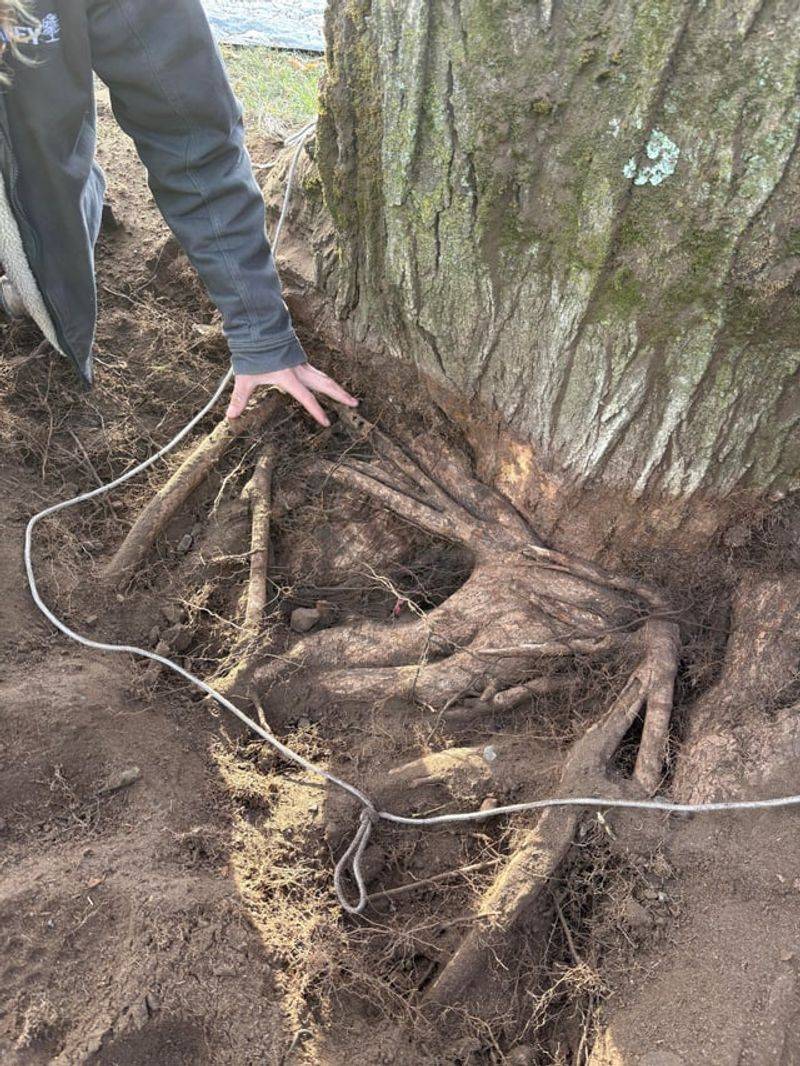
Once a tree has been planted too deep for several years, fixing the problem is rarely simple or cheap.
The cost depends on how long the tree has been in the ground, how severe the root issues are, and whether the damage has already progressed past the point where intervention can help.
The least expensive fix is catching the problem early, within the first year or two of planting, before girdling roots have formed and before bark damage has set in.
In those cases, carefully lifting the tree and replanting it at the correct height is possible, though it still requires labor, proper technique, and sometimes a professional to do it safely without damaging the root system further.
For trees that have been in the ground for five or more years, an arborist may use a specialized tool called an air spade to carefully excavate the soil around the base without cutting roots.
This process, known as root collar excavation, can cost anywhere from several hundred to over a thousand dollars depending on tree size and root complexity.
If girdling roots are found, removing them adds to the cost and the risk.
In cases where the damage is too advanced, the only option may be complete tree removal. In Ohio, removing a large tree can run between five hundred and several thousand dollars depending on size, location, and access.
Planting correctly from the start is far less expensive than any of these repair scenarios, and it protects the investment you make when you buy and plant a new tree.
8. Planting At The Right Height Prevents Costly Problems
Getting the planting depth right from the very beginning is the single most effective thing you can do to protect a new tree. It costs nothing extra, takes only a few minutes of preparation, and prevents years of hidden damage.
The process is straightforward once you know what to look for.
Start by locating the root flare before the tree goes into the ground. For container trees, scrape away the top inch or two of potting mix until you find where the trunk begins to widen.
For balled-and-burlapped trees, pull back the burlap and remove any soil at the top of the root ball until the flare is clearly visible. That flare is your reference point for everything else.
Dig the planting hole wide but not deep. The hole should be two to three times wider than the root ball to give roots easy access to surrounding soil, but it should be no deeper than the distance from the bottom of the root ball to the root flare.
When the tree is placed in the hole, the root flare should sit one to two inches above the surrounding soil grade. Soil naturally settles after planting, so starting slightly high accounts for that shift.
Backfill with the native soil you removed, not amended or fluffy fill that will compress significantly. Water thoroughly to settle the soil, then apply mulch in a flat donut shape, keeping it away from the trunk.
Following these steps consistently gives every new tree in your Ohio yard the best possible start.
9. Choosing The Right Tree Species For Ohio Conditions Also Matters
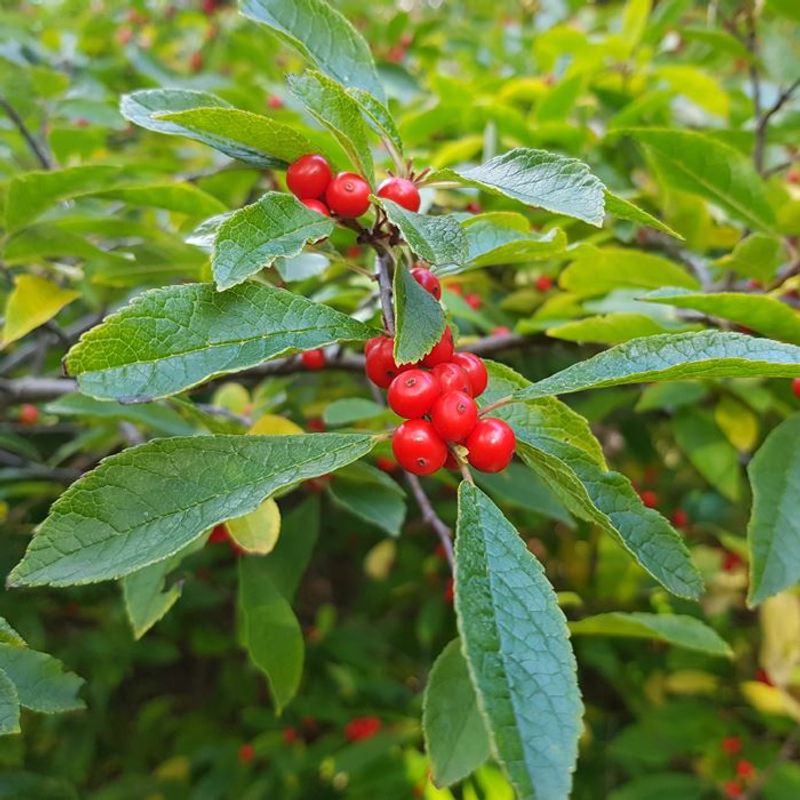
Even a perfectly planted tree can run into trouble if the species is a poor match for Ohio’s climate and soil conditions.
Planting depth is the most costly mistake, but species selection runs a close second when it comes to long-term problems that homeowners end up paying to fix.
Ohio’s clay soils, humid summers, and cold winters favor trees that have evolved alongside those conditions. Native species like red oak, sugar maple, serviceberry, and tulip poplar are well adapted to Ohio’s environment.
They tend to establish faster, require less intervention once planted correctly, and hold up better against the region’s seasonal extremes than many ornamental or non-native alternatives.
Some popular choices, like Bradford pear and silver maple, are frequently planted across Ohio neighborhoods but come with well-documented problems. Bradford pears have brittle branch structure that splits easily in ice storms, a common occurrence in Ohio winters.
Silver maples develop aggressive, shallow root systems that crack driveways and sidewalks over time. Both species often end up costing homeowners more in maintenance and removal than they ever anticipated.
The Ohio Department of Natural Resources and Ohio State University Extension both publish regional planting guides that match tree species to local soil types, drainage conditions, and available space.
Taking thirty minutes to consult those resources before buying a tree can save years of frustration and hundreds of dollars in repair or removal costs down the road.
Good intentions combined with good information make all the difference.