The One Cut That Keeps Ohio Dahlias Blooming From July Through October
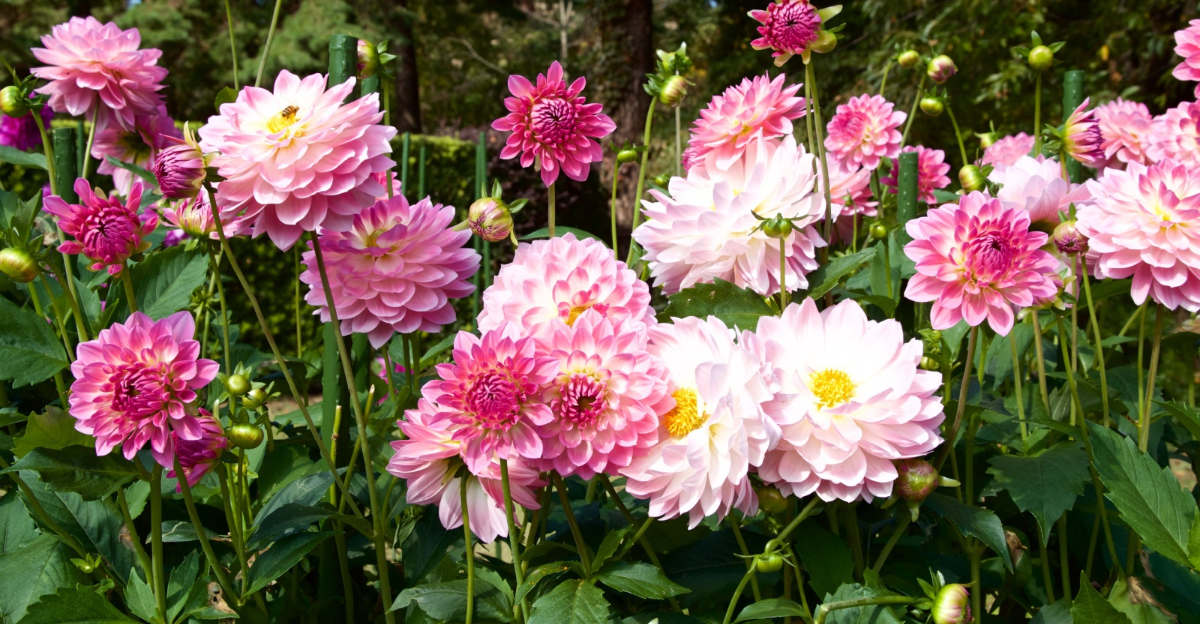
There are few things in an Ohio summer garden more satisfying than a dahlia bed in full bloom. Bold, dramatic, almost absurdly beautiful: dahlias have a way of making everything around them look like it’s trying harder.
But here’s where a lot of gardeners hit a wall: keeping that color going strong through August, September, and into October takes a little more than just good soil and a sunny spot.
The real difference maker is deadheading, and more specifically, knowing exactly where to make the cut so you’re encouraging new buds rather than accidentally removing them.
It sounds like a small detail, and honestly it is. But done correctly and consistently, this one simple habit can keep Ohio dahlias blooming from midsummer right up until the season wraps up.
Pretty good return on a five-second investment.
1. Cut Spent Blooms Back To Healthy Leaves
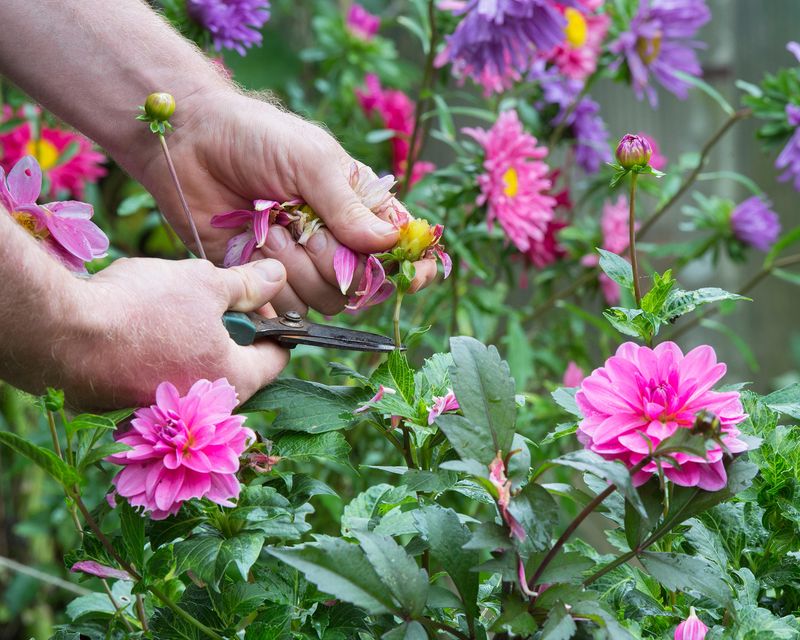
July flower beds in Ohio can look stunning one week and start looking tired the next if spent blooms are left hanging on the plant. When a dahlia flower fades, it signals the plant to shift energy toward forming seeds rather than producing new flowers.
Removing that faded bloom changes everything.
The key is cutting the stem back to a healthy set of leaves rather than just snipping off the flower head. Cutting to a leaf node encourages the plant to push new side shoots from that point, which is exactly where fresh buds will form.
Leaving a bare stem stub does not give the plant a clear growing point to work from.
Look for leaves that are deep green, fully open, and facing outward on the stem. Avoid cutting back to yellowed or damaged foliage since those leaves are not actively supporting new growth.
Ohio summers can be humid and warm, which means dahlias move through their bloom cycle quickly, so checking plants every few days keeps things on track. A clean pair of scissors or hand pruners works well for this cut.
2. Follow The Stem Below The Faded Flower
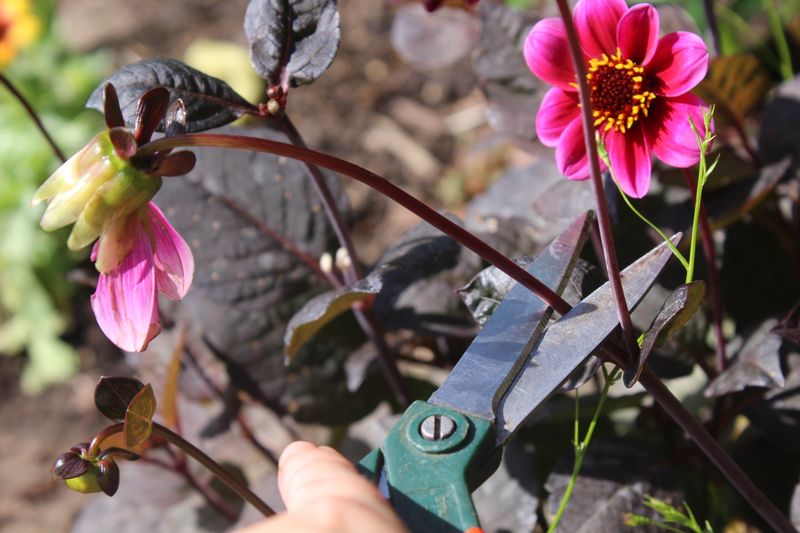
One of the most common mistakes Ohio gardeners make when deadheading dahlias is cutting too close to the flower itself.
Snipping just below the faded bloom removes the spent head but leaves a short stem section that does not benefit the plant in any meaningful way.
Following the stem downward from the faded flower to the first healthy set of leaves below it gives you the correct cut point. At that leaf node, the plant holds dormant buds that are waiting for a signal to grow.
Removing the spent bloom at this location sends that signal and encourages new branching to begin within days.
On tall dahlia varieties common in Ohio cutting gardens, this can mean tracing the stem down several inches before reaching the right spot. That extra step is worth taking.
Some gardeners find it helpful to use their fingers to follow the stem while looking for the first firm, outward-facing leaf pair. Once you find it, make one clean angled cut just above that node.
Your Ohio Garden Changes Every Week. Your Plan Should Too.
Gardening in Ohio changes quickly throughout the season. Every Friday you’ll receive a simple weekly plan showing exactly what to plant, prune, fertilize, harvest, and protect so you never miss the right timing.
Keeping the cut angled rather than flat helps water run off the stem and reduces the chance of moisture sitting on the cut surface.
3. Remove Pointed Spent Blooms Promptly
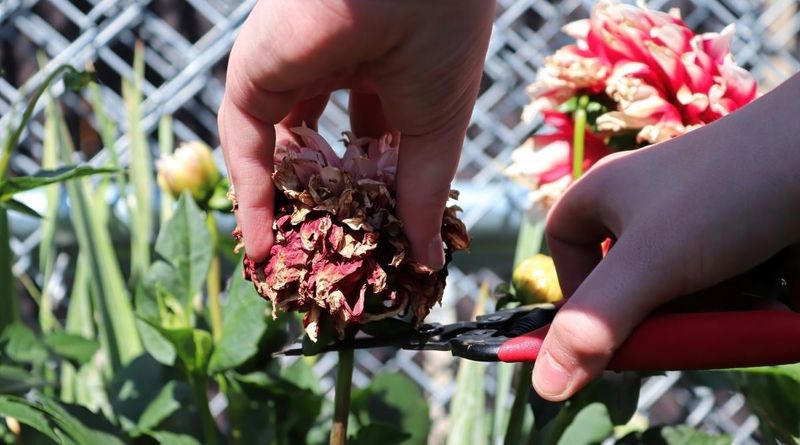
Knowing which blooms are spent and which are buds ready to open is one of the trickier parts of dahlia care, especially for newer Ohio gardeners who are still learning to read their plants.
Spent dahlia blooms tend to have a distinctive look once you know what to search for.
Faded flowers develop a pointed, papery, or slightly drooping shape as the petals begin to close inward and dry out. The center of the bloom may look soft or mushy rather than firm.
These are the blooms that need to come off promptly. Leaving them on the plant for even a few extra days can allow seed formation to begin, which pulls energy away from the fresh buds waiting below.
Ohio summers bring stretches of heat and humidity that speed up the decline of individual flowers, so checking plants every two to three days during peak bloom season keeps spent flowers from lingering too long.
Early morning is a good time to walk through the garden and identify which blooms are past their best.
Removing them right away, rather than waiting for a scheduled garden day, keeps the plant focused on what comes next: new flowers.
4. Leave Rounded Buds In Place
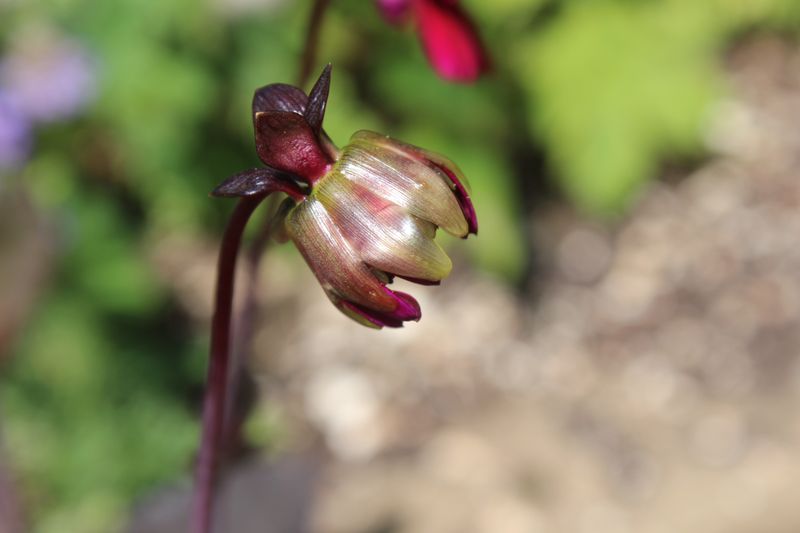
Rounded buds on a dahlia stem are a sign that the plant is already working ahead of you. Mistaking these firm, ball-shaped buds for spent blooms and accidentally cutting them off is one of the easiest ways to slow a plant’s bloom cycle without realizing it.
Fresh dahlia buds are round, smooth, and firm to the touch. They sit upright on the stem and have a slightly waxy surface.
Spent blooms, by contrast, tend to feel soft or papery and begin to point or droop as the petals fold inward. Once you hold both in your hand and compare them, the difference becomes very clear.
In Ohio gardens where multiple dahlia varieties grow side by side, bud shapes can vary slightly between types.
Dinner plate varieties produce large, round buds that are easy to spot, while pompon and ball dahlias have smaller buds that can be harder to distinguish from spent flowers at a glance.
Taking a moment to look carefully before making any cut pays off. A bud left in place will open into a fresh flower within several days, keeping the display going through the warmest stretch of Ohio’s growing season.
5. Cut For Bouquets To Encourage More Blooms
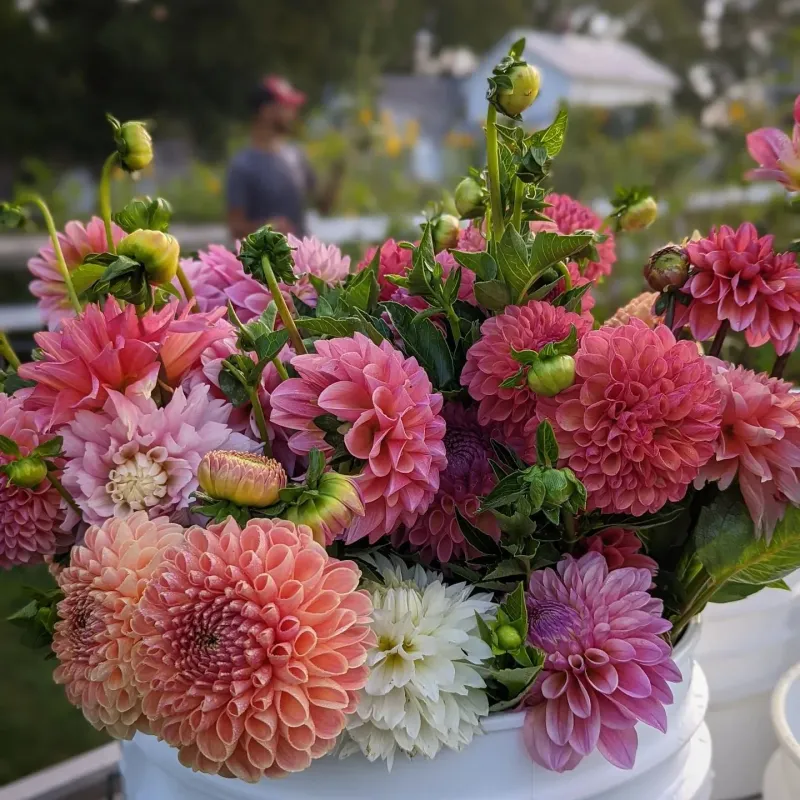
Cutting dahlias for indoor bouquets is one of the most enjoyable parts of growing them in an Ohio garden, and it turns out that harvesting blooms regularly is actually good for the plant.
Each cut made for a vase functions much like a deadheading cut, encouraging the plant to push out more side shoots and fresh flowers.
For the best vase life, cut dahlia stems in the early morning before the day heats up. Choose blooms that have just fully opened or are about three-quarters open.
Stems cut at this stage hold up well in water and last longer than blooms cut when fully mature. Use clean, sharp scissors or pruning shears and cut the stem long, going back to a healthy leaf node as you would with standard deadheading.
Ohio cutting gardens planted with dahlias can produce enough blooms for weekly bouquets from midsummer onward when plants are harvested consistently.
The more you cut, the more the plant branches and sets new buds.
Varieties like cafe au lait, labyrinth, and bishop types are popular in Ohio home gardens for their bouquet-ready colors and strong stems. Keeping a bucket of cool water nearby and placing cut stems in it immediately helps preserve stem quality.
6. Keep Stems Long Enough For Strong Regrowth
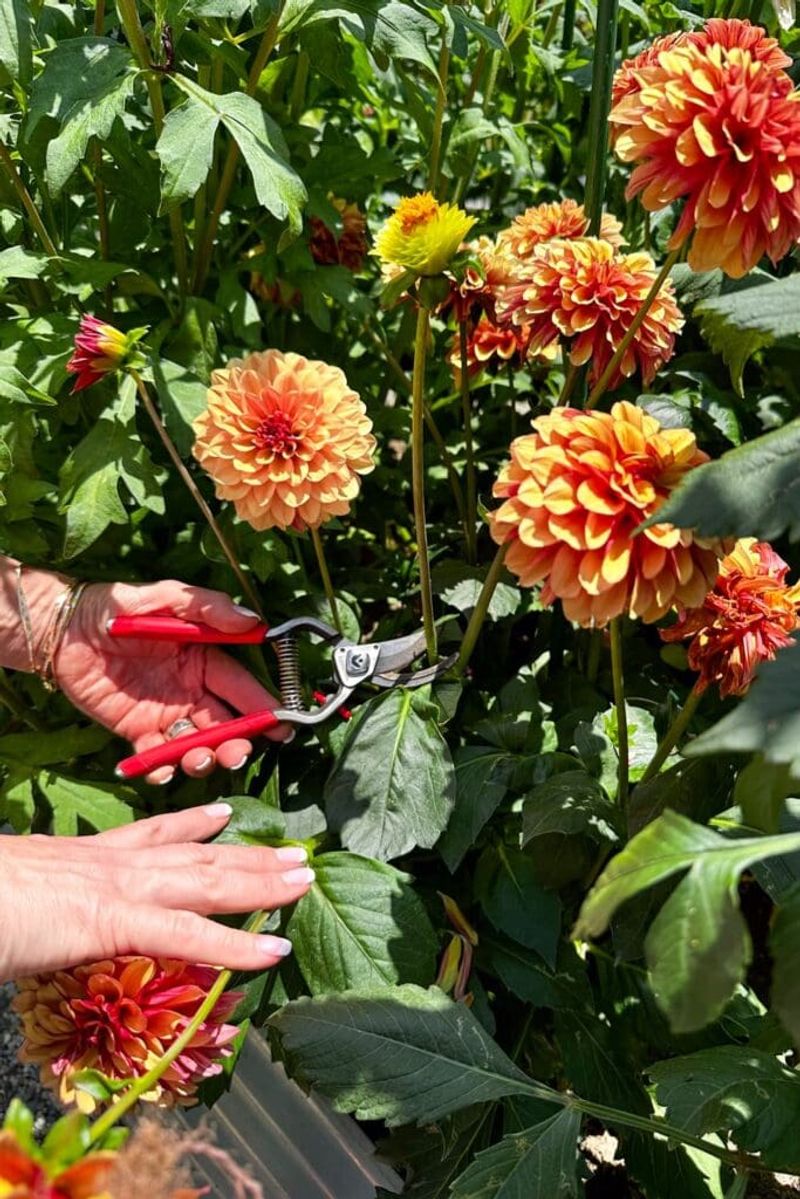
Short cuts feel tidy, but they can actually work against a dahlia’s ability to rebound quickly. When stems are cut too short during deadheading or bouquet harvesting, the plant has fewer leaf nodes to work from, which limits where new growth can emerge.
Keeping stems at a generous length when making any cut gives the plant more options for pushing new side shoots.
Each leaf node along the remaining stem is a potential branching point, and the more of those that are preserved, the more pathways the plant has toward new flowers.
Ohio gardeners who cut stems very short often notice that regrowth takes longer and produces fewer blooms in the following weeks.
A practical approach is to cut no more than one-third of the stem length at any single time unless the plant is being heavily pruned for a specific reason.
For most deadheading cuts, tracing back to the first healthy leaf node below the spent bloom and cutting there naturally preserves a good portion of the stem.
On taller varieties that are common in Ohio sunny borders and raised beds, this means leaving stems that are several inches or more in length. That remaining stem length is what the plant uses as a launching point for its next round of flowers.
7. Water Consistently After Heavy Blooming
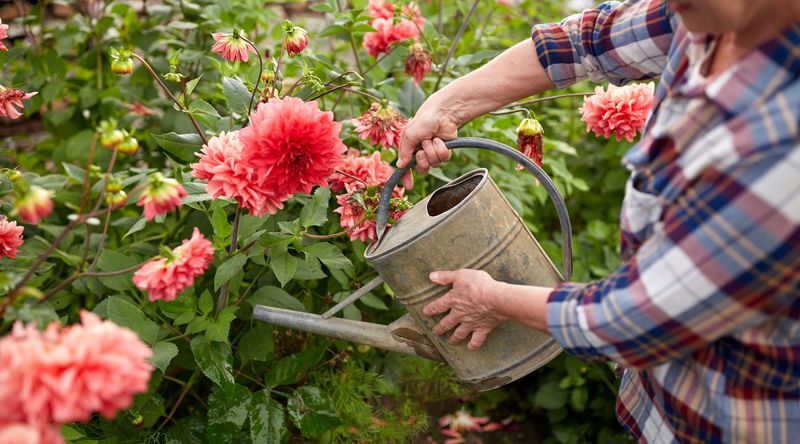
After a dahlia plant pushes out a heavy flush of blooms, it has used a significant amount of energy and moisture. Ohio summers can swing between rainy stretches and dry spells, and dahlias feel that difference quickly in how they perform after a big blooming period.
Consistent watering in the days and weeks following heavy flowering helps the plant recover and build toward its next round of buds. Dahlias prefer deep, steady watering at the base of the plant rather than light, frequent surface sprinkles.
Shallow watering encourages roots to stay near the surface, which makes plants more vulnerable during dry Ohio summers.
A good general approach is to water deeply two to three times per week during warm, dry stretches, adjusting based on rainfall. Mulching around the base of the plant helps retain soil moisture between waterings and keeps roots cooler during hot Ohio afternoons.
Avoid letting water sit on the foliage for long periods, especially in humid weather, as this can encourage fungal issues.
Checking the soil a few inches down before watering helps avoid overwatering, which can be just as problematic as drought for dahlias growing in Ohio garden beds and borders.
8. Support Tall Plants Before Stems Bend
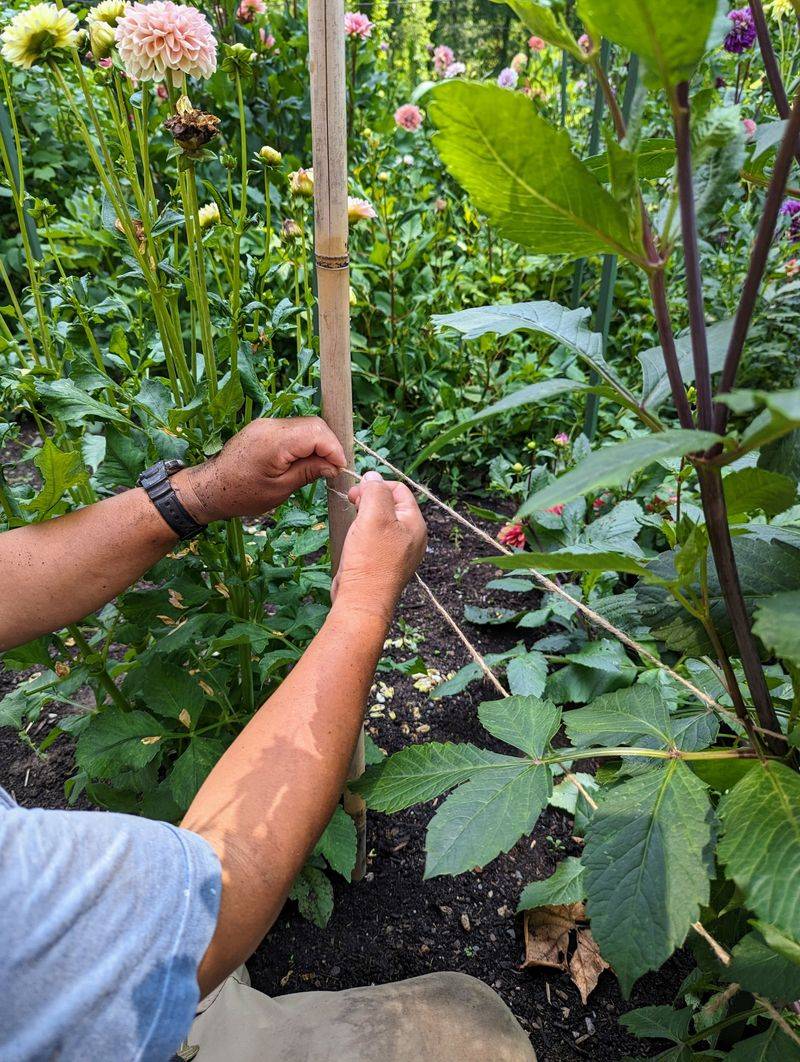
Tall dahlia varieties can reach impressive heights in Ohio gardens, and their large blooms make them top-heavy in ways that can cause stems to bend or lean as summer progresses.
A stem that bends sharply is harder for the plant to move water and nutrients through, which can slow bud development on the affected branch.
Setting up support before stems become a problem is much easier than trying to prop up a plant that has already started leaning. Stakes placed at planting time or shortly after are ideal, but adding support later in the season still helps.
Wooden garden stakes, bamboo poles, or metal tomato cages all work well depending on the size of the plant and the space available in the bed.
When tying stems to stakes, use soft garden twine or plant ties rather than wire or stiff materials that can cut into the stem. Tie loosely enough to allow some natural movement while still keeping the stem upright.
Ohio can see late summer storms with wind and heavy rain, which can knock unsupported dahlias flat overnight.
Checking ties periodically through the season and adjusting them as the plant grows taller keeps everything upright and gives blooms the best chance to develop fully through fall.
9. Expect Blooms Until Frost With Good Care
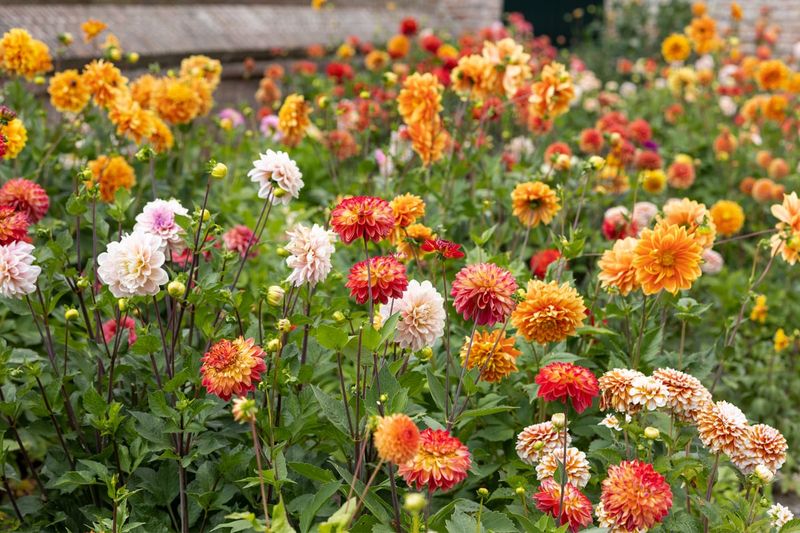
Walking out to a dahlia bed on a cool Ohio October morning and finding fresh blooms still open is one of the most satisfying rewards a flower gardener can experience.
Dahlias have a real capacity for long-season flowering when the basics are handled well through summer and into fall.
Consistent deadheading, proper stem cutting, steady watering, and good plant support all work together to extend the bloom season.
No single practice guarantees flowers through any specific date, since weather, variety, planting time, and local frost timing all play a role in how long dahlias perform in Ohio gardens.
Some years bring an early frost in October that ends the season abruptly, while other years allow plants to keep blooming well into the month.
Checking local frost forecasts as fall approaches gives Ohio gardeners a chance to cut a final round of blooms before a hard freeze arrives. Bringing stems indoors and placing them in water can extend enjoyment of the last flowers by several more days.
For gardeners who want to save tubers for the following year, digging them after the foliage is touched by frost and storing them properly through winter sets the stage for another full season of color starting again the following July.