The One Fall Task That Keeps Pennsylvania Fig Trees Productive Next Summer
Pennsylvania fig growers know the feeling well. A tree that produced generously through summer gets left to face winter without much thought.
Come spring it’s either slow to recover, partially damaged, or in some cases doesn’t come back at all. The disappointment is real, and it’s almost always preventable.
There is one fall task that makes the difference between a fig tree that comes through winter in strong condition and one that spends half the following summer recovering instead of fruiting.
Most homeowners who skip it find out why it matters the hard way. It doesn’t take long and it doesn’t require specialized equipment.
But the window for doing it correctly is closing, and missing it means waiting another full year to find out what a productive Pennsylvania fig tree is actually capable of.
Wrap And Insulate Your Fig For Winter

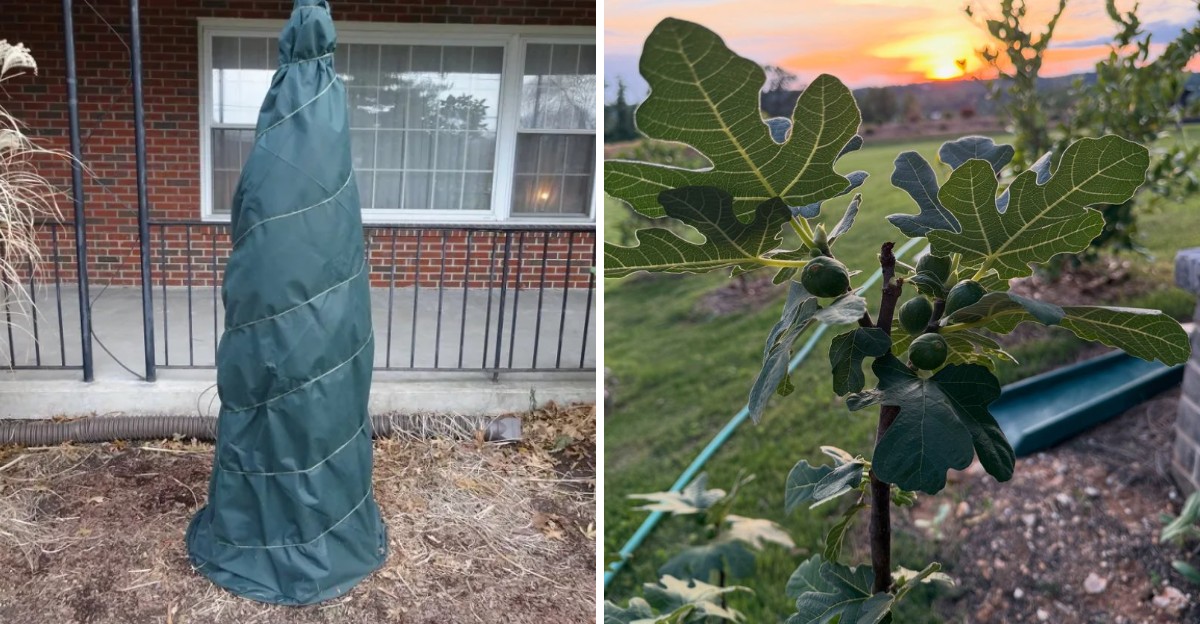
Walk through South Philadelphia in December, and you might spot odd bundles standing in tiny backyards. Some look like giant burritos wrapped in burlap and topped with a bucket.
Those strange shapes are fig trees, tucked in for the winter. Italian immigrants brought fig cuttings to Philly neighborhoods over a hundred years ago.
They missed the fruit from home, so they figured out how to keep the trees alive through cold northern winters.
Wrapping became a family ritual. Grandparents taught kids, and those kids now teach their own grandkids. Many trees in the city today grew from cuttings passed down from one generation to the next.
So why does wrapping work so well? Fig fruit forms on branches, so when those branches freeze, the fruit buds go with them.
A good wrap acts like a winter coat, holding back the bitter cold and blocking the drying winds that suck moisture out of bare wood.
Wind is a sneaky problem. Even on days that are not very cold, strong winter gusts can dry out the thin bark. Dry, cracked branches often fail to leaf out when spring arrives.
When the branches make it through winter in good shape, the tree gets a big head start. It can push out new leaves quickly in spring.
Figs also grow on the new shoots that come from older wood, so healthy branches mean more fruit sooner.
Think of wrapping as the one task that ties everything else together. Once you try it, you may find you enjoy the yearly routine as much as the harvest. Some gardeners even throw a wrapping party with neighbors, coffee, and a box of cannoli.
Why Pennsylvania Winters Are Hard On Figs
Figs first grew wild in places like Turkey and the Middle East, where winters are mild and summers bake. Pennsylvania is a whole different story.
Most of the state sits in USDA hardiness zones 5 and 6, with the Philadelphia area reaching zone 7. In those zones, winter lows can drop to 0 degrees or even below. Fig wood usually starts getting hurt once temperatures fall into the teens.
Here is what happens inside the branch. Water in the plant cells freezes and expands, which damages the living tissue. The top of the tree turns brown and brittle, even though the roots underground may still be fine.
Your Pennsylvania Garden Changes Every Week. Your Plan Should Too.
Gardening in Pennsylvania changes quickly throughout the season. Every Friday you’ll receive a simple weekly plan showing exactly what to plant, prune, fertilize, harvest, and protect so you never miss the right timing.
Gardeners often call this freezing back to the ground. The good news is that a healthy root system can send up fresh shoots in spring. The bad news is that those new shoots need time to grow before they make fruit.
Varieties like Chicago Hardy and Brown Turkey have earned a reputation for toughness. They really can bounce back from harsh cold better than many others. Still, bouncing back is not the same as thriving.
A tree that regrows from its roots may only give you a small crop in late September, or none at all before the first fall frost. Compare that with a protected tree.
Its branches stay alive, so it starts leafing out right away in spring. You may even get an early breba crop in June, followed by the main crop in August.
Weather in Pennsylvania also swings a lot. A warm spell in February can wake a tree up, and then a sudden freeze hits hard. Protection helps smooth out those wild ups and downs.
Time It After The Leaves Drop
Patience is the hardest tool in the shed. Plenty of eager gardeners grab the burlap in early October, proud to be ahead of schedule. Sadly, that head start can backfire.
Your fig needs to go fully dormant before you bundle it up. Dormant means the tree has stopped growing and is resting for winter. The clearest sign is simple: the leaves turn yellow, flop over, and fall to the ground.
A few light frosts help trigger this change. In most of Pennsylvania, that happens sometime between late October and late November.
Folks in Erie or the northern mountains will usually be ready earlier than gardeners near Philadelphia or Pittsburgh.
So what goes wrong if you wrap too soon? A tree that still has leaves is still breathing and holding lots of moisture. Trap all that under burlap on a sunny 60 degree afternoon, and you have built a tiny steam room.
Warm, damp air invites mold, mildew, and rot. Soft branches may turn mushy and black by spring. Early wrapping can also confuse the tree, keeping it awake when it should be settling down.
Waiting too long has risks too, though they are smaller. A sudden deep freeze in December can catch an unwrapped tree off guard.
A good rule is to aim for a dry day soon after the leaves drop, before the first forecast of temperatures in the low 20s.
Keep an eye on the ten day forecast starting in late October. Rake up the fallen fig leaves and toss them in the trash, since they can carry fungus.
Then pick a calm, dry weekend afternoon, and enjoy the job while the weather still feels friendly.
How To Wrap A Fig Tree Step By Step
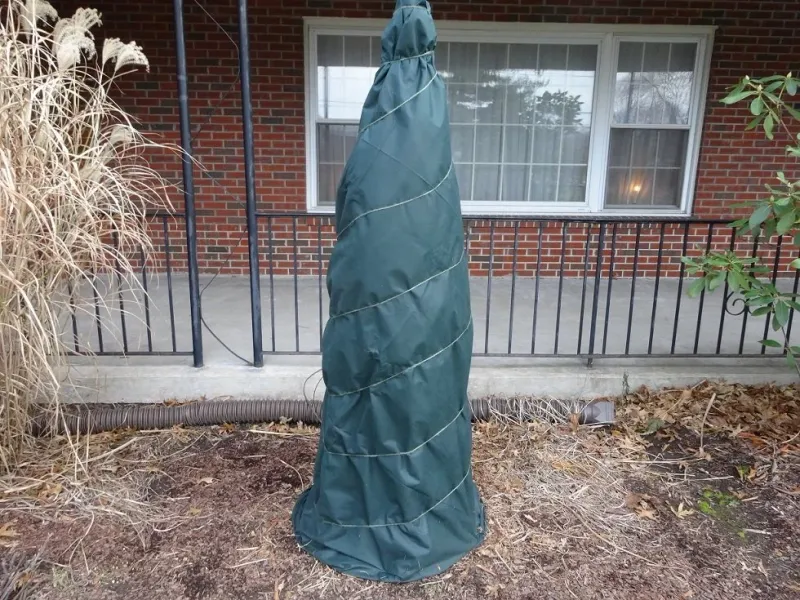
Grab a roll of twine, some burlap, a few bags of dry leaves, and a big bucket. That is nearly everything you need to turn your fig into a cozy winter bundle.
Step one is to gather the branches. Gently pull them toward the center and tie them together with soft twine every foot or so. Go slow, because cold fig wood can snap if you bend it too hard.
Next, wrap the whole tree in burlap. Start at the bottom and spiral upward, overlapping each layer by a few inches. Two or three layers work well for most Pennsylvania backyards.
Now it is time to add insulation. Stuff dry leaves or straw into the gaps between the branches and the burlap. Oak leaves are a favorite because they stay fluffy and do not mat down as fast as maple leaves.
Some gardeners build a simple cage of chicken wire around the tree first. The cage holds the leaves in place and makes the stuffing job much easier. It is a handy trick for taller trees.
After that, cover the bundle to keep it dry. Wet insulation freezes solid and loses its power to protect. A plastic tarp wrapped around the sides, or a large bucket flipped upside down on top, will shed rain and snow.
Leave the very bottom a little open so some air can move through. Finally, spread a thick layer of mulch, about 6 to 12 inches deep, around the base.
Mulch guards the roots, which act as a backup plan if the top gets hurt. In early April, unwrap slowly over a week or two so the tree can adjust.
Move Container Figs Into Shelter
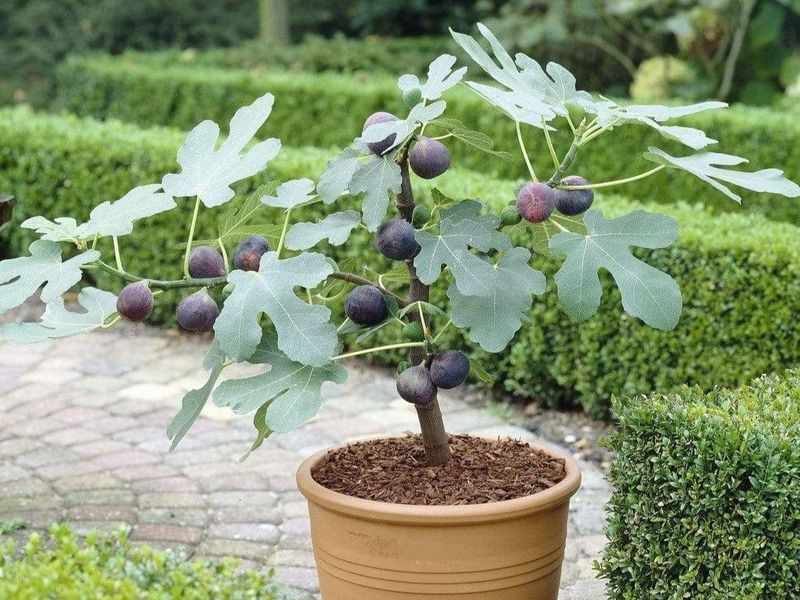
Lucky you if your fig lives in a pot. Container trees get a free pass on the whole burlap routine, because you can simply roll them indoors.
Pots are actually more at risk outside than trees in the ground. Soil in a container freezes much faster, since cold air hits it from every side. Roots that would be safe in the earth can get badly hurt in a frozen pot.
The best winter home is a cool, dark spot that stays between about 25 and 45 degrees. An unheated garage, a garden shed, or a basement corner all work great. You want the tree to stay asleep, not wake up and start growing.
Avoid bringing it into your warm living room. Heat and low light will trick the fig into pushing out pale, weak shoots. Those spindly stems rarely amount to much once spring rolls around.
Wait until the leaves drop, just like with in-ground trees, before making the move. A hand truck or a plant caddy with wheels will save your back. Big pots full of damp soil can weigh well over 100 pounds.
Watering is the part people forget. A dormant fig needs very little, but bone dry roots can shrivel and fail. Give it a light drink about once a month, just enough to keep the soil slightly moist.
Skip the saucer full of standing water, since soggy roots rot. Set a reminder on your phone so the monthly check does not slip your mind.
Around mid-April, once the worst cold has passed, roll your fig back outside and let it soak up the sunshine.
Skip Fall Fertilizing And Heavy Pruning
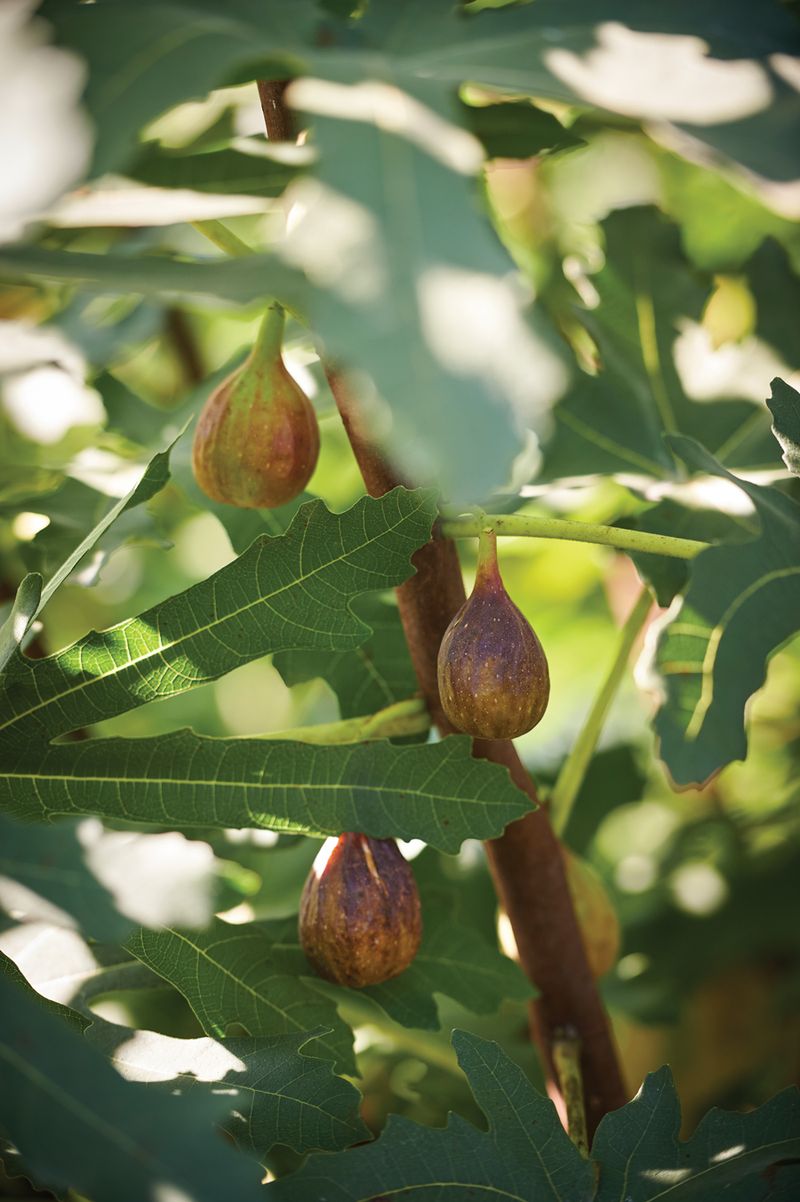
‘Less is more’ might be the best garden advice you ever hear in autumn. When it comes to figs in fall, doing nothing is sometimes the smartest move of all.
Let’s start with fertilizer. Plant food is packed with nitrogen, which tells a tree to grow. Feed a fig in September or October, and it will happily push out soft, green shoots right when it should be slowing down.
That fresh growth never gets a chance to toughen up. When the first hard freeze arrives, those tender stems turn to mush. Even worse, the tree wastes energy it needs to store in its roots for winter.
A better plan is to stop feeding figs by mid-July. If you want to help the soil, spread a thin layer of compost in spring instead. Your tree will use it exactly when it needs a boost.
Pruning is the other temptation. It feels tidy to trim everything before you wrap. Still, heavy fall pruning opens fresh wounds that cold air and moisture can easily damage.
Wait until spring, around April, after you remove the wrap. By then, you can clearly see which branches made it through.
Healthy wood shows green when you scratch the bark with a fingernail, while hurt wood looks brown and dry.
Cut out the brown sections back to a live bud or down to the ground. A little light trimming in fall is fine if a branch is too long to fit inside your wrap.
Otherwise, put the pruners away, pour a warm drink, and let your fig rest until the robins come back.