Plant Chuparosa Once In Arizona And It Feeds Hummingbirds Through The Winter For Years
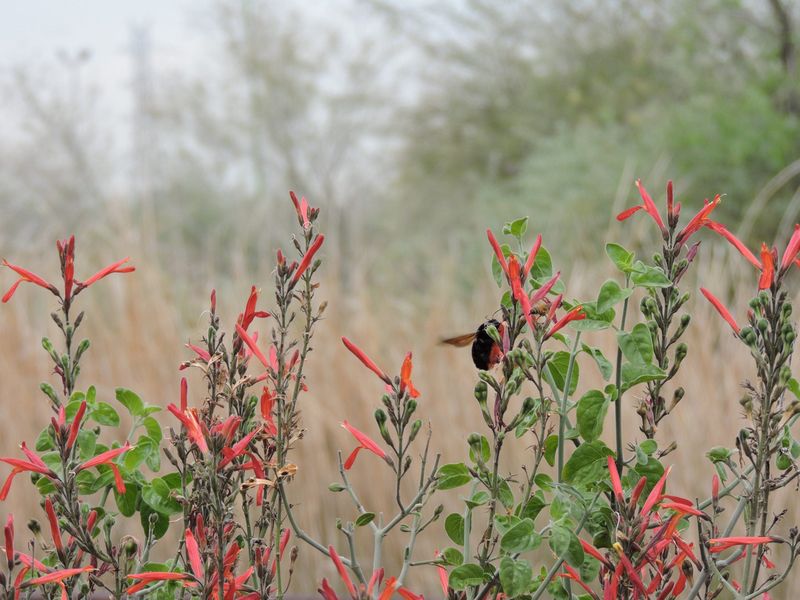
Chuparosa is a tough, sprawling native shrub that grows right at home in the low-desert yards of Phoenix and Tucson. Its bright tubular flowers can draw hummingbirds during parts of the cooler months, offering a seasonal nectar source when other plants are winding down.
For homeowners who want a water-wise yard that does something useful for local wildlife, chuparosa is worth a serious look.
Chuparosa offers a native nectar source for low-desert yards
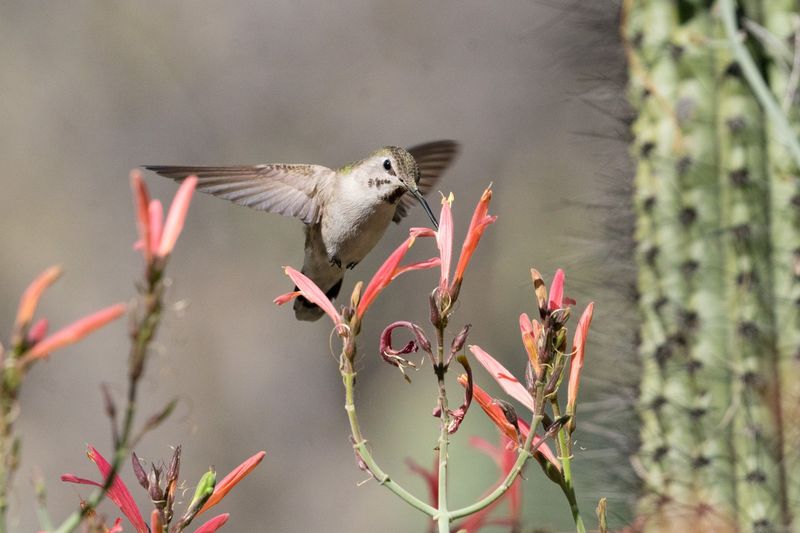
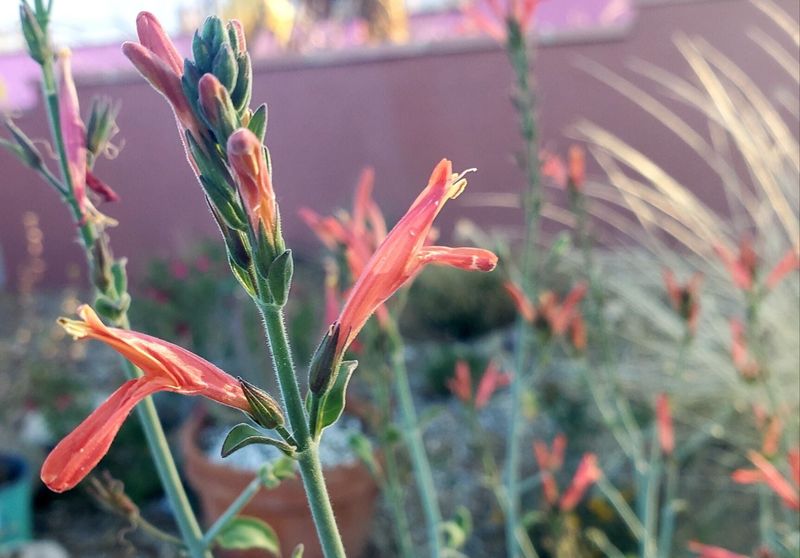
Justicia californica, commonly called chuparosa, is a Sonoran Desert native that belongs in the low-desert landscape the same way saguaro and palo verde do. Its name literally means “hummingbird” in Spanish, and the plant earns it with clusters of narrow, tubular red flowers that are shaped to deliver nectar directly to a hovering bird.
University of Arizona Campus Arboretum records document visits from Costa’s and rufous hummingbirds, though actual bird use depends on what species are present in your yard and what other food sources they have available nearby.
Calling chuparosa a reliable winter feeding station overstates what the plant consistently delivers. A more accurate description is that it can offer nectar during parts of the cool season in suitable low-desert conditions, which is still a meaningful contribution for a yard designed to support local wildlife.
Phoenix and Tucson homeowners with full-sun spots and fast-draining soil are the most likely candidates to get results from this shrub.
The plant is not a magic fix, and flower production is not guaranteed on any fixed schedule. What chuparosa does offer is a native option with real ecological value, low water needs once settled in, and a growth habit that fits comfortably into a xeriscape design without demanding constant attention.
Its bloom can complement desert willow, but not on a fixed schedule
Desert willow is a familiar sight in low-desert yards, putting on a showy display of orchid-like flowers from roughly April through August. By late fall, it typically drops its leaves and goes dormant for the winter, which is exactly when some gardeners start wondering what else might be offering something to local hummingbirds.
University of Arizona Extension guidance on deciduous trees confirms this usual spring-through-summer bloom window and the common late-fall leaf drop, making the seasonal contrast between the two plants a reasonable observation.
Chuparosa’s bloom timing, though, is genuinely variable. The Arizona Native Plant Society lists a March-through-June window as a primary range, while the UA Campus Arboretum notes that flowering can begin as early as February or occasionally October.
Weather, elevation, available soil moisture, and the specific microclimate of your yard all shift that window in ways that are hard to predict from one season to the next.
The practical takeaway is that chuparosa and desert willow can complement each other in a low-desert yard, but they do not operate like a relay race with a clean handoff. Some years the overlap or the gap between them will be wider or narrower depending on conditions.
Planting both gives you more chances at seasonal nectar coverage without locking you into an expectation that either plant will perform on a precise calendar.
Your Arizona Garden Changes Every Week. Your Plan Should Too.
Gardening in Arizona changes quickly throughout the season. Every Friday you’ll receive a simple weekly plan showing exactly what to plant, prune, fertilize, harvest, and protect so you never miss the right timing.
Choose a sunny, well-drained spot with room for a spreading shrub
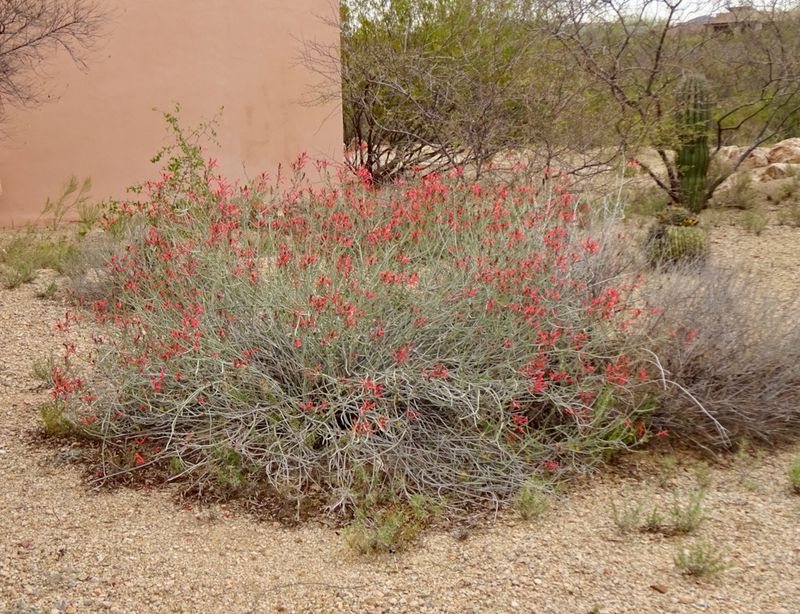
Chuparosa does best in full sun with soil that drains quickly after rain. Low-desert soils are often sandy, rocky, or caliche-heavy, and this plant handles those conditions far better than most nursery shrubs you might find in a big-box garden center.
What it cannot tolerate well is standing water or heavy clay that stays wet after monsoon storms, so avoid planting in any low spot where runoff collects.
Mature size varies depending on conditions, but chuparosa is a sprawling shrub that can spread several feet in each direction. Give it space from the start rather than crowding it against a wall or other plants.
According to the UA Campus Arboretum profile, this plant is suited to low-desert conditions in the Phoenix-to-Tucson region, so keep the geographic scope in mind when you read care advice from general Southwest gardening sources that do not account for local soil and heat specifics.
A south- or west-facing exposure typically gives the plant the warmth and light it prefers. Avoid north-facing spots or areas shaded by a roofline for most of the day.
Pairing chuparosa with other Sonoran Desert natives in a xeriscape bed is a natural fit, and the Arizona Native Plant Society notes that it favors frost-free or frost-protected conditions, which means placement near a south-facing wall can make a meaningful difference in colder winters.
Fall can be a useful planting window when frost risk allows
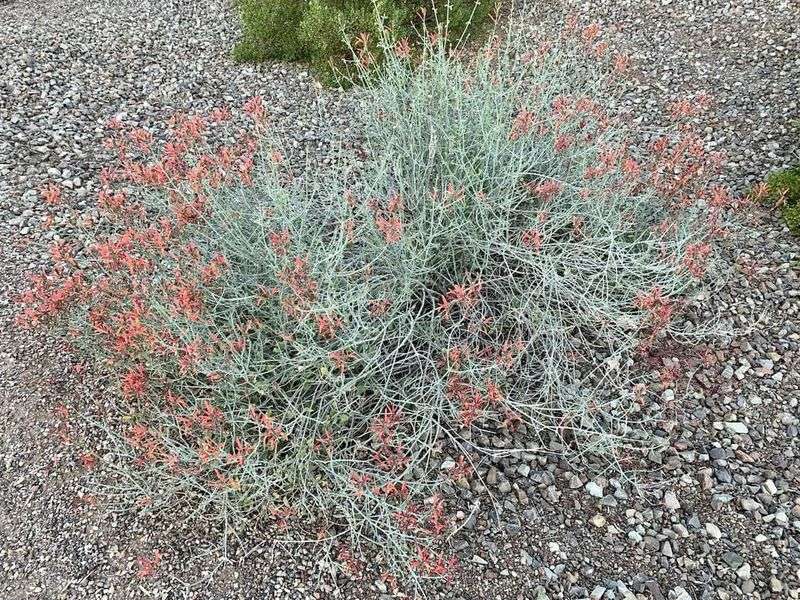
Fall is generally one of the best times to put new plants in the ground across low-desert Arizona. Cooler air temperatures reduce the stress on a newly transplanted shrub, and the soil stays warm enough to encourage root growth before winter.
For many desert natives, October and November hit a sweet spot that spring planting in a cooler climate could never replicate.
Chuparosa, though, needs a frost-risk check before you commit to a fall planting date. Cold-tolerance sources put its threshold somewhere around 20 to 25 degrees Fahrenheit, and while hard freezes are rare in central Phoenix, they happen more often in outlying areas and at higher elevations.
The Arizona Native Plant Society describes chuparosa as favoring frost-free conditions, and UA Extension xeriscape guidance notes that late fall is a favorable general planting window except for frost-sensitive species, which puts chuparosa in a category that deserves some extra thought.
If your yard sits in a frost pocket, a low-lying area, or a neighborhood that regularly dips below 28 degrees, consider planting near a south-facing wall or structure that holds heat overnight. Have frost cloth or a lightweight cover ready for the first cold snaps after planting, when the shrub has not yet had time to harden into its new location.
Homeowners in Tucson’s higher-elevation foothills or in areas north of Phoenix should be especially thoughtful about microclimate before choosing a planting spot and timing.
Establishment care matters even for a low-water native
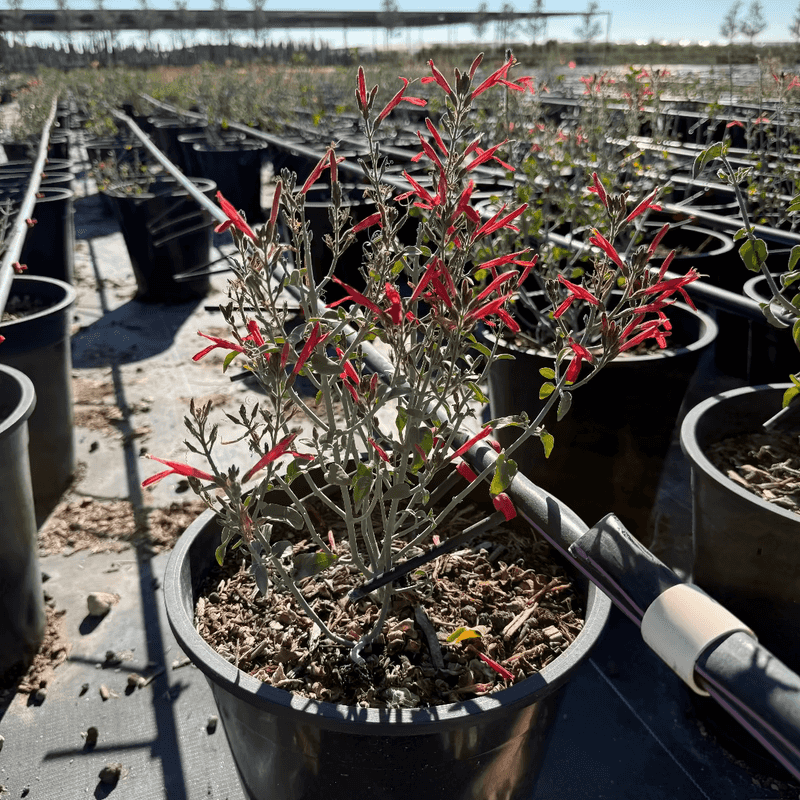
Low-water plants earn that label after they have settled into the soil, not on the day you bring them home from the nursery. A newly planted chuparosa still needs regular supplemental irrigation during its first growing season while roots spread out and anchor into the surrounding soil.
Skipping that early care can leave the shrub stressed and slow to flower, even in a spot that would otherwise suit it perfectly.
No single watering schedule works for every yard. Soil texture, sun exposure, and the time of year you plant all affect how quickly a new shrub establishes.
The UA Campus Arboretum profile describes chuparosa as low-water once established, which is a useful long-term promise, but the path to that point requires attention. Deep, infrequent watering that encourages roots to follow moisture downward tends to produce a more resilient plant than frequent shallow watering that keeps the surface wet.
The Desert Botanical Garden notes that chuparosa may drop leaves during drought stress or cold spells and can pause flowering during a hot, dry summer. Neither of those responses means the plant has failed or needs to come out.
Leaflessness is a normal survival strategy for this shrub, and new growth typically returns after fall or winter rains bring relief. Watching the plant through a full calendar year gives you a much better read on its health than judging it by a single bare or quiet period.
Set realistic expectations for seasonal nectar and long-term care
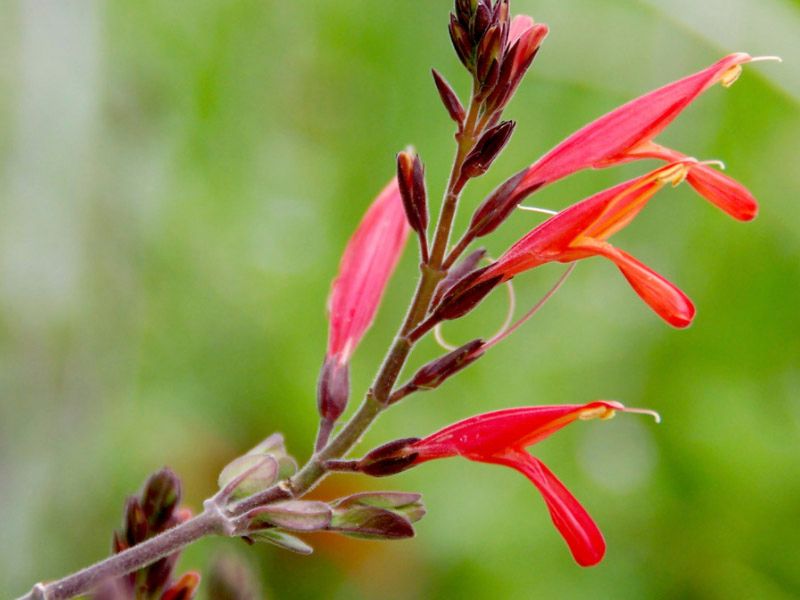
Chuparosa makes the most sense for low-desert Arizona homeowners who already have a sunny, well-drained spot available and a manageable level of frost risk. If those conditions are in place, the shrub can add a potential seasonal nectar source to a yard that might otherwise have little to offer hummingbirds during the cooler months.
That is a real benefit, and it comes from a plant with genuine Sonoran Desert credentials.
Bloom timing and bird activity will vary from year to year. Some winters will produce more flowers earlier; others will be quieter.
The UA Campus Arboretum documents hummingbird visits to chuparosa, and UA Extension pollinator guidance for the low desert supports chuparosa as a useful plant for attracting native pollinators, but neither source promises a steady stream of birds on a predictable schedule. Flower production depends on weather, water, and the particular conditions of your yard in any given season.
The reviewed sources do not establish a specific garden lifespan for chuparosa, so expecting a set number of years of payoff is not a reasonable frame. What the plant does offer is a long-term native addition to a xeriscape yard, one that needs less water over time, tolerates the heat that challenges most ornamentals, and provides something genuinely useful to local wildlife when conditions cooperate.
A yard with one well-placed chuparosa is simply a more functional desert yard than one without it.