The One Thing Michigan Hostas Need Right Now If You Want More Plants Next Spring
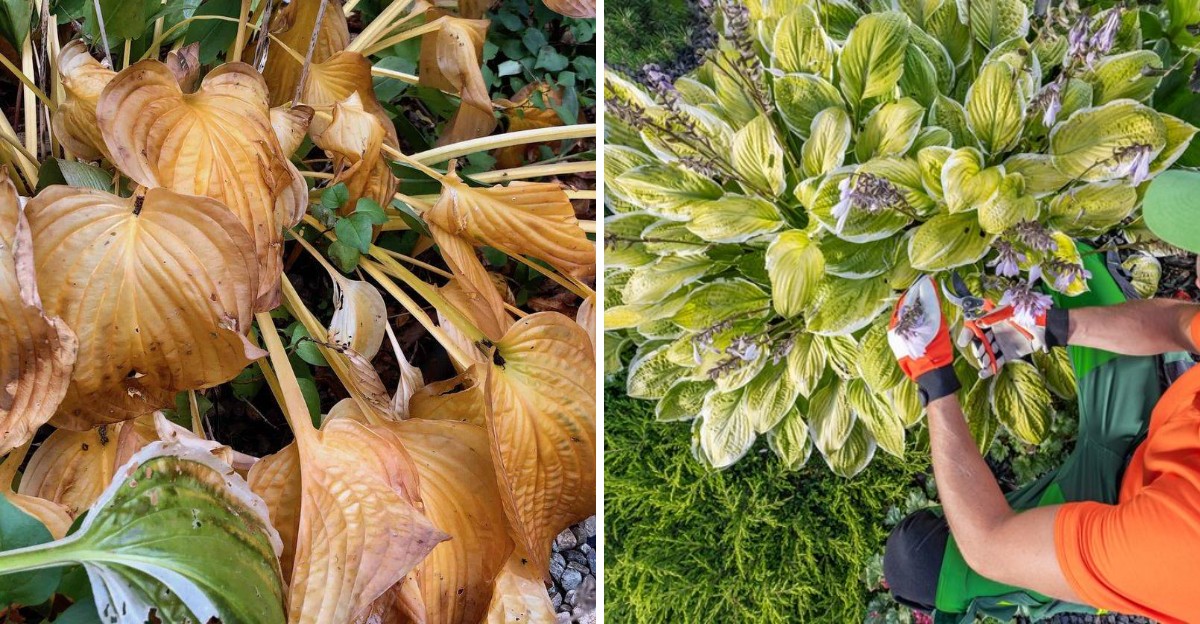
Early November has a way of making the garden look like it gave up. The hostas that once filled shady beds with big, bold leaves are now a flat, soggy mess, and it is tempting to look away until spring.
Resist that urge, because this is the moment these plants quietly need a little attention. Ask a seasoned grower what hostas need right now and the answer comes down to one job: clean up the collapsed foliage, but only after a hard freeze has flattened it.
That small task sounds almost too simple to matter. Yet it ties into what you will see when the first shoots poke up.
Clean crowns tend to have fewer hiding spots for slugs and voles, and healthy clumps are the ones worth splitting into extra plants.
Dividing itself belongs to spring in most of Michigan, so think of cleanup as the groundwork that makes that job easier and more rewarding.
In the sections below, you will learn how to read the weather, when to cut, how low to go, what to do with the clippings, and how it all sets you up for more hostas next year. Grab your pruners and give the leaves a little more time to finish their season.
1. Cleanup Is The One Thing Hostas Need Right Now
Winter prep can turn into a long to-do list, but hostas keep theirs short. These shade perennials are tougher than they look.
Michigan State University Extension describes them as cold-hardy plants that thrive in zones 3 to 9, so a Michigan winter is not something you need to shield them from.
They do not need fertilizer in November, a fancy cover, or a special spray. What they benefit from most is a tidy finish to the season.
Once the leaves have collapsed, clearing them away is the single job that does the most good.
MSU Extension recommends removing hosta leaves, leaf stalks, and stems in fall, since that can reduce disease and the eggs of insects and slugs that would otherwise spend winter in the debris. Notice the careful wording there.
Cleanup lowers risk, and it does not remove every problem. Still, it is a low effort step that pays you back in spring.
Clean crowns have room to push up fresh shoots, and healthy clumps are the ones that divide well when you want extra plants.
Cleanup does not create new hostas by itself, but it protects the plants you already have so they are strong enough to split into more once spring arrives. Keep that goal in mind as you read on, because the timing of the job matters just as much as the job itself.
2. A Hard Freeze Tells You When The Time Is Right
Weather apps toss around words like frost, freeze, and hard freeze, and they are not interchangeable. A frost shows up when temperatures hover in the mid 30s.
A freeze means the air drops to 32 degrees or below. A hard freeze, the one that matters for your hostas, means a low of 28 degrees or colder.
Your Michigan Garden Changes Every Week. Your Plan Should Too.
Gardening in Michigan changes quickly throughout the season. Every Friday you’ll receive a simple weekly plan showing exactly what to plant, prune, fertilize, harvest, and protect so you never miss the right timing.
That is cold enough to flatten tender leaves and end the season for many garden plants.
In much of southern and central Lower Michigan, the first hard freeze often arrives between late October and early November, though the exact date shifts each year. Frost-date data for Grand Rapids show roughly a 50 percent chance of a first 28 degree night by about October 23, and around 80 percent by November 2.
Northern areas tend to get there sooner, while spots near the Great Lakes can run later.
One more tip helps with tracking it. Since late 2024, the National Weather Service folds hard freeze warnings into freeze warnings, so the name of the alert no longer tells you how cold the night will get.
Look at the forecast low instead.
A reading of 28 or below is your cue to start watching the plants. One cold night may not finish the job, so give the leaves a day or two to show you what happened before you reach for the pruners.
3. Green Leaves Mean You Should Keep Waiting
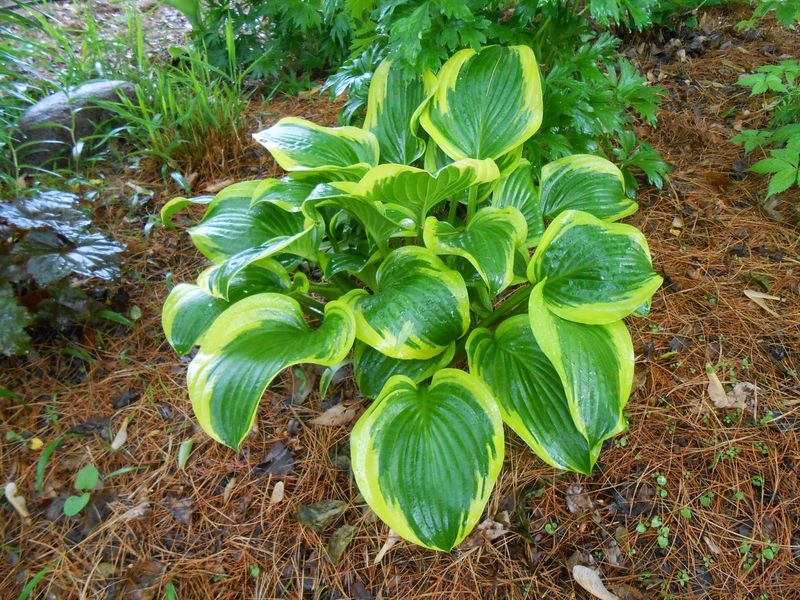
It is easy to mistake one chilly morning for the end of the season, but hostas follow their own schedule. As long as a leaf is green and firm, it is still working.
It collects a little sunlight and sends energy down to the roots and crown, which is the stored fuel that powers new shoots in spring.
Hosta growers point out that if the foliage is alive, growth below ground is still going on too. Cutting back early can interrupt that, and the plant may have a weaker start next year.
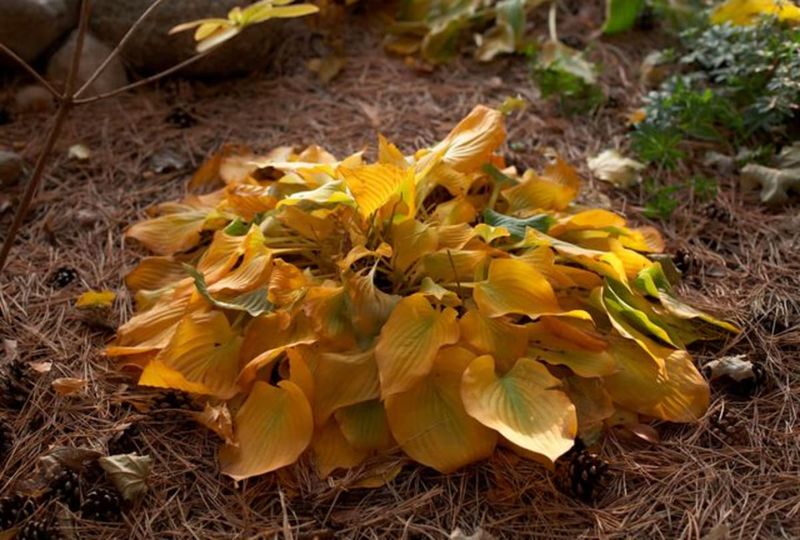
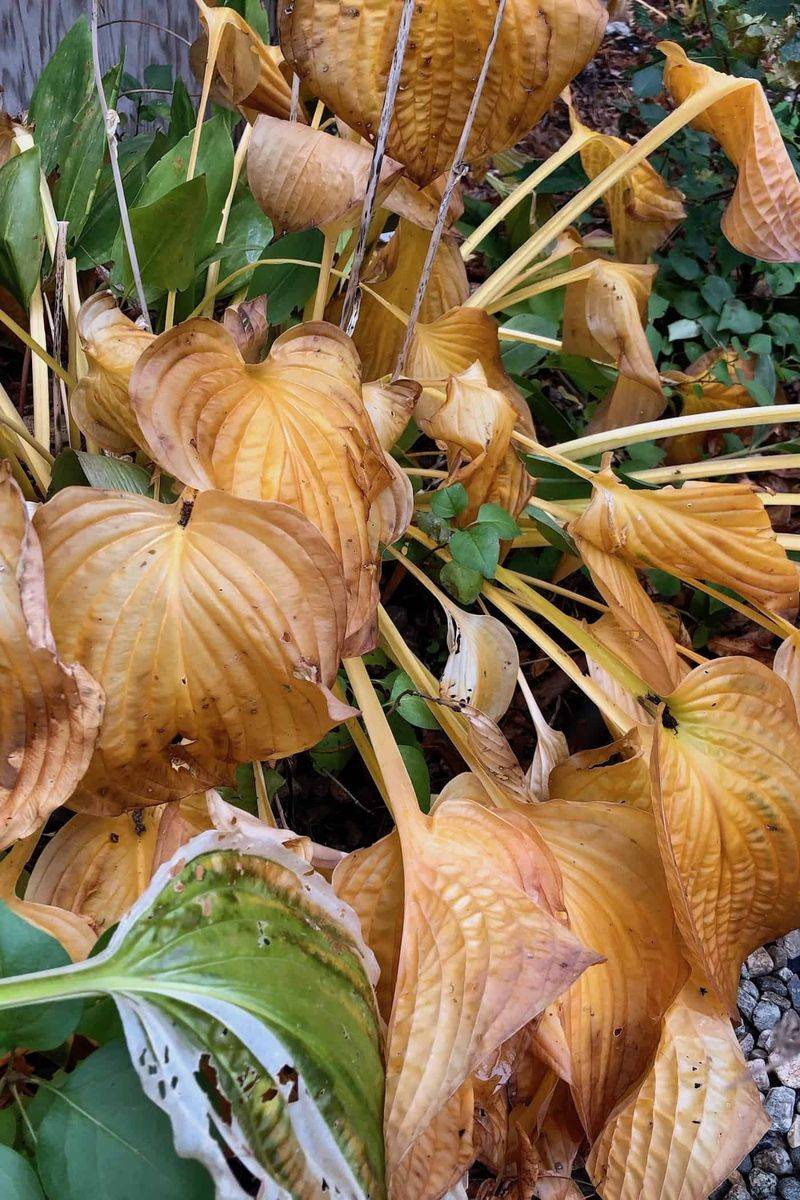
So let the plant lead. The clearest sign is leaves that have turned yellow or brown, gone limp, and flopped over the soil.
A light frost can nip the edges without finishing the job, and several light frosts may come and go before a hard freeze does.
Try a simple test. Lift a leaf and look at its texture.
If it feels slimy or papery and the stalk bends without resistance, the plant has finished with it. If it is still firm and colorful, walk away and check again in a week.
Some clumps will flop before others, so judge each one on its own. In many Michigan yards, the go-ahead comes after the first hard freeze, though the date moves with the weather.
There is no prize for being first, so patience wins here.
4. Cut The Stalks Low And Protect The Crown
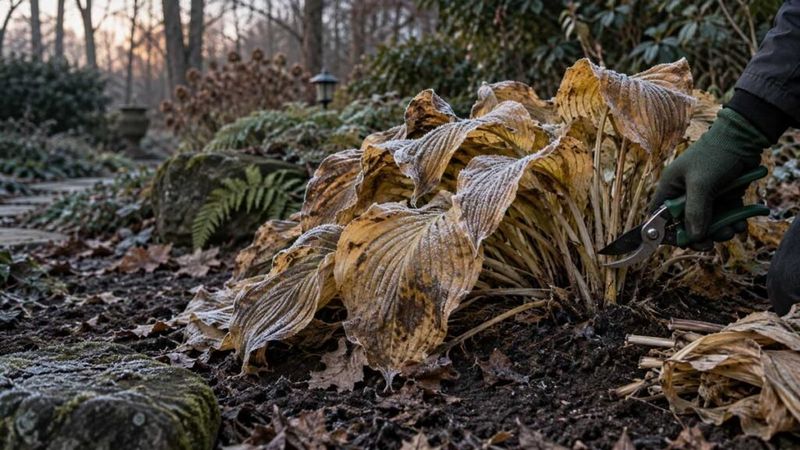
Sharp tools make this job quick and keep the plant happy. A pair of bypass pruners works well, and a bucket or bag nearby saves you extra trips.
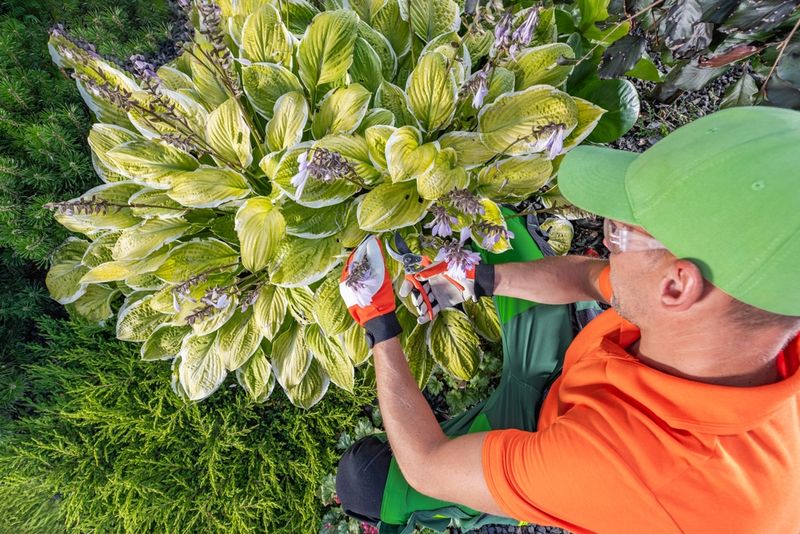
Once the foliage has flopped, cut the leaf stalks about 1 to 2 inches above the soil. Leaving a short stub helps you remember where each plant sits, and it keeps your blades well away from the crown, which is the knobby base where the new shoots will form next spring.
Nicking that area can invite trouble, so go slowly. Many collapsed leaves slide right off with a gentle tug, and you may not need tools at all.
Cut off the old flower stalks too, since they stand around all winter with nothing to do.
While you are down there, pull away any soggy mats of leaves that settled over the crown. Fallen tree leaves tend to pile up in untrimmed beds, and MSU Extension notes that clearing leaf litter and caked mulch from around vulnerable crowns removes hiding places for voles, especially if you have had vole damage before.
One habit is worth building: clean your tools between individual hostas. Hosta Virus X can spread through sap on blades, and a plant can carry it without showing symptoms for a while.
Advice on the best disinfectant varies by source, so follow the directions on whatever product you choose.
In Michigan, where a long winter follows cleanup, short stubs marking each plant also make spring work faster.
5. Cleanup Takes Away The Winter Hiding Spots
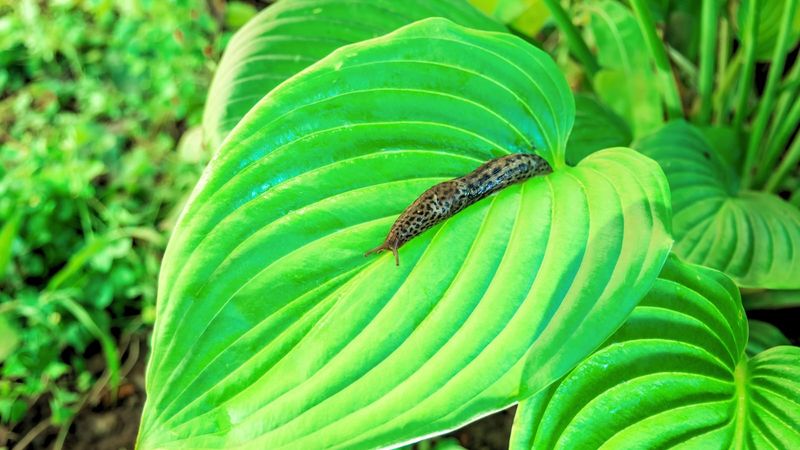
Slugs do not take the winter off just because the garden looks quiet.
Across Michigan, slugs and their eggs can overwinter in sheltered spots such as soil, mulch, and piles of plant debris, and a soggy mat of hosta leaves makes a very cozy one.
When spring warms up, those eggs hatch close to the plants, and slugs are often most active just as the new shoots push through.
Removing the collapsed foliage takes away some of that shelter. It does not wipe out every egg, and no cleanup can promise a slug-free summer, but it does reduce the number of hiding places close to the crown.
MSU Extension also suggests clearing debris and mulch from around the base of hosta plants as part of slug control, along with other steps such as mowing nearby grass.
Voles are the other winter visitor to keep in mind. These small rodents use leaf litter as cover while they reach the crowns and roots below, and clean ground leaves them more exposed.
If your hostas had leaf disease or damage from foliar nematodes this year, that is an even stronger reason to remove the foliage in fall instead of leaving it to rot in place.
Think of cleanup as one layer of defense, not a cure. It works best alongside the habits you already use, such as spacing plants so air can move through the clump and picking off slugs on damp spring evenings.
6. Handle The Clippings The Smart Way
What happens to the pile of leaves matters almost as much as the cutting itself. Toss it right beside the bed, and you have simply moved the hiding spots a few feet.
MSU Extension suggests composting healthy clippings in a pile set well away from the garden, ideally quite a few yards off, so any leftover eggs or spores are not sitting next to your plants.
Foliage that looked sick is a different story. If you noticed spots, mushy crowns, or odd mottling, bag it and send it out with the household trash instead of the compost.
A backyard pile may not heat up enough to stop some diseases, and Hosta Virus X is not something you want to spread.
University of Maine Extension advises removing any plant showing virus symptoms and throwing it away in its own bag instead of composting it. Resist the idea of using the cut leaves as mulch over the same bed, too, because that puts the same shelter right back on top of the crowns.
See if your town offers fall yard waste pickup or drop-off, since rules vary across Michigan, and read the local guidelines before you haul anything. When the cleanup is finished, step back and look at the bed.
The soil surface should be mostly bare around short stubs, which gives air and sunlight a chance to dry things out. A tidy bed like that is what you want heading into the coldest months.
7. Healthy Foliage Can Wait Until Spring If You Prefer
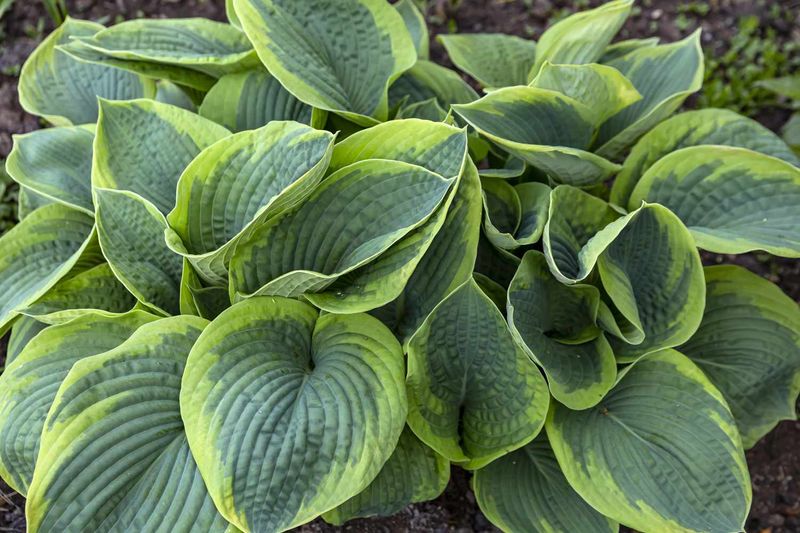
Plenty of gardeners skip fall cleanup, and their hostas often still return in spring. That is worth saying out loud, because the advice here comes with some flexibility.
A Michigan State University Extension educator has noted that experts disagree about how much fall care a perennial garden needs, and that perennials can go into winter without being cut back at all.
Healthy hosta foliage can stay in place until late winter or early spring, as long as you clear it before the new shoots come up. The trade-off is that the cleanup can get slimier, because winter can turn the leaves into a wet, flattened mat.
Spring cleanup also keeps the slug and vole hiding places around all winter. Look at the history of the bed.
If slugs chewed your hostas hard last summer, if you saw leaf spots or foliar nematode damage, or if voles have visited before, fall cleanup is the stronger choice. If the plants stayed clean and the pest pressure was light, waiting is a reasonable plan.
A middle path works well too. Clean the beds with a history of trouble now, and leave the healthy ones for a mild day in late winter.
Whichever route you pick, set a reminder so the job does not slip.
Foliage left standing needs to come off before the pointed shoots start rising, because cutting around tender new growth can be harder and riskier for the plant.
8. Clean Clumps Set You Up For More Plants In Spring
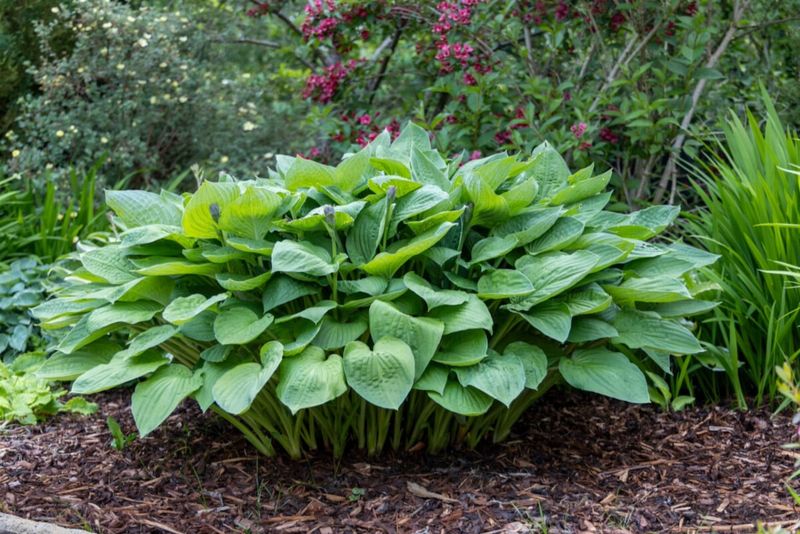
Spring is where all this effort pays off. As soon as the soil warms, the pointed shoots called eyes begin rising from the crown, and a bed cleared the fall before makes them easy to find.
The window right as the eyes emerge and before the leaves unfurl is one of the best times to divide a clump into more plants. Dig up the crown, then slice it with a sharp knife or spade so each piece has at least three eyes and a healthy portion of roots.
Replant at the same depth, water well, and keep the soil moist while new roots form. You do not need to divide every year.
Fast-growing hostas may be ready every two to three years, while slow growers can wait five to ten, so split the clumps that look crowded or thin in the center.
Early November is too late for division in most of Michigan, because roots need several weeks to settle in before the ground freezes. If spring slips by, the next window opens in late summer, about four to six weeks before the first hard freeze.
Clean your tools between plants, and skip any hosta with mottled or puckered leaves.
If you divided or planted new hostas this fall, add a loose layer of mulch after the ground freezes to help them through their first winter, and pull it back when shoots appear. A little extra care like that helps your new plants make it to spring in good shape.