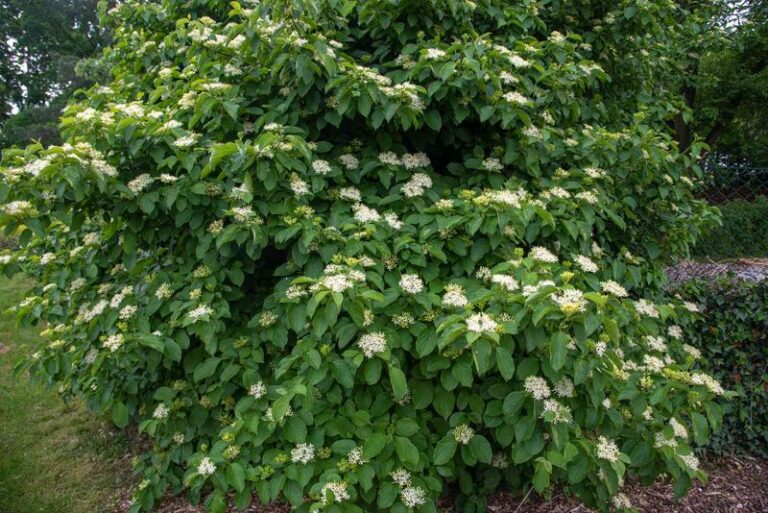
The One Thing North Carolina Hydrangeas Need In August Or Next Spring They Give You Only Leaves
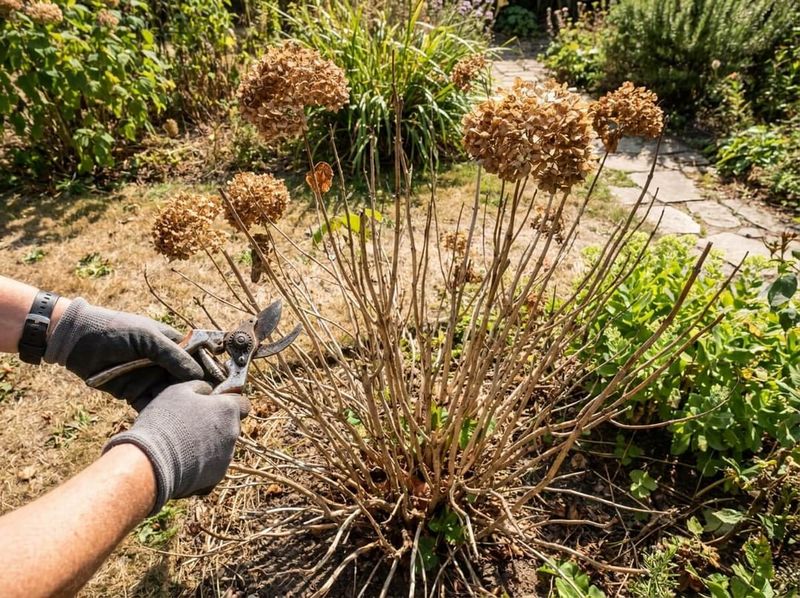
You walk out back on a July evening, the air still thick from the afternoon storm, and your hydrangea looks gorgeous. But come spring, that same shrub might hand you nothing but a wall of green leaves and zero flowers, and most gardeners blame the wrong thing. If you grow a traditional bigleaf hydrangea in North Carolina, when you prune matters more than almost any other decision you make all year. Get the timing right and next spring’s blooms take care of themselves.
The August Warning Applies to One Main Hydrangea Group
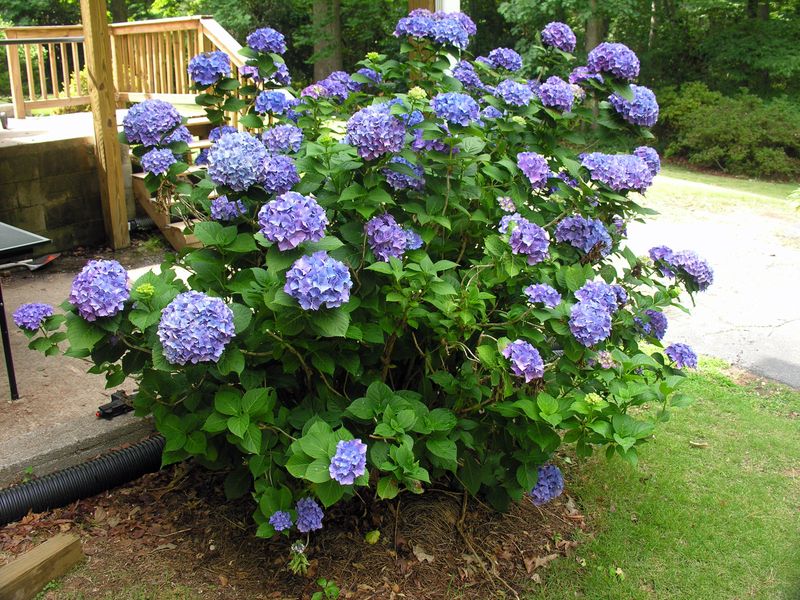
Most of the “prune in August” advice floating around social media was written for one specific plant: the traditional bigleaf hydrangea, known botanically as Hydrangea macrophylla. If that is what you have, the window for any necessary shaping or deadheading closes sooner than most people expect. Late July or roughly August 1 works as a rough planning benchmark for North Carolina gardeners, but the more important signal is whether your plant has actually finished blooming yet.
Here is where it gets tricky. That late-July benchmark is not a biological switch that flips at midnight on August 1. NC State Extension’s woody ornamentals guidance explains that bigleaf hydrangeas form next year’s flower buds on stems from the previous season, and late-summer bud formation is what closes the safe pruning window. Prune after those buds set and you are cutting off next spring’s flowers before they ever had a chance.
The risk is real, but the outcome is not automatic. University of Georgia Extension’s hydrangea pruning guide is clear that wrong-time pruning can reduce or eliminate flowering, but other factors play a role too. Cold injury, drought, and deer can produce the same leafy result even when your pruning was perfectly timed.
Before you touch the clippers, identify the plant. Smooth hydrangeas and panicle hydrangeas follow a completely different schedule, and cutting them on the wrong date does far less damage. The August warning is real, but it belongs specifically to traditional old-wood bigleaf types, so confirm what you have before the advice applies to your yard.
Old Wood Holds Next Year’s Flower Buds
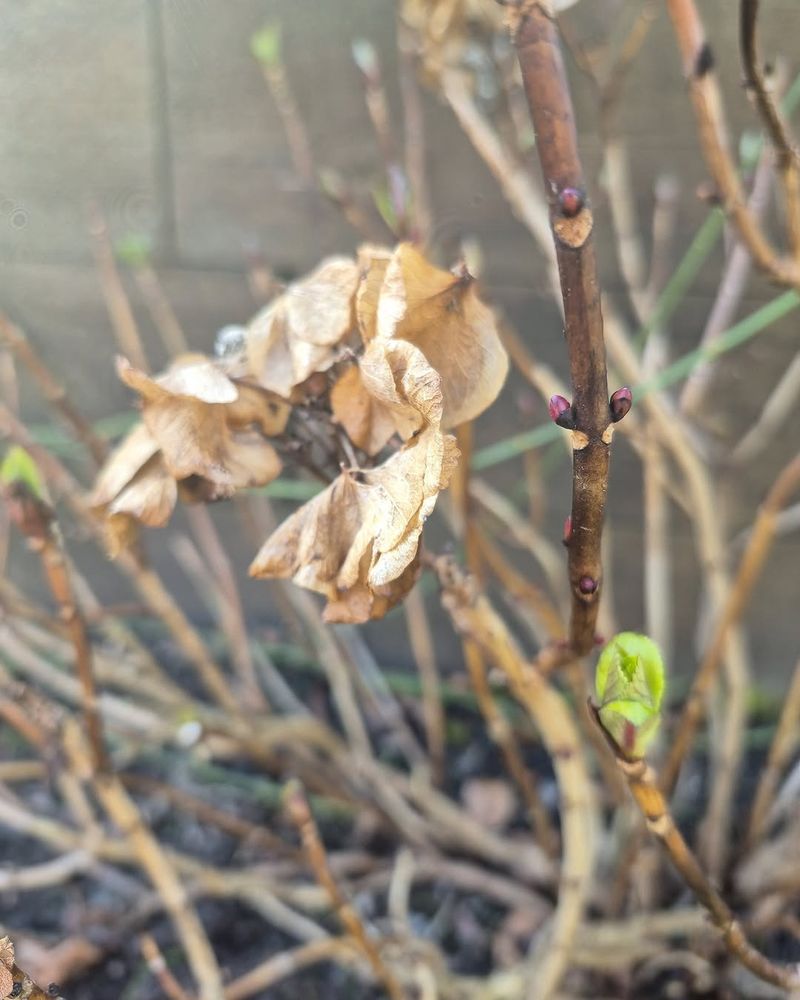
Old wood does not mean dead wood. That mix-up causes more ruined bloom seasons than almost any other misunderstanding in the yard. Old wood is simply the stems your hydrangea grew last season, the ones that turned brown and woody over winter while the plant rested. Dormant flower buds sit along those stems, quietly waiting for spring warmth to wake them up.
New wood is exactly what it sounds like: the fresh green growth your plant pushes out each spring during the current growing season. For traditional bigleaf hydrangeas, University of Maryland Extension’s pruning guide explains that flower buds form on old wood, which means any pruning done in late summer, fall, winter, or early spring can remove the buds before they ever open. You end up with a perfectly healthy, leafy shrub that simply has nothing left to bloom with.
Your North Carolina Garden Changes Every Week. Your Plan Should Too.
Gardening in North Carolina changes quickly throughout the season. Every Friday you’ll receive a simple weekly plan showing exactly what to plant, prune, fertilize, harvest, and protect so you never miss the right timing.
The timing of bud formation varies by plant and by the weather that season. A bigleaf that bloomed late because of a cool spring may not begin setting next year’s buds until later in summer than one that peaked in early June. That is why the plant’s own bloom-finish date matters more than the calendar, and why UGA Extension recommends pruning immediately after flowering fades rather than waiting for a fixed date on the wall.
Think of those old stems as a savings account the plant spent all last summer building. Pruning them away in October feels harmless because the shrub looks dormant and fine. But the balance is gone, and spring finds the account empty.
Identify the Hydrangea Before You Prune
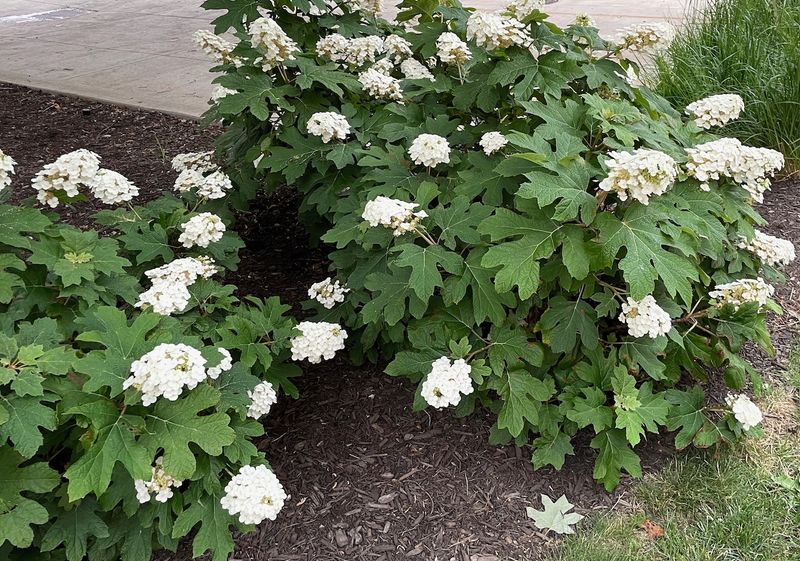
Pruning the wrong hydrangea at the wrong time is an honest mistake, mostly because the plants look similar at a glance. Spend two minutes with the plant label or a photo identification app before you pick up the clippers, and you will save yourself a flowerless spring.
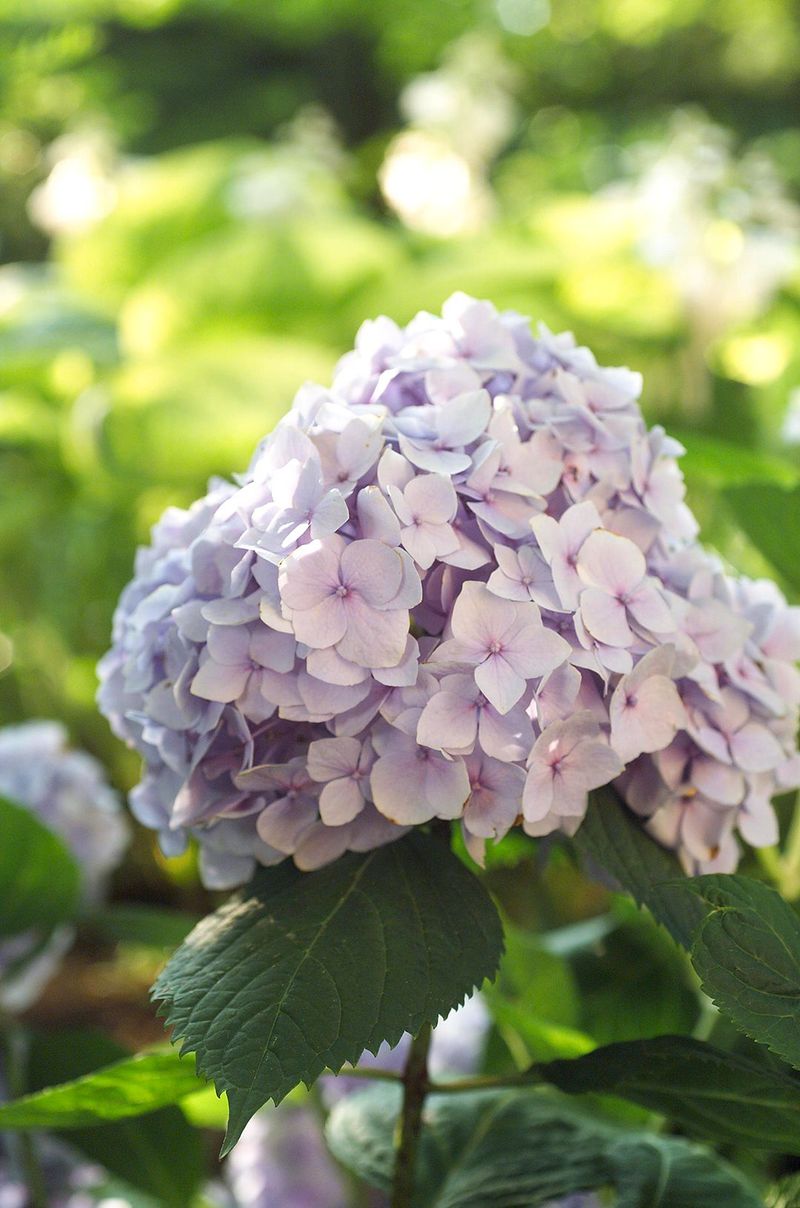
Traditional bigleaf hydrangeas, Hydrangea macrophylla, are the ones with the classic round mophead or flat lacecap flowers in pink, purple, or blue. NC State’s plant profile for Hydrangea macrophylla confirms these bloom on old wood, so they need any necessary pruning completed after flowering and before late-summer bud formation. Oakleaf hydrangea, Hydrangea quercifolia, also blooms on old wood. Its deeply lobed leaves look like a red oak’s, and NC State’s oakleaf hydrangea profile notes it should be pruned right after flowering if pruning is needed at all.
Smooth hydrangea, Hydrangea arborescens, is actually native to North Carolina and blooms on new wood. NC State’s smooth hydrangea profile confirms it can be cut back hard in late winter without sacrificing flowers, because it will push fresh blooming stems that same spring. Panicle hydrangea, Hydrangea paniculata, also blooms on new wood and follows the same late-winter or early-spring pruning window. Penn State Extension’s species-by-species guide lays this out clearly for both types.
Then there are the reblooming or remontant bigleaf cultivars, such as those in the Endless Summer series, including BloomStruck, Summer Crush, and Twist n Shout. University of Minnesota Extension explains that these cultivars can flower on both old and new wood, making them more forgiving when a pruning cut is mistimed. They are not immune, though. Cutting away old-wood buds can still delay or reduce the first flush of flowers, so the after-flowering principle still applies as a best practice.
Visual clues get you far, but they cannot identify every cultivar with certainty. When in doubt, keep the plant label, search the cultivar name, or take a photo to your local cooperative extension office.
Make a Light Cut, Then Stop
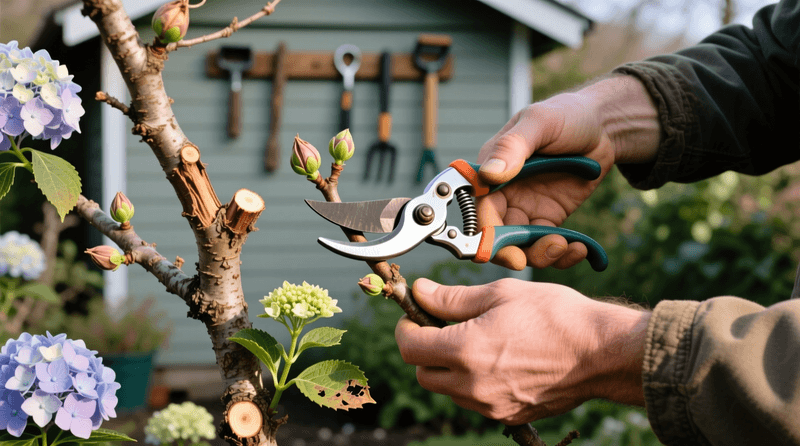
The safest pruning move for a traditional old-wood hydrangea is also the simplest one. Find a faded flower head, follow the stem down to a healthy pair of leaves or a strong-looking bud, and cut just above that point. That is the whole job for most plants in most years.
University of Maryland Extension’s pruning guidance is specific: remove spent flower heads and any dead or clearly damaged stems, then stop. Do not shear the entire shrub into a tidy ball. Do not shorten every cane just because the plant looks a little rangy. Each stem you remove beyond dead or broken wood is a stem that might have been carrying next year’s buds.
Deadheading is actually optional for plant health. Penn State Extension notes that leaving dried flower heads in place does not harm the plant, and many gardeners enjoy the papery brown clusters through fall and winter. If you like the look, leave them. Your hydrangea will not suffer.
Hard renewal pruning, meaning cutting old-wood hydrangeas down to near ground level, is a different matter entirely. UGA Extension warns that this kind of drastic cut on a bigleaf type removes the stems carrying next year’s flower buds and can mean a full season or longer with few blooms while the plant rebuilds. Reserve that approach for smooth and panicle hydrangeas in late winter, when it actually helps rather than hurts.
The plant’s bloom-finish date still matters more than a hard calendar rule. UGA’s Paulding County Extension blog puts it plainly: prune right after the flowers fade, then put the clippers away. A plant that bloomed late into July needs its cut completed as soon as those flowers drop, not on a schedule set by last year’s neighbor’s plant.
A Leafy Shrub May Have Lost Its Buds Another Way
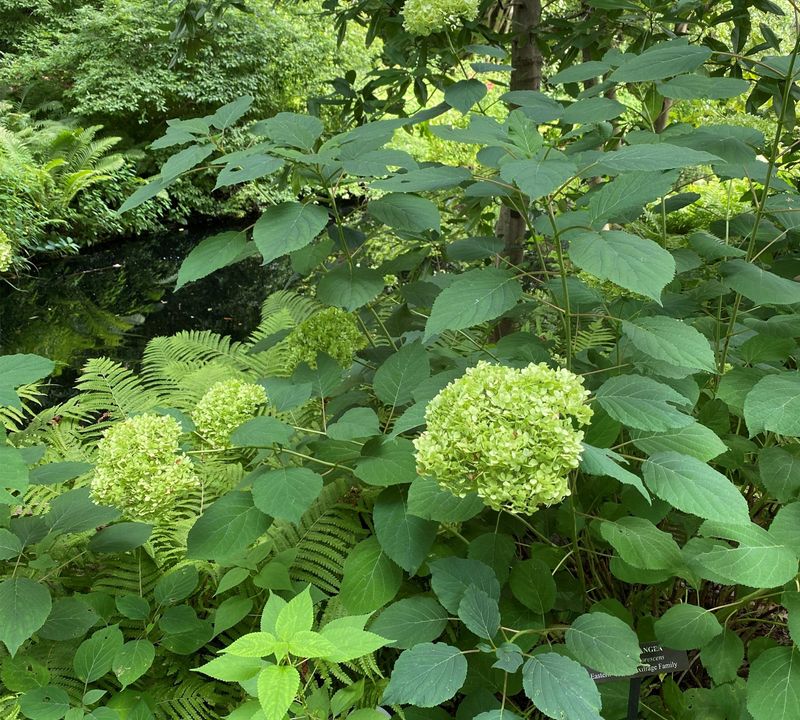
Spring arrives, your hydrangea leafs out beautifully, and there is not a single flower bud in sight. Before you blame last summer’s pruning, consider what else happened between August and April, because the list of suspects is longer than most people realize.
Winter injury is one of the most common causes of bud loss in North Carolina, and it hits hardest in the mountains. Bigleaf hydrangea flower buds can be killed by cold snaps even when the stems themselves survive. NC State Extension’s woody ornamentals handbook identifies winter damage as a frequent reason for reduced or absent flowering, separate from any pruning decision the gardener made. A late freeze in March or April, the kind that catches the Piedmont off guard after a warm February, can finish off buds that made it through January just fine.
Deer are another possibility that gardeners in rural Piedmont areas, the Sandhills, and mountain communities know well. Penn State Extension notes that deer browsing can remove the exact stems a gardener was trying to protect, producing the same flowerless result as late pruning without any clippers involved.
Site conditions add another layer. Excessive shade can reduce flowering on any hydrangea. Drought stress during bud development can affect bloom set. University of Maryland Extension’s problem-diagnosis guide lists inadequate light, excess nitrogen, and drought as documented causes of poor flowering alongside pruning errors.
Coastal Plain gardeners face sandy soils that drain fast and dry out quickly during summer. Mountain gardens face cold snaps that Piedmont and coastal sites rarely see. No single explanation fits every yard.
Blaming yourself for pruning too late is sometimes accurate and sometimes not. A little honest detective work through the seasons usually points to the real culprit.
Give the Plant Moisture, Drainage, and Appropriate Light
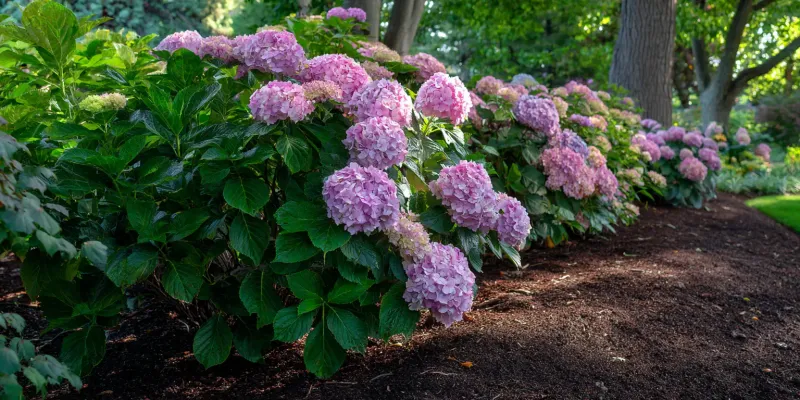
A hydrangea that is stressed, waterlogged, or baking in full afternoon sun is going to struggle to bloom well regardless of when you pruned it. Getting the site conditions right is not a substitute for correct pruning, but it is the foundation that makes everything else work.
North Carolina summers are genuinely hard on hydrangeas. NC State Extension identifies hydrangeas as among the first landscape plants to show drought stress, thanks to their large leaves losing water fast in the heat and humidity. Water deeply during dry stretches rather than sprinkling lightly every day. Deep, less frequent watering encourages roots to go down where soil stays cooler and moister, which helps the plant handle the next dry spell on its own.
Midday wilting can fool you. If leaves droop in the afternoon but bounce back overnight and the soil still feels moist a few inches down, heat stress is the likely cause, not drought. University of Maryland Extension’s hydrangea problem guide cautions against overwatering in response to afternoon wilt, especially in Piedmont clay where poor drainage can damage roots faster than any summer dry spell.
A 2- to 3-inch layer of mulch around the base of the plant helps hold moisture, moderate soil temperature, and protect shallow roots. NC State’s profile for Invincibelle smooth hydrangeas and the oakleaf hydrangea profile both recommend mulching, particularly in sandy Coastal Plain soils and in Piedmont clay where moisture swings between flood and drought after summer storms. Keep the mulch a few inches away from the stems to avoid rot.
Light placement matters too. Bigleaf and smooth hydrangeas generally do best with morning sun and afternoon shade in most of North Carolina, as UGA Extension’s identification guide confirms. Panicle hydrangeas tolerate more sun than most other types, but NC State’s panicle hydrangea profile still recommends adequate moisture even for that tougher species. Full shade, on the other hand, can reduce flowering on any hydrangea, so a spot that gets no direct sun at all may be limiting your blooms more than your pruning schedule ever did.
Skip the August Fertilizer Fix
When a hydrangea refuses to bloom, the temptation to grab a bag of fertilizer and throw it at the problem is understandable. Resist it, especially in August, especially if the plant is already stressed by heat or dry soil.
High-nitrogen fertilizer applied in late summer pushes the plant to produce lush leafy growth right when it should be slowing down and hardening off for fall. That burst of soft new growth can actually work against next year’s flowers, not for them. NC State Extension’s fertilizing guide for trees and shrubs advises against late-season nitrogen applications, and UGA Extension’s hydrangea guide notes that excess nitrogen can favor leaf production over flowering even at other times of year. Fertilizing a drought-stressed plant carries its own risk: concentrated salts can injure roots that are already struggling.
If you genuinely suspect a nutrient problem, start with a soil test through NC State Extension before buying anything. A test tells you what the soil actually needs, which is almost always more specific than a generic bloom-booster promises. Follow the product label for rates and timing, and factor in the plant’s age, size, and current condition before applying anything.
Many hydrangeas actually need very little fertilizer at all. University of Maryland Extension’s problem guide and their pruning resource both note that many established shrubs need nothing beyond removing dead or damaged growth each season. Deadheading is optional. Annual hard pruning is not a requirement.
The plants are genuinely more self-sufficient than the gardening industry sometimes suggests.
The practical sequence that protects next year’s bloom is straightforward: identify the hydrangea type, prune old-wood plants right after flowering fades, and then leave the remaining stems alone through fall and winter. A plant that knows what it is doing, and has good drainage, steady moisture, and decent light, rarely needs much else from you.