The One Thing North Carolina Lawns Need After August Storms Or Fungus Sets In
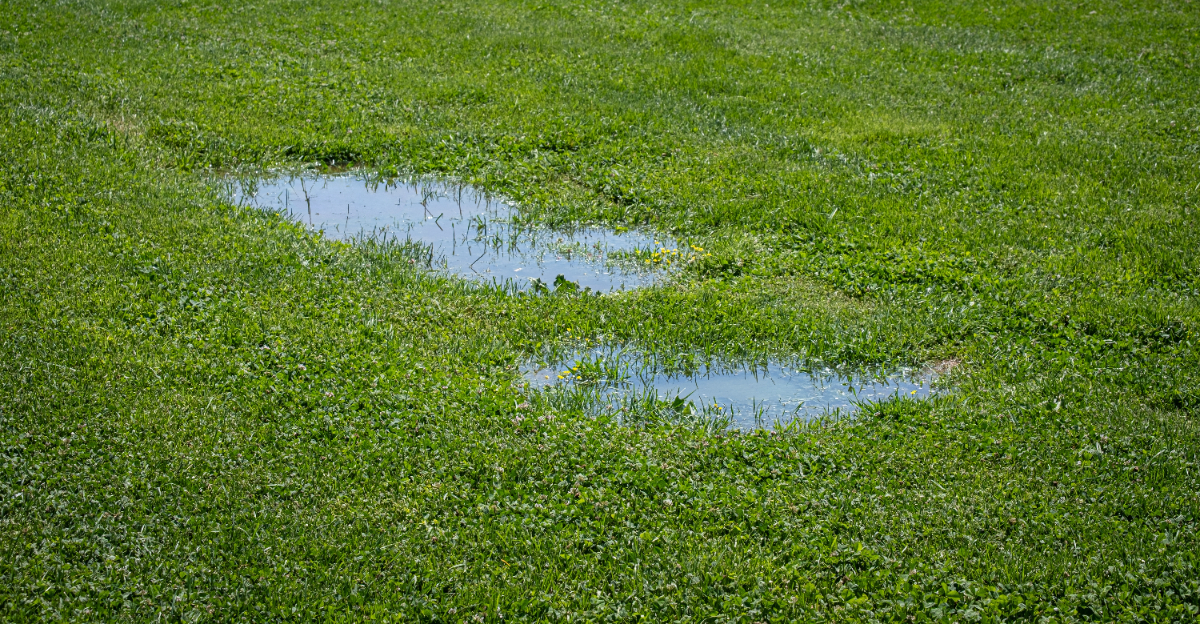
Improved airflow and proper drying time are essential for North Carolina lawns after August storms if fungal issues are going to be avoided.
Standing water combined with warm, humid conditions creates an ideal environment for fungal problems to spread quickly across a lawn.
Avoiding mowing wet grass immediately after a storm helps prevent spreading spores from one area to another. Raking up any debris or fallen leaves also removes potential hiding spots where fungus can develop and linger.
Allowing grass to dry fully before any additional watering gives the lawn a chance to recover naturally. Aerating compacted areas improves drainage, reducing the standing water that fungal issues rely on to take hold.
Applying a fungicide only becomes necessary if visible signs of fungus actually appear despite these preventive steps. Taking these simple precautions after storms protects lawns from a problem that’s much harder to treat once established.
1. The Lawn Needs Time To Dry
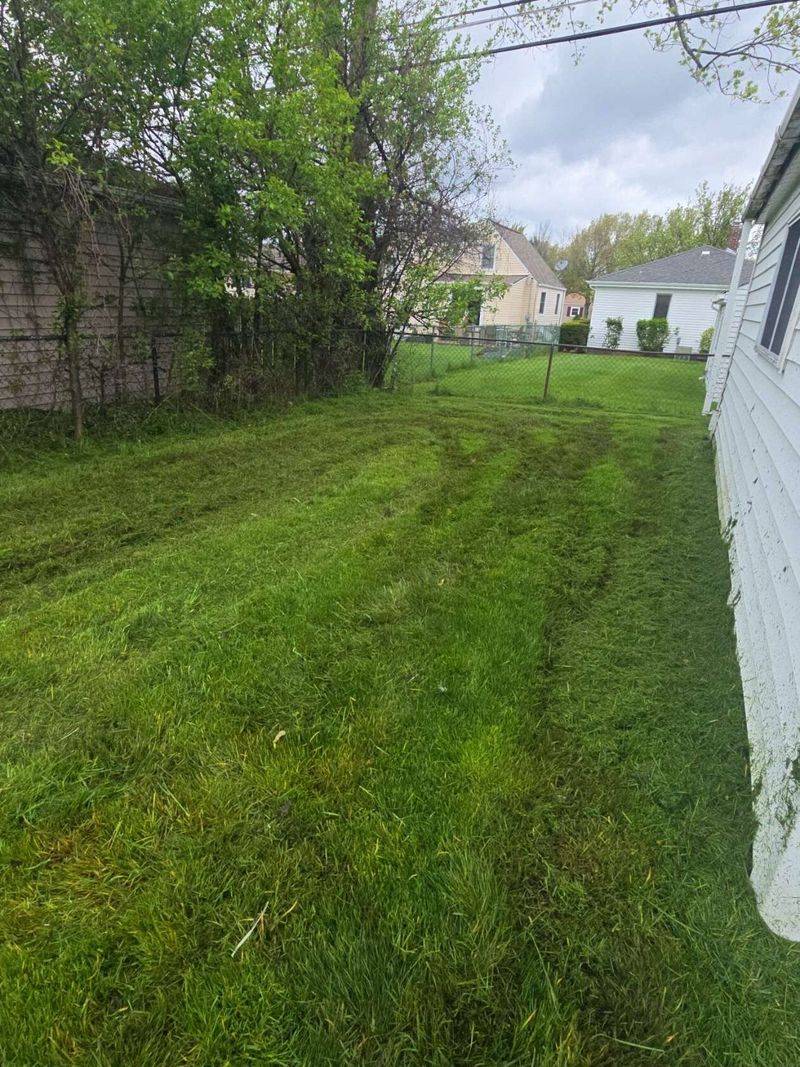
After a storm drops inches of rain on your lawn, the single best thing you can do is nothing. Seriously.
Giving your grass and soil time to dry out naturally is the most powerful step you can take to stop fungal disease before it starts. Fungi love moisture, and a lawn that stays wet for too long becomes an open invitation for trouble.
Warm, humid North Carolina summers already push conditions toward fungal growth. When storm moisture sits on grass blades for more than eight hours, pathogens like brown patch get the foothold they need.
The longer the lawn stays soaked, the faster those organisms multiply and spread.
Drying time is not just about the surface either. Soil that holds too much water deep down can stay soft and soggy for days, which keeps the entire turf system stressed.
Stressed grass has a weaker immune response, making it far easier for fungus to move in and take over.
Good air circulation speeds up drying significantly. If your yard has dense tree cover or shrubs blocking airflow, that shade and wind block can keep the lawn wet well past sunrise.
Trimming back overhanging branches improves both light penetration and airflow across the turf. Patience after a storm is genuinely one of the most underrated lawn care strategies.
Resisting the urge to mow, fertilize, or even walk across the yard while it is still saturated gives your grass the recovery window it needs to stay strong and fungus-free.
2. Turn Off The Sprinklers After Heavy Rain
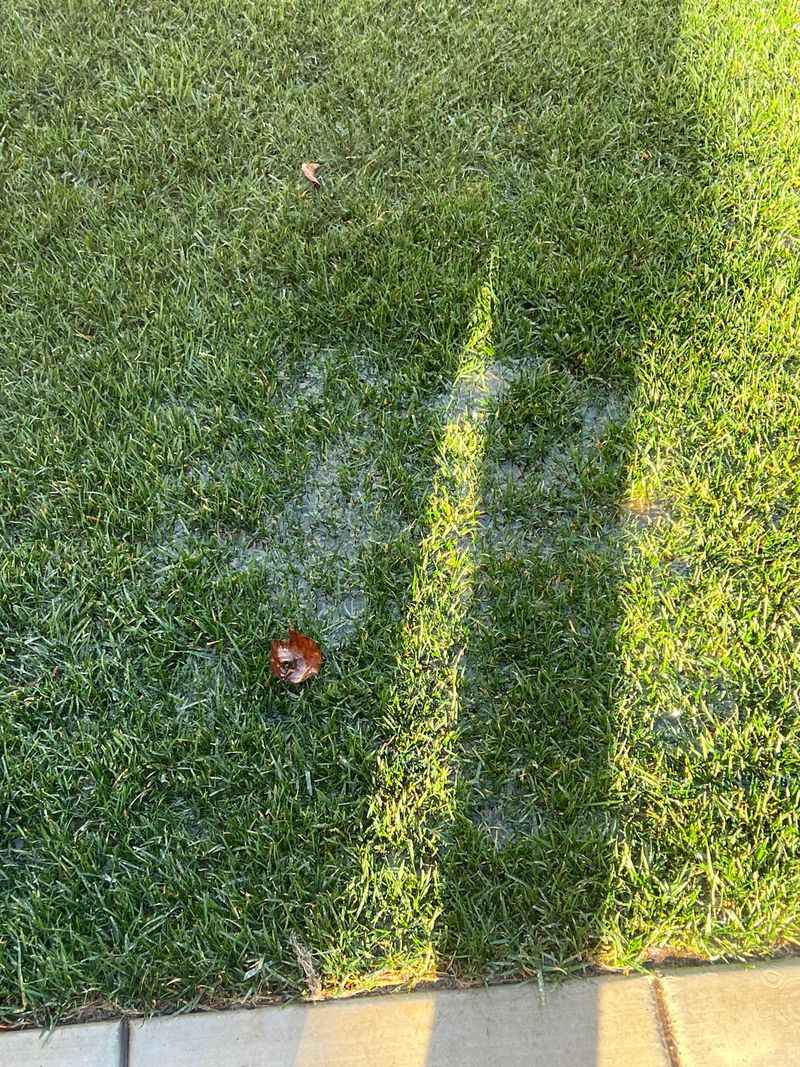
One of the most common mistakes homeowners make after a big August storm is leaving the irrigation system on its normal schedule.
Your lawn just received a heavy dose of water from the sky, and adding more through sprinklers pushes the moisture level into dangerous territory for fungal disease.
Brown patch, one of the most destructive lawn diseases in North Carolina, thrives when grass stays wet overnight. Sprinklers that run in the evening or early morning hours after a storm basically roll out the welcome mat for this fungus.
Cutting irrigation immediately after heavy rainfall is one of the simplest and most effective protective steps you can take.
Your North Carolina Garden Changes Every Week. Your Plan Should Too.
Gardening in North Carolina changes quickly throughout the season. Every Friday you’ll receive a simple weekly plan showing exactly what to plant, prune, fertilize, harvest, and protect so you never miss the right timing.
Many modern irrigation controllers have rain sensors or smart weather-based settings that automatically pause the system after precipitation. If your system does not have this feature, it is worth the upgrade.
A basic rain sensor costs very little compared to the expense of treating widespread fungal damage across your lawn.
Even if your yard looks dry on the surface a day after a storm, the soil beneath can still hold plenty of moisture.
Checking soil moisture with a simple screwdriver test, pushing it six inches into the ground, tells you whether the ground is still saturated before you consider turning the sprinklers back on.
Watering discipline after storms is genuinely one of the easiest wins in lawn care. Skip the scheduled irrigation, let nature do its thing, and your grass will thank you with a cleaner, healthier appearance through the rest of the summer season.
3. Watch How Long The Grass Stays Wet
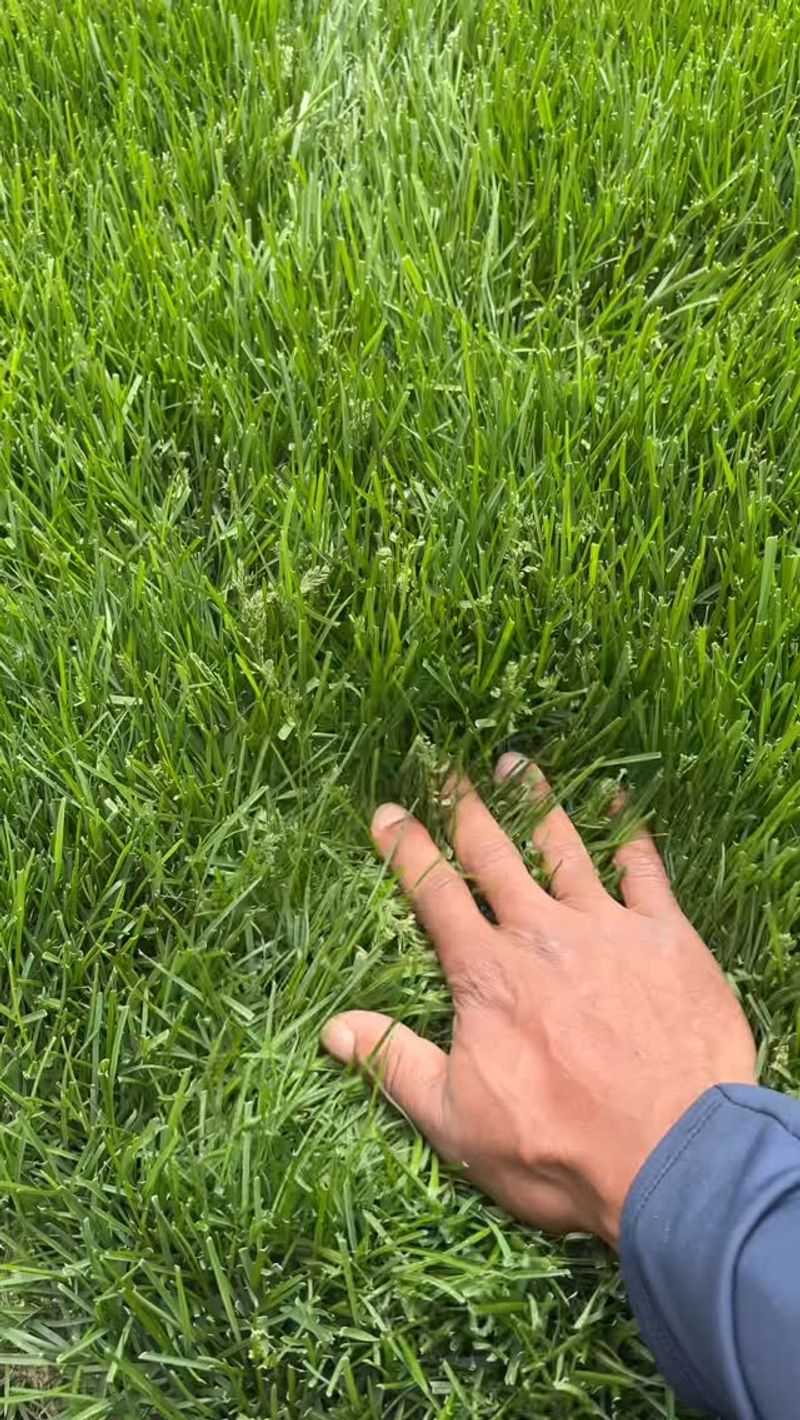
Not all wet lawns are created equal. A quick afternoon shower that dries up within a couple of hours is very different from an overnight storm that leaves your grass soaked through the next morning.
The length of time your grass blades stay wet, a measurement plant scientists call leaf wetness duration, is one of the biggest factors in whether fungal disease takes hold.
Brown patch fungus, which is extremely common in North Carolina during August, needs extended leaf wetness combined with warm nighttime temperatures to really get going.
When nighttime lows stay above 70 degrees Fahrenheit and grass stays wet for eight or more hours, conditions become nearly perfect for an outbreak.
That combination happens regularly during North Carolina summers, especially after slow-moving storms.
Watching the pattern of wetness in your yard helps you identify which areas are at highest risk. Low spots, shaded corners, and sections near fences or walls tend to stay wet much longer than open, sunny areas.
Those spots deserve extra attention and careful monitoring after every storm event.
One practical habit is checking your lawn in the early morning, about an hour after sunrise. If the grass still feels sopping wet at that point, you are in a higher-risk window for fungal development.
Dry conditions by mid-morning are generally much safer for the overall health of your turf. Awareness of leaf wetness patterns costs you nothing but a few minutes of observation.
Over time, that habit builds a mental map of your lawn’s vulnerable zones, letting you respond faster and smarter whenever August storms roll through your neighborhood.
4. Fix Spots Where Water Collects
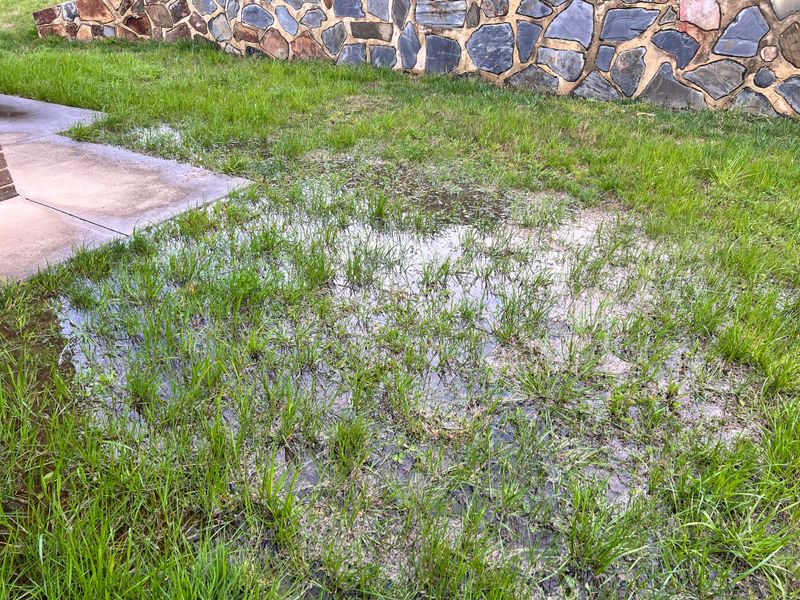
Every lawn has its problem zones, and in North Carolina, those low spots become trouble magnets after August storms. Water that pools and sits in one area creates a persistently moist environment that fungal pathogens absolutely thrive in.
If you have noticed the same patch of grass looking brown and struggling after every rainy stretch, poor drainage is almost certainly a contributing factor.
Standing water does more than just encourage fungus. It also suffocates grass roots by pushing oxygen out of the soil.
Turf that is both oxygen-starved and soaking wet becomes significantly more vulnerable to disease organisms that are always present in the environment but normally held in check by healthy plant defenses.
Fixing drainage problems does not always require major landscaping work. Small low spots can often be corrected by topdressing with a sand and compost blend, gradually raising the grade over a season or two.
For more significant drainage issues, installing a simple French drain or redirecting downspouts away from the lawn can make a dramatic difference in how quickly your yard dries after storms.
Aerating compacted areas also helps water move down through the soil profile instead of sitting on top. Core aeration in late summer or early fall opens up the soil structure and improves both drainage and root depth over time.
Better drainage equals faster drying, and faster drying means less opportunity for fungus to establish itself.
Addressing those wet spots is a long-term investment in your lawn’s health. Every storm season after you fix the drainage will be noticeably less stressful for both you and your grass.
5. Stay Off Saturated Soil
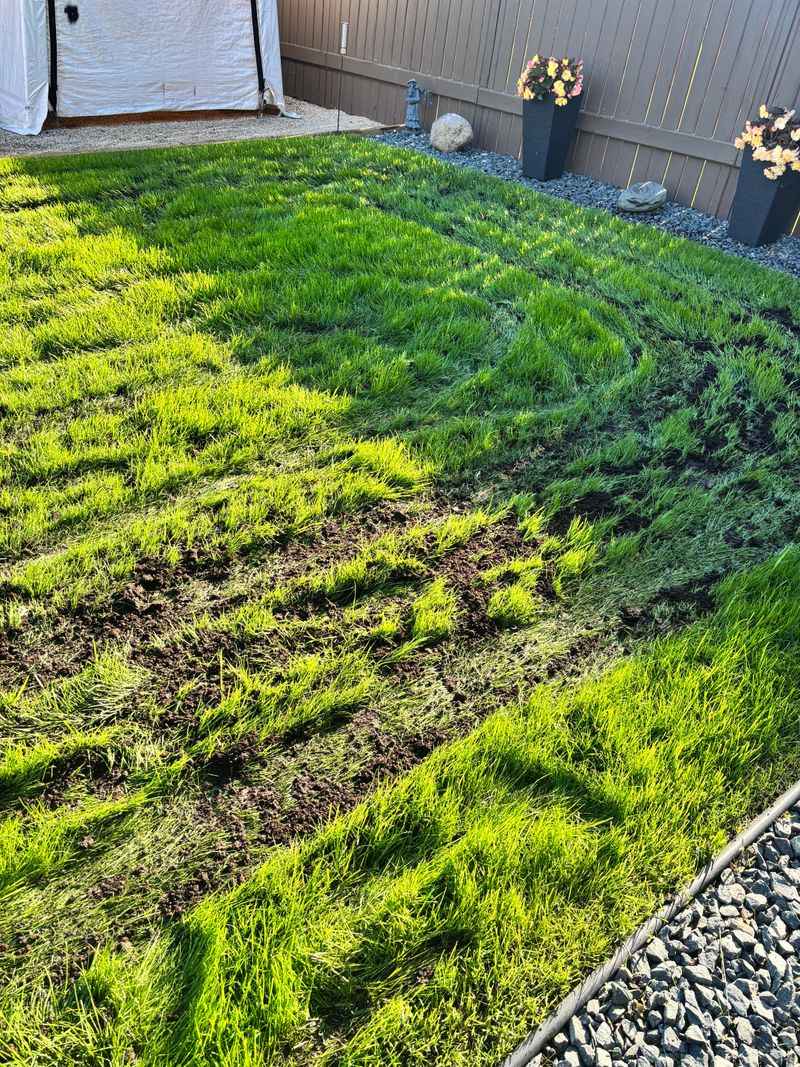
Saturated soil is fragile soil. When the ground is completely soaked after a heavy August storm, the tiny air pockets between soil particles collapse under pressure far more easily than they would in dry conditions.
Walking across a waterlogged lawn, even just once, can compress those particles together in a way that reduces drainage and root health for months afterward.
Compacted soil is a sneaky problem because the damage is not visible on the surface right away. You walk across the wet yard, it looks fine, but underneath the surface the structure has tightened.
Water starts moving through the soil more slowly, roots struggle to penetrate deeply, and the turf becomes more stressed overall, which makes it more susceptible to fungal disease down the road.
Lawn equipment makes the compaction problem even worse. Pushing a mower across saturated turf can leave wheel ruts and compressed tracks that take an entire growing season to recover from.
Even lighter foot traffic from pets or kids playing outside adds up quickly when the soil is at its most vulnerable state.
A simple squeeze test tells you a lot about soil saturation. Grab a handful of soil from just below the surface and squeeze it firmly.
If water drips out or the clump stays perfectly molded without crumbling at all, the soil is still too wet for any kind of traffic or work.
Treating your saturated lawn like a recovery zone for a day or two after a major storm pays off in stronger turf, better drainage, and far fewer disease problems as the season continues.
6. Wait Until Grass Is Dry To Mow
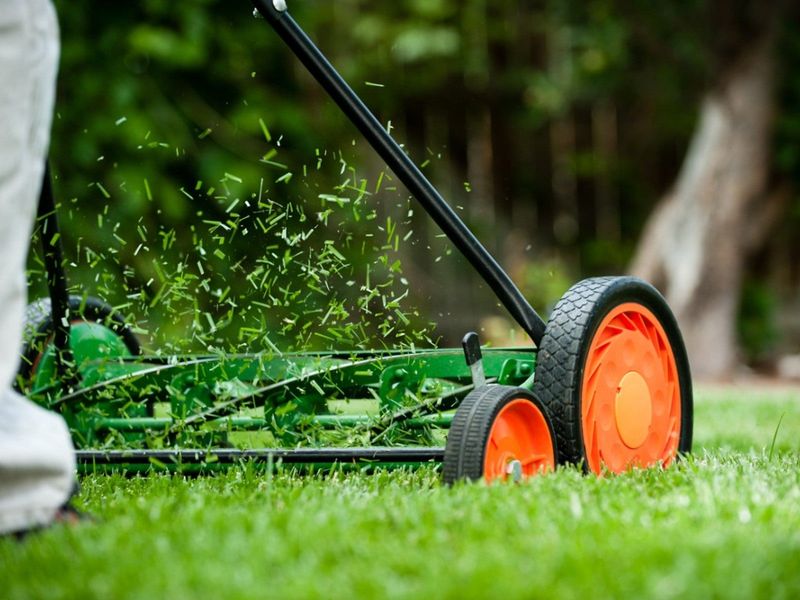
Mowing wet grass feels like a productive thing to do after a storm, especially when the lawn looks overgrown and messy. However, cutting wet turf is one of the fastest ways to spread fungal disease across your entire yard.
Lawn mowers do not just cut grass blades, they also pick up and redistribute whatever is living on those blades, including fungal spores that are just starting to develop.
Wet clippings clump together and stick to the mower deck, the wheels, and the grass itself. Those clumps become moist piles that sit on the turf surface and create concentrated spots of humidity where fungal organisms can multiply rapidly.
A single mowing session on wet grass can scatter disease organisms from one small infected area across a much larger portion of the lawn.
Wet grass also cuts unevenly. The blades bend under the mower rather than standing upright for a clean cut, which results in a torn, ragged edge on each grass blade.
Torn cuts heal more slowly and provide an easier entry point for pathogens compared to clean, sharp cuts made when the grass is dry and standing tall.
Waiting for the grass to dry completely before mowing is not just about disease prevention. Dry mowing also results in a better-looking finish, less clumping, and a cleaner collection of clippings if you bag them.
The wait is usually just a matter of one sunny afternoon after a storm passes.
Sharpening your mower blade regularly makes the eventual dry mowing session even more effective, giving your lawn the cleanest possible cut and the fastest healing response after storm stress.
7. Do Not Push Growth With Extra Nitrogen
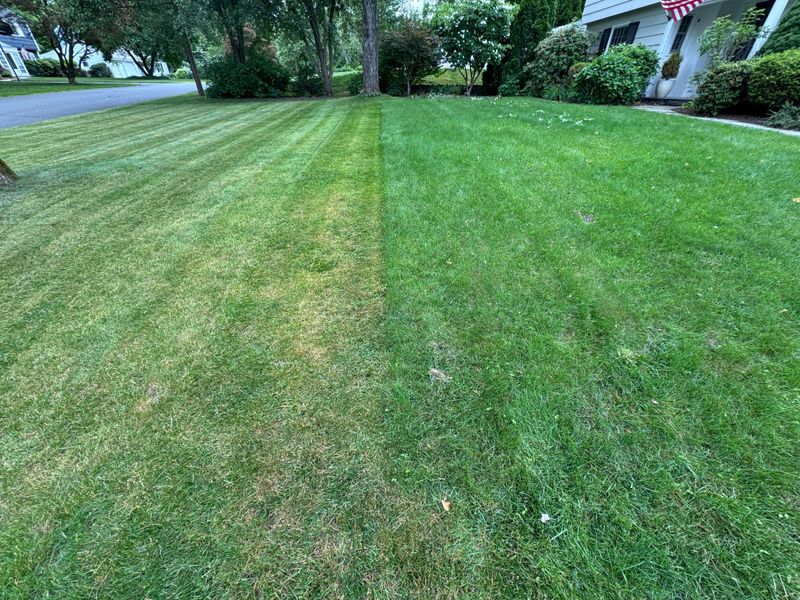
After a storm knocks your lawn around, the instinct to fertilize and push recovery is understandable.
However, reaching for a nitrogen-heavy fertilizer in August is one of the worst things you can do for a North Carolina lawn, especially one growing tall fescue.
Heavy nitrogen applications during the hottest and most humid part of the year create conditions that make brown patch disease significantly worse.
Nitrogen drives rapid, lush top growth, and while that sounds great, soft and fast-growing grass tissue is actually more vulnerable to fungal attack.
Brown patch fungus, which is already highly active in August, feeds on that tender new growth with remarkable efficiency.
Lawns that receive heavy nitrogen applications during peak humidity often show dramatic brown patch outbreaks within just a week or two of fertilizing.
Research from North Carolina State University specifically recommends avoiding nitrogen applications on tall fescue during the summer months.
The university’s turfgrass program advises waiting until the weather cools in early fall before resuming a fertilization schedule.
Following that guidance protects your lawn during the period when it is most at risk from disease.
If your lawn genuinely looks pale or struggling after a storm, consider a light application of potassium instead.
Potassium strengthens cell walls and improves overall stress tolerance without triggering the rapid soft growth that nitrogen produces. It is a quieter, smarter form of support during difficult conditions.
Holding back on fertilizer through August and into early September is a discipline that pays off. Your lawn will have a much cleaner, more resilient foundation heading into the fall recovery season when cooler temperatures arrive.
8. Confirm Fungus Before Reaching For Fungicide
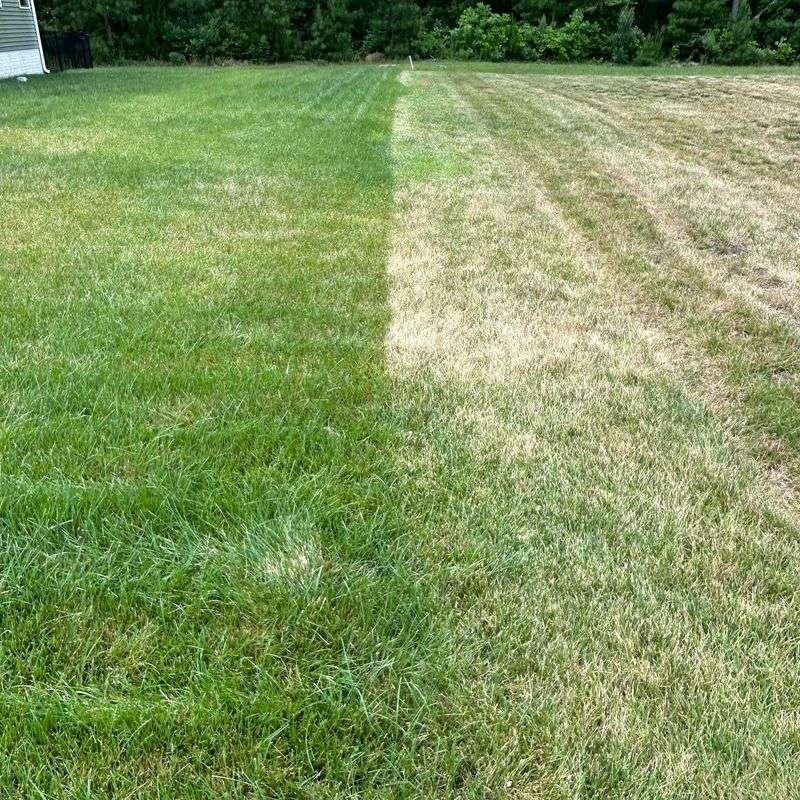
Brown patches on a lawn after a big August storm are alarming, but they are not automatically a sign of fungal disease.
Several other problems can produce very similar-looking damage, including drought stress, soil compaction, insect feeding, dog spots, and even simple physical damage from storm debris.
Spraying fungicide on a lawn that does not actually have fungus wastes money and does nothing to address the real problem.
Proper identification starts with a close look at the affected grass. True brown patch fungus typically produces circular or irregular patches with a grayish, smoky ring around the outer edge, especially visible in the early morning when dew is present.
The grass within the patch often shows tan or straw-colored blades with brown lesions near the base, while the roots remain relatively intact. That pattern is very different from drought damage, where the entire blade dries out evenly from tip to base.
Pulling a few affected grass blades and examining them closely reveals a lot. Fungal lesions often have a distinct border where healthy tissue meets damaged tissue, sometimes with a reddish-brown or water-soaked appearance at the edge.
Drought or compaction damage tends to look more uniform and faded without those sharp lesion borders.
If you are still unsure after examining the grass, your local North Carolina Cooperative Extension office can help with identification.
They offer free plant diagnostic support and can confirm whether a fungal pathogen is actually present before you invest in treatment products.
Getting the diagnosis right before treating means your money and effort go toward a solution that actually works, giving your lawn the targeted care it truly needs to bounce back strong.