Why California Tomatoes Can Crack Almost Overnight After A Deep Watering
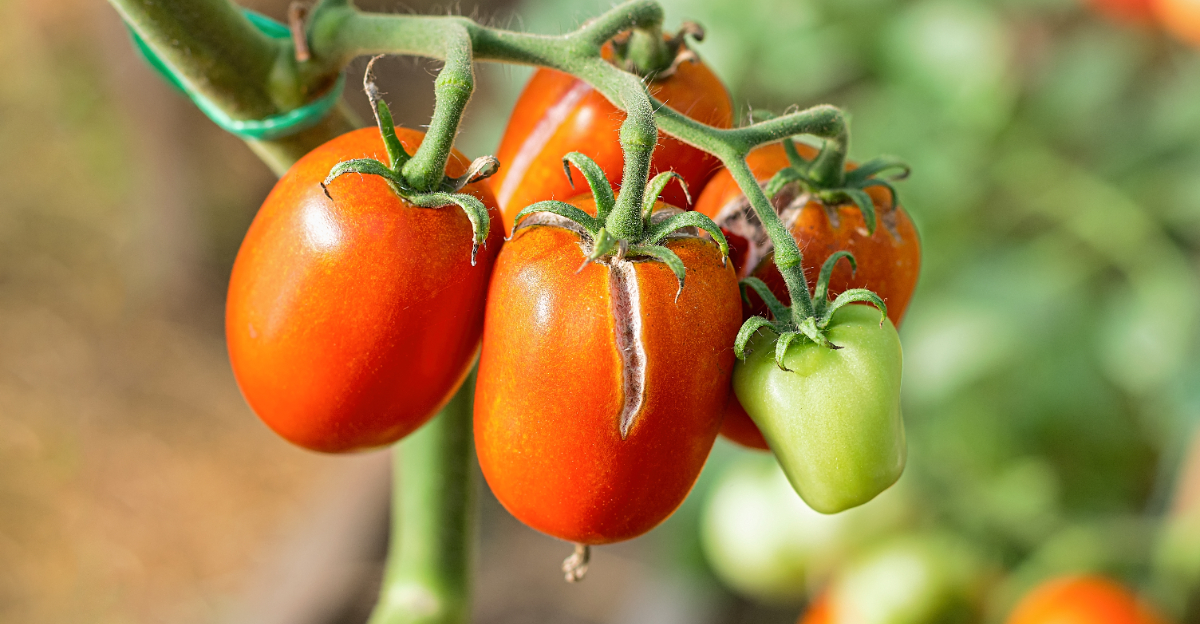
A tomato can look perfect in the evening and split wide open by the next morning. That sudden change often catches California gardeners off guard, especially after a long hot stretch when the plants finally receive a thorough drink.
The fruit may have been developing normally for days, then one shift in moisture changes everything.
Cracks usually appear near the stem or run down the sides, making an almost-ripe tomato look damaged before it ever reaches the kitchen.
The surprising part is how quickly it can happen. Heat, dry soil, and the stage of ripening all influence how the fruit responds once water becomes available again.
If cracking seems to happen right after irrigation, the watering itself is only part of the story. The real issue starts with what the tomato experienced before that deep soak ever happened.
1. Dry Soil Making Tomatoes Extra Thirsty
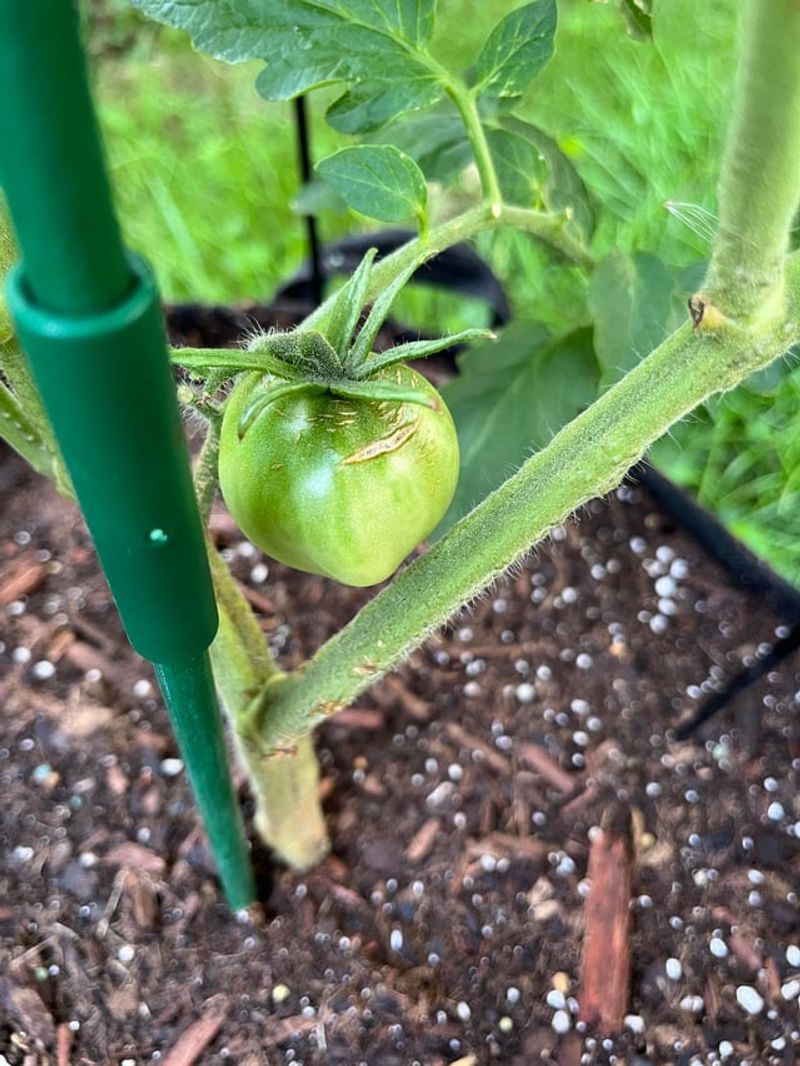
When soil dries out completely between waterings, tomato plants go into a kind of survival mode. They pull every bit of moisture they can find from the soil, and the fruit stops growing as fast.
The plant is basically waiting for relief. During a dry stretch, the skin of the tomato firms up and becomes less flexible. It adjusts to the stress of low water and tightens around the fruit inside.
That might sound like a good thing, but it actually sets the stage for cracking later.
Once a deep watering finally arrives, the roots soak up water rapidly. That moisture rushes into the fruit all at once.
The inside of the tomato swells much faster than the skin can stretch, and that is when the split happens.
Keeping your soil from getting bone dry between waterings is one of the best ways to prevent this cycle. Try to water before the soil gets completely dry.
Stick your finger about two inches into the soil. If it feels dry at that depth, it is time to water.
Consistent moisture gives the plant a steady supply to work with. When the fruit grows at a steady pace, the skin keeps up with it.
Letting the soil dry out completely and then flooding it is one of the most common mistakes gardeners make. Small, regular waterings are much kinder to your tomatoes than rare, heavy soaks.
2. One Big Soak Sending Fruit Into Overdrive
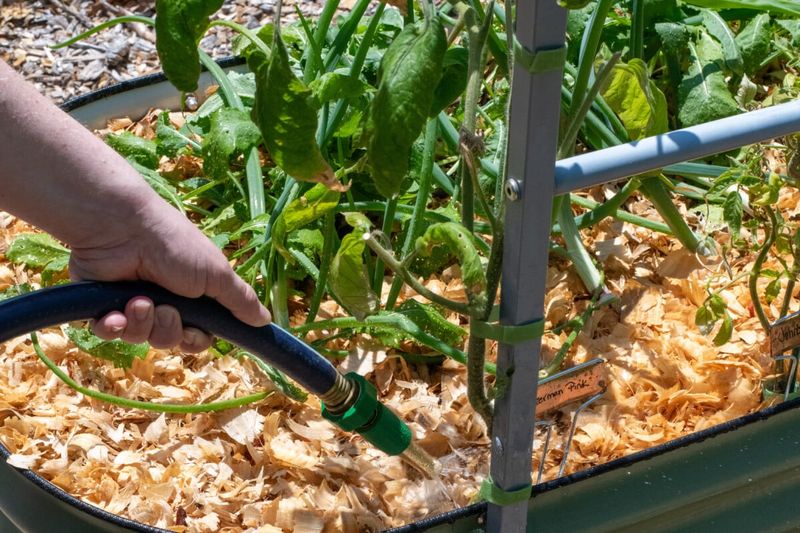
A single deep watering after a long dry period is like giving a very thirsty person a giant glass of water all at once. The body, or in this case the plant, takes in as much as it can, as fast as it can.
That rush of water causes problems. Tomato plants are surprisingly efficient at moving water from roots to fruit. When a big watering hits dry soil, the roots absorb it quickly and send it straight up into the plant.
The fruit acts like a sponge and expands rapidly from the inside out.
That rapid expansion is exactly what causes cracking. The skin was not prepared for such a fast change.
Your California Garden Changes Every Week. Your Plan Should Too.
Gardening in California changes quickly throughout the season. Every Friday you’ll receive a simple weekly plan showing exactly what to plant, prune, fertilize, harvest, and protect so you never miss the right timing.
It was tight from the dry period, and now it has to handle a sudden surge of fluid. Most of the time, it simply cannot do that without splitting.
Gardeners who water deeply but infrequently often see the most cracking after each session. Switching to a drip irrigation system can help a lot.
Drip systems deliver water slowly and steadily right to the root zone. That gives the plant time to absorb moisture at a manageable pace.
If you water by hand, try splitting one big session into two smaller ones a few hours apart. That small change can reduce the shock to the plant and give the fruit time to adjust.
Slow and steady really does win this race.
3. Tomato Skins Can’t Stretch Fast Enough
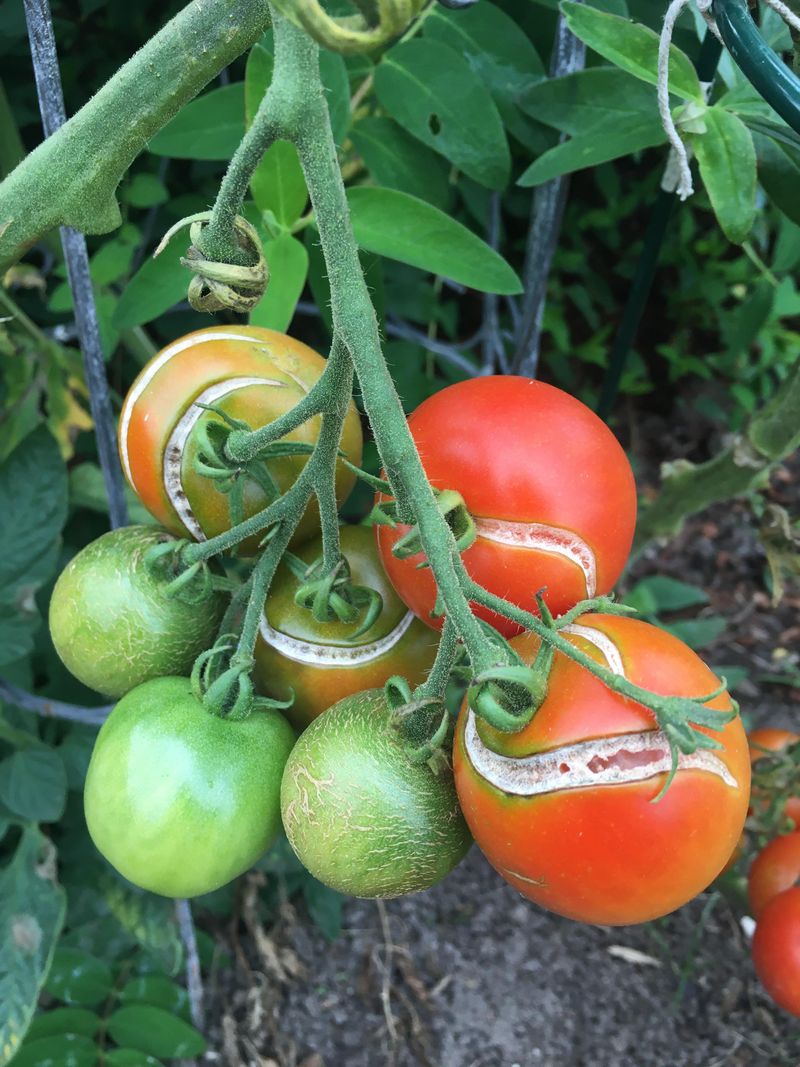
Tomato skin is tough, but it has its limits. Think of it like a rubber band that has been stretched out in the cold.
It becomes stiff and less flexible. When you suddenly pull it hard, it snaps instead of stretching smoothly.
The same thing happens to tomato skin after a period of dry weather. The outer layer loses some of its elasticity.
It firms up as the fruit adjusts to low moisture conditions. That firming is a natural response, but it makes the skin far less able to handle fast growth.
When water rushes in after a dry spell, the inner flesh of the tomato expands rapidly. The skin simply cannot stretch fast enough to match that growth.
The pressure builds from the inside, and the skin gives way along its weakest points. Those weak spots are where cracks appear first.
Some tomato varieties have naturally thicker or tougher skins, which makes them more prone to cracking. Roma tomatoes and other paste varieties tend to crack more easily than cherry tomatoes.
Choosing crack-resistant varieties can make a real difference if cracking is a recurring problem in your garden.
Keeping the soil consistently moist helps the skin stay more flexible over time. A tomato that grows at a steady pace has skin that keeps up with the fruit inside.
Steady growth equals fewer surprises, and fewer surprises mean fewer cracks at harvest time.
4. Ripening Fruit Cracks The Easiest
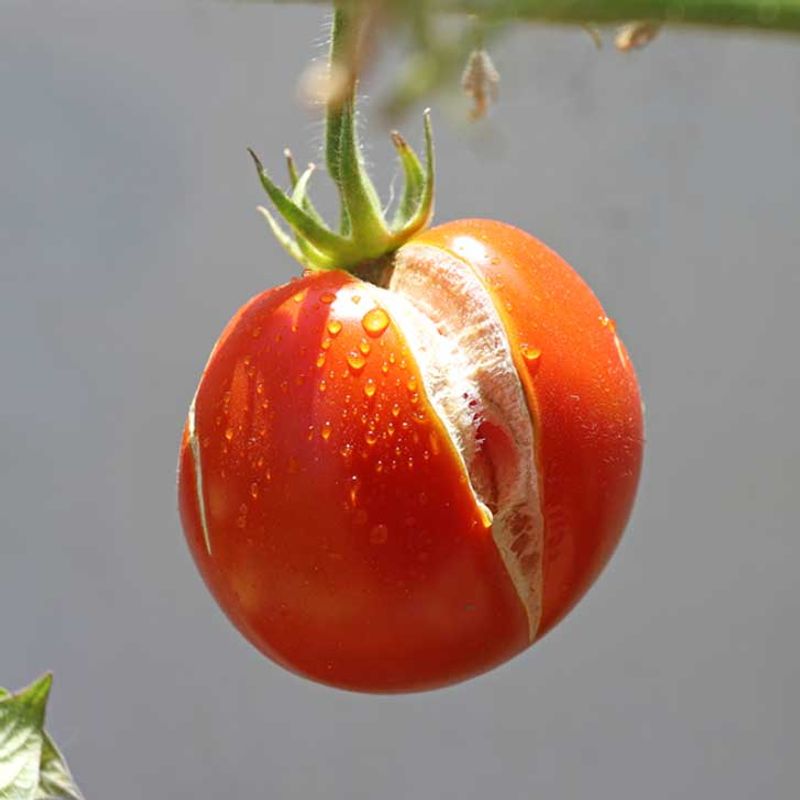
Here is something many California gardeners do not realize: the riper a tomato gets, the more likely it is to crack. A tomato that is nearly ready to pick is at its most vulnerable.
The skin has been stretching for weeks, and it is starting to thin out as the fruit matures.
As tomatoes ripen, their skin becomes softer and more fragile. The sugars inside increase, which also pulls in more water when moisture is available.
That combination of thin skin and high sugar content makes ripe tomatoes react strongly to sudden watering.
Green tomatoes have tougher, thicker skin that can handle moisture swings better. But once a tomato starts turning red, that protection fades.
A heavy watering at this stage can cause dramatic cracking in just a day or two. Sometimes it happens overnight.
One practical tip is to harvest tomatoes a little early if you know a big watering or rainstorm is coming. Pick them when they are just starting to turn color.
They will finish ripening indoors at room temperature, and they will be safe from cracking.
Never put unripe tomatoes in the refrigerator. The cold stops the ripening process and ruins the texture.
A cool, shaded spot indoors is all they need. Picking slightly early is a smart move that saves your harvest without sacrificing flavor or quality.
Timing your harvest around your watering schedule is one of the easiest tricks in the garden.
5. Uneven Watering Sets Up The Perfect Split
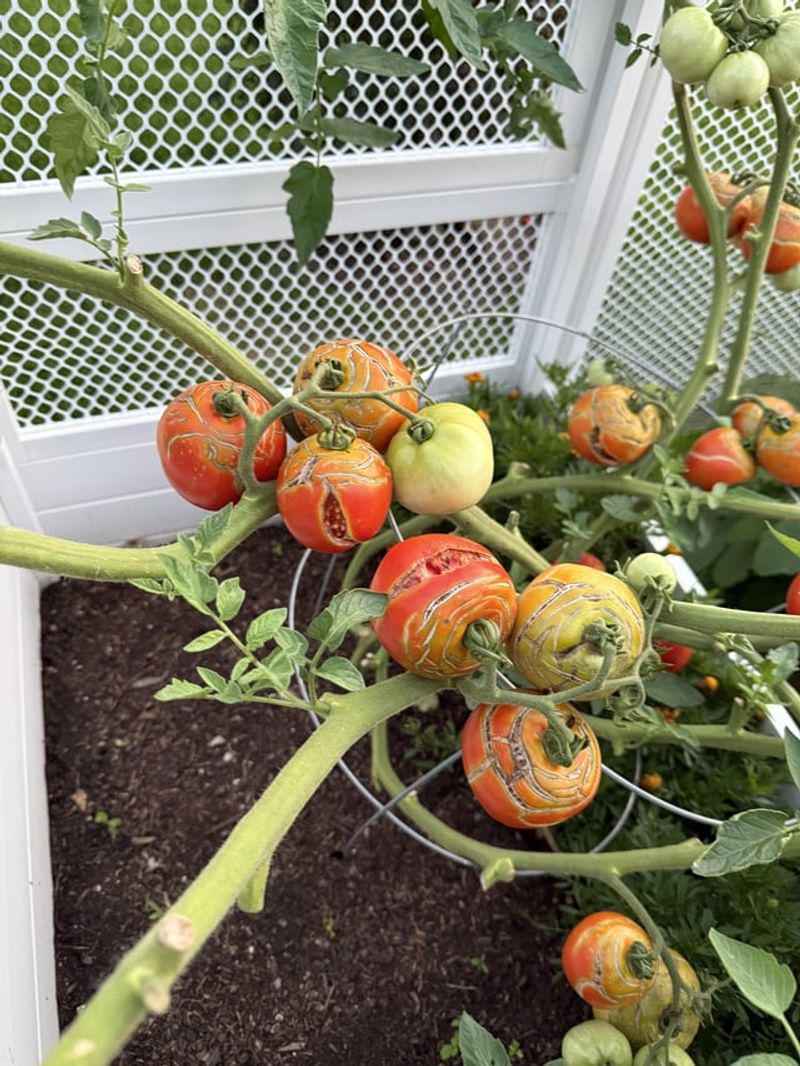
Not all parts of a garden bed get the same amount of water. Some spots dry out faster because of sun exposure, slope, or soil type.
Others stay moist longer because of shade or clay-heavy soil. That unevenness causes big problems for tomatoes.
When one part of the root zone is dry and another part is wet, the plant gets mixed signals. It absorbs water unevenly, which leads to uneven growth inside the fruit.
That internal stress is a major driver of cracking, even when the overall amount of water seems fine.
Gardeners who hand-water sometimes miss certain spots without realizing it. The surface can look moist while the deeper soil stays dry.
Then the next watering floods everything at once, and the fruit reacts badly to the sudden change.
Checking soil moisture at different spots in your bed is a smart habit. A simple moisture meter costs very little and takes the guesswork out of watering.
Push it into the soil in several places to see where dry pockets are hiding.
Drip irrigation is one of the best tools for solving uneven watering. It delivers water directly to the root zone in a slow, controlled way.
Every plant gets a consistent supply, and the soil stays at a more even moisture level throughout the bed. Even watering leads to even growth, and even growth is the best defense against cracking in your tomato plants.
6. Hot Days Make Moisture Swings Even Worse
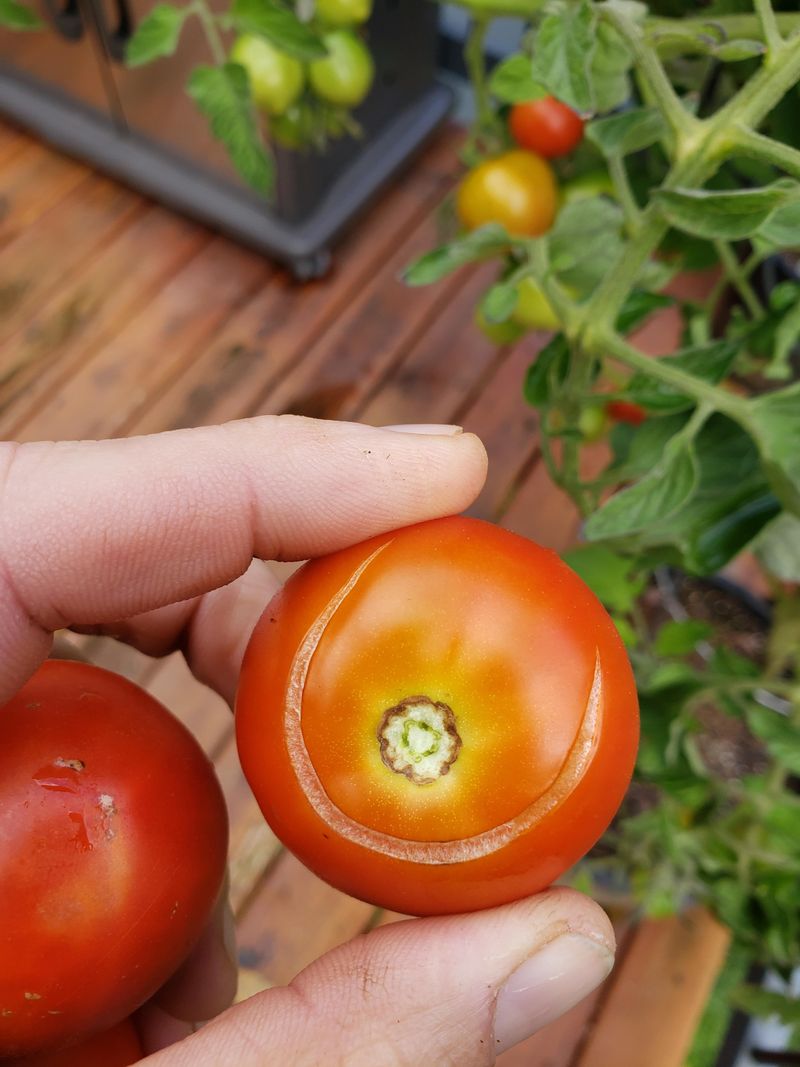
Heat adds another layer of stress to the cracking problem. On a very hot day, soil moisture evaporates quickly.
The top layer of soil can go from moist to dry in just a few hours when temperatures climb above 90 degrees Fahrenheit.
That fast evaporation means tomato plants experience rapid moisture swings even when you water regularly. The plant might have plenty of water in the morning and be stressed by afternoon.
Then an evening watering brings another sudden surge of moisture.
Hot weather also speeds up fruit development. When temperatures are high, tomatoes ripen faster than usual.
That faster ripening means the fruit is in its most vulnerable, crack-prone stage for less time overall, but the risk during that window is higher because of the heat stress.
Watering in the early morning is the best strategy on hot days. Morning watering gives the soil time to absorb moisture before the heat of the day kicks in.
It also keeps the foliage dry, which reduces the risk of fungal issues.
Avoid watering in the middle of a hot afternoon. The water evaporates too fast to be useful, and the sudden temperature change from cold water hitting hot soil can stress the roots.
Evening watering is a better backup option if mornings do not work for your schedule.
Pairing smart watering timing with other moisture-saving strategies gives your tomatoes the best chance of staying crack-free through the hottest part of California summer.
7. Mulch Helps Keep Soil From Swinging So Hard
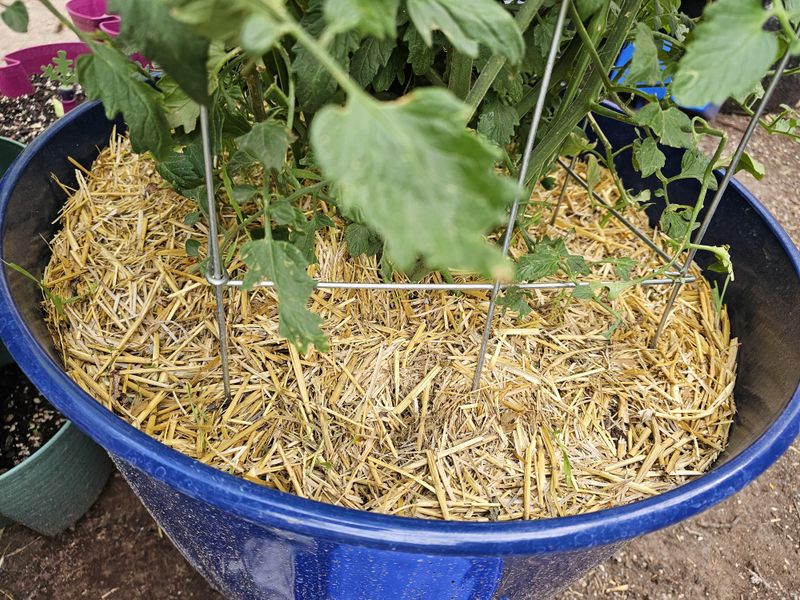
Mulch might be the single most underrated tool for preventing tomato cracking. A good layer of mulch on top of your soil acts like a buffer between the weather and your plant’s roots.
It slows down evaporation and keeps soil moisture more stable throughout the day.
When soil moisture stays steady, the plant does not experience those big swings between very dry and very wet. That stability means the fruit grows at a more consistent rate.
The skin keeps up with the inside, and cracking becomes much less likely.
Straw is one of the most popular mulch choices for tomato beds. It is lightweight, affordable, and easy to spread.
Wood chips and shredded leaves also work well. Apply a layer about two to three inches thick around the base of each plant, keeping it a few inches away from the stem.
Mulch also keeps soil temperatures more stable during hot days. That matters because extreme heat speeds up evaporation and stresses the roots.
A cooler, more consistent root zone means the plant handles watering events much more smoothly.
Beyond cracking prevention, mulch offers other benefits too. It suppresses weeds, which compete with tomatoes for water and nutrients.
It also breaks down over time and adds organic matter to the soil. Adding mulch at the start of the season and refreshing it as it breaks down is a simple habit that pays off in a big way for your tomato harvest.