The One Thing Pennsylvania Rhododendrons Need In September Or They Won’t Bloom Next Spring
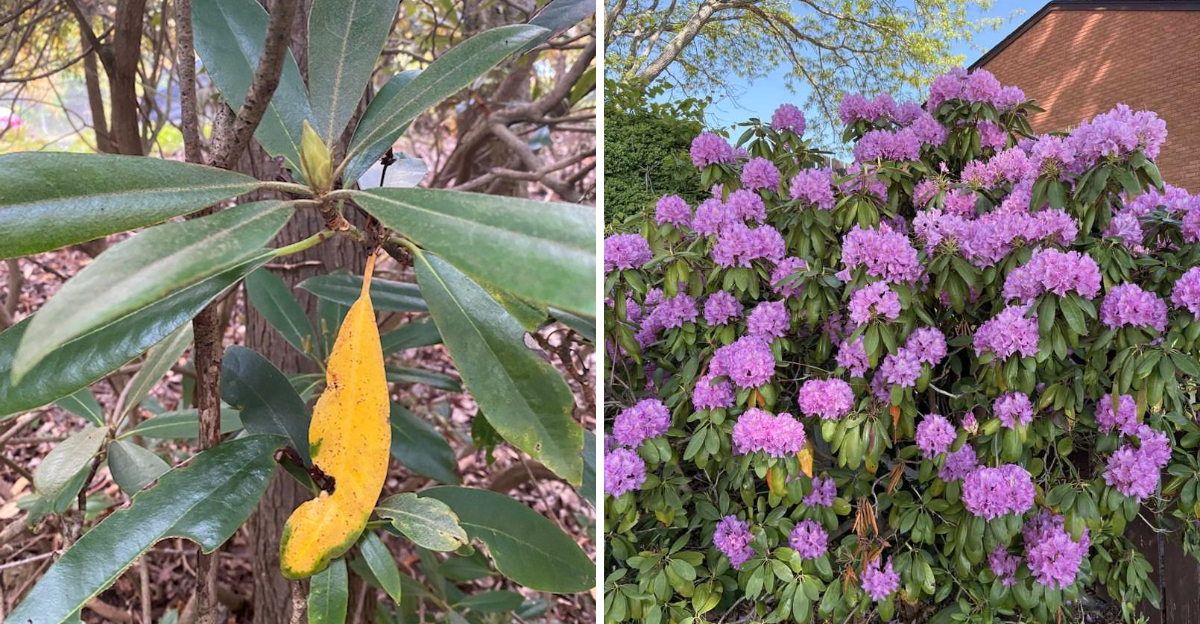
A rhododendron that filled your yard with color last May can look oddly flat by September.
Leaves are still there. The plant seems fine. Nothing obviously wrong.
Meanwhile something is happening at the branch tips that determines everything about next spring.
Flower buds are forming right now, tiny and easy to overlook, and they are the entire show. No buds set this month means no flowers in May, regardless of how healthy the shrub looks in October.
Here’s the trap. Pennsylvania late summers frequently turn dry precisely during this window.
When roots run short on water while buds are forming, the plant either drops those buds or never builds them. You find out eight months later.
One factor matters more than anything else you could do, and it costs nothing beyond attention. Not a product. Not fertilizer. Not pruning.
Curious what your rhododendron actually needs before the month ends?
Water Deeply Before Buds Fully Set
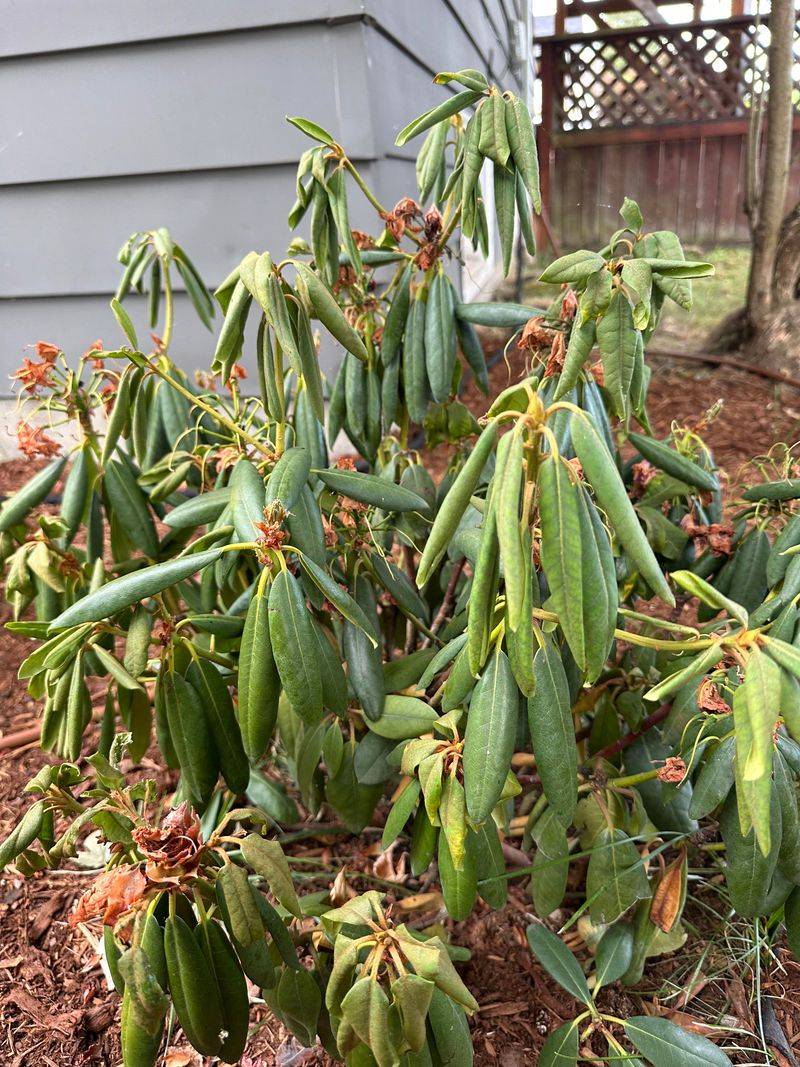
Flower buds for next spring are forming right now, tucked at the tips of your rhododendron branches.
Bud set runs across mid to late summer into early fall, and it demands real resources from the plant.
Skimp on water through this stretch and you risk a spring with abundant leaves and very few flowers.
Deep watering beats frequent sprinkles decisively. A slow soak reaching the root zone lets roots take up water fully, while light misting only dampens the surface layer.
Let a hose trickle at the base for a stretch, or use a soaker hose so moisture sinks in rather than running off.
Pennsylvania weather can mislead you here. A quick afternoon storm looks generous and often barely wets the top inch of soil.
Rhododendrons continue setting buds whether rain arrives or not, so consistent moisture from you fills the gap during dry spells.
Drought stress during this window is a major reason healthy looking shrubs skip a bloom season.
No single soaking guarantees flowers, since cold winters and late frosts also affect the outcome. Consistent moisture remains the strongest factor within reach.
Aim for regular deep watering through September, particularly in weeks without meaningful rain.
Think of it as quietly loading the plant with resources it needs to hold every bud it has worked to build.
How Much Water And How Often
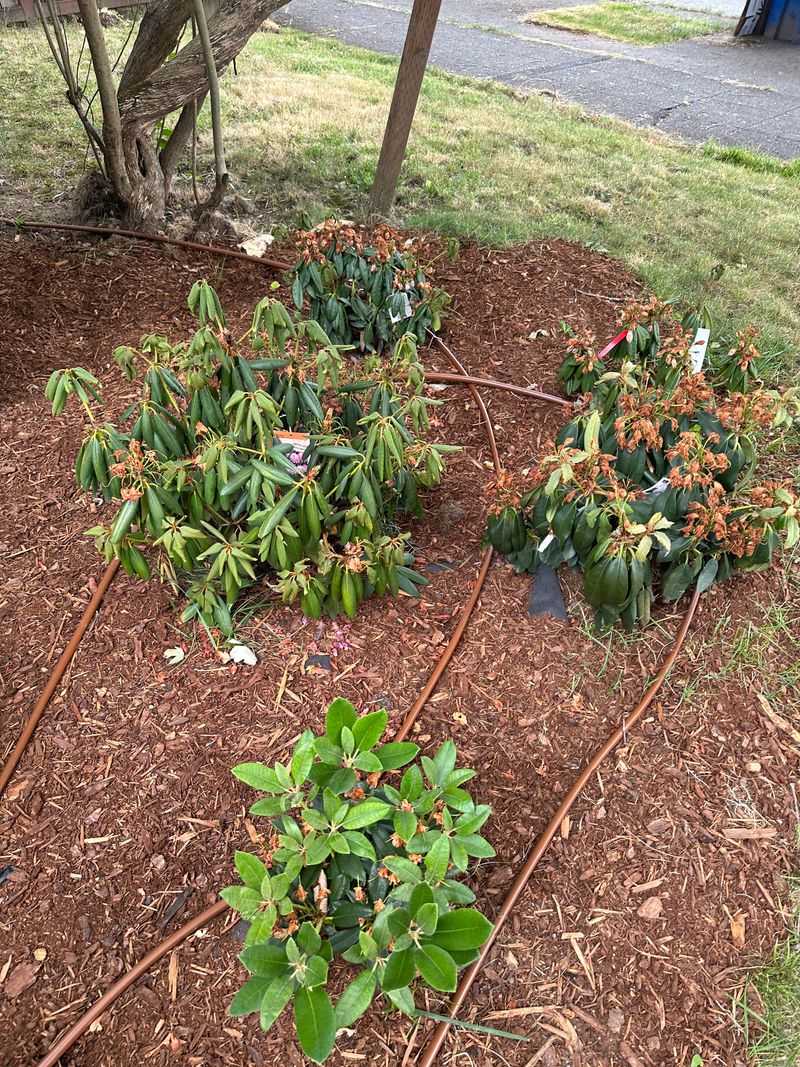
Vague advice about deep watering leaves most gardeners guessing, so here are workable numbers.
An established rhododendron generally wants about an inch of water per week during dry stretches, delivered in one or two thorough sessions rather than daily sips.
For a shrub three or four feet across, that translates to roughly five to ten gallons per session applied slowly.
Slowly is the operative word. Water applied faster than the soil can absorb runs off and accomplishes nothing.
A hose set to a trickle for twenty or thirty minutes works. A soaker hose coiled around the drip line works better.
Frequency depends on rainfall and soil type. Sandy soils need water more often, while clay holds moisture longer between sessions.
Your Pennsylvania Garden Changes Every Week. Your Plan Should Too.
Gardening in Pennsylvania changes quickly throughout the season. Every Friday you’ll receive a simple weekly plan showing exactly what to plant, prune, fertilize, harvest, and protect so you never miss the right timing.
Check before watering rather than following a schedule. Push a finger or a screwdriver two or three inches into the soil near the outer branch spread.
Dry at that depth means water. Still damp means wait.
Newly planted rhododendrons need considerably more frequent attention, often twice weekly through their first two seasons.
Container plants dry fastest of all and may need water every day or two in warm September weather.
Morning application gives the plant moisture ahead of afternoon heat and lets any wet foliage dry before evening.
Where To Put The Water
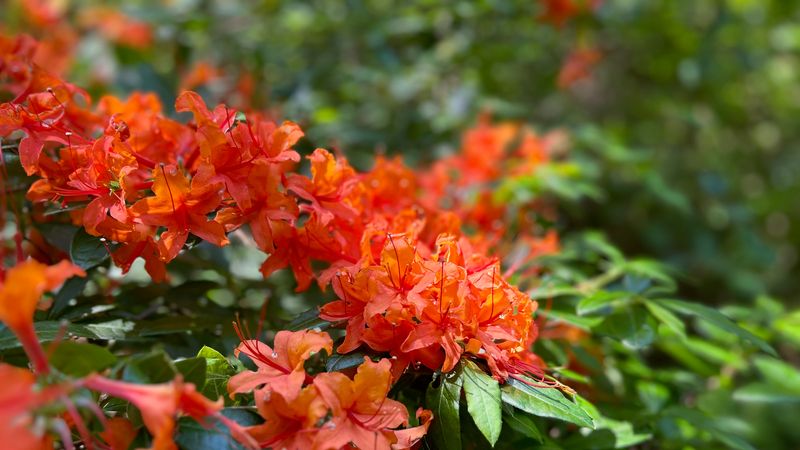
Placement matters as much as volume, and this is where good intentions frequently miss.
Rhododendron roots are shallow and fibrous, concentrated in the top eight to twelve inches of soil.
They also spread outward, extending to and beyond the branch tips rather than staying near the trunk.
Water poured at the base of the stem misses much of that root system entirely.
Apply water across the full area beneath the canopy and slightly past the outer branches. That’s where the absorbing roots actually live.
Shallow roots explain why these shrubs suffer so quickly in drought. There is no deep reservoir to draw on.
That same shallowness makes them vulnerable to competition. Tree roots, aggressive groundcovers, and turf all pull moisture from the same zone.
Check what else is growing in that space. A rhododendron sharing root area with a mature maple faces real competition regardless of how much you water.
Overhead sprinklers work poorly here. Much of the water lands on foliage and evaporates, and wet leaves through humid nights encourage fungal problems.
Ground level application solves both issues.
Avoid creating a basin that holds standing water against the crown, since these plants tolerate drought poorly and saturation even worse.
Mulch Does Half The Work
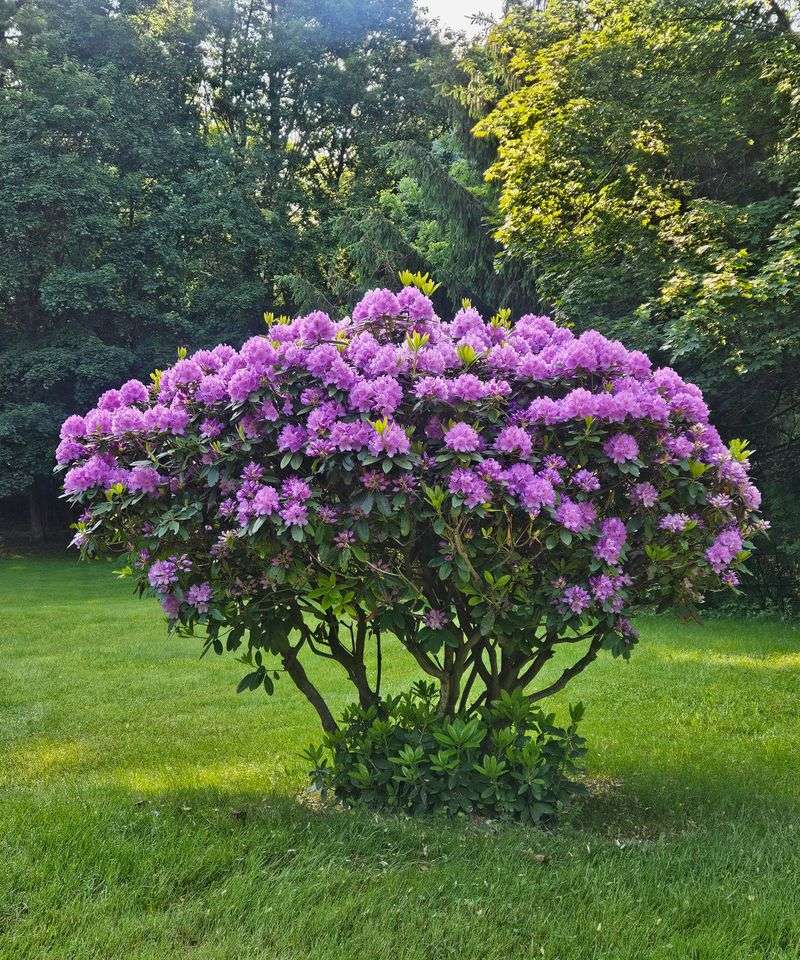
Water applied without mulch drains and evaporates faster than most gardeners realize.
Two to three inches of organic mulch across the root zone changes the equation substantially.
Moisture holds longer, soil temperature stays steadier, and the shallow root system gets real protection from drying wind and sun.
Weed competition drops too, which matters when everything is drawing from the same top foot of soil.
Material choice suits rhododendrons naturally. Pine bark, pine straw, and shredded oak leaves all work well and break down into the kind of organic matter these plants prefer.
Keep mulch pulled back a few inches from the main stems. Material packed against bark holds moisture where it causes rot.
Depth deserves attention. More than three or four inches can keep the surface too wet and restrict air movement to shallow roots.
Refresh the layer as it decomposes, since a thin patchy covering accomplishes very little.
One myth worth setting aside. Pine bark and pine needles change soil pH only marginally, so use them for moisture retention rather than acidification.
Mulching now, before fall dry spells and winter freeze thaw cycles, protects the buds you’re working to preserve.
What Not To Do This Month
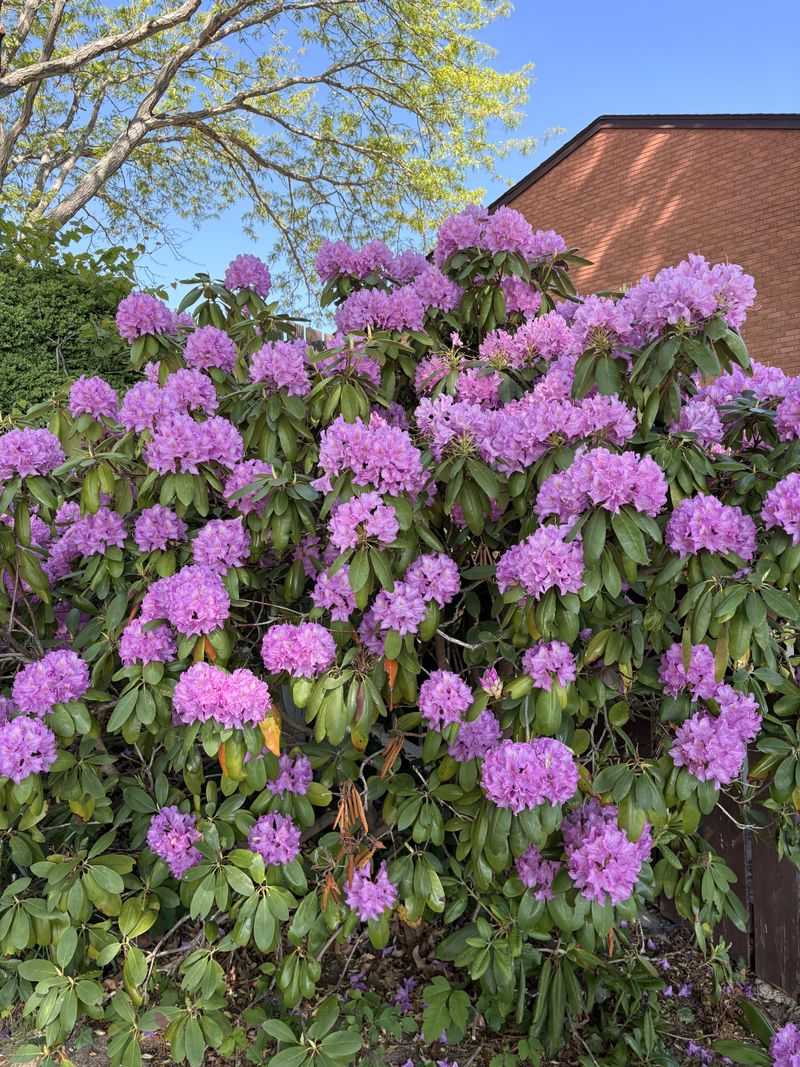
Several well meaning interventions work directly against bud set.
Fertilizer tops the list. Late nitrogen pushes tender new growth at the moment the plant should be finishing its season, and that growth rarely hardens off before cold arrives.
Feeding also diverts energy away from bud development. Spring after flowering is the appropriate window.
Pruning is the other major risk. Rhododendrons bloom on old wood, meaning buds formed this fall open next spring.
Cutting branch tips now removes those buds directly, which guarantees the outcome you’re trying to avoid.
Save any shaping for immediately after flowering next spring, when the plant has months to set new buds before fall.
Trimming spent flower clusters is fine and should already be done, since it happens right after bloom rather than in September.
Skip cultivating or digging near the plant. Shallow roots damage easily, and disturbance during bud set adds stress at the worst time.
Herbicides applied nearby deserve caution too, since surface roots can absorb what drifts or leaches into their zone.
Transplanting belongs in early spring or after flowering, not during bud formation.
Doing less is the correct approach this month. Water, mulch, and leave the plant alone.
Warning Signs Worth Catching Early
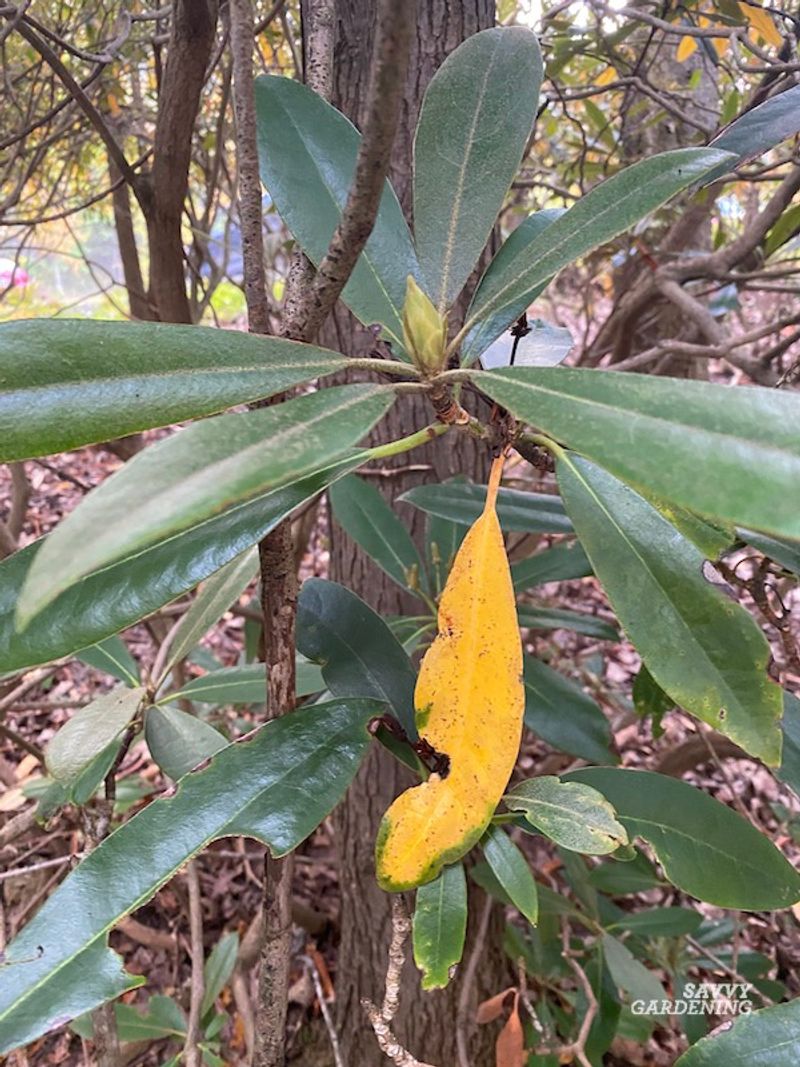
Rhododendrons signal water stress clearly if you know what you’re looking at.
Leaves curling inward along their length, rolling toward a tube shape, is the classic drought response. Some curling on a hot afternoon is normal, and leaves still curled the next morning mean the plant needs water.
Drooping foliage that hangs limp rather than curling points the same direction.
Dull, grayish green color instead of glossy dark green suggests ongoing stress rather than an acute problem.
Browning at leaf tips and margins often follows extended dry conditions, and that damage does not reverse.
Now the confusing part. Overwatering produces some of the same symptoms, since drowned roots cannot take up water either.
Checking soil moisture separates the two. Wilting in wet soil means drainage problems rather than drought.
Yellowing between leaf veins usually indicates iron availability trouble, common where soil pH has drifted too high for rhododendrons.
Winter leaf curl is normal and unrelated. Cold causes it, and plants recover as temperatures rise.
Bud examination tells you where you stand. Flower buds are noticeably fatter and rounder than the pointed leaf buds beside them.
Finding plump rounded buds at branch tips by October means the work paid off.
Carrying The Effort Through Fall And Winter
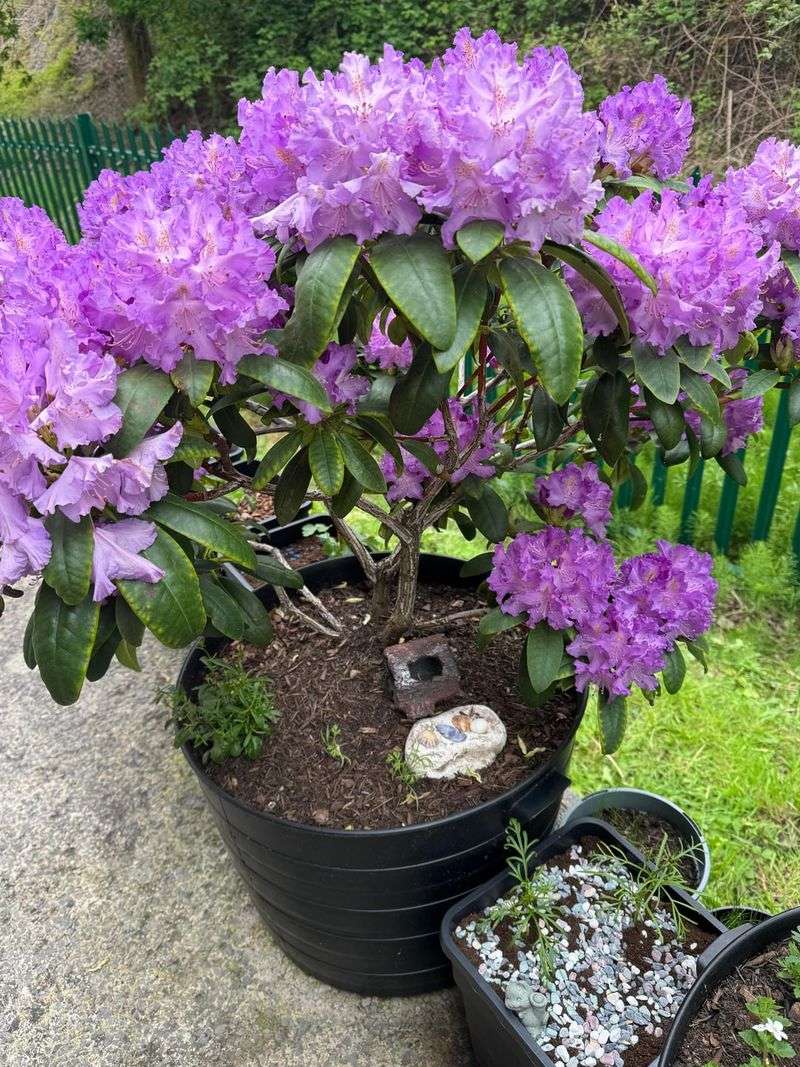
September water matters most, and the job does not end when the calendar turns.
Rhododendrons are evergreen, which means they lose moisture through their leaves all winter long.
Frozen soil prevents roots from replacing that loss, and the result is winter burn, showing as brown scorched foliage by March.
Watering through fall until the ground freezes gives the plant reserves to draw on.
Late October and November deep soakings are genuinely valuable, particularly during dry autumns.
Wind exposure compounds the problem. Plants on the north or west side of a building face the harshest conditions, so those need the most attention.
Burlap screens or evergreen boughs positioned as windbreaks help substantially in exposed sites.
Anti-desiccant sprays exist and produce mixed results, so a windbreak plus adequate fall water is the more reliable approach.
Mulch keeps working here too, moderating soil temperature and reducing freeze thaw stress on shallow roots.
Snow cover actually helps, insulating the root zone rather than harming the plant.
Come spring, keep watering as growth begins, since buds that survived winter still need moisture to open properly.
Steady care across three seasons is what turns this September effort into flowers you actually get to see.