Native Michigan Plants That Help Reduce Mosquito Habitat Following Heavy Late Summer Rains
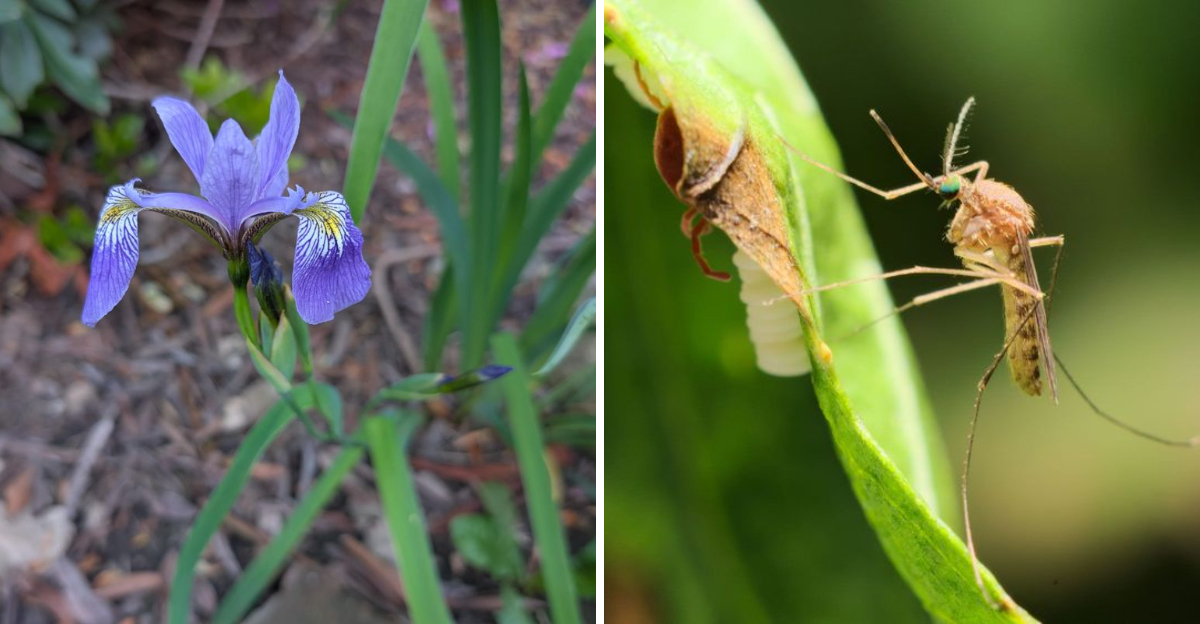
A heavy August rain rolls through Michigan and leaves something behind.
Not the puddle in the low corner of the yard. That’s just the symptom.
What matters is how long it sits there, because a mosquito needs roughly a week of standing water to go from egg to adult.
Seven days. That’s the whole window.
Here’s what most people get wrong about mosquito plants. Garden centers sell them on scent, and the research on that is thin at best.
The plants that genuinely help work a different way entirely. They drink.
Deep roots pull water out of saturated ground, break up clay, and give runoff somewhere to go besides sitting on the surface.
Michigan has natives built for exactly that job. They evolved in wet ground here and handle clay, downpours, and hard winters without any help from you.
A few of them also feed the dragonflies and birds doing the hunting.
Curious which plants actually shorten that seven-day window?
1. Cardinal Flower
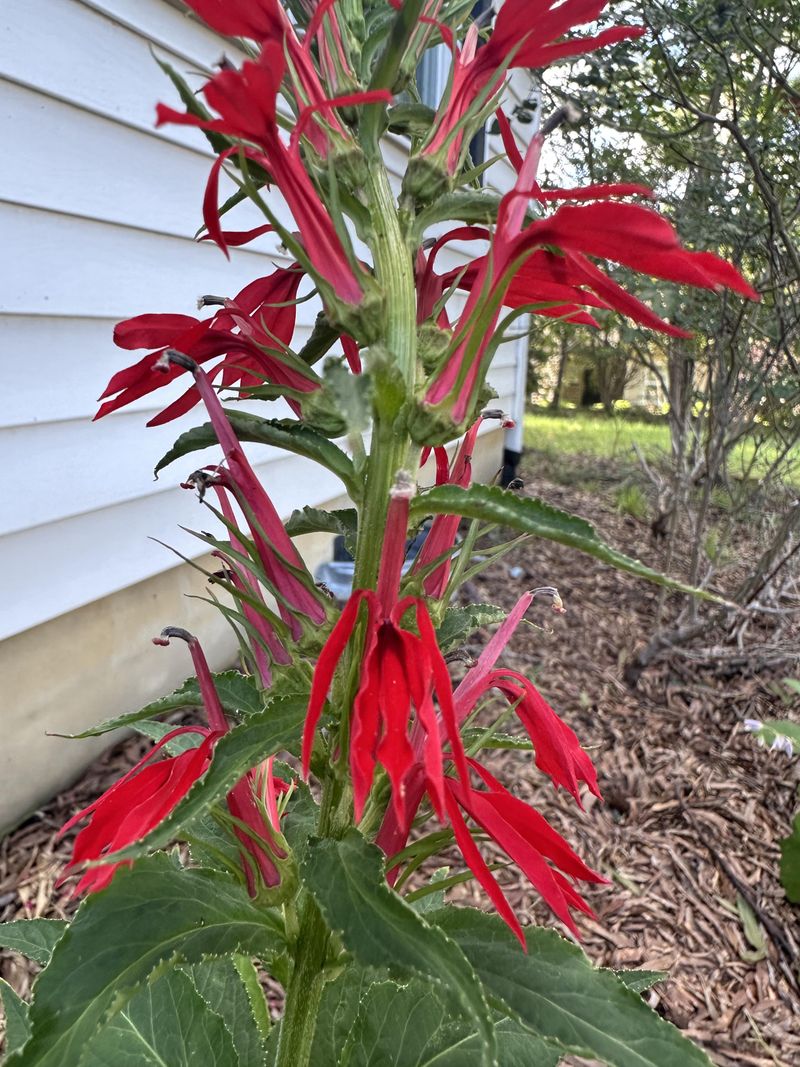
Few natives put on a show quite like this one, with fiery red spikes glowing at the edge of a wet ditch.
Lobelia cardinalis thrives in the damp rich soil that stays moist for days after a storm.
Its natural range covers streambanks, wet meadows, and low ground across much of the eastern United States, including Michigan.
Because it takes up moisture steadily and tolerates saturated conditions, planting it in a low spot helps draw down water that would otherwise pool.
Several plants set together form a patch that also holds soil during heavy rain.
Hummingbirds work those tubular red blooms constantly, and butterflies visit too.
That pollinator traffic supports the wider insect population that feeds birds and other predators.
Care is simple. Partial shade to full sun, consistently moist ground, and a little mulch to hold that moisture.
One honest note. Individual plants tend to be short lived, so letting some reseed keeps the patch going without replanting.
Worth repeating clearly. The plant does not deter a single mosquito by scent. Its value is absorbing moisture in problem spots and drawing in the wildlife that reduces mosquito numbers.
2. Swamp Milkweed
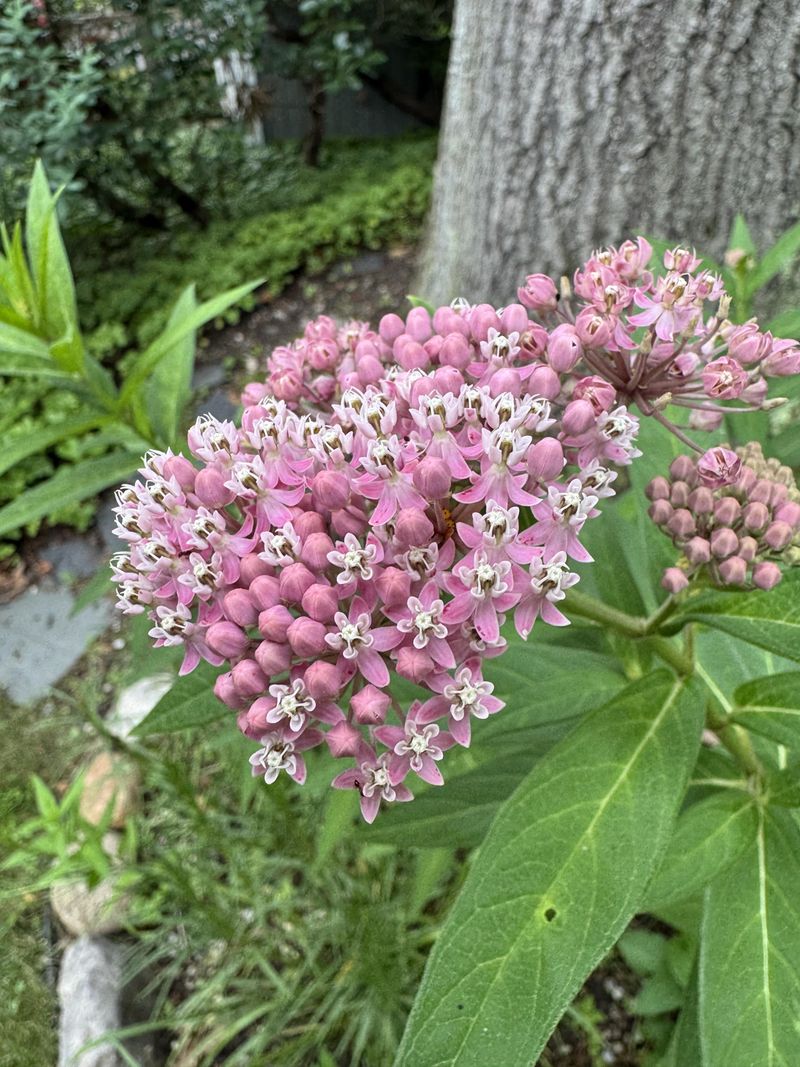
Don’t let the name put you off.
Asclepias incarnata is one of the more graceful natives available for a wet corner, topped with clusters of soft pink flowers that stay busy with insects.
It handles moist and occasionally flooded soil without complaint, and its natural range covers wetlands and streamsides throughout Michigan and the Midwest.
Roots reach down and draw up moisture, which helps dry ground that would otherwise stay wet enough for egg laying.
Planted in a group, it also functions as erosion control on slopes that wash during downpours.
Monarchs lay eggs on milkweed, and the leaves feed their caterpillars. Bees and other pollinators crowd the flowers.
That activity supports the food chain feeding mosquito-eating birds.
Growing it takes minimal effort. Sunny to partly sunny location, damp soil, and leaving the roots undisturbed once established.
It emerges late in spring, so don’t assume it failed if nothing shows in April.
Your Michigan Garden Changes Every Week. Your Plan Should Too.
Gardening in Michigan changes quickly throughout the season. Every Friday you’ll receive a simple weekly plan showing exactly what to plant, prune, fertilize, harvest, and protect so you never miss the right timing.
Aphids appear on new growth some years. A spray of water usually handles them, and beneficial insects manage the rest.
No scent-based repellent effect exists here either. Water absorption and habitat are the contribution.
3. Blue Flag Iris
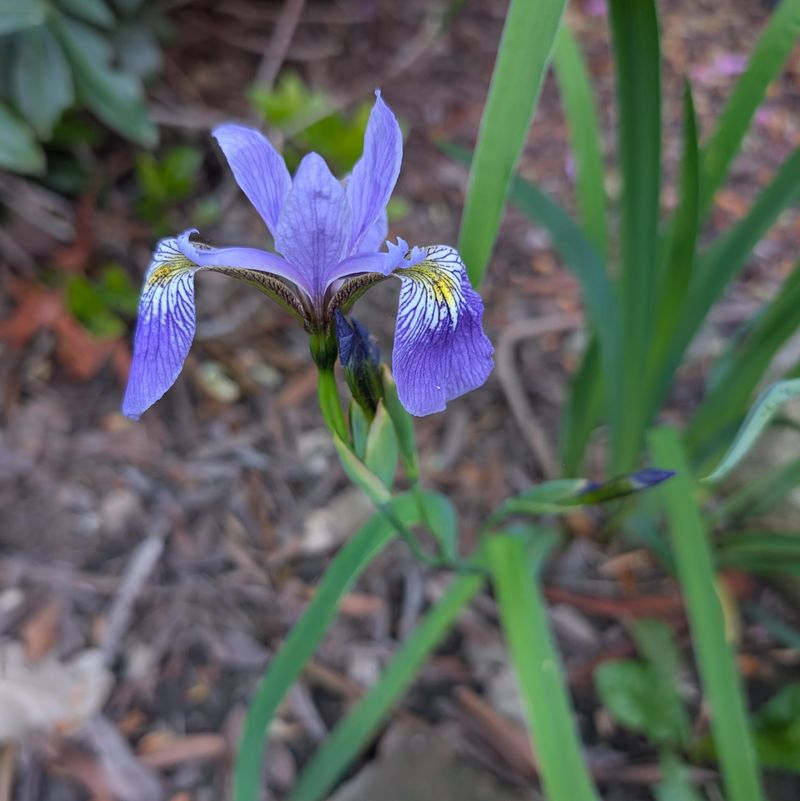
Standing water is where this one actually prefers to live.
Iris versicolor grows naturally in marshes, wet meadows, and shallow water margins across Michigan.
That tolerance makes it useful in the wettest part of a yard, where most perennials would fail outright.
Purple blue flowers appear in early summer above sword shaped foliage, giving the wet corner real structure rather than just function.
Rhizomes spread slowly to form clumps that stabilize soil along a ditch or pond edge.
Water uptake happens through active growth, and a healthy stand moves considerable moisture during the growing season.
Full sun to partial shade both work. Wet feet are welcome rather than tolerated.
One identification note. Yellow flag iris is a different species, non-native, and invasive in parts of the country, so check the botanical name before buying.
Division every few years keeps clumps vigorous, and divisions transplant easily to other wet spots.
Pollinators use the flowers, and the dense foliage shelters frogs and beneficial insects.
For the spot that never quite dries out, this is the plant that belongs there.
4. Switchgrass
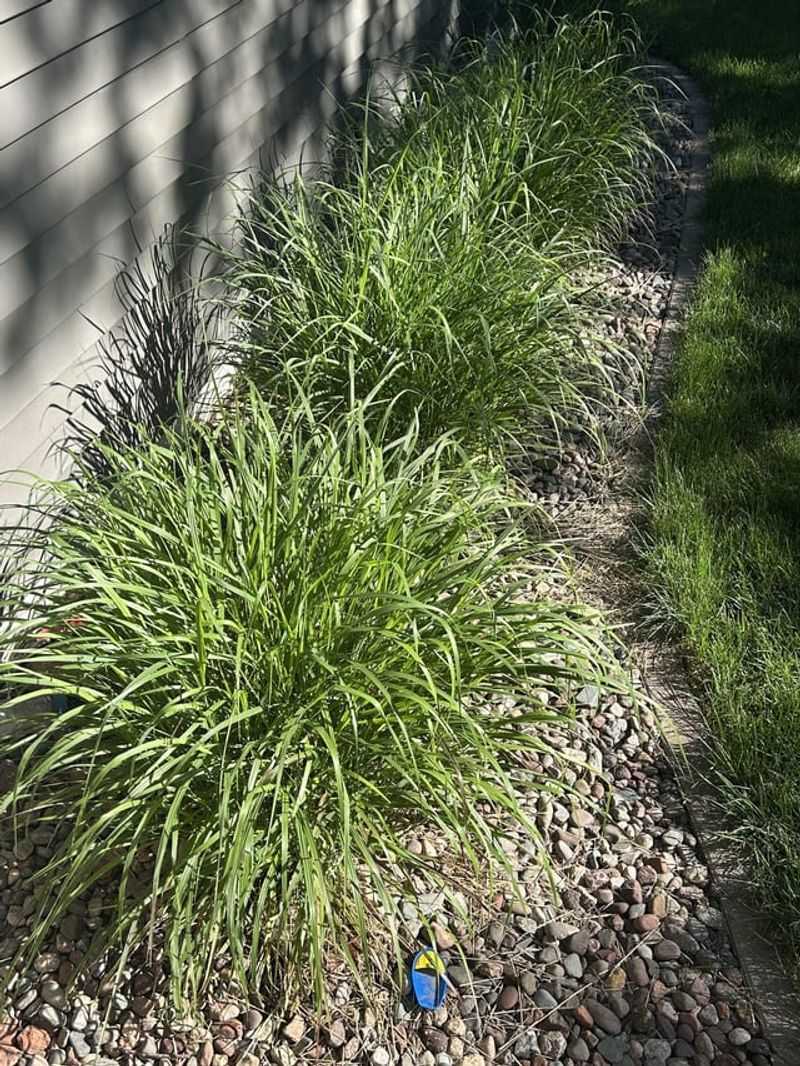
Run your hand along a stand and you feel how sturdy these stems are.
The real work happens underground. Panicum virgatum sends roots several feet down, well past where most garden plants operate.
Those deep roots absorb rainwater and improve soil structure, which helps water move downward instead of collecting on the surface.
Loose root-filled soil accepts water that compacted clay would shed.
Switchgrass also slows water crossing a yard. Thick stems catch runoff and give it time to soak in gradually rather than racing toward a low spot.
Wildlife benefits substantially. Clumps shelter beneficial insects, and seed heads feed birds through fall and winter.
Planting is forgiving. It tolerates both drought and periodic flooding, needs no fertilizer, and requires cutting back once in early spring.
Cultivars vary in height considerably. Some reach six feet while selections like Shenandoah stay around three, which matters for placement.
Full sun produces the sturdiest stems. Shade or rich soil causes flopping.
Think of it as the plumbing of a natural landscape. Water moves and gets absorbed, and the wet spots mosquitoes need simply stop forming.
5. Big Bluestem
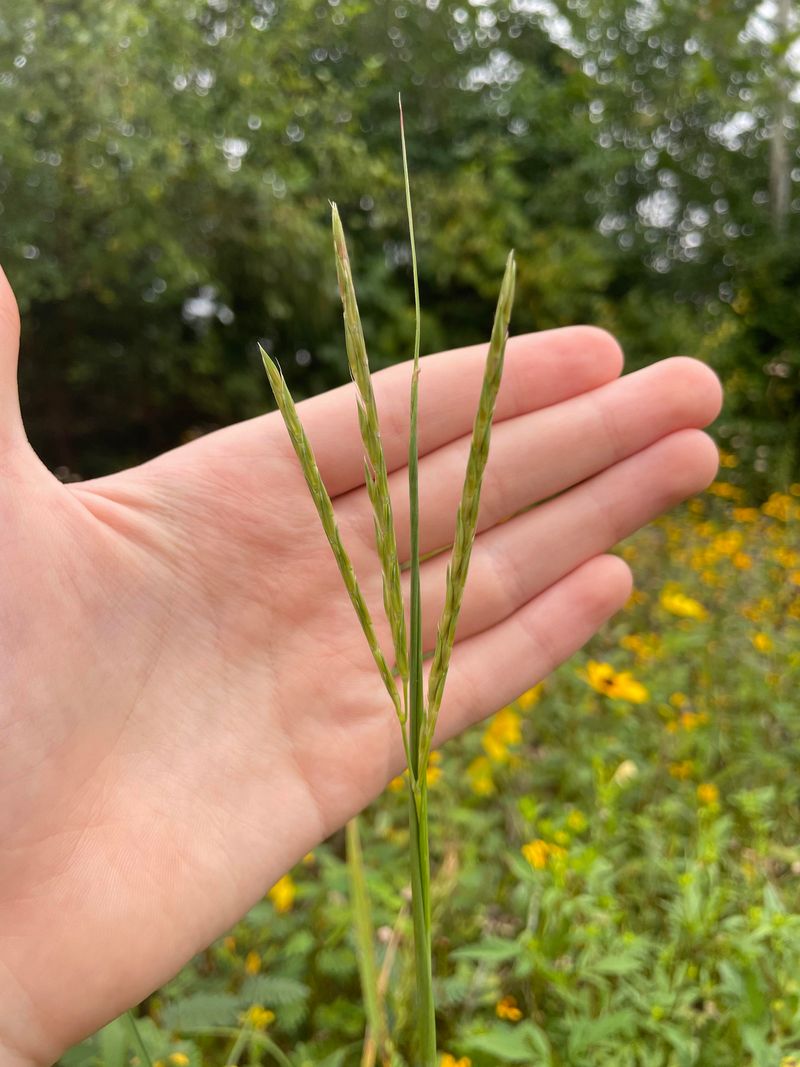
Michigan prairie had this grass as its backbone, and the reason is underground.
Andropogon gerardii develops a root system reaching remarkably deep, which builds soil structure and opens pathways for water infiltration.
That combination addresses the exact problem behind a puddle that lingers. Compacted clay sheds water, while root-worked soil takes it in.
Height is worth planning around. Mature plants reach five to eight feet, which suits a back border or a large open area better than a foundation bed.
Blue green summer foliage turns coppery bronze in fall and holds that color through winter.
Seed heads split into three parts, which gives the plant its other common name, turkey foot.
Birds use those seeds, and the dense clumps shelter insects that feed the wider food web.
Full sun and average to dry soil suit it, though it handles periodic wet conditions once established.
Fertilizer works against you. Rich soil produces tall floppy growth.
Cut it back once in early spring. Beyond that, the plant handles itself and keeps working on your soil year after year.
6. Native Sedges
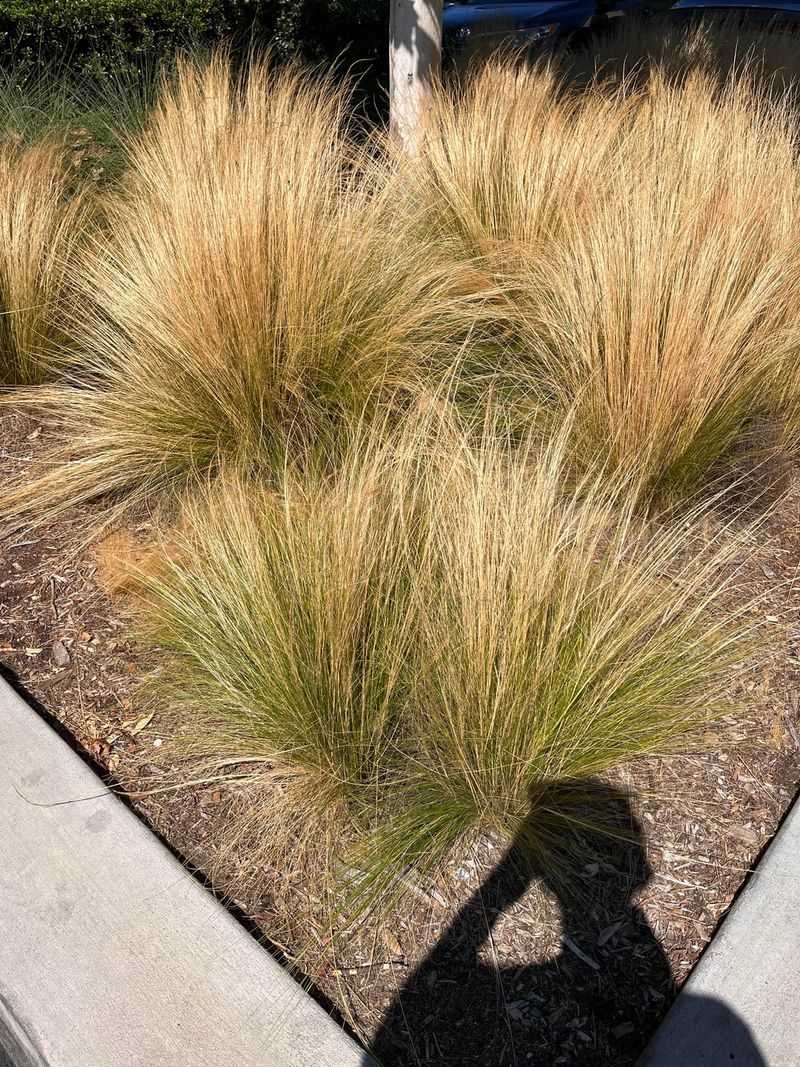
The quiet workers in this group rarely get a mention.
Carex species number in the hundreds, and Michigan has plenty adapted to wet ground specifically.
Tussock sedge is the standout for saturated conditions, forming dense mounds in ground that stays wet most of the year.
Fox sedge handles rain gardens and swales well. Pennsylvania sedge suits drier shade if the wet spot is only seasonal.
These plants grow actively in cool weather, which means they move water in spring and fall when most perennials are dormant.
Root systems are fibrous and dense, which improves soil structure and increases infiltration.
Sedges also fill space that would otherwise sit bare and puddle, which matters more than the individual plant’s water use.
Many species tolerate shade, making them useful under trees where wet spots often develop.
Wildlife value runs high. Sedge seeds feed birds, and the foliage hosts caterpillars of several butterfly species.
Maintenance is minimal. Cut back tired foliage in late winter if it bothers you, and otherwise leave them alone.
For the low spot that stays damp under a maple, sedges handle it when almost nothing else will.
7. Joe-Pye Weed
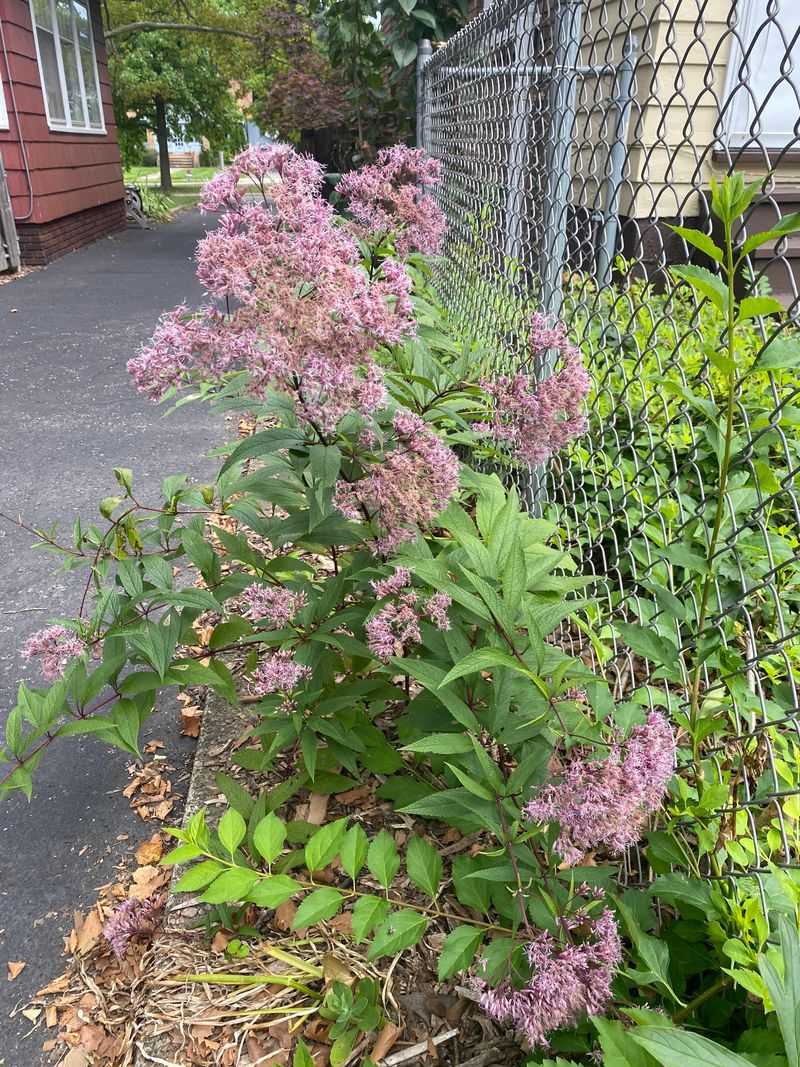
Tall, pink, and thirsty describes this one accurately.
Eutrochium maculatum grows naturally in Michigan wet meadows, marsh edges, and stream banks.
Mature plants reach five to seven feet, and all that growth requires substantial water, which it pulls from ground that would otherwise stay saturated.
Dusty pink flower clusters appear in late summer, exactly when many gardens have run out of bloom.
Pollinator traffic is heavy. Butterflies in particular work the flat topped clusters, and the plant is among the better late season nectar sources available.
That insect activity feeds birds, which connects directly to the predator side of the equation.
Full sun to partial shade works. Consistently moist soil produces the best growth.
Height needs planning. Placement at the back of a bed or in a naturalized area suits it better than a front border.
Cutting stems back by a third in early summer produces shorter sturdier plants if the height concerns you.
Sweet Joe-Pye is a related species tolerating somewhat drier ground, which gives you options depending on the site.
Late summer color plus real water uptake makes this a genuine two-purpose plant.
8. Drainage Work The Plants Cannot Do
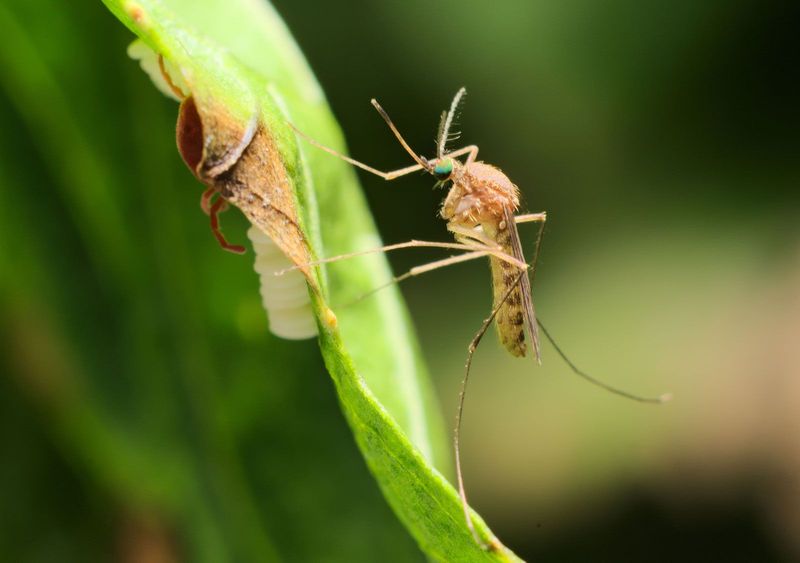
Sometimes the right tool is a shovel rather than a plant.
Eliminating standing water is the most effective mosquito reduction available, since breeding needs only a small puddle lasting about a week.
Start by looking for low areas holding water more than a couple of days. That’s your target list.
Gentle regrading so soil slopes away from the house sends runoff toward better locations.
A rain garden handles this deliberately. Dig a shallow bowl shaped bed in a low area, fill it with the plants above, and let it collect runoff that soaks in within a day or two.
Sizing matters for that to work. A rain garden that holds water longer than about 48 hours becomes a breeding site rather than a solution.
Check the small stuff too. Clogged gutters, driveway dips, tarps, buckets, plant saucers, and old tires all hold water.
Birdbaths need refreshing every few days, which is short enough to interrupt the cycle.
Compost worked into heavy clay helps it absorb water faster.
French drains and swales carry water away from stubborn wet zones.
Grading moves water, plants absorb it, and together they leave very little for mosquitoes to work with.
9. Build The Predators A Reason To Stay
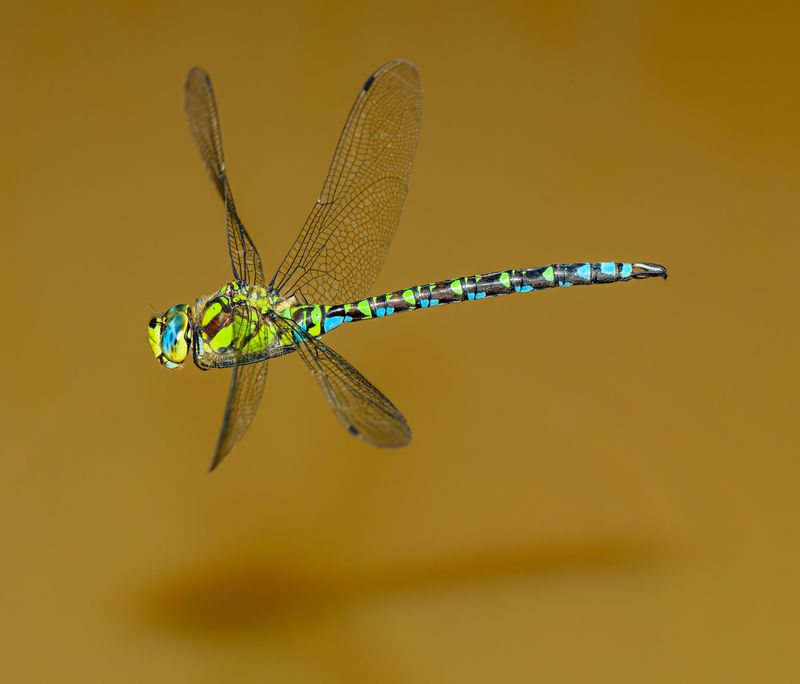
Water management handles one side. Predators handle the other.
Dragonflies, songbirds, swallows, and bats all feed on mosquitoes at various life stages.
Dragonfly larvae are the notable ones, since they eat mosquito larvae underwater before either becomes an adult.
Flowering natives draw the insects birds eat, and dense shrubs give those birds nesting cover.
Mixing heights and bloom times extends the season. Tall grasses, mid-sized wildflowers, and low groundcovers each shelter something different.
Leaving seed heads standing into fall feeds birds when other food thins out.
Bats deserve mention, since they consume large numbers of insects nightly, and native plantings attracting moths keep them returning.
Worth an honest caveat. Bats and purple martins eat mosquitoes among many other insects, and mosquitoes make up a modest share of the diet rather than the bulk.
Broad spectrum insecticides work against all of this, since they remove predators alongside pests.
Starting small is reasonable. Convert one section of lawn, then expand as you see the response.
Habitat plus drainage produces a yard that manages itself, which beats spraying every August.