The One Watering Rule That Keeps Oregon Cucumbers Sweet All Summer
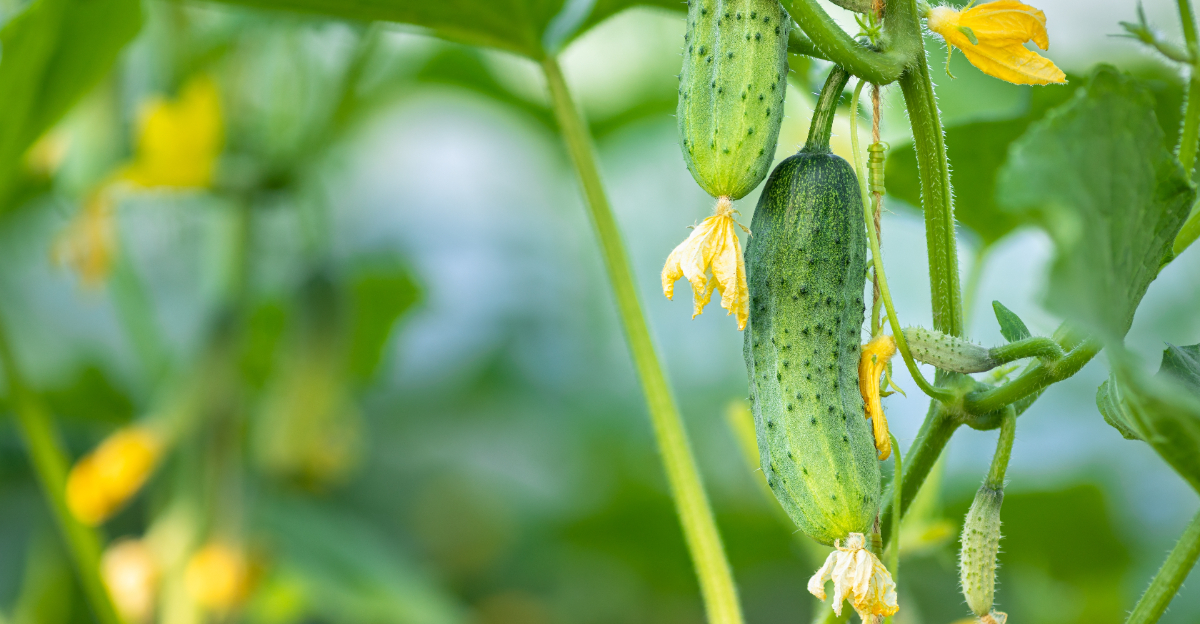
Cucumbers can look crisp and promising on the vine, then deliver a bite that tastes far more bitter than expected. Talk about a rude surprise after weeks of careful garden work.
Summer heat can put these plants under pressure fast, especially when Oregon weather shifts between warm afternoons and cooler stretches.
One simple watering rule can help the vines stay steady through those changes and support fruit with a fresher flavor.
The challenge is that cucumbers do not always show stress right away. Leaves may still look healthy while the fruit starts to tell a different story. That delay can make the real problem easy to miss.
A small change in routine may have a much bigger effect than extra fertilizer or another round of pruning.
Once the plants receive moisture in a more consistent way, the harvest has a better chance to stay crisp, juicy, and pleasantly sweet all Oregon summer.
1. This One Rule Can Make Or Break It In Summer
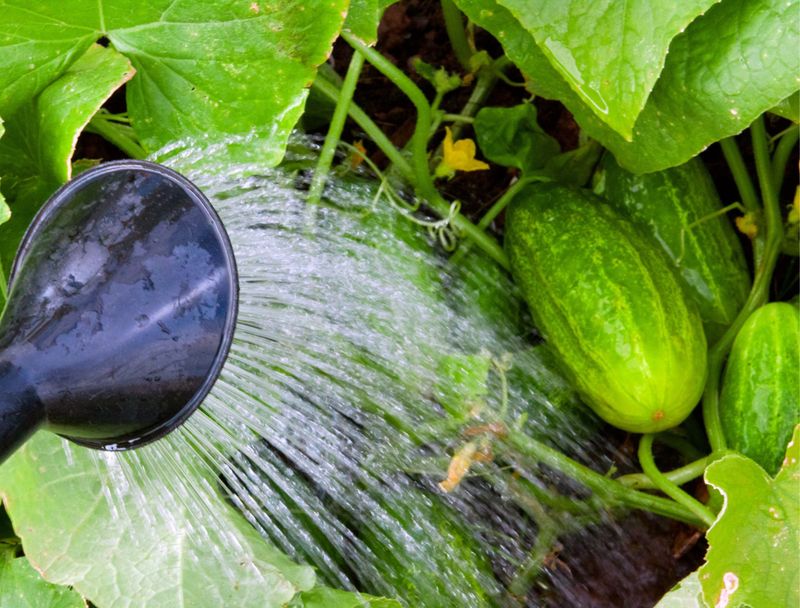
Sweet cucumbers do not happen by accident. The single most important thing you can do for your cucumber plants is give them the same amount of water on a regular schedule.
Cucumbers are about 96 percent water, so it makes sense that they need steady hydration to grow properly.
When water levels in the soil go up and down too much, the plant gets confused. It cannot move nutrients the way it should.
That stress shows up in the fruit as a bitter taste that no amount of seasoning can fix.
Aim for about one to two inches of water per week. In Oregon’s warmer inland valleys, you may need to water more during July and August.
Check the soil about two inches down with your finger. If it feels dry at that depth, it is time to water.
Keeping a consistent schedule does not mean watering at the exact same hour every single day. It means making sure the soil never fully dries out and never stays soggy for too long.
That balance is what your vines are asking for. A simple rain gauge near your garden can help you track how much moisture your plants are actually getting each week.
Pair that with a basic watering routine, and you will notice a big difference in how your cucumbers taste by midsummer.
2. Dry Soil Can Turn Cucumbers Bitter
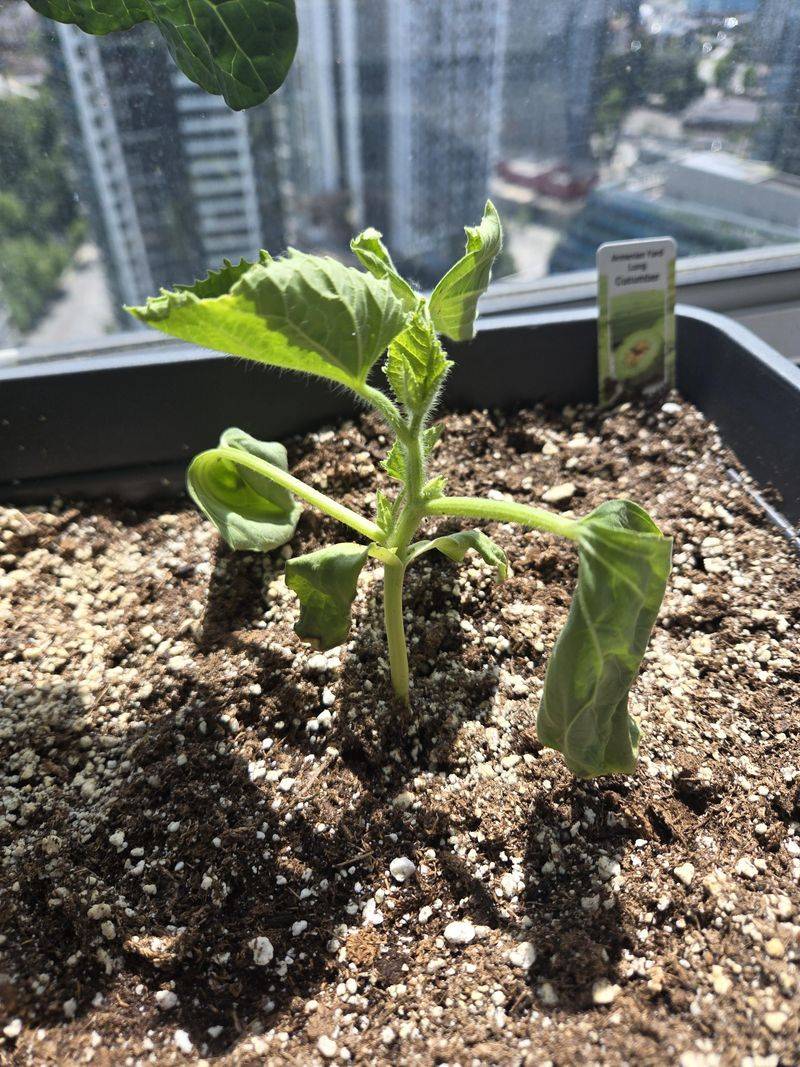
Most people blame bitterness in cucumbers on the variety they planted, but the real culprit is often dry soil. Cucumbers produce a compound called cucurbitacin when they are stressed.
Low water is one of the fastest ways to trigger that stress response.
Cucurbitacin is actually a natural defense the plant uses when it feels threatened. The more stress the plant experiences, the more of this bitter compound it produces.
Unfortunately, once it builds up in the fruit, there is no way to reverse it.
Oregon late summer can bring dry stretches that last a week or longer without rain. During those periods, garden soil can lose moisture faster than you expect, especially in raised beds or sandy ground.
Your Oregon Garden Changes Every Week. Your Plan Should Too.
Gardening in Oregon changes quickly throughout the season. Every Friday you’ll receive a simple weekly plan showing exactly what to plant, prune, fertilize, harvest, and protect so you never miss the right timing.
Checking your soil every day or two during a dry spell can prevent bitterness before it starts.
Even a single period of drought stress during fruit development can affect the flavor of cucumbers that are already forming on the vine. The damage happens quickly and quietly. You might not notice it until you bite into a cucumber at harvest time.
Staying consistent with your watering, especially during the hottest and driest weeks of summer, is the best way to keep cucurbitacin levels low and your cucumbers tasting clean, mild, and refreshing straight from the garden.
3. Deep Watering Beats Quick Sprinkling
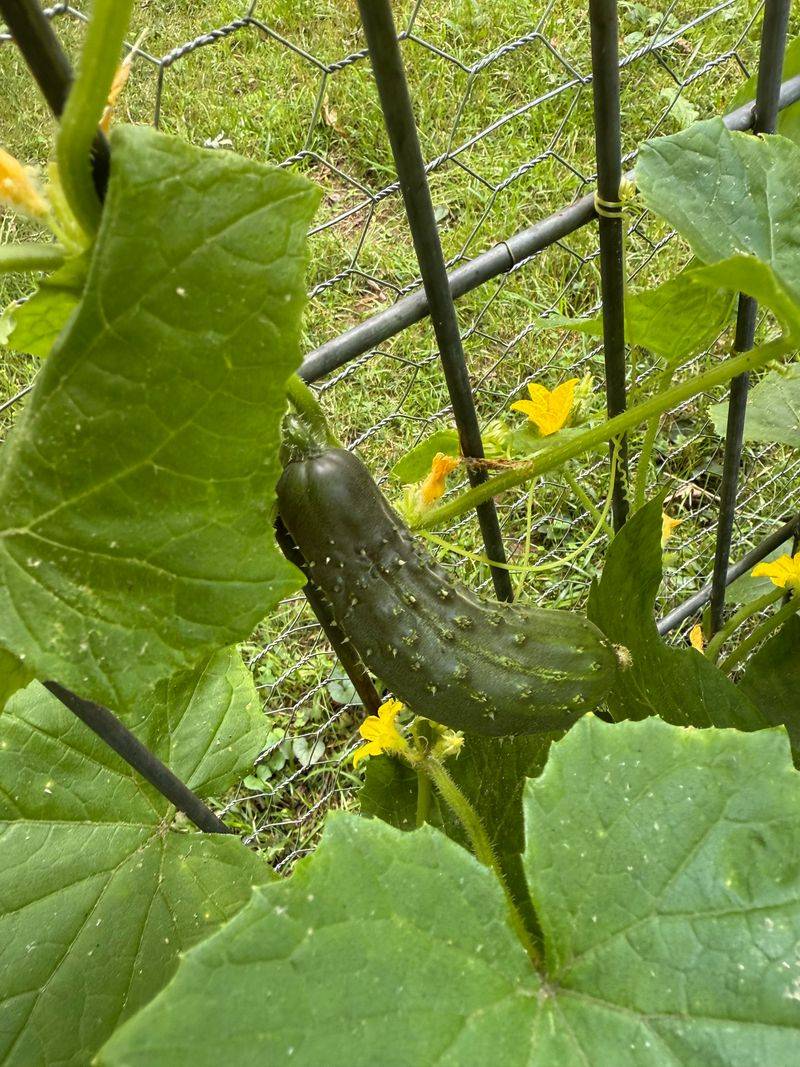
A quick sprinkle on top of the soil might look like enough, but it rarely gets water where cucumber roots actually need it. Roots grow deep, sometimes reaching six to eight inches below the surface.
Shallow watering only wets the top inch or two, which encourages roots to stay near the surface where they are more vulnerable to heat and drought.
Deep watering means letting water soak slowly into the ground so it reaches the full root zone. One long, slow watering session is far better than three short ones.
A drip system or a soaker hose laid at the base of your plants does this job really well.
When roots grow deeper, plants become more stable and more resilient. They can reach stored moisture even on hot days when the top layer of soil dries out fast.
That buffering effect is especially helpful during the warm, dry stretches that hit many parts of this state in mid to late summer.
If you water by hand, try leaving the hose running at low pressure near the base of each plant for several minutes. You want the water to move down, not run off sideways.
After watering, push a finger or a stick into the soil to check how deep the moisture went. Ideally, you want wet soil at least four to six inches down before you call it done for the day.
4. Mulch Keeps Roots Evenly Moist
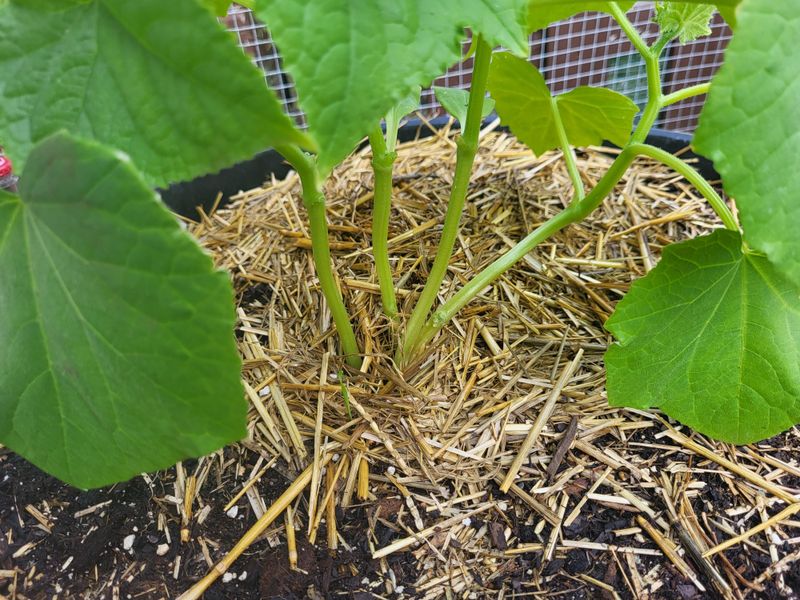
One of the smartest moves a home gardener can make is spreading mulch around cucumber plants. A two to three inch layer of straw, shredded leaves, or wood chips acts like a blanket over the soil.
It slows down evaporation and keeps the root zone from swinging between wet and dry extremes.
Without mulch, the sun and wind can pull moisture out of the top few inches of soil surprisingly fast.
On a warm day in the Willamette Valley or southern parts of Oregon, bare soil can go from moist to bone dry within hours. Mulch puts a stop to that cycle.
Beyond moisture retention, mulch also helps regulate soil temperature. Cucumber roots prefer soil that stays in a moderate range.
When soil gets too hot, it stresses the plant just like drought does. Mulch keeps things cooler and more stable underground, which directly supports sweeter fruit above ground.
Apply mulch right after you transplant your seedlings or once your direct-sown plants reach a few inches tall. Keep the mulch a couple of inches away from the main stem to prevent rot.
Refresh it during the season if it starts to break down or thin out. Good mulching can actually reduce how often you need to water, which saves time and keeps your plants in a much happier, more productive state all summer long.
5. Morning Water Helps Vines Handle Heat
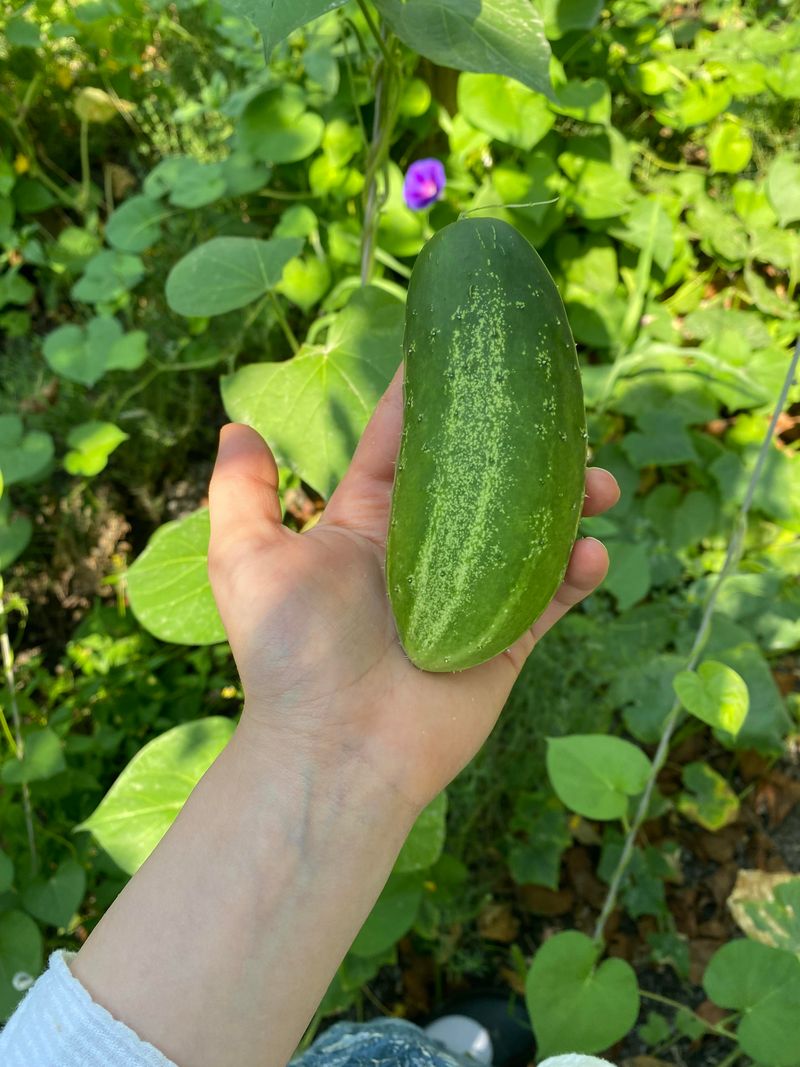
Timing matters more than most gardeners realize. Watering in the morning gives your cucumber plants a full tank of moisture heading into the hottest part of the day.
By the time afternoon heat peaks, the roots have already soaked up what they need to stay cool and productive.
Evening watering is not ideal for cucumbers. Wet leaves sitting overnight invite powdery mildew and other fungal problems that love cool, damp conditions.
Oregon’s coastal areas and valley floors can have cool nights even in summer, which makes this risk even more real for local growers.
Morning watering also means the leaves dry off quickly once the sun comes up. That keeps fungal pressure low and lets the plant focus its energy on growing fruit instead of fighting off disease.
It is a small timing adjustment that pays off in a big way by the end of the season.
Try to water before 10 in the morning if you can. If your schedule does not allow that every day, aim for at least three to four morning sessions per week.
On days when you water in the evening, try to direct water at the base of the plant rather than overhead. Keeping the foliage dry at night is just as important as giving roots enough to drink.
Both habits together create a strong defense against the issues that slow cucumber production during summer.
6. Containers Need More Frequent Checks
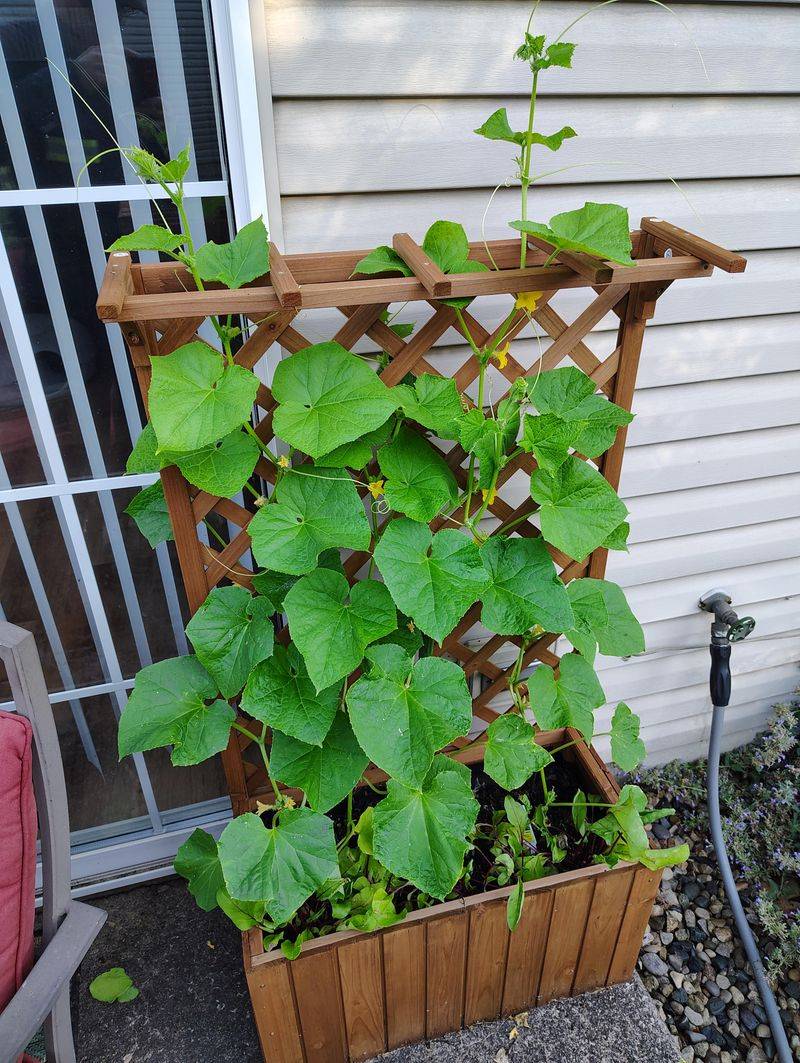
Growing cucumbers in pots or containers is a great option for small spaces, patios, and urban yards. But containers dry out much faster than garden beds.
The limited soil volume heats up quickly in direct sun, and there is no surrounding ground to borrow moisture from when things get dry.
During the hottest weeks of summer, container cucumbers may need watering once or even twice a day. That might sound like a lot, but it is just the nature of pot gardening.
The good news is that checking a container takes about ten seconds. Stick your finger into the soil about an inch deep. If it feels dry, water it right away.
Choose the largest containers you can find for cucumbers. A five-gallon pot is the minimum, but ten gallons or more gives roots much more room and holds moisture longer between waterings.
Dark-colored pots absorb more heat, so light-colored or fabric grow bags can help keep root temperatures more stable during sunny afternoons.
Self-watering containers are worth considering if you travel or have a busy schedule. They hold a reservoir of water at the bottom that roots can draw from as needed.
That steady supply mimics the consistent moisture that in-ground plants get from surrounding soil.
Adding a layer of mulch on top of the container soil also helps slow evaporation and keeps things more stable between your daily watering checks.
7. Don’t Flood Vines After Letting Them Wilt
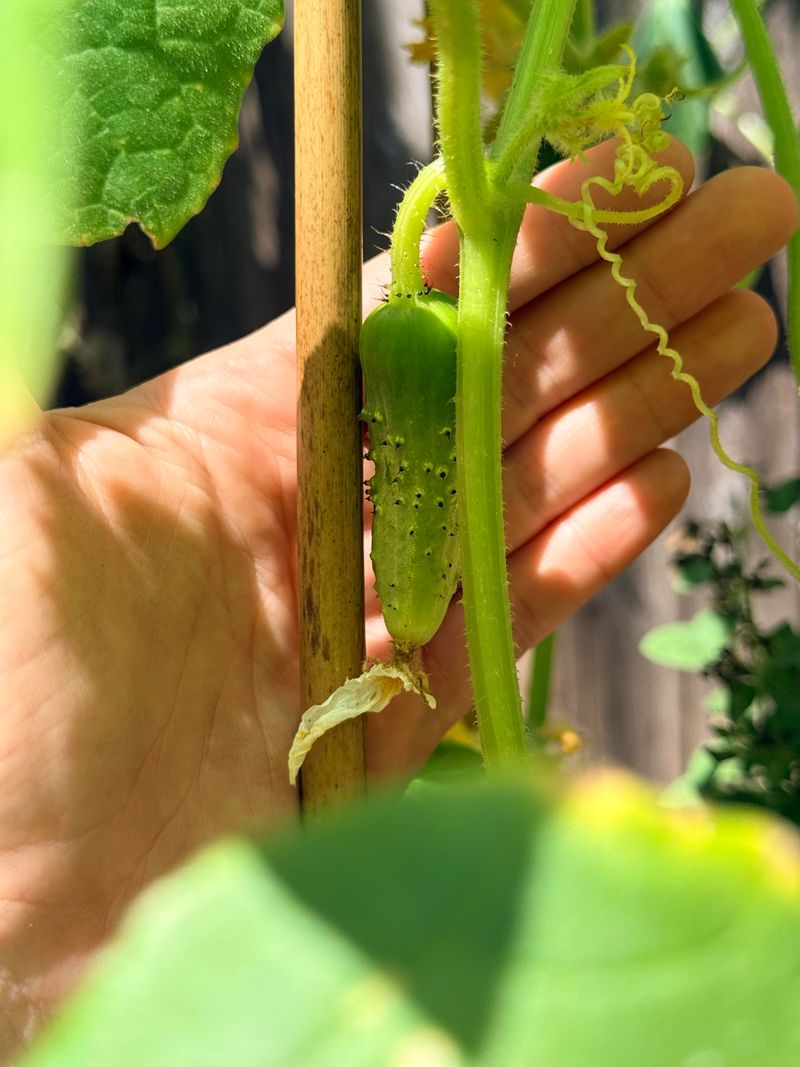
It happens to every gardener at some point. You get busy, miss a few days of watering, and come outside to find your cucumber vines drooping and looking sad.
The instinct is to grab the hose and soak them as fast as possible, but flooding stressed plants all at once can actually cause more harm than good.
When roots have been dry for a while, they become fragile. Dumping a large amount of water on them suddenly can cause uneven uptake throughout the plant.
That rapid shift in moisture can lead to problems like fruit cracking, blossom end rot, or split skins on cucumbers that were almost ready to harvest.
The better move is to water slowly and steadily to bring the soil moisture back up over a couple of hours. Use a drip hose or a slow trickle from a regular hose laid at the base of the plant.
Let the water soak in gradually rather than pooling on the surface and running off.
After a wilt recovery, give your plants a day or two to bounce back before assessing any damage.
Some cucumbers may already have developed bitterness or cracks, but new fruit that forms after the recovery period should taste much better.
The real lesson here is that preventing the wilt in the first place, through consistent daily or every-other-day watering, is always easier than trying to fix the aftermath of a dry spell.