Never Mow Wet Michigan Grass After This Weekend’s Thunderstorms
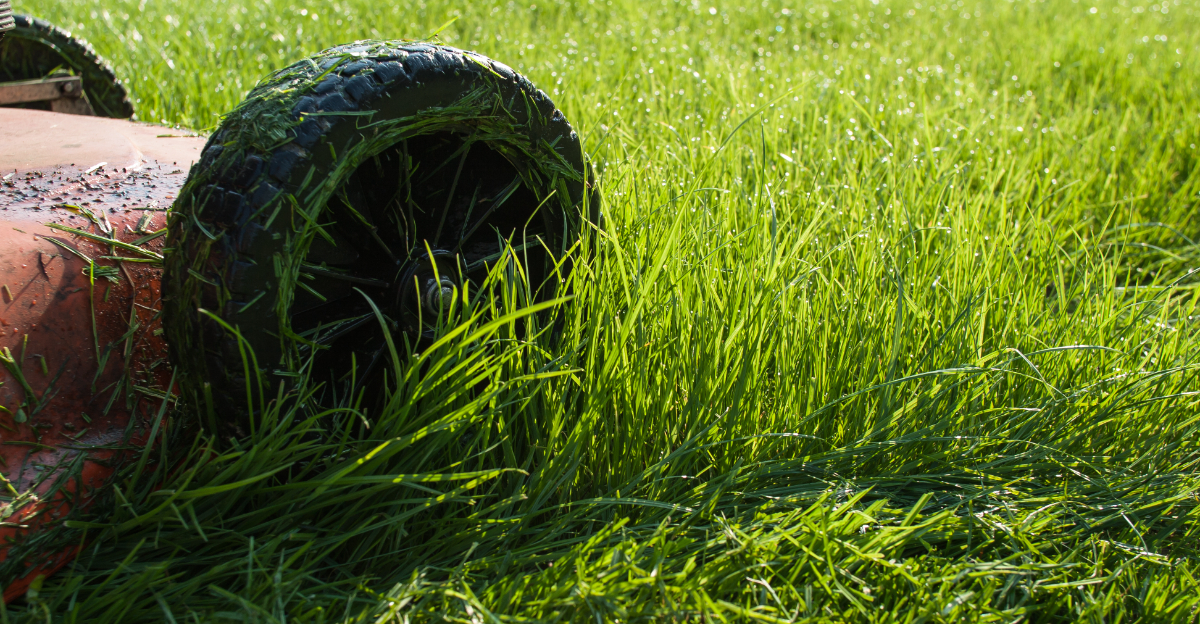
This weekend’s storms are going to leave Michigan lawns saturated, and the mower is going to look tempting the moment the sun comes back out. Waiting feels unnecessary when the grass is tall and the weather window is finally clear.
Mowing wet grass in Michigan does damage that dry grass never experiences from the same equipment and the same technique.
Blades tear rather than cut cleanly, clippings clump and smother the turf beneath them, soil compacts under mower weight in ways that affect root development for weeks, and fungal problems find exactly the surface conditions they need to establish quickly.
The lawn that gets mowed dry after a proper drying period looks significantly better and recovers faster than the one that gets mowed the morning after a storm.
1. Wet Soil Ruts Faster Under Mower Wheels
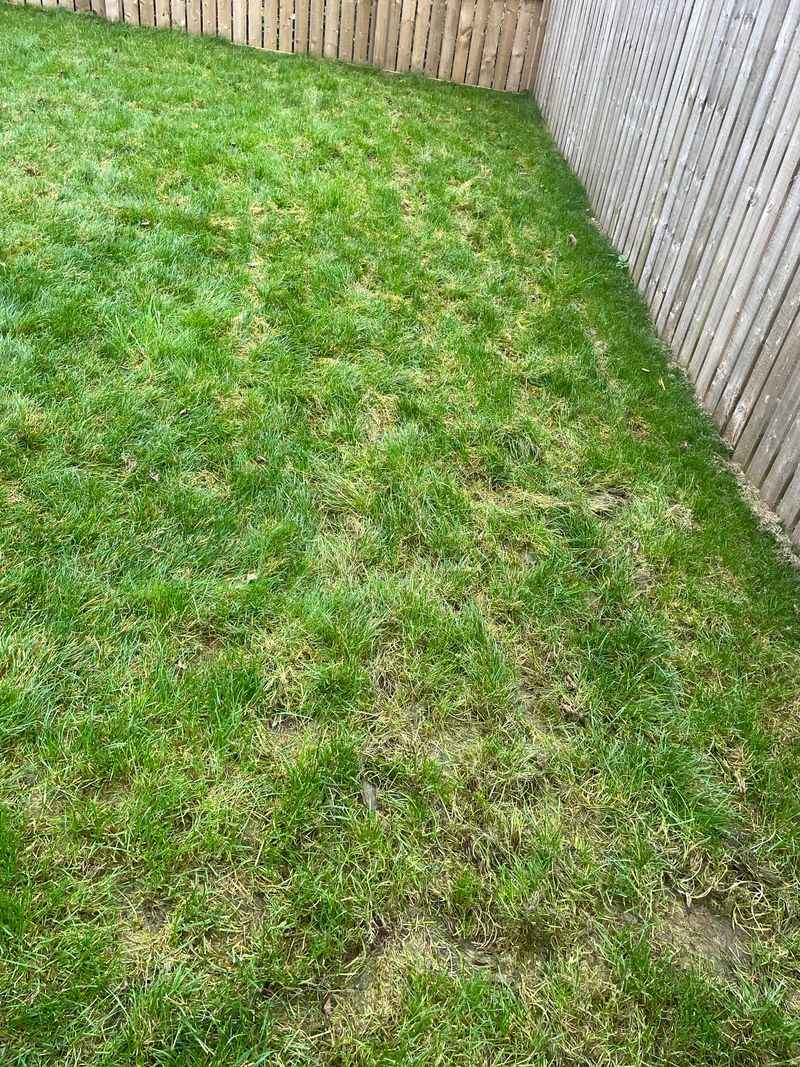
Picture this: you push the mower across your lawn after a big storm, and instead of clean tracks, you leave behind deep, muddy grooves that harden into ridges once the sun comes back out.
That is exactly what ruts are, and they are one of the most frustrating things that can happen to a Michigan lawn.
When soil absorbs a lot of rain, it becomes soft and unstable, almost like wet clay in your hands.
Low spots in the yard, shaded areas under trees, and lawns with heavy clay soil are especially vulnerable. These zones hold moisture longer than the rest of the yard, which means the ground stays squishy long after the rain has stopped.
Running a mower through those areas puts concentrated weight on already-weakened soil, and the wheels sink right in.
Once ruts form, they are not easy to fix. You may need to fill them with topsoil, reseed the area, and water carefully until the grass fills back in.
That process can take several weeks, especially if the damage is deep. Avoiding the whole situation is far easier than repairing it later.
A simple test before mowing is to walk across the lawn and pay attention to how your feet feel. If you notice your shoes sinking even slightly into the turf, the soil is still too soft.
Give it another day or two, and you will save yourself a lot of frustrating repair work down the road.
2. Heavy Mowers Can Compact Saturated Soil
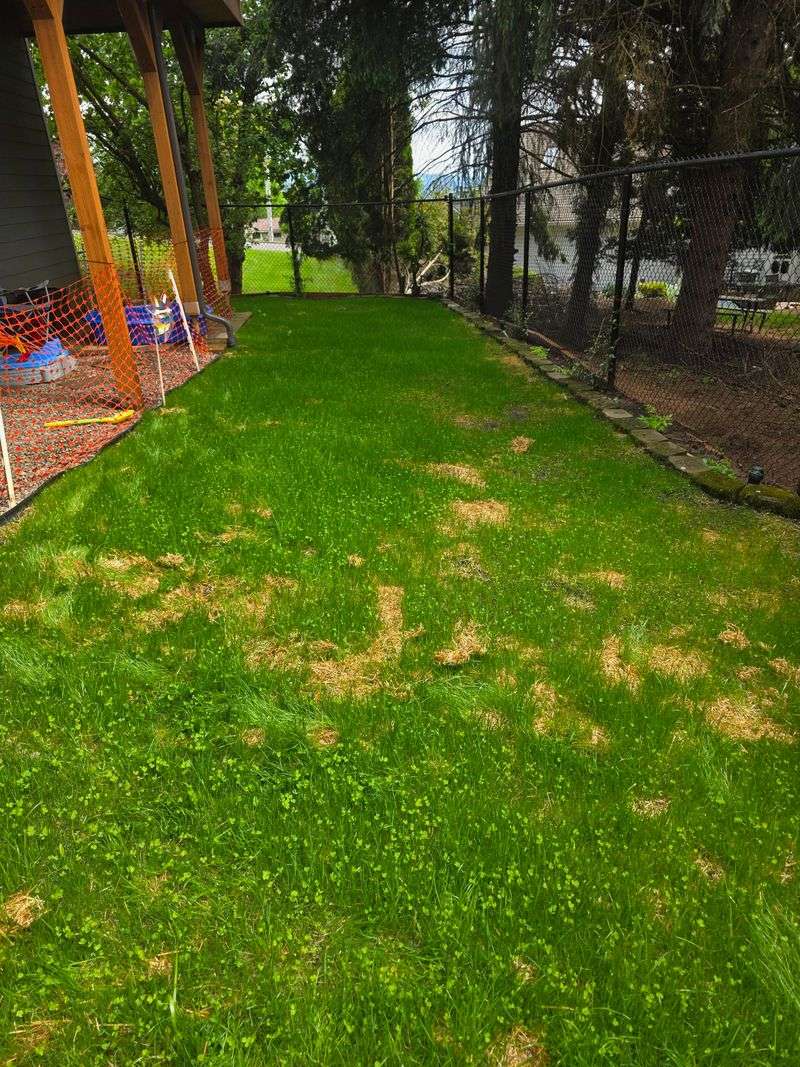
Soil compaction is one of those lawn problems that sneaks up on you quietly. You cannot always see it happening, but your grass will definitely feel it over the following weeks.
When you run a mower over saturated ground, the weight of the machine presses soil particles tightly together, squeezing out the tiny air pockets that grass roots depend on to breathe and grow.
Michigan lawns that already struggle with drainage are the most at risk. Areas near downspouts, along fence lines, or in low-lying sections of the yard tend to hold water after storms, and those spots are exactly where compaction causes the most harm.
Once the soil gets compacted, water has a harder time soaking in, which ironically makes future drainage problems even worse.
Your Michigan Garden Changes Every Week. Your Plan Should Too.
Gardening in Michigan changes quickly throughout the season. Every Friday you’ll receive a simple weekly plan showing exactly what to plant, prune, fertilize, harvest, and protect so you never miss the right timing.
Grass roots need air, water, and room to spread. Compacted soil blocks all three.
Over time, compacted areas thin out, turn yellow, and become more vulnerable to weeds that thrive in hard, dense soil. Reversing compaction usually means aerating the lawn in fall, which adds extra work to your seasonal schedule.
Riding mowers are especially heavy and pose a greater compaction risk than push mowers, but even a standard walk-behind can cause damage on truly saturated ground.
Waiting just 24 to 48 hours after a heavy thunderstorm gives the soil time to drain and firm up enough to handle the mower safely. Your lawn will recover faster and look much healthier for it.
3. Wet Grass Clogs The Mower Deck
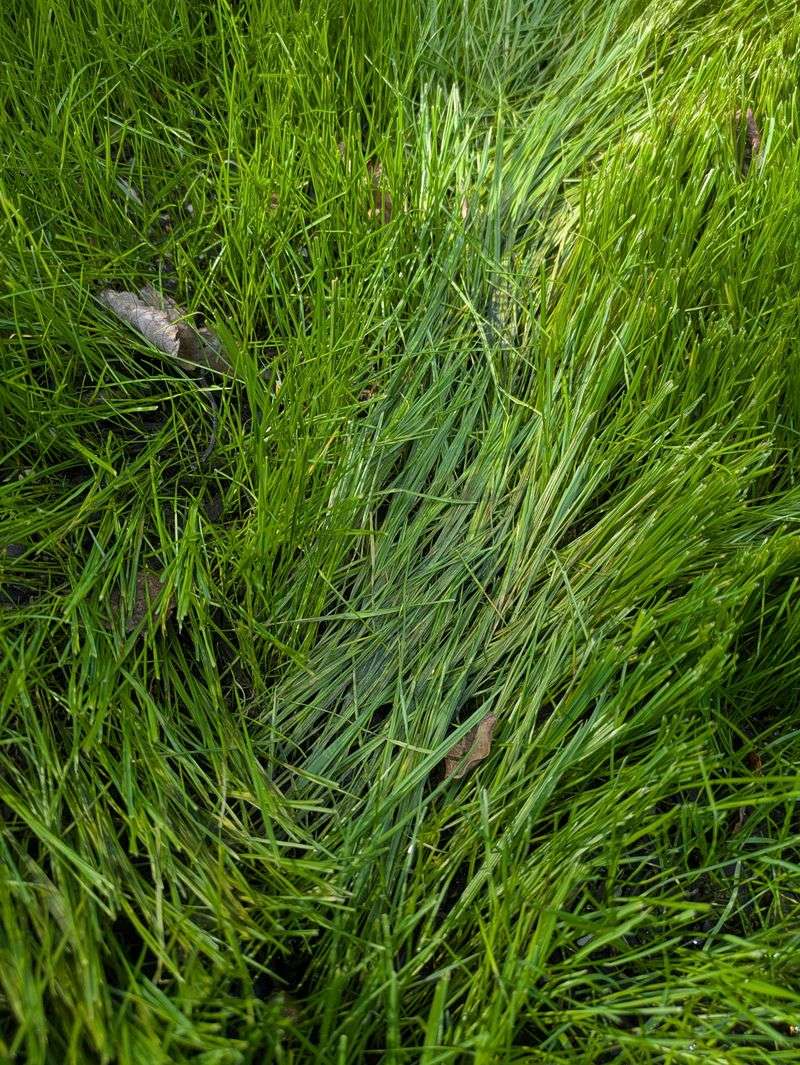
Wet grass is heavy, sticky, and stubborn. When you run the mower over a lawn that is still dripping from a thunderstorm, the clippings do not fly out the way they should.
Instead, they pile up underneath the mower deck, sticking to the blade housing and building into a thick, wet mat that slows everything down.
Michigan grass tends to grow fast during rainy stretches, so after a weekend of storms, your lawn may be longer than usual on top of being soaked. That combination is especially rough on the mower.
The machine has to work harder to cut through tall, heavy, wet blades of grass, which strains the engine and puts extra stress on the belt and blade assembly.
Cleaning a clogged deck is messy and time-consuming. You have to tip the mower, scrape out the packed clippings, and sometimes repeat the process multiple times during a single mowing session if you push through wet conditions.
That extra effort adds up fast, and it is completely avoidable by simply waiting for the grass to dry.
Beyond the inconvenience, a clogged deck also affects cut quality. When clippings pile up underneath, the blade cannot spin freely, which means the grass gets torn and pushed rather than cut cleanly.
The result is a rough, uneven finish that looks worse than if you had just waited. Dry grass flows through the deck smoothly, makes the job faster, and keeps your mower running in better shape overall.
4. Wet Blades Dull The Mower Faster
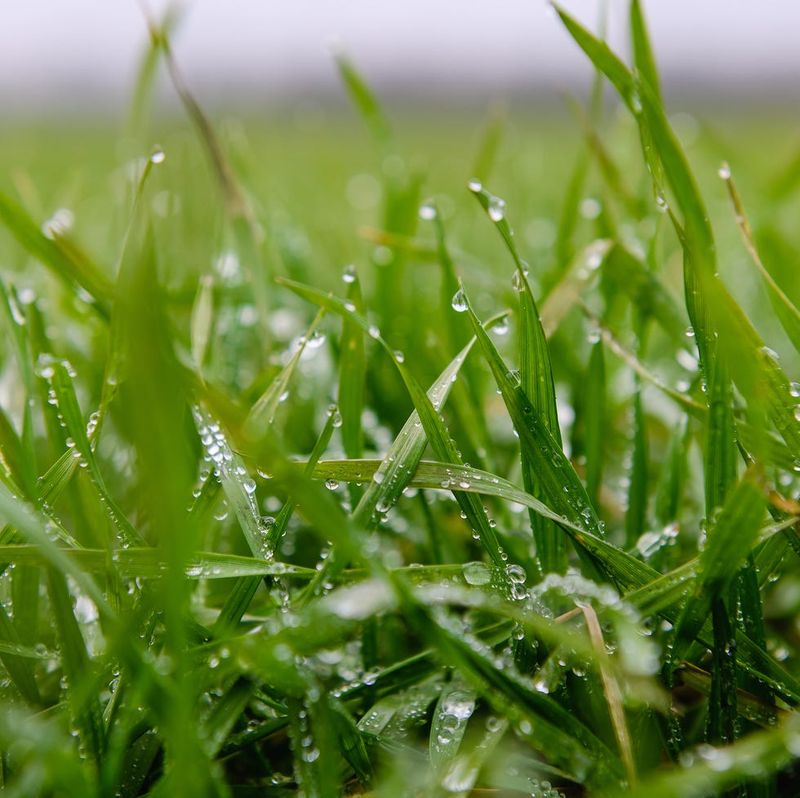
Sharp mower blades are one of the most overlooked keys to a healthy-looking lawn. Most people do not think about blade sharpness until the grass starts looking ragged, but by then the damage is already done.
Michigan State University extension resources note that mowing wet turf can dull blades faster than cutting dry grass, and that detail alone is worth paying attention to.
Wet grass is denser and heavier than dry grass. The extra resistance puts more friction and stress on the blade edge with every rotation.
Over time, that repeated contact with heavy, moisture-laden turf chips away at the sharpness, leaving you with a blade that tears rather than cuts. Torn grass tips turn brown and give the lawn a rough, burnt look within a day or two of mowing.
A dull blade does more than make your lawn look bad. It actually weakens the grass over time.
Clean cuts heal quickly and help the grass stay strong and green. Ragged cuts leave larger wounds on each blade of grass, making it easier for fungal diseases to take hold, especially when the weather stays humid after a storm.
Getting a blade sharpened costs a few dollars at most hardware stores, but it is still an extra step that takes time and planning.
Mowing only when the grass is dry helps your blades stay sharper between sharpening sessions, which means less maintenance, better-looking cuts, and a healthier lawn through the whole growing season. It is a small habit that makes a big difference.
5. The Cut Looks Uneven When Grass Is Bent And Heavy
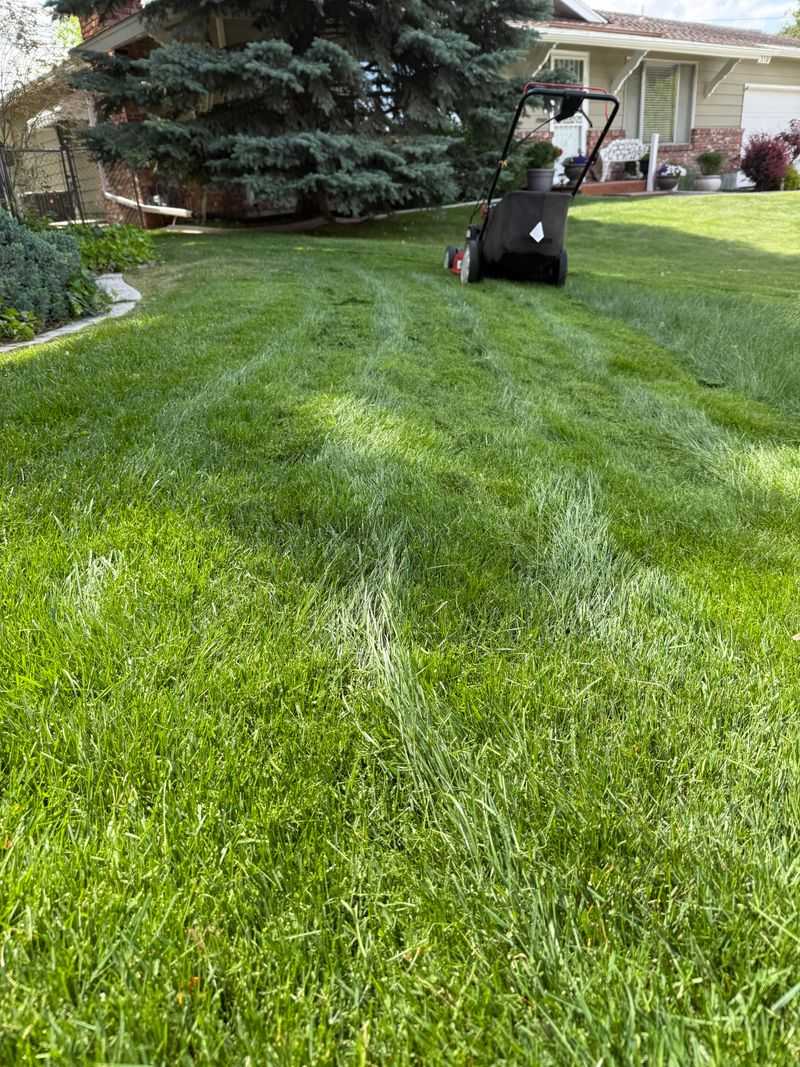
Rain does something interesting to grass. When a heavy storm rolls through, the water weighs down the blades and makes them bend flat against the soil.
From a distance, the lawn might look shorter than it actually is because everything is leaning sideways instead of standing upright. That is a problem when you try to mow it.
A mower works by creating suction that lifts grass blades upright just before the spinning blade cuts them. When grass is wet and heavy, it stays bent instead of lifting, and the mower cuts some blades while completely missing others.
The result is a choppy, uneven finish with visible patches where the grass was too flat to get trimmed properly.
After the lawn dries out, those missed blades stand back up and suddenly the yard looks like it was never mowed at all.
Some areas will be short, others will look tall and scraggly, and the uneven appearance often makes gardeners want to go over the whole lawn again right away. Mowing twice in a short period stresses the grass and wastes your time.
Waiting for the grass to dry and stand back up on its own gives the mower the best chance of making a clean, even pass across the entire yard. You get a sharper-looking result, fewer missed spots, and a lawn that stays looking tidy for longer.
Patience here genuinely pays off in visible ways, and the final cut will be something you feel proud of every time you pull into the driveway.
6. Clumped Clippings Can Smother Patches
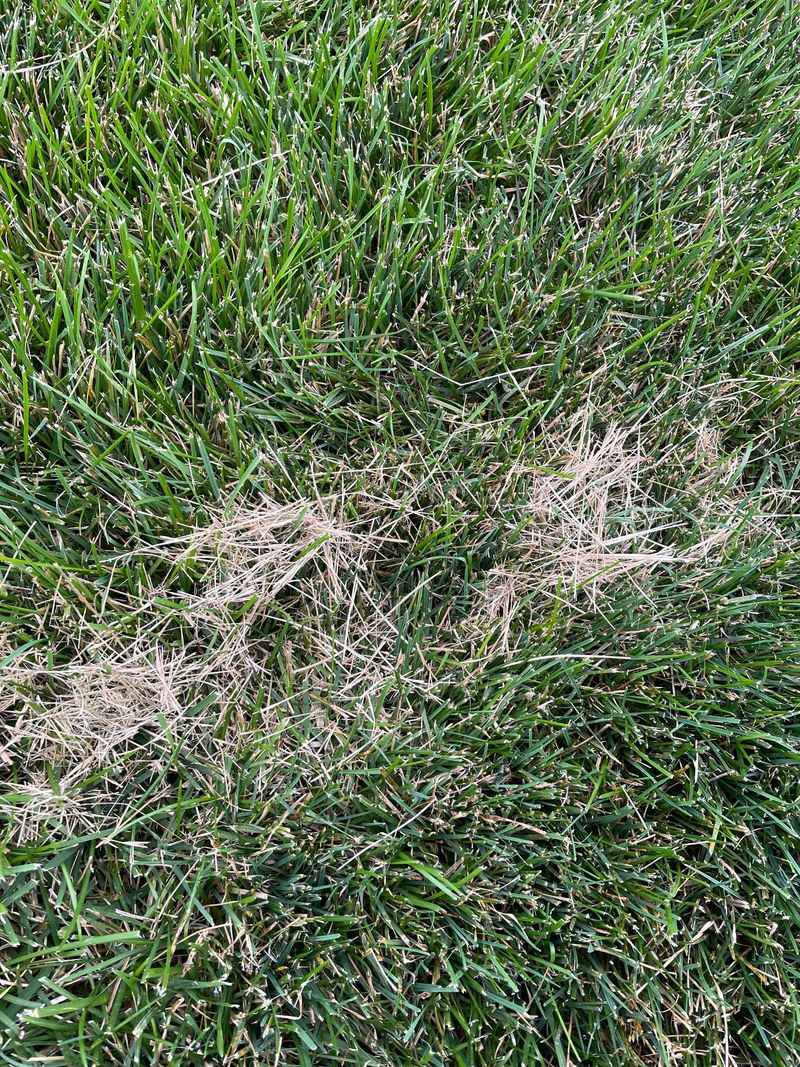
Grass clippings are actually great for your lawn when they are light and dry. They break down quickly, return nutrients to the soil, and feed the turf naturally.
Wet clippings, though, are a completely different story. They clump together into dense, heavy mats that sit on top of the grass instead of falling through to the soil below.
When those clumps land on the lawn and stay there, they block sunlight and air from reaching the grass underneath. The covered patches cannot photosynthesize, cannot breathe properly, and start to weaken within just a few days.
If the clumps stay in place long enough, the grass underneath can turn yellow and thin out, leaving you with bare spots that need reseeding.
Tall grass makes this problem even worse. After a rainy stretch, Michigan lawns often grow several inches taller than normal before you get a chance to mow.
Cutting that tall, wet grass produces extra-large clippings that pile up even more heavily on the surface. The sheer volume of wet material can be overwhelming for the lawn to handle on its own.
If you absolutely cannot wait and need to mow despite the wet conditions, plan to rake up the clumps right after you finish. Spreading them thin or removing them from the lawn surface gives the grass underneath a fighting chance.
Better yet, wait for dry conditions so the clippings stay light, spread naturally, and actually do your lawn some good rather than causing patchy damage that takes weeks to recover from.
7. Clippings Can Wash Into Storm Drains
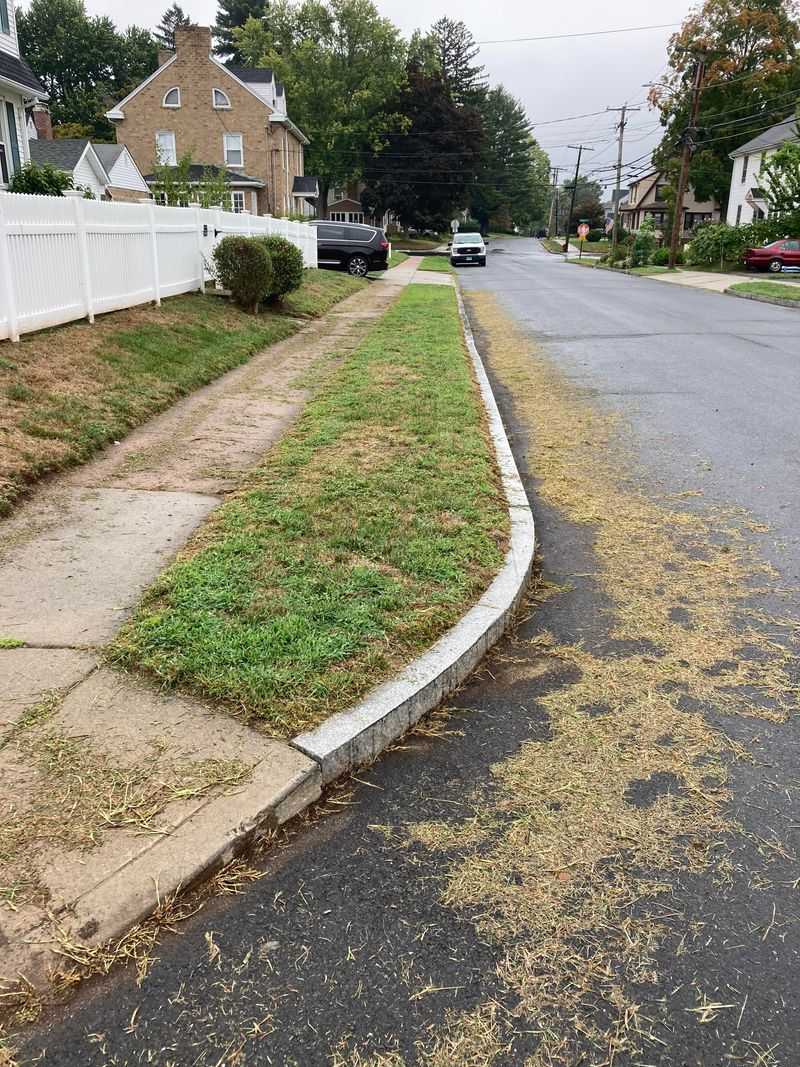
Most people focus on what mowing does to the lawn itself, but there is a bigger picture worth thinking about. When you mow right after a thunderstorm, wet clippings end up everywhere.
They stick to the sidewalk, collect on the driveway, and blow across the road. Then the next rain shower comes through and washes all of those clippings straight into the nearest storm drain.
Michigan State University extension resources specifically recommend sweeping clippings back onto the lawn rather than leaving them on paved surfaces.
Storm drains connect directly to local waterways, including lakes, rivers, and streams that communities across Michigan rely on for recreation and wildlife habitat.
Grass clippings carry nitrogen and phosphorus from fertilizers, and when those nutrients wash into water in large amounts, they can fuel algae growth that throws the ecosystem out of balance.
This is not just an environmental concern for scientists. Algae blooms affect water clarity, reduce oxygen levels for fish, and make lakes less enjoyable for swimming and boating.
Michigan communities have worked hard to protect their waterways, and simple habits at home make a real difference at the neighborhood level.
Keeping clippings off paved surfaces is straightforward. You can use a leaf blower or a broom to push any stray clippings back onto the lawn after mowing.
Or, even better, wait until the grass is dry so clippings stay lighter and are far less likely to scatter onto hard surfaces in the first place. Small choices like this add up to healthier local water for everyone.
8. Thunder And Hidden Storm Debris Make It Unsafe
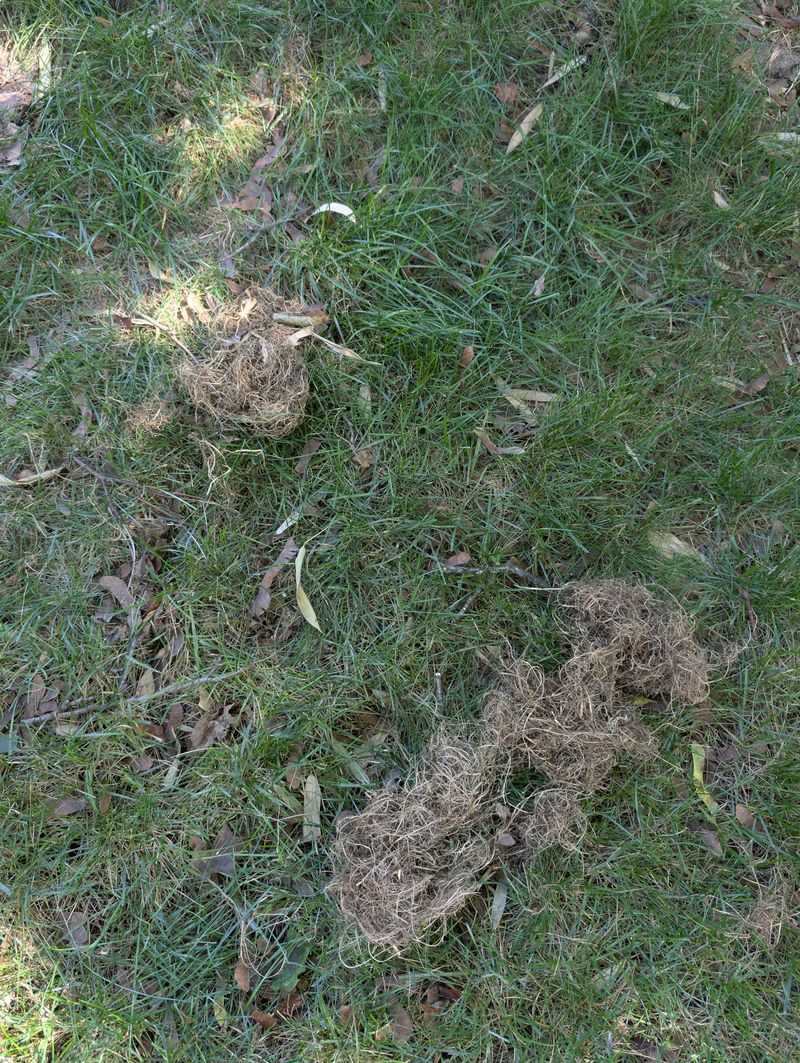
Safety always comes first, and that point is especially true right after a Michigan thunderstorm. Even when the rain stops and the sky starts to clear, thunder can still rumble in the distance, which means lightning is still a real possibility.
Standing in an open yard while holding a metal mower handle during an active storm is a situation worth avoiding entirely.
The standard safety recommendation is to wait at least 30 minutes after the last sound of thunder before going back outside. That 30-minute window gives the storm enough time to move far enough away that the lightning risk drops significantly.
It might feel like a long wait when you are eager to get the lawn done, but it is the right call every single time.
Beyond the lightning concern, storms leave behind surprises that you cannot always spot from the porch.
Fallen branches, broken limbs, downed wires, and scattered debris can hide in tall grass and become serious hazards the moment the mower blade hits them.
A branch flung by a mower blade can travel at dangerous speeds and cause real harm to anyone nearby.
Before starting the mower after any storm, walk the entire yard slowly and look carefully. Check for soft spots and standing water that could cause you to slip.
Look up at nearby trees for hanging branches that might still be unstable. Move any debris you find to a safe spot before mowing begins.
Taking five or ten minutes to do that walkthrough can prevent accidents that no one wants to deal with on a weekend afternoon.