The 10 Oregon Entry Path Plants That Look Expensive But Need Little Water
Luxury-looking entry paths are not always built with luxury-level effort. In Oregon, the smartest plant choices can give a walkway that rich, curated feel without turning watering into a daily chore.
Near an entry, every detail shows. A plant that spills softly over the edge, holds its shape, or adds striking color can make the whole path feel more refined in a heartbeat.
That is the magic of a good low-water choice. It works hard visually while staying surprisingly easy to live with.
Oregon gardeners do not need a lineup of thirsty, fussy plants to create that polished first impression.
The best options bring texture, structure, and just enough drama to make a front path feel thoughtfully designed instead of quickly thrown together. And when they can handle drier conditions without falling apart, even better.
These are the plants that help an entrance look elegant, welcoming, and far more expensive than it really was. Less watering, less upkeep, and a lot more style packed into every step up to the door.
1. Lavender
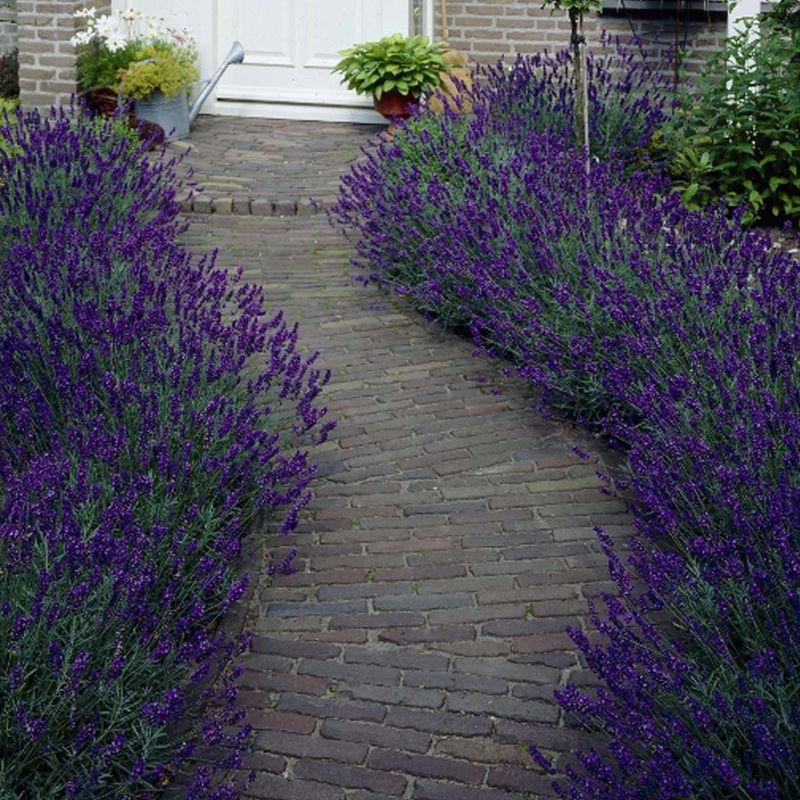
Few plants smell as good as lavender while making your entry path look like it belongs on a magazine cover. In Oregon, lavender thrives during the dry summer months when many other plants start to struggle.
It loves full sun and well-drained soil, which makes it a natural fit for path borders and garden edges.
Once established, lavender needs very little water. You can water it deeply once every two weeks during summer, and it will reward you with tall, purple flower spikes that attract bees and butterflies.
The silvery-green leaves stay attractive even when the plant is not in bloom.
Lavender also works as a natural pest repellent, which is a bonus for any Oregon homeowner. Plant it in groups of three or five for a bold, lush look that feels intentional and polished.
Trim it back lightly after flowering to keep it full and tidy. With minimal effort, this Mediterranean beauty turns an ordinary front path into something truly eye-catching.
2. Rosemary
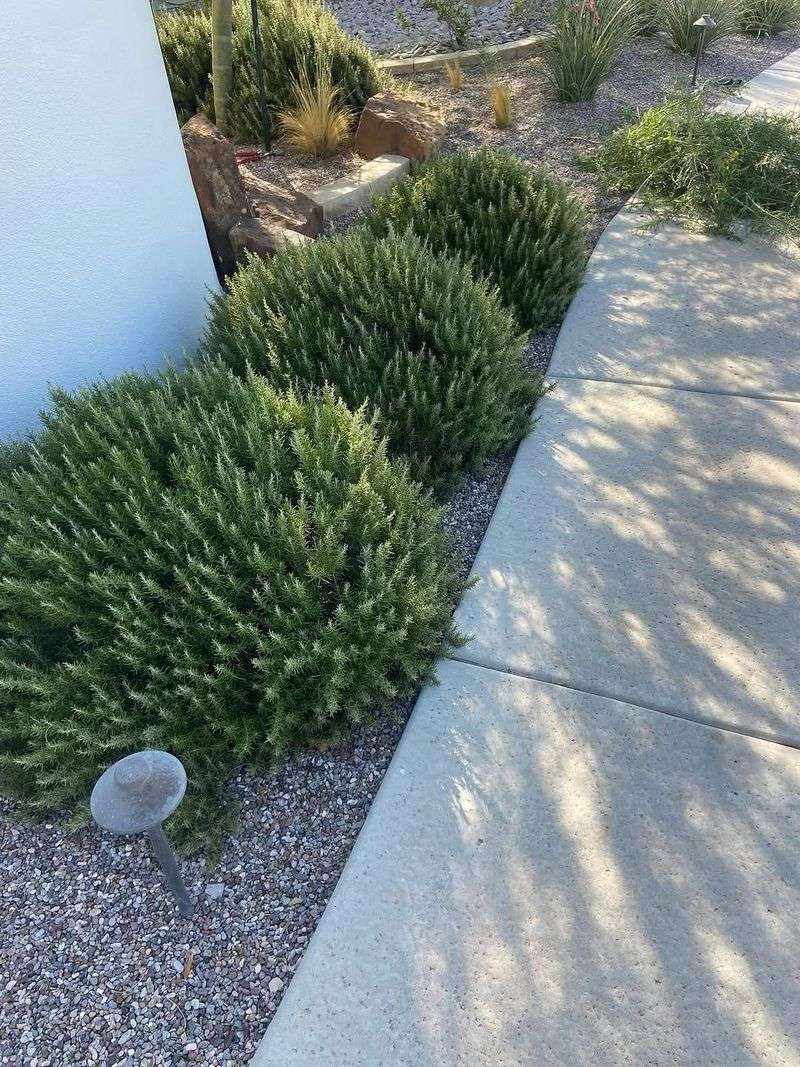
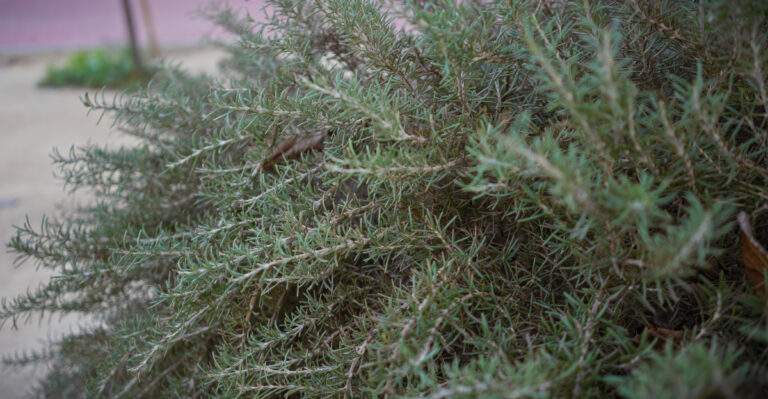
Rosemary is one of those plants that pulls double duty without breaking a sweat. It looks structured and elegant along an Oregon entry path, and it also happens to be a culinary herb you can snip for dinner.
That combination of beauty and usefulness makes it a smart pick for any front yard.
In Oregon, rosemary handles dry summers well once it gets established. It prefers full sun and soil that drains quickly, so avoid planting it in soggy spots.
The upright varieties can grow into small, tidy shrubs that frame a path beautifully, while trailing types spill attractively over low walls or raised beds.
The small blue or purple flowers that appear in late winter and early spring are a bonus, giving your entry path color when not much else is blooming. Bees absolutely love those blooms too.
Water it sparingly, prune it lightly to shape, and it will look sharp for years. Rosemary has a naturally formal appearance that makes even a simple path feel polished and well-designed without any extra effort on your part.
Your Oregon Garden Changes Every Week. Your Plan Should Too.
Gardening in Oregon changes quickly throughout the season. Every Friday you’ll receive a simple weekly plan showing exactly what to plant, prune, fertilize, harvest, and protect so you never miss the right timing.
3. Hebe
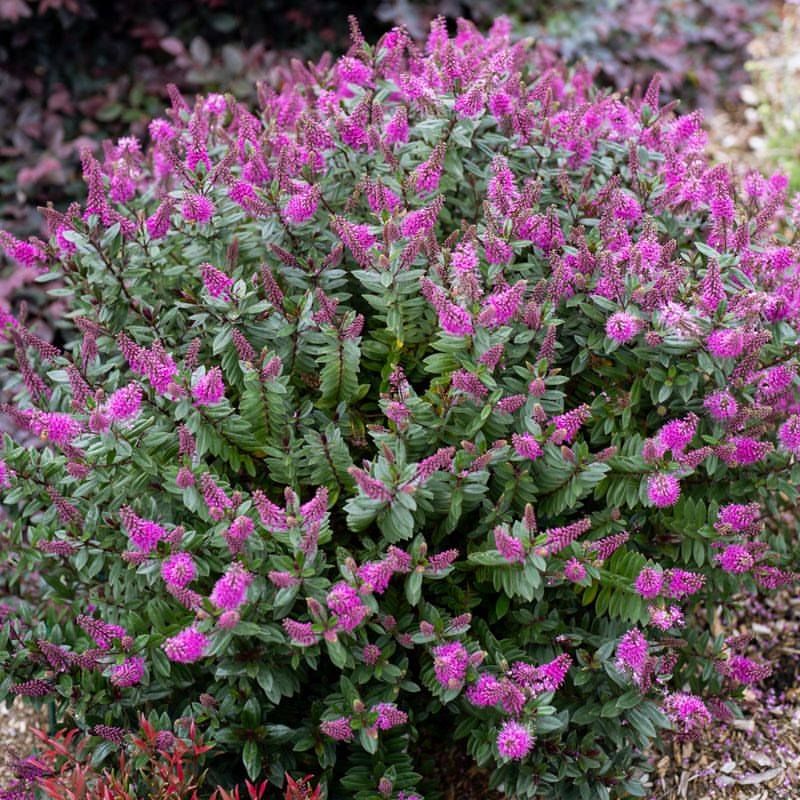
Not everyone knows about Hebe, but Oregon gardeners who discover it tend to become instant fans. This compact, evergreen shrub from New Zealand produces beautiful flower spikes in shades of purple, pink, or white, and it keeps its attractive foliage all year long.
Planted along an entry path, it looks like something from an upscale botanical garden.
Hebe handles Oregon’s climate surprisingly well. It tolerates coastal winds, moderate drought, and even a light frost, making it versatile across different parts of the state.
Once it settles into its spot, it needs only occasional watering during the driest weeks of summer. Regular, heavy watering is actually something it prefers to avoid.
The glossy, dense leaves give it a lush, expensive look without requiring much maintenance. Trim it lightly after flowering to keep the shape tidy.
Pair it with gravel mulch and some ornamental grasses for a modern, water-wise entry path that looks professionally designed. Hebe comes in many sizes, from low ground-hugging types to knee-high mounds, so you can find the right fit for any Oregon front yard space.
4. Wall Germander
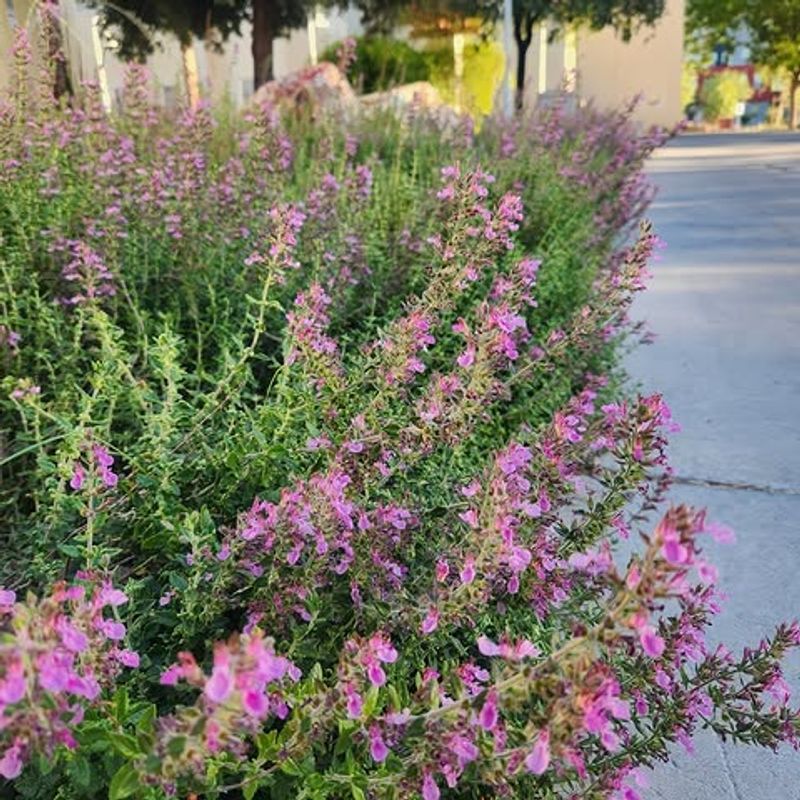
Wall Germander has been used in formal European gardens for centuries, and that history shows in how polished it looks. The small, dark green leaves and tiny pink to purple flowers give it a refined, classic appearance that elevates any Oregon entry path instantly.
It works especially well as a low edging hedge that lines both sides of a walkway.
What makes Wall Germander such a practical choice is how little water it needs once established. It thrives in full sun and well-drained soil, conditions that are common in many Oregon yards during summer.
It also tolerates poor soil, so it is forgiving if your garden beds are not perfect.
You can clip it into neat, formal shapes or let it grow in a relaxed, natural mound. Either way, it holds its structure well and stays green throughout the season.
The flowers attract pollinators, adding life and movement to your front yard. In Oregon, where water conservation is becoming more important each year, Wall Germander is a smart, stylish solution that brings old-world charm to a modern low-water landscape without demanding much in return.
5. Santolina (Lavender Cotton)
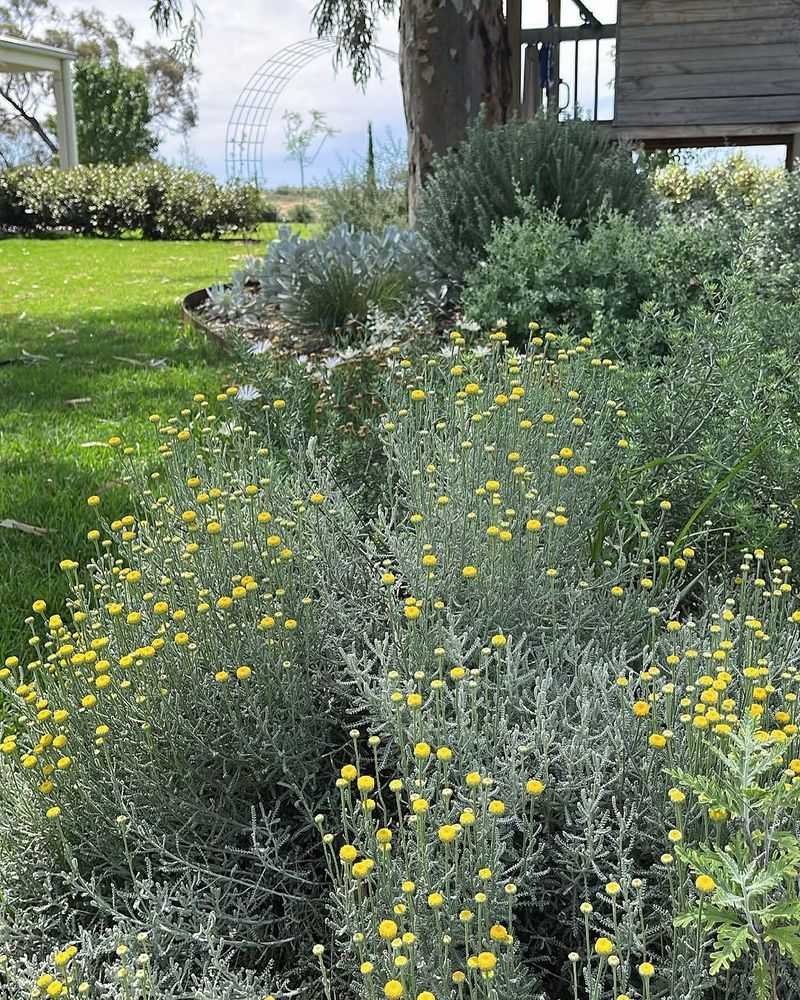
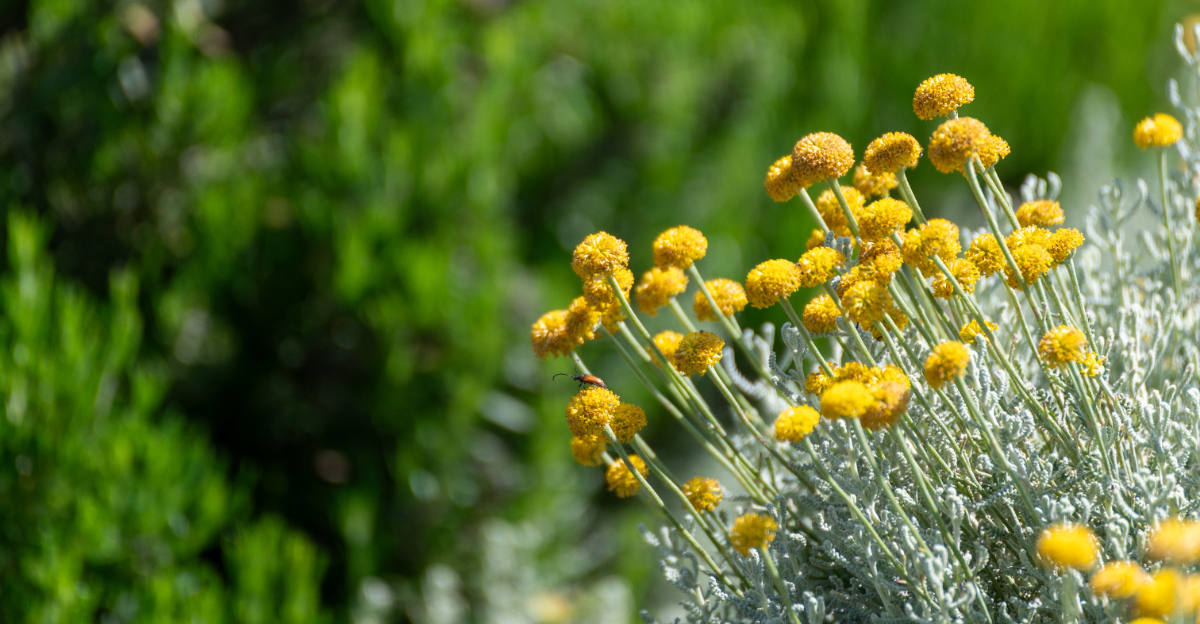
Santolina, also called Lavender Cotton, is one of the most underrated plants for Oregon entry paths. Its silvery-gray, finely textured foliage creates a soft, almost cloud-like mound that looks striking against darker stones or pavers.
When the small, bright yellow button flowers appear in summer, the contrast is genuinely beautiful.
Originally from the Mediterranean, Santolina was practically built for dry conditions. It loves heat, full sun, and soil that does not hold moisture for too long.
In Oregon, those summer dry spells that stress other plants are exactly what Santolina enjoys. Water it lightly every couple of weeks once it is established, and it will thrive.
The silvery color of the leaves makes it a standout even when it is not in bloom. It pairs well with lavender, rosemary, and blue fescue, creating a cohesive, water-wise planting scheme that looks planned and intentional.
Trim it back by about one-third in early spring to keep it from getting leggy. Santolina brings texture, color contrast, and an almost sculptural quality to an Oregon front path that makes visitors stop and take notice.
6. Blue Fescue
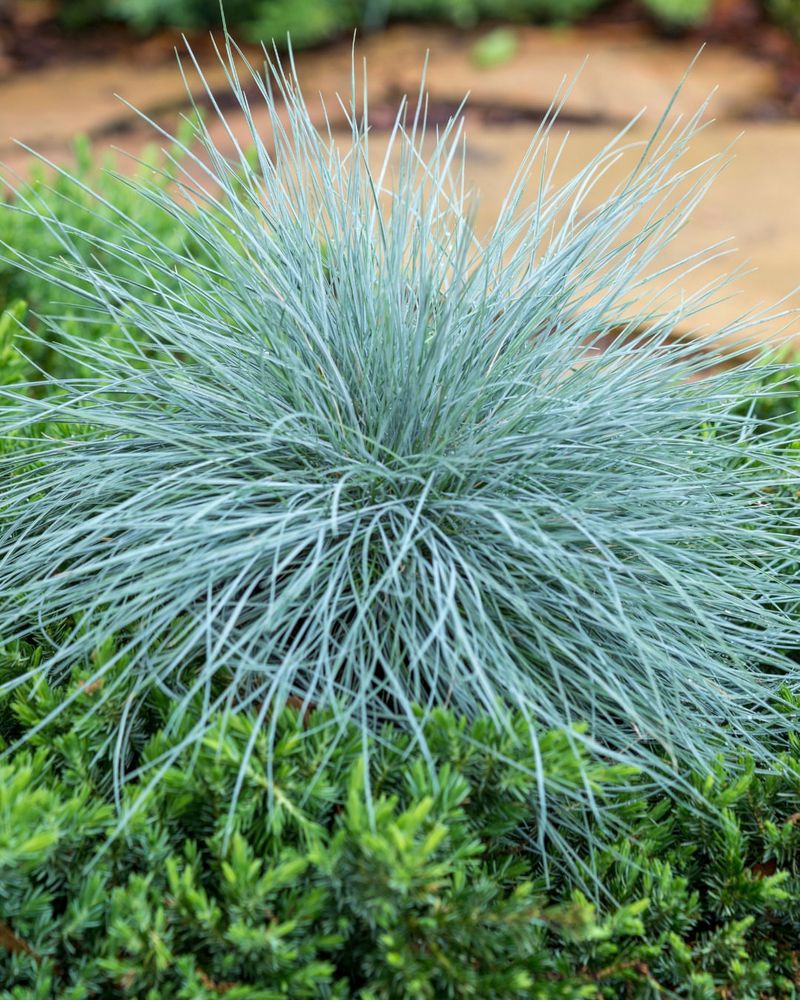
There is something quietly cool about Blue Fescue. Its compact, spiky tufts of blue-gray grass look like tiny sculptures planted along an entry path, giving the landscape a modern, designer feel.
In Oregon, this ornamental grass is one of the easiest low-water plants you can grow, and it stays attractive through most of the year.
Blue Fescue forms tidy mounds that reach about eight to twelve inches tall. It does not spread aggressively, so it stays exactly where you plant it.
That makes it ideal for lining a path without worrying about it taking over nearby plants. Full sun and good drainage are the main requirements, and once settled, it needs only minimal watering during dry spells.
The blue tone of the foliage creates a cool contrast against warm-colored pavers, gravel, or bark mulch. Planting it in repeating groups along both sides of an entry path creates a rhythm that feels intentional and polished.
Replace clumps every three to four years when they start to look sparse in the center. For an Oregon front yard that needs texture and color without constant irrigation, Blue Fescue is a reliable and visually rewarding choice.
7. Yucca
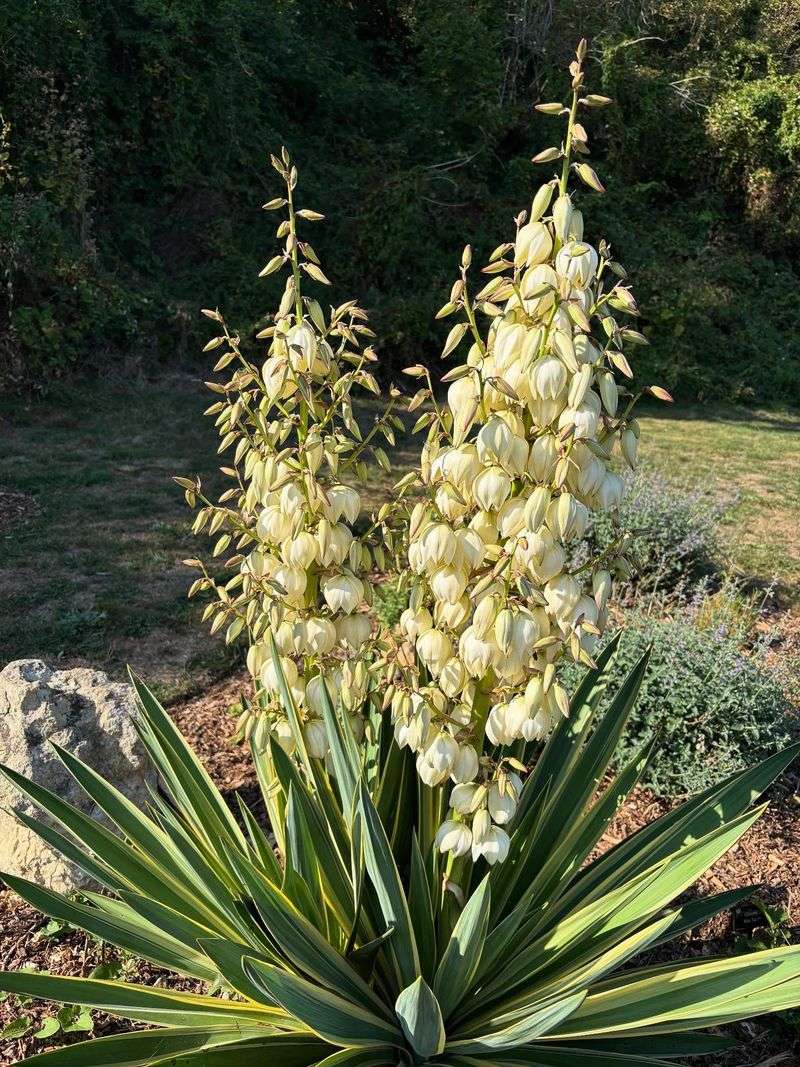
Bold, architectural, and unmistakably dramatic, Yucca makes a statement the moment guests set eyes on your entry path. The long, sword-like leaves create a strong visual anchor that makes even a simple front yard look like it was designed by a professional landscaper.
When the tall flower stalks appear in summer, the effect is even more impressive.
Yucca is one of the toughest low-water plants you can grow in Oregon. It handles hot, dry summers without complaint and actually prefers to be left alone rather than fussed over.
Plant it in full sun with well-drained soil, and it will take care of itself season after season. Overwatering is the one thing to avoid with this plant.
Because of its size and presence, Yucca works best as an accent plant rather than a repeating border. Place one or two at key points along your entry path, such as near the front door or at a corner, to create focal points that draw the eye.
The cream-colored flower spikes can reach several feet tall and are genuinely striking. For Oregon homeowners who want big impact with minimal maintenance, Yucca delivers every single time.
8. Rock Rose (Cistus)
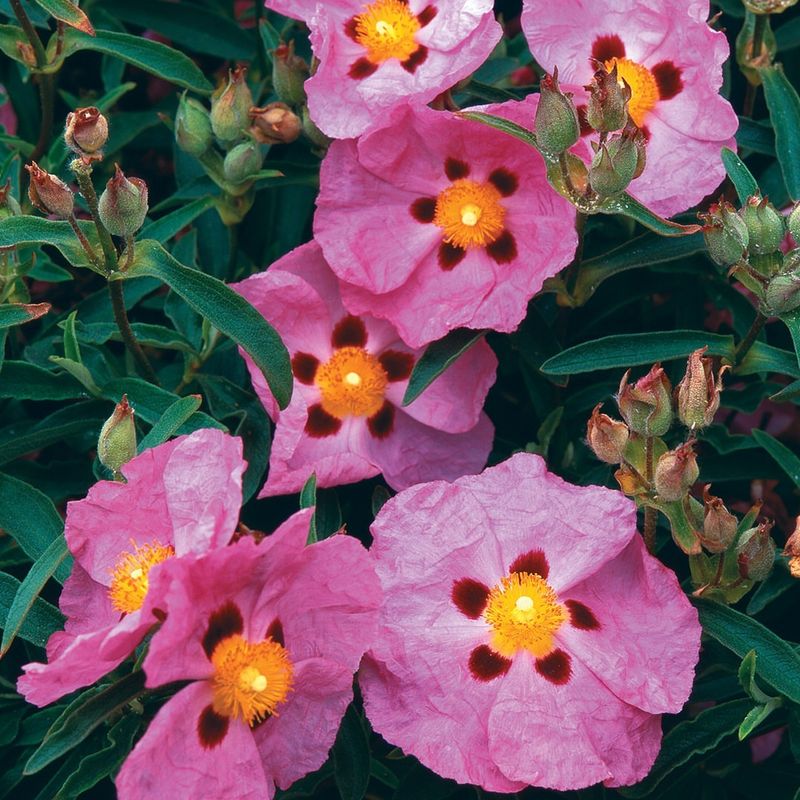
The papery, five-petaled flowers in shades of pink, white, or magenta appear in late spring and early summer, covering the plant so fully that the leaves almost disappear beneath them. It looks like something you would pay a landscape designer a lot of money to include.
Cistus is built for dry conditions. It actually performs better in lean, well-drained soil than in rich, moist garden beds.
In Oregon, the warm, dry summers suit it perfectly, and once it settles in, it rarely needs supplemental watering. This makes it an excellent choice for water-wise front yard designs across the state.
The plants stay evergreen, so your entry path looks tidy even in winter when many other plants go dormant. Rock Rose grows into a rounded, bushy shape that softens the edges of paths and walkways naturally.
Avoid heavy pruning since it does not regenerate well from old wood. Instead, give it a light trim after flowering to keep it compact.
Pair it with lavender or Santolina for a cohesive, drought-tolerant entry path planting that looks effortlessly stylish in any Oregon front yard.
9. Sedum
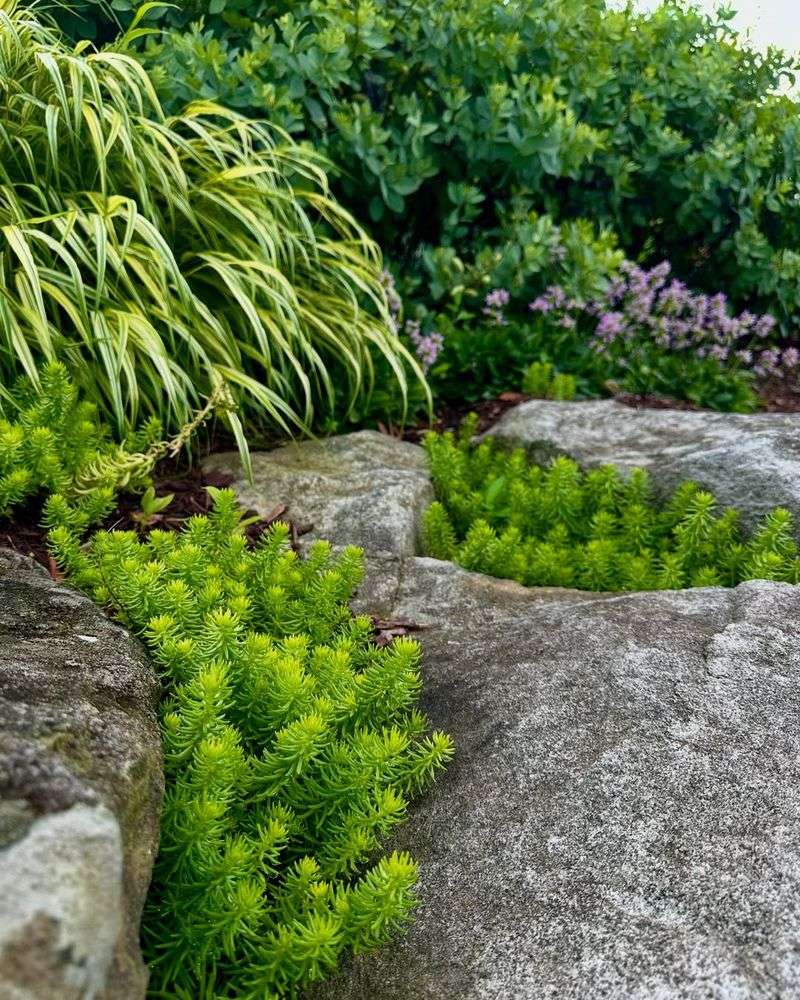
Sedum might just be the most versatile low-water plant on this list. It comes in hundreds of varieties, from low ground-hugging carpets to upright clumps that bloom with clusters of star-shaped flowers in late summer.
For an Oregon entry path, Sedum fills gaps between pavers, edges borders, and adds color in ways that look intentional and polished.
The fleshy leaves store water, which is how Sedum survives dry spells with ease. Oregon summers can get quite dry, and Sedum handles that stress without skipping a beat.
It thrives in full sun and poor, well-drained soil, making it a natural fit for gravel gardens and rocky path edges. Overwatering is its biggest enemy, so hold back on the hose.
The late-season blooms in pink, red, or yellow attract butterflies and give the garden a warm, end-of-summer glow. Even after the flowers fade, the seed heads remain attractive through fall and into winter.
Plant low-growing Sedum between stepping stones for a lush, carpet-like effect, or use taller varieties as mid-border plants. Either way, Sedum brings a layered, textured look to an Oregon front path that feels lush without requiring constant attention or irrigation.
10. Cordyline
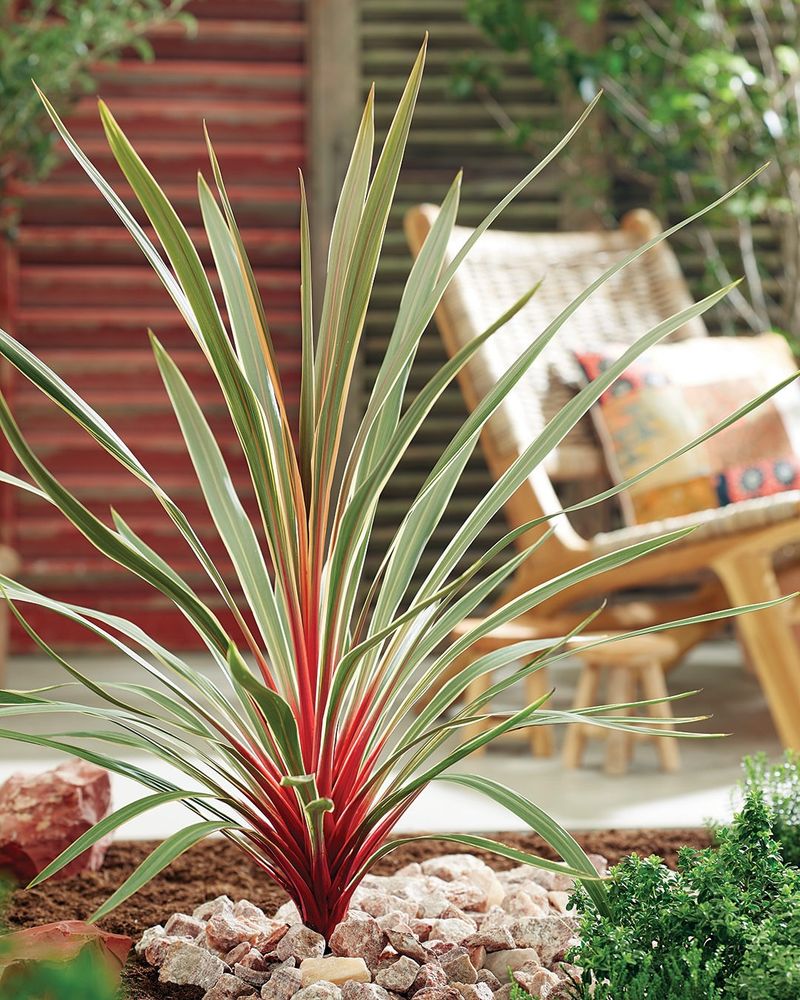
Its long, arching leaves come in deep purple, green, bronze, or striped varieties, and the plant has a tropical, sculptural quality that looks genuinely expensive. Placed along an Oregon entry path, it creates a dramatic focal point that sets the tone for the entire front yard.
While it looks exotic, Cordyline is surprisingly tough. It handles Oregon’s mild winters reasonably well, especially in coastal and valley areas of the state.
During dry summers, it needs only occasional deep watering once established. It prefers full sun to partial shade and well-drained soil, conditions that are easy to provide in most Oregon front yards.
The contrast between Cordyline’s bold, upright form and softer plants like lavender or blue fescue creates a layered, professional look. Use it as an anchor plant at the start of your entry path or near the front door where its drama can be fully appreciated.
The leaves move gracefully in the breeze, adding life and energy to the space. For Oregon homeowners who want a front path that looks like a designer created it, Cordyline is one of the best choices available.