The Outdoor Lighting Habit That’s Keeping Luna Moths Away From Ohio Yards
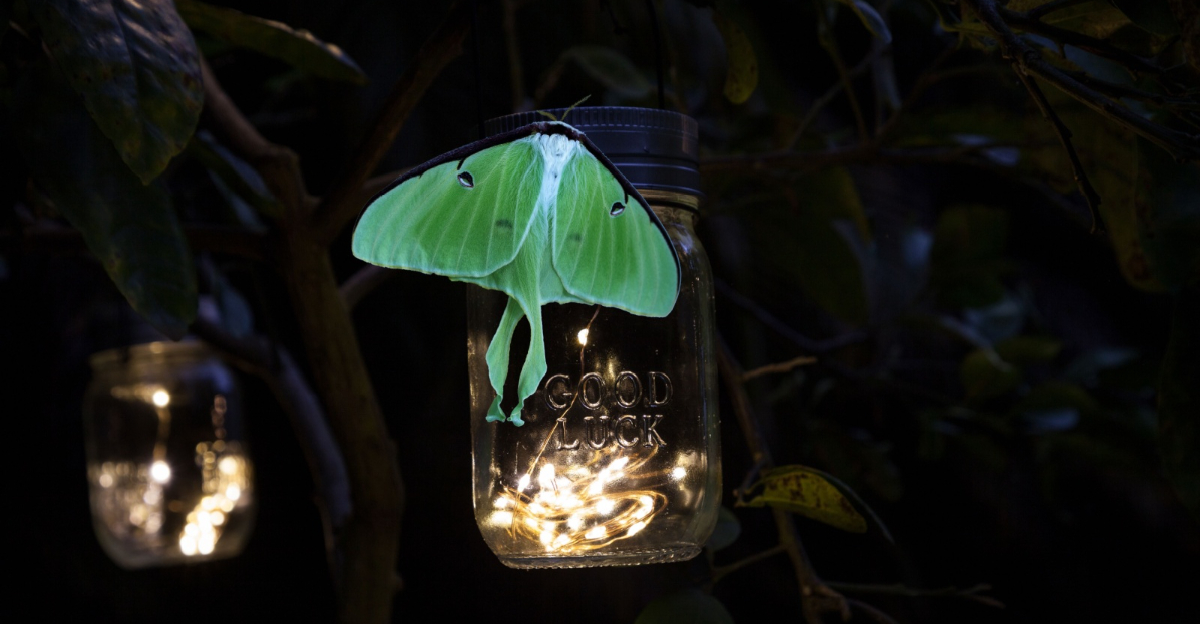
There are not many wildlife moments that stop you in your tracks quite like spotting a luna moth on a warm Ohio summer night.
Those pale green wings, the elegant trailing tails, the whole ethereal vibe: it genuinely feels like something out of a nature documentary happening right in your own backyard.
Absolutely worth staying up for. But here’s something a lot of Ohio homeowners don’t realize: a very common outdoor lighting habit could be making those sightings much rarer than they used to be.
Leaving bright lights on all night pulls night-flying moths off course, disrupts their natural behavior, and quietly makes even the most thoughtfully planted yard feel like a no-go zone for luna moths and other beneficial nighttime insects.
The fix is simpler than you might expect, and it starts with your porch light.
1. Bright Lights Can Disrupt Night-Flying Moths
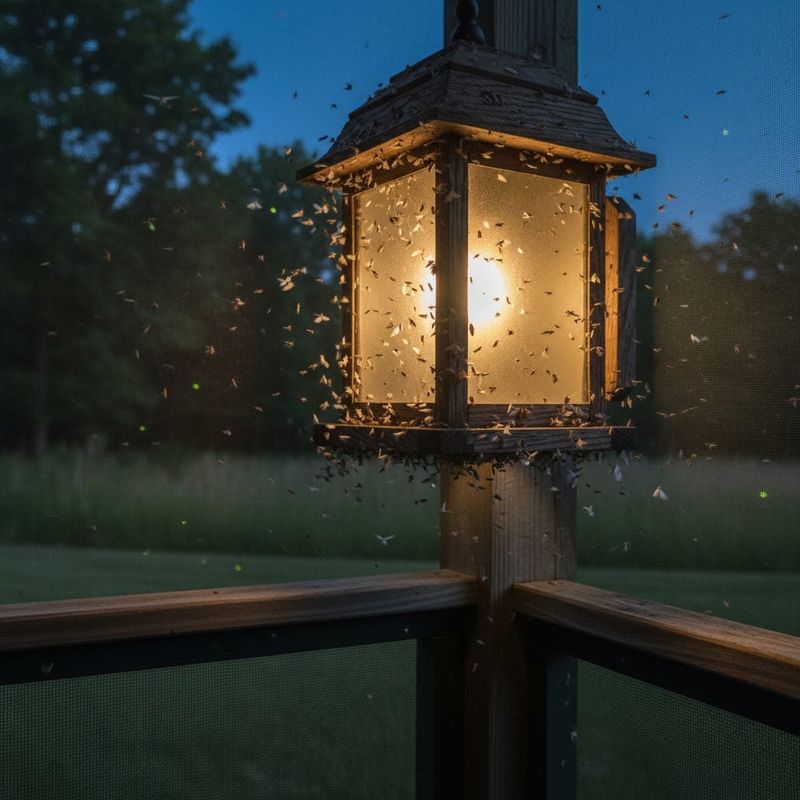
Summer evenings in Ohio have a kind of quiet magic to them, especially when the fireflies come out and the air cools down after sunset.
But that same darkness that makes a summer night feel alive is also what luna moths and other night-flying insects depend on to navigate, find mates, and move through the landscape.
Artificial light at night can interfere with those natural patterns in ways that are easy to overlook.
Moths use light cues from the moon and stars to orient themselves as they travel. When a bright outdoor fixture floods the yard, it can confuse that navigation system and cause moths to circle the light source rather than continue on their natural path.
Over time, repeated exposure to artificial light may reduce the number of night-active insects visiting a yard.
Ohio homeowners who enjoy watching nighttime wildlife may not realize that their outdoor lighting setup plays a role in what shows up after dark.
Reducing unnecessary brightness around porches, patios, and garden beds can help create a calmer environment for luna moths and the many other fascinating insects that share Ohio nights.
2. Porch Lights May Pull Moths Off Course
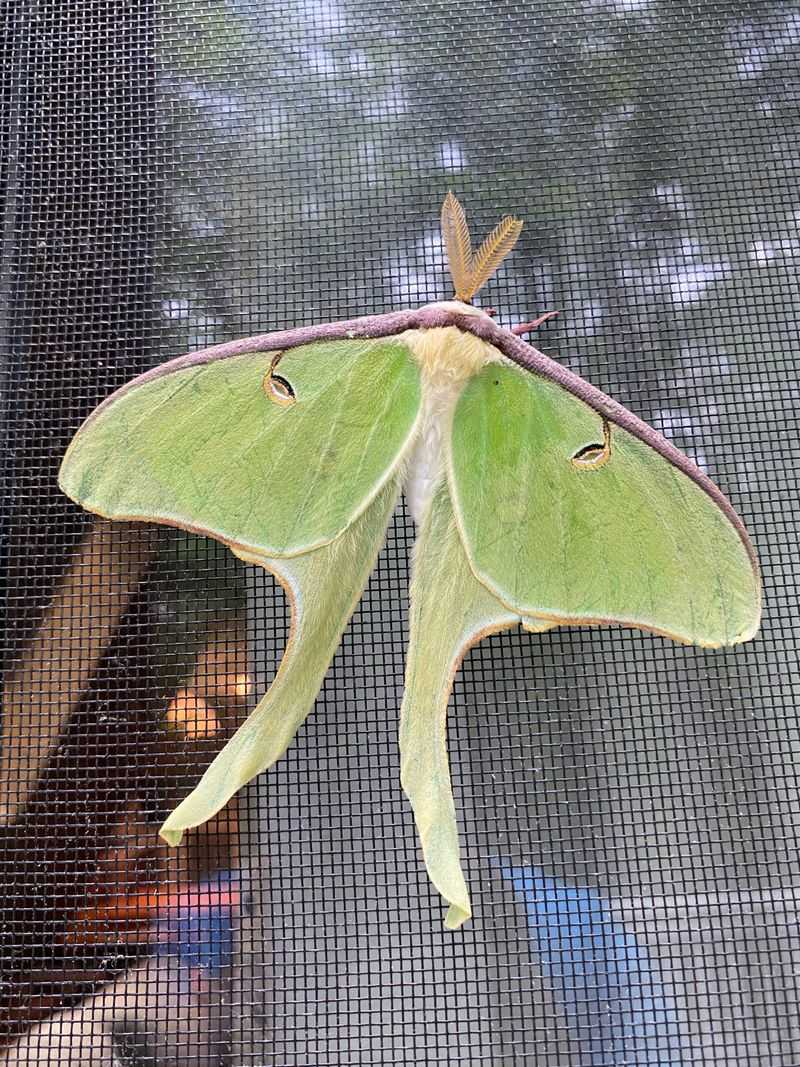
Walking out onto a porch on a humid Ohio evening and finding moths gathered around the light is a familiar experience for a lot of homeowners. It can even feel charming at first glance.
But that clustering behavior is actually a sign that artificial light is pulling moths away from where they were headed, interrupting the routes they use to find mates and locate host trees.
Luna moths are large, slow-moving insects that rely on low-light conditions to behave naturally. A bright porch fixture can act like a beacon that draws them in and holds their attention longer than is good for them.
Rather than moving through the yard and doing what moths do on summer nights, they end up stuck circling a light source.
Switching a porch light to a motion-activated setting or using a warmer, lower-output bulb can reduce how much the fixture interferes with nighttime moth activity.
Even small adjustments to how long and how brightly a porch light stays on can make a noticeable difference in how welcoming the surrounding yard feels to luna moths passing through Ohio neighborhoods on warm summer nights.
Your Ohio Garden Changes Every Week. Your Plan Should Too.
Gardening in Ohio changes quickly throughout the season. Every Friday you’ll receive a simple weekly plan showing exactly what to plant, prune, fertilize, harvest, and protect so you never miss the right timing.
3. Cool White Bulbs Can Be More Disruptive
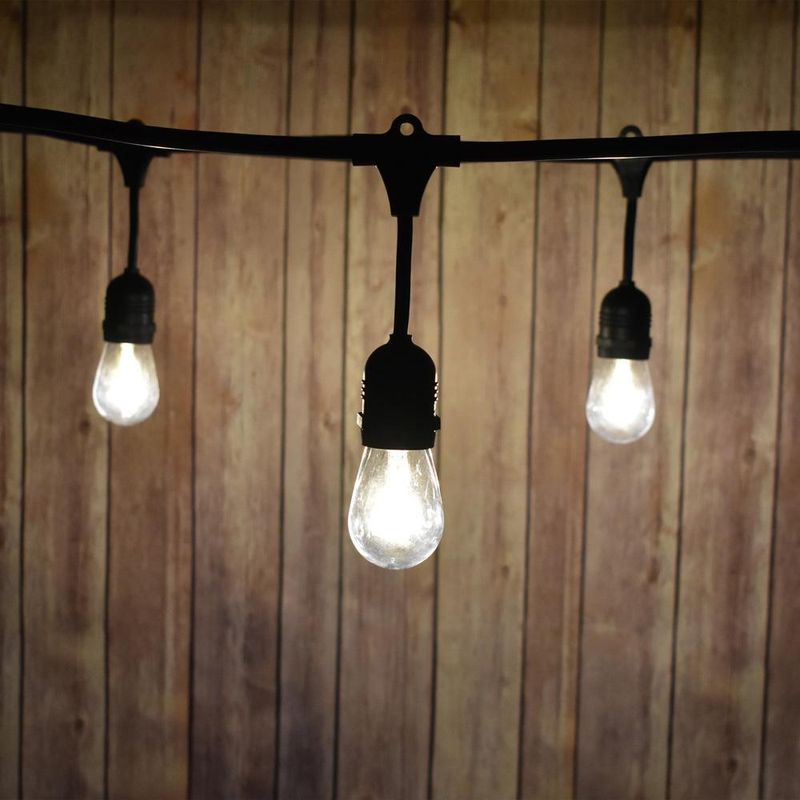
Not all outdoor bulbs behave the same way when it comes to nighttime wildlife. Cool white LED bulbs, which have become very common in Ohio neighborhoods because of their brightness and energy efficiency, tend to emit more blue and white light wavelengths.
Those wavelengths are particularly noticeable to night-flying insects like luna moths.
Research on light and insect behavior has shown that shorter wavelengths of light, like those found in cool white and daylight-colored bulbs, attract more insects than longer, warmer wavelengths do.
For a homeowner trying to make a yard more moth-friendly, the color temperature of outdoor bulbs is one of the easiest things to check and adjust.
Warm white or amber LED bulbs with a color temperature around 2700 Kelvin or lower can reduce the disruption that outdoor lighting causes to nighttime insects.
They still provide usable light for porches, steps, and garden paths, but they do so in a way that is less likely to pull luna moths and other night-active species off their natural routes.
Swapping out cool white bulbs is a low-effort change that can quietly improve the nighttime environment in an Ohio yard without sacrificing outdoor comfort.
4. All-Night Lighting Shrinks Dark Resting Time
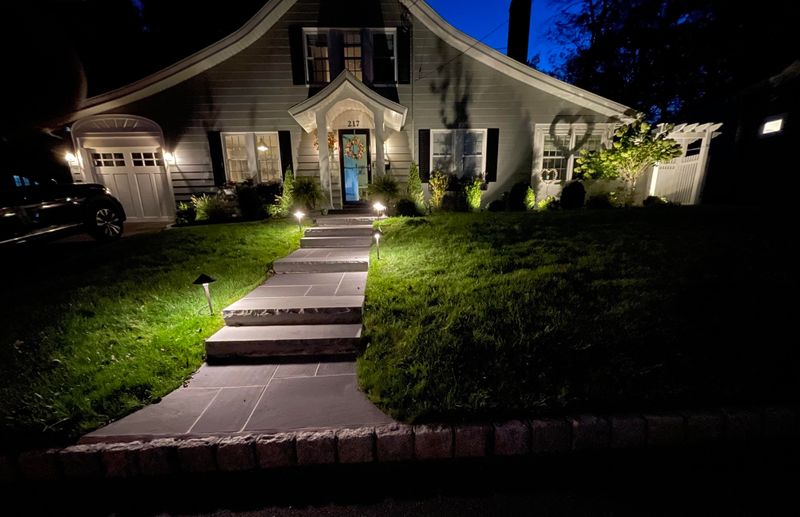
Keeping outdoor lights on from dusk until dawn is one of the most common habits in Ohio residential neighborhoods, and it is also one of the most disruptive to nighttime wildlife.
Luna moths and many other night-active insects are not just affected by where light falls but also by how many hours of true darkness are available to them each night.
Natural darkness serves as a biological cue for moths. It signals when it is safe to emerge, when to search for mates, and when to rest.
An Ohio yard that stays brightly lit from evening through early morning offers very little of that cue.
Moths that might otherwise visit the yard may avoid the area entirely, or they may spend time circling lights rather than engaging in the behaviors that keep their populations healthy.
Putting outdoor fixtures on timers is one practical way to give a yard more hours of natural darkness without giving up evening lighting entirely.
Setting porch lights and patio fixtures to turn off by midnight or a few hours after sunset can restore a meaningful stretch of darkness.
That shift, even a few hours of reduced light, can make an Ohio yard feel more like a welcoming stop for luna moths on summer nights.
5. Landscape Uplights Can Affect Garden Habitat
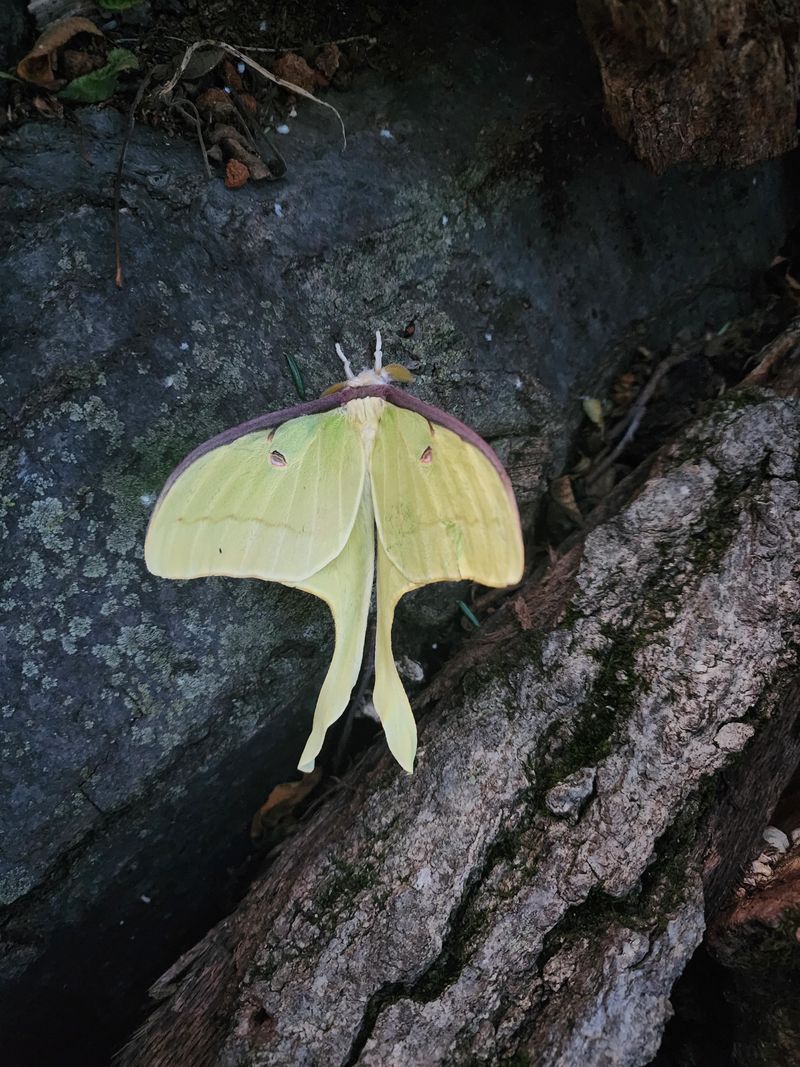
Landscape uplights have become a popular way to add drama and curb appeal to Ohio yards after dark. Pointing fixtures up into trees or along garden borders can make a yard look beautiful from the street.
But those upward-facing beams can also flood the exact areas where luna moths and other nighttime insects are most likely to rest, feed, or search for mates.
Luna moths spend time in and around the canopy of host trees like black walnut, sweetgum, and wild cherry, which are native species found across Ohio.
When uplights shine directly into that canopy, they can disturb the resting and mating behavior of moths that depend on the cover of darkness to function normally.
Even a single uplight aimed at a walnut or cherry tree can reduce how useful that tree is as habitat after dark.
Redirecting landscape lights so they shine downward rather than upward, or placing them away from host trees and native plantings, can help preserve the darker zones that luna moths prefer.
Keeping garden borders and the areas beneath native trees as dim as possible during the night hours gives those spaces a better chance of supporting the nighttime wildlife that makes an Ohio summer yard feel truly alive.
6. Motion Sensors Reduce Unneeded Light
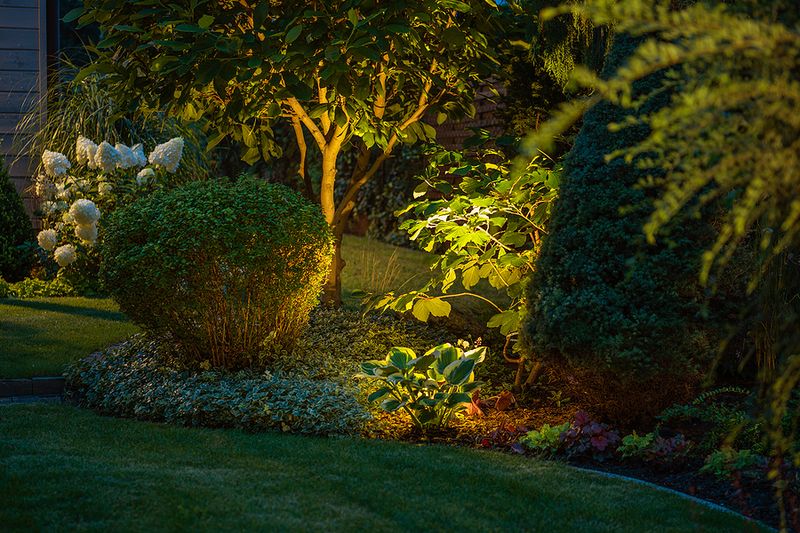
One of the simplest upgrades an Ohio homeowner can make for nighttime wildlife is swapping standard always-on outdoor fixtures for motion-activated ones.
Motion sensors allow outdoor lights to stay off most of the time and only switch on when someone actually needs them, which dramatically reduces the total hours of artificial light hitting the yard each night.
For luna moths and other night-active insects, those quiet hours when the motion sensor is not triggered can be genuinely useful.
A yard that stays dark for most of the night, only flickering on briefly when a person or pet moves through, gives moths more time and space to behave naturally.
The reduction in constant light exposure can make a meaningful difference in how welcoming a yard feels to nighttime wildlife over the course of a summer.
Motion sensors work well on porch fixtures, garage lights, side-yard paths, and back patio areas where lights are mostly needed for safety rather than ambiance.
Pairing motion sensors with warm-toned bulbs gives even more benefit, since the brief bursts of light that do occur will be less disruptive to night-flying moths.
It is a practical, low-cost adjustment that fits easily into a standard Ohio residential outdoor lighting setup.
7. Warm Bulbs Are A Better Night Choice
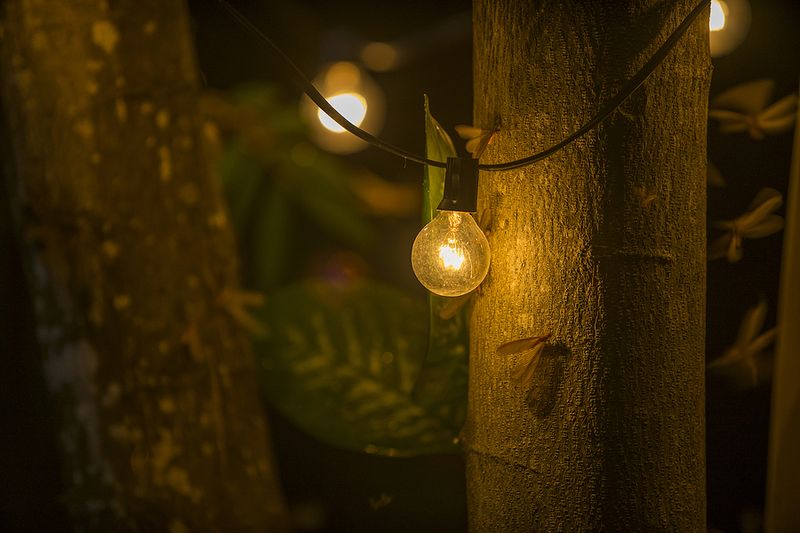
Amber and warm white bulbs have been recommended by wildlife and lighting researchers as a more insect-friendly option for residential outdoor use. The reason comes down to wavelength.
Warm bulbs produce light at the longer end of the visible spectrum, which is less attractive to night-flying insects than the cooler, bluer light produced by standard white LED or fluorescent fixtures.
For an Ohio yard where luna moths might pass through during summer nights, choosing warm bulbs for porch fixtures, path lights, and patio string lights can reduce the pull those fixtures have on insects.
Moths may still notice the light, but they are less likely to be strongly drawn toward it and stuck circling the source for extended periods.
Warm bulbs are widely available and can often be swapped into existing fixtures without any additional equipment. Looking for bulbs labeled 2200K to 2700K on the packaging is a good starting point for finding options that produce a softer, amber-toned glow.
These bulbs work well for porches, garden borders, and backyard seating areas where a warm, relaxed atmosphere already fits the mood.
Choosing them is one of the more straightforward ways to make an Ohio yard a little friendlier to luna moths and other nighttime visitors.
8. Shielded Fixtures Keep Light Pointed Down
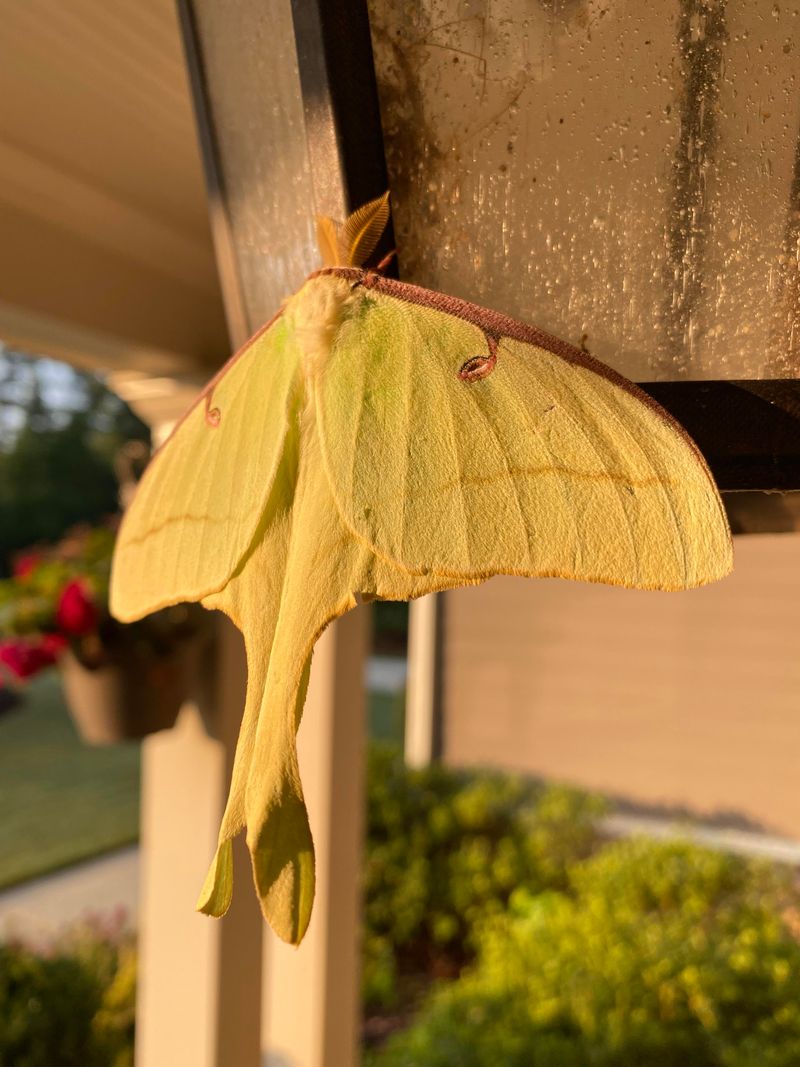
The direction that outdoor light travels matters just as much as how bright or warm it is.
Fixtures that send light upward and outward into the sky and surrounding landscape can create a wide zone of artificial brightness that affects far more of a yard than the homeowner might intend.
Shielded fixtures, which direct light downward toward the ground, help contain that spread.
Full-cutoff or shielded outdoor fixtures are designed so the bulb is recessed inside the housing and the light beam points downward rather than radiating in all directions.
For an Ohio yard with garden paths, foundation plantings, or a back patio, these fixtures can provide the same usable light for people while keeping the surrounding landscape, tree canopy, and sky noticeably darker.
Darker sky and canopy conditions are more comfortable for luna moths and other night-active wildlife that depend on low-light environments.
Shielded fixtures are available in a wide range of styles that work for porch ceilings, post-mounted path lights, and wall-mounted garden fixtures.
Replacing unshielded or globe-style fixtures with downward-facing options is a practical step that benefits both the nighttime environment and the overall light quality in an Ohio yard.
It reduces glare for people while also being gentler on the moths passing through after dark.
9. Darker Yards Support More Night Activity
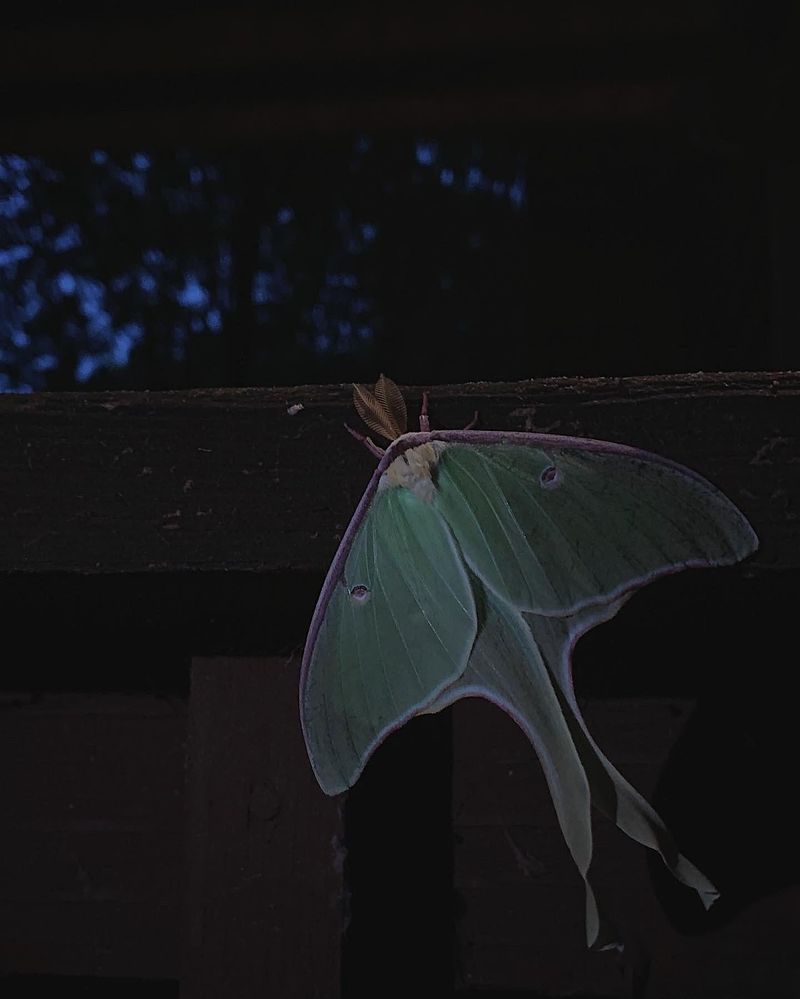
Yards that hold onto their darkness after sunset tend to feel more alive in a quiet, subtle way.
Native plants settle into their nighttime rhythms, the air fills with the sounds of crickets and katydids, and on the right summer nights in Ohio, a luna moth might drift through the garden on its way to a nearby host tree.
That kind of activity depends on having real darkness available.
Reducing outdoor lighting does not mean leaving a yard completely dark or giving up the ability to use outdoor spaces in the evening. It means being thoughtful about which lights stay on, for how long, and at what brightness.
Turning off decorative landscape lights after a certain hour, dimming string lights on the patio, and letting the back corners of the yard stay naturally dark can all contribute to a more moth-friendly environment.
Lighting is one part of a larger picture for supporting luna moths in Ohio. Host trees, reduced pesticide use, and preserved leaf litter also play important roles.
But lighting is often the easiest variable to adjust without major landscaping changes.
A yard that stays reasonably dark through the night gives luna moths and other nighttime insects a better reason to pass through, rest, and return to Ohio gardens summer after summer.