The Oversized Golden Stranger Turning Up In Kentucky Webs Looks Worse Than Its Bite
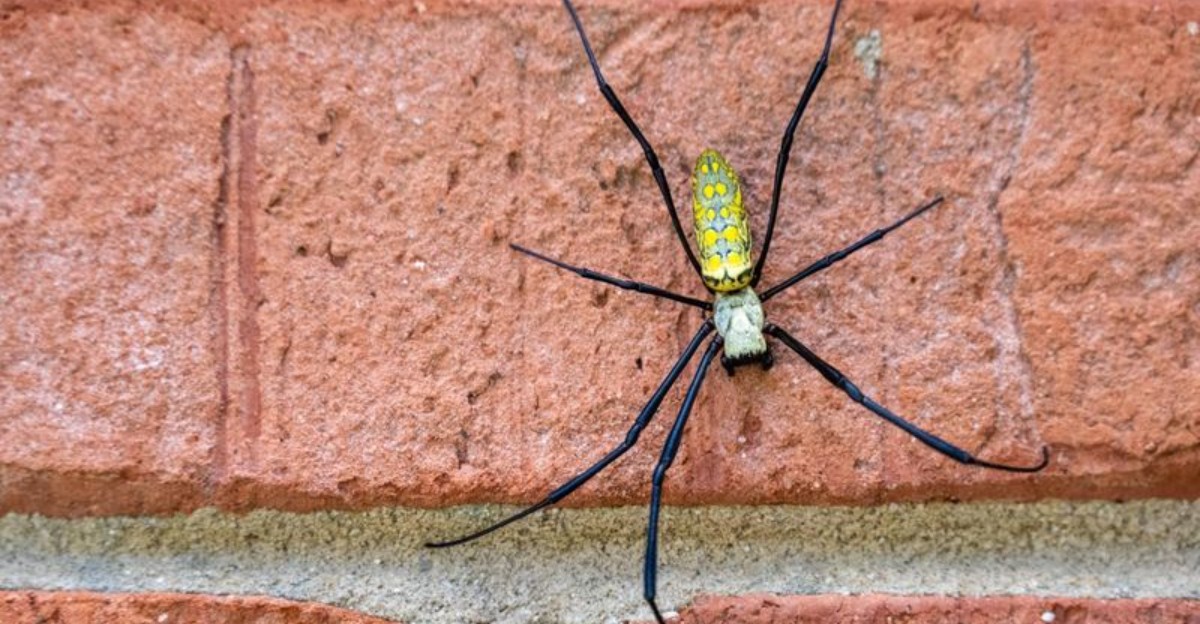
Some of the webs showing up near porches lately stretch up to 10 feet wide. In the right sunlight, the silk shines gold, almost like someone strung jewelry between the trees.
The builder is just as flashy. Picture-perfect yellow and blue-black stripes, long banded legs, and a leg span that can match the width of your palm.
I’ll admit my first reaction was not calm or scientific. I backed up, grabbed my phone, and texted a friend in all caps.
This eye-catching newcomer traveled a long way to reach Kentucky gardens, and it has settled in. So should you panic, grab a spray can, or simply watch from a polite distance? The answer surprised me more than the spider did.
That Giant Yellow Spider In The Porch Web Has A Far-Off Home
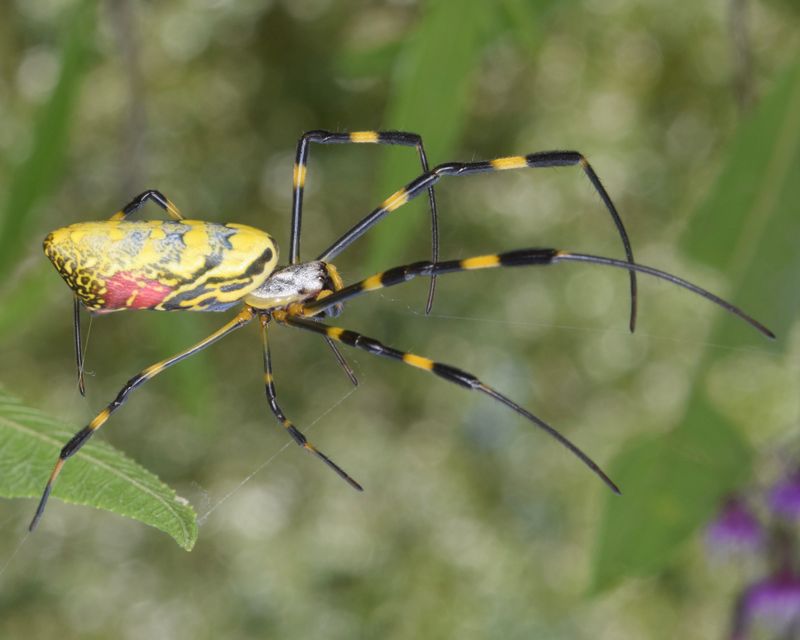
Spot a huge yellow-and-black spider hanging in a shimmering web near your porch light, and you have probably met a Joro spider. Its scientific name is Trichonephila clavata, and it originally comes from East Asia, including Japan, China, Korea, and Taiwan.
Nobody planted it here on purpose. Scientists first documented it in Georgia in 2014, and it most likely hitched a ride in shipping goods. Since then, it has spread across several southeastern states, and Kentucky now has confirmed sightings.
Females are the ones that grab attention. Their bodies can reach about 1 inch long, and with legs stretched out, they can span close to 4 inches. They wear bright yellow and blue-black stripes on the back, and there is a red patch underneath.
Males look like a whole different creature. They are much smaller and duller in color, so most folks walk right past them.
Late summer and fall are when adults become easiest to notice. If you suddenly see them everywhere around that time, it is mostly because they have grown big enough to catch your eye, not because something strange is happening in your yard.
Those Long Striped Legs Belong To A Surprisingly Shy Spider
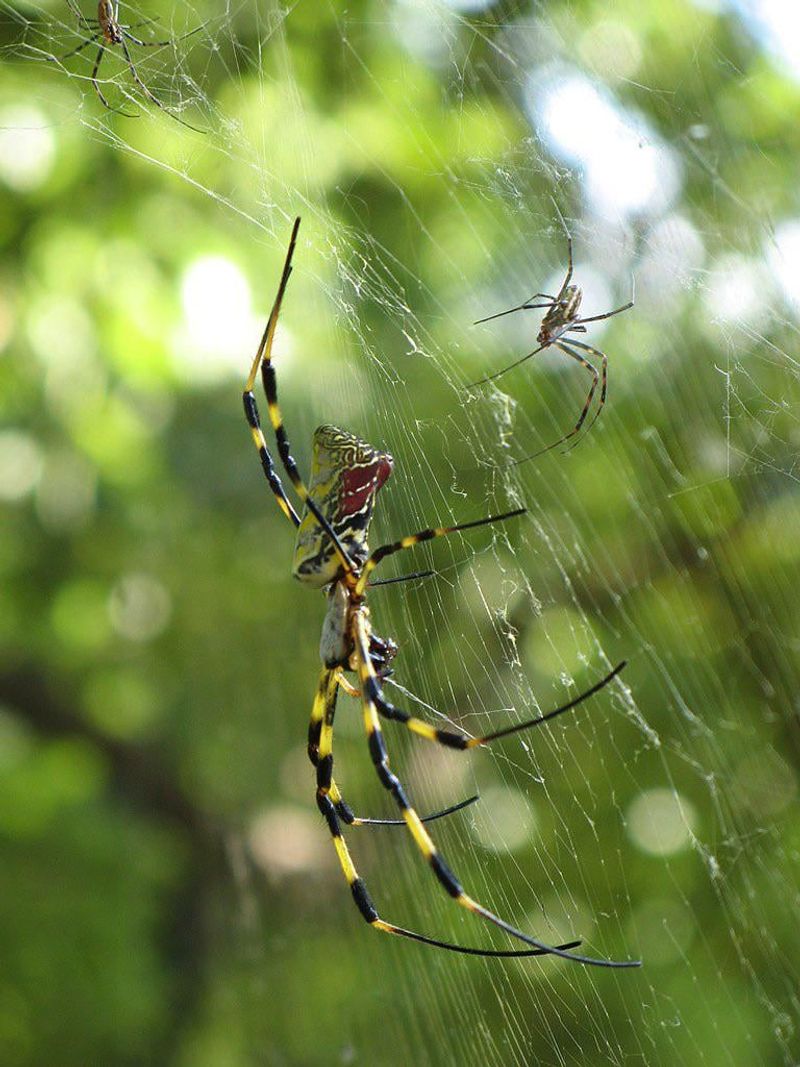
Truth is, the scariest thing about a Joro spider is the first glance. Experts describe these spiders as harmless to people and pets, and their bite risk is rated as mild.
They are timid by nature. When disturbed, a Joro is far more likely to freeze or scoot away than to come after you. Bites are rare and usually happen only when someone grabs or squeezes the spider.
Their fangs are also pretty small. Many sources note they often cannot reliably break through human skin at all.
If a bite does happen, expect something close to a bee sting. You might feel some local pain, numbness, swelling, or itching, and it typically fades on its own. Wash the spot with soap and water, and use a cool cloth if it feels sore.
Allergic reactions are possible with almost any bite or sting, so anyone with a history of strong reactions to insect stings should watch for unusual symptoms and call a doctor if needed.
The venom is built for insects. To us, it simply is not a medical concern, which makes this flashy visitor much easier to live with.
A Golden Orb Web Stretching Between Trees Is A Major Clue
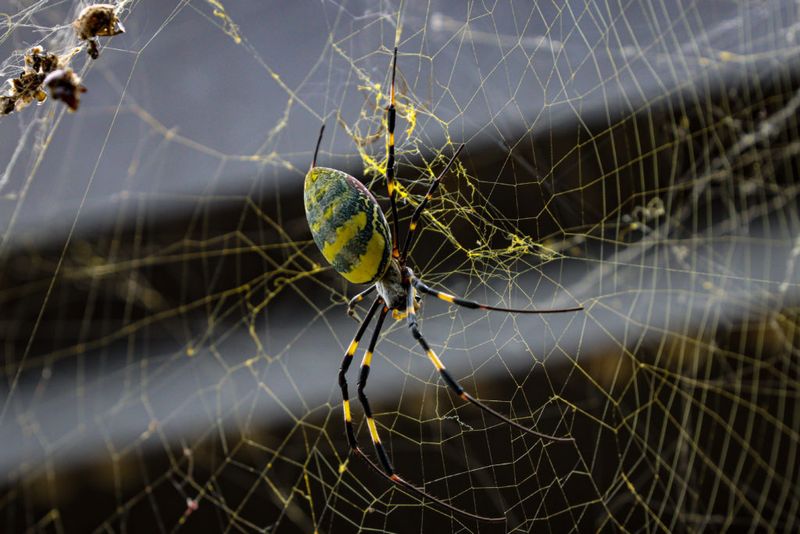
Walk outside on a sunny September morning, and you might find silk stretched across a gap you could practically drive a riding mower through. Joro webs can reach about 10 feet across, which makes them hard to miss.
The silk itself has a yellow tint. In bright sun, it glows golden, and that color gives the spider away even before you see it.
These spiders like open gaps between trees, shrubs, fences, and buildings. They often set up near porches, decks, and garages, especially where outdoor lights draw moths and other flying insects at night.
Look closely, and the web often has a layered, three-dimensional look. Joro webs can include extra strands in front of and behind the main orb, a bit like scaffolding.
In Kentucky, they settle into hardwood and conifer forests as well as yards and neighborhoods. So whether you live near a wooded hollow or on a quiet suburban street, a golden web may appear.
A quick tip from my own yard: walk with a stick held out in front of you on early morning garden strolls. It saves you from a silky surprise across the face.
Your Native Black And Yellow Garden Spider Is A Look-Alike
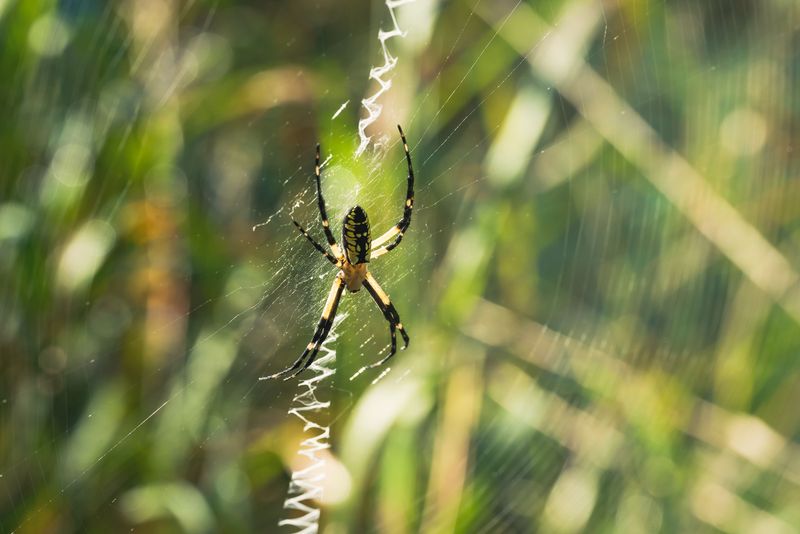
Plenty of gardeners report a Joro when they have actually found an old friend. The black and yellow garden spider, Argiope aurantia, is a native orb weaver that has lived in Kentucky gardens for ages.
Some people call it the golden argiope or writing spider. It can reach about 3 inches from leg tip to leg tip and shows bold black and yellow or silver markings.
The easiest way to tell them apart is the web. Garden spiders often weave a thick zigzag band of silk called a stabilimentum right through the center. Joro webs usually lack that zigzag and have that golden shimmer instead.
Body shape helps too. The native garden spider has a plumper, more oval abdomen with black and yellow patches, while the Joro looks longer and striped, with thin banded legs.
Location gives hints as well. Garden spiders love tall flowers and vegetable beds, often sitting low in sunny spots.
Both species bite about as hard as a bee stings, and only when handled. Snap a photo before you decide what you have, and you may discover a native helper has been guarding your tomatoes all season.
Those Silky Bug Traps Catch Plenty Of Garden Pests
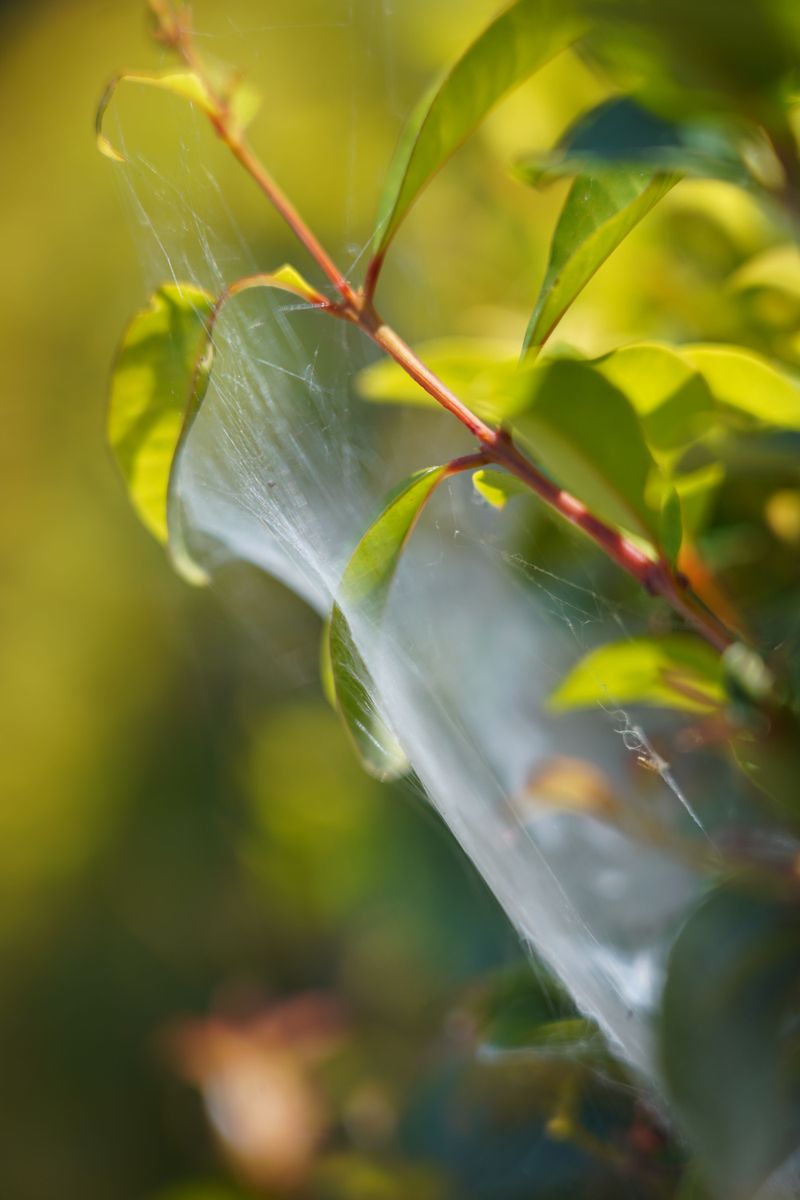
Count the bugs stuck in one big orb web, and you might be shocked. Orb weavers like the Joro catch flies, mosquitoes, and other small insects that bug gardeners all summer long.
Every night those porch lights pull in moths and gnats. A Joro parked nearby turns that buzzing crowd into dinner.
Not going to lie, I used to sweep away every web on sight. Then I noticed fewer mosquitoes around my back steps during the weeks a large orb weaver stayed put.
Spiders also become food for other wildlife. Birds and some predators eat them, which ties these webs into the bigger backyard food chain.
Scientists are still studying how Joros affect native species over the long run. Some researchers wonder whether they compete with native orb weavers, and that question is not settled yet.
For now, the main point for gardeners is simple. A web near your plants is not a sign of trouble with your crops, and the spider is not chewing on your leaves. It is working the night shift, snagging insects that you probably did not want around anyway.
A Simple Broom Handles A Web In The Wrong Spot
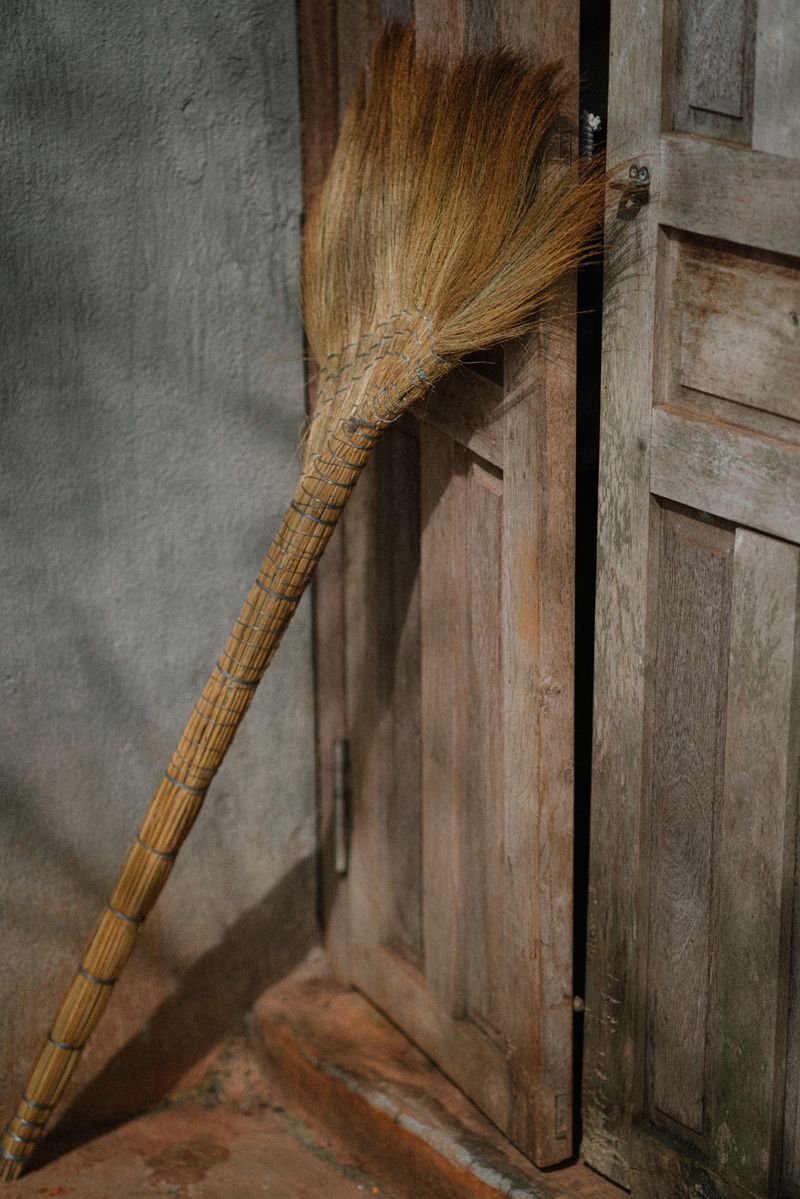
Sometimes a web lands right across the path to your mailbox, and nobody wants a face full of silk. Experts suggest a calm fix: just knock the web down with a broom or a long stick.
This approach moves the spider along without harming it. Most of the time, the spider simply drops off or scurries to a nearby branch.
Fair warning, it may rebuild. Joros sometimes spin a new web in the same location, especially if bugs keep gathering there.
To make a spot less inviting, cut back on the insects that attract them. Switch porch bulbs to yellow or warm-toned lights, or turn off outdoor lights when you do not need them.
You can also trim shrubs back from doorways so there are fewer handy anchor points. A gentle spray of water from the hose can clear webs from high corners too.
Wear gloves if you plan to handle branches covered in silk. Bites are unlikely, but it is smart to avoid pressing a spider against your skin by accident.
Keep the broom by the back door during fall, and you will be ready for any surprise doorway decorations.
Skip The Bug Spray Around Those Big Orb Weavers
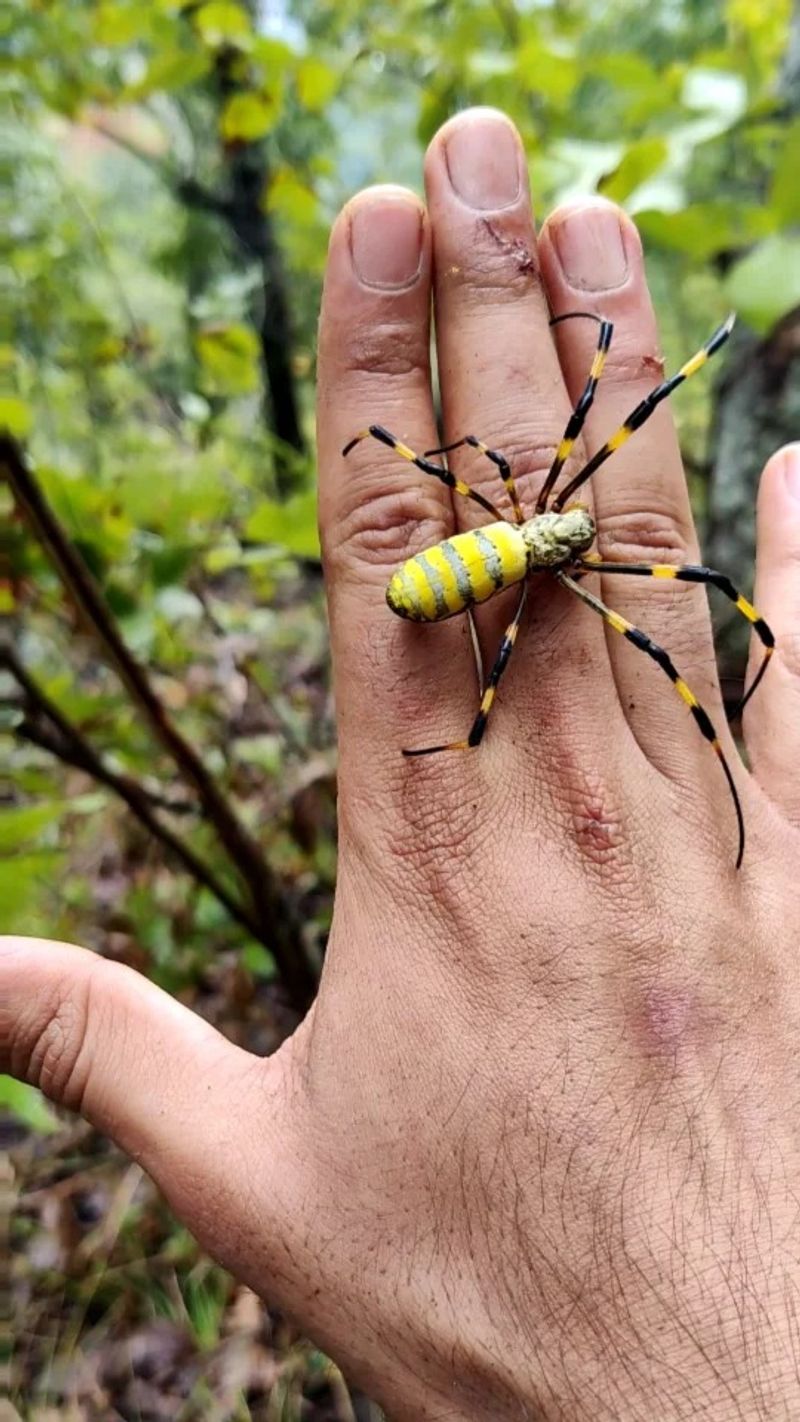
Reaching for a can of pesticide feels natural when something looks this alarming. Experts recommend against it, since these spiders pose no real threat to people and play a role in the backyard ecosystem.
Broad pesticide sprays also hit the good guys. Pollinators like bees and butterflies, along with ladybugs and native spiders, can get caught in the crossfire.
Spraying is often a losing battle anyway. More spiders can move in from nearby trees and woods, so you may end up spending money with little lasting change.
I get it, a yard full of giant webs can feel creepy. Still, mechanical removal with a broom does the job without adding chemicals to your garden beds or vegetable patch.
Consider the timing too. Adult Joros show up strongest in late summer and fall, and cold weather in winter brings an end to the adults for the season. Eggs wait out the winter in silk sacs.
Patience often solves the problem on its own. By the time frost settles over Kentucky, those golden webs will mostly be gone until next year, and your garden will have stayed free of unnecessary pesticides.
Report Your Joro Spider Sighting And Help Track The Spread
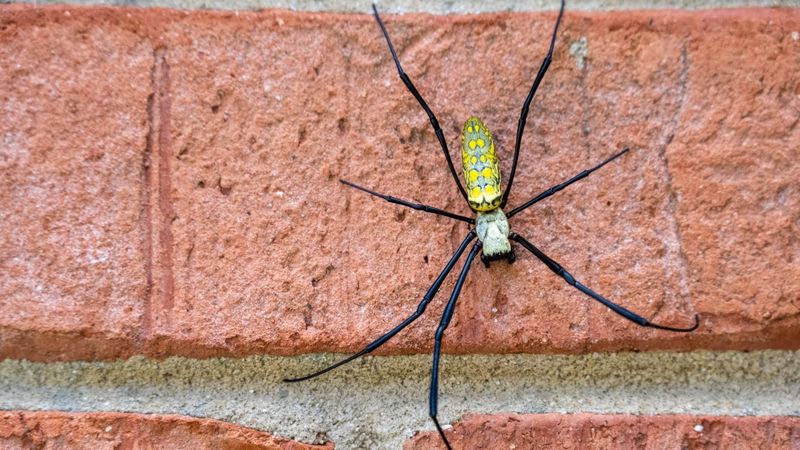
Grab your phone the next time you spot one of these golden giants. A clear photo helps you confirm what you found, and it can help researchers too.
Groups like EDDMapS collect reports of non-native species, including the Joro spider. Each sighting adds a dot to the map that shows where the spider is moving across Kentucky and nearby states.
The University of Kentucky entomology program also shares identification tips. Their resources can help you tell a Joro apart from a native garden spider before you send anything in.
For the best photo, capture the top of the spider, the web, and something for scale, like a hand held safely away. Note the date and location as well.
Kids love this kind of project. Turn it into a backyard science hunt, and let them count webs or sketch the stripes from a safe distance.
Once you know what you are looking at, the fear fades fast. A big, colorful spider in a glowing web becomes less of a horror movie moment and more of a fall curiosity worth sharing with neighbors who might be just as startled as you were.