The Pennsylvania Native Plants That Create The Most Dramatic Maximalist Garden Displays In Summer
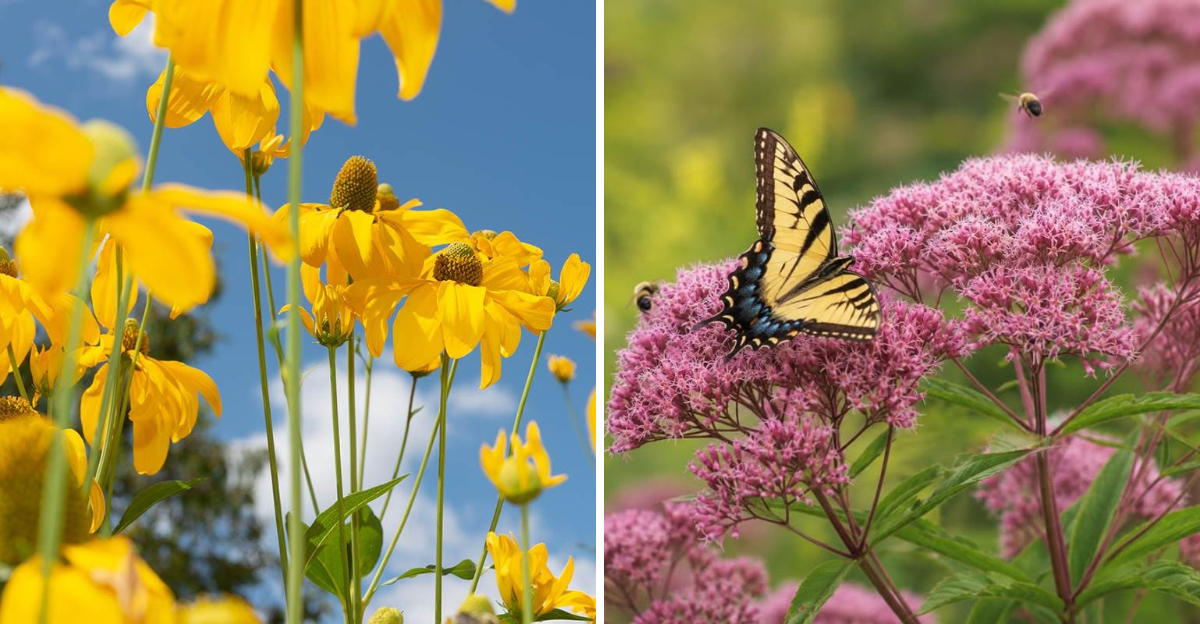
More is more, and in a maximalist Pennsylvania garden, that is absolutely the point. Towering stems, dinner-plate blooms, sweeping color, contrasting textures, layers of foliage stacked from ground level all the way up to eye height and beyond.
This style throws the rulebook about keeping things neat and restrained right out the window, and honestly it is a lot more fun for it. Pennsylvania native plants are surprisingly well matched to this approach.
Many of them grow tall, spread generously, and bloom in saturated hues that hold their own under full summer sun without needing much encouragement.
The key is putting the right plants together with compatible light, moisture, and space needs, then arranging them so each layer actually supports the ones around it.
Get that part right and a Pennsylvania native border in peak summer is genuinely something to see.
1. Tall Ironweed Adds Towering Purple Color
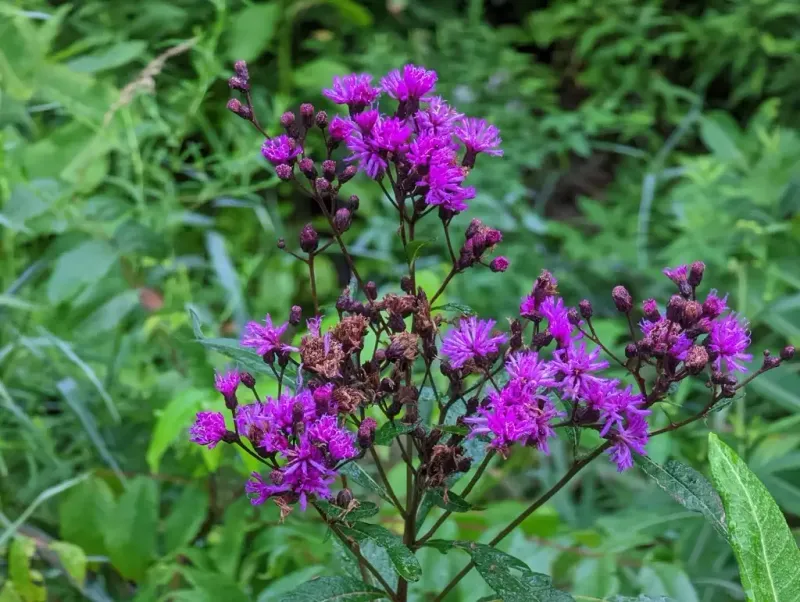
Few native plants announce themselves quite as boldly as tall ironweed, Vernonia gigantea, when its deep purple flower clusters open against a late-summer sky.
The upright stems can reach impressive heights under favorable conditions, though soil richness, moisture availability, and competition with neighboring plants all influence how tall any individual plant grows.
Gardeners who give it room in a sunny, moderately moist border often find it becomes a commanding background anchor.
Its color is one of its strongest design assets. That saturated reddish-purple reads as a strong contrast beside yellow flowers, soft ornamental grasses, or pale pink blooms.
Repeating a group of three or more plants across the back of a wide border creates rhythm without requiring any additional work once the plants are established.
Vernonia altissima may appear as an older botanical synonym in some references, but Vernonia gigantea is the currently accepted name. The plant’s scale means it suits a large naturalistic planting far better than a narrow foundation bed near a house.
Allow adequate space at planting based on mature dimensions, and expect the most dramatic results after the plants have developed strong root systems over two or three growing seasons.
2. Cup Plant Brings Bold Height And Structure
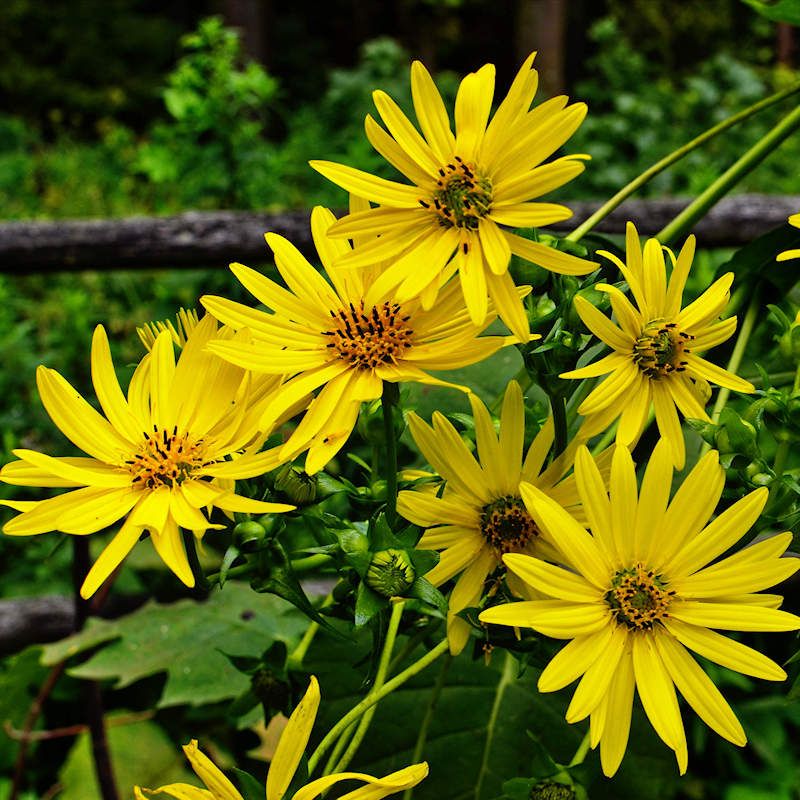
Silphium perfoliatum earns its common name from a clever botanical quirk: opposite leaves fuse around the stem and form a small cup-shaped basin that can collect rainwater.
That structural detail alone makes it one of the most architecturally interesting natives available to Pennsylvania gardeners who want genuine visual substance in a summer border.
The yellow, sunflower-like flowers that appear on tall, sturdy stems add bright color at a scale that reads clearly from a distance.
Under suitable conditions with adequate sun and moisture, cup plant can reach approximately four to eight feet, though individual results vary with soil quality, drainage, and available space.
Its coarse leaf texture contrasts well with finer-leaved companions, and its strong vertical lines add structure that many flowering perennials cannot provide on their own.
One important consideration is spreading behavior. Cup plant can form substantial colonies where conditions suit it, which makes it a rewarding choice in a large meadow-style planting or wide informal border.
Your Pennsylvania Garden Changes Every Week. Your Plan Should Too.
Gardening in Pennsylvania changes quickly throughout the season. Every Friday you’ll receive a simple weekly plan showing exactly what to plant, prune, fertilize, harvest, and protect so you never miss the right timing.
In a compact residential bed, that same spreading tendency may require more frequent management.
Sourcing plants labeled with the correct botanical name helps confirm that the plant matches the intended design rather than a related cultivar with different habits.
3. Great Blue Lobelia Cools Moist Borders
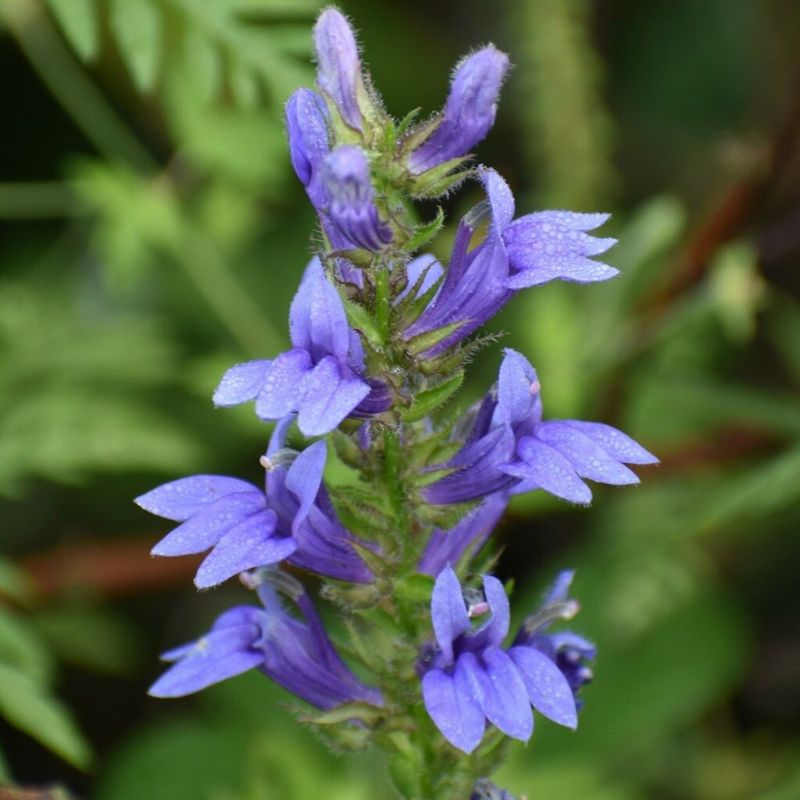
Cool blue is one of the hardest colors to find in a summer native plant palette, which is exactly why Lobelia siphilitica earns a reliable spot in moist Pennsylvania borders.
Its upright flower spikes open in shades of blue to blue-violet during late summer, offering a refreshing visual contrast beside the warm yellows, deep purples, and vivid reds that dominate the season.
The plant reaches a more moderate height than background giants like cup plant or tall ironweed, which makes it useful in the middle or front-middle layer of a layered design.
Suitable settings include rain-garden edges, woodland openings with filtered light, and naturalistic beds that hold consistent moisture. It can handle full sun if the soil stays reliably moist, but persistently hot, dry conditions are not where it performs well.
Grouping several plants together rather than relying on a single isolated specimen creates a more visible sweep of color that registers strongly in a busy border.
The contrast possibilities are genuinely appealing. Blue lobelia beside scarlet cardinal flower, golden black-eyed Susan, or soft pink Joe-Pye weed creates a layered palette that feels rich without being chaotic.
Spacing plants based on their mature size allows air to move freely and gives each plant room to develop its full upright form.
4. Cardinal Flower Creates A Scarlet Vertical Accent
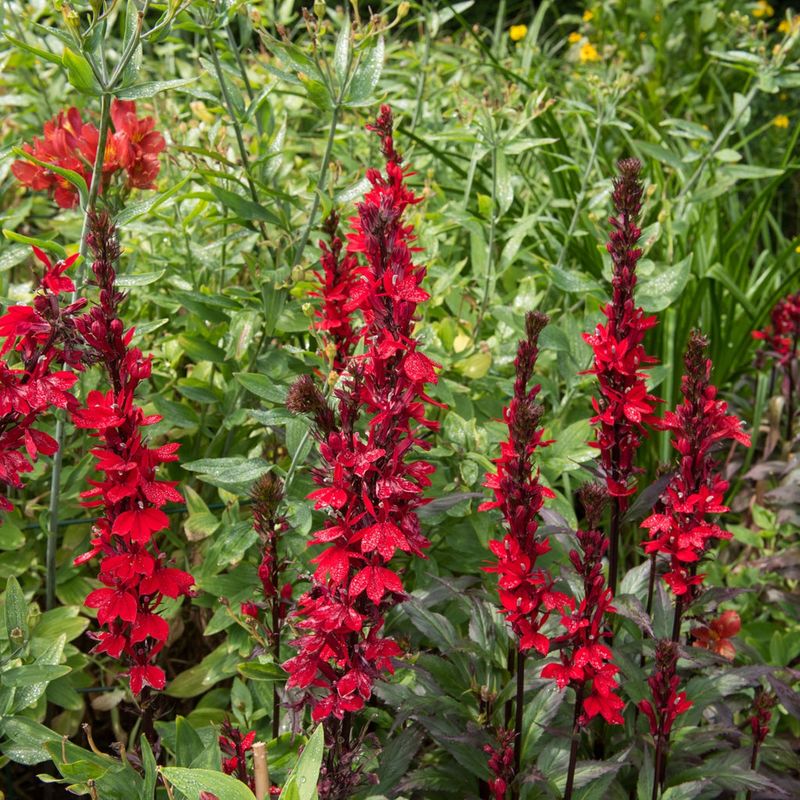
Scarlet is a rare and powerful color in any garden, and Lobelia cardinalis delivers it with real intensity on tall, upright flower spikes that draw the eye immediately.
The vivid red blooms open progressively from the bottom of the spike upward through midsummer and into early fall, extending the display over several weeks.
Hummingbirds are frequently drawn to the flowers, and while visits are never guaranteed, the plant’s tubular red blooms are well suited to their feeding style.
Cardinal flower performs best where soil moisture is dependable. Rain-garden margins, pond edges, streamside plantings, and naturally moist borders all provide the kind of consistent moisture the plant prefers.
Exposed, drought-prone sites tend to produce weaker plants with shorter bloom periods, so matching the species to the right location matters more than simply fitting its color into a design.
As a vertical accent, the scarlet spike pairs naturally with the cool blue of great blue lobelia when both species share compatible moist conditions. It also contrasts sharply with soft lavender wild bergamot or the dusty pink of sweet Joe-Pye weed.
Repeating the plant in small groups of two or three rather than planting single specimens creates a bolder color statement that holds its own beside taller background plants in a layered summer border.
5. Wild Bergamot Fills Beds With Soft Color
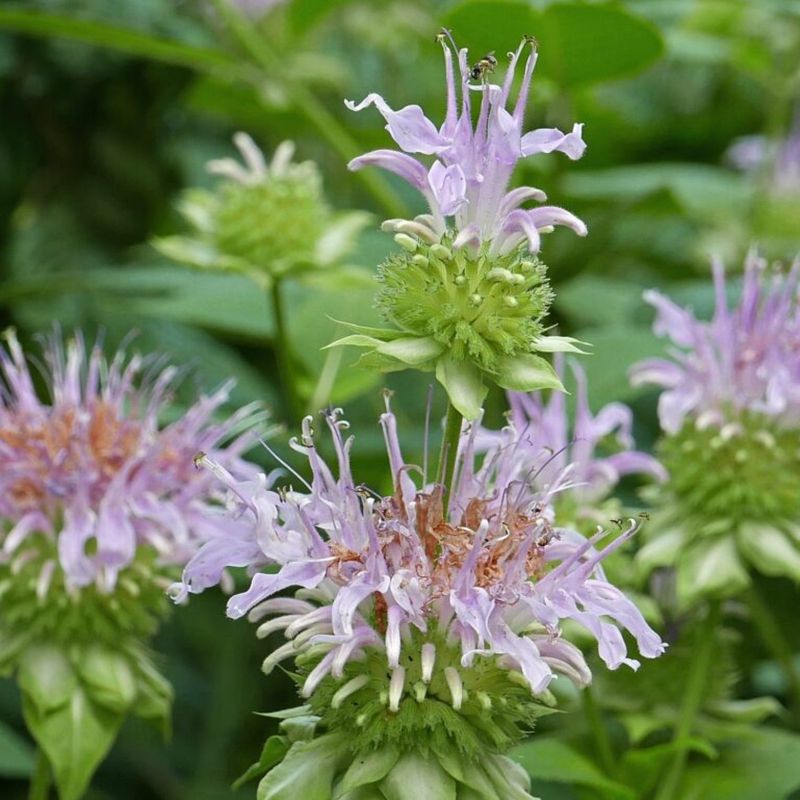
Walk past a patch of Monarda fistulosa on a warm afternoon and the aromatic foliage announces itself before the flowers even come into view.
Wild bergamot produces rounded clusters of lavender, pale purple, or soft pinkish blooms on loosely branching stems during midsummer, filling sunny borders with a color that bridges the gap between the cool blues and the deeper purples in a layered native planting.
Its informal, airy form adds fullness without the heavy architectural weight of cup plant or ironweed.
Groups of wild bergamot scattered through a pollinator border or meadow-style planting create repeated soft color that ties bolder elements together.
The plant can spread by rhizomes and seed when conditions suit it, so the density and rate of expansion can vary considerably depending on soil, moisture, and competition from neighboring plants.
Powdery mildew sometimes appears on the foliage, particularly when air movement is limited, plants are crowded, or summer weather patterns favor fungal development.
Spacing plants based on their mature size rather than their small installation size improves airflow, though mildew can still appear on susceptible plants under certain conditions.
Visible mildew late in the season does not mean the plant is a poor choice for a maximalist border, as the flower display typically occurs before significant mildew development.
6. Swamp Rose Mallow Delivers Oversized Summer Blooms
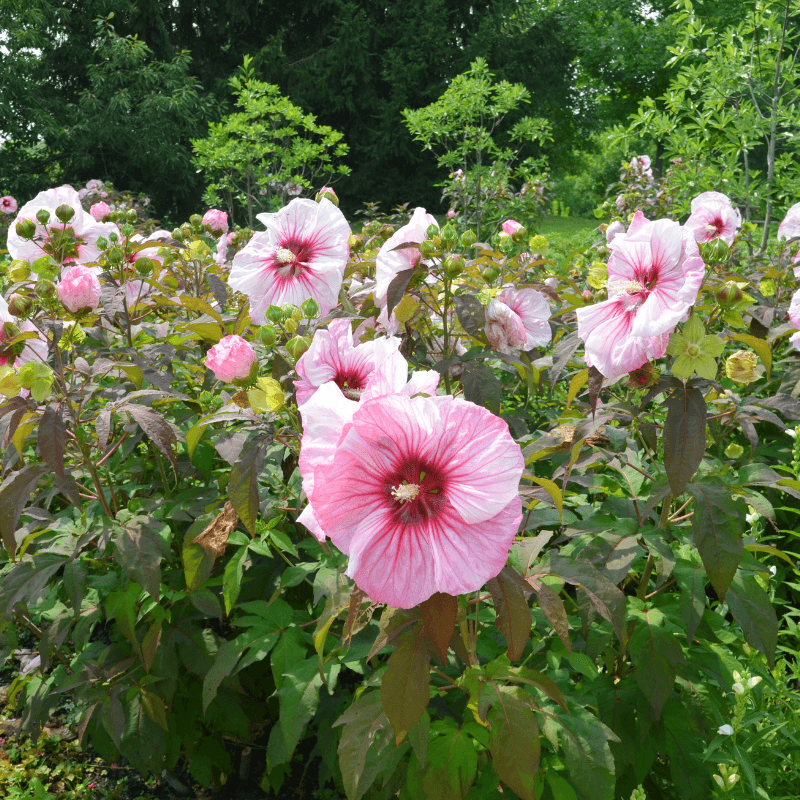
Hibiscus moscheutos produces flowers so large that first-time visitors to a Pennsylvania rain garden sometimes stop to confirm they are looking at a native plant.
The blooms can span several inches across and typically appear in white or pink with contrasting reddish or crimson centers on wild-type plants.
Deeper red flowers are more commonly associated with selected cultivars or hybrids, so gardeners purchasing plants for a naturalistic design should check the botanical name and origin carefully.
Bold leaves, substantial stems, and those oversized flowers combine to create a focal point that few other summer natives can match for sheer visual impact.
Suitable settings include rain gardens, pond margins, damp borders, and naturally moist beds that receive full sun or very light afternoon shade.
The plant needs sufficient space to develop its full form, and it should not be placed in a dry location simply because its flowers suit a dramatic design concept.
One practical note worth mentioning is that swamp rose mallow emerges later in spring than many perennials.
Early-season gardeners sometimes worry that the plant has not survived the winter, but the stems and foliage typically push through once soil temperatures warm consistently.
Marking the planting location helps avoid accidentally disturbing the root zone before new growth appears.
7. Sweet Joe-Pye Weed Builds A Layered Backdrop
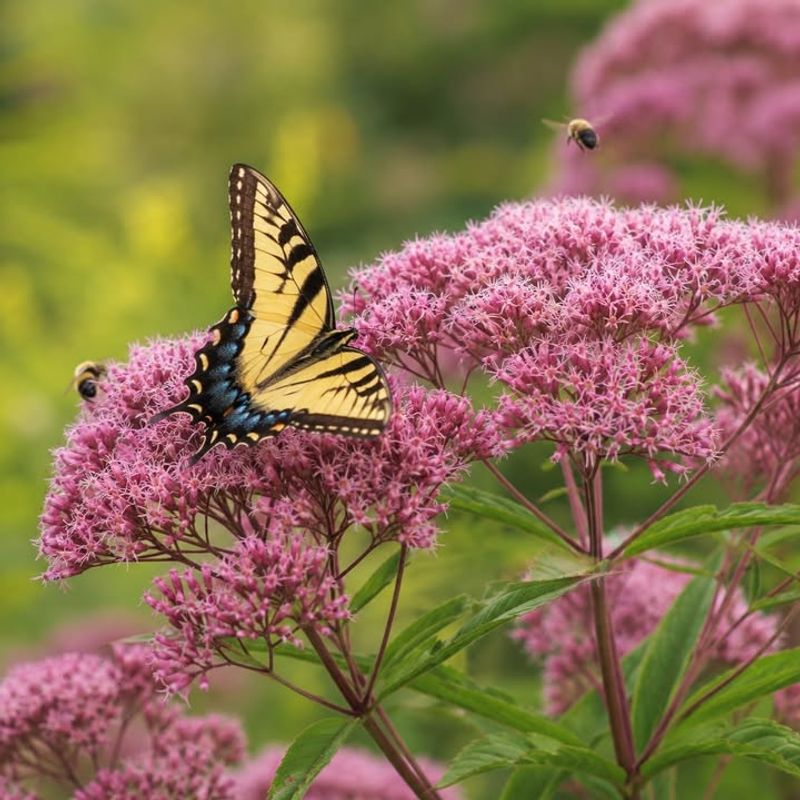
Standing five to seven feet tall under suitable conditions, Eutrochium purpureum brings a soft, dusty elegance to the back of a layered summer border that heavier architectural plants sometimes cannot provide on their own.
Its broad, domed flower clusters open in shades of dusty pink, muted rose, or soft purplish-pink during mid to late summer, creating a hazy backdrop that makes sharper colors in front of it read more vividly by comparison.
Sweet Joe-Pye Weed is worth distinguishing from other Eutrochium species because the common name Joe-Pye Weed covers several related plants with different mature sizes and site preferences.
Eutrochium purpureum may tolerate somewhat more shade and moderately drier conditions than certain relatives, though it still performs best with good light and reasonable moisture.
Gardeners should verify the botanical name when purchasing because cultivars and related species sold under similar common names may differ significantly in height and habit.
Placing sweet Joe-Pye Weed behind shorter companions such as black-eyed Susan, cardinal flower, or great blue lobelia works well when all the chosen plants share compatible light and moisture requirements.
The layered height difference creates visual depth, and the soft pink tones transition naturally between the golden yellows below and the deeper purples of ironweed nearby.
8. New York Ironweed Deepens Late-Summer Color
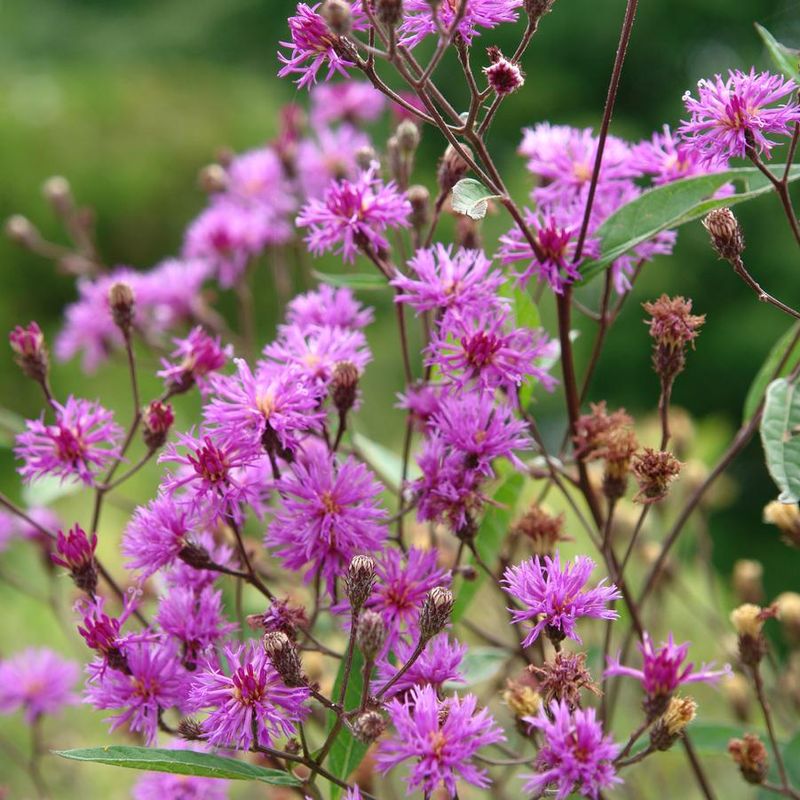
As earlier summer flowers begin to fade, Vernonia noveboracensis steps forward with some of the deepest, most saturated violet-purple color available in a Pennsylvania native planting.
New York ironweed is associated with moist meadows, stream margins, low areas, and other sites where moisture is dependable, and it tends to reach several feet tall with upright stems topped by flat-topped clusters of intensely colored flowers.
That late-season richness can anchor a border that might otherwise start to look tired by August.
New York ironweed belongs to the same genus as tall ironweed but is not the same plant.
Their typical habitats, mature dimensions, branching patterns, and natural distribution within Pennsylvania may differ, so gardeners should not treat them as interchangeable.
Both species can serve a similar visual role as bold purple background plants, which means a gardener can choose whichever species better matches the available site rather than feeling obligated to grow both.
The plant can spread by seed or underground growth when conditions suit it, which makes it a comfortable fit in a large naturalistic border or informal moist meadow planting.
A smaller, tightly managed bed may require more attention to contain its spread over time.
Sourcing plants from a reputable native nursery with the correct botanical name helps ensure the plant matches the intended design.
9. Black-Eyed Susan Creates Bright Golden Sweeps
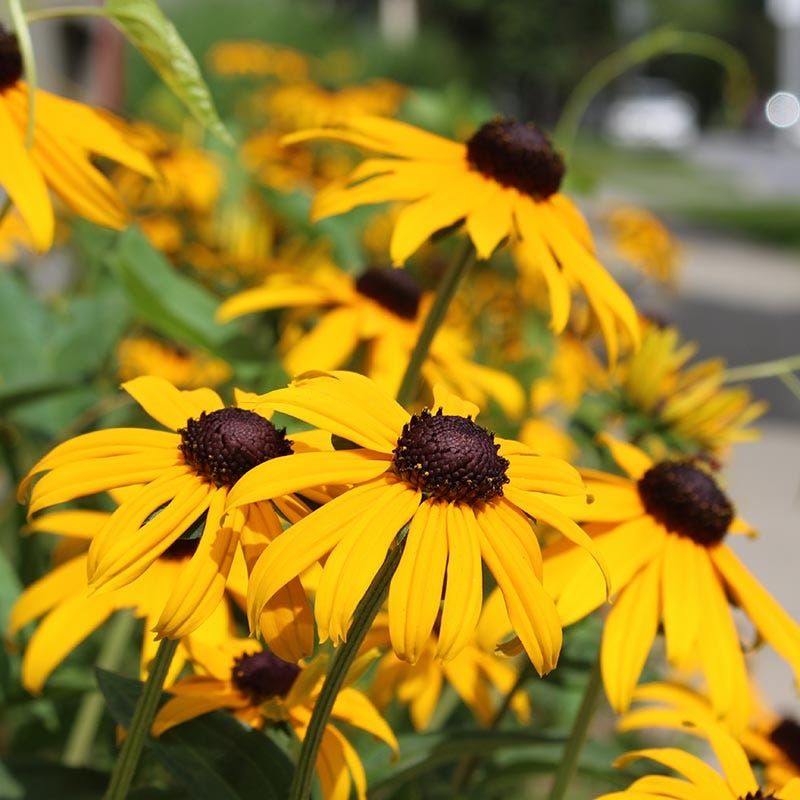
Golden yellow is one of the most reliable summer colors in a Pennsylvania native garden, and Rudbeckia hirta delivers it in cheerful abundance when planted in groups across a sunny border.
The bright ray flowers surrounding dark central disks create a strong visual contrast that reads well from a distance, making black-eyed Susan one of the most effective connective plants in a layered maximalist design.
Its relatively modest height allows it to bridge the visual gap between tall background plants and the front edge of the border.
Black-eyed Susan may behave as a biennial or short-lived perennial rather than remaining as a permanent clump in every garden.
Where suitable open soil remains and seed heads are allowed to mature, the plant can maintain a visible presence through reseeding.
Mulch depth, competition from neighboring plants, soil disturbance, and moisture conditions all influence whether seedlings establish successfully, so reseeding is not something to count on in every situation.
Pairing golden black-eyed Susan with the deep purple of ironweed creates one of the most classic color contrasts in a native summer border. It also works well beside the soft pink of Joe-Pye weed or the scarlet spikes of cardinal flower.
Planting in repeated groups of five or more rather than single specimens creates the sweeping golden effect that gives this plant its strongest visual presence.
10. Cutleaf Coneflower Fills Moist Beds With Height
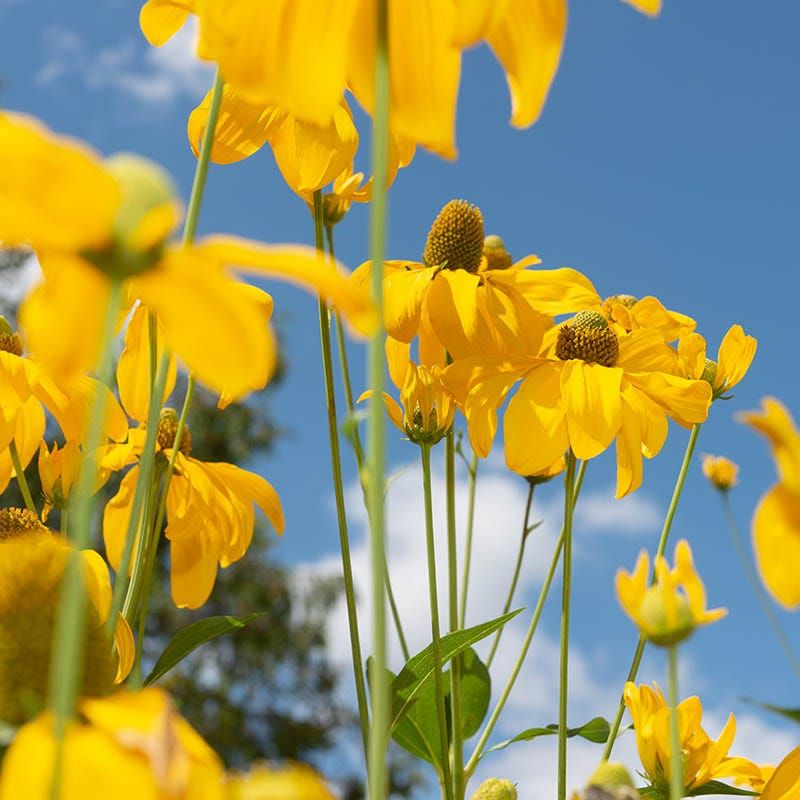
Rudbeckia laciniata, known as cutleaf coneflower, is a Pennsylvania-native alternative worth highlighting here because purple coneflower, Echinacea purpurea, while widely cultivated, is not considered native to Pennsylvania by the most precise state flora records.
Cutleaf coneflower brings its own distinctive character to a moist border through tall stems, deeply divided foliage with a lush texture, and yellow flowers with drooping ray petals arranged around raised greenish centers.
The overall effect is looser and more naturalistic than the stiff, upright form of some other coneflowers.
Under favorable conditions in moist, rich soil, cutleaf coneflower can reach substantial heights and form expanding colonies.
This makes it well suited to large naturalistic beds, damp borders, streamside plantings, and woodland openings where spreading plants are welcome.
In a smaller residential garden, its colony-forming habit and considerable height may require more management than a compact border can comfortably absorb.
Dry soil and narrow formal borders are not appropriate settings for this species.
When placed thoughtfully in a large moist planting alongside sweet Joe-Pye Weed, New York ironweed, or great blue lobelia with compatible site needs, cutleaf coneflower adds height, textural contrast, and extended summer color.
Purchasing plants labeled with the correct botanical name helps confirm the species rather than a related cultivar with different growth habits.