Never Prune Your Arizona Citrus Trees In July To Prevent Severe Sunscald
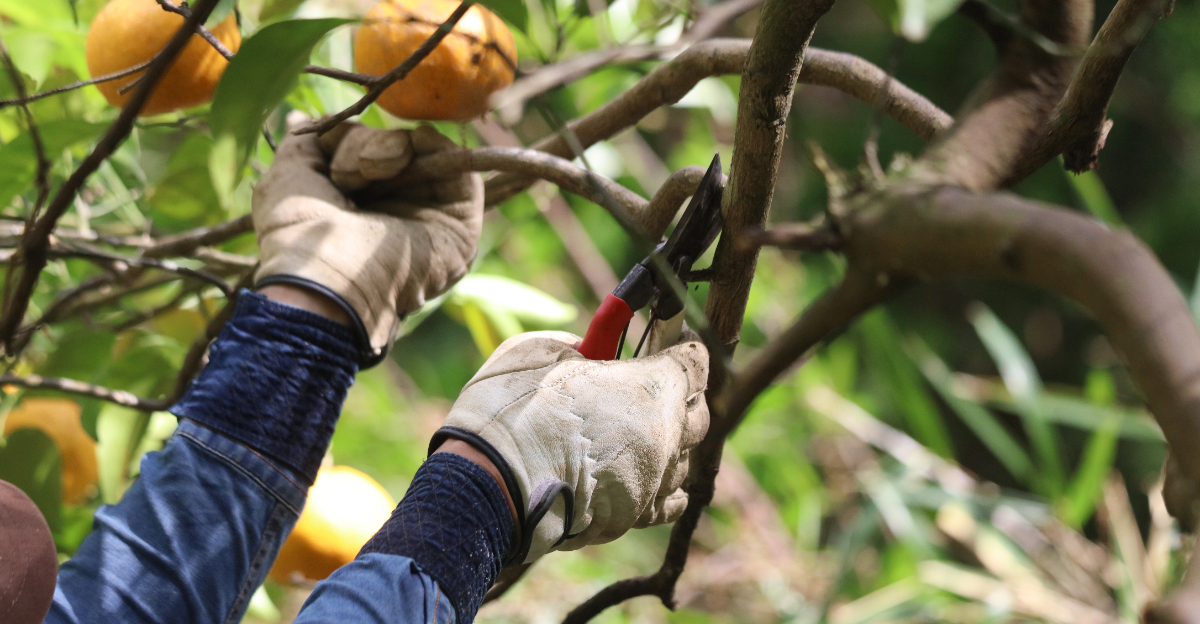
Your citrus tree may look like it needs a quick trim, but July is the time to leave the pruning shears alone. Those extra branches are doing more than making the canopy look full.
They are shielding the trunk and larger limbs from powerful sunlight that can damage exposed bark surprisingly fast. Removing that natural cover now can create problems that last far beyond summer.
In Arizona, intense sunshine can cause severe sunscald after heavy pruning, even on healthy citrus trees. The injured bark may crack, weaken, and recover very slowly over time.
Waiting for the proper pruning season gives your tree a much better chance of staying healthy through extreme heat.
A little patience now can prevent lasting damage and help your citrus tree remain strong, productive, and attractive for seasons to come.
1. July Pruning Leaves Branches Exposed To Intense Sun
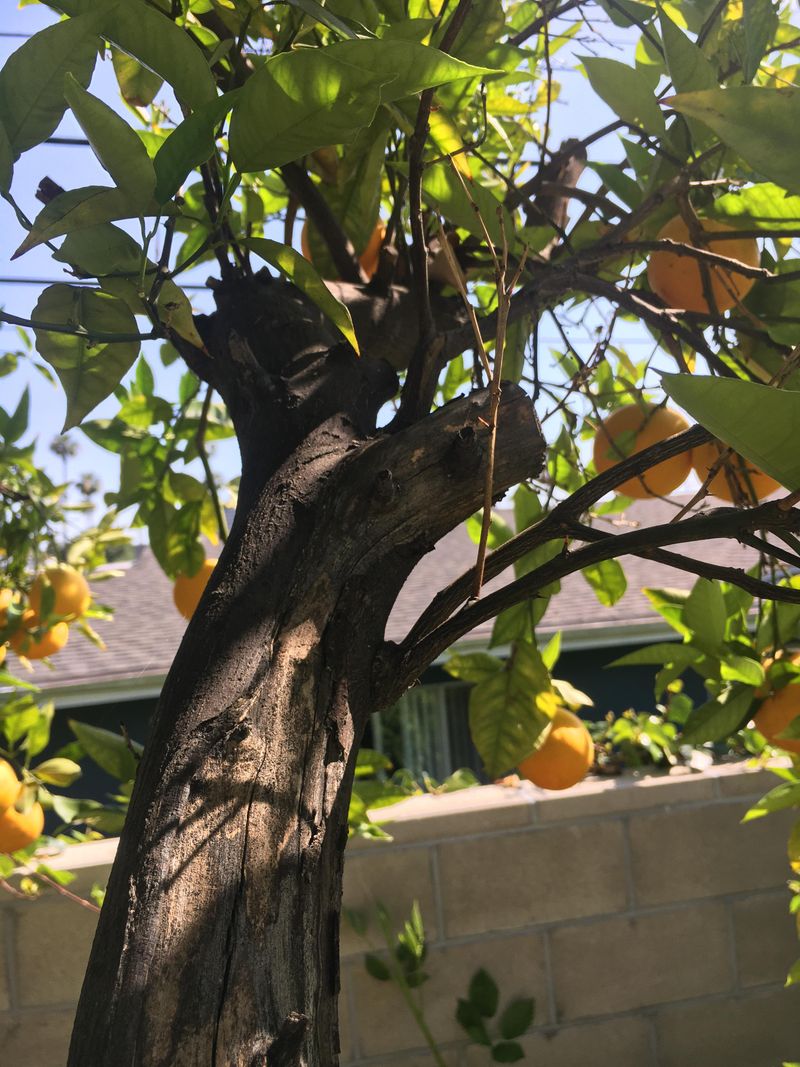
Grabbing pruning shears in July might feel like smart tree care, but it often works against you. Removing branches in peak summer strips away the natural shade your tree creates for itself.
Without that leafy cover, bark that was previously shaded suddenly faces full, direct sun exposure.
Arizona summers push daytime temperatures well above 100 degrees Fahrenheit. Bark exposed to that kind of heat absorbs intense solar radiation with very little protection.
Temperatures on exposed bark surfaces can climb significantly higher than the surrounding air temperature.
Citrus bark is not built to handle sudden, prolonged sun exposure. When shade disappears overnight due to pruning, the bark has no time to adapt.
Stress builds quickly under those conditions.
Sunscald typically appears as discolored, cracked, or blistered patches along the trunk and major limbs. Early damage may look minor, but it often worsens as summer continues.
Weakened bark becomes more vulnerable to pests and secondary issues over time.
Waiting until cooler months before making significant cuts gives your tree a real advantage. Late winter and early spring pruning allows new growth to establish before intense heat arrives.
2. Sunscald Can Damage Bark Long Before You Notice It
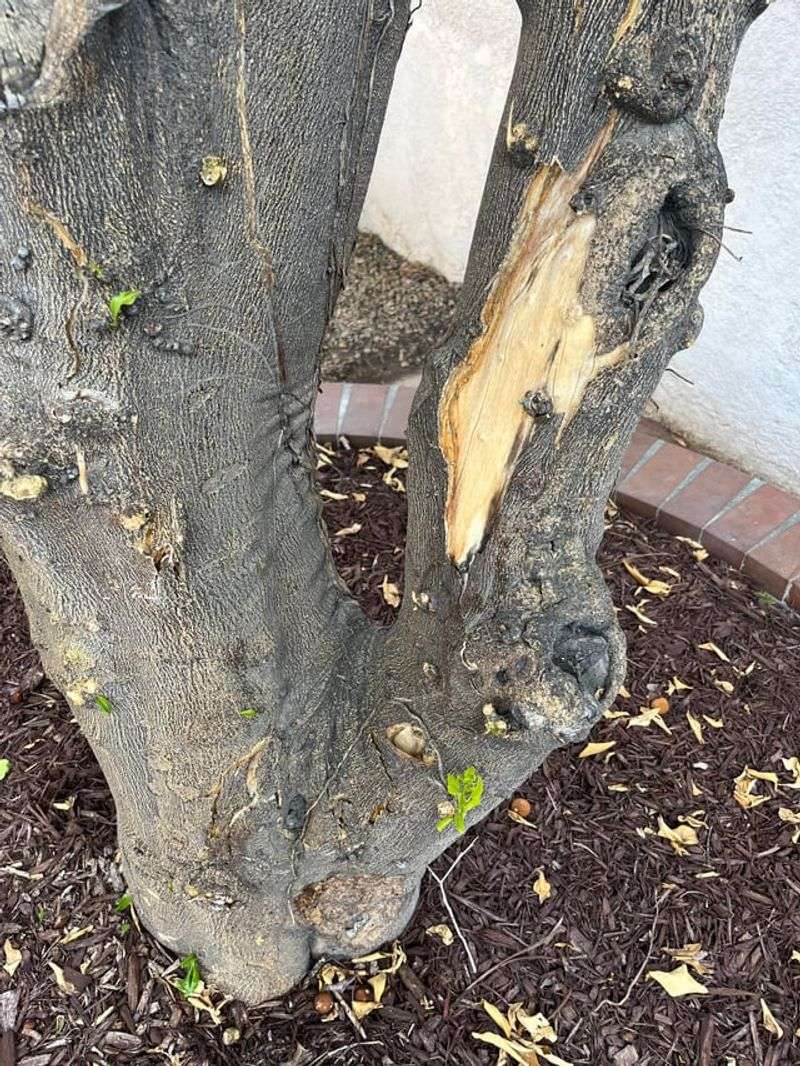
Sunscald is sneaky. Bark damage often begins well before any visible signs appear on the surface.
By the time you spot discoloration or cracking, the underlying tissue may already be significantly stressed.
Cells beneath the bark are sensitive to sudden temperature swings. Intense solar heat can essentially cook those inner layers while the outer bark still looks intact.
Damage progresses quietly beneath the surface over days and weeks.
Hot desert climates create conditions where bark temperatures can spike dramatically between shaded and unshaded areas. A limb that loses its surrounding canopy cover faces a sudden and extreme change in sun exposure.
That shift alone puts real strain on bark tissue.
Visible symptoms usually show up as pale, yellowish, or brownish patches on the bark. Cracking and peeling may follow as the affected area dries out further.
In more serious cases, the bark separates from the wood beneath it.
Once sunscald progresses, affected areas become entry points for insects and fungal issues. Monitoring your trees closely through summer helps you catch problems earlier.
Your Arizona Garden Changes Every Week. Your Plan Should Too.
Gardening in Arizona changes quickly throughout the season. Every Friday you’ll receive a simple weekly plan showing exactly what to plant, prune, fertilize, harvest, and protect so you never miss the right timing.
Look for subtle color changes along the trunk and main limbs regularly.
Prevention remains far easier than recovery. Keeping the canopy intact through July reduces bark stress considerably.
3. Healthy Canopies Shield Trunks And Major Limbs
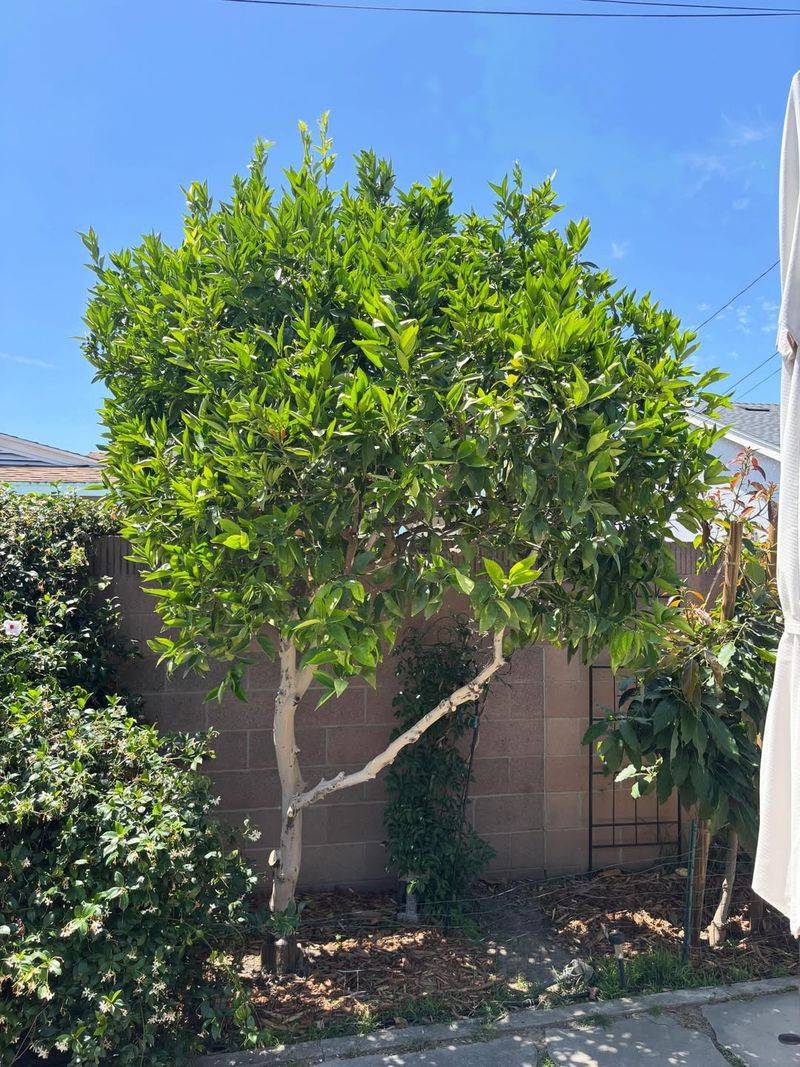
A full, healthy canopy does more than produce fruit. It acts like a natural sunscreen for everything underneath it.
Leaves and branches create layered shade that keeps bark temperatures significantly cooler during peak afternoon heat.
Citrus trees in desert climates depend heavily on their own foliage for self-protection. Trunks and major limbs stay cooler when surrounded by dense leaf cover.
Strip that away in summer, and the bark becomes vulnerable almost immediately.
Well-established canopies also reduce ground-level soil temperatures around the root zone. Shade from above keeps moisture in the soil longer, which supports overall tree health during dry, hot stretches.
Roots stay more stable when surface temperatures are moderated by overhead cover.
Maintaining canopy density through July is a practical priority. Avoid thinning cuts that open up large gaps in the leaf cover.
Even moderate pruning can create pockets of exposed bark that catch direct sun for hours each day.
Younger citrus trees are especially at risk because their canopies are still developing. Less foliage means less natural shade, and smaller trunks can sunscald faster than mature ones.
Protecting young trees through summer often requires extra attention and possibly some additional shade cloth during the hottest weeks.
4. Save Major Pruning For Cooler Times Of Year
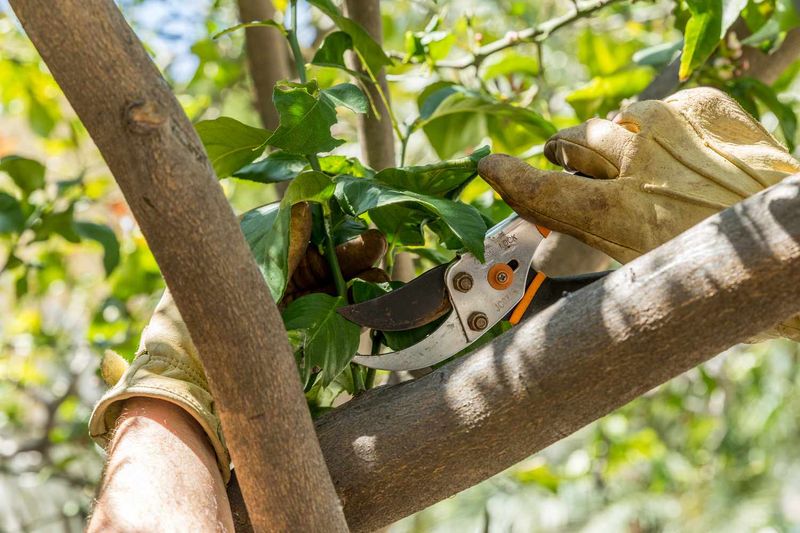
Timing your pruning correctly is one of the most impactful decisions you make as a citrus grower. Late winter and early spring are widely considered the best windows for significant pruning work.
Temperatures are mild, stress on the tree is lower, and new growth has time to fill in before summer heat arrives.
February through early April generally works well for most citrus varieties in desert regions. Frost risk has typically passed by late February in many low-elevation areas, making it safer to cut without worrying about cold damage to fresh wounds.
New growth that follows has weeks of moderate weather to establish before summer begins.
Late winter to early spring remains the preferred time for major citrus pruning in Arizona. By then, the risk of frost has largely passed in many areas, and new growth has time to develop before the extreme heat of summer arrives.
Major structural cuts made during summer create large exposed areas that bark simply cannot protect on its own. Healing slows in extreme heat, and wounds remain open longer.
That extended vulnerability increases risk considerably.
Lighter maintenance, like removing broken or damaged twigs, carries less risk than heavy structural pruning. Even so, keeping cuts minimal during July is a reasonable approach.
5. Remove Only Broken Or Dangerous Branches
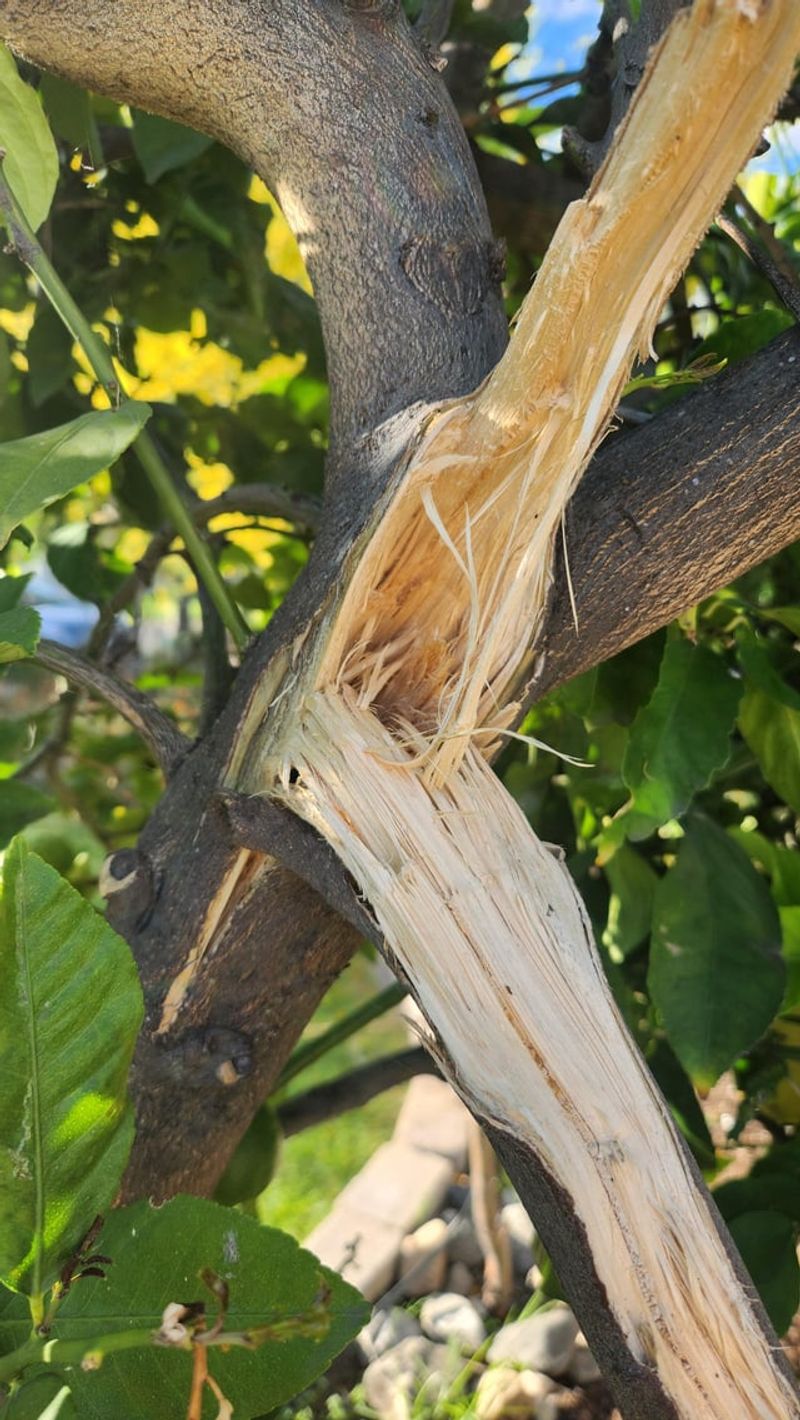
Sometimes a branch snaps during a monsoon storm or gets weighed down and cracks under heavy fruit. Leaving a badly broken branch in place creates its own set of problems, even in the middle of summer.
Ragged, hanging limbs can introduce pest activity and physical hazards around the tree.
Removing genuinely broken or structurally unsafe branches during summer is generally acceptable when necessary. The key difference is purpose.
Cutting away a dangerous limb is reactive and targeted. Elective shaping or thinning during July is a choice that can wait.
When you do make a summer cut out of necessity, keep it clean and precise. A sharp, clean cut causes less stress than a rough or torn one.
Avoid cutting more than what is actually needed to address the immediate issue.
Smaller cuts heal more efficiently than large ones, even in heat. Removing just the broken portion rather than the entire limb reduces the amount of bark and wood exposed to direct sun.
Keeping the wound area minimal matters when temperatures are extreme.
After a necessary summer cut, consider whether the exposed area needs any protection. White latex paint diluted with water is sometimes applied to freshly exposed bark or cut surfaces in desert climates.
It reflects heat and can reduce sunscald risk on vulnerable spots.
6. White Trunk Paint Helps Protect Exposed Bark
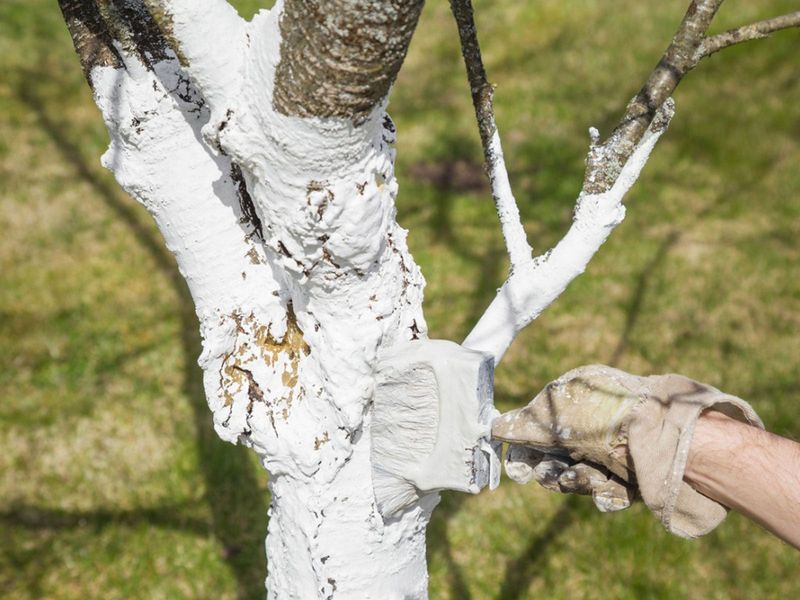
White trunk paint sounds like an old-fashioned trick, but it actually works on a practical level. Painting exposed bark with diluted white latex paint reflects sunlight instead of absorbing it.
That reflection keeps bark surface temperatures noticeably lower during peak afternoon heat.
In Arizona, bark temperatures on unshaded trunks can reach extreme levels during July afternoons. Even a thin coat of white paint can reduce those surface temperatures meaningfully.
Lower surface temperatures reduce the risk of sunscald on vulnerable areas.
Use interior white latex paint diluted roughly 50/50 with water. Exterior paint or undiluted paint can sometimes cause more harm than good by sealing bark too heavily.
Diluted interior latex allows some gas exchange while still reflecting heat effectively.
Apply paint to the lower trunk and any major limbs that have recently lost surrounding leaf cover. Focus on south-facing and west-facing bark surfaces, since those sides receive the most intense afternoon sun exposure.
A brush or roller works fine for application.
White trunk paint is not a permanent solution or a substitute for proper pruning timing. Think of it as a practical tool for situations where bark is already exposed and needs short-term protection.
Reapply as needed if rain or weathering reduces coverage over time.
7. Avoid Stripping Lower Branches During Summer
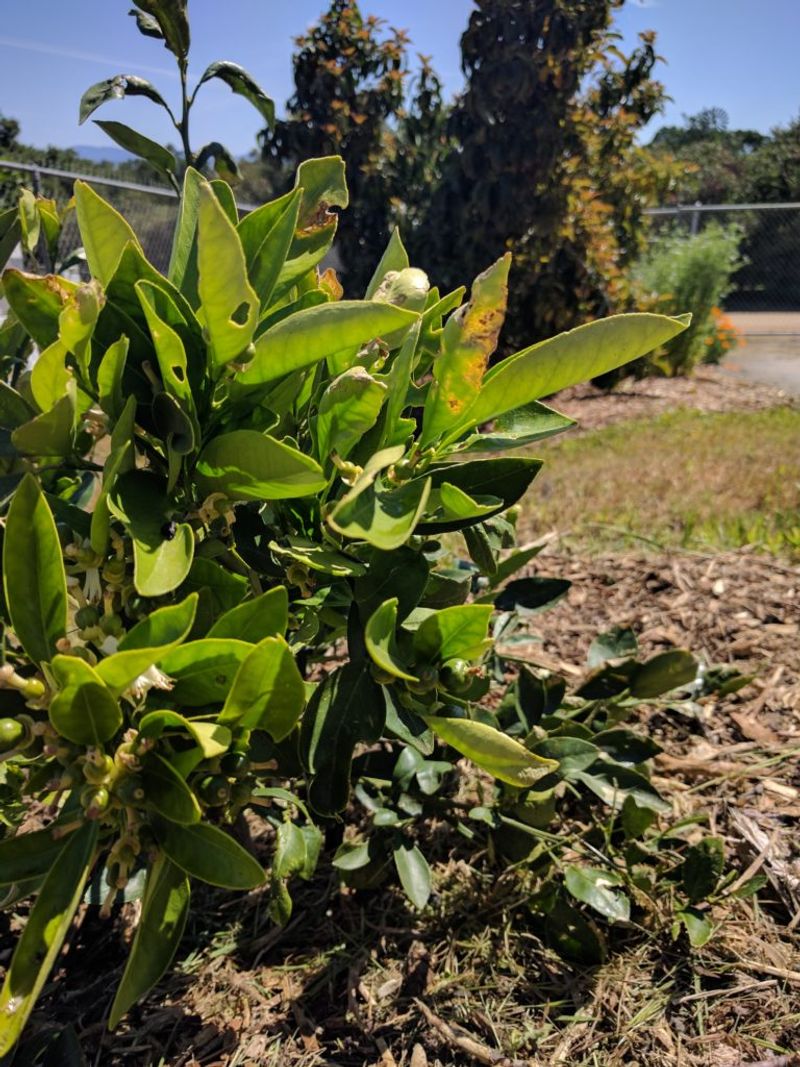
Lower branches on citrus trees often get removed for aesthetic reasons or to make yard maintenance easier. Pulling them off in summer, though, removes critical shade from the base of the trunk and the root zone.
That shade matters more than most people expect during extreme heat.
Bark near the base of the trunk is particularly sensitive to ground-reflected heat. Desert soil and hardscape surfaces radiate stored heat upward throughout the afternoon.
Lower branches help block some of that reflected heat from reaching the trunk directly.
Root zones also benefit from the shade that low-hanging branches provide. Cooler soil holds moisture longer, which supports root function during dry summer stretches.
Removing that natural shade cover increases soil temperature and speeds moisture loss.
Skirting, which is the practice of removing all lower branches up to a certain height, is sometimes done for pest management or airflow. When done during summer, it removes a layer of protection that the tree uses to regulate its own environment.
Consider waiting until late fall or winter before making those kinds of structural decisions.
Low branches that are clearly diseased, crossing, or rubbing against the trunk are worth addressing carefully. Prioritize only what genuinely needs attention.
Cosmetic or convenience-based removal of healthy lower branches during July typically creates more problems than it solves.